

Let us not mince words: The state of Georgia just murdered Troy Davis. The state coroner will list homicide as his cause of death. But he wasn't the first and, sadly, he won't be the last person slaughtered in the name of U.S. law and order. There are today dozens more people scheduled to be killed by states, according to Amnesty International. Their likely deaths represent the ultimate act of perversity in a system that destroys untold thousands of primarily black and brown lives every day.
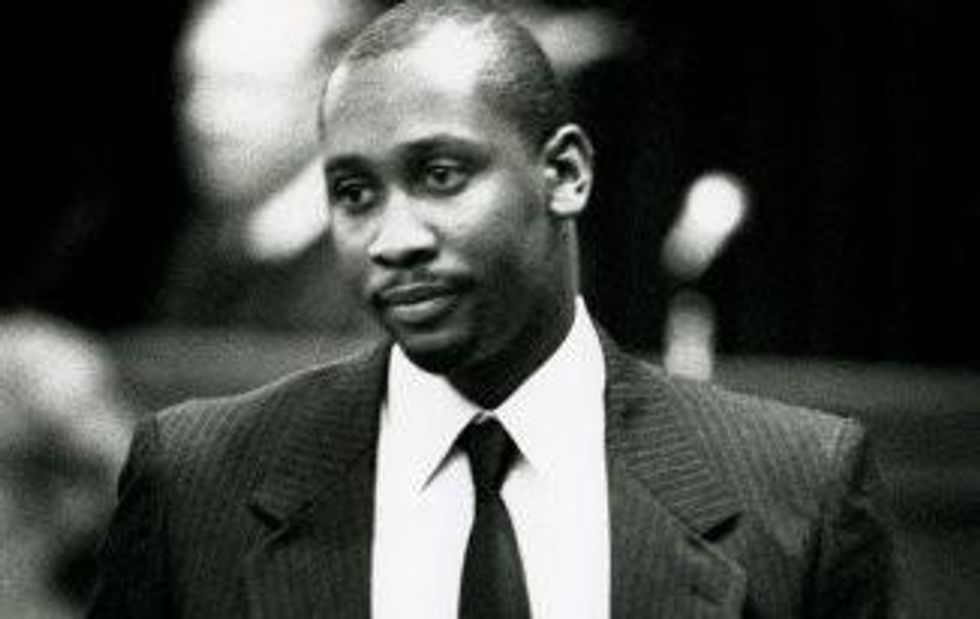
The execution came following a harrowing and wrenching night for Davis's family and supporters all over the world. Hundreds had gathered for a vigil outside of the Jackson, Ga., prison where Davis was put to death. Literally minutes before Davis's scheduled 7 p.m. execution, the U.S. Supreme Court delayed the killing in order to review a final appeal. A little over three hours later, news broke that the court had refused to block the execution. He was slain at 11:08 p.m. eastern.
As the world waited those agonizing hours, the crowd chanted, sang songs and prayed. Perhaps the most moving speaker of all was Davis's 17-year-old nephew DeJaun Davis-Correia. Jen Marlowe has reported for Colorlines.com on how DeJaun grew up visiting his uncle in prison, and was inspired by his plight to get involved in the fight against inequity in the criminal justice system. In an interview with Democracy Now's Amy Goodman outside of the prison, DeJaun said pointedly, "I am Troy Davis, we are Troy Davis, and you could be Troy Davis, too, Ms. Amy Goodman."
Amnesty International director Larry Cox offered that, importantly, the massive movement that developed around this case offers an opportunity to question this country's values. And it offers a chance to engage the many people who are repulsed that the state would murder in our names and yet remain silent about it. "We have to take people who were against the death penalty and never did anything about it," Cox told Goodman, and mobilize them. "Now is the time."
Davis's case offers a bracing and depressing illustration of capital punishment's many problems. In their eagerness to prosecute a black man for murdering a white cop, local officials set in motion a killing machine that, once turned on, is near impossible to halt without executive intervention. Much has already been written about the details of Davis's case; no reasonable observer can deny there is significant doubt as to his guilt. But our criminal justice system is anything but reasonable. Those who don't come into contact with it can sit in self-satisfied assurance that our cops and courts measure out blind justice that keeps society well ordered. The evidence simply does not support that fantasy, as Davis's life and death so dreadfully illustrate. In fact, if we are to judge our criminal justice system by its outcomes, it is built to round up masses of black men, transfer public funds to private companies to warehouse them, and then kill them in cold blood.
Colorlines.com will write much more about this case and about criminal justice reform broadly in the coming days and weeks. For tonight, we mourn not only Davis's life, but all of those lives that have been destroyed and taken in the name of a criminally unjust system of law and order. Can this nation do no better? Georgia Rep. John Lewis perhaps put it best. "Do not weep for Troy Anthony Davis, he will be with God," Lewis tweeted as his state committed murder, "weep for Georgia and for our Nation. Capital punishment is barbaric."
Let us not mince words: The state of Georgia just murdered Troy Davis. The state coroner will list homicide as his cause of death. But he wasn't the first and, sadly, he won't be the last person slaughtered in the name of U.S. law and order. There are today dozens more people scheduled to be killed by states, according to Amnesty International. Their likely deaths represent the ultimate act of perversity in a system that destroys untold thousands of primarily black and brown lives every day.
The execution came following a harrowing and wrenching night for Davis's family and supporters all over the world. Hundreds had gathered for a vigil outside of the Jackson, Ga., prison where Davis was put to death. Literally minutes before Davis's scheduled 7 p.m. execution, the U.S. Supreme Court delayed the killing in order to review a final appeal. A little over three hours later, news broke that the court had refused to block the execution. He was slain at 11:08 p.m. eastern.
As the world waited those agonizing hours, the crowd chanted, sang songs and prayed. Perhaps the most moving speaker of all was Davis's 17-year-old nephew DeJaun Davis-Correia. Jen Marlowe has reported for Colorlines.com on how DeJaun grew up visiting his uncle in prison, and was inspired by his plight to get involved in the fight against inequity in the criminal justice system. In an interview with Democracy Now's Amy Goodman outside of the prison, DeJaun said pointedly, "I am Troy Davis, we are Troy Davis, and you could be Troy Davis, too, Ms. Amy Goodman."
Amnesty International director Larry Cox offered that, importantly, the massive movement that developed around this case offers an opportunity to question this country's values. And it offers a chance to engage the many people who are repulsed that the state would murder in our names and yet remain silent about it. "We have to take people who were against the death penalty and never did anything about it," Cox told Goodman, and mobilize them. "Now is the time."
Davis's case offers a bracing and depressing illustration of capital punishment's many problems. In their eagerness to prosecute a black man for murdering a white cop, local officials set in motion a killing machine that, once turned on, is near impossible to halt without executive intervention. Much has already been written about the details of Davis's case; no reasonable observer can deny there is significant doubt as to his guilt. But our criminal justice system is anything but reasonable. Those who don't come into contact with it can sit in self-satisfied assurance that our cops and courts measure out blind justice that keeps society well ordered. The evidence simply does not support that fantasy, as Davis's life and death so dreadfully illustrate. In fact, if we are to judge our criminal justice system by its outcomes, it is built to round up masses of black men, transfer public funds to private companies to warehouse them, and then kill them in cold blood.
Colorlines.com will write much more about this case and about criminal justice reform broadly in the coming days and weeks. For tonight, we mourn not only Davis's life, but all of those lives that have been destroyed and taken in the name of a criminally unjust system of law and order. Can this nation do no better? Georgia Rep. John Lewis perhaps put it best. "Do not weep for Troy Anthony Davis, he will be with God," Lewis tweeted as his state committed murder, "weep for Georgia and for our Nation. Capital punishment is barbaric."
Let us not mince words: The state of Georgia just murdered Troy Davis. The state coroner will list homicide as his cause of death. But he wasn't the first and, sadly, he won't be the last person slaughtered in the name of U.S. law and order. There are today dozens more people scheduled to be killed by states, according to Amnesty International. Their likely deaths represent the ultimate act of perversity in a system that destroys untold thousands of primarily black and brown lives every day.
The execution came following a harrowing and wrenching night for Davis's family and supporters all over the world. Hundreds had gathered for a vigil outside of the Jackson, Ga., prison where Davis was put to death. Literally minutes before Davis's scheduled 7 p.m. execution, the U.S. Supreme Court delayed the killing in order to review a final appeal. A little over three hours later, news broke that the court had refused to block the execution. He was slain at 11:08 p.m. eastern.
As the world waited those agonizing hours, the crowd chanted, sang songs and prayed. Perhaps the most moving speaker of all was Davis's 17-year-old nephew DeJaun Davis-Correia. Jen Marlowe has reported for Colorlines.com on how DeJaun grew up visiting his uncle in prison, and was inspired by his plight to get involved in the fight against inequity in the criminal justice system. In an interview with Democracy Now's Amy Goodman outside of the prison, DeJaun said pointedly, "I am Troy Davis, we are Troy Davis, and you could be Troy Davis, too, Ms. Amy Goodman."
Amnesty International director Larry Cox offered that, importantly, the massive movement that developed around this case offers an opportunity to question this country's values. And it offers a chance to engage the many people who are repulsed that the state would murder in our names and yet remain silent about it. "We have to take people who were against the death penalty and never did anything about it," Cox told Goodman, and mobilize them. "Now is the time."
Davis's case offers a bracing and depressing illustration of capital punishment's many problems. In their eagerness to prosecute a black man for murdering a white cop, local officials set in motion a killing machine that, once turned on, is near impossible to halt without executive intervention. Much has already been written about the details of Davis's case; no reasonable observer can deny there is significant doubt as to his guilt. But our criminal justice system is anything but reasonable. Those who don't come into contact with it can sit in self-satisfied assurance that our cops and courts measure out blind justice that keeps society well ordered. The evidence simply does not support that fantasy, as Davis's life and death so dreadfully illustrate. In fact, if we are to judge our criminal justice system by its outcomes, it is built to round up masses of black men, transfer public funds to private companies to warehouse them, and then kill them in cold blood.
Colorlines.com will write much more about this case and about criminal justice reform broadly in the coming days and weeks. For tonight, we mourn not only Davis's life, but all of those lives that have been destroyed and taken in the name of a criminally unjust system of law and order. Can this nation do no better? Georgia Rep. John Lewis perhaps put it best. "Do not weep for Troy Anthony Davis, he will be with God," Lewis tweeted as his state committed murder, "weep for Georgia and for our Nation. Capital punishment is barbaric."