
Hedge Funds Against Malaria
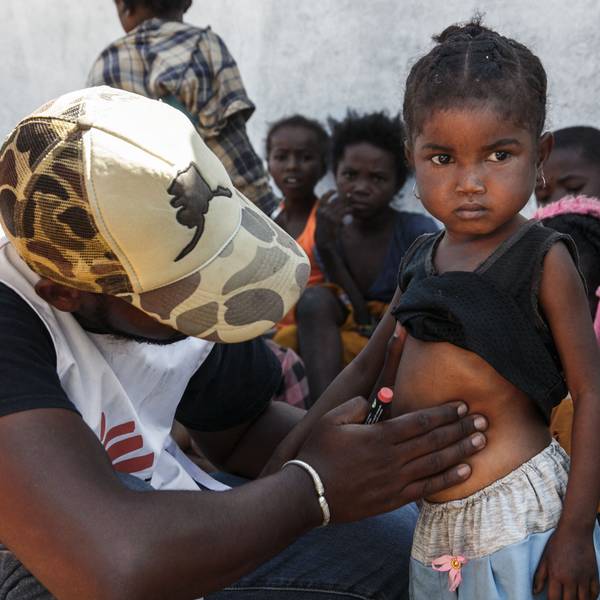
Suppose every day for the past umpteen years, four fully loaded Boeing 747 Jumbo Jets crashed full of African children. Suppose further that no one doubted that similar children-filled jumbo jets would crash at this level every day into the indefinite future. Don't you think that at some point something big would be done about this slaughter of the innocents? Well, every day about 2000 African children die from malaria as their predecessors have died for centuries. Only now the mortality levels are as high or higher than they have ever been in this modern, technology-driven 21st century. What goes here?
For starters children are not dying from malaria in western countries that have the wealth, know-how and discovery-potential to do something. Second, these massive fatalities, which often include their mothers, are not caused by Terrorists. Unless, that is the malarial mosquito and its deadly parasite can be called "terrorists" of real weapons of mass destruction. Third, death from malaria has been going on since time immemorial; its part of the Third World landscape of banal inevitability. It doesn't have the novelty of a new disease such as AIDS or a looming avian influenza pandemic.
Malaria has not had any single-minded lobbyists who are either fortified by big money or have Hollywood celebrity status. I know this because for the last 13 years, some of us have been grappling with this puzzling disinterest regarding both malaria and tuberculosis, which between them take about four million lives a year. Even the Bill and Melinda Gates Foundation's grants for malaria research in recent years have not sparked that "fire in the belly" feeling either among the health powers-that-be in governments or among the general public.
Just last month, the Gates Foundation pledged $258 million for research toward a malaria vaccine, new drugs and improved ways of mosquito control. That's big by malaria budget standards. The Gates announcement did not even make page one on most newspapers. It was an inside story for the Washington Post, the New York Times and the Wall St. Journal and not a very large one at that:
Enter Lance Laifer, a Hedge Fund manager, commuting between Connecticut and New Jersey. One evening last June he was watching a television interview program, which reported that malaria, was taking well over a million lives a year and the world was not doing much about it. He was, in his words, "amazed since I thought Malaria was eradicated hundreds of years ago." Possessed by a sense of urgency, he started researching. His conclusion: "what I found was that this disease is the worse positioned and marketed disease on the planet."
In searching the internet, he called me after coming across my column urging Hedge Fund zillionaires to establish a revolving $100 million fund for immediate response to famines erupting in places like Niger. It was during our conversation and after his first conference of malarial experts in New York City on September 20 that I sensed Mr. Laifer knew what it was going to take to put the chronic malarial epidemic on the front burner of public health action.
He started Hedge Funds against malaria - an eyebrow raiser to be sure - because "there are no business people involved in fighting this disease day in and day out . . . There are no fundraisers. There are no Malaria Political Action Committees. It is not thought about creatively." Mr. Laifer takes off on the "good news," that "malaria is fundamentally a preventable disease transmitted by mosquitoes. If the children and adults -- malaria is the largest killer of mothers on the planet -- are provided with bed nets, sprays, and medicines, they can be protected . . .." he says.
It is time for relentless repetition of the message, drama in its delivery and a firestorm of emergency. So this Hedge Fund man is organizing action conferences in Atlanta with follow up conferences around the nation to build a broad-based anti-malaria coalition among business people, students, and alumni while all along working with All Africa Global Media.
He is in the process of establishing Malaria Free Zones in three villages in Africa (Ghana, Kenya and Nigeria) that will be supplied with bed nets, medication and sprays - as pilot projects.
More flamboyantly, he has started Dunk Malaria I - a grassroots initiative to recruit millions of people worldwide to shoot a basketball through a basketball net (the tie-in to bed nets) next March 19, as a participatory charity activity. NBA star, Dikembe Mutombo has agreed to a high visibility role here. (Contact atvs.malaria@gmail.com). In early December, 2005, Lance Laifer will swim in the ocean to help a benefit he calls 'the World Swim for Malaria." It will be chilling he says, but nothing like malaria chills and the chills associated with mothers and fathers burying a young child stricken with this disease. Proceeds will go to benefit the Global Fund Bednet purchase program. (see worldswim4malaria.com/en/)
I suppose Mr. Laifer believes that if you try for the impossible, you'll be more likely to achieve the possible.
For more information, contact allafrica.com.
An Urgent Message From Our Co-Founder
Dear Common Dreams reader, It’s been nearly 30 years since I co-founded Common Dreams with my late wife, Lina Newhouser. We had the radical notion that journalism should serve the public good, not corporate profits. It was clear to us from the outset what it would take to build such a project. No paid advertisements. No corporate sponsors. No millionaire publisher telling us what to think or do. Many people said we wouldn't last a year, but we proved those doubters wrong. Together with a tremendous team of journalists and dedicated staff, we built an independent media outlet free from the constraints of profits and corporate control. Our mission has always been simple: To inform. To inspire. To ignite change for the common good. Building Common Dreams was not easy. Our survival was never guaranteed. When you take on the most powerful forces—Wall Street greed, fossil fuel industry destruction, Big Tech lobbyists, and uber-rich oligarchs who have spent billions upon billions rigging the economy and democracy in their favor—the only bulwark you have is supporters who believe in your work. But here’s the urgent message from me today. It's never been this bad out there. And it's never been this hard to keep us going. At the very moment Common Dreams is most needed, the threats we face are intensifying. We need your support now more than ever. We don't accept corporate advertising and never will. We don't have a paywall because we don't think people should be blocked from critical news based on their ability to pay. Everything we do is funded by the donations of readers like you. When everyone does the little they can afford, we are strong. But if that support retreats or dries up, so do we. Will you donate now to make sure Common Dreams not only survives but thrives? —Craig Brown, Co-founder |
Suppose every day for the past umpteen years, four fully loaded Boeing 747 Jumbo Jets crashed full of African children. Suppose further that no one doubted that similar children-filled jumbo jets would crash at this level every day into the indefinite future. Don't you think that at some point something big would be done about this slaughter of the innocents? Well, every day about 2000 African children die from malaria as their predecessors have died for centuries. Only now the mortality levels are as high or higher than they have ever been in this modern, technology-driven 21st century. What goes here?
For starters children are not dying from malaria in western countries that have the wealth, know-how and discovery-potential to do something. Second, these massive fatalities, which often include their mothers, are not caused by Terrorists. Unless, that is the malarial mosquito and its deadly parasite can be called "terrorists" of real weapons of mass destruction. Third, death from malaria has been going on since time immemorial; its part of the Third World landscape of banal inevitability. It doesn't have the novelty of a new disease such as AIDS or a looming avian influenza pandemic.
Malaria has not had any single-minded lobbyists who are either fortified by big money or have Hollywood celebrity status. I know this because for the last 13 years, some of us have been grappling with this puzzling disinterest regarding both malaria and tuberculosis, which between them take about four million lives a year. Even the Bill and Melinda Gates Foundation's grants for malaria research in recent years have not sparked that "fire in the belly" feeling either among the health powers-that-be in governments or among the general public.
Just last month, the Gates Foundation pledged $258 million for research toward a malaria vaccine, new drugs and improved ways of mosquito control. That's big by malaria budget standards. The Gates announcement did not even make page one on most newspapers. It was an inside story for the Washington Post, the New York Times and the Wall St. Journal and not a very large one at that:
Enter Lance Laifer, a Hedge Fund manager, commuting between Connecticut and New Jersey. One evening last June he was watching a television interview program, which reported that malaria, was taking well over a million lives a year and the world was not doing much about it. He was, in his words, "amazed since I thought Malaria was eradicated hundreds of years ago." Possessed by a sense of urgency, he started researching. His conclusion: "what I found was that this disease is the worse positioned and marketed disease on the planet."
In searching the internet, he called me after coming across my column urging Hedge Fund zillionaires to establish a revolving $100 million fund for immediate response to famines erupting in places like Niger. It was during our conversation and after his first conference of malarial experts in New York City on September 20 that I sensed Mr. Laifer knew what it was going to take to put the chronic malarial epidemic on the front burner of public health action.
He started Hedge Funds against malaria - an eyebrow raiser to be sure - because "there are no business people involved in fighting this disease day in and day out . . . There are no fundraisers. There are no Malaria Political Action Committees. It is not thought about creatively." Mr. Laifer takes off on the "good news," that "malaria is fundamentally a preventable disease transmitted by mosquitoes. If the children and adults -- malaria is the largest killer of mothers on the planet -- are provided with bed nets, sprays, and medicines, they can be protected . . .." he says.
It is time for relentless repetition of the message, drama in its delivery and a firestorm of emergency. So this Hedge Fund man is organizing action conferences in Atlanta with follow up conferences around the nation to build a broad-based anti-malaria coalition among business people, students, and alumni while all along working with All Africa Global Media.
He is in the process of establishing Malaria Free Zones in three villages in Africa (Ghana, Kenya and Nigeria) that will be supplied with bed nets, medication and sprays - as pilot projects.
More flamboyantly, he has started Dunk Malaria I - a grassroots initiative to recruit millions of people worldwide to shoot a basketball through a basketball net (the tie-in to bed nets) next March 19, as a participatory charity activity. NBA star, Dikembe Mutombo has agreed to a high visibility role here. (Contact atvs.malaria@gmail.com). In early December, 2005, Lance Laifer will swim in the ocean to help a benefit he calls 'the World Swim for Malaria." It will be chilling he says, but nothing like malaria chills and the chills associated with mothers and fathers burying a young child stricken with this disease. Proceeds will go to benefit the Global Fund Bednet purchase program. (see worldswim4malaria.com/en/)
I suppose Mr. Laifer believes that if you try for the impossible, you'll be more likely to achieve the possible.
For more information, contact allafrica.com.
Suppose every day for the past umpteen years, four fully loaded Boeing 747 Jumbo Jets crashed full of African children. Suppose further that no one doubted that similar children-filled jumbo jets would crash at this level every day into the indefinite future. Don't you think that at some point something big would be done about this slaughter of the innocents? Well, every day about 2000 African children die from malaria as their predecessors have died for centuries. Only now the mortality levels are as high or higher than they have ever been in this modern, technology-driven 21st century. What goes here?
For starters children are not dying from malaria in western countries that have the wealth, know-how and discovery-potential to do something. Second, these massive fatalities, which often include their mothers, are not caused by Terrorists. Unless, that is the malarial mosquito and its deadly parasite can be called "terrorists" of real weapons of mass destruction. Third, death from malaria has been going on since time immemorial; its part of the Third World landscape of banal inevitability. It doesn't have the novelty of a new disease such as AIDS or a looming avian influenza pandemic.
Malaria has not had any single-minded lobbyists who are either fortified by big money or have Hollywood celebrity status. I know this because for the last 13 years, some of us have been grappling with this puzzling disinterest regarding both malaria and tuberculosis, which between them take about four million lives a year. Even the Bill and Melinda Gates Foundation's grants for malaria research in recent years have not sparked that "fire in the belly" feeling either among the health powers-that-be in governments or among the general public.
Just last month, the Gates Foundation pledged $258 million for research toward a malaria vaccine, new drugs and improved ways of mosquito control. That's big by malaria budget standards. The Gates announcement did not even make page one on most newspapers. It was an inside story for the Washington Post, the New York Times and the Wall St. Journal and not a very large one at that:
Enter Lance Laifer, a Hedge Fund manager, commuting between Connecticut and New Jersey. One evening last June he was watching a television interview program, which reported that malaria, was taking well over a million lives a year and the world was not doing much about it. He was, in his words, "amazed since I thought Malaria was eradicated hundreds of years ago." Possessed by a sense of urgency, he started researching. His conclusion: "what I found was that this disease is the worse positioned and marketed disease on the planet."
In searching the internet, he called me after coming across my column urging Hedge Fund zillionaires to establish a revolving $100 million fund for immediate response to famines erupting in places like Niger. It was during our conversation and after his first conference of malarial experts in New York City on September 20 that I sensed Mr. Laifer knew what it was going to take to put the chronic malarial epidemic on the front burner of public health action.
He started Hedge Funds against malaria - an eyebrow raiser to be sure - because "there are no business people involved in fighting this disease day in and day out . . . There are no fundraisers. There are no Malaria Political Action Committees. It is not thought about creatively." Mr. Laifer takes off on the "good news," that "malaria is fundamentally a preventable disease transmitted by mosquitoes. If the children and adults -- malaria is the largest killer of mothers on the planet -- are provided with bed nets, sprays, and medicines, they can be protected . . .." he says.
It is time for relentless repetition of the message, drama in its delivery and a firestorm of emergency. So this Hedge Fund man is organizing action conferences in Atlanta with follow up conferences around the nation to build a broad-based anti-malaria coalition among business people, students, and alumni while all along working with All Africa Global Media.
He is in the process of establishing Malaria Free Zones in three villages in Africa (Ghana, Kenya and Nigeria) that will be supplied with bed nets, medication and sprays - as pilot projects.
More flamboyantly, he has started Dunk Malaria I - a grassroots initiative to recruit millions of people worldwide to shoot a basketball through a basketball net (the tie-in to bed nets) next March 19, as a participatory charity activity. NBA star, Dikembe Mutombo has agreed to a high visibility role here. (Contact atvs.malaria@gmail.com). In early December, 2005, Lance Laifer will swim in the ocean to help a benefit he calls 'the World Swim for Malaria." It will be chilling he says, but nothing like malaria chills and the chills associated with mothers and fathers burying a young child stricken with this disease. Proceeds will go to benefit the Global Fund Bednet purchase program. (see worldswim4malaria.com/en/)
I suppose Mr. Laifer believes that if you try for the impossible, you'll be more likely to achieve the possible.
For more information, contact allafrica.com.