

SUBSCRIBE TO OUR FREE NEWSLETTER
Daily news & progressive opinion—funded by the people, not the corporations—delivered straight to your inbox.
5
#000000
#FFFFFF
To donate by check, phone, or other method, see our More Ways to Give page.
Daily news & progressive opinion—funded by the people, not the corporations—delivered straight to your inbox.
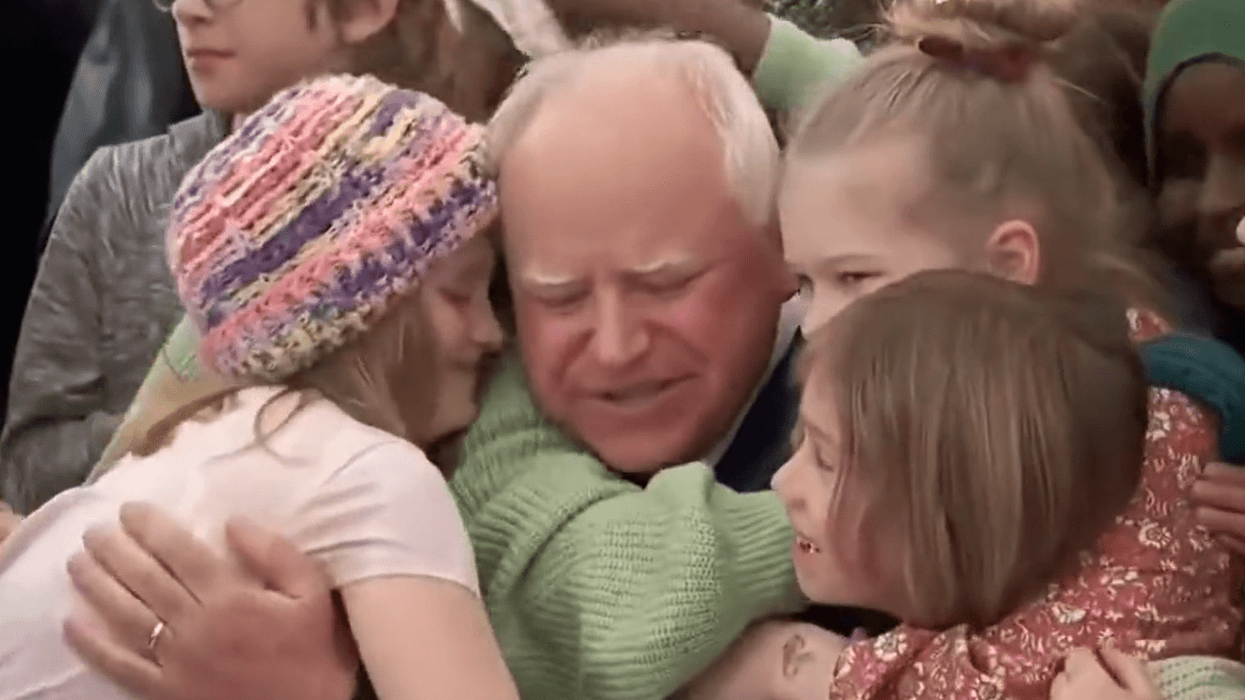
The Minnesota Miracle is a slew of major progressive policies that improved the lives of all types of people in the state; here’s how to take it national.
There’s a lot to choose from in the race to define Minnesota Gov. and vice presidential candidate Tim Walz, and it seems like the Walz well will never run dry. He’s an additional jolt of energy for Democrats who felt hopeless about U.S. President Joe Biden’s reelection campaign. He’s a former small-town high school football coach with the potential to be a champion for forgotten small-town Americans. He’s folksy with a ton of Midwestern dad energy, and seems to charm nearly everyone he meets.
For us, the bigger picture isn’t about who Walz is, but about how he will govern. Because while he was governor in 2018, it was organizers and advocates for working families who pulled off the “Minnesota Miracle,” also called the “Minnesota Model.” Apply that model to the country as a whole, and you get a road map for winning popular progressive policies under tough conditions—and that’s exactly what Democrats need to defeat former President Donald Trump and Sen. JD Vance (R-Ohio) and to keep winning beyond November.
On paper, the Minnesota Miracle is a slew of major progressive policies that improved the lives of all types of people in the state. It came together from decades of organizing by community and labor groups who in turn organized Walz, paving the way for these wins and forming an inside-outside coalition of governance to make sure that the legislature followed through on their promises. As leaders of the Working Families Party, a political party that does just that, we know how well it works.
By following the leadership of communities and organized labor, Democrats can rebuild the coalition needed to win power—and hold power.
The Miracle’s agenda included popular policies like paid family and medical leave, a child tax credit, making breakfast and lunch free for all students, allowing undocumented immigrants to access driver’s licenses, and making record investments in public schools..
That’s a strong platform to run a presidential ticket on. Not only are these policies immensely popular, they’re popular among the coalition that Vice President Kamala Harris and Walz need to win in November. Every policy in the Minnesota Model has been the subject of a major poll—if not dozens or hundreds. Time and time again, they poll well across race, place, and class.
Much of our work focuses on electing leaders who fight for these popular policies, and there’s a growing contingent. But the majority of Democrats tend to balk at these issues, especially when trying to placate powerful corporate interests. But Walz could help break that trend. Many Democratic leaders balk at bold policies under the best conditions, but Walz and the organizers who won the Miracle did it despite the odds, turning a tight Democratic majority into concrete policy wins. Instead of going small, they seized the moment. As Tim Walz himself said, “You don’t win elections to bank politics capital. You win elections to burn political capital and improve lives.”
Imagine that approach on the federal level. Democrats can go big, opening the door to bold policies that meet the needs of this moment. By running on a proven popular agenda like the Minnesota Miracle, Democrats can win by big margins. And, perhaps most importantly, by following the leadership of communities and organized labor, Democrats can rebuild the coalition needed to win power—and hold power.
There are big lessons to be learned here, if we choose to. The Minnesota coalition did it six years ago, and we can do it again, on the federal level. But only if we organize like our future depends on it to beat Trump and flip the house.
We’re far from starting from scratch. The Working Families Party, Center for Popular Democracy Action, People’s Action, and countless other allied groups have spent decades paving the way for Democrats to run on these issues, just like organizers in Minnesota did. And while electoral wins are just the beginning of the fight, real change happens when our communities have governing power.
If we can build a multiracial working-class coalition to defeat Trump and his MAGA movement at every level of government, that same coalition can fight for and win more together than we ever have.
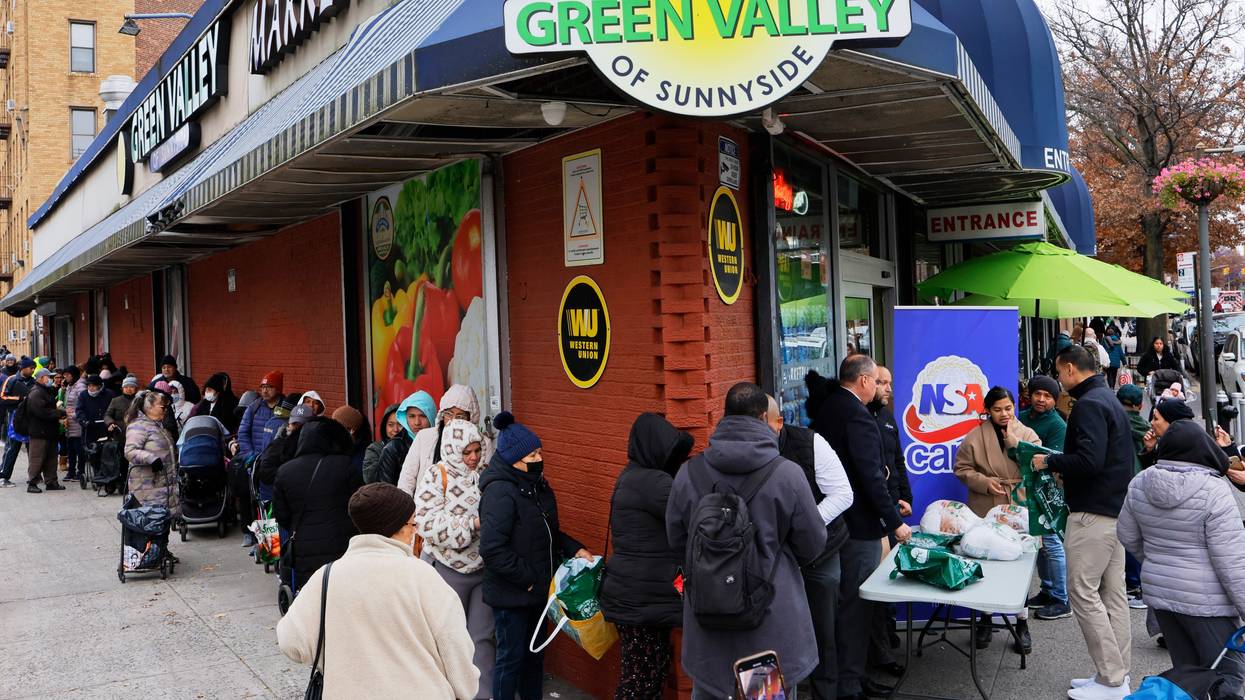
"Effective federal public policies over the previous few years were spectacularly successful in stemming U.S. hunger, but as many of those policies have been reversed, hunger has again soared," said one expert.
Highlighting the end of a yearslong trend of declining hunger in the United States due largely to federal policies like the expanded Child Tax Credit and universal school meals, a report published Wednesday details how the expiration of these programs has fueled a resurgence in food insecurity.
Hunger Free America's (HFA) 2023 National Hunger Survey Report found that "the number of Americans without enough food over a seven-day period was an average of 40% higher in September and October of 2023 than in September and October of 2021."
"Over that time period, the number of people without enough food increased from 19.7 million to 27.8 million nationwide," HFA noted, attributing the rise in hunger to the expiration of the expanded Child Tax Credit and universal school meals.
"Many federal benefit increases have either gone away entirely, or are being ramped down, even as prices for food, rent, healthcare, and fuel continue to soar," the advocacy group added.
Among the report's other findings:
"This report should be a jarring wake-up call for our federal, state, and local leaders," HFA CEO Joel Berg said in a statement.
The new HFA report follows federal data released in November showing the U.S. child poverty rate more than doubled in 2022 compared to the previous year, thanks in large part to the expiration of the expanded Child Tax Credit. Under the policy—part of the American Rescue Plan signed into law by President Joe Biden in March 2021—eligible families received up to $300 per child each month.
However, the program expired at the end of 2021 as congressional Republicans and right-wing Democratic Sen. Joe Manchin of West Virginia opposed its extension. Manchin infamously argued that parents would use the money to buy drugs instead of food for their children.
Meanwhile, congressional Republicans last year blocked the extension of a pandemic-era policy under which public schools offered free breakfast and lunch to tens of millions of children.
"Effective federal public policies over the previous few years were spectacularly successful in stemming U.S. hunger, but as many of those policies have been reversed, hunger has again soared," Berg said on Wednesday. "At exactly the moment when so many Americans are in desperate need of relief, many of the federally funded benefits increases, such as the Child Tax Credit and universal school meals, have expired, due mostly to opposition from conservatives in Congress."
"Just as no one should be surprised if drought increases when water is taken away, no one should be shocked that when the government takes away food, as well as money to buy food, hunger rises," Berg added. "Our political leaders must act to raise wages and provide a strong safety net, so we can finally end U.S. hunger and ensure that all Americans have access to adequate, healthy food."
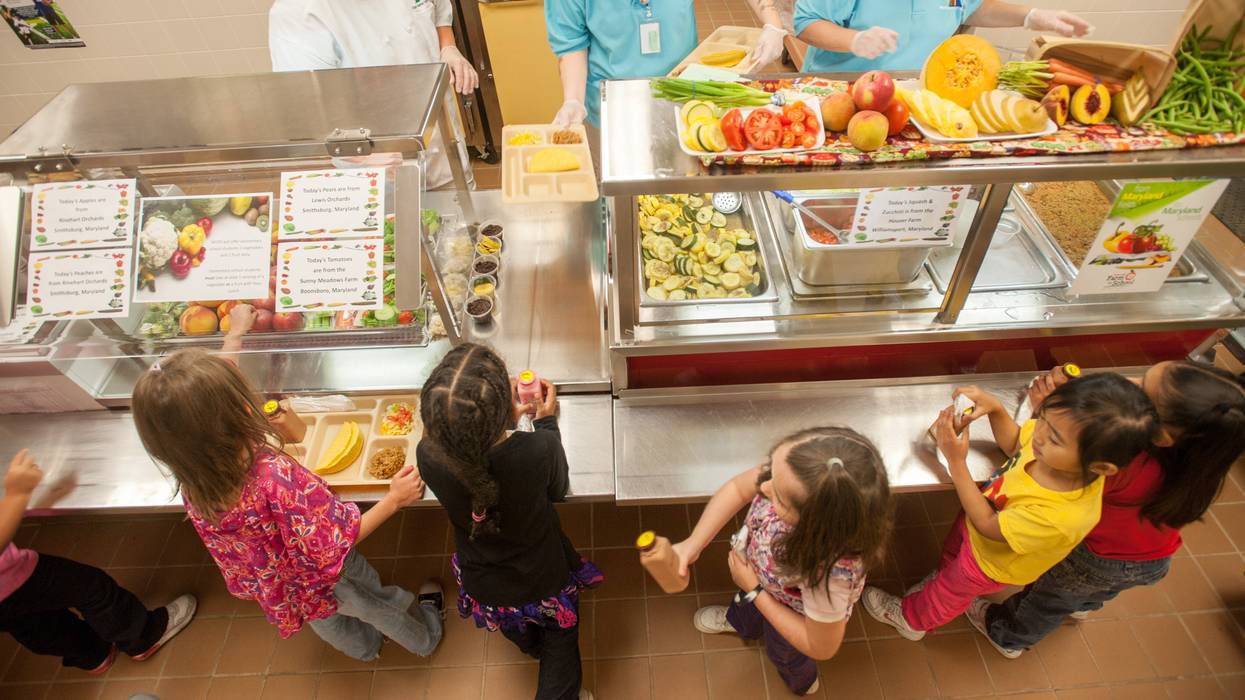
U.S. Sen. John Fetterman said the aim of the bill is to "stop humiliating kids and penalizing hunger."
As children across the United States have started a new academic year over the past month, many families have had to contend with federal lawmakers' refusal to guarantee universal free meals and the resulting "lunch shaming"—which three U.S. Senate Democrats hope to partially combat with new legislation to cancel student lunch debt nationwide.
"'School lunch debt' is a term so absurd that it shouldn't even exist," Sen. John Fetterman (D-Pa.) declared in a statement Monday. "That's why I'm proud to introduce this bill to cancel the nation's student meal debt and stop humiliating kids and penalizing hunger."
"It's time to come together and stop playing political games with Americans' access to food," he added. "September is Hunger Action Month and I'm proud to be introducing this bill to help working families now, while we work to move our other priorities to combat food insecurity in our nation."
Fetterman—who chairs the Senate Committee on Agriculture, Nutrition, and Forestry's Subcommittee on Food and Nutrition, Specialty Crops, Organics, and Research—is leading the fight for the School Lunch Debt Cancellation Act with Sens. Sheldon Whitehouse (D-R.I.) and Peter Welch (D-Vt.).
"No child in Rhode Island—or anywhere in America—should be penalized for not being able to afford school lunch. It's that simple," asserted Whitehouse. "Our legislation will eliminate lunch debt in schools, supporting every child's access to a healthy meal and positioning them for long-term success."
Welch agreed, saying: "Our students shouldn't have to worry about how they're paying for lunch—full stop. I'm proud to partner with my colleagues Sen. Fetterman and Whitehouse on this commonsense bill, and urge my colleagues to stand with us."
Congress initially responded to the Covid-19 pandemic by enabling public schools to provide free breakfast and lunch to all 50 million children nationwide, but Republicans blocked the continuation that policy last year. Instead, lawmakers passed the Keep Kids Fed Act, a bipartisan compromise that increased federal reimbursement rates for programs serving low-income students. However, as Common Dreams reported in January, only around a quarter of districts that responded to a survey from the School Nutrition Association said those levels are sufficient, and 99.2% had concerns about raised rates expiring.
Further burdening American families trying to feed children amid food companies' price gouging, congressional Republicans and right-wing Sen. Joe Manchin (D-W.Va.) also killed the pandemic-era expansion of the child tax credit—a move that contributed to the U.S. child poverty rate more than doubling in 2022 compared with the previous year, according to data released this month.
"Prior to the pandemic, some schools had resorted to tactics that embarrassed kids, such as stamping their hands to remind parents of unpaid bills and substituting cold cheese sandwiches for hot meals," Civil Eats reported Monday. "Sometimes meals were thrown out in front of the children. And while experts say that fewer districts have resumed these practices—often dubbed 'lunch shaming'—they haven't gone away entirely either."
Crystal FitzSimons, director of school and out-of-school time programs at the Research and Action Center (FRAC), told the outlet, "Schools, families, and states really did not want to go back to having the complicated school nutrition operations where some kids have access to free meals and other kids do not, and they have to struggle with unpaid debt."
The families of almost half a million food insecure children in Pennsylvania collectively owe nearly $80 million in public school lunch debt, according to Fetterman's office. Nationally, more than 30 million kids can't afford their school meals and the total debt is $262 million annually.
California, Colorado, Maine, Massachusetts, Minnesota, New Mexico, and Vermont have all guaranteed universal free school meals, and Michigan and Nevada have programs in place for the 2023-24 school year. While lawmakers in other states are working to pass similar bills, advocates have called for federal legislation to ensure all schoolchildren are fed.
In addition to the new debt cancellation bill, Fetterman is among the co-sponsors of the Universal School Meals Program Act, reintroduced in May by Sen. Bernie Sanders (I-Vt.) and Rep. Ilhan Omar (D-Minn.).
"It is downright cruel that we are letting our children in America go hungry," Fetterman said at the time. "No child in America should be worried about if they are going to be able to get breakfast, lunch, or dinner. I am proud and honored to co-sponsor this bill that will finally make sure that our children are fed."
This post has been updated with the latest details about programs in Michigan and Nevada.
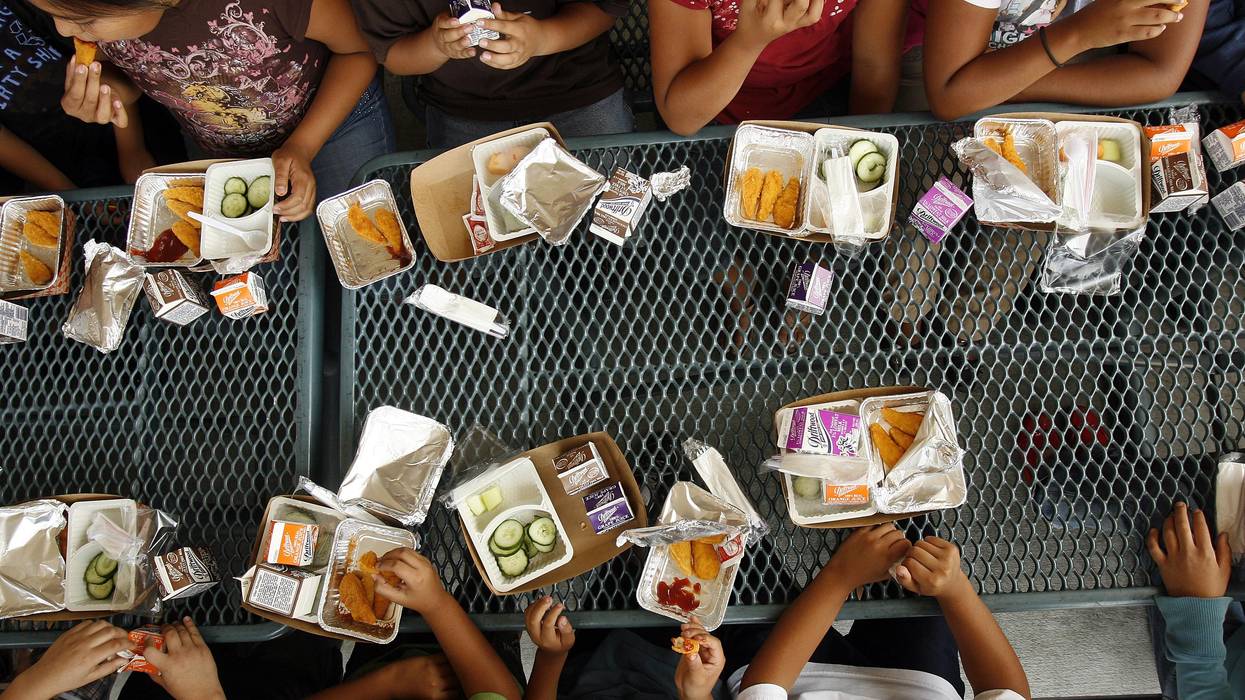
"In the richest country in the history of the world, every child that does not have enough to eat is a policy failure and a moral outrage," said Rep. Jim McGovern, a co-sponsor of the Universal School Meals Program Act.
Demanding an end to the "international embarrassment" of childhood hunger in the world's wealthiest country, U.S. Sen. Bernie Sanders on Thursday was among the lawmakers who introduced legislation to ensure all children in the United States have sufficient food at school without means-testing and stigmatizing those who rely on free meals.
Sanders (I-Vt.) was joined by Reps. Ilhan Omar (D-Minn.), Jim McGovern (D-Mass.), and Gwen Moore (D-Wis.) in the House and Sens. Kirsten Gillibrand (D-N.Y.) and Martin Heinrich (D-N.M.) in the Senate in unveiling the Universal School Meals Program Act of 2023, eight months after the expiration of a pandemic-era program which offered meals at school to all students regardless of income.
The legislation would provide all students from preschool through high school with free breakfast, lunch, dinner, and a snack, as well as incentivize schools to obtain food from local sources.
That pandemic-era program was credited with reducing hunger among children by more than 2% between 2020 and 2021, but was allowed to expire due to objections from Republican lawmakers, throwing nearly 30 million children back into a state of food insecurity.
"We cannot continue to prop up a grossly unjust economy in which the very rich get richer while millions of working families struggle to afford the most basic necessities of life, from paying for rent and medications to feeding their children," said Sanders. "Kids cannot learn if they are hungry and every child deserves a quality education free of hunger. What we've seen during this pandemic is that a universal approach to school meals works. We cannot go backwards. It is time for Congress to pass this legislation to ensure no student goes hungry again."
As inflation was rising last fall, due to means-testing, the expiration of the universal school meals program left students unable to access free food at school even if their household income was just above 130% of the poverty line—or $34,450 for a family of four.
"No child in America should be hungry—period, end of story," said McGovern on Thursday. "In the richest country in the history of the world, every child that does not have enough to eat is a policy failure and a moral outrage. We have a responsibility not just to teach kids reading and math, but to ensure they have healthy, nutritious food at school... Our kids deserve nothing less."
The legislation introduced would:
The bill also takes aim at the school meal debt crisis, in which families across the country "owe" a collective $19 million in school meal fees and which has led some school districts to use "lunch-shaming" tactics to collect debts. In 2019, public school students in Warwick, Rhode Island were told they would no longer receive hot meals and would instead be given sunflower-butter-and-jelly sandwiches if their families owed money, until their debts were paid off.
The legislation would put "an end to school lunch-shaming, including heinous scare tactics aimed at school meal debt collection," said Sanders' office, and would reimburse schools for all meal debt to end "the harassment of parents and students."
Omar noted that since she introduced the pandemic-era Maintaining Essential Access to Lunch for Students (MEALS) Act in 2020, five states have passed laws to provide universal school meals.
"No child should be forced to learn on an empty stomach," said the congresswoman. "Universal school meals is not just commonsense policy; it is also extremely popular. Nearly 75% of Americans support permanent universal school meals—including majority of Democrats, Republicans, and Independents. It's time to listen to the demands of our constituents and at long last make school meals free and universal for all kids."
The bill is co-sponsored by 83 other lawmakers and has been endorsed by nearly 100 food, health, and education policy organizations.
"The Universal School Meals Program Act is a win for children, a win for parents, and a win for communities," said Crystal FitzSimons of the Food Research & Action Center. "It's not only doable, it's the right thing to do."

"Mandating birth is state responsibility. Helping feed those kids is not," is how Democratic California Gov. Gavin Newsom summarized the Republican position.
Republican Gov. Doug Burgum of North Dakota on Monday signed one of the nation's most draconian abortion bans into law, just weeks after the state's GOP lawmakers shot down a proposal to provide free school lunches to low-income students.
The new forced pregnancy law, which takes immediate effect, prohibits abortion care in nearly all cases. Abortion is allowed in cases of rape or incest, but only during the first six weeks of pregnancy—before many people realize they are pregnant. Abortion is also allowed without gestational limits if terminating a pregnancy could prevent the pregnant person's "death or a serious health risk."
North Dakota is one of several states where dormant abortion bans took immediate effect last June when the U.S. Supreme Court's reactionary majority overturned Roe v. Wade, the 1973 decision that had legalized the healthcare procedure nationwide.
However, "North Dakota's trigger ban was blocked last year by a district judge, after its sole abortion provider, the Red River Women's Clinic, filed a lawsuit against the law," The New York Times reported Monday. "The state Supreme Court upheld the lower court's ruling last month and said the state constitution protected abortion rights in some situations."
Burgum, a former vice president at Microsoft, said in a statement that North Dakota's new forced pregnancy law "clarifies and refines" the existing abortion ban that has been blocked by courts.
As the Times noted:
Under the earlier ban, providers who performed an abortion to save the life of a mother could face felony prosecution. The provider would need to offer an "affirmative defense" proving that the abortion was medically necessary within the confines of the state law.
Under the new version of the law, the exceptions do not require an affirmative defense from providers. But providers could still face criminal charges if they violate the exceptions detailed in the law.
Elisabeth Smith, director of state policy and advocacy at the Center for Reproductive Rights, accused North Dakota lawmakers of "attempting to bypass the state constitution and court system with this total ban."
"They made the exceptions a little bit less narrow but essentially tried to repackage the trigger ban," she told the Times.
North Dakota has been completely bereft of abortion clinics since August, when the Fargo-based Red River Women's Clinic moved its operations a short distance across the border to Moorhead, Minnesota. But as the Times reported, Center for Reproductive Rights attorneys representing the clinic "say it is important to ensure that the ban does not take effect, so that patients facing medical emergencies can receive abortions in hospitals and from their doctors."
As the lawsuit opposing North Dakota's currently enjoined abortion ban proceeds, fresh legal challenges to the state's new forced pregnancy law are expected.
"I don't think women in North Dakota are going to accept this, and there will be action in the future to get our rights back," state Rep. Liz Conmy (D-11) told The Associated Press. "Our Legislature is overwhelmingly pro-pregnancy, but I think women in the state would like to make their own decisions."
Burgum, who also signed a bill prohibiting gender-affirming healthcare for trans youth last week, argued that the new abortion ban "reaffirms North Dakota as a pro-life state."
Democratic California Gov. Gavin Newsom, however, contrasted North Dakota Republicans' willingness to enact a forced pregnancy law with their refusal last month to expand access to free school lunches.
Condemning GOP lawmakers and officials, Newsom summarized their position as follows: "Mandating birth is state responsibility. Helping feed those kids is not."
Just 10 days after North Dakota Republicans rejected a bill that would have broadened eligibility for free school lunches, they voted in early April to increase their own daily meal reimbursements from $35 to $45, adding insult to injury.
"I'm beyond enraged at these cruel backward MAGA extremist politicians," tweeted human rights lawyer Qasim Rashid. "A special place in hell."
In sharp contrast to their counterparts in Bismarck, North Dakota, lawmakers in St. Paul recently made Minnesota the fourth state to guarantee universal free school meals.
Meanwhile, a first-of-its-kind lawsuit filed last month by five Texas women whose lives were endangered by that state's near-total abortion ban underscores the spurious nature of so-called "abortion exceptions," as Common Dreams reported.
With its new law, North Dakota became at least the 14th state with an active ban on nearly all abortions. Additional states have slightly less restrictive prohibitions in place.
The U.S. Supreme Court's 6-3 opinion last summer in Dobbs v. Jackson Women's Health Organization ended the constitutional right to abortion and turned regulation of the procedure over to individual states, leaving tens of millions of people without access to lifesaving reproductive healthcare.
The ruling's elimination of federal protections has enabled right-wing lawmakers to prohibit or restrict abortion in more than half of the states, unleashing a life-threatening crisis that human rights advocates consider a violation of U.S. obligations under international law.

"Hiving off a tiny part of the public school bundle and charging a means-tested fee for it is extremely stupid," argues Matt Bruenig.
Minnesota last week became just the fourth U.S. state to guarantee universal free school meals, triggering a fresh wave of demands and arguments for a similar federal policy to feed kids.
"Universal school meals is now law in Minnesota!" Democratic U.S. Rep. Ilhan Omar, who represents the state, tweeted Monday. "Now, we need to pass our Universal School Meals Program Act to guarantee free school meals to every child across the country."
Omar's proposal, spearheaded in the upper chamber by Sen. Bernie Sanders (I-Vt.), "would permanently provide free breakfast, lunch, dinner, and a snack to all school children regardless of income, eliminate school meal debt, and strengthen local economies by incentivizing local food procurement," the lawmakers' offices explained in 2021.
Congressional Republicans last year blocked the continuation of a Covid-19 policy enabling public schools to provide free breakfast and lunch to all 50 million children, and now, many families face rising debt over childrens' cafeteria charges.
"The school bus service doesn't charge fares. Neither should the school lunch service."
Matt Bruenig, founder of the People's Policy Project, highlighted Monday that while children who attend public schools generally have not only free education but also free access to bathrooms, textbooks, computer equipment, playgrounds, gyms, and sports gear, "around the middle of each school day, the free schooling service is briefly suspended for lunch."
"How much each kid is charged is based on their family income except that, if a kid lives in a school or school district where 40% or more of the kids are eligible for free lunch, then they are also eligible for free lunch even if their family income would otherwise be too high," he detailed. "Before Covid, in 2019, 68.1% of the kids were charged $0, 5.8% were charged $0.40, and 26.1% were charged the full $4.33... The total cost of the 4.9 billion meals is around $21 billion per year. In 2019, user fees covered $5.6 billion of this cost."
Bruenig—whose own child has access to free school meals because of the community eligibility program—continued:
The approximately $5.6 billion of school lunch fees collected in 2019 were equal to 0.7% of the total cost of K-12 schooling. In order to collect these fees, each school district has to set up a school lunch payments system, often by contracting with third-party providers like Global Payments. They also have to set up a system for dealing with kids who are not enrolled in the free lunch program but who show up to school with no money in their school lunch account or in their pockets. In this scenario, schools will either have to make the kid go without lunch, give them a free lunch for the day (but not too many times), or give them a lunch while assigning their lunch account a debt.
Eligibility for the $0 and $0.40 lunches is based on income, but this does not mean that everyone with an eligible income successfully signs up for the program. As with all means-tested programs, the application of the means test not only excludes people with ineligible incomes, but also people with eligible incomes who fail to successfully navigate the red tape of the welfare bureaucracy.
The think tank leader tore into arguments against universal free meals for kids, declaring that "hiving off a tiny part of the public school bundle and charging a means-tested fee for it is extremely stupid."
Bruenig pointed out that socializing the cost of child benefits like school meals helps "equalize the conditions of similarly-situated families with different numbers of children" and "smooths incomes across the lifecycle by ensuring that, when people have kids, their household financial situation remains mostly the same."
"Indeed, this is actually the case for the welfare state as whole, not just child benefits," the expert emphasized, explaining that like older adults and those with disabilities, children cannot and should not work, which "makes it impossible to receive personal labor income, meaning that some other non-labor income system is required."
Conservative opponents of free school lunches often claim that "fees serve an important pedagogical function in society to get people to understand personal responsibility" and because they "are means-tested, they serve an important income-redistributive function in society," he noted. "Both arguments are hard to take seriously."
Pushing back against the first claim, Bruenig stressed that right-wingers don't apply it to other aspects of free schooling such as bus services. He also wrote that the means-testing claim "is both untrue and at odds with their general attitudes on, not just redistribution, but on how child benefit programs specifically should be structured."
A tax for everyone with a certain income intended to make up the $5.6 billion in school meal fees, he argued, "would have a larger base and thus represent a smaller share of the income of each person taxed and such a tax would smooth incomes over time," while also eliminating means-testing—which would allow schools to feed all kids and ditch costly payment systems.
As Nora De La Cour reported Sunday for Jacobin: "The fight for school meals traces its roots all the way back to maternalist Progressive Era efforts to shield children and workers from the ravages of unregulated capitalism. In her book The Labor of Lunch: Why We Need Real Food and Real Jobs in American Public Schools, Jennifer Gaddis describes how early school lunch crusaders envisioned meal programs that would be integral to schools' educational missions, immersing students in hands-on learning about nutrition, gardening, food preparation, and home economics. Staffed by duly compensated professionals, these programs would collectivize and elevate care work, making it possible for mothers of all economic classes to efficiently nourish their young."
Now, families who experienced the positive impact of the pandemic-era program want more from the federal government.
"When schools adopt universal meals through community eligibility or another program, we see improvements in students' academic performance, behavior, attendance, and psychosocial functioning," wrote De La Cour, whose reporting also includes parent and cafeteria worker perspectives. "Above all, the implementation of universal meals causes meal participation to shoot up, demonstrating that the need far exceeds the number of kids who are able to get certified."
Crystal FitzSimons, director of school-based programs at the Food Research and Action Center (FRAC), told Jacobin, "There is a feeling that we can't go back."
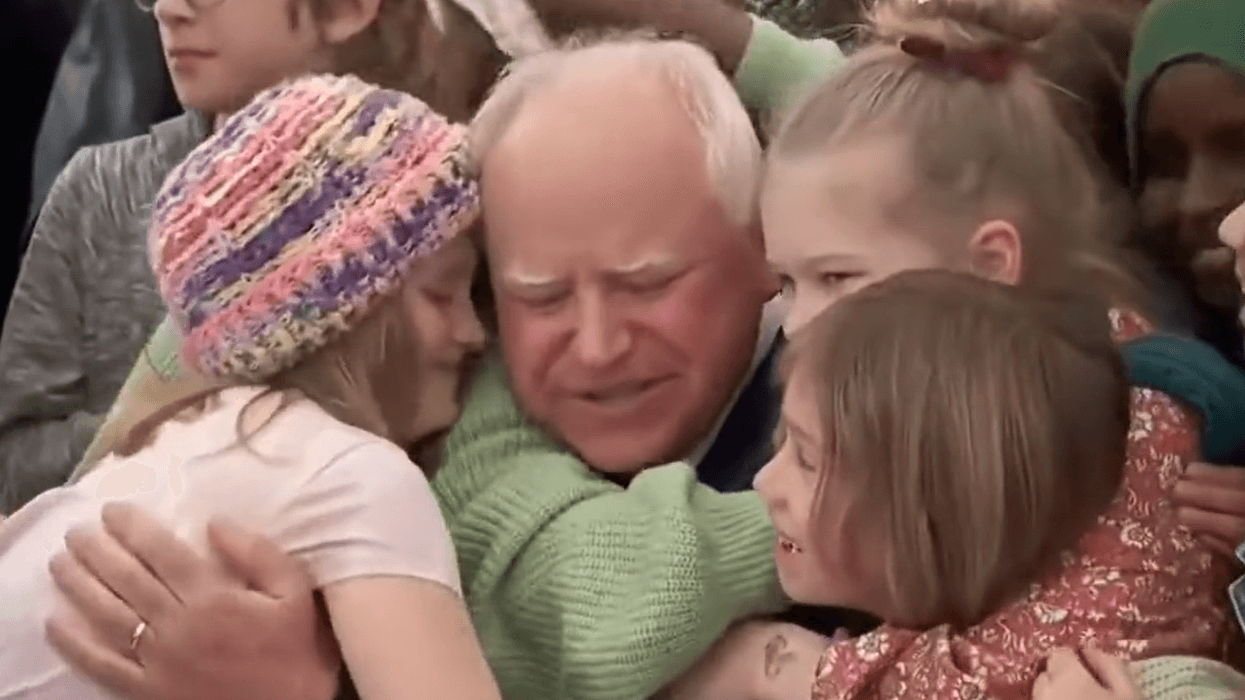
"Let this serve as a reminder that poverty is a policy choice," said one advocate. "In the richest country in the world, it is absolutely inexcusable that millions of our children go to school hungry because they are living in poverty."
Surrounded by students, teachers, and advocates, Democratic Minnesota Gov. Tim Walz on Friday afternoon signed into law a bill to provide breakfast and lunch at no cost to all of the state's roughly 820,000 K-12 pupils regardless of their household income.
The move to make Minnesota the fourth U.S. state to guarantee universal free school meals—joining California, Maine, and Colorado—elicited praise from progressives.
"Beautiful," tweeted Stephanie Kelton, a professor of economics and public policy at Stony Brook University.
"No child should go hungry for any reason, period."
UC-Berkeley professor and former U.S. labor secretary Robert Reich wrote on social media: "Let this serve as a reminder that poverty is a policy choice. In the richest country in the world, it is absolutely inexcusable that millions of our children go to school hungry because they are living in poverty."
An estimated 1 in 6 children in Minnesota don't get enough to eat on a regular basis. But 1 in 4 food-insecure kids live in households that don't qualify for the federal free and reduced meal program, leading to "mounting school lunch debts in the tens of thousands of dollars," Minnesota Public Radio reported.
Tens of thousands of children are set to benefit from Minnesota's new law, which could be operational as early as summer school in July. Some of them were there to thank Walz at the signing ceremony, where the sense of elation was palpable.
"As a former teacher, I know that providing free breakfast and lunch for our students is one of the best investments we can make to lower costs, support Minnesota's working families, and care for our young learners and the future of our state," Walz said. "This bill puts us one step closer to making Minnesota the best state for kids to grow up, and I am grateful to all of the legislators and advocates for making it happen."
The Minnesota House—led by the Democratic-Farmer-Labor (DFL) Party, the state's Democratic affiliate—first passed the bill in February in a 70-58 party-line vote. The state Senate—where the DFL holds just a single-seat advantage—approved it on Tuesday by a 38-26 margin. The state House rubber-stamped an amended version of the bill on Thursday.
In a now-viral clip from the state Senate's debate over the bill earlier this week. Sen. Steve Drazkowski (R-20) questioned whether hunger is really a problem in Minnesota—even as the state's food banks reported a record surge in visits last year, months before federal lawmakers slashed pandemic-era Supplemental Nutrition Assistance Program (SNAP) benefits.
"I have yet to meet a person in Minnesota that is hungry," Drazkowski said before voting against the bill. "I have yet to meet a person in Minnesota that says they don't have access to enough food to eat."
During Friday's signing ceremony, Lt. Gov. Peggy Flanagan (DFL) said, "To our decision-makers who believe they have never met someone who is experiencing or has experienced hunger: Hi, my name is Peggy Flanagan, and I was 1 in 6 of those Minnesota children who experienced hunger."
"By providing free breakfast and lunch to all of our students, we are removing barriers and removing stigma from the lunch room," said Flanagan. "We are helping family pocketbooks, especially for those 1 in 4 who don't qualify for financial assistance with school meals. We are leading with our values that no child should go hungry for any reason, period."
"This is an investment in the well-being of our children, as well as an investment in their academic success," Flanagan added, calling the "generation-changing" bill "the most important thing" she's ever worked on in her life.
"By providing free breakfast and lunch to all of our students, we are removing barriers and removing stigma from the lunch room... This is an investment in the well-being of our children, as well as an investment in their academic success."
As Minnesota Reformer reported: "The majority of Minnesota schools receive federal funding from the National School Lunch Program, which reimburses schools for each meal served, though it doesn't cover the cost of the entire meal. Under the new law, schools are prohibited from charging students for the remaining cost, and the state will foot the rest of the bill—about $200 million annually."
MPR noted that "the legislation is similar to a program that was introduced during the pandemic to provide meals for all students, but was discontinued at the end of last year."
Last month, The Star Tribune editorial board opined that providing free breakfast and lunch to all of Minnesota's students, including affluent ones, is "excessive."
Pushing back against this argument for means-testing, Darcy Stueber—director of Nutrition Services for Mankato Area Public Schools and public policy chair of the Minnesota School Nutrition Association—asserted that meals should be guaranteed to all kids at no cost, just like other basic learning necessities.
"We don't charge for Chromebooks and desks and things like that," she told MPR. "It's a part of their day and they're there for so many hours. It just completes that whole learning experience for the child."
Minnesota Rep. Sydney Jordan (DFL-60A), the bill's lead author, made the same point to counter GOP lawmakers' complaints following the initial passage of the legislation.
"We give every kid in our school a desk," Jordan said last month. "There are lots of kids out there that can afford to buy a desk, but they get a desk because they go to school."
Walz, for his part, stressed Friday that his administration is "just getting started" when it comes to boosting education funding.
"The big stuff," said the governor, "is still coming."

"We give every kid in our school a desk. There are lots of kids out there that can afford to buy a desk, but they get a desk because they go to school," said the Democratic author of the bill, pushing back against GOP means-testing canards.
The Democratic-led Minnesota House of Representatives voted Thursday night in favor of legislation to provide free school meals for all students, a move meant to alleviate childhood hunger in a state where 1 in 6 children don't have enough to eat.
The bill, HF 5, provides universal school meals—lunch and breakfast—to all of Minnesota's 600,000 pupils at no cost. House lawmakers voted 70-58 along party lines in favor of the measure.
If approved by the state Senate—in which the Minnesota Democratic-Farmer-Labor Party (DFL), the state's Democratic affiliate, holds a single-seat advantage—and signed into law by DFL Gov. Tim Walz, a former high school teacher, the policy will cost the government around $387 million during fiscal year 2024-25, according to estimates.
"We're feeding the kids," tweeted Rep. Sydney Jordan (DFL-60A), the bill's lead author, after the House vote.
Rep. Mary Frances Clardy (DFL-53A), another author of the bill, said that "as a teacher of 27 years, I've seen the impact hunger has on our students and their ability to concentrate and learn in the classroom. We have the resources to step up and deliver the food security families need."
However, DFL leaders say the program will save Minnesota families between $800 and $1,000 on annual food costs.
According to a fact sheet in support of the bill, 1 in 6 Minnesota children report not having enough to eat; however, a quarter of food-insecure kids come from households that can't get government food support because their families earn too much to qualify.
"When school meals are provided at no cost to all students, these hungry kids no longer fall through the cracks," the publication said. "They consistently get nutritious food that sustains their energy and focus in the classroom."
Jordan said that "in a state with an agricultural tradition as rich as ours, it is particularly unacceptable that any child go hungry."
"We know hunger is something too many students bring with them to their classrooms," she added. "And we know the current status quo is letting Minnesota school children go hungry."
Republicans, meanwhile, slammed the bill as an example of "reckless spending."
"Paying for lunches for every student, kids that can afford it, families that can afford this, that doesn't make sense," said Rep. Peggy Bennett (R-23A), who offered an amendment to the bill that would expand current eligibility for free school meals, with income limits.
Jordan dismissed the Republicans' argument, saying "we give every kid in our school a desk. There are lots of kids out there that can afford to buy a desk, but they get a desk because they go to school."
Advocates of universal school meals across the country hailed the Minnesota House vote on the bill. U.S. Rep. Ilhan Omar (D-Minn.)—who helped negotiate legislation allowing schools to temporarily drop regulatory burdens such as income-based eligibility requirements in order to deliver free meals to as many students as possible — tweeted that she is "incredibly proud of our state for leading the way to ensure no child goes hungry and receives the nutrition they need to succeed."
Chef and television personality Andrew Zimmern said on Twitter that he is "so proud today to be a Minnesotan."
"Prioritizing meals for kids should be job one and we can figure out the compensatory issues tomorrow," he added. "No child should be hungry. Ever. This is a big step towards that."
According to the National Conference of State Legislatures, 20 states have considered or passed legislation to establish universal free school meals, with California, Colorado, Maine, and Vermont being the first ones to enact the policy.