

SUBSCRIBE TO OUR FREE NEWSLETTER
Daily news & progressive opinion—funded by the people, not the corporations—delivered straight to your inbox.
5
#000000
#FFFFFF
To donate by check, phone, or other method, see our More Ways to Give page.
Daily news & progressive opinion—funded by the people, not the corporations—delivered straight to your inbox.

'The Israeli fans instigated the violence after arriving in the city and attacking Palestinian supporters before the match'
Thursday night, Israeli soccer fans clashed with Amsterdam residents before and after a Europa League soccer match between their team Maccabi Tel Aviv and Ajax in Amsterdam.
Clashes occurred outside the Johan Cruyff Arena and across the city on Thursday night. Police on Friday said five people had been taken to hospital, and 62 arrests had been made.
The violence reportedly started when the far-right Israeli soccer hooligans began chanting racist and violent anti-Arab slogans, attacked Arab and Muslim residents, and vandalized houses and businesses with Palestinian flags.
Al Jazeera reported:
In one video, Israeli supporters were heard singing: “Let the IDF win, and f*** the Arabs!” referring to the Israeli army’s offensive on Gaza. Another video captured a fan screaming: “F*** you terrorists, Sinwar die, everybody die,” in reference to the Hamas leader who was killed last month.
The Israeli fans instigated the violence after arriving in the city and attacking Palestinian supporters before the match, an Amsterdam city council member said.
“They began attacking houses of people in Amsterdam with Palestinian flags, so that’s actually where the violence started,” Councilman Jazie Veldhuyzen told Al Jazeera on Friday.
“As a reaction, Amsterdammers mobilised themselves and countered the attacks that started on Wednesday by the Maccabi hooligans.”
Yet the corporate media - both in the US and abroad - portrayed the events as one-sided "anti-semitic" attacks on helpless soccer fans:
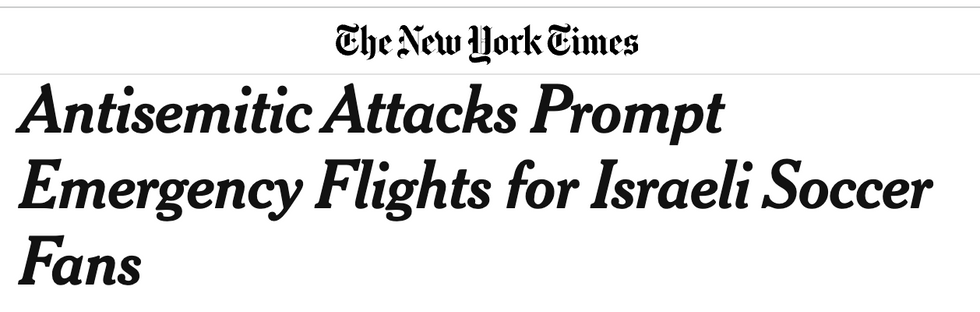
US President Joe Biden, his Secretary of State Tony Blinken, and Senate Majority Leader Chuck Schumer were quick to echo Israeli Prime Minister Benjamin Netanyahu's claim that the events in Amsterdam were unprovoked anti-semitic attacks reminiscent of pogroms or the Kristallnacht.
However many social media posts reported the context of the violence that was missing from corporate media reporting:
@martydoesnotplay On request: a recap of what has been happening in Amsterdam the past few days in which Zionist hooliguns from Tel Aviv attacked people on our streets and sang songs about burning Gaza down. But where only the response from clashes with them were caught up by the media. Placed within a narrative by the devil himself that this was anti-semitism 🍉

The Biden administration faced fresh pressure Thursday to protect Haitians who are in the United States from being deported to a country that has endured increasing economic and political turmoil since a presidential assassination and devastating extreme weather last year.
"Given the deteriorating situation in Haiti, this administration should prioritize humanitarian relief."
In a letter to Homeland Security Secretary Alejandro Mayorkas, Reps. Cori Bush (D-Mo.), Ayanna Pressley (D-Mass.), and Mondaire Jones (D-N.Y.), along with 14 other House Democrats, urged a Temporary Protected Status (TPS) extension for Haitians not affected by Ramos v. Mayorkas, and redesignation for people who arrived in the United States after July 29, 2021.
"Haiti is currently experiencing one of its worst outbreaks of violence in decades," the letter states. "The rule of law has effectively collapsed. Powerful gangs rule with impunity, and in some cases with government complicity."
"For months, a gang blockade at Haiti's principal fuel terminal crippled day-to-day operations, severely restricting the movement of medicine, food, and supplies," the letter continues. "The situation paralyzed an already crippled economy in the country, where the inflation rate reached a staggering 30%."
The letter adds that "this has all occurred amid a resurgence of cholera in the country, particularly in Haiti's National Penitentiary in Port-au-Prince. Since October, the disease has killed at least 100 people and sickened 8,000 more, though experts say the numbers are likely higher."
"Given the deteriorating situation in Haiti, this administration should prioritize humanitarian relief, especially given the positive impact that extending and redesignating Haiti for TPS will have for our nation," the lawmakers argued, also highlighting how Haitians positively contribute to the American workforce.
House Democrats' letter calling on the Biden administration to refrain from sending Haitians to "face an unprecedented crisis in their home country" was also sent to Secretary of State Antony Blinken and echoes recent demands from civil society.
More than 400 groups--including the Florida Immigrant Coalition (FLIC)--sent Biden, Blinken, and Mayorkas a letter last month, stressing the need for urgent action given that "the TPS designation for Haiti will expire on February 3, 2023."
FLIC renewed its call for action in a statement Thursday, warning that "Haitians are in mortal danger" and asserting that extending and redesignating TRS "is a matter of life and death!"
Last month, a Florida-bound vessel overloaded with almost 200 Haitians--including 46 children--struck a sandbar. After the rescue effort, the U.S. Coast Guard returned nearly all of them "to a Haiti plagued by a rapidly spreading cholera," noted FLIC's co-executive director, Tessa Petit.
Petit, who immigrated to Florida from Haiti, stressed that "you do not have to be Haitian to be outraged by the blatant human rights violations currently perpetrated by both the United States and the Dominican Republic on Haitian nationals."
Along with FLIC's TPS demands, the group is calling on the Biden administration to "provide all possible support required and needed to stop the abuse of Haitians in the Dominican Republic."
In the Dominican Republic, which shares an island with Haiti, "the violent attacks against Haitians have intensified, to include hateful bodily harm using whips and wooden sticks," Petit pointed out. "All this added to the mass deportation of Haitians regardless of their immigration status, their safety, and in a discriminatory manner, using the color of their skin as a crime."
Like the lawmakers, in addition to the moral appeal, FLIC director of politics and policy David Metellus--the son of Haitian immigrants--made an economic case for federal action.
"Haitians living in the United States currently eligible for TPS contribute $2.6 billion annually to our economy, and 81% of them are part of the American labor force, providing essential services at a time of worker shortages and high inflation," said Metellus. "They have lived here for 15 years, on average, and have built families of almost 200,000 American citizens."
"Continuing to provide TPS protections for Haitian nationals would ensure families remain together and continue building meaningful lives in our society," he added. "Moreover, redesignating Haiti for TPS would allow more Haitians in the U.S. to enroll in the program, and contribute their skills and talents to the American workforce and communities around the country."
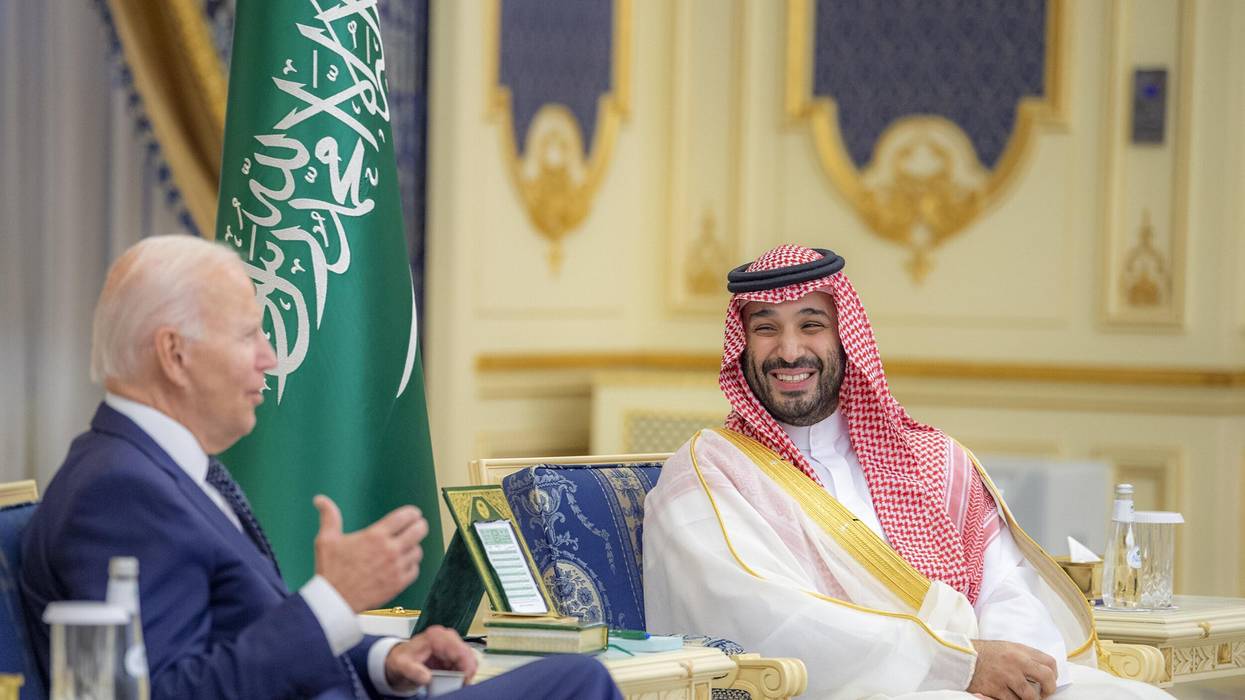
U.S. progressives in recent days have renewed efforts to push President Joe Biden and Congress to hold Saudi Arabia accountable for atrocities including war crimes in Yemen and the murder of journalist Jamal Khashoggi.
"Our foreign policy should not be based on a dependence on oil or the geopolitical whims of foreign despots."
Last week, the Biden administration angered human rights defenders by seeking sovereign immunity status for Saudi Crown Prince and Prime Minister Mohammed bin Salman--commonly called by his initials, MBS--in a lawsuit over the 2018 kidnapping and brutal murder of Khashoggi, a Washington Post columnist with permanent U.S. residency.
Activists were already infuriated with Biden for "letting MBS get away with the murder," as one writer put it, as well as for his summer summit and infamous fist-bump with the crown prince, and for continuing to support the Saudi-led war in Yemen after an initial temporary freeze on arms sales.
"President Biden vowed to hold accountable Saudi ruler MBS for Khashoggi's murder by making him a 'pariah,' and Congress should help Biden keep his word by passing a War Powers Resolution that cuts off U.S. support for the Saudi war in Yemen," David Segal, executive director of the online-intensive activist group Demand Progress, said in a statement Tuesday.
"Saudi Arabia is controlled by an outlaw regime, as demonstrated by the murder of a U.S.-based journalist and by deliberately holding down oil production to support Russia's illegal war in Ukraine," Segal added. "The United States should no longer prop up that regime's unconscionable war in Yemen that killed nearly 400,000 people, including untold children."
Additionally, a Saudi-led blockade has exacerbated starvation and disease in Yemen. Of Yemen's approximately 30 million people, more than 23 million required some form of assistance in 2022, according to United Nations humanitarian officials.
In June, 48 bipartisan U.S. House lawmakers introduced a War Powers Resolution to end the nation's unauthorized involvement in the Saudi-led war. The following month, Sens. Bernie Sanders (I-Vt.), Patrick Leahy (D-Vt.), and Elizabeth Warren (D-Mass.) proposed a similar measure in the upper chamber.
Interviewed for an Intercept article published on Monday, U.S. Rep. Ilhan Omar (D-Minn.)--one of the 48 co-sponsors of the House resolution--asserted that "our foreign policy should not be based on a dependence on oil or the geopolitical whims of foreign despots. It should be based on the rule of law and human rights."
Omar and Rep. Joaquin Castro (D-Texas) led a letter signed last week by 13 House Democrats to Secretary of State Antony Blinken "to express our strong support for the United States to use its influence at the United Nations Human Rights Council to work towards the establishment of an independent, international investigative mechanism on Yemen at the earliest opportunity."
"This new mechanism should have the authority to collect and preserve evidence of violations for future consideration, by competent judicial authorities, of possible crimes committed by all parties to the conflict," the lawmakers' letter added. "Having an international mechanism would play a crucial role in ensuring accountability for the atrocities that have taken place for more than a decade in Yemen."
Omar contended that "true peace demands justice" and that "international institutions have a responsibility to account for any and all atrocities that took place in Yemen, and the United States has a responsibility to advocate for them."
"Truly centering human rights and a rules-based order in our foreign policy," she added, "requires full accountability when those rights are violated."
Joey Shea, a researcher on Saudi Arabia and the United Arab Emirates at Human Rights Watch, noted Monday that Biden's July meeting with bin Salman "was followed by an uptick in serious violations of human rights by Saudi authorities."
"In August, a Saudi appeals court dramatically increased the prison sentence of Saudi doctoral student Salma al-Shehab from six years to 34 years, based solely on her Twitter activity," she continued. "Other people--including at least one U.S. citizen--critical of the Saudi government on social media have received extreme prison sentences from Saudi courts."
"Biden's campaign promise to make Saudi authorities 'pay the price' for Khashoggi's heinous murder has not been met," Shea added. "Absent real sanctions against the Saudi government for its transnational repression, MBS will read U.S. policy as a 'green light' to continue committing abuses at home and abroad while enjoying generous U.S. military, diplomatic, and political support."

U.S. Sen. Ron Wyden on Friday released a letter to Secretary of State Antony Blinken demanding reforms to the practice of allowing 25 federal intelligence and law enforcement agencies "unfettered access" to the passport application data of over 145 million Americans.
"The department has voluntarily taken on this role, and in doing so, prioritized the interests of other agencies over those of law-abiding Americans."
Yahoo News, which first revealed the letter Thursday, noted that the Oregon Democrat uncovered the State Department's practice during his ongoing probe into the outlet's reporting about Operation Whistle Pig, a leak investigation launched by officials at the U.S. Customs and Border Protection (CBP) National Targeting Center.
The letter explains that according to the public version of a report on the Department of Homeland Security Office of Inspector General (OIG) review of the incident, "a CBP officer in a unit that was supposed to be looking into forced labor abuses inappropriately accessed the passport application of a U.S. journalist for purposes of 'vetting'" the reporter.
Wyden stressed to Blinken that "in the normal course of criminal investigations and intelligence collection, federal officers must rely on legal processes," such as subpoenas or court orders, to obtain such personal information, and "the fact that many of the same records are readily available to federal agents through direct access to State Department passport applications removes any checks and invites exactly the kind of abuses detailed in the OIG report."
"The department's mission does not include providing dozens of other government agencies with self-service access to 145 million Americans' personal data," the letter highlights. "The department has voluntarily taken on this role, and in doing so, prioritized the interests of other agencies over those of law-abiding Americans. While there is a legitimate role for the use of this information by law enforcement, the current unregulated system of interagency access to millions of Americans' records goes far beyond what a reasonable person would expect or tolerate."
With a deadline of December 9, the senator asked the secretary to provide him with a list of all agencies with access to the data and any agreements governing it; details on how often agencies have accessed the data; and what lessons the State Department has learned from "clear abuses" by CBP personnel, along with action it is taking to prevent similar problems in the future.
Wyden also called on the State Department to:
"The State Department did not respond to Yahoo News' questions about Wyden's letter and if it would come up with the plan his office requested," the outlet reported Thursday.
Meanwhile, Rachel Levinson-Waldman, managing director of the Liberty & National Security Program at the Brennan Center for Justice, told Yahoo News that "the use of passport data to vet Americans for no justifiable purpose sets off alarm bells."
"This data includes such sensitive information as an applicant's Social Security number, date of birth, gender identity, and every name they have ever used," Levinson-Waldman noted.
"If the State Department has no mechanism to vet the purposes for which government agents seek to access this data, it is extremely vulnerable to misuse and abuse, whether to conduct unsanctioned fishing expeditions on political antagonists or to stalk a former domestic partner," she continued. "Sen. Wyden's inquiries are critical, and the State Department should take immediate steps to significantly tighten access to this data and track the uses to which it is put."
Sean Vikta, senior policy counsel at Demand Progress Education Fund, similarly welcomed the senator's letter in a statement Friday.
"Sen. Wyden is right to raise the alarm regarding the State Department's mishandling of sensitive personal information of 145 million Americans," he said. "We have already seen passport information misused by federal agencies, including to gather detailed personal information on a congressional staffer, a journalist, and her family, and it is highly likely that an investigation will identify additional abuses."
"Sharing information of this kind, especially in such an indiscriminate manner and without privacy protections or legally required procedures," he warned, "allows untold federal agents to engage in problematic fishing expeditions and creates vulnerabilities like the one that allowed foreign adversaries to steal 22.1 million records concerning applications for security clearances."

As U.S. Secretary of State Antony Blinken and Canadian Prime Minister Justin Trudeau met Thursday in Ottawa to discuss a possible multilateral invasion of Haiti in the name of restoring "stability," Haitian and anti-war voices denounced the prospect of yet another U.S.-backed intervention--which they say will bring the opposite of stability to the crisis-ridden nation.
"U.S.-style 'humanitarian' intervention is like a massive blow to the spine."
The Biden administration is seeking a nation to lead a rapid-deployment international military force, an intervention backed by the United Nations Secretary-General Antonio Guterres and requested by de facto Haitian prime minister Ariel Henry to quell the gang violence that has spiked since last year's presidential assassination, a 7.2-magnitude earthquake, and a hurricane that devastated much of the deeply impoverished nation.
While some Haitians--especially elites--and the U.S. corporate media push for armed intervention, other Haitians and peace activists have taken to the streets and to social media to condemn any new invasion.
"The U.S. wants another country to invade Haiti on its behalf to put down protests against the U.S.-installed government. They're also ready to make it happen with or without U.N. approval," tweeted the women-led peace group CodePink on Thursday. "The entire world must demand #HandsOffHaiti right now."
In a recent interview with Democracy Now!, Guerline Jozef, executive director of the Haitian Bridge Alliance, said that Haitians "are saying no to an invasion, no to armed invasion from the international community, because every time there is the so-called 'help' invasion, that people go to Haiti, it results in chaos."
Madame Boukman, a prominent Haitian political commentator, recently tweeted that "U.S.-style 'humanitarian' intervention is like a massive blow to the spine."
"It has completely paralyzed Haiti's development," she added. "Haitians call for a localized, Haitian solution based on the principles of self-determination."
Jemima Pierre, a sociocultural anthropologist, UCLA professor, and co-coordinator of the Black Alliance for Peace team on Haiti, said in a Wednesday interview on the progressive radio show "Between the Lines" that "the Haitian people... absolutely do not want foreign armed soldiers on the ground."
"Haiti has been invaded many times by the U.S. government," Pierre continued. "And every single time it's been complete brutality, rape... And so the last thing people want is to have these soldiers going around with guns and tanks pointing at them, right?"
Each time the United States has invaded or backed intervention in Haiti--the only nation born from a successful slave revolt--it has cited the restoration of order and stability as its pretext.
The U.S., which had coveted Haitian territory since the 19th century, used civil unrest sparked by a gruesome presidential assassination to justify a 1915 invasion and subsequent 19-year occupation.
U.S. Marines, wrote Time at the end of the occupation, "landed at Port-au-Prince and began forcibly soothing everybody." Thousands of Haitians who resisted were killed. Rape of Haitian women and children by U.S. troops ran rampant and went unpunished. Occupation forces implemented forced labor, Jim Crow segregation, and oversaw the looting of the country's finances and resources for the benefit of Wall Street banks and investors. All the while, U.S. politicians and press hailed what they called America's "civilizing mission."
The U.S. would occupy Haiti until 1934. In the decades that followed, successive administrations in Washington supported Haitian dictators including the brutal Duvalier dynasty. Democracy was finally restored with the 1990 election of then-priest and progressive populist Jean Bertrand Aristide, but a year later he was ousted in a military coup whose plotters included CIA operatives.
Amid calls for an international intervention to restore stability, President Joe Biden, then the junior U.S. senator from Delaware, in 1994 opined that "if Haiti just quietly sunk into the Caribbean or rose up 300 feet, it wouldn't matter a whole lot to our interests."
Then-President Bill Clinton did not agree, and that year his administration secured United Nations Security Council authorization to stage a U.S.-led invasion to "restore democracy" to Haiti. Clinton sent 25,000 troops on a "nation-building" mission, and Aristide was returned to the Palais National. Ten years later, he was ousted in another U.S.-backed coup.
When U.N. troops deployed to Haiti following a devastating 2010 earthquake, they brought more than the stability they were tasked with maintaining. A cholera epidemic traced back to Nepalese U.N. peacekeepers infected more than 800,000 people in four regional countries, killing over 10,000 of them.
A fresh cholera outbreak has been cited by some people seeking renewed intervention in Haiti, but Jozef said that "that itself is a result of the U.N. being in Haiti after the earthquake."
In related Haiti news, U.S. Sen. Ed Markey (D-Mass.) and 15 colleagues--including progressives Bernie Sanders (I-Vt.) and Elizabeth Warren (D-Mass.)--this week urged the Biden administration to "immediately extend and redesignate Temporary Protected Status (TPS) for Haiti," a move that would allow Haitians currently in the United States to remain in the country until conditions improve in their homeland.
Haiti's current TPS status is set to expire in February 2023. The Biden administration has deported tens of thousands of Haitian asylum-seekers--many of whom report human rights abuses by U.S. immigration authorities--despite the grave humanitarian situation in the country.
Correction: This piece has been updated to reflect that United Nations Secretary-General Antonio Guterres--not the United Nations Security Council--supports military intervention in Haiti.

The Biden administration is facing pressure from advocacy groups to end Saudi Arabia's blockade of Yemen, especially with the weekend expiration of a six-month cease-fire in the war-torn country.
"Saudi Arabia's tactic of collective punishment has created untold suffering for tens of millions of people and contributed to hundreds of thousands of deaths."
"Whether or not warring parties can reach a new agreement to extend the truce, the U.S. has a moral and political obligation to use any and all points of leverage with Saudi Arabia to end their collective punishment of Yemenis via the blockade, especially as we still maintain the backbone of their offensive military capabilities, which may be reactivated in the coming weeks," said Demand Progress policy adviser Cavan Kharrazian.
"The continued subservience to Saudi Arabia's disastrous foreign policy and complicity in blatant human rights abuses against the Yemeni people is a dark stain on the U.S.'s reputation and credibility," Kharrazian added. "We are going on eight years of fueling this war and humanitarian disaster. Enough is enough."
Demand Progress Educational Fund is among over a dozen groups that endorsed a letter 40 House Democrats sent last week urging U.S. Secretary of State Antony Blinken to "maintain pressure on the Saudi-led coalition to eliminate unnecessary restrictions on commercial trade, travel, or other actions that harm the prospects for humanitarian relief and peace in Yemen."
"Numerous Members of Congress, including members of both parties, have called on the administration to publicly pressure Saudi Arabia to lift the blockade in Yemen and decouple it from broader political negotiations, citing humanitarian concerns and the need to de-escalate the conflict," notes the letter--led by Reps. Debbie Dingell (D-Mich.) and Mark Pocan (D-Wis.). "Given the outsized human impact of this conflict, it is vital that this position remain a priority for the administration."
The letter also highlights that according to United Nations Special Envoy for Yemen Hans Grundberg, "under the first 4.5 months of the truce, the Saudi-led coalition allowed in nearly one million metric tons of fuel and has permitted the use of Sanaa International Airport for commercial flights for the first time since 2016."
"However, these early steps to mitigate the worst excesses of the Saudi-led coalition's blockade remain woefully inadequate in the face of the world's worst humanitarian crisis, and are in danger of being reversed if the truce is not extended and expanded," the lawmakers warned.
The U.N.'s deadline for extending the truce--which began in April--was Sunday, and negotiators failed to strike a deal, despite Grundberg's push for a six-month extension.
"I am grateful for the constructive engagement at the leadership level from both sides over the past weeks," Grundberg said Sunday. "And I appreciate the position of the government of Yemen on engaging positively with my proposal. I will continue to work with both sides to try and find solutions."
Al Jazeera reports that Ahmed Awad Bin Mubarak, the foreign minister for Yemen's internationally recognized government, blamed the Houthis for the failure to reach a deal, telling the satellite channel Al-Hadath that "the government made many concessions to extend the truce."
According to Al Jazeera, "There was no immediate comment from the Houthis, but on Saturday they said that discussions around the truce had reached a 'dead end,' and that they were continuing to advocate for a full opening of the Sanaa airport and lifting of the blockade on the key port city of Hodeida."
Urging all parties involved "to fulfill their obligation to the Yemeni people to pursue every avenue for peace," Grundberg stressed that "ultimately, Yemenis need an end to the conflict through an inclusive political process and a negotiated settlement."
The failed negotiations sparked global alarm--including from Ferran Puig, Oxfam's country director in Yemen, who said that "the end of the truce is terrible news for the people of Yemen. Millions will now be at risk if airstrikes, ground shelling, and missile attacks resume."
"The past six months have brought hope to millions of Yemenis who have seen a 60% decrease in casualties, a significant reduction in violence, more fuel imports, and much easier access to essential services and aid. In addition, fewer people have been forced from their homes," he noted.
"Resumed fighting would further exacerbate the crisis and undermine the efforts towards the lasting peace Yemenis desperately need," Puig warned. "We urge all parties to the conflict to listen to the demands of their people, who dream for a better tomorrow where they are able to rebuild their lives and future."
"The Biden administration must take urgent action to compel Saudi Arabia to completely lift this blockade as a humanitarian act."
While U.S. President Joe Biden pledged shortly after taking office last year to end the United States' support for the Saudi-led coalition's "offensive operations" in Yemen, his administration has come under fire for continuing to allow warplane maintenance and arms sales.
Despite his campaign promise to treat the kingdom as a "pariah," Biden greeted Saudi Crown Prince Mohammed bin Salman with a fist bump in Jeddah this summer.
"Conventional wisdom in many powerful circles here in Washington--emanating from Saudi-funded think tanks and from an administration that fist-bumps the Saudi dictator--attempts to cast the blame for this war on the Yemeni-run, de facto government in Sanaa, instead of the Saudi-led coalition that has brutally bombed and blockaded its neighbor for over seven years. This position, however, is increasingly indefensible," said Erik Sperling, executive director of Just Foreign Policy, another group backing the letter to Blinken.
"This important letter shows that members of Congress are rightly standing firm against the use of collective punishment of tens of millions of Yemenis as a bargaining chip in negotiations," Sperling said.
Hassan El-Tayyab, legislative director for Middle East policy at Friends Committee on National Legislation (FCNL), noted that "Saudi Arabia's tactic of collective punishment has created untold suffering for tens of millions of people and contributed to hundreds of thousands of deaths."
"The Biden administration must take urgent action to compel Saudi Arabia to completely lift this blockade as a humanitarian act," he said, "for the sake of millions of Yemenis in desperate need."
That demand was echoed by Dr. Aisha Jumaan, president of the Yemen Relief and Reconstruction Foundation, who asserted that the blockade "is the main contributor to the spread of starvation and diseases and is considered a war crime. The Yemeni people should not be held hostage to peace negotiations or the truce. The blockade should be lifted unconditionally."
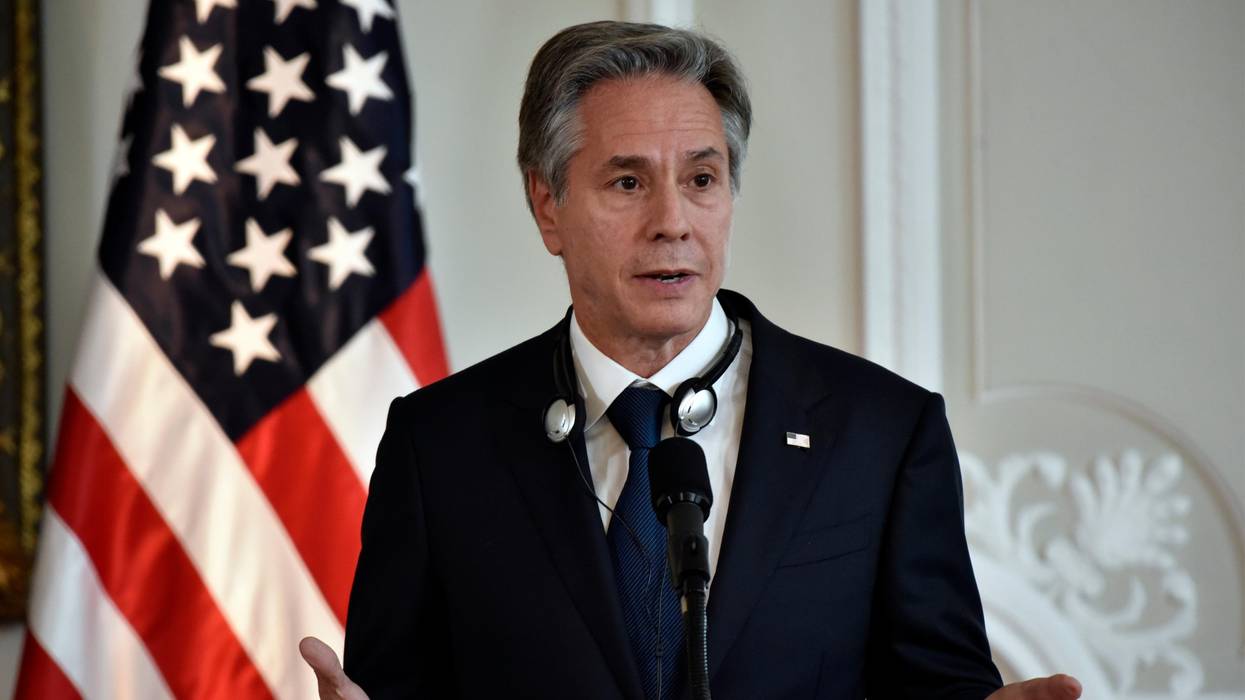
Proponents of a negotiated diplomatic solution to end Russia's invasion of Ukraine this week decried the Biden administration's latest military assistance package for the embattled country, warning that the longer the fight continues, the greater the chance of a catastrophic nuclear war.
"The chances of a nuclear war increase significantly every day that passes."
The Pentagon announced Tuesday that the U.S. will deliver up to $625 million worth of additional armaments and ammunition to Ukraine following Russia's illegal annexation of four Ukrainian regions last week, a move that prompted Ukrainian President Volodymyr Zelenskyy to formally apply for NATO membership.
The new package includes four High Mobility Artillery Rocket Systems (HIMARS) and an unknown number of guided missiles; 16 155mm howitzers and 75,000 precision-guided artillery rounds; 1,000 155mm remote anti-armor mines; 16 105mm howitzers; 30,000 120mm mortar rounds; 200 MaxxPro mine-resistant ambush-protected vehicles; 200,000 rounds of small arms ammunition; and other armaments.
U.S. Secretary of State Antony Blinken said the new aid--which comes on top of more than $15 billion in American military assistance to Ukraine since Russia invaded on February 24--is "carefully calibrated to make the most difference on the battlefield and strengthen Ukraine's hand at the negotiating table when the time is right."
Peace advocates stressed that--with Russian President Vladimir Putin's repeated threats to use nuclear weapons--the right time is right now, and that the United States and NATO allies should stop trying to weaken Russia by prolonging the war.
"The longer the war goes on, the longer it's maintained, the more the prospects for a diplomatic settlement diminish," U.S. political dissident and professor Noam Chomsky told Democracy Now! host Amy Goodman in a Monday interview. "The longer the war continues, the more the window closes."
However, Chomsky noted that the United States and Britain "are keeping to the principle that the war must continue to severely weaken Russia--meaning no negotiated settlements, with all the consequences that follow."
Harry J. Kazianis, senior editor at 19FortyFive and president of the Rogue States Project, a bipartisan national security think tank based in Washington, D.C., wrote Monday for the Quincy Institute for Responsible Statecraft that "tensions are rising by the second," while "the chances of a nuclear war increase significantly every day that passes."
"Considering the stakes--among them, the possibility that Russia will feel so boxed in that it will turn to its arsenal of 6,400 nuclear warheads and try to end the Ukraine war on its own terms despite the risk of a nuclear holocaust--one would think talks would already be happening as we speak," Kazianis continued.
"Sadly," he added, "due to the Western narrative that Ukraine is 'winning' the war against Moscow, the Biden administration appears to believe it can put enough pressure on Putin with more weapons for Ukraine that he will give up his newly annexed territories and go home with his atomic tail between his legs."
According to recent polling by the Quincy Institute and Data for Progress, 49% of Americans want Biden to do more to seek a diplomatic solution to the war.
"This is not just the United States," Jacobin staff writer Branko Marcetic told "Breaking Points" podcast hosts Krystal Ball and Saagar Enjeti on Tuesday. "There was a poll in Germany that shows most Germans, who are really feeling harshly the economic blowback of the sanctions, they want more diplomacy to try to end the war."
"This is also the prevailing opinion in most of the rest of the world, the Global South," he added. "You can look at... countries like Turkey, or say Mexico, who have attempted to try and broker some sort of peace agreement."
China has been a leading proponent of de-escalation and finding a diplomatic solution to the war. Speaking last week, Zhang Jun, China's permanent representative to the United Nations, said that his country's government "calls on all parties concerned to exercise restraint, refrain from actions that exacerbate tensions, and leave space for settlement through diplomatic negotiations."
"Where is the peace movement? There used to be a robust peace movement throughout the Cold War."
"The pressing priority is to make every effort to de-escalate the situation," he added, "and guide the parties to restart diplomatic negotiations as soon as possible to open the door to a political settlement with legitimate concerns brought into the negotiations and viable options put on the table, in an effort to achieve an early ceasefire."
With Zelenskyy having signed a decree Tuesday asserting that the prospect of talks with Putin is "impossible"--while signalling an openness to future negotiations with a change in Russian leadership--many Western observers have argued that seeking a diplomatic solution is an exercise in futility at this point.
"Are there still negotiation possibilities? There's only one way to find out. That's to try," said Chomsky. "If you refuse to try, of course, there's no option, no possibilities."
Marcetic asked: "Where is the peace movement? There used to be a robust peace movement throughout the Cold War."
"All that seems to be gone," he added. "I wish that people were more active and more outspoken about this to demonstrate that, no, you know, nuclear war is not worth anything."

Just after midnight on Friday Congresswoman Rashida Tlaib linked the death of a 7-year-old Palestinian boy reportedly chased by Israeli forces to the billions of dollars in annual military aid the United States provides Israel.
The Michigan Democrat--and first Palestinian-American woman elected to Congress--shared an image of the boy, Rayyan Yaser Suleiman, tweeted by the nonprofit Institute for Middle East Understanding.
"Don't look away," said Tlaib. "$3.8 billion+ of our money is funding this. Enough. It must stop."
The U.S. and Israeli governments struck their third 10-year agreement on military aid in 2016. Between fiscal years 2019 and 2028, the United States agreed to provide a total of $38 billion, subject to congressional appropriation.
Tlaib is among the relatively few progressives in Congress who openly criticize U.S. military aid to what she--and major human rights groups--call "Israel's apartheid government."
Other critics of Israel's abuse of Palestinians have also pointed to the dead child--whose Friday funeral drew hundreds of people to Bethlehem--as yet another example.
In a video circulated on social media, Suleiman's father said the 7-year-old "died on the spot from fear" while being chased by Israeli soldiers in the illegally occupied West Bank, Reuters reported Thursday.
"A medical official who inspected the body told Reuters that it bore no sign of physical trauma and that the death appeared consistent with heart failure," the news agency noted. "The Palestinian Foreign Ministry condemned the incident as 'an ugly crime' by Israel."
According to Reuters:
An Israeli military spokesman said troops were in the vicinity at the time to search for Palestinians suspected of fleeing into the village after having thrown rocks at motorists.
"An initial inquiry shows no connection between the searches conducted by the Israel Defense Forces (IDF) in the area and the tragic death of the child," the spokesman said.
Palestinian residents said there was no stone-throwing at the time. The military spokesman added that "the details of the incident are under review."
Asked about Suleiman during a Thursday press briefing, U.S. State Department deputy spokesperson Vedant Patel said that "the U.S. is heartbroken to learn of the death of an innocent Palestinian child."
As U.S. President Joe Biden and Secretary of State Antony Blinken "have repeated numerous times, Palestinians and Israelis equally deserve to live safely and securely and enjoy equal measures of freedom and prosperity," Patel continued. "We support a thorough and immediate investigation into the circumstances surrounding the child's death, and I believe the IDF itself has also indicated it will be looking into what has--what transpired as well."
The European Union Delegation to the Palestinians similarly called for a probe in a pair of tweets:
The boy's death came just a day after four Palestinians were killed and another 44 were wounded during an Israeli military raid at the Jenin refugee camp in the occupied West Bank.

A group working for peaceful relations between the United States and China on Monday sent a letter to leaders of both countries imploring them to end or limit "dangerous and provocative military maneuvers" in the South China Sea and near Taiwan that could lead to all-out war.
"With the frequency and scale of these maneuvers increasing by the week, the likelihood of a mishap is increasing exponentially."
Writing to U.S. President Joe Biden, Secretary of State Antony Blinken, Defense Secretary Lloyd Austin, and Chinese President Xi Jinping, Committee for a SANE U.S.-China Policy co-chairs Joseph Gerson and Michael Klare warned that "combative" U.S. and Chinese naval and aerial maneuvers "could result in the outbreak of accidental or unintended conflict with unforeseeable and possibly catastrophic consequences."
The group documented 115 "provocative maneuvers and close encounters" between U.S. and Chinese forces this year, with a dramatic increase following a controversial August visit to Taiwan by a U.S. congressional delegation led by House Speaker Nancy Pelosi (D-Calif.).
According to the document, China initiated 93 of the incidents, while the U.S. triggered 22. They ranged from "modest actions" by one or two ships or planes to "large-scale maneuvers" like a Chinese air force exercise involving 62 warplanes along China's maritime border with Taiwan.
"Whenever these maneuvers occur, it is common for the opposing side to mobilize its own air and naval forces to guard its territory (or those of its allies) and ward off any intruders," the letter notes. "This has resulted, on some occasions, in close encounters between the ships and planes of the opposing sides--with only the skillful action of pilots and helmsmen preventing a potentially deadly collision."
"This good fortune, however, is not likely to last forever," the group cautioned, "and, with the frequency and scale of these maneuvers increasing by the week, the likelihood of a mishap is increasing exponentially."
"Given this danger, we call on you to immediately take unilateral and bilateral steps to reduce the risk of an accidental or unintended clash between U.S. and [Chinese] air and naval forces in the West Pacific by discontinuing or scaling back military exercises that could be deemed threatening by others," the letter continues.
The activists also urged the two countries' leaders to hold talks "between military officials of the two sides," plus "other interested parties such as Taiwan, Vietnam, and the Philippines," to create "'rules of the road' for safe, nonthreatening air and naval maneuvers."
The group's letter comes amid intense U.S. diplomatic efforts to persuade China to be less supportive of Russia's invasion of Ukraine.
"It is peculiar," wrote South China Morning Post opinion contributor Dong Lei on Friday, "how Washington expects help from China on Ukraine while maintaining a campaign of hectoring and humiliation, including on China's refusal to condemn Russia, and on Taiwan."

As the Biden administration on Thursday announced billions of dollars in additional aid for Ukraine's defense against Russian invaders, peace activists renewed calls for a diplomatic solution to the nearly seven-month war.
"We, the people, have to rise up with a demand of negotiations, not escalation."
"The White House and Congress are fueling this war with a steady stream of weapons instead of pushing for talks to end the conflict," Medea Benjamin, co-founder of the peace group CodePink, said in a statement. "That's why we, the people, have to rise up with a demand of negotiations, not escalation."
CodePink and other anti-war groups including Veterans for Peace, World Beyond War, and Peace Action are set to launch a global week of action for peace in Ukraine next Monday. Demonstrations are scheduled in U.S. cities including Washington, D.C., metropolitan Boston, Milwaukee, Nashville, San Francisco, Santa Barbara, and Pasadena.
"Rather than push for a protracted war, the White House and Congress should support a diplomatic solution along the lines of the MINSK II Peace Accord, signed by both Ukraine and Russia in 2015, to declare Ukraine a neutral non-NATO country and hold elections in the eastern region of Ukraine," CodePink said in a statement announcing the week of action.
"Instead the U.S. government has budgeted $40 billion to escalate the war with weapons, military equipment, troop training, and intelligence, with zero accountability or oversight for taxpayer dollars," the group added. "The same amount of money could have paid for 350,000 nurses or 400,000 elementary school teachers."
U.S. Secretary of State Antony Blinken announced $2.8 billion in new military assistance to Ukraine and 17 other regional nations while on an unscheduled visit to the Ukrainian capital Kyiv Thursday.
Blinken said that "the war's terrible toll continues to mount" over six months after Russian President Vladimir Putin ordered the invasion.
Decrying the "thousands of civilians killed or wounded, 13 million Ukrainian civilians forced to flee their homes, historic cities pounded to rubble, horrifying reports of ongoing atrocities, nuclear power stations put at risk, food shortages, [and] skyrocketing food prices around the world," Blinken reaffirmed that "we stand united with Ukraine."
The secretary of state said that he was authorizing a $675 million drawdown of "additional arms, munitions, and equipment from U.S. Department of Defense inventories."
This weaponry includes howitzers, artillery munitions, Humvees, armored ambulances, anti-tank systems, and more, and comes as Ukrainian military forces wage counteroffensives on multiple fronts.
"In addition," Blinken continued, "we are also notifying Congress today of our intent to make a further $2.2 billion available in long-term investments under Foreign Military Financing to bolster the security of Ukraine and 17 of its neighbors, including many of our NATO allies, as well as other regional security partners potentially at risk of future Russian aggression."
"These announcements will bring the total U.S. military assistance for Ukraine to approximately $15.2 billion since the beginning of this administration," Blinken added.