

SUBSCRIBE TO OUR FREE NEWSLETTER
Daily news & progressive opinion—funded by the people, not the corporations—delivered straight to your inbox.
5
#000000
#FFFFFF
To donate by check, phone, or other method, see our More Ways to Give page.
Daily news & progressive opinion—funded by the people, not the corporations—delivered straight to your inbox.
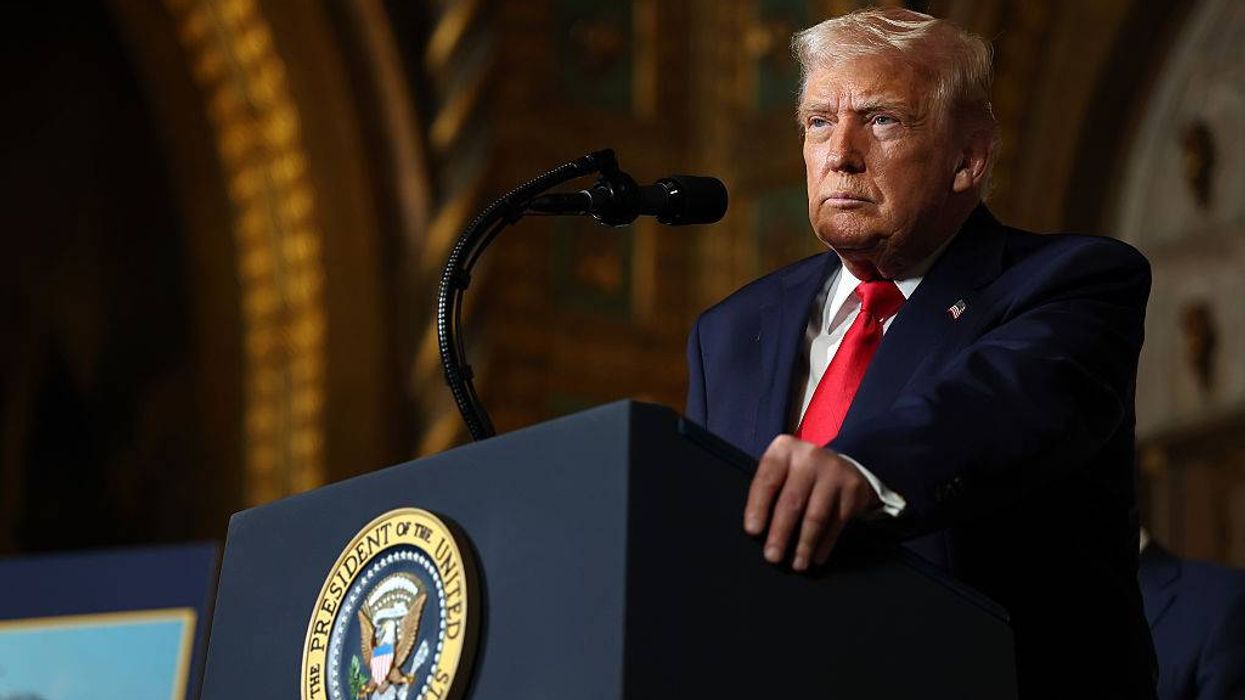
The bill vetoed by Trump would have provided funds to finish the Arkansas Valley Conduit, a 130-mile pipeline designed to deliver clean, filtered water to 50,000 residents in the eastern part of the state.
President Donald Trump issued the first veto of his second term this week when he rejected a bill with bipartisan support aimed at ensuring access to clean drinking water in rural Colorado.
As reported by Colorado Public Radio on Tuesday, the bill in question would have provided funds to finish the Arkansas Valley Conduit, a 130-mile pipeline designed to deliver clean, filtered water to 50,000 residents in the eastern part of the state.
In a statement announcing his video of the bill, Trump cited concerns about the size of the US deficit, even though the Congressional Budget Office has estimated that finishing the conduit will cost less than $500,000.
"My administration is committed to preventing American taxpayers from funding expensive and unreliable policies," said Trump, whose signature legislation, the One Big Beautiful Bill Act, is projected to increase the US deficit by $3.4 trillion over the next decade. "Ending the massive cost of taxpayer handouts and restoring fiscal sanity is vital to economic growth and the fiscal health of the nation."
Rep. Lauren Boebert (R-Colo.), a longtime Trump ally who sponsored the legislation, blasted the president for vetoing "a completely non-controversial, bipartisan bill that passed both the House and Senate unanimously."
Boebert also hinted that Trump's reasons for passing the bill could be political retribution over her effort to force the release of files related to the criminal prosecution of the late convicted sex offender Jeffrey Epstein, who for years was a friend of the president.
"I sincerely hope this veto has nothing to do with political retaliation for calling out corruption and demanding accountability," Boebert said. "Americans deserve leadership that puts people over politics."
It's not clear what Trump's motives were for vetoing the bill, though he has been feuding with elected officials in Colorado over the continued imprisonment of Tina Peters, the former county clerk of Mesa County, Colorado who was convicted in 2024 of seven charges related to her allowing unlawful access to voting machines in the wake of the 2020 presidential election.
Trump has demanded that Colorado release Peters, and he even went so far as to give her a presidential pardon, even though she was convicted on state charges rather than federal charges where such a pardon would carry real legal weight.
In a New Year's Eve Truth Social post, Trump once again made false claims about Peters' case.
"God Bless Tina Peters, who is now, for two years out of nine, sitting in a Colorado Maximum Security Prison, at the age of 73, and sick, for the 'crime' of trying to stop the massive voter fraud that goes on in her State," Trump wrote.
In reality, there is no evidence of widespread voter fraud in Colorado during the 2020 election.
Trump finished off his post by lashing out at Democratic Colorado Gov. Jared Polis and Mesa County District Attorney Dan Rubinstein, a Republican whose office successfully put Peters in prison for a nine-year sentence.
"To the Scumbag Governor, and the disgusting 'Republican' (RINO!) DA, who did this to her (nothing happens to the Dems and their phony Mail In Ballot System that makes it impossible for a Republican to win an otherwise very winnable State!), I wish them only the worst," Trump wrote. "May they rot in Hell. FREE TINA PETERS!"

Rather than celebrating emerging and untested technology attempting to recreate animals that have long since been extinct, our focus must be on the real, present-day threats to existing species facing extinction.
Secretary of the Interior Doug Burgum quickly embraced news earlier this month of the misleadingly named “de-extinction technology” introduced by bioscience engineering company Colossal Biosciences. The premature and misguided celebration by Secretary Burgum, among many others, glosses over real, present-day conservation concerns and threatens progress to recover real species teetering on the edge of extinction.
Genetic technology to recreate long extinct species that will live the rest of their lives in captivity, held as curiosities for exhibition and publicity stunts, cannot be viewed as the solution to human-caused extinction.
Rather than celebrating emerging and untested technology attempting to recreate animals that have long since been extinct, our focus must be on the real, present-day conservation concerns and threats to existing species facing extinction. Our research efforts, conservation dollars, and legal tools should be focused on restoring and preserving the species currently on the ground and in need of help.
Genetically altering an animal to mimic one long-extinct species costs millions of dollars that could have been invested to prevent the extinction of over 1,600 species currently identified as endangered.
Instead, politicians vilify the Endangered Species Act (ESA) and claim we can Frankenstein our way to the future where nothing is natural but instead born out of a petri dish and raised in a man-made ecosystem.
If Secretary Burgum and the administration truly believed in wildlife conservation, they would not be opening massive swaths of our public lands to logging, drilling, and mining, nor would they be eliminating regulations critical to safeguarding endangered and imperiled species.
The ESA, a bipartisan federal statute enacted in 1973, has saved 99% of species listed under the law from the brink of extinction, yet has been chronically underfunded for years, starved of the resources it needs to achieve full recovery for imperiled species.
Genetically altering an animal to mimic one long-extinct species costs millions of dollars that could have been invested to prevent the extinction of over 1,600 species currently identified as endangered. In just the past few years, Colossal Biosciences raised over $430 million, enough to fully implement the ESA.
Meanwhile, representatives in Congress, like Lauren Boebert (R-Colo.) and Bruce Westerman (R-Ark.), are directly targeting laws that prevent wildlife extinction, including the ESA.
Rep. Boebert’s recently introduced bill, misleadingly named the “Pet and Livestock Protection Act,” would eliminate ESA protections for wolves in the lower 48 states. This bill does not protect pets and livestock; instead, it harms wolves and ignores both science and the courts, which have repeatedly affirmed that wolves need federal protections.
Rep. Westerman’s bill, the ESA Amendments Act of 2025, would make it more difficult to list species under the ESA, fast-track the elimination of protections for endangered species before they are ready, and remove scientists from the decision-making process.
Make no mistake, these bills and efforts by the Trump administration to kneecap the ESA and other federal conservation laws will undo 50 years of wildlife conservation success and put America’s imperiled wildlife at greater risk of extinction.

"We are in a biodiversity crisis, and Congress is playing with fire," warned one wildlife defender. "These bills would accelerate extinction at a time when we can least afford it."
Green groups warned this week that a pair of Republican-led bills in the U.S. House of Representatives, including proposals to amend the Endangered Species Act and strip gray wolves of ESA protection, would, as Sierra Club said, "radically undercut the ability of the federal government to protect imperiled wildlife."
On Tuesday, the Republican-led House Natural Resources Subcommittee on Water, Wildlife, and Fisheries held legislative hearings on four bills, two of which involve the ESA.
Rep. Bruce Westerman (R-Ark.) said his ESA Amendments Act of 2025—which aims to streamline regulatory and permitting processes—is needed because "the Endangered Species Act has consistently failed to achieve its intended goals and has been warped by decades of radical environmental litigation into a weapon instead of a tool."
However, Sierra Club said Monday that the bill would "amend the ESA beyond recognition."
Congress is trying to kill the Endangered Species Act. New bill would amend iconic law's ability to protect wildlife. Today, a House committee held a hearing on a bill that would drastically limit the Endangered Species Act's ability to protect our country's imperiled wildlife.
[image or embed]
— Sierra Club (@sierraclub.org) March 25, 2025 at 10:44 AM
Earthjustice warned Tuesday that the legislation "would gut the critical protections that the ESA provides for thousands of imperiled species, upend the scientific consultation process (which has been the cornerstone of American species protection for 50 years), slow listings to a crawl while fast-tracking delistings, and allow much more exploitation of threatened species and shift their management out of federal hands to the states, even while they are still nationally listed."
Rep. Lauren Boebert (R-Colo.) said that the second bill, the Pet and Livestock Protection Act of 2025—which she introduced in January with Rep. Tom Tiffany (R-Wis.)—would "remove the ability of progressive judges to get in the way of science and allow states to set their own rules and regulations for managing their gray wolf population" by delisting the species from the ESA within 60 days and prohibiting judicial review of the action.
During his first administration, U.S. President Donald Trumpdelisted gray wolves from the ESA across most of the country, a move that was reversed by a federal judge in 2022.
Defenders of Wildlife senior attorney Ellen Richmond said Monday that "this bill is deceptively named and if enacted will directly undermine our nation's landmark conservation laws."
"Wolves play important roles in maintaining healthy ecosystems, and cutting short their recovery not only harms the species but also the incredible landscapes we all love," Richmond added.
Josh Osher, public policy director for Western Watersheds Project, said Tuesday: "We are in a biodiversity crisis, and Congress is playing with fire. These bills would accelerate extinction at a time when we can least afford it."
"The Endangered Species Act isn't just about saving wolves, grizzlies, or sea turtles—it's about protecting the ecosystems that sustain us all," Osher added. "Weakening these protections pushes our planet further into collapse. Congress must open its eyes and reject these reckless attacks before it's too late."
On Monday, dozens of green groups sent a letter to senior lawmakers on Water, Wildlife, and Fisheries Subcommittee urging them to reject the two bills, arguing they would "dramatically weaken the ESA and make it harder, if not impossible, to achieve the progress we must make to address the alarming rate of extinction our planet now faces."
The two bills come amid wider Republican attacks on the ESA by members of Congress and the Trump administration, including Elon Musk's Department of Government Efficiency. In a bid to boost logging on public lands, Trump is planning to establish a so-called "God Squad" committee that could veto ESA protections. DOGE, meanwhile, has fired hundreds of U.S. Fish and Wildlife Service employees while ordering a hiring freeze on seasonal workers tasked with species protection.
"The Endangered Species Act is one of the country's most popular and successful conservation laws, and Donald Trump wants to throw it in the garbage to pad the bottom lines of his corporate supporters," Sierra Club deputy legislative director for wildlife and lands protection Bradley Williams said on Monday. "Since day one of his administration, Trump has shown again and again that he wants to hand over control of our public lands and waters to billionaires and corporations. Imperiled wildlife will suffer the consequences."
"For more than 50 years, the United States has made amazing progress bringing species back from the brink of extinction," Williams added. "It's because of the ESA that species like the grizzly bear and bald eagle are living symbols of America and not just photos in a history book. If Trump and his allies in Congress get their way, that progress won't just come to a screeching halt—it could be completely reversed."
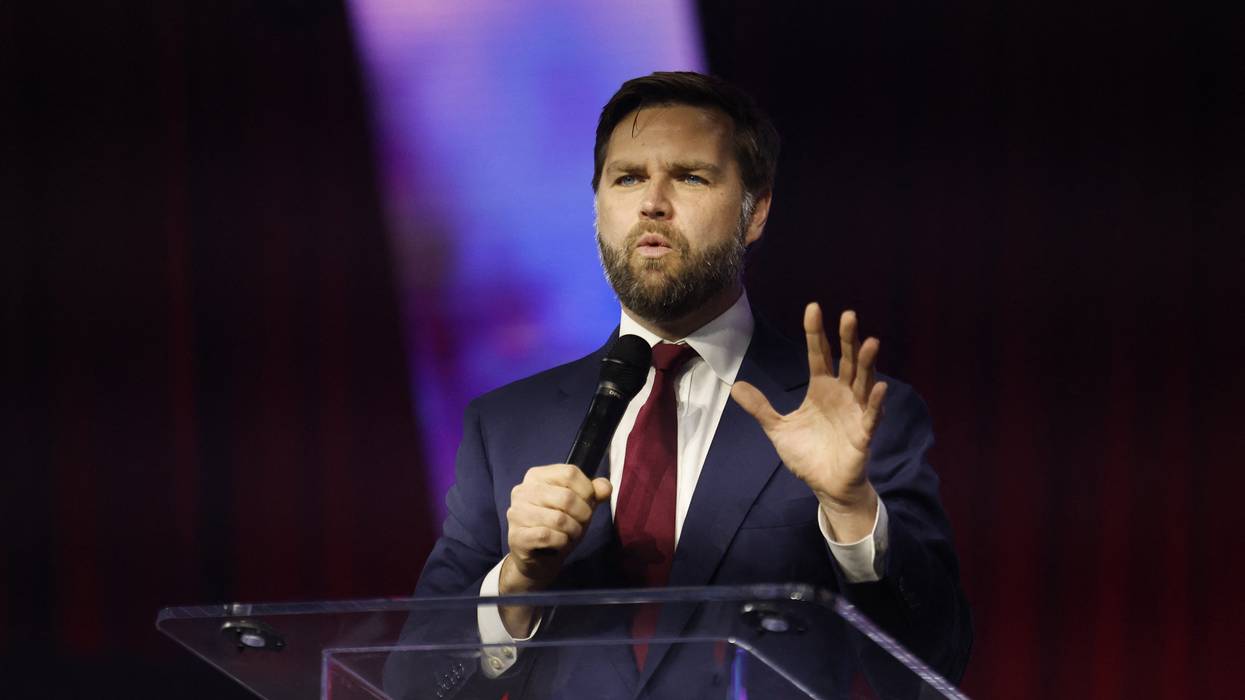
"This stuff is basically cooked up in a lab to incite further violence," said one critic of comments made by Sen. J.D. Vance, Rep. Mike Collins, and other allies of Trump.
As federal law enforcement officials launched a full investigation into the shooting at presumptive Republican presidential nominee Donald Trump's Pennsylvania rally on Saturday, journalists and political observers expressed fear that the act of violence would ramp up political division and turmoil in the United States ahead of the November elections.
Boston Globe reporter James Pindell was among the journalists at the rally who shared that Trump supporters "turned on the media"—a frequent target of Trump during his presidency—after the shooting.
"The crowd was angry," he wrote. "Middle fingers were everywhere. They asked the press if they were happy and blamed the media. 'You did this,' they said to reporters."
Allies of Trump including Sen. J.D. Vance (R-Ohio), Rep. Lauren Boebert (R-Colo.), Rep. Mike Collins (R-Ga.), and former White House adviser Stephen Miller immediately placed blame with President Joe Biden, claiming the attack was the result of warnings that electing the former president to a second term would threaten democracy.
Rep. Mark Pocan (D-Wis.) denounced Collins' claim that Biden "sent the orders," calling it "a continuation of the bullshit rhetoric that drives political violence."
"A likely assassination attempt and gun violence on Trump is awful on many levels," said Pocan. "Adding jet fuel to the political climate is unbecoming of a member of Congress."
Trump, who spread baseless lies that the 2020 election was rigged against him and urged his supporters to riot at the U.S. Capitol on January 6, 2021 as Congress was certifying the results, has said he would act as a dictator on "day one" of his potential presidency.
Dozens of people who worked in his administration helped to write Project 2025, a far-right political agenda aimed at consolidating power with the president and dismantling parts of the federal government, and he has named political opponents he aims to prosecute and pledged to deploy the military to stop political protests.
"One response to Trump's attempted shooting (apparently by a registered Republican) we must NOT take is to stop framing the existential nature of this election," said political organizer Aaron Regunberg. "The problem isn't Democrats saying Trump is attacking our democracy—the problem is that he's attacking our democracy."
One audience member was killed and two were seriously injured after the gunman, identified as 20-year-old Thomas Matthew Crooks of Bethel Park, Pennsylvania, fired several shots from a rooftop near Butler Farm Show, where the rally was held.
Trump was escorted off the stage after a bullet "pierced the upper part of his right ear," The New York Times reported. The Secret Service reported that Crooks had been killed after firing his weapon, and that officials found an AR-15-type semiautomatic rifle near his body.
Authorities did not identify a motive for the shooting.
Crooks was registered as a Republican in his hometown; records also showed that someone named Thomas Crooks donated $15 to a liberal voter turnout campaign called the Progressive Turnout Project in January 2021.
"This remains an active and ongoing investigation," said the FBI in a statement Sunday, as law enforcement agents closed down all roads leading to the home of the suspect's family in Bethel Park in the Pittsburgh area.
David Hogg, who survived the 2018 Parkland, Florida school shooting and co-founded March for Our Lives, said the gunman's ability to fire at the president and kill an audience member while in the presence of Secret Service agents and police is the latest proof that people across the U.S. are vulnerable to gun violence due to a lack of strict gun control laws, which Republican lawmakers have long refused to pass.
"What happened today is unacceptable and what happens every day to kids who aren't the president and don't survive isn't either," said Hogg. "It's insane we have such a major problem with gun violence in America that no one—not even a presidential candidate—is safe."

"The inappropriately named 'Trust the Science Act' not only puts endangered gray wolves at risk for extinction, but it completely undermines the purpose of the Endangered Species Act," one wildlife advocate said.
Overriding the opposition of more than 100 environmental groups, the Republican-led House of Representatives passed a bill on Tuesday that would strip gray wolves in the Lower 48 states of their protections under the Endangered Species Act.
The so-called Trust the Science Act, which was introduced by far-right election denier Rep. Lauren Boebert (R-Colo.), passed by a narrow 209-205 margin. It would reimpose a Trump administration decision to delist gray wolves that was later overturned in federal court.
"This move by extremists in Congress to push forward an anti-wolf, anti-science bill is irresponsible and emboldens cruelty towards gray wolves," said Endangered Species Coalition executive director Susan Holmes.
"This is yet another troubling sign that our elected leaders in the House are increasingly choosing to subvert our nation's landmark environmental laws and ignore the biodiversity crisis that threatens wildlife populations around the globe with extinction."
There were once around 2 million gray wolves in North America, but they were nearly hunted to extinction with government support. After the federal government began to protect them in the 1960s, their numbers rebounded to around 6,000, but they only roam through less than 10% of their historic range in the lower 48 states.
Scientists have discovered that wolves are very beneficial for the ecosystems they inhabit; their reintroduction into Yellowstone National Park increased the park's biodiversity by controlling elk and deer that had overgrazed trees, allowing willows and aspens to thrive and attract the song birds and beavers that depend on them.
"The inappropriately named 'Trust the Science Act' not only puts endangered gray wolves at risk for extinction, but it completely undermines the purpose of the Endangered Species Act," Raena Garcia, senior fossil fuels and lands campaigner at Friends of the Earth, said in a statement. "The ESA is essential environmental legislation that needs to be strengthened, not weakened. As a keystone species that plays a vital role in preserving biodiversity, the livelihood of gray wolves can't be dictated by industry-driven politicians."
The Endangered Species Act Coalition and Friends of the Earth Action were two of the more than 100 groups that sent a letter to representatives on Monday urging them to oppose the bill. In the letter, they pointed out that the Trump-era ruling it is based on was overturned because of its faulty science: It based its determination for national wolves on only two populations, it did not define what it meant by a "significant" portion of the species' range, it did not consider what it means for gray wolves to have lost so much of their historic range, and it did not account for the fact that West Coast wolves and northern Rocky Mountain wolves have different ancestries. Despite these flaws with the decision, the bill would also prohibit courts from weighing in a second time.
"The 'Trust the Science Act' undermines the integrity of the ESA by forcing the reinstatement of the Trump administration's scientifically indefensible delisting rule and precluding judicial review, undermining the rule of law that holds government officials accountable in the courts," the conservation groups wrote.
Environmental organizations also argue that the bill would put wolves at even greater risk from human violence. In Wyoming, where wolves are delisted, a man recently injured a young wolf and showed it off at a local bar before killing it. When wolves were delisted during the Trump administration, a hunt reestablished in Wisconsin killed off up to a third of the state's wolves.
"The recent torture and killing of a young gray wolf in Wyoming shows how critical the Endangered Species Act protections are for the survival of this species core to our country's natural heritage," Holmes said.
The bill also comes as the Earth is losing species at such alarming rates that scientists say humans have likely instigated a sixth mass extinction.
"This is yet another troubling sign that our elected leaders in the House are increasingly choosing to subvert our nation's landmark environmental laws and ignore the biodiversity crisis that threatens wildlife populations around the globe with extinction," Robert Dewey, vice president of government relations for Defenders of Wildlife, said in a statement. "Wolves play hugely important roles in maintaining healthy ecosystems and cutting short their recovery will only harm our nation."
"The majority of Americans believe that protecting biodiversity should be a national priority and today their voices were stifled," Dewey continued. "We urge the Senate to take the scientifically sound path forward and not take up this bill."
Whatever the Senate decides, it is unlikely the bill would become law while President Joe Biden is in office. The Executive Office of the President's Office of Budget and Management issued a statement on Monday saying the Biden administration "strongly opposes" the bill, arguing that its passage "would undermine America's proud wildlife conservation traditions and the implementation of one of our nation's bedrock environmental laws."
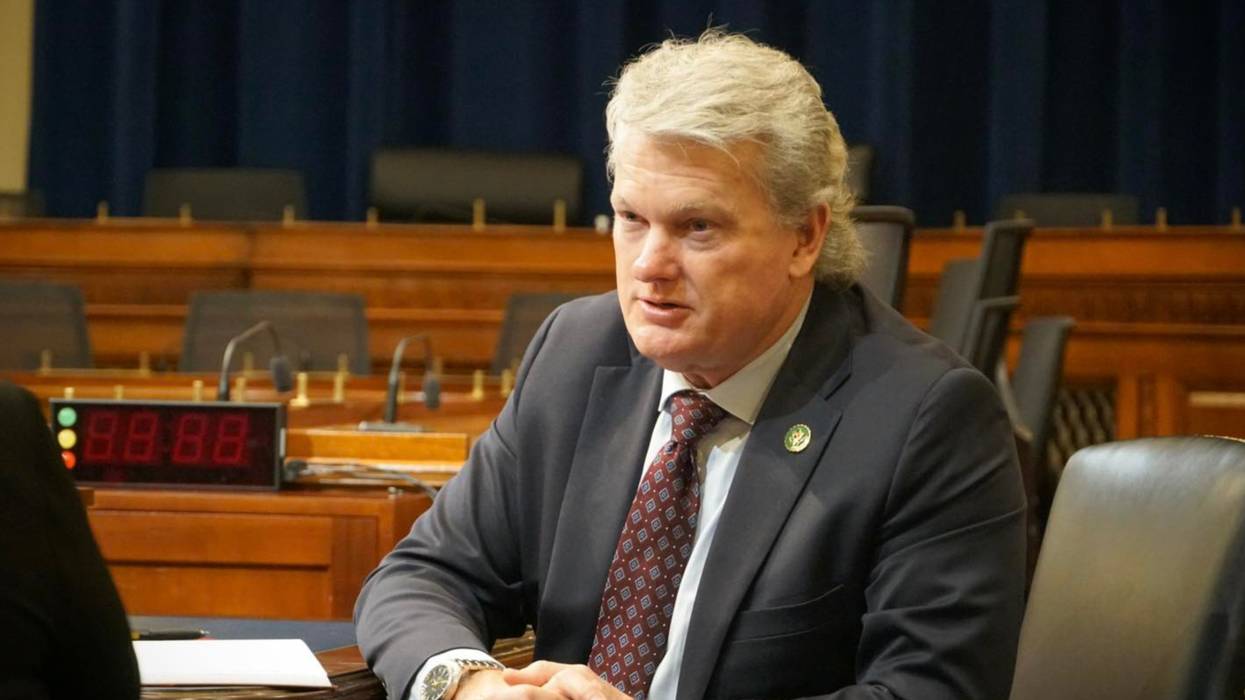
"We wonder why the right-wingers aren't freaking out about Trump's dictator talk but we shouldn't," said one local Democratic leader in Georgia.
A Republican congressman from Georgia on Thursday suggested a novel way to stem the influx of migrants at the southern border: throw them from helicopters into the sea.
Responding to a photo showing a migrant flipping off the camera following his release without bail from a New York City court, Rep. Mike Collins took to social media to reply to a post by Rep. Anthony D'Esposito (R-N.Y.) advising the young man to "holla at the cartels and have them escort you back."
"Or we could buy him a ticket on Pinochet Air for a free helicopter ride back," Collins suggested. He was referring to former U.S.-backed Chilean dictator Augusto Pinochet, whose regime was known to "disappear" critics by throwing them from helicopters into the Pacific Ocean and other waterways while they were still alive in what became known as "death flights."
As Christopher Mathias—a senior HuffPost reporter who covers the far-right—noted, Collins "is parroting a meme that's been popular among white supremacists and neofascists like the Proud Boys."
After Collins' post was removed from X, the social media platform formerly known as Twitter, the congressman appealed directly to owner Elon Musk, saying that "he's apparently got a few more folks to fire," a reference to the site's purge of content moderators following its purchase by the multibillionaire.
Collins' post was restored with a notice that although it "violated the X rules," the site determined that "it may be in the public's interest" for it to remain accessible.
On right-wing sites including Daily Caller, commenters overwhelmingly voiced support for Collins' suggestion—although one reader found helicopter flights to be a "waste of time," preferring to "just shoot them at the border."
Pete Fuller, the Democratic Party chair in Jackson County, Georgia—which is part of Collins' district—tied the congressman's remarks to those of former President Donald Trump, the Republican front-runner for the November election.
"We wonder why the right-wingers aren't freaking out about Trump's dictator talk but we shouldn't," Fuller said. "The hard right would love Trump taking over dictatorial powers and to start disappearing the people that are inconvenient to them."
Trump infamously suggested shooting migrants and stocking the Rio Grande with alligators, a proposal that resurfaced this week when Rep. Lauren Boebert (R-Colo.) attempted to breathe life into her floundering reelection campaign by affirming she would co-sponsor legislation authorizing an alligator moat.
Collins is a more serious supporter of deadly obstacles in the Rio Grande. Responding to a recent U.S. Supreme Court ruling affirming the Biden administration's order for federal border authorities to cut down razor wire installed by Republican Texas Gov. Greg Abbott, the Georgia lawmaker said he will introduce the Restricting Administration Zealots from Obliging Raiders (RAZOR) Act. His bill would ban the federal government from removing or altering "any state-constructed barriers installed to mitigate illegal immigration."
The Supreme Court ruling followed a U.S. Justice Department lawsuit over Texas' razor wire-topped buoy barriers in the Rio Grande, in which numerous migrants have drowned while trying to cross into the United States. One migrant's body was found in the buoy barrier last year.
Meanwhile, U.S. President Joe Biden has come under fire from migrant rights advocates for expressing his willingness to "shut down the border" in exchange for a deal with Republican lawmakers that would continue U.S. funding for Ukraine's defense against Russian invasion.
Critics have warned that such a bargain would cost migrants lives and result in the evisceration of rights and protections for legal asylum-seekers and other immigrants.
An example of absurdist drama that prophesied Trumpist transformation is Eugène Ionesco’s Rhinoceros—the classic play in which an entire town devolves into rhinoceroses that silence any hope of coherent conversation.
In 1968, the Youth International Party nominated a pig named Pigasus for president; in 2024, the Republican Party will likely nominate a Traitor named Trump for president, a dumber and more corrupt candidate than Pigasus. The Youth International Party—the anarchic, counter-culture Yippies— nominated the pig as an absurd joke. While it’s absurd to nominate an indicted felon who tried to overturn the 2020 election, the GOP is not joking.
The Yippies’ pig had no chance of becoming president: according to the Constitution Pigasus wasn’t qualified, being younger than 35 years old. Trump as an insurrectionist is—like the pig—unqualified to be president, according to the Constitution. Yet, unlike Pigasus, he has a good chance to become president: The Supreme Court will likely discount the Constitution, he leads Biden in some polls, and, if he loses, he will try to steal the election again, threatening “bedlam” if that happens.
To rational people, it is mindbogglingly surreal that an incompetent, ignorant megalomaniac and sexual abuser like Trump, whose grating voice alone rattles teeth, would be deemed fit for the presidency, let alone close to winning power. Yet he is. Despite his enabling of the pandemic, his 2020 defeat, his instigation of the January 6 attack on the Capital, the 91 charges across four criminal cases, and his never-ending hurricane of lies, millions of reality-challenged Americans worship and support him.
Exposing its total MAGA-tization, the Republican Party has crawled with Trump into a moral abyss that turns out to be a bottomless pit of unreality. The fake GOP primary delivers phony, cowardly candidates Nikki Haley and Ron DeSantis, who are terrified of criticizing him and have promised to support him even if he were a convicted felon. They continue their sham candidacies, hoping that the laws of gravity will reverse on Trump and he will be sucked up into the vacuum of outer space. Failing that, it is perfectly fine with them that the defeated president attempted a coup and, though stopped, he can still return to the presidency.
The deranged Trump swamped his “opposition” in the Iowa caucus by 30 points. Watching cable news afterwards, it felt like I was living in Russia and Putin was running against two puppet candidates. The pundits seriously discussed the micro-details of the race and how each of the candidates fared in Nowheresville, Iowa, and no one screamed, “This is insanity—this is the cult of a madman!”
The craven cult that inflates Trump’s already-enormous self-esteem has given him the power to bend the arc of reality.
The nightmarish possibility of electing the shameless septuagenarian— a self-described dictator—is helped by his politically weak octogenarian opponent Joe Biden who frames the election as a choice between him and doomsday, but provides doomsday-style weapons and unconditional support for Israel’s Gaza genocide. In addition, Biden risks a “Red Sea War” by bombing Yemen, one of the poorest countries in the world.
Angry with Biden, pro-Palestine anti-war progressives might turn away from him in disgust—not voting or voting for third party candidates, undoubtedly funded by Republican donors. Other voters don’t like him because he is too old. In any case, Biden-hating voters might help elect the Muslim-hating, also elderly Trump, who is even more supportive of Israeli Prime Minister Benjamin Netanyahu than Biden. In his first torturous term, Trump moved the American embassy to Jerusalem and left Palestinians out of the Abraham Accords, which many viewed as a betrayal of Palestine.
In his first term, Trump’s brutality and corruption were slightly mitigated by his ignorance and laziness. In a second, Trump—older and lazier—would better understand the system’s vulnerabilities and loopholes. On inauguration day 2025, Trump will be an indicted or convicted outlaw. He will commit the first crime of his second term at noon: His oath to defend the United States Constitution will be a perjury.
In a second term, he would install an army of political loyalists whose fealty to his most unhinged demands will take precedence over their commitment to the Constitution or legal governance. They will help him drive a much more focused agenda of vengeance against his adversaries and impunity for himself. For his own survival, he must destroy the rule of law by stopping all state and federal, civil and criminal cases against him. If a president can order the justice department to stop a case against him—as Trump would surely do—then obstruction of justice becomes a normal privilege of the presidency.
A former insurrectionist re-elected to the Presidency, he would use the Insurrection Act to order the military to crush protests—which he hoped to do during the summer of 2020—and turn the power of the federal government against his perceived enemies. Paraphrasing Hitler, he said, “We will root out the communists, Marxists, fascists, and the radical-left thugs that live like vermin within the confines of our country.” It has always been Trump’s supreme political wish to wield military violence as personal weapons of power—a wish that many in his party now seem determined to help him achieve.
As xenophobe-in-chief, he hopes to institute a program of mass detainment and deportation of undocumented immigrants, who he says are “poisoning the blood” of the country, employing the rhetoric of European totalitarians. His aides have already drawn up plans for new detention centers at the U.S.-Mexico border, where anyone suspected of illegal entry would be held until officials have settled the person’s immigration status.
If Trump is returned to office, he will undoubtedly make January 6 a national holiday—the Day of the Patriotic Martyrs.
American democracy will disintegrate piece by piece as a second Trump term erects a postmodern fascist state modeled on Victor Orbán’s Hungary—destroying the legitimacy of elections, trampling constitutional rights, instituting a nation-wide abortion ban, cutting off immigration, suppressing derogatory media, promoting Christian nationalism, and undermining the rule of law.
Even beyond this horror, the craven cult that inflates Trump’s already-enormous self-esteem has given him the power to bend the arc of reality. His hallucinating supporters believe in an elaborate MAGA phantasmagoria that Trump has concocted: that the previous election was stolen, that Biden is an illegitimate president, that Biden has weaponized the legal system to prosecute his strongest opponent Trump, and that the January 6 riot was not an insurrection by Trump supporters but an instigation by the FBI and antifa.
In a brief moment after the January 6 Capitol attack, many in the GOP thought the Trump monster had been banished, a pariah in the Party. Republican leaders blamed him for the insurrection. Party fund-raisers assured donors they were done with him. Trump’s own loyalists turned against him. Former Attorney General Barr said Trump’s conduct was a “betrayal of his office and supporters.”
The Murdoch-owned lapdog Wall Street Journal argued that Trump was done: “This week finished him as a serious political figure. He has betrayed his loyal supporters by lying to them about the election and the ability of Congress and Mr. Pence to overturn it. He has refused to accept the basic bargain of democracy, which is to accept the result, win or lose.” Trump also got blamed when the 2022 midterms went seriously awry as Trump-endorsed election deniers lost winnable races and the much-hyped “red tsunami” turned into a dribble. In her book, purged Republican Liz Cheney reported that afterwards Trump was depressed and refused to eat.
After condemning Trump for January 6 and even suggesting that he resign, now-deposed House Speaker Kevin McCarthy traveled to Mar-a-Lago and, in an historically spineless act of recantation, embraced and absolved the starving former President. Cheney and many others have identified this as a pivotal moment in reviving the former president’s political viability and appetite.
Still, previous to this submission, the Republican Party threw away its best chance to bury him forever when 43 senators voted to acquit him in his impeachment after the Capitol riot. They could have relegated him to Palm Beach and saved America from hearing the despicable rants of this malfunctioning moron and putting the police and the nuclear button under his thumb.
Trump resumed eating, lying, and constructing a new absurd reality that has proven more politically salient with the GOP and its voters than many of us thought possible on January 7, 2021, even after seeing it happen over and over for the previous six exhausting, gut-wrenching years.
Pulling off a kind of double coup, this psychopathic fabricator added to the original Big Lie about the “rigged election.” He called January 6 “a beautiful day,” and he designated the nearly 1,300 defendants arrested in connection with the Capitol attack ”martyrs” and “hostages.” He has promised to pardon insurrectionists and threatened to lock up the police who tried to defend the Capitol that day. If Trump is returned to office, he will undoubtedly make January 6 a national holiday—the Day of the Patriotic Martyrs.
The GOP and the right-wing media echo system has been so effective in pumping out Trump’s upside-down-world propaganda that polling recently found that, in the intervening three years, the number of Republicans who believe Trump’s lies about a “rigged election” has, in fact, gone up. Today, only 31% of Republicans believe that Biden is the “legitimate” president, down from 39% in late 2021. The poll also showed that Republicans thought the insurrectionist mob were mostly peaceful.
For millions of people, Trump has managed to transmute historical events that everyone saw with their own eyes into theater of the absurd, an anti-realistic dramatic genre characterized by dark humor, incoherent language, strange symbolism, and themes that relate to human irrationality.
An example of absurdist drama that prophesied Trumpist transformation is Eugène Ionesco’s Rhinoceros—the classic play in which an entire town devolves into hard-skinned, monstrous rhinoceroses that issue ear-shattering bellows that silence any hope of coherent conversation. Rhinoceros thundered onto the stage, in 1960, with a chilling yet farcically funny allegory of how fascism can mutate ordinary people into angry, violent, mindless beasts whose articulateness dissolves into a cacophony of guttural honks.
Writing in the wake of Hitler and Stalin, Ionesco painted a picture of a society succumbing to the contagion of “rhinoceritis,” a disease that erodes individuality and replaces it with groupthink and casual brutality as well as a hatred of non-rhinoceroses. The transformative infection suggests the dehumanizing force of tyrannical ideologies.
Becoming a huge, horned rhinoceros is gradually normalized: A formerly concerned character Jean dismisses his friend’s terror at the multiplication of grotesque rhino mutations and their deleterious effects on human freedom. Jean debases himself and enables rhinoceritis when he says that despite their savage deformity, they’re “harmless, docile herbivores” and “seem so sure of themselves.” This mindless acceptance and rationalization foreshadows the insidious nature of the disease, disguising its destructive potential.
Ionesco’s play exposes the lure of surrendering to a mass authoritarian movement and abandoning the burden of independent thought. Among Trump’s abettors are numerous verifiably insane congresspeople who have been infected by rhinoceritis for a long time such as Marjorie Taylor Green, Lauren Boebert, and Matt Gaetz. But it’s the transformed normies that are most pathetic.
Current House Majority Whip Tom Emmer angered Trump when he voted to certify Biden’s election, unlike 147 colleagues who voted to overturn the election. When Emmer ran for his dream-job Speaker of the House, Trump sank his candidacy, warning that he would be a “tragic mistake” and calling him a “Globalist RINO” (not a rhinoceros). Two months later, Emmer—like nearly 100 members of the House, said, “I am proud to endorse Donald J. Trump for President.” Expressing his gratitude to Emmer for his miserable self-abasement, Trump smirked, “They always bend the knee.”
One of the more pitiful examples of “Trump Debasement Syndrome” is Sen. Josh Hawley, the guy who egged on the January 6 rhinoceros-thugs with a fist-pump that lamely showed solidarity with them and then was recorded in security footage fleeing for his life to avoid those same stampeding thugs. Hawley has decided to “forget” his traumatic escape from the mob, though he had not endorsed King Rhinoceros as the Iowa caucus approached. Exhibiting concern for Hawley’s electoral health, Trump warned him to “be very careful” in his Senate re-election campaign. Shortly thereafter, Hawley joined the Republican Rhino herd and publicly endorsed Trump saying, “I’m with him.”
Rhinoceros explored the erosion of moral values, the seductive nature of power as people become mere instruments of brute strength and aggression. As authority figures collapse and undergo metamorphosis, other people find it easier to justify why becoming a rhinoceros is desirable. As one character declares, “It‘s the strength that counts, don’t you want to be strong?”
Once a rising conservative normie in the party—an acolyte of former Republican VP candidate Paul Ryan, Rep. Elise Stefanik has transmogrified into an automated MAGA rhinoceros. She trumpeted Trump’s reference to the January 6 criminals as “hostages,” and embraced the claim that the 2020 election was an “unconstitutional circumventing of the Constitution.” Stefanik refused to commit to certifying the results of the 2024 election, saying “We will see if this is a legal and valid election.” After calling the media biased against Trump, she said the “border crisis is poisoning Americans.” Desperately thirsty for Trump’s VP spot, Stefanik has become a eager demagogue.
What began, in Rhinoceros, as isolated incidents becomes a rhinoceros contagion as the town’s residents witness an astonishing metamorphosis as more and more people sprout horns, grow enormously huge with hard green skin, and succumb to the allure of the rampaging Rhino fascists. There are no elections in Rhinoceros Town so the entire society is transformed, except for one individual Berenger who shouts, “I’ll take on the whole of them! I’ll put up a fight against the lot of them! I’m the last man left, and I’m staying that way until the end. I’m not capitulating.”
The entire Republican Party—elected officials and voters—have capitulated. They’ve chosen the sickness, nihilism, and absurdity. Fortunately, we still have democracy. Stopping the Trump contagion will not suddenly eradicate the disease and make America perfectly healthy, but it is vital to embrace reality, reject the absurd, prevent further suffering, and preserve the possibility of progress.

"House GOP leaders should be ashamed for trying to thwart the EPA, and its authority under the Clean Air Act, to limit dangerous and deadly pollution," said one campaigner.
Climate and environmental campaigners on Wednesday bristled as the Republican-controlled U.S. House of Representatives voted to block a proposed Biden administration rule meant to accelerate the transition from gasoline-powered to electric automobiles.
House lawmakers voted 221-197, almost entirely along party lines, in favor of H.R. 4468, the so-called Choice in Automobile Retail Sales Act of 2023. The office of House Energy and Commerce Committee Chair Cathy McMorris Rodgers (R-Wash.) claimed the bill "stops President [Joe] Biden's agenda to force Americans to drive electric vehicles, which will cede our auto future to China."
However, Democratic Congressman Paul Tonko of New York condemned the measure during a House floor speech Wednesday, asserting that "we should be putting our clean energy standards in overdrive to protect consumers and our planet, not reversing course on vital electric vehicle policies."
"We should be putting our clean energy standards in overdrive to protect consumers and our planet, not reversing course on vital electric vehicle policies."
When the Biden administration unveiled its proposed clean transportation standard in April, progressive critics argued that it did not go far enough. The Environmental Protection Agency (EPA) projects that under the most robust version of its
proposal—which, if implemented, would take effect in 2027—electric vehicles could account for two-thirds of all new U.S. light-duty automobile sales by the 2032 model year. Last year, just 6% of new vehicles sold in the U.S. were electric.
A coalition of green groups slammed H.R. 4468 this week, writing to congressional leaders that "rather than recognize the twin crises of unmitigated climate change and public health impacts from transportation pollution and the transition to zero-emission vehicles underway, this bill aims to stem the tide of progress towards clean air and a healthy future."
"We need to move forward," the groups added, "not backward."
Margie Alt, director of the Washington, D.C.-based Climate Action Campaign, said in a statement that "today's vote on H.R. 4468 is a cynical and tremendously harmful attempt by some in Congress to placate their deep-pocketed fossil fuel executive and lobbyist allies."
"House GOP leaders should be ashamed for trying to thwart the EPA, and its authority under the Clean Air Act, to limit dangerous and deadly pollution from light duty and medium duty vehicles and trucks," she continued. "Cleaner cars standards protect all Americans from the significant respiratory and other health impacts of tailpipe pollution, not to mention limit the impacts of the climate crisis from a key source of climate pollution."
"Vehicle pollution endangers millions of Americans," Alt added, "particularly vulnerable Americans living near highways and high-traffic corridors."
H.R. 4468 has little chance of passing the Senate and even if it did, the White House has signaled that Biden will veto the measure. The White House Office of Management and Budgetsaid Monday that the GOP proposal "would catastrophically impair EPA's ability to issue automotive regulations that protect public health, save consumers money, strengthen American energy security, and protect American investments in the vehicle technologies of the future."
Republican lawmakers on Wednesday also advanced a raft of what GOP leaders called "American energy solutions" that critics slammed as damaging to the climate, environment, Indigenous rights, and frontline communities. These bills include H.R. 6009, a measure introduced by Rep. Lauren Boebert (R-Colo.) that would force taxpayers to foot the bill for cleaning up oil and gas wells on federal lands.

"The oil and gas industry could stick taxpayers with a massive bill of between $2.9 billion and $17.7 billion," warned Public Citizen's Alan Zibel.
Fossil fuel industry-funded Republicans on the U.S. House Natural Resources Committee voted Wednesday to advance Rep. Lauren Boebert's bill that would saddle taxpayers with the massive cost of cleaning up oil and gas wells on federal lands.
"Corporations awarded a lease to drill on federal land must post a bond. If the leasing corporation abandons an exploration site, goes bankrupt, or fails to plug a well securely, the posted bond covers the cost of doing so," Public Citizen explained this week in a statement opposing the proposal.
The Colorado Republican's Restoring American Energy Dominance Act (H.R. 6009) would block a proposed rule from the Bureau of Land Management (BLM) revising federal regulations "to update the fees, rents, royalties, and bonding requirements related to oil and gas leasing, development, and production" in line with the Inflation Reduction Act signed by President Joe Biden last year.
"Rep. Boebert is plainly on the side of the oil and gas companies that don't want to be held accountable for exploiting hardworking taxpayers."
Based on a BLM review of the costs to plug orphaned wells, the rule—strongly opposed by polluting oil and gas companies—would raise the minimum lease bond amount to $150,000 and the minimum statewide bond to $500,000. It would also end the use of nationwide bonds.
"Without these crucial protections, the oil and gas industry could stick taxpayers with a massive bill of between $2.9 billion and $17.7 billion," Public Citizen's Alan Zibel warned in a report published Tuesday in anticipation of the House committee vote.
"We already allow far too much climate-destroying fossil fuel drilling on public lands in Western states," Zibel added in a statement Wednesday. "The least we can do is ensure taxpayers don't get stuck subsidizing the fossil fuel industry's cost of doing business."
"Even as U.S. fossil fuel production soars to record levels," he said, "Republicans are doing the bidding of fossil fuel lobbyists by trying to block modest, sensible efforts to reduce blatant, long-standing giveaways in the system for leasing public lands for oil and gas production."
In the leadup to the vote, Accountable.US highlighted that the "Big Oil-backed, far-right extremists" on the Republican-led committee have taken at least $3.8 million in campaign contributions from the oil and gas industry during their political careers.
Rep. Garret Graves (R-La.) leads the pack with $850,945, followed by committee Chair Bruce Westerman (R-Ark.) at $416,575, based on the group's analysis of OpenSecrets data. Boebert, who is only in her second term, ranks sixth, with $121,150.
"Rep. Boebert is plainly on the side of the oil and gas companies that don't want to be held accountable for exploiting hardworking taxpayers," Accountable.US spokesperson Chris Marshall said Wednesday. "The American public can't afford to suffer from this broken, polluting system any longer."
Thanks to the panel's party-line vote, H.R. 6009 now moves to the House floor. It faces far better odds of passing the GOP-controlled lower chamber than the divided Senate—but even if the bill got through Congress, Biden could veto it.
While Biden—who is seeking reelection next year—campaigned on being a "climate president," he has come under fire from campaigners and frontline communities for continuing fossil fuel lease sales for public lands and waters, greenlighting the Willow oil project and Mountain Valley Pipeline, and blowing off COP28, the ongoing United Nations climate summit taking place in Dubai.

Democrats are expected to use GOP opposition to renewable energy and decarbonization as a major issue in races where Biden ran well in their districts.
Six of the most vulnerable first-term congressional Republicans represent districts that are benefiting from new renewable energy facilities made possible by the Inflation Reduction Act of 2022, one of President Joe Biden’s most significant legislative achievements to date.
While Reps. Juan Ciscomani (R-Ariz.), Juan Duarte (R-Calif.), John James (R-Mich.), Julia Letlow (R-La.), Marcus Molinaro (R-N.Y.), and Brandon Williams (R-N.Y.) were not yet in office when Congress passed the Inflation Reduction Act (IRA) last August, their unsuccessful vote to repeal it in April as part of the House GOP’s draconian debt ceiling bill has created a 2024 campaign issue for Democrats.
Only four Republican representatives—none of whom are the most vulnerable—opposed this year’s attempt at repeal. That puts all Republicans in districts with IRA-related renewable energy facilities on the defensive in terms of justifying their vote to kill the bill.
Despite Rep. Lauren Boebert’s recent vote to repeal the IRA, her district is benefiting from the creation of 700 new jobs in conjunction with the construction of a solar and battery storage plant.
According to the nonpartisan group Climate Power, which tracks renewable energy projects by congressional district, 272 new clean energy projects have been “announced or advanced” in the first year since the IRA was enacted, generating “170,606 new jobs in 44 states” and “totaling $278 billion in new investments.”
More than 80% of the investments associated with IRA financial incentives are in Republican-held districts, as are the majority of new jobs—96,216 in 152 new facilities—announced so far. Workers will help produce semiconductors, wind turbines, solar panels, EVs, batteries, and storage, among other clean energy needs.
New jobs are also being created in districts represented by each of the six vulnerable GOP freshmen. Two projects are generating 245 jobs in Rep. Ciscomani’s district in Arizona, with 855 jobs coming to Rep. Duarte’s district in California. In Missouri, 155 jobs are being created in Rep. James’ district, and in Louisiana, Rep. Letlow’s district is gaining 222. New York Reps. Molinaro and Williams are seeing gains of 500 and 9,000 jobs, respectively.
The single largest investment, under the companion Chips and Science Act, is for Micron’s new $100-billion semiconductor plant in central New York state—in Rep. Williams’ district. Only one Republican voted for this bill.
None of these congressional freshmen responded to inquiries from the Center for Media and Democracy about whether the renewable energy facilities being built in their districts impacts their position on the IRA.
Democrats are expected to use GOP opposition to renewable energy and decarbonization as a major issue in races where Biden ran well in their districts. The outcome of toss-up races in swing states will likely determine which party controls the House after next year’s congressional elections.
In assessing the most competitive races in 2024, The Cook Political Report considers 19 Republican-held districts across the country as either toss-ups or leaning (but not necessarily “likely”) Republican based on criteria such as a thin margin of victory for a first-term representative and whether Biden carried the district in 2020.
In addition to the vulnerable freshmen, Rep. Lauren Boebert (R-Colo.) is facing a highly competitive race for a third term. Despite her recent vote to repeal the IRA, her district is benefitting from the creation of 700 new jobs in conjunction with the construction of a solar and battery storage plant.
Best known for her provocative rhetoric, pro-gun advocacy, and support for the conspiracy group QAnon, Boebert narrowly won her district in 2022—by 500 votes—making her a target for Democrats in 2024.
Once the congressional session resumes next month, House GOP members will keep pushing for H.R. 812 and other legislation to repeal and rescind funding for the IRA. However, there is evidence that the IRA-driven construction in their district may change some lawmakers’ behavior—no cosponsors of H.R. 812 are from the toss-up districts or Republican leaning districts with such facilities.
Additionally, Rep. Molinaro broke with his party and the other five vulnerable freshmen mentioned here to oppose House Joint Resolution 39, which would have made solar companies pay duties on parts already imported for their solar plants. Looking ahead to 2024, he seems to see the wisdom of welcoming the influx of clean energy jobs the IRA has helped bring to his district.
Hayden Coss contributed research for this article.