SUBSCRIBE TO OUR FREE NEWSLETTER
Daily news & progressive opinion—funded by the people, not the corporations—delivered straight to your inbox.
5
#000000
#FFFFFF
To donate by check, phone, or other method, see our More Ways to Give page.
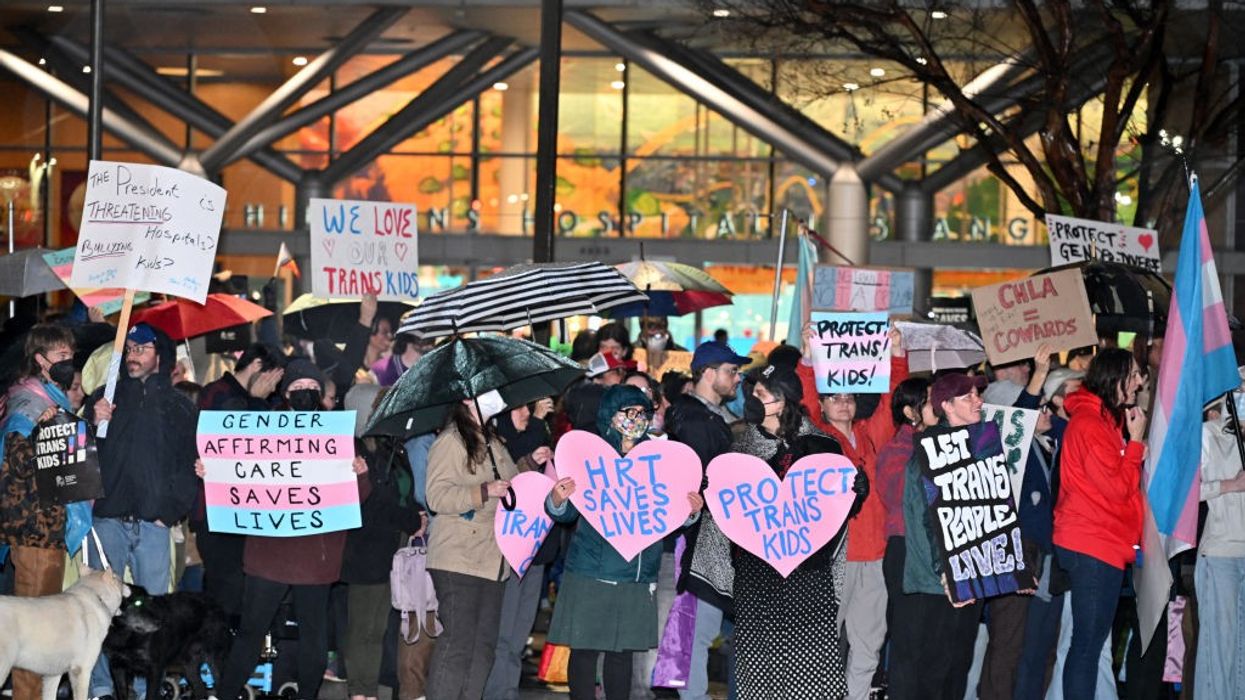
"The Supreme Court is green-lighting the eradication of trans people from society."
"This case carries with it the weight of fierce scientific and policy debates about the safety, efficacy, and propriety of medical treatments in an evolving field," Roberts wrote. "The voices in these debates raise sincere concerns; the implications for all are profound. The equal protection clause does not resolve these disagreements. Nor does it afford us license to decide them as we see best."
"Our role is not 'to judge the wisdom, fairness, or logic' of the law before us... but only to ensure that it does not violate the equal protection guarantee of the 14th Amendment," the ruling adds. "Having concluded it does not, we leave questions regarding its policy to the people, their elected representatives, and the democratic process."
Roberts was joined in the majority by right-wing Justices Clarence Thomas, Samuel Alito, Neil Gorsuch, Brett Kavanaugh, and Amy Coney Barrett. Liberal Justices Sonia Sotomayor, Elena Kagan, and Ketanji Brown Jackson dissented.
Sotomayor wrote in her dissent that "there is no constitutional justification" for the decision, which "does irrevocable damage to the equal protection clause and invites legislatures to engage in discrimination by hiding blatant sex classifications in plain sight. It also authorizes, without second thought, untold harm to transgender children and the parents and families who love them."
She continued:
Transgender adolescents' access to hormones and puberty blockers... is not a matter of mere cosmetic preference. To the contrary, access to care can be a question of life or death. Some transgender adolescents suffer from gender dysphoria, a medical condition characterized by clinically significant and persistent distress resulting from incongruence between a person's gender identity and sex identified at birth. If left untreated, gender dysphoria can lead to severe anxiety, depression, eating disorders, substance abuse, self-harm, and suicidality. Suicide, in particular, is a major concern for parents of transgender teenagers, as the lifetime prevalence of suicide attempts among transgender individuals may be as high as 40%. Tragically, studies suggest that as many as one-third of transgender high school students attempt suicide in any given year.
S.B. 1—introduced by Tennessee state Sen. Jack Johnson (R-23)—who was also behind the state's public drag ban—prohibits minors from undergoing hormone therapy or taking prescribed puberty blockers. Three transgender teens and their parents, as well as a Tennessee doctor who treats trans youth, challenged the law, claiming it violated the equal protection clause.
The plaintiffs were joined by the Biden administration along with the national and state ACLU, Lambda Legal, and the law firm Akin Gump Strauss Hauer & Feld LLP in asking the Supreme Court to review the ban after the 6th U.S. Circuit Court of Appeals upheld it in September 2023.
Responding to Wednesday's ruling, Allison Scott of the Campaign for Southern Equality—which manages the Trans Youth Emergency Project (TYEP)—said: "I am heartbroken today. No one should be forced to leave their home state to access healthcare—and it is outrageous to see the U.S. Supreme Court uphold these bans and continue to allow the government to interfere with the personal medical decisions of families."
Scott was alluding to the argument often made by proponents of bans on not only trans healthcare but also abortion and other reproductive rights that people seeking such care are free to go where it is legal—even as some states pass laws banning such travel.
There are approximately 300,000 people aged 13-17 and 1.3 million adults in the United States who identify as transgender, according to the Williams Institute at the University of California, Los Angeles School of Law, which notes that more than two dozen states have passed laws similar to S.B. 1.
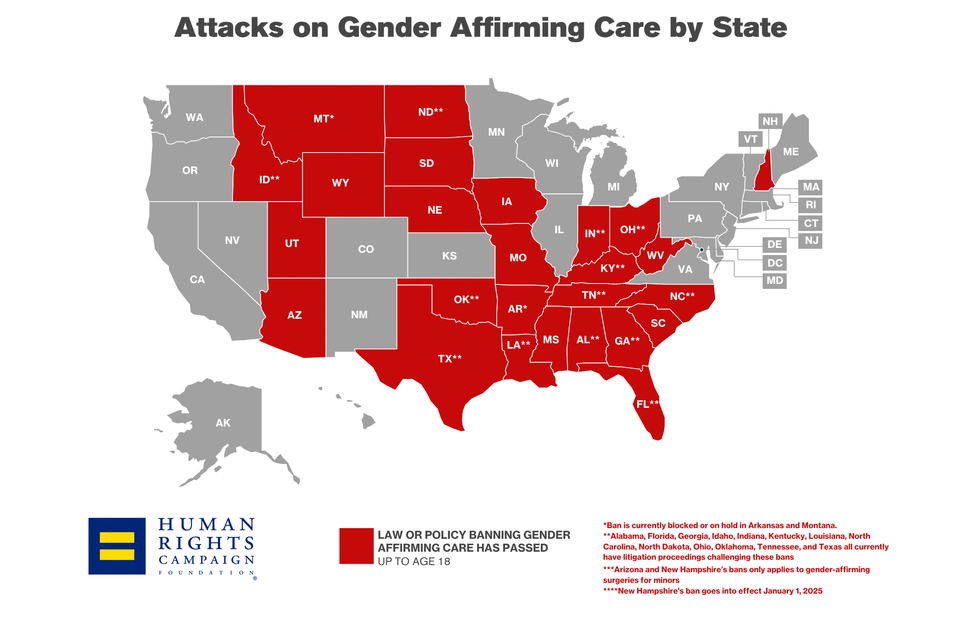 (Image: Human Rights Campaign Foundation)
Transgender activist Alejandra Caraballo, a civil rights attorney and instructor at the Harvard Law School Cyberlaw Clinic, said on the social media site Bluesky, "I can't begin to tell you just how incredibly fucked trans people are here."
"This will pour gasoline on the Trump administration's attacks on trans people and they will get even harsher and more cruel," Caraballo added. "The Supreme Court is green-lighting the eradication of trans people from society."
Caraballo and others including the ACLU and trans rights activist Erin Reed noted that the decision is somewhat limited because it leaves previous rulings against anti-trans laws intact. However, Caraballo warned that "while the decision didn't explicitly say heightened scrutiny doesn't apply to all contexts involving trans people, it held that it was on the basis of medical diagnosis."
Therefore, "the government could just do whatever it wants to trans people based on gender dysphoria," she wrote. "For instance, they could strip everyone with gender dysphoria of security clearance in the government. Declare everyone with gender dysphoria a national security threat and purge them from the government entirely. The trans military ban will be upheld under this."
"Most importantly, states can now just ban gender-affirming care for everyone, including adults," Caraballo added. "We'll likely see that coming soon in addition to federal government efforts to eliminate access for all trans people."
"This will pour gasoline on the Trump administration's attacks on trans people."
U.S. President Donald Trump has renewed and expanded his first-term attacks on transgender people, including by issuing a day one executive order declaring that only two genders exist, another order advocating action against educators who "facilitate the social transition of a minor," and yet another directing the Department of Education—which he has vowed to abolish—to notify school districts that allowing transgender girls and women to compete on female teams violates Title IX, the federal law prohibiting discrimination on the basis of sex in education.
Trump also appointed a transphobe to head the Justice Department's civil rights office, ordered the removal transgender people and issues from federal agency websites, and reinstated his first-term ban on new military enlistment by trans people, who—according to the White House—cannot lead an "honorable, truthful, and disciplined lifestyle."
"Every day I speak with families of transgender youth who are worried about the future," TYEP patient navigator Van Bailey said after Wednesday's ruling. "Many are panicking, unsure of where or when they'll get the medicine that their child needs to continue leading a healthy, happy life. These laws are cruelly thrusting families into impossible choices, and it is deeply unfair."
ACLU LGBTQ & HIV Project co-director Chase Strangio—the first openly trans attorney to argue before the Supreme Court—said that "today's ruling is a devastating loss for transgender people, our families, and everyone who cares about the Constitution."
However, Strangio also noted that "the court left undisturbed Supreme Court and lower court precedent that other examples of discrimination against transgender people are unlawful."
"We are as determined as ever to fight for the dignity and equality of every transgender person and we will continue to do so with defiant strength, a restless resolve, and a lasting commitment to our families, our communities, and the freedom we all deserve," he added.
Jennifer Levi, senior director of transgender and queer rights at GLAD Law, said in a statement that "the court today failed to do its job."
"When the political system breaks down and legislatures bow to popular hostility, the judiciary must be the Constitution's backbone," Levi added. "Instead, it chose to look away, abandoning both vulnerable children and the parents who love them. No parent should be forced to watch their child suffer while proven medical care sits beyond their reach because of politics."
"When the political system breaks down and legislatures bow to popular hostility, the judiciary must be the Constitution's backbone."
National Center for LGBTQ Rights legal director Shannon Minter asserted: "The court's ruling abandons transgender youth and their families to political attacks. It ignored clear discrimination and disregarded its own legal precedent by letting lawmakers target young people for being transgender."
"Healthcare decisions belong with families, not politicians," Minter added. "This decision will cause real harm."
Sasha Buchert, counsel and director of the Nonbinary and Transgender Rights Project at Lambda Legal, called the ruling "heartbreaking" and contended it will make it "more difficult for transgender youth to escape the danger and trauma of being denied their ability to live and thrive."
"But we will continue to fight fiercely to protect them," Buchert added. "Make no mistake, gender-affirming care is often lifesaving care, and all major medical associations have determined it to be safe, appropriate, and effective. This is a sad day, and the implications will reverberate for years and across the country, but it does not shake our resolve to continue fighting."
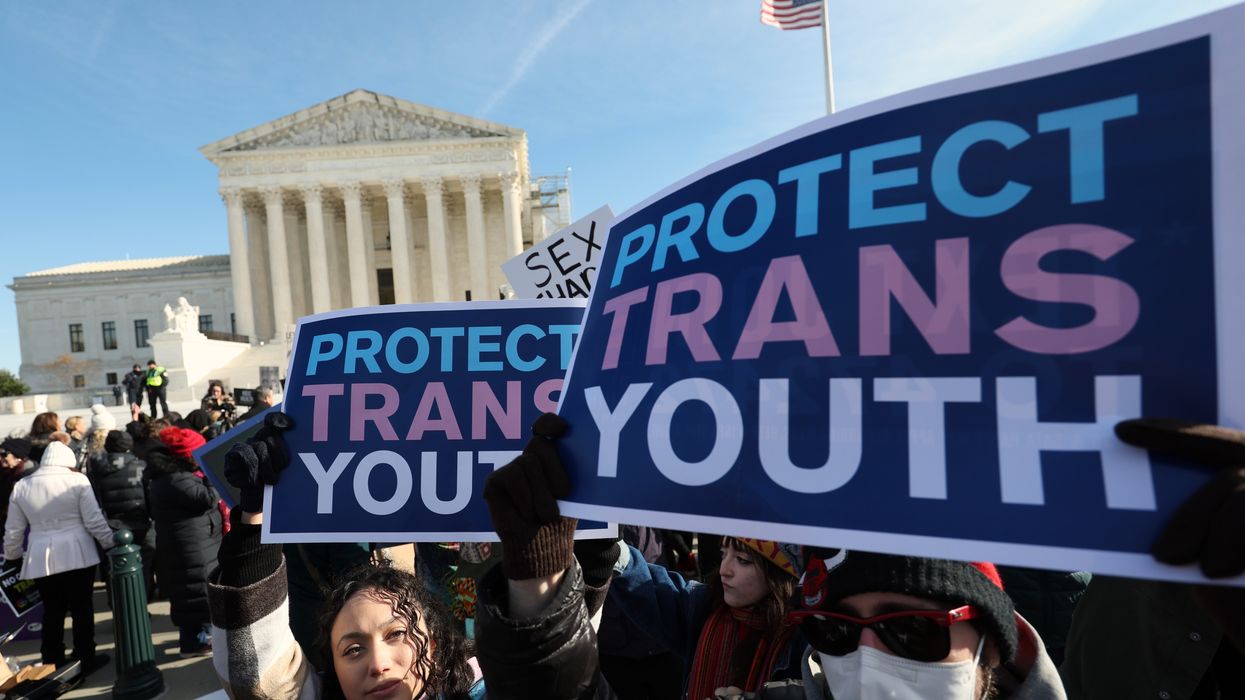
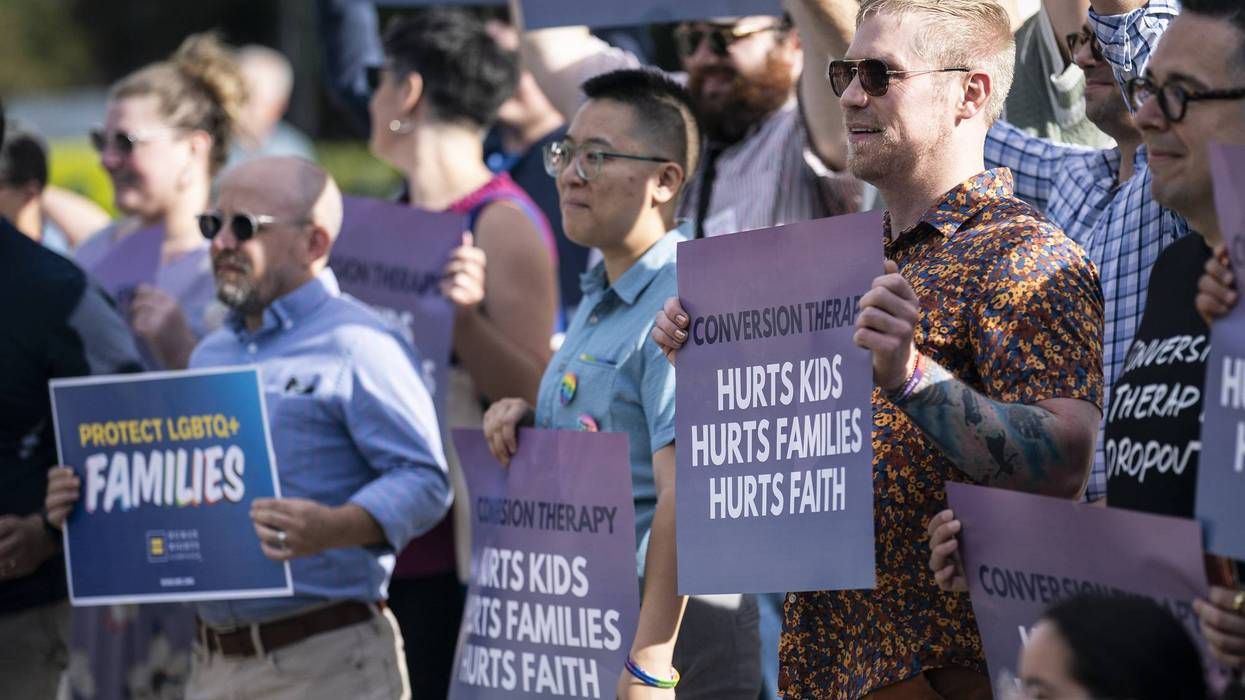
Human Rights Campaign (HRC), Lambda Legal, and other advocacy organizations are planning to hold a "decision day" rally at noon Wednesday outside the Supreme Court in Washington, D.C.
HRC lamented that Skrmetti "sets a dangerous precedent and threatens access to care for trans people across the country."
"We are showing up loud and clear: We will not go back," HRC said. "We will not be erased."