

SUBSCRIBE TO OUR FREE NEWSLETTER
Daily news & progressive opinion—funded by the people, not the corporations—delivered straight to your inbox.
5
#000000
#FFFFFF
To donate by check, phone, or other method, see our More Ways to Give page.
Daily news & progressive opinion—funded by the people, not the corporations—delivered straight to your inbox.
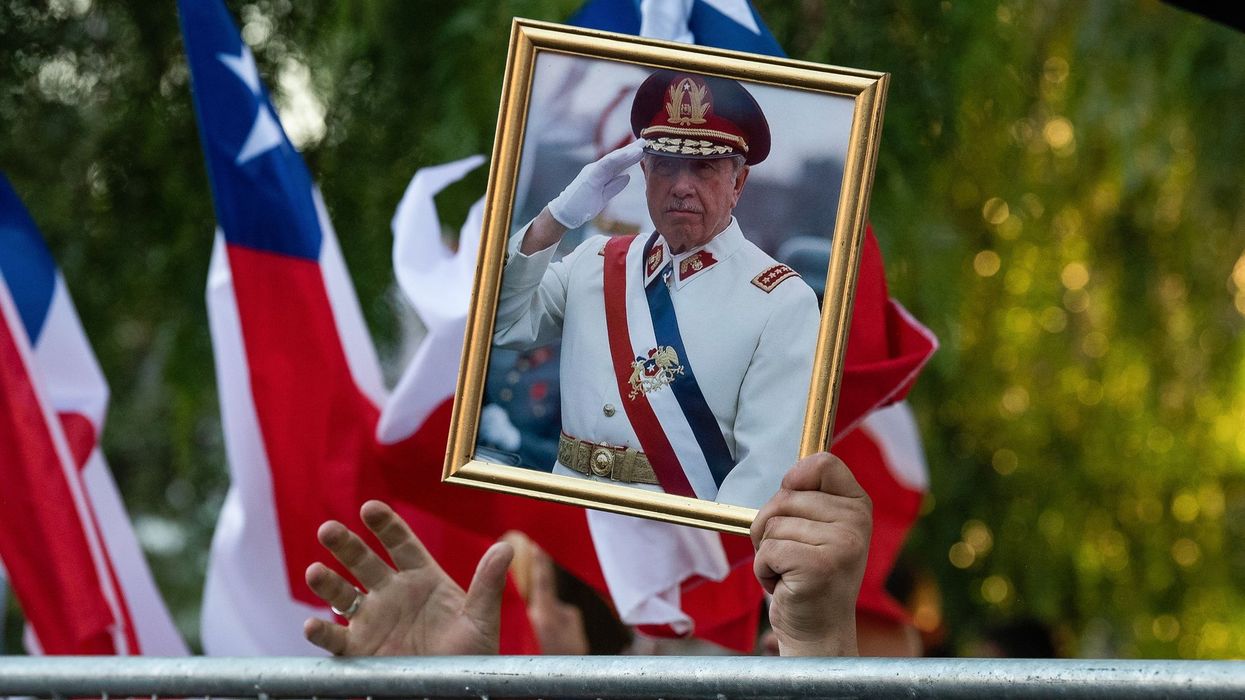
Through a combination of elections, judicial maneuvers, and extra-parliamentary pressure, including direct interference by Washington, countries that were formerly left or left leaning have swung sharply to the right.
2025 saw progressive governments in Latin America and the Caribbean delegitimized and displaced. Right-wing forces have seized on drug-related crises to attack the so-called Pink Tide governments, driving a reactionary backwash and putting new, neoliberal administrations in power. The irony is that the rise in drug use and crime is driven by neoliberalism’s failure to meet social needs. But this has been successfully cloaked.
A further irony is that governments with the strongest records in limiting the social damage caused by illegal narcotics have been the principal targets of US destabilization campaigns.
Despite the reactionary backwash, more than half the region’s population is still governed by progressive administrations, of which the largest countries are Brazil, Mexico, and Colombia.
This could change in 2026, with presidential elections in Colombia and Brazil, where right-wing challenges threaten progressive gains. As the Financial Times observes, “Brazil’s global balancing act is trickier than ever.” Peru, where left-wing President Pedro Castillo was deposed and imprisoned two years ago, may also continue rightwards in elections scheduled for April. Of the current Pink Tide governments, Mexico appears best insulated from an imminent reversal.
Presiding over these developments is an increasingly assertive US hegemon, citing a “Donroe” corollary to the 19th-century Monroe Doctrine as justification for the havoc it is wreaking. Now formalized in the National Security Strategy, it's policy aims to “reassert and enforce the Monroe Doctrine to restore American pre-eminence” in Latin America and the Caribbean (LAC). As Venezuelan Ambassador Samuel Moncada warned the UN Security Council, Venezuela is only the “first target of a larger plan” to divide and conquer the region “piece by piece.”
Through a combination of elections, judicial maneuvers, and extra-parliamentary pressure, including direct interference by Washington, countries that were formerly left or left leaning have swung sharply to the right. This trend was evident in LAC’s four major elections in 2025—in Bolivia, Chile, Ecuador, and Honduras.
Across the region, the right now arguably constitutes a significant Washington-aligned force.
There were, however, crumbs of comfort for progressives. In Ecuador, the victorious President Daniel Noboa—whose win is likely attributable to electoral fraud—has since lost key popular referendums. In Bolivia, President Rodrigo Paz faces massive popular resistance as he moves to impose austerity economics. And in Chile, the defeated communist candidate Jeannette Jara did nevertheless secure 42% in December’s runoff vote.
Progressive governments have also shown a degree of unity in opposing US aggression against Venezuela, although Mexico and Brazil have also had to contend with Washington’s direct pressures on them. In Mexico, this included overt military threats.
The rightward shift is starkly illustrated by Chile’s election, where the outgoing Gabriel Boric had been a “flash in the pan” and unfulfilled expectations have “reshaped the political horizon of the left.” In March, when José Antonio Kast takes office, Chile will have a “Nazi” in power—or at least a self-avowed defender of the Pinochet dictatorship and the son of an actual German Nazi. Kast’s first foreign visit after his win was to Argentina’s hard-right Javier Milei, restoring an alliance between the two major Southern Cone countries. Both have large, right-leaning middle classes that sustained dictatorships in the recent past.
“Trump’s policies have intensified the extreme polarization in which the far right has replaced the center right,” notes Steve Ellner, retired professor at Venezuela’s Universidad de Oriente.
Across the region, the right now arguably constitutes a significant Washington-aligned force encompassing not only Chile and Argentina but also Paraguay, Bolivia, Ecuador, Panama, and El Salvador. All support Washington’s military aggression against Venezuela and genocide in Palestine. As Vijay Prashad observes, this new right bloc shares the libertarian economic doctrines of the Pinochet-era “Chicago Boys” (Kast’s brother was one of them), dramatized by Milei waving a chainsaw to symbolize his attack on the state.
Both left and right agree that organized crime poses a major threat to LAC’s security. Although statistics show that most of the region is safer than a decade ago, violence has surged in some previously safe countries and reactionary forces have pushed crime as an issue in many others. “Polls show that in at least eight countries, including Chile, security is the dominant voter concern, driving many Latin Americans to demand iron-fisted measures and show a greater tolerance for tough-on-crime policies,” reports the New York Times.
The right’s response is captured by the phrase la mano dura (“the iron fist”), exemplified by the torturous prisons of Nayib Bukele’s El Salvador. Such approaches have proven more attractive to electorates in Chile, Honduras, and Ecuador than the community-based strategies advanced by the left—even though they are proven to work. Rafael Correa successfully reduced crime in Ecuador a decade ago. Xiomara Castro, too, achieved a significant decrease in Honduras, where the homicide rate dropped to the lowest level in 30 years. Left-leaning Mexico most dramatically reduced homicides by 37%.
The right’s alarming yet successful rhetoric links rising crime to drug trafficking and immigration. Trump-style measures have been sold to many Latin Americans yet, as Michelle Ellner of CodePink explains, in Cuba and Venezuela he is blocking migrants from entering the US “while systematically destroying the conditions that allow them to survive at home.”
This framing resonated even in Chile, which remains Latin America’s safest country despite an increase in gang-related crime. Kast successfully blamed the increase on Chile’s half million Venezuelan migrants, whom he threatens to deport, while also proposing to construct a US-style border wall.
The principal driver of the region’s crime is the drug trade. The unseen elephant in the room is the US—the world’s largest market for illegal narcotics as well as the leading money launderer of drug profits and the cartels’ gunrunner of choice. Yet Washington portrays itself as an ally in drug-related crime prevention, claiming to be tackling “narco-terrorism” not only in Venezuela but also in Colombia and Mexico.
This is hypocrisy of the highest order. As Venezuelan writer Francisco Delgado Rodríquez points out: “The only culprits are cartels and bandits with Latin American surnames, and their US counterparts or partners never appear, defying common sense given that the volumes of drugs, weapons, and profits generated necessarily require organized structures of their own on US soil.”
Nicaragua-based analyst Stephen Sefton also notes “the central role of the US government in manipulating the regional structures of organized crime and money laundering.” In reality, “US government propaganda uses the alibi of fighting organized crime and drug trafficking to justify its extensive military presence in the region.”
Trump has elevated this hypocrisy to new heights by releasing a former Honduran president who was serving a 45-year US prison sentence for drug trafficking and links to violent crime. Trump’s administration has gone on to murder, on the high seas, over 100 supposed drug traffickers, offering no proof of their crimes, and has committed acts of piracy against commercial vessels leaving Venezuela. This is in open defiance of the Law of the Sea, which the US explicitly cites in a different context—its actions to maintain “freedom of navigation” in the South China Sea.
The surge of drug-related crime, and even more of the rhetoric surrounding it, have coincided with the rise of a powerful Christian right. Once overwhelmingly Catholic, the region has seen rapid growth in conservative Protestant evangelical movements, particularly in Central America. Evangelicals constitute approximately 43% of the electorate in Honduras, 40% in Guatemala and Nicaragua, 37% in El Salvador, 29% in Panama, and 27% in Costa Rice and Brazil. Aligned with the populist right, these movements tend to promote social conservatism and pro-Zionism.
In 2014, the 33 member states of the Community of Latin American and Caribbean States (CELAC) declared the region a Zone of Peace, pointedly asserting its sovereignty and its opposition to US military infiltration. In opposition to any such accord, Washington instrumentalizes a “war on drugs,” which Cuba has described as “a pretext to conceal military, paramilitary, and interventionist operations.”
Biden’s expansion of US military penetration continued seamlessly with Trump—only intensified further. This includes the deployment of a full naval armada off Venezuela’s coast; major military buildups in Puerto Rico and Panama; and the recruitment of Trinidad and Tobago, Dominican Republic, and Guyana into the offensive against Venezuela.
Despite the counter-hegemonic presence of China, the power of the US is such that it can threaten punitive tariffs on all the constituent countries and impose unilateral coercive measures on roughly 35% of the states in the Western Hemisphere.
Trump began his new term with mass migrant deportations and sweeping tariffs imposed on the region in January, a lurch toward xenophobia and economic parochialism. In response, Honduran President Xiomara Castro, then head of CELAC, called an emergency meeting, which was then canceled for lack of regional unity. The pan-Caribbean CARICOM has seen unity undermined by Trinidad and Tobago’s servile support of Trump’s armada. In response, Black Studies professor Isaac Saney asks, “Will the Caribbean accept fragmentation as its fate, or will this rupture provoke a renewed Pan-Caribbean struggle for a future beyond empire?”
Indeed, other regional organizations such as the progressive-oriented CELAC and even the US-dominated Organization of American States (OAS) have waned, especially given the latter’s anemic response to US military aggression in the Caribbean. The OAS’ controversy-ridden Summit of the Americas, scheduled for December, has been postponed to 2026.
Among the region’s most progressive forces, the Bolivarian Alliance for the Peoples of Our America (ALBA) has faced setbacks, including the loss of Bolivia following the election of a right-wing president. The influential leadership of Ralph Gonsalves was also lost when he was voted out in St. Vincent and the Grenadines.
“The level of fragmentation that we are seeing today among Latin American countries,” Foreign Policy observes, is “the most dramatic in the last half-century.”
Washington’s push to consolidate hemispheric dominance is linked to efforts to counter China, now South America’s largest trading partner and the second largest for the overall LAC region. China’s regional strategy sharply contrasts with Trump’s. China offers a win-win model of economic cooperation for mutual benefit, while the US proffers a zero-sum model of winners and losers.
China rejects excluding third parties from the region, while the US pledges to “deny non-Hemispheric competitors.” China emphasizes multilateral cooperation and shared Global South priorities, such as reforming international financial institutions, scientific collaboration, and high-tech investment. Beijing criticizes Washington’s “unilateral bullying.”
Most LAC governments try to triangulate between Beijing and Washington, while also developing new trading partnerships with countries such as India. Under US pressure, however, Brazil and Mexico may impose new tariffs on Chinese goods, although trade with China remains crucial for both. Argentina’s President Milei accepted a US bailout, but nonetheless renewed a currency swap line with China.
Washington is pressing its client states to take an anti-China stance, which it does not even take itself, by recognizing Taiwan and cutting formal diplomatic relations with the PRC. New rightist presidents in Bolivia and Honduras have promised to do so.
Furthermore, both the US and China need access to lithium, a vital mineral in advanced technology. Argentina, Bolivia, and Chile possess around 60% of the world’s known reserves. But while China offers complementary investment and industrial partnerships in return for a share of such resources, the US offers military bases and threats.
Despite the counter-hegemonic presence of China, the power of the US is such that it can threaten punitive tariffs on all the constituent countries and impose unilateral coercive measures on roughly 35% of the states in the Western Hemisphere. These sanctions, which are collective punishment, are illegal under international law. This is done with relative impunity and little prospect for relief for the victims. And victims there are of the so-called sanctions—especially those imposed on Venezuela and Cuba, which are under country-level embargoes or sectoral restrictions that constitute blockades because the measures are enforced against third countries.
Haiti represents the ultimate outcome of neoliberal whittling down of the state: a hollowed-out government, near-total loss of sovereignty to the US and its allies, and a vacuum in which criminal gangs operate with impunity. This is the logical outcome of enforced submission to empire.
The US seeks to impose a similar subjugation on Venezuela precisely because Venezuela represents the hope of an alternative socioeconomic order. Michelle Ellner rightly argues that Venezuela is a test case:
What is being refined now—economic siege without formal war, maritime coercion without declared blockade, starvation without bombs—is a blueprint. Any country that refuses compliance with Washington’s political and economic demands should be paying attention. This will be the map for 21st century regime change.
Even if Venezuela had not a drop of oil to be exploited, it still would be in the crosshairs of imperialism as are Marco Rubio’s other two “enemies of humanity”—resource-poor Cuba and Nicaragua. Havana, made more vulnerable by the blockade on Venezuela, is now teetering on the brink of a disaster not of its own making. Nicaragua, so far treated lightly, faces attacks on its tourism industry and the likelihood of punishing tariffs. Also in line for regime change is Colombia, whose President Gustavo Petro has emerged as a continental conscience through his criticism of Washington’s deportation policies and his outspoken support for Palestine.
Nonetheless, Venezuelan President Nicolás Maduro faces the hardest test, likely with worse to come. He embodies a nation and more broadly a region bravely resisting imperial domination with remarkable resolve. Anti-imperialists hope and believe that such resistance by Latin America’s progressive governments will sustain them during 2026 and beyond.
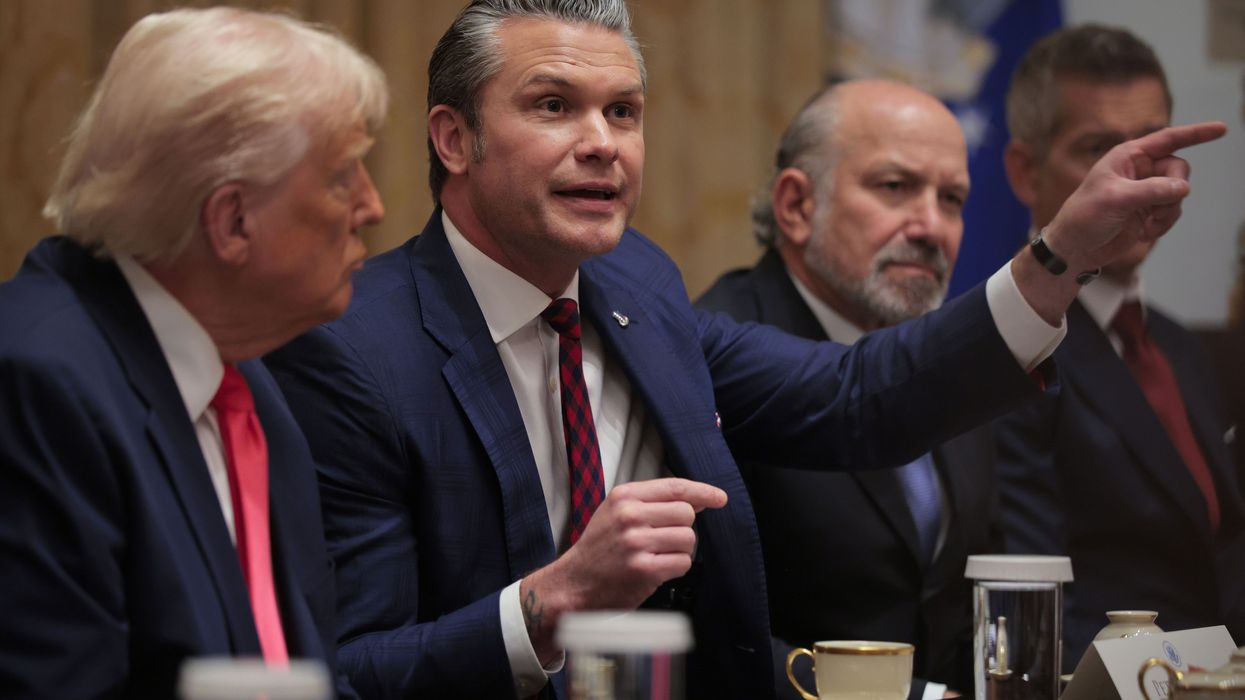
Framing “Operation Southern Spear” as a battle against “narco-terrorists” is a desperate attempt to commit new violence using old excuses, one which ignores the security state’s history of creating its own enemies.
Between the War on Drugs and the War on Terror, the US government has a long history of waging bloody and unsuccessful wars against broad concepts that can not be meaningfully defeated. What makes the government’s latest “armed conflict” unique is not just its combination of these two failures, but also that its target—“narco-terrorism”—is largely a myth.
Under the title “Operation Southern Spear,” the Trump administration has launched a campaign intended to target the drug cartels that it designated as terrorist organizations earlier this year. So far, this has involved at least 21 airstrikes, killing upwards of 83 people on small boats in the Caribbean and the Pacific; a military buildup involving 15,000 troops; and covert operations by the CIA in Venezuela. Though President Donald Trump lacks the legal authority for these activities, the Senate’s latest attempt to restrain military action failed in a narrow vote of 49-51.
Key to the White House’s case is the idea of “narco-terrorism,” a label they have applied to both the airstrike victims and Venezuelan President Nicolas Maduro. The US claims that Maduro is closely connected to the Tren de Aragua cartel (despite a National Intelligence Council analysis suggesting otherwise) and that he is the leader of the supposed “Cartel of the Suns” (which, despite its terrorist designation, does not exist as an organization). The specter of “narco-terrorism” has also been invoked to bash the progressive governments of Colombia and Honduras.
To say that “narco-terrorism” is a myth is not to deny the obvious violence associated with the black market drug trade, but to acknowledge that the term does more to confuse than to clarify. The idea does not accurately explain the complex dynamics of the global drug trade; instead, it radically oversimplifies the problem. By portraying military intervention as a response to drug trafficking, the “narco-terrorism” myth allows politicians to ignore all of the ways in which military intervention is a cause of drug trafficking.
“Narco-terrorism” has its origins in the early 1980s, when US Ambassador to Colombia Lewis Tambs began referring to leftist rebel groups like FARC and ELN as “narco-guerillas.” Some of his specific claims were fabricated: After Colombian police completed what was then the largest drug bust in history, Tambs falsely claimed that communist rebels were involved in the operation, prompting another State Department official to admit that “Tambs got ahead of the evidence.” Regardless, the idea quickly gained acceptance as a justification for military intervention in Latin America, suggesting that the only way to reduce drug abuse at home was to wage war against foreign suppliers. By 1985, the Reagan administration was alleging an “emerging alliance between drug smugglers and arms dealers in support of terrorists and guerrillas.”
Ironically, Tambs himself later played a role in the Iran-Contra scandal, helping to traffic drugs and guns for the violent anti-communist Contras in Nicaragua. The full scope of the CIA’s involvement in bringing the Contra’s drugs into the US remains unclear, but at the very least it is obvious that officials like Tambs helped support the group. Thus, the idea of “narco-terrorism” was created by someone who participated in it.
The “narco-terrorism” label has always been controversial. Drug traffickers are motivated solely by profit, while “terrorists” and “guerillas” are motivated by goals like ideology and territory. Though some armed groups in Latin America engaged directly in the drug trade, many others either had no involvement or were involved only by “taxing” traffickers for revenue. “Narco-terrorism” misrepresents this extortion racket between two opposed groups as an alliance of like-minded organizations. By “combining two threats that have traditionally been treated separately,” critics argue that the term can “complicate rather than facilitate discussions on the two concepts…”
Many of the largest foreign interventions in US history created new pathways for drugs to reach the country while also generating new demand among traumatized veterans.
Far from being allies, rebels and drug traffickers often fought one another. Most rebels were communist outsiders, while many traffickers hoped to build ties with Colombia’s elite. The rebels sometimes imposed wage and price controls in coca-growing communities in hopes of building popular support, rules which ate into the traffickers’ profits. These tensions eventually escalated into violent conflict, and it was later revealed that dozens of officers from the US-backed Colombian military had collaborated with the traffickers in a campaign to crush the rebels. The rebels and traffickers were “staunchly opposed social forces” in the words of journalist Collet Merrill, meaning that “narco-guerilla” was “less an analytical model than a political slogan.”
The Trump administration’s definition of “narco-terrorism” seems even less useful than its original meaning. Speaking to the United Nations, a US delegate commented on the recent terrorist designations of cartels to say: “When you flood American streets with drugs, you are terrorizing America...” Similarly, the White House claims that drug imports “constitute an armed attack” all by themselves. In other words, traffickers no longer need to have any “terrorist” connections to be considered “narco-terrorists,” because all drug trafficking is now considered “terrorism.”
The language used in our debates about drug trafficking is poisoned by this type of imprecision. Even the concept of a “cartel” is suspect, as it often portrays loose networks of organized criminals cooperating with state authorities as well-coordinated paramilitaries that lack government connections. This sort of terminology survives because of its usefulness to government officials in search of ready-made explanations, officials who did not want to draw attention to their own role in the global drug trade.
Many of the largest foreign interventions in US history created new pathways for drugs to reach the country while also generating new demand among traumatized veterans, leading some scholars to conclude that “every major foreign war of the past century produced a domestic drug crisis.” At times, the US government has even purposefully supported drug traffickers to advance its short-term objectives.
During the Vietnam War, the CIA allegedly facilitated drug trafficking in Southeast Asia to help fund anti-communist organizations, helping to turn the region into the source of the majority of the world’s heroin by the early 1970s. Much of this heroin made its way to US soldiers stationed overseas and, through the trafficking efforts of troops like Army Master Sergeant Ike Atkinson, to the United States itself. The subsequent rise in drug addiction helped inspire the original “War on Drugs,” a war which the US fought on both sides of.
The pressures of the Drug War helped bring Mexican “cartels” into existence. One of the first such organizations—the “Guadalajara Cartel”—emerged as an organized effort to survive the joint US-Mexican attempts at destroying the then-disorganized drug trade. Later efforts to support foreign security forces backfired when some of the Mexican soldiers who received special forces training in the US defected to form their own cartel: “Los Zetas,” which carried out a wave of extreme violence in Mexico in the 2000s-2010s.
With our focus exclusively on military efforts to disrupt the supply of drugs, little time is spent on the real solution: reducing demand.
Similarly to Vietnam, the War in Afghanistan created new channels for heroin trafficking. After the Taliban lost control of the country, a US government report noted that Afghanistan saw “increased poppy cultivation and drug production as farmers and traffickers took advantage of the power vacuum…” The growing opium trade corrupted the highest levels of US-backed leadership in Afghanistan. As a result, US-occupied Afghanistan was “producing nine times more heroin than the rest of the world combined,” according to journalist Seth Harp.
Sensing a profitable opportunity to connect this supply of heroin with the demand at home, a group of current and former US troops began smuggling the opium into the world’s largest military base, Fort Bragg. These smugglers then moved the drugs around the country by plugging into the distribution network of the Los Zetas cartel (whose founders had coincidentally received training at Fort Bragg decades earlier). US military interventions thus produced all of the necessary ingredients to inflame the opioid crisis: a flood of new heroin production abroad, flights to smuggle it into the US, and a cartel with the skills to distribute it.
These are just a few of the moments throughout history when the US government facilitated drug trafficking all over the world. More recently, the US provided extensive support to Honduran President Juan Orlando Hernández despite widespread allegations that he was connected to cocaine trafficking. Only after he left office did the US government bother to indict him for “protect[ing] some of the largest drug traffickers in the world,” helping to bring more than 400 tons of cocaine into the country. In an absurd act of hypocrisy, President Trump recently pardoned Hernández on the grounds that the convicted drug trafficker was “treated very harshly and unfairly.”
Believe it or not, this was not even the first time that something like this had happened. In the 1980s, the Reagan administration tolerated the obvious drug trafficking of Panamanian dictator Manuel Noriega because of his cooperation with their geopolitical priorities. As with Hernández, the government even provided cover for Noriega by claiming that he helped fight against drug trafficking. But when US officials finally lost patience with him near the end of the decade, a Panamanian official predicted that “suppressing drug trafficking might be the Reagan administration’s excuse for an invasion.”
Though George H.W. Bush claimed that the 1989 invasion of Panama was intended in part “to combat drug trafficking,” others were skeptical. The Academy Award-winning documentary The Panama Deception argued that the true purpose of the invasion was to reinforce US dominance over the Panama Canal (a topic which is now an obsession of President Trump’s). Though this regime change operation against a former ally serves as a classic example of how military interventionism creates its own villains, it is now often remembered as a success, even earning praise from Republicans arguing in favor of Trump’s airstrikes. Panamanian diplomat Carlos Ruiz-Hernández recently criticized this comparison as a “fundamentally flawed” analogy which “persists because it’s emotionally satisfying for US hawks.”
By misunderstanding and overemphasizing a select few of the groups involved in the drug trade, the “narco-terrorism” myth redirects our attention away from more significant causes of drug trafficking. First, the focus on supply distracts us from the far more important question of demand—so long as drug addiction remains a major problem in this country, the drugs will always find a way in. Additionally, the exclusive focus on non-state actors distracts us from the role that our own government plays in facilitating the global drug trade.
Framing “Operation Southern Spear” as a battle against “narco-terrorists” is a desperate attempt to commit new violence using old excuses, one which ignores the security state’s history of creating its own enemies. In truth, this is a domestic problem as much as a foreign one. Of those convicted of drug trafficking in the US, 80% are citizens. MS-13, now designated as a foreign terrorist organization, was founded in Los Angeles and spread abroad by the US government’s deportation practices. More than two-thirds of the Mexican cartels’ guns come from the US, and US military weaponry regularly shows up in the hands of cartel members.
With our focus exclusively on military efforts to disrupt the supply of drugs, little time is spent on the real solution: reducing demand. In fact, the Trump administration has undermined real public health solutions by repeatedly firing employees at the Substance Abuse and Mental Health Services Administration, discouraging lifesaving harm reduction efforts, and proposing massive cuts to drug abuse services. No amount of immoral and illegal airstrikes will ever save even a fraction of the lives lost by these decisions.
Perhaps the greatest flaw of “narco-terrorism” is that it encourages us to believe that complex human problems have simple military solutions. Sociologist C. Wright Mills once astutely criticized US elites for accepting a “military definition of reality,” a distorted perspective which prevents them from imagining policy solutions that do not involve military intervention. So long as the government insists upon seeing non-military problems through a military lens, they will never be solved.

This is not about stopping the flow of dangerous drugs, it is about actually increasing the flow of the dangerous drug some pushers want to keep us all hooked on.
President Donald Trump’s saber-rattling about potential military action in Venezuela is indeed about drugs, but not cocaine. It is about a far more dangerous drug that former President George W. Bush admitted (in his 2006 State of the Union address) the US is addicted to—oil.
Venezuela has the largest proven oil reserves in the world—300 billion barrels—even larger than reserves in Saudi Arabia. Mr. Trump and his oil industry friends may imagine that by deposing President Nicolas Maduro and installing a friendly government there, the US would have unlimited access to this huge oil reserve, which is five times larger than the proven reserves in the US. Never mind the fact that for any hope of future climate stability, most of this oil needs to stay right where it is, in the ground.
We've seen this tragic play before. The Bush administration justified its disastrous 2003 invasion of Iraq with the pretext that Iraq had weapons of mass destruction which, as it turned out, it didn't. And as US Central Command commander General John Abizaid admitted about the Iraq war at the time: “Of course it’s about oil, it’s very much about oil, and we can’t really deny that.” The invasion killed tens of thousands of people, mostly civilians, and destabilized the broader Middle East region for years.
And now here we go again. A similar pretext—this time “drug interdiction”—is being used to justify a potential US invasion and regime change in Venezuela. But this is not about stopping the flow of dangerous drugs, it is about actually increasing the flow of the dangerous drug some pushers want to keep us all hooked on—oil. As Colombian President Gustavo Petro recently stated on the US-Venezuela threat: “Oil is at the heart of the matter.”
Instead of admitting their addiction, the damage it causes, and committing to recovery, hard core junkies are always desperate for more supply. It seems Mr. Trump and his oil industry friends are the most dangerous narco-traffickers we need to worry about.
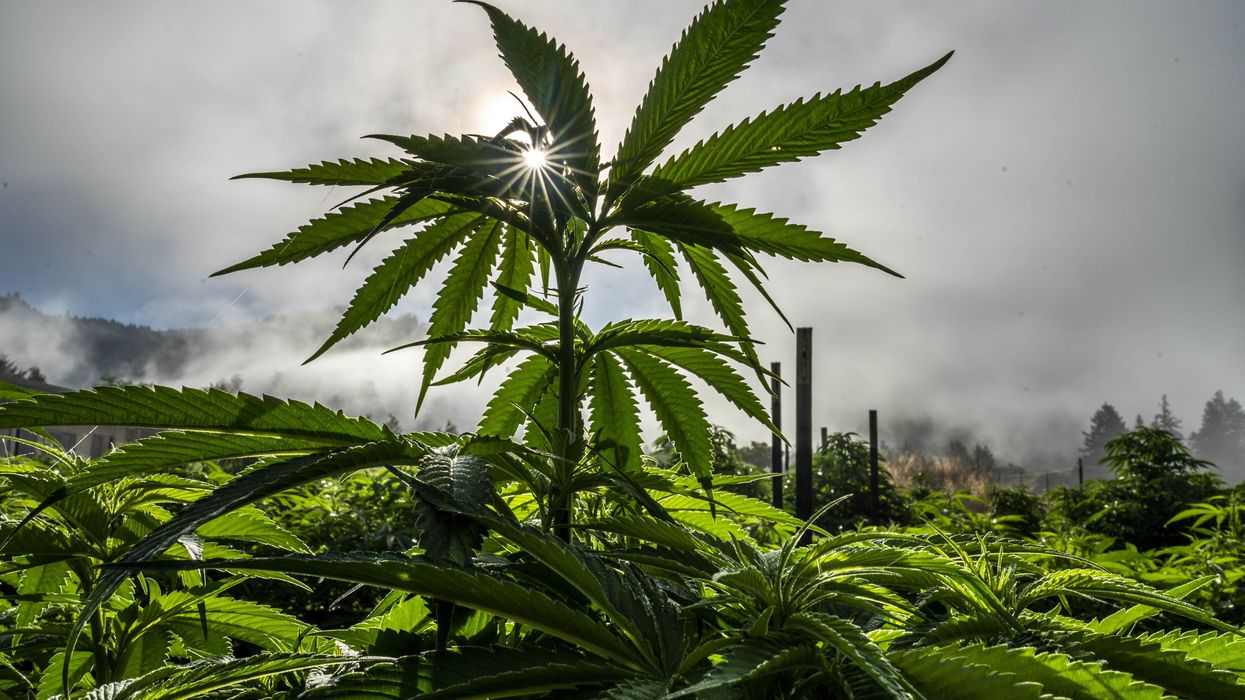
The question is no longer whether the United States should move toward legalization, but why federal law still treats a mainstream industry as a crime.
This fall, the Drug Enforcement Administration is anticipated to decide whether to reclassify cannabis at the federal level. Nearly 90% of Americans support cannabis legalization, 47 states have legalized it for medical use, and over 20 allow for recreational use. The question is no longer whether the United States should move toward legalization, but why federal law still treats a mainstream industry as a crime.
In 2024, Americans spent just as much on cannabis as they did on beer. The US legal cannabis market is worth more than $35 billion and expanding quickly. Yet, under federal law, cannabis is still a Schedule I drug, grouped alongside heroin and considered to have “no medical use.” It’s a Nixon-era relic that has remained unchanged since 1971—by those outdated standards, cocaine and crystal meth are classified as less harmful Schedule II substances. That classification is not only outdated, but it also creates an untenable mismatch between federal policy and economic reality.
Today, cannabis is one of the fastest-growing industries in America, employing nearly 500,000 people—more than the beverage and tobacco manufacturing industries combined—and generating billions in annual tax revenue. Federal legalization would strengthen an already significant engine of economic growth. The cannabis industry added roughly $115 billion to the US economy in 2024 alone and is expected to reach $45 billion in legal sales by 2025. It is one of the few sectors that is both labor-intensive and domestically produced—every gram sold is grown, tested, packaged, and distributed in the US.
All of this growth has happened without access to the basic tools every other sector relies on: banking, capital markets, credit cards, and institutional investment. Because cannabis remains federally illegal, businesses can’t take out conventional bank loans, list on US stock exchanges, or process credit card payments. Dispensaries operate as cash-only businesses, creating daily security risks for employees and customers. Entrepreneurs cannot access Small Business Administration loans or standard insurance. Even employees, founders and executives in the cannabis industry often struggle to qualify for personal mortgage loans due to the industry they work in.
Rescheduling would not be radical. It would be a recognition of the obvious: Cannabis is already part of American life and the American economy.
The result is a thriving yet hobbled industry, competing on an uneven playing field. Legal operators are forced to navigate a different set of regulations, packaging requirements, and facilities for every state where they conduct business, while the illicit market still accounts for an estimated $50 billion in unregulated sales each year and has no problem selling cannabis to the American youth. The DEA’s forthcoming decision offers an opportunity to modernize this system before it calcifies further.
The cultural and economic shifts are here to stay. Cannabis is mainstream. It’s integral to how Americans relax, socialize, and take care of themselves. It’s in our music, our fashion, our film, and our homes. What’s missing is a legal, regulatory, and financial framework at the federal level that reflects reality.
The public health case is equally clear. Consistent national standards would strengthen consumer safety and transparency, closing the gap between legal and illicit markets. Rescheduling would also remove barriers to research and innovation. The current classification makes it nearly impossible for US scientists to study cannabis at scale, leaving critical medical discoveries to foreign and underfunded research programs.
In a country where millions of adults use cannabis for anxiety, pain, and sleep, and where opioid dependency remains a public health crisis, the restriction is not just outdated, but negligent.
A recent study published by the American Journal of Health Economics found that states with legal cannabis programs reduced opioid prescriptions by up to 22%. The American Medical Association also found that cannabis helps cancer patients reduce opioid use throughout their treatments.
Legalization would also improve public safety. With access to banking, dispensaries could move away from cash-heavy operations that make them frequent targets for robbery. National standards for labeling, potency, and contaminants would protect consumers and build trust. And as we’ve already seen in legal states, underage use declines when cannabis is regulated.
Rescheduling would not be radical. It would be a recognition of the obvious: Cannabis is already part of American life and the American economy. In 2023, the Department of Health and Human Services formally recommended to the DEA that cannabis be rescheduled—a historic acknowledgment that federal law is out of step with science, public opinion, and economic reality. Even the Supreme Court has noted the “contradictory and unstable” relationship between federal and state cannabis laws.
This is one of the few policy issues with broad bipartisan support. Former President Joe Biden campaigned on rescheduling cannabis in 2020. So did President Donald Trump in 2024. With the DEA’s decision imminent, the window for meaningful modernization has never been clearer.
The cultural reality is undeniable. The economic opportunity is massive. The public mandate is clear. The question is no longer whether cannabis belongs in American life—it already does. The question is when federal law will finally catch up.
It’s time for Washington to finish what the majority of states have already started: Bring cannabis policy into alignment with science, economics, and public consensus.
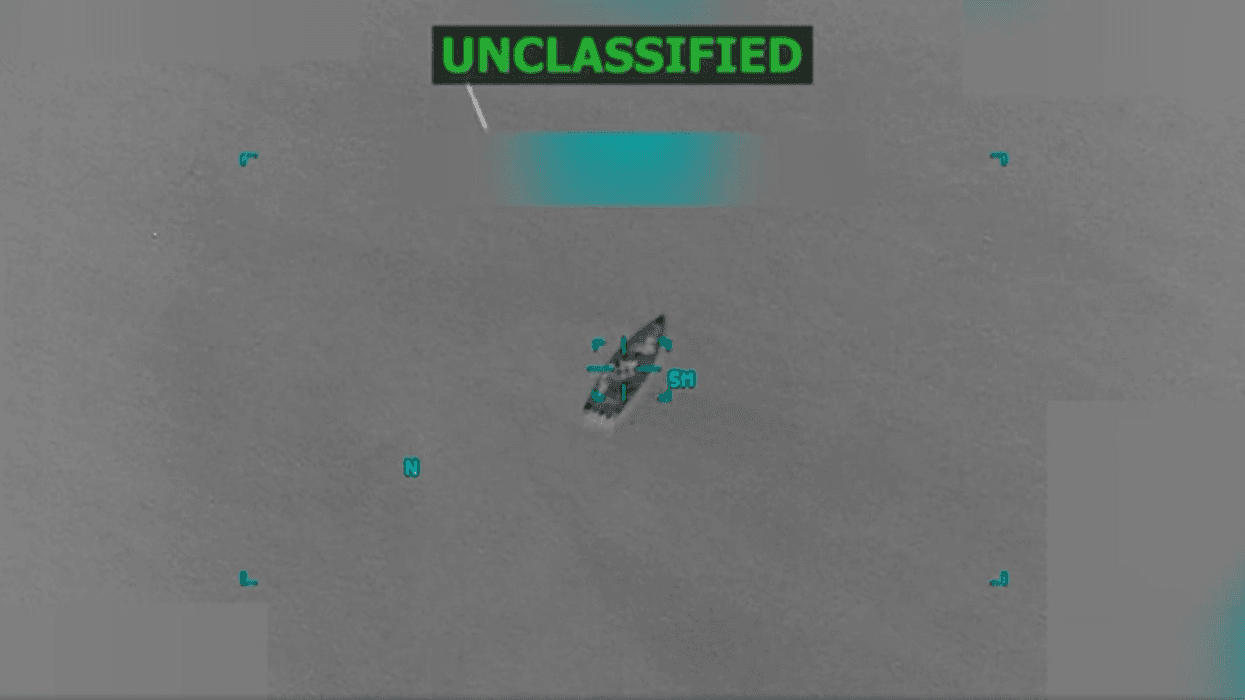
What makes these strikes so appealing to President Donald Trump is that it gives him the godlike power to look down from above and smite anyone who displeases him. But that won't stop the flow of drugs.
The Trump administration has been blowing up fishing boats in the Caribbean—and now one in the Pacific—claiming without evidence that they’re “drug boats.”
These are extrajudicial executions outside any system of law. And there’s a reason we shouldn’t allow drug warriors to act as judge, jury, and executioner: because over the years, they’ve made many, many tragic mistakes and killed lots of civilians.
I’ve seen countless tragedies like these in my decades studying drug policy. Two were particularly egregious.
In 2001, the United States was using local air forces to shoot down alleged trafficking planes over the Peruvian Amazon. In this case, a surveillance plane flown by CIA contractors misidentified a pontoon plane and had it shot down. Instead of traffickers, they killed a missionary from Michigan named Veronica Bowers and her infant daughter.
Would it be okay for the Mexican military to blow up a US fishing boat because they believed it was smuggling deadly guns into Mexico, even if they offered no evidence? Would that be acceptable to this administration?
The second case was an incident in Honduras in 2012, where the Drug Enforcement Administration and local forces mistakenly opened fire on a water taxi, killing four people—including two pregnant women—and then tried to cover it up.
What makes these strikes so appealing to President Donald Trump is that it gives him the godlike power to look down from above and smite anyone who displeases him, without consequence. He’s even told sick jokes about local fishermen in the Caribbean now being afraid to get in their boats.
If he’s allowed to normalize this kind of international extrajudicial killing, I don’t think it’s a far leap for him to try it domestically.
Imagine a cop chasing a guy down the street, getting hot and tired, and shooting the suspect in the back. The cop probably wouldn’t tell a judge, “Well your honor, I didn’t want to chase him, so I just shot him.” But here’s the president declaring on the international stage: We’re not going to do police work. We’re just going to kill people.
Now imagine the shoe’s on the other foot. Most of the killings in Mexico are done by guns smuggled from the United States. They call it the “River of Iron,” and it’s responsible for literally hundreds of thousands of killings in the country in the past 20 years.
So would it be okay for the Mexican military to blow up a US fishing boat because they believed it was smuggling deadly guns into Mexico, even if they offered no evidence? Would that be acceptable to this administration?
The drug war acts as a price support for drug dealers. That’s why no one wants the drug war to continue more than the smugglers themselves.
Here’s what drug warriors don’t understand: The US isn’t under armed attack from drug traffickers. It’s actually the opposite.
Most drugs cost pennies per dose to manufacture. But the higher the risk to the individual smuggler—like the risk of getting arrested, shut down, or blown up—the more they can charge as drugs move down the smuggling chain.
By the time drugs reach users, they’ve snowballed in value. But consumers in the US have proven more than willing to pay hyper-inflated prices, and even risk arrest, for drugs—just as drinkers were once willing to pay bootleggers huge sums for booze during Prohibition.
In short, our policies create tremendous value for substances that are relatively cheap. We’re making trafficking more profitable, not less.
So if the US bombs a trafficker—or an alleged trafficker—we escalate the risk premium for everyone else in that industry. It’s a bad deal for you if you’re the one who’s killed, but it creates a “job opening” for others in the operation, or a rival cartel, to take over that turf—which is now more lucrative.
The drug war acts as a price support for drug dealers. That’s why no one wants the drug war to continue more than the smugglers themselves. This was ultimately why the US ended alcohol prohibition.
Addiction is a public health problem and requires public health solutions, not allowing someone like Trump to play judge, jury, and executioner—at home or abroad.
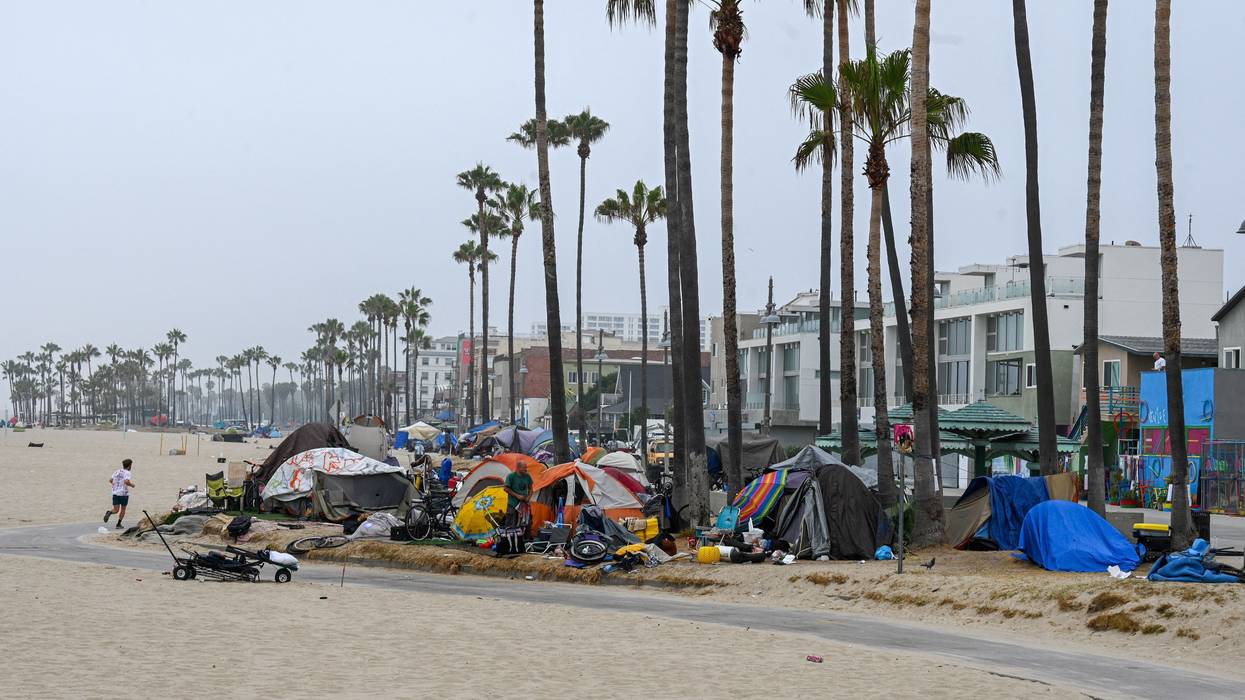
If you don’t want to acquiesce to the president’s way of doing things, might it not finally be time to make eye contact with those neighbors of ours who are homeless?
The federal takeover of Washington, DC rightfully attracted extensive media coverage, but an executive order called “Ending Crime and Disorder on America’s Streets,” quietly issued on July 24, received remarkably little attention. Perhaps it didn’t make a splash because it wasn’t specifically about policing (or, for that matter, National Guarding), but more generally about how we should treat people who already exist on the outermost fringes of society, human beings who have long been reduced to labels like “addict” or “homeless.”
Indeed, the Trump administration is counting on us to renounce those living on the streets, while struggling with their mental health or the cost of housing (or both). And if history is any guide, that may be exactly what most of us do. While the current moment may feel shocking in so many ways, the president’s order to end what he’s labeled “disorder” represents a further development of norms that have been in place for all too long. They are also norms that we have the power to change.
Identifying a very real crisis, the president’s July 24 executive order noted that “the number of individuals living on the streets in the United States on a single night during the last year of the previous administration—274,224—was the highest ever recorded.” The order went on to state that the majority of those who are unhoused have a substance use disorder, with two-thirds reporting that they have used hard drugs at some point in their lives. What followed was the administration’s solution: “Shifting homeless individuals into long-term institutional settings… will restore public order.” Precisely which institutions was unclear.
One thing we know is that the use of substances is often connected to past trauma or current hardship, including oppression and poverty. Regardless of that reality, not just the president but all too many of us tend to believe that people who use drugs are undeserving of our compassion or support. In 2021, a national survey found that 7 of every 10 Americans believed that those who use drugs problematically are “outcasts” or “non-community members.” (And yes, those were the terms used.)
The president’s executive order fuses drug use and homelessness into a single issue without revealing that homelessness can cause or exacerbate substance use disorder—because people use drugs to cope with privation. As addiction expert Gabor Maté has said, “Don’t ask why the addiction, ask why the pain.” Much like those of us who reach for wine or social media in order to escape, when people who are unhoused use drugs, they are usually searching for a way to make life tolerable. At the same time, they come to be regarded by their peers as non-community members, making it so much less likely that this nation will fight the president on his plans to round them up and erase them from our world entirely.
Meanwhile, many of us with homes never pause to consider our common habit of avoiding unhoused people in every possible way. We cross the street, shift our gaze, anything to avoid the briefest glimpse of their humanity—perhaps terrified to see ourselves in them. Here’s a thought, though: If you don’t want to acquiesce to the president’s way of doing things, might it not finally be time to make eye contact with those neighbors of ours who are homeless? Might it not be time to acknowledge their humanity and, in doing so, recover some of our own?
The Los Angeles nonprofit LA Más helps residents build security through collective economic power and home ownership. As Helen Leung, its executive director, put it recently: “Families who’ve been in their neighborhoods for generations are getting priced out. Vendors who work multiple jobs are sleeping in their cars. Kids have classroom friends disappear mid-semester because rent went up again.” She noted that immigrants and working-class households in particular are experiencing acute displacement pressure, which ultimately pushes some to become houseless—and now they find themselves in the crosshairs of the president’s July executive order.
That order proposes the vast expansion of a practice that has been around for a very long time. In recent years, in fact, in states across this country, there has been an uptick in involuntary commitment, a trade term for the forced institutionalization of people who are unwell—or, now, simply unhoused.
Evidence suggests that rounding up masses of unwell people and institutionalizing them will do anything but benefit public safety, while endangering the individuals who are locked up.
Elected officials of all political stripes, including the current president, have claimed that involuntary commitment is an evidence-based way to treat mental illnesses, including addiction. Research does show that, in certain cases, involuntary commitment can be beneficial. But in all too many cases, it’s both ineffective and inhumane. A recent report by the Federal Reserve Bank of New York found that the institutionalization of individuals who were involuntarily hospitalized in “judgment call cases”—meaning cases where one physician might recommend hospitalization, while another would not—nearly doubled the risk of death by suicide or overdose. It also nearly doubled the likelihood of that person later being charged with a violent crime, perhaps because such institutionalization disrupted employment, subjecting people to still more dire economic circumstances. (Again, don’t ask why the addiction, ask why the pain.) Even a recent essay in the New York Times advocating forced treatment conceded that it must be well funded and thoughtfully carried out—conditions that are virtually certain to be unmet in the current climate.
In other words, evidence suggests that rounding up masses of unwell people and institutionalizing them will do anything but benefit public safety, while endangering the individuals who are locked up. On-the-ground data also indicates that, even before US President Donald Trump focused on that tactic, such commitment was unequally applied, with Black and Hispanic people more likely than White people to be institutionalized against their will.
“We’re not operating with an optimal treatment system, mandatory or voluntary,” according to Regina LaBelle, director of the Center on Addiction Policy at Georgetown University and the former acting director of the White House Office of National Drug Control Policy. “We’re starting from a really bad system. And so pushing people into a really bad system will end really badly.”
In response to the president’s executive order, the American Bar Association published a statement saying that it raises grave constitutional and civil rights issues and “paves the way for arbitrary and prolonged detention.”
A response to the president’s executive order, published in the Psychiatric Times, a journal for psychiatry professionals, noted that it “invokes fear of people with psychiatric illnesses, talks of indiscriminate incarceration of people who have not committed a crime, as well as collection and sharing of sensitive health information with law enforcement, and yet proposes no actual solutions.”
Unfortunately, the president and his crew undoubtedly do regard the involuntary commitment of unhoused people as an “actual solution.” Indeed, many people who have homes or apartments feel unhappy at the sight of human beings living on the streets of their neighborhood and want something done about it. But the underlying problem isn’t that people live on the street or use substances in public in order to tolerate despair. As Helen Leung put it, “When someone loses their housing, it’s not because they need to be institutionalized—it’s because we’ve allowed housing to become a commodity instead of a human right.”
“What works best is making sure that we have affordable housing for people,” says LaBelle. New research out of Philadelphia, for instance, found that a program of cash assistance for housing costs more than halved the odds of participants becoming homeless.
But our prevailing housing system—in which the purpose is less to provide shelter than to generate profits for those who own real estate—has resulted in rents or costs that are beyond reach for increasing numbers of Americans. And as if such a state of affairs weren’t bad enough, President Trump now plans to make “alternative” investment assets, including real estate, available to anyone with a 401(k). If he succeeds in doing so, far more people will compete to own real estate for the purposes of turning a profit, which will undoubtedly raise real estate prices yet more, driving rents higher still.
Notably, his July 24 executive order provides law enforcement with the vague instruction to institutionalize people who “cannot care for themselves,” which could result in a kind of real estate roulette. In essence, those who lack the cash to pay for housing at market rates—no matter how high those rates rise—could be deemed unable to care for themselves, and therefore would become eligible to be rounded up and taken… where?
On one matter there is widespread agreement: There’s already a distinct shortage of mental health services, especially for those who can’t pay for them.
“Our current system does not provide for long-term institutionalization,” noted the Psychiatric Times in its response to the president’s executive order, which itself does nothing to expand the inpatient capacity of treatment facilities or increase funding for mental health services. The administration actually slashed funding for such programs this spring and has approved cuts to Medicaid, a program that currently funds 24% of all mental-health and substance-use care in the United States.
It’s easy to blame Trump, but far harder to engage in self-reflection: How have I participated in the dehumanization of unhoused people or those who use drugs?
So where will people be taken? Health and Human Services Secretary Robert F. Kennedy Jr. has proposed rural camps for addiction recovery, but that (controversial) policy would require substantial new funding, rather than cuts, to healthcare. The president and Congress do seem to have an appetite for increasing funding for military and enforcement programs. The hastily constructed immigration detention facility in Florida known as “Alligator Alcatraz” offers a nightmarish example of how this administration pursues the development of new carceral space.
Already, immigrants are being rounded up and institutionalized, a practice likely to be expanded to still more of our neighbors. While all of this may feel unprecedented, it’s all too precedented. This nation has a long history of institutionalizing people who have not committed a crime, including Indigenous people and those with mental health struggles. It’s easy to blame Trump for all that’s now happening, and he certainly bears enormous responsibility, but he’s not responsible for everything.
He is not, for example, responsible for the longstanding and pervasive stigma attached to people who are unhoused or mentally unwell or both, which has pushed all too many of us in the wealthiest nation on Earth to live in isolation and poverty and even to perish. It’s easy to blame Trump, but far harder to engage in self-reflection: How have I participated in the dehumanization of unhoused people or those who use drugs? Do I have the capacity to recognize the humanity in everyone without exception?
Perhaps it seems that acknowledging the humanity of those who have so long been dehumanized is far too little and too subtle to make a difference now. And it’s true that we need much more than that, including strong collective action to create housing that people can afford and that’s accessible to those who have experienced addiction and criminalization. But it’s also true that nonjudgmental support from peers makes a difference in the lives of those who are struggling, raising the odds that they may heal and go on to live fruitful and connected lives.
In the past half-year of Donald Trump’s second term as president, raids by masked US Immigration and Customs Enforcement (ICE) agents have become a fixture of American life. ICE now operates in the shadows—and that’s how stigma works, too. Stigma toward people who use drugs or who live without homes is a corrosive force that makes it acceptable to withhold compassion, care, and connection from certain of our neighbors. But unlike forces equipped with military-grade tactical gear, stigma can be overcome by any individual who chooses to witness and affirm the humanity of all our neighbors. And in our present American world, doing so is surely a revolutionary act.
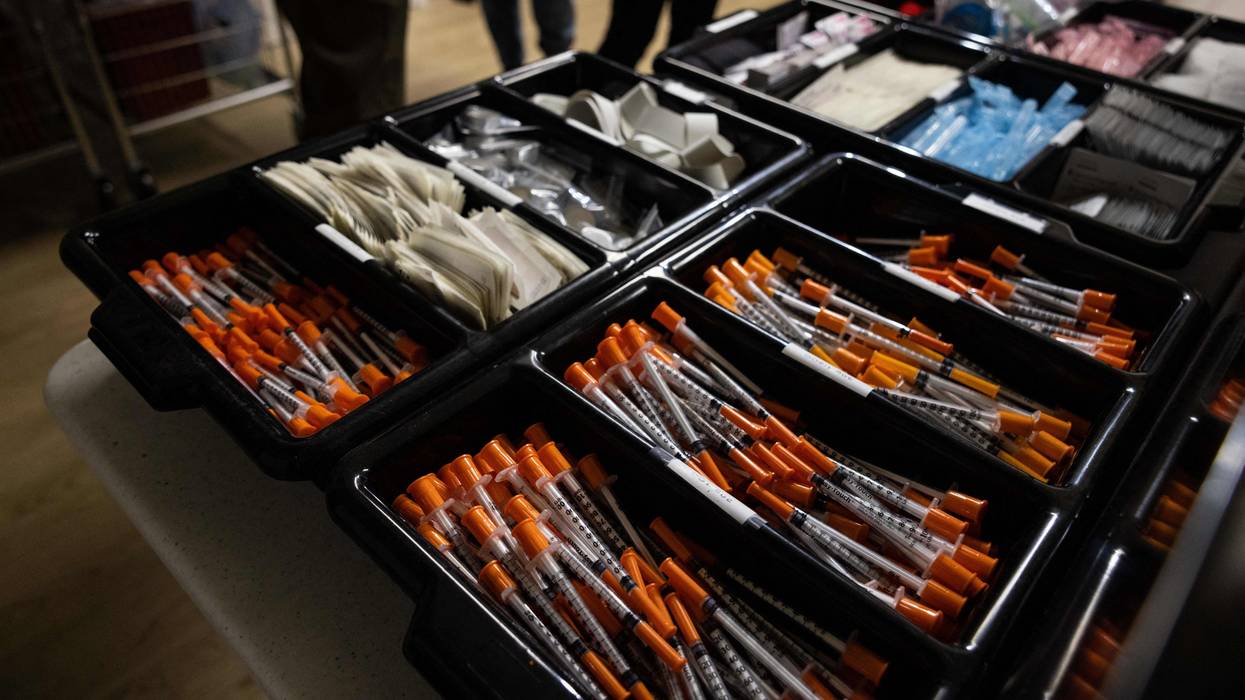
We have come too far to turn our backs on what works when it comes to sound, life-saving drug policies. Now is the wrong time to politicize practical, proven responses to this medical emergency.
We lost more than 80,000 Americans to overdose last year, making it the leading cause of death for adults aged 18 to 44. But, for the first time in years, we have some reason for hope: in 2024, overdose deaths dropped by 27 percent. That progress, however, didn’t happen on its own. It came from investments in harm reduction: an ecosystem of strategies including naloxone distribution, syringe service programs, medications for opioid use disorder, and housing-first programs that secured shelter for people before connecting them to care.
Unfortunately, much of that progress is in danger. In recent weeks, President Trump issued an executive order targeting the very programs that provide these services and helped bring down overdose deaths. In doing so, the administration is cutting federal funding for proven, evidence-based interventions. It is also carving out naloxone from the larger harm reduction ecosystem it belongs to, falsely suggesting that naloxone can succeed in isolation. The reality is that saving someone from an overdose requires more than just increasing naloxone’s availability. It requires a broader public health approach to reach those at risk. Without systemic support for trusted community-led networks, naloxone will not be able to reach the people who are most vulnerable.
I should know. I’ve spent the past 30 years working with people who use drugs—first addressing HIV in Central and Eastern Europe, and now as Director of Drug Policy at the Open Society Foundations, where we support harm reduction efforts globally. I’ve seen, time and again, that when we lead with evidence and compassion, we save lives.
The biggest barrier we consistently face isn’t science, but the stigma and misunderstandings associated with drug use.
Back in the 1990s, I worked on a program that supported harm reduction efforts in former Soviet countries, then the region with the highest rates of HIV among people who use drugs. The interventions were straightforward: provide sterile syringes, educate people about safe injections, and offer access to basic medical care. Whether in Tomsk, Russia, or my hometown in New Jersey, I never met a person who didn’t want to protect themselves. We were fortunate to have tools that people actually wanted. And they work. Syringe service programs cut HIV and hepatitis C infections in half. Other interventions, like methadone and buprenorphine, can lower HIV incidence by as much as 60 percent by helping people reduce or stop injecting altogether.
The biggest barrier we consistently face isn’t science, but the stigma and misunderstandings associated with drug use.
People mistakenly believe that providing sterile syringes encourages drug use or that drug treatment medications simply “replace one drug with another.” But by supporting and translating scientific research, educating medical professionals, and, perhaps most importantly, supporting people who use drugs, we’ve made great progress. These efforts have not only produced strong results but have also helped chip away at longstanding stigma.
Take, for example, the OnPoint NYC—the first overdose prevention center in the country. Since 2021, the center has reversed nearly 2,000 overdoses. Syringe exchange programs are now authorized in 37 states, the District of Columbia, and Puerto Rico. With bipartisan support, red states from Kentucky to Indiana to South Carolina are using opioid settlement funds to support critical harm reduction work. The reality that many have recognized is that harm reduction programs provide an important on-ramp to broader care. They engage people who often don’t go to traditional medical providers out of fear. People who visit syringe service programs are five times more likely to enter treatment than those who don’t. Harm reduction programs are an optimal venue for naloxone distribution since they directly reach people at risk of overdose. That’s why the Trump administration’s recent actions are so concerning. They reflect a shift away from science that has been working.
We have come too far to turn our backs on what works. We must not politicize practical, proven responses to this medical emergency. We live in a time where evidence-based public health interventions that had once been taken as givens have become political flashpoints. But we can’t let politics come in the way of saving very real lives. Too much is at stake now.
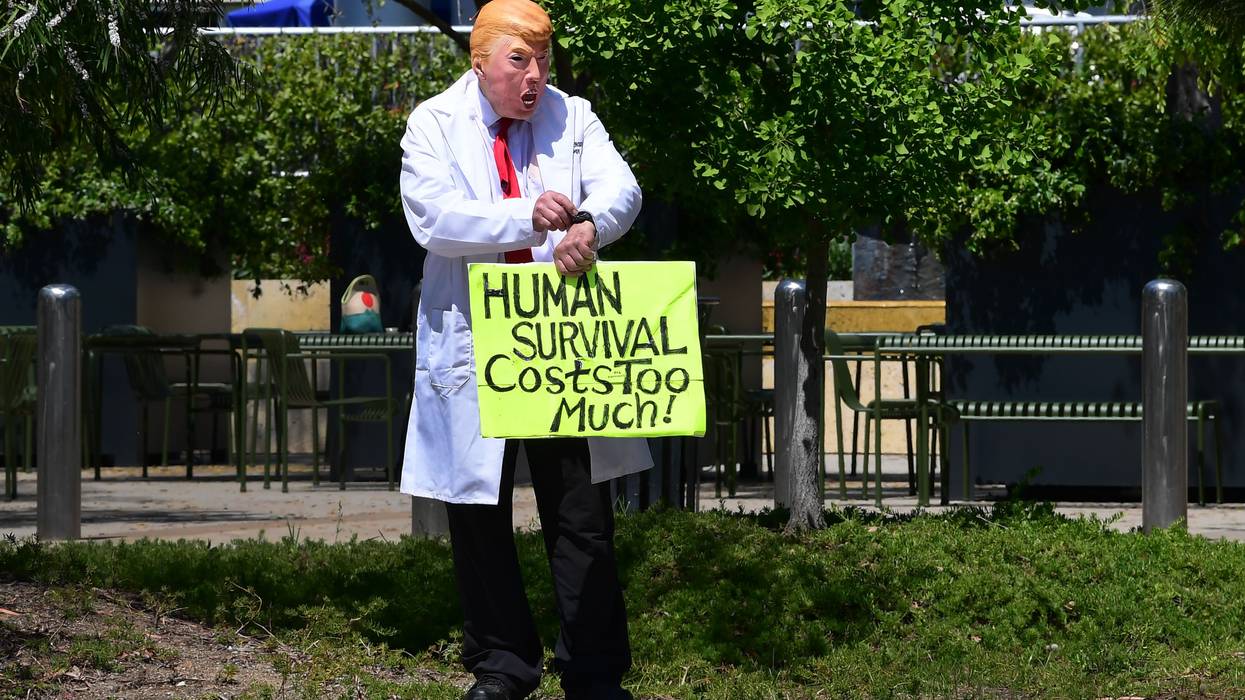
Despite the administration’s cuts, there appears to be surprising agreement among people with divergent political beliefs that it’s time to expand services for those who are struggling.
The United States has been in the throes of a mental health and overdose crisis so severe it has spanned five presidential administrations and been classified as an official state of emergency in three of them. No one knows exactly how this emergency will play out during the current Trumpian cocktail of uncertainty, fear, and cuts to social services, but charts of the recent turbulence of the stock market suggest a relevant visual: Imagine the nervous systems of millions of already struggling Americans, along with millions more who are being pushed to the limits of what they can handle, all experiencing deep emotional crashes, briefly recovering, only to collapse again into new lows. And while it might be tempting to think that many of us aren’t affected by the present gut-wrenching emotional tumult because we appear fine and don’t seem to care about what’s happening to the more desperate among us, our recent research suggests that people do care—including, perhaps, those you’d least expect to do so.
Last year brought a widely reported piece of news in mental health. Overdose fatalities in the United States declined substantially, a notable but qualified victory. As overdose deaths fell 9% from 2021 to 2023 for white Americans, such deaths increased 12% for people of other races, according to a Reuters analysis of data from the Centers for Disease Control and Prevention. Street drugs continue to kill more than 84,000 people in the United States annually, and overdoses remain the leading cause of death among Americans ages 18 to 44.
In such a devastating moment, in all corners of American society, people are in ever greater need of mental health services, just as funding for them is being slashed.
In other words, many young Americans and people of all ages attempt to numb difficult, even unbearable feelings, and sometimes that numbing is fatal. Depending on who you are, your preferred numbing agent might be wine, work, prescription pills, social media, street drugs, or something else entirely. But in the second age of Donald Trump, as well as long before him, all too many of us have been grappling with profound pain, whether from a sense of hopelessness about the future, oppression, trauma, grief, job loss, or general financial strain in ever more economically difficult times. Those among us who are not U.S. citizens are increasingly seized with the fear of being deported due to false, unknown, or unsubstantiated allegations and without due process. In addition to sowing terror, this has also been exacerbating an already widespread sense of loneliness, as people stay inside for fear of being detained.
Another source of despair is the urgent overseas humanitarian crisis over which noncitizens and legal permanent residents are now being seized, shackled, and imprisoned or disappeared for expressing moral protest. One (but not both) of the authors of this article has the protection of U.S. citizenship, although experts now question whether even citizenship will continue to provide protection, and so, for safety’s sake, we’re not naming that crisis or the widely shared sense of grief and powerlessness as men, women, and heartbreaking numbers of children die there. Students and people in all walks of life continue to take to the streets in protest, including the one of us who is a citizen.
Indeed, in such a devastating moment, in all corners of American society, people are in ever greater need of mental health services, just as funding for them is being slashed. May is Mental Health Awareness Month and so a ripe moment to take stock of the damage being done and to report that there appears to be surprising agreement among people with divergent political beliefs that it’s time to expand services for those who are struggling.
In late January, the Trump White House issued a vague memo that put a temporary freeze on the disbursement of federal financial assistance. By early February, NBC News had reported that some health clinics were closing their doors. Then, in March, the Trump administration announced the cancellation of more than $11 billion in funding to deal with addiction, mental health, and related issues. A federal judge subsequently halted that cancellation of funds, saying such a sudden termination caused “direct and irreparable harm to public health.” The Trump administration requested a stay of the order, with plans to appeal.
By mid-April, around the same time that Elon Musk’s DOGE took over responsibility for posting federal grant opportunities for the public, Reuters published an extensive investigation on the subject. It drew on interviews with dozens of experts to conclude that funding cuts and associated layoffs were “dismantling the carefully constructed health infrastructure that drove the number of overdose deaths down by tens of thousands last year.”
In Philadelphia, where one of the authors of this article resides, the Inquirer reported that a forensic research lab that tests the nation’s illicit drug supply for new and harmful substances hadn’t received crucial funds from the federal government. That, in turn, meant the furloughing of staff and a growing backlog of untested samples. If you’ve followed news about the evolving nature of illicit and counterfeit drugs, you know that novel and dangerous molecules are continually turning up in unexpected places, whether the veterinary sedative xylazine or the more potent medetomidine found in batches of fentanyl, or as deadly levels of nitazenes in seemingly innocuous pills. Slowing or halting drug-testing is a dangerous proposition.
Meanwhile, a Philadelphia outreach program run by Unity Recovery was recently forced to shut down, while its workers who had offered services in addiction, nutrition, and other kinds of healthcare suddenly lost their jobs. At the time of this writing, the organization’s website features a red warning symbol and the message: “Due to federal funding cuts enacted on March 24, 2025, Unity Recovery has lost critical access to resources to provide peer support services.” It also notes that “information is changing rapidly”—a nod to the fact that a judge halted the cancellation of funds and no one now knows exactly how the pending cuts will (or won’t) unfold.
And while there is supposedly stark disagreement between the Trumpist and non-Trumpist halves of this country about whether such cuts should be taking place at all, extensive data from the purple state of Pennsylvania suggests there is far more agreement than anyone might have guessed.
Over the past year, the two of us have worked on a research project that collected perspectives from thousands of Pennsylvanians about mental health, substance use, and the state’s criminal justice system. We also collected hundreds of surveys from Pennsylvanians who work in law enforcement and criminal justice. We guessed that such anonymous surveys would capture punitive viewpoints and a belief that people who use drugs should be put behind bars. And, yes, there was a bit of that, but to our surprise, on the whole, we found something quite different.
More than a quarter of Pennsylvanians said that, in recent years, they had become more sympathetic toward people who struggle with drugs or alcohol. A majority of the respondents identified stress and traumatic life events as a primary cause of problematic substance use. And most surprising of all, we found broad agreement on policy priorities across—yes, across—the political spectrum.
It’s notable that, in this purple state where the current president won more than 50% of the vote, there is majority support across the political spectrum for providing genuine assistance to people who need it.
Eighty-three percent of Pennsylvanians agreed that “addressing social problems such as homelessness, mental health, and substance use disorder” was a greater priority than “strengthening social order through more policing and greater enforcement of the laws.” That view was shared across political affiliations: 71% of respondents identifying as conservative agreed with it, as did 88% of those identifying as liberal.
Asked whether they agreed or disagreed with the statement, “It is in all our interests to give help and support to people who struggle with drugs and/or alcohol,” 68% of respondents identifying as conservative or very conservative agreed, as did 77% of liberal or very liberal respondents. Notably, there was majority support (61%) for increasing government spending for this cause. Even 54% of conservatives said they supported increasing spending to improve treatment and services for substance-use disorder.
We assumed that Americans who work in law enforcement and criminal justice would have more hardline views. Again, we were wrong. Compared with Pennsylvanians overall, over the past five years, those who work in the criminal justice system were—yes!—more likely to report feeling greater sympathy toward people who struggle with drugs or alcohol, and an overwhelming 70% of them believed that this society was obliged to provide them with treatment. Asked what services they believed could help prevent people struggling with substance use from becoming involved in the justice system, 71% said “more access to mental health treatment providers or services.”
Because much drug use in this country is criminalized, those who work in criminal justice are on the frontlines of our mental health crisis. These new findings suggest that, at least in Pennsylvania, justice system workers feel a responsibility to offer genuine help and see bolstering mental health services as the best way forward.
Of course, the opposite is happening. Yet it’s notable that, in this purple state where the current president won more than 50% of the vote, there is majority support across the political spectrum for providing genuine assistance to people who need it.
The ongoing axing of services will likely prove devastating. It leaves many feeling like there is nothing they can do. Yet, as individuals, count on one thing: We are not powerless (as we so often believe).
When life feels scary and uncertain, as it increasingly does in the Trump era, many people respond by thinking a lot about what might happen in their world and trying to anticipate the future in order to make plans and gain at least some minimal sense of control. Both authors of this article—one of us a doctor, the other a writer—struggle with our ruminations on the state and direction of this country, which can lead us deeper into anxiety and isolation.
And while we probably can’t escape those fearful feelings (and probably shouldn’t try to), we can at least stay in touch with others instead of giving in to the common urge to withdraw. That isn’t easy, of course. Both of us find ourselves struggling to pick up the phone. But this is a time when picking up that phone couldn’t be more important. A time when so much of our world is endangered is distinctly a moment to put special effort into looking out for one another and regularly experiencing the energy that comes from human connection.
We also understand that many Americans are living on the edge. We often don’t know who among our neighbors and loved ones is wrestling with the question of whether life is worth living. (Suicide rates remain high for Americans generally and especially for those with drug and alcohol use disorders.) Right now, there is a dire need for better services, but even if every person had access to quality mental healthcare, our actions as community members would still matter. It’s sometimes possible to save the life of someone you care about just by telling them you care.
Each of us, including you, has a role to play in keeping all of us alive and safe as best we can in ever more difficult times.
No one yet knows exactly how the Trump administration’s potentially staggering cuts to community healthcare and social services will unfold. But amid the chaos, people across this nation continue to do meaningful, lifesaving work.
The Drug Policy Alliance, a nonprofit outfit that seeks to prevent harms associated with drug use and drug criminalization, recently published a report entitled “From Crisis to Care.” It presents an intelligent roadmap for improving mental health and addressing substance use and homelessness, including investing in treatment options that are evidence-based and voluntary, as well as housing programs and community-based crisis response systems. These are anything but radical ideas. They’re grounded in research and can serve as a model for the future. Of course, funding and some political power will be necessary to accomplish such things, and that might sound farfetched in our current situation. But simple actions in the present make it more likely that such services will be launched in the future.
We can save a life by reaching out to friends and neighbors, and it’s no less important to recognize when we ourselves are struggling. Sometimes we worry about others without acknowledging that we, too, are on the edge. With that in mind, we’re writing the following words for you and every other reader but also for ourselves: When you’re struggling, contact someone you trust for support. By doing so, you’re also implicitly giving them permission to ask for help from you when they need it, and by giving and receiving help, you create a new pattern of reciprocity.
Such reciprocity has political significance. It fosters social cohesion, a precursor for coordinated action on a far larger sale.
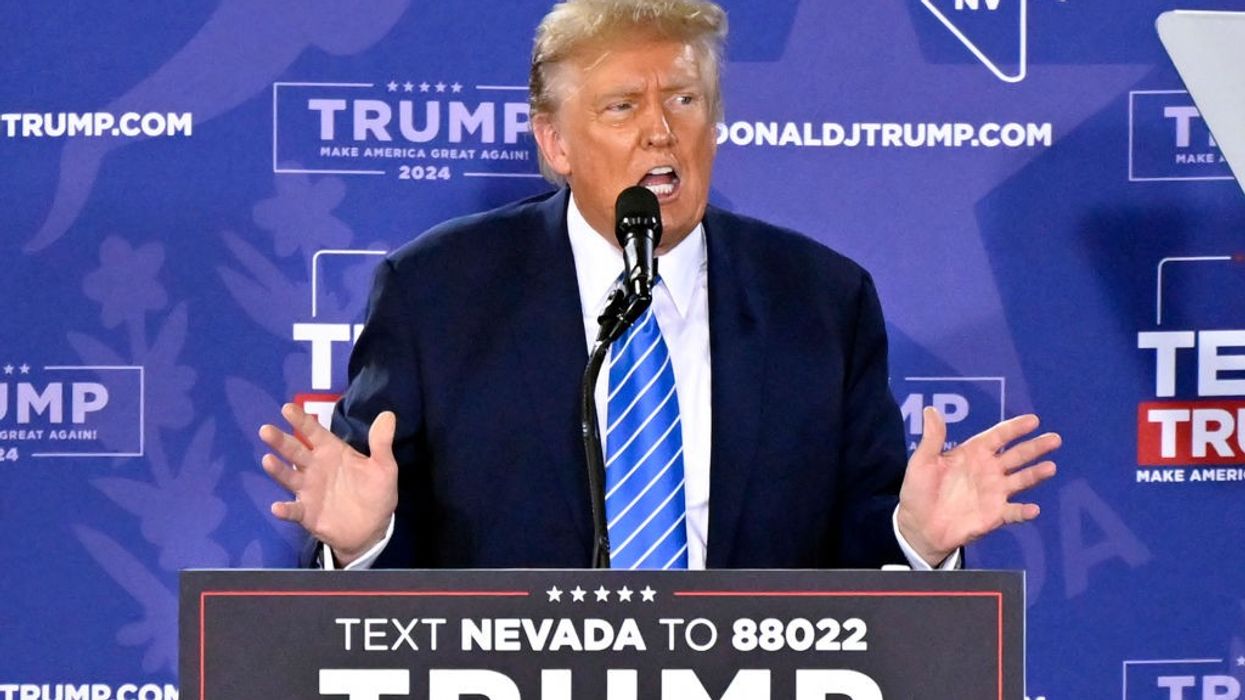
"In the last six months of his first term, President Trump executed 13 individuals—more than any administration in 120 years," one critic noted.
Republican U.S. President-elect Donald Trump vowed Tuesday that his administration will "vigorously" use capital punishment as part of his "make America safe again" agenda, despite copious evidence that the death penaltydoes not deter crime, is racially biased, and results in wrongful executions.
Responding to Democratic President Joe Biden's Monday commutation of 37 federal death sentences—an action that cannot be reversed—Trump took to his Truth Social platform to condemn the move.
"Joe Biden just commuted the Death Sentence on 37 of the worst killers in our Country," Trump fumed. "When you hear the acts of each, you won't believe that he did this. Makes no sense. Relatives and friends are further devastated. They can't believe this is happening!"
"As soon as I am inaugurated, I will direct the Justice Department to vigorously pursue the death penalty to protect American families and children from violent rapists, murderers, and monsters," Trump said in a separate Truth Social post. "We will be a Nation of Law and Order again!"
ACLU executive director Anthony Romero called Biden's move "the most consequential step of any president in our history to address the immoral and unconstitutional harms of capital punishment" and a bulwark against Trump, who "has a proven penchant and track record of conducting rushed executions."
"In the last six months of his first term, President Trump executed 13 individuals—more than any administration in 120 years," Romero noted.
Death penalty foes are particularly worried about Trump's campaign promise to seek federal death sentences for crimes other than murder.
"When I am back in the White House, I will immediately end the Biden border nightmare that traffickers are using to exploit vulnerable women and children," Trump said in July 2023. "I will urge Congress to ensure that anyone caught trafficking children across our border receives the death penalty immediately."
There is a higher likelihood of a compliant Congress given Republicans will control both the Senate and House of Representatives.
"We're going to be asking everyone who sells drugs, gets caught selling drugs, to receive the death penalty for their heinous acts," Trump said earlier while announcing his 2024 run for president.
During his first term, Trump praised then-Philippines President Rodrigo Duterte, who oversaw the extrajudicial execution of thousands of drug dealers and users, for doing "an unbelievable job on the drug problem."
In 1994, then-President Bill Clinton signed into law the Violent Crime Control and Law Enforcement Act—commonly known as the Crime Bill—which expanded the federal death penalty to approximately 60 crimes, including three that do not involve murder: espionage, treason, and large-scale drug trafficking. In addition to Republicans and mainstream Democrats like Biden, then a senator, the legislation had the support of progressives including then-Rep. Bernie Sanders (I-Vt.).
Trump's enthusiastic embrace of capital punishment comes amid an international and national trend toward abolition. Twenty-three U.S. states and the District of Columbia have abolished the death penalty, while five other states have gubernatorial holds on executions. In 2021, Biden's Justice Department paused federal executions.
However, Biden never succeeded in his campaign goal of pushing Congress to end the federal death penalty and 2024 also saw a
surge in executions in Republican-controlled states.

"As CMS negotiates the prices Medicare will pay for top-selling drugs, it should take into account the billions we've already lost due to these patenting tactics," said one researcher.
When the Inflation Reduction Act became law in 2022, it included a historic provision that gave the Centers for Medicare and Medicaid Services (CMS) the ability to negotiate maximum fair prices for select drugs. This means that CMS now has an important tool to resist high prices imposed by pharmaceutical companies and lower the cost that Medicare recipients pay for their drugs. So far, Medicare has negotiated the maximum fair prices for 10 drugs, which will go into effect January 1, 2026.
But according to a report released Wednesday by the watchdog group Public Citizen, the manufacturers behind these drugs are able to rely on another method to protect their profits: patent abuses and evergreening tactics.
The report defines "evergreening tactics" as the practice of "patenting trivial and/or obvious modifications of existing medications to lengthen exclusivity on branded medicines."
The makers of the drugs Eliquis, Imbruvica, Jardiance, Farxiga, and Entresto, for example, obtained patents on what constitute trivial or minor changes to earlier patent claims, "such as crystalline forms of drug compounds which would be discovered and managed during routine testing that is part of the drug approval process," according to Public Citizen. These new patents allow the manufacturers to extend their monopoly on these drugs.
" Big Pharma patent abuse is cheating Medicare enrollees of more affordable drugs and costing taxpayers billions," said Public Citizen Access to Medicines program researcher Jishian Ravinthiran in a statement.
"Patent abuses enable Big Pharma companies to unfairly extend their monopolies and keep prices artificially high. As CMS negotiates the prices Medicare will pay for top-selling drugs, it should take into account the billions we've already lost due to these patenting tactics," he added.
The report makes this same point, arguing that the agency's initial offers on pharmaceuticals should take into account how long-monopoly drugs have been able to obtain longtime exclusivities on medicines by manipulating patents.
This is paramount, Public Citizen argues, given the scope of lost savings. The group estimates that Medicare will lose somewhere between $4.9 and $5.4 billion in savings that should have accrued to taxpayers if four out of the 10 drugs did not take advantage of patenting tactics, and therefore would have faced greater competition prior to negotiation.
"These lost savings are nearly as much as what Medicare is expected to save if negotiated prices go into effect on all of the selected drugs in the first year of the program ($6 billion)," according to the report.
As an example, the drug etanercept, which is marketed as Enbrel, is on the list of 10 drugs that will be subject to a negotiated cap come January 2026. Etanercept's maker Amgen did not contribute to the original research and development of etanercept, per Public Citizen, it just acquired the original maker of the drug, Immunex, in 2002.
Immunex's patent of etanercept was set to expire in 2019, but "by using abusive patent practices" Amgen was able to extend the patent protections through 2029, according to Public Citizen. Amgen was able to evade competition of two potential "biosimilar" competitors, Erelzi and Eticovo, which received FDA approval in the 2010s.
Referencing analysis done in a separate report, Public Citizen estimated "that biosimilars could have entered the market after August 2019 were it not for Amgen's unwarranted patent exclusivities, and we calculated Medicare would have spent $1,891,500,836 less on a net basis had enrollees been able to use lower-cost alternatives by the time negotiated prices go into effect on January 1, 2026."