

SUBSCRIBE TO OUR FREE NEWSLETTER
Daily news & progressive opinion—funded by the people, not the corporations—delivered straight to your inbox.
5
#000000
#FFFFFF
To donate by check, phone, or other method, see our More Ways to Give page.
Daily news & progressive opinion—funded by the people, not the corporations—delivered straight to your inbox.
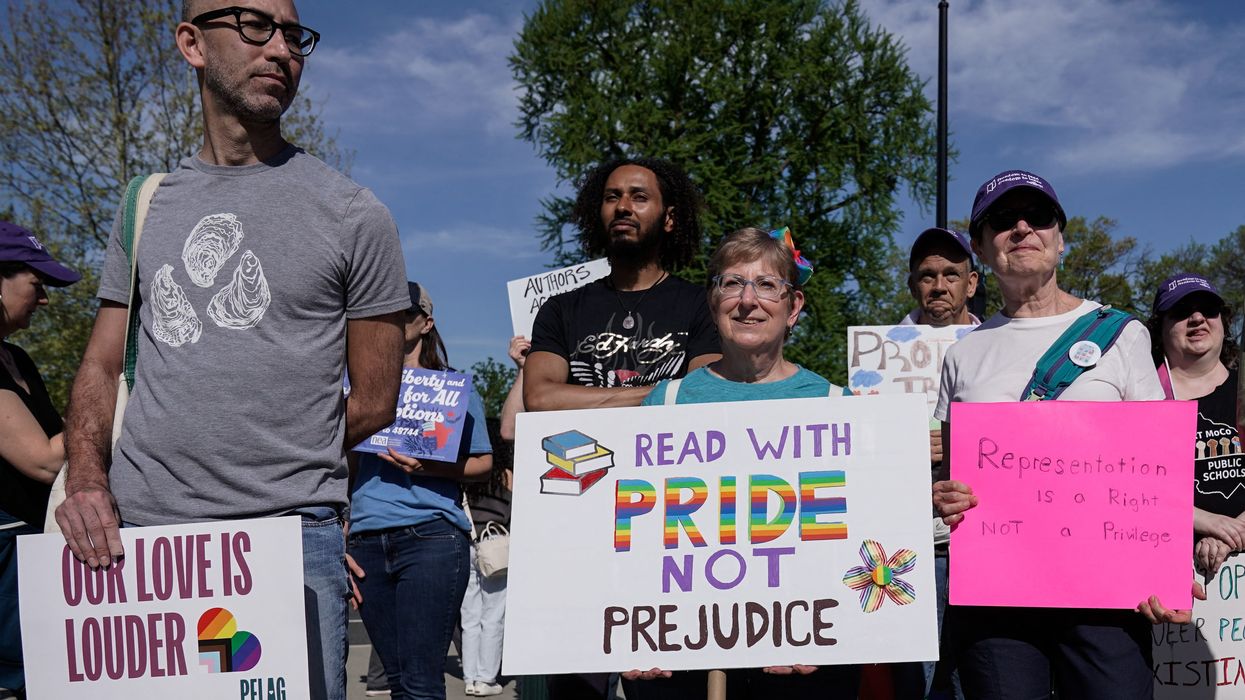
The ruling, said Justice Sonia Sotomayor, reflects the right-wing majority's "failure to accept and account for a fundamental truth: LGBTQ people exist."
A day after many LGBTQ+ Americans celebrated the 10th anniversary of the landmark U.S. Supreme Court ruling that established marriage equality in the United States, right-wing Justice Samuel Alito suggested in a new decision that public schools should not promote "acceptance of same-sex marriage."
Alito's opinion was handed down in a 6-3 ruling in Mahmoud v. Taylor, in which the high court's right-wing majority held that parents should be permitted to opt their children out of certain lessons in public schools on religious grounds.
The ruling stemmed from a lawsuit filed by parents of several religious backgrounds in Montgomery County, Maryland, who sued the county's school system for not giving parents advance notice and an opportunity to opt out of a curriculum that included storybooks dealing with LGBTQ+ themes.
The books included Pride Puppy, about a dog that gets lost at an LGBTQ+ pride parade; Love, Violet, about a girl who has a same-sex crush; Born Ready, about a transgender boy; and Uncle Bobby's Wedding, about a gay couple getting married.
Alito pointed to the latter book in particular in his opinion.
"It is significant that this book does not simply refer to same-sex marriage as an existing practice," wrote the judge. "Instead, it presents acceptance of same-sex marriage as a perspective that should be celebrated."
Elly Brinkley, staff attorney for U.S. Free Expression Programs at the free speech group PEN America, noted the timing of Alito's comments about marriage equality.
"Just after the 10th anniversary of Obergefell v. Hodges and as we celebrate Pride Month, the Supreme Court has delivered a devastating blow to the dignity of LGBTQ+ people and families," said Brinkley. "This ruling means that parents can opt their children out of any classroom activity that acknowledges same-sex marriages, the right to which this very court held was guaranteed by the Constitution."
The right-wing majority ruled that Montgomery County Public Schools must allow families to opt out of any lessons that parents believe will interfere with their children's religious education, including stories or discussions with LGBTQ+ themes.
"This ruling threatens to give any religious parent veto power over public school curricula. If this dangerous logic is carried forward, it could unravel decades of progress toward inclusive education and equal rights."
Legal scholars said that in addition to stigmatizing the families of an estimated 5 million children in the U.S. who have one or more LGBTQ+ parents, the ruling could pave the way for parents to argue that their children shouldn't be exposed at school to materials involving any number of topics, including evolution, yoga, and mothers who work outside the home—all issues that have been the subject of earlier, unsuccessful lawsuits against schools.
"The decision could have far-reaching consequences for public schools' ability to create an inclusive and welcoming environment that reflects the diversity of their communities, as well schools' ability to implement any secular lesson plan that may trigger religious objections," said the ACLU, which filed an amicus brief in the case arguing that the school district's "policy prohibiting opt-outs from the English Language Arts curriculum is religiously neutral and applicable across the board."
Daniel Mach, director of the ACLU's Program on Freedom of Religion and Belief, said that religious freedom is "fundamentally important" under U.S. law.
But freedom of religion, Mach said, "shouldn't force public schools to exempt students from any secular lessons that don't align with their families' religious views. This decision could wreak havoc on public schools, tying their hands on basic curricular decisions and undermining their ability to prepare students to live in our pluralistic society."
Cecilia Wang, national legal director of the ACLU, added that parents with religious objections will now be "empowered to pick and choose from a secular public school curriculum, interfering with the school district's legitimate educational purposes and its ability to operate schools without disruption—ironically, in a case where the curriculum is designed to foster civility and understanding across differences."
Liberal Justices Sonia Sotomayor, Elena Kagan, and Ketanji Brown Jackson dissented in the case, with Sotomayor making the unusual move of announcing her dissent from the bench.
Citizens fully experiencing the United States' multicultural society, said Sotomayor, "is critical to our nation's civic vitality. Yet it will become a mere memory if children must be insulated from exposure to ideas and concepts that may conflict with their parents' religious beliefs."
She also accused the majority of making a "myopic attempt to resolve a major constitutional question through close textual analysis of Uncle Bobby's Wedding," which revealed, she said, "its failure to accept and account for a fundamental truth: LGBTQ people exist."
The ruling is the latest victory for right-wing advocates of what they view as religious freedom at the high court; other recent rulings have allowed a web designer to refuse to make a website for same-sex couples and a high school football coach to pray with his team at school games.
Annie Laurie Gaylor, co-president of the Freedom From Religion Foundation, called Friday's ruling a "deeply troubling outcome for public education, equality, and the constitutional principle of the separation between state and church."
"This ruling threatens to give any religious parent veto power over public school curricula. If this dangerous logic is carried forward, it could unravel decades of progress toward inclusive education and equal rights," said Gaylor. "Public schools must be grounded in facts and reality and not subject to religious censors."
"People feel empowered to attack queer students because if the legislators can do it, they think they can do it too," one student told the human rights group.
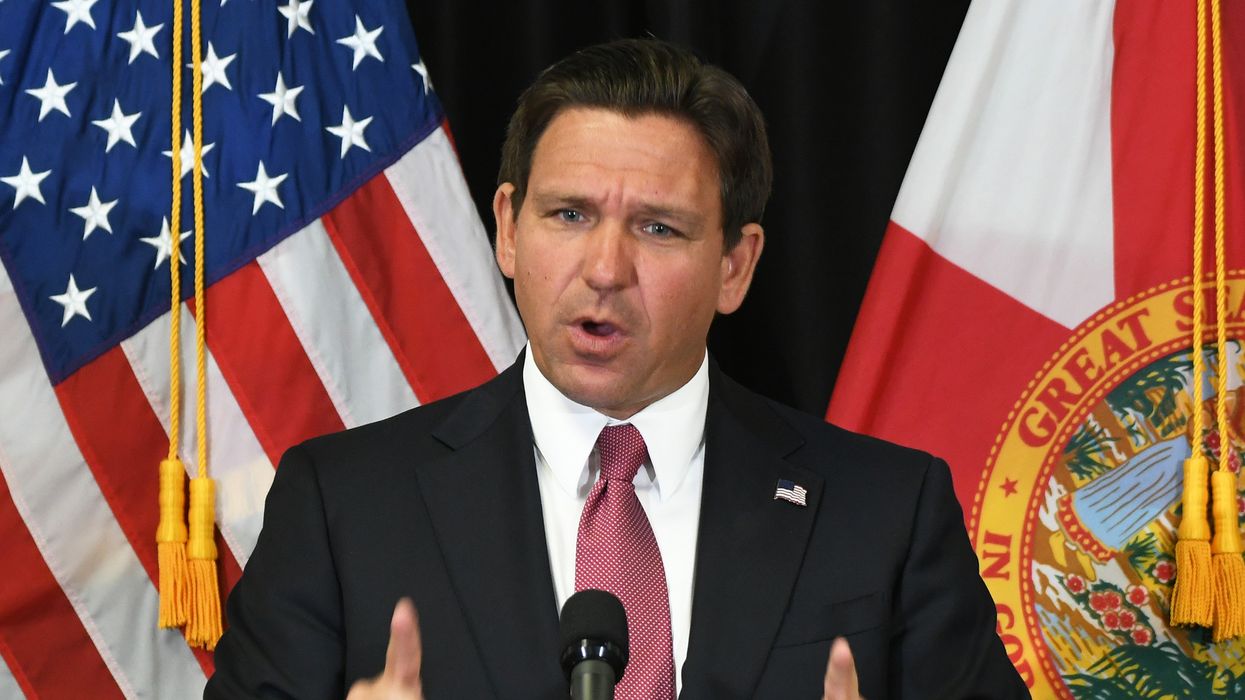
Warning that hateful laws and policies will only spread if not challenged, legal experts joined human rights campaigners on Wednesday in calling on the Biden administration to take action against the "vicious" attacks on LGBTQ+ and Black people, both students and teachers, that Florida Gov. Ron DeSantis has waged through his state's schools.
Human Rights Watch (HRW) was joined by grassroots group Florida Rising and the Rule of Law Impact Lab at Stanford Law School in releasing a new report titled, "Why Do They Hate Us So Much?": Discriminatory Censorship Laws Harm Education in Florida."
The report's title stems from a question Black students asked one of teachers interviewed by HRW between January and April 2024, months after the state government released new standards for teaching African American history. The new standards teach students that Black Americans benefited from slavery and discourage students from learning about contributions Black individuals have made to U.S. history, asking children in Florida schools "to simply identify African American individuals," according to Education Week.
The new teaching standards, along with a number of laws passed by Republican lawmakers since 2021, have helped create "an environment of censorship and discrimination in classrooms that harms education for all Florida students but is especially hostile in its impact on Black Floridians and LGBTQ Floridians," said HRW in the report.
Through interviews with more than 60 teachers, students, administrators, and parents as well as reviews of Florida's education policies, court record, and media accounts, HRW found that in just over three years, the public school system in the state has devolved into an environment where educators and children fear retaliation for speaking about racism, LGBTQ+ rights, and other social justice issues.
"People feel empowered to attack queer students because if the legislators can do it, they think they can do it too," a high school student named Kara told HRW. "I've heard slurs being said constantly and no teacher bats an eye and it's like, whoa, why aren't you doing anything about it? We need more protections for queer students. We need schools that are an inclusive space."
A parent named Patricia told the group the DeSantis administration has waged "an attack on Blackness" that has led people across the state "to feel hopeless."
The new laws include a ban on so-called "critical race theory," a legal theory that is not taught on public K-12 schools but has been adopted as a flashpoint for conservatives who appear to define the term as any discussion of structural racism or the legacy of slavery in the U.S.; the Stop Wrongs Against Our Kids and Employees (Stop WOKE) Act, which limits classroom discussions of racism; and laws limiting classroom lessons on sexual orientation and gender identity, including one commonly known as the "Don't Say Gay or Trans" law.
The report notes that since DeSantis and the Republican Party began introducing the new laws, teachers have been fired and investigated for such supposed transgressions as refusing to remove a Black Lives Matter flag from a classroom, showing a Disney film that included a gay character, using the gender-neutral honorific Mx., and posting on social media about concerns over book bans.
Trey Walk, a U.S. democracy researcher for Human Rights Watch, noted that the report was released on Juneteenth, the national holiday which marks the day enslaved Black people in Texas learned that the Emancipation Proclamation had ordered their freedom. DeSantis has refused to make the day a state holiday and has not formally recognized the day since 2020.
"June 19 is Juneteenth, a time we should reckon with the devastating costs of suppressing information, including about slavery and its legacies, that will move the United States forward," said Walk. "We're also celebrating Pride Month, a time we cherish the freedom of LGBTQ people to be represented and valued, including in their schools."
Amrit Singh, executive director at the Rule of Law Impact Lab, said the Biden administration must enact "robust civil rights protections to combat this trend of discriminatory censorship and book bans in schools."
The groups called on President Joe Biden to hold a national summit on educational censorship and said Congress should increase funding for the Department of Education's (DOE) Office for Civil Rights; hold public hearings on censorship laws like those pushed by DeSantis; and pass the Books Save Lives Act to clarify that discriminatory censorship in schools violates the U.S. Constitution.
They also called on the DOE to increase community engagement with students, teachers, and families who have been impacted by censorship laws in schools; issue guidance clarifying that laws distorting or restricting classroom content may deny students from protected classes educational opportunities, which may amount a civil rights violation; and initiate compliance reviews in school districts and state where a large number of civil rights complaints are filed.
"The question all officials must now address is how to ensure students learn U.S. history and the contributions and cultures of the many people of the United States with accuracy and nuance," said HRW, "and discuss and think critically about these topics in a context where they may express their identities and their opinions free from discrimination and fear."
"Sadly, it's all part of the DeSantis playbook of eroding rights, censoring those he disagrees with, and undermining access to knowledge," said one critic.
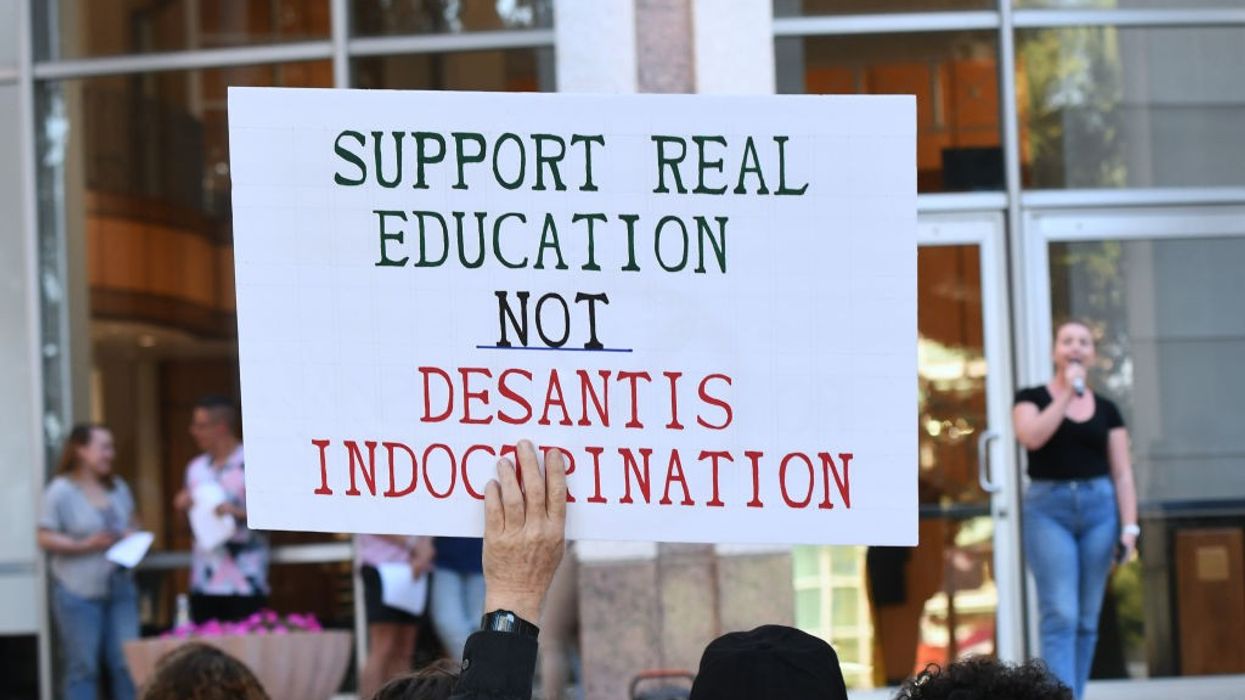
The Republican-controlled Florida Board of Education on Thursday effectively banned Advanced Placement Psychology by notifying school district superintendents that teaching about sexual orientation and gender identity—key subjects in college-level psychology curricula—is prohibited under the state's so-called "Don't Say Gay or Trans" law.
That means class schedules for the fall semester—which begins next week in most Florida school districts—are in limbo for thousands of students. Last year, around 28,000 pupils in more than 500 Florida high schools took AP Psychology.
"What a terrible decision that is 100% politically motivated."
In a statement, the College Board—the New York-based national body that approves AP courses and runs SAT testing—called sexual orientation and gender identity "essential topics" in psychology.
"The AP course asks students to 'describe how sex and gender influence socialization and other aspects of development,'" the board explained. "This element of the framework is not new: gender and sexual orientation have been part of AP Psychology since the course launched 30 years ago."
"We cannot modify AP Psychology in response to regulations that would censor college-level standards for credit, placement, and career readiness," the body continued. "Our policy remains unchanged. Any course that censors required course content cannot be labeled 'AP' or 'Advanced Placement,' and the 'AP Psychology' designation cannot be utilized on student transcripts."
"To be clear, any AP Psychology course taught in Florida will violate either Florida law or college requirements," the College Board added. "Therefore, we advise Florida districts not to offer AP Psychology until Florida reverses their decision and allows parents and students to choose to take the full course."
As originally signed into law by Republican Florida Gov. Ron DeSantis in March 2022, H.B. 1557—dubbed the "Don't Say Gay or Trans" bill by critics—"prohibits classroom discussion about sexual orientation or gender identity" in grades K-3 or at any level "that is not age-appropriate." In May, DeSantis expanded the legislation to include all grades K-12.
Randi Weingarten, president of the American Federation of Teachers, condemned the "slippery slope of government censorship and bans" in DeSantis' Florida.
"Sadly, it's all part of the DeSantis playbook of eroding rights, censoring those he disagrees with, and undermining access to knowledge," Weingarten said of the 2024 GOP presidential candidate, whose campaign has been accused of embracing homophobia.
"Just this year, countless educators have been forced to remove or cover up their classroom libraries under threat of sanctions and jail, countless students have lost out because the governor ended AP African American Studies, and now this assault on AP Psychology," she added. "It's an unconscionable but far-from-surprising move from an extremist and increasingly unpopular leader who is fast becoming both a national pariah and a global embarrassment."
At the Human Rights Campaign, the nation's largest LGBTQ+ advocacy group, president Kelley Robinson said that "psychology is centered around people—all people."
"Erasing us from the curriculum ignores our existence, sets back Florida students who want to pursue psychology in higher education, and disrupts pathways for future mental health professionals to provide comprehensive, culturally competent mental healthcare for the LGBTQ+ community," she continued.
"College Board's AP Psychology curriculum is science-driven and endorsed by both educators and experts," Robinson noted. "Educational systems that reject the inclusion of LGBTQ+ people from their psychology courses are failing in their commitment to students."
Florida State Rep. Anna Eskamani (D-42) said in a statement, "As someone who graduated from Florida public schools with college credit via AP classes, I know how powerful and effective these classes are and I am sick to my stomach to see what Gov. Ron DeSantis and the Republican Party are doing in our state."
Florida Department of Education Spokesperson Cassie Pelelis accused the College Board of "attempting to force school districts to prevent students from taking the AP Psychology."
"The department didn't 'ban' the course," she insisted. "The course remains listed in Florida's Course Code Directory for the 2023-24 school year. We encourage the College Board to stop playing games with Florida students and continue to offer the course and allow teachers to operate accordingly."
During the previous academic year, educators, students, parents, and Democratic lawmakers reacted angrily after the DeSantis administration rejected a new high school AP African American Studies course—without even seeing its syllabus—claiming it violated the state's ban on "woke" education and lacked "educational value."
In March, the 11th U.S. Circuit Court of Appeals upheld a lower court's preliminary injunction against the Stop WOKE Act.
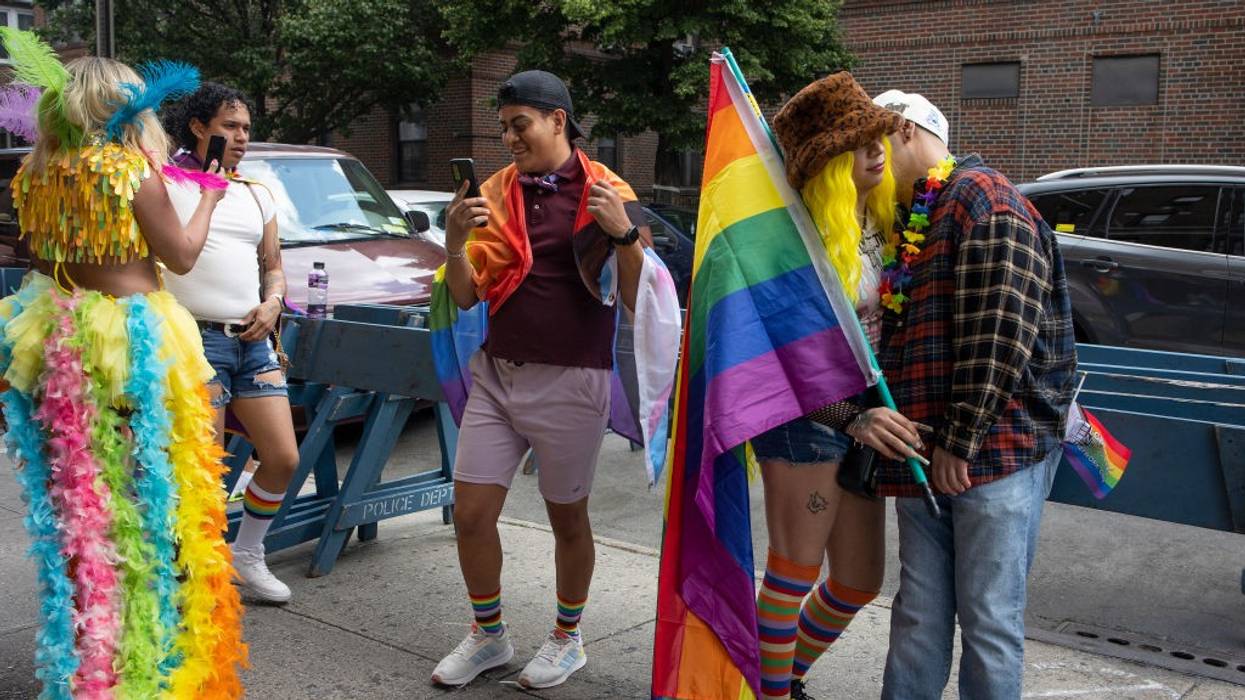
“More than 75 anti-LGBTQ+ bills have been signed into law this year alone, more than doubling last year’s number, which was previously the worst year on record,” the Human Rights Campaign said.
The modern struggle for equality for lesbian, gay, bisexual, and transsexual people has been waged for over a century. Despite significant gains, the work is sadly far from over as Pride Month begins. Just as massive plumes of sun-dimming smoke from wildfires now raging north of the border billow over the eastern half of the United States, darkening the sky and driving people indoors, so too has an epidemic of discrimination and hate targeting traditionally marginalized LGBTQ+ communities swept the land, unleashed by demagogues, cynical politicians, and bigots. State and local governments from coast to coast are passing repressive bills, banning books, and criminalizing people.
The rash of laws, often accompanied by intimidation and acts of violence, has prompted the Human Rights Campaign, the nation’s largest LGBTQ+ civil rights organization, to announce:
“We have officially declared a state of emergency for LGBTQ+ people in the United States for the first time following an unprecedented and dangerous spike in anti-LGBTQ+ legislative assaults sweeping state houses this year. More than 75 anti-LGBTQ+ bills have been signed into law this year alone, more than doubling last year’s number, which was previously the worst year on record.”
Human Rights Campaign (HRC) President Kelley Robinson explained on the Democracy Now! news hour:
“In this moment, when people are traveling across the country, when they’re deciding to move or what schools to go to, we had a responsibility to let people know that, one, there’s an imminent health and safety crisis facing our community, and, two, there’s a dizzying patchwork of protections for us and for our families depending on the state that you’re in.”
HRC tracks these anti-LGBTQ+ bills. Over 520 of them have been introduced so far this year, and 75 have already been signed into law, with broad impacts: criminalizing the provision of gender-affirming health care for youth, prohibiting the teaching of LGBTQ-related topics, barring transgender people from using a gender-appropriate bathroom, banning books, and more.
“A loud and vocal minority… is sowing hate and fear against our community because they’re not willing to solve the real problems,” Robinson added. “If they actually cared about the safety of our kids, they would be moving forward legislation to prevent gun violence, the number one killer of our children.”
The legislative assault is occurring in parallel with the 2024 Republican presidential primary season. Florida Governor Ron DeSantis has championed several oppressive laws targeting the LGBTQ+ community, including the school curriculum ban known as the “Don’t Say Gay” law, and banning gender affirming care for minors. Others in the increasingly crowded Republican field are following suit.
“A loud and vocal minority… is sowing hate and fear against our community because they’re not willing to solve the real problems.”
Former South Carolina Governor and presidential hopeful Nikki Haley suggested opposing trans rights was a feminist issue.
“The idea that we have biological boys playing in girls’ sports, it is the women’s issue of our time,” Haley said at a recent CNN town hall. “How are we supposed to get our girls used to the fact that biological boys are in their locker rooms?”
Robinson responded on Democracy Now!, “This is political theater. They are doing this to pander to a MAGA Republican base in so many of these states… Seventy percent of Americans support the LGBTQ+ community and believe that legislatures should be standing with our values. One in five of Generation Z identifies as a member of this community, 20 million American adults. This is not an issue of the margins.”
The evangelical Christian movement has long been at the forefront attacking the LGBTQ+ community. Major televangelists like Pat Robertson, who died this week at the age of 93, and groups like Focus on the Family and the Alliance to Defend Freedom have stoked intolerance and repression not only here at home, but around the world.
Uganda is now on the front lines of this U.S.-based push to criminalize homosexuality. In May, Ugandan President Yoweri Museveni signed an anti-LGBTQ law that makes same-sex relationships punishable by life in prison or, in some cases, death. Many LGBTQ Ugandans have gone into hiding or have fled the country.
“The homophobia and transphobia we are seeing towards queer and trans persons in Uganda is from the West. It is mostly peddled by extreme American evangelicals,” Ugandan LGBTQ activist Frank Mugisha said on Democracy Now! He fears similar laws will follow in neighboring countries like Tanzania and Kenya.
Human Rights Campaign’s state of emergency declaration is unprecedented, but is not simply a warning. Their statement ends with a call to action, one which everyone, whether LGBTQ+ or not, should heed this Pride month and beyond:
“Our community is in danger, but we won’t stop fighting back—not now, not ever.”

"From his hostility toward racial equity and LGBTQ+ rights, to book bans, to one of the most draconian abortion bans on record, he poses an immense threat to our freedoms and our country's most vulnerable communities," said one critic.
"Of all the extremists gunning for the GOP nomination, Ron DeSantis might be the worst."
That's what NARAL Pro-Choice America president Mini Timmaraju said in a statement Wednesday as Florida's Republican governor formally launched his long-anticipated campaign for the party's 2024 presidential nomination.
"From his hostility toward racial equity and LGBTQ+ rights, to book bans, to one of the most draconian abortion bans on record, he poses an immense threat to our freedoms and our country's most vulnerable communities," Timmaraju warned. "NARAL and our 4 million members will keep fighting side-by-side with those that DeSantis has targeted, and we are ready to mobilize to ensure that his extremism gets nowhere near the White House."
In a series of tweets Wednesday, Women's March also slammed "fascist, anti-choice" DeSantis, and listed some of the policies he has fought for as governor, including a six-week abortion ban and the "Don't Say Gay" law. The Florida Republican has also recently engaged in attacks on academic freedom, the rights of immigrants and transgender people, and democracy.
Jenny Lawson, executive director of Planned Parenthood Votes, similarly stressed Wednesday that "Ron DeSantis' governorship has been an unmitigated disaster for Floridians, and his candidacy is a grave threat to every American's reproductive freedom."
"He's shown time and time again that he will put himself and his political ambitions over anything and everyone—including the health and lives of Floridians," Lawson continued. "While Floridians demand affordable healthcare and safer communities, DeSantis has pushed policies that endanger Florida's future."
"Voters in Florida don't support his anti-abortion, anti-LGBTQ+ agenda, and DeSantis will soon learn that the rest of the country doesn't, either," she added. "Everyone will see him for the dangerous, out-of-touch, overzealous politician he is. Planned Parenthood Votes will make sure of it."
DeSantis on Wednesday filed paperwork with the Federal Election Commission and then officially announced his candidacy during a Twitter "Spaces" event—hosted by the social media giant's billionaire owner, Elon Musk—that, as Politico put it, was "marred by horrendous tech failures."
Nora Benavidez, Free Press Action's senior counsel and director of digital justice and civil rights, said that "it's no surprise that the Spaces suffered a tech meltdown during tonight's big announcement. Musk has cut back on the personnel needed to keep Twitter glitch-free. It's fitting that his reckless management style would bite him just as so many are tuning in."
"Giving airtime to Ron DeSantis is not about free speech on Twitter or making the platform a public square. Elon Musk is instead prioritizing voices like his that promote bigotry and hate," Benavidez added. "This latest Musk stunt merely showcases a man who has misused his power in Florida to attack every basic right Floridians have. From DeSantis' attacks on voting rights, protest rights, and academic freedoms to denying basic protections for the LGBTQIA+ community, his presidential announcement this evening shows us all what Twitter has become: a megaphone for right-wing reactionary views."
As Politico reported:
President Joe Biden was quick to chime in, tweeting: "This link works," followed by a link to the president's campaign donation site.Polling results released Wednesday by Quinnipiac University show that despite his various legal issues, Trump is the top choice for 56% of Republican and Republican-leaning voters, followed by DeSantis with 25%. Former United Nations Ambassador and South Carolina Gov. Nikki Haley got just 3% while ex-New Jersey Gov. Chris Christie, former Vice President Mike Pence, and U.S. Sen. Tim Scott (S.C.) all tied at 2%; the other eight declared or potential candidates each received less than that.
A spokesperson for former President Donald Trump responded: "Glitchy. Tech issues. Uncomfortable silences. A complete failure to launch. And that's just the candidate!"
As Common Dreams reported earlier Wednesday, DeSantis entered the 2024 race as he faced scrutiny from campaign finance watchdogs.
This article has been updated with comment from Free Press Action.
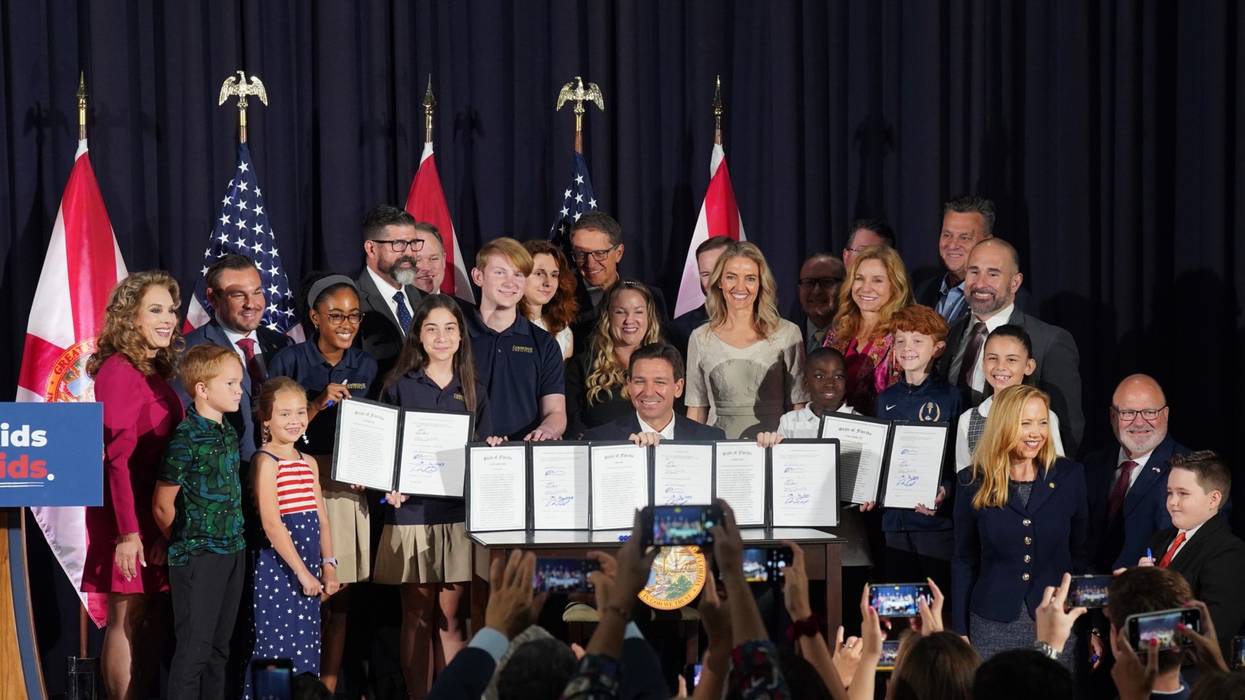
"The nation should be on high alert. We are all Floridians as DeSantis seeks to export this blueprint of authoritarianism to the rest of the country," warned one activist in anticipation of the governor's likely presidential run.
Republican Florida Gov. Ron DeSantis on Wednesday signed a bundle of bills targeting transgender people that one activist condemned as "the most extreme slate of anti-trans laws in modern history."
Surrounded by children at Cambridge Christian School in Tampa, DeSantis—a likely 2024 Republican presidential candidate—signed H.B. 1069, which expands the so-called "Don't Say Gay or Trans" law to prohibit educators from discussing sexual orientation or gender identity in grades K-12.
Also sometimes called the "Don't Say They" law, the legislation prohibits transgender students and staff from sharing updated preferred pronouns with each other.
DeSantis also signed S.B. 254, which bans gender-affirming care—which many trans people and doctors have called "lifesaving"—for minors, while prohibiting nurse practitioners from providing such healthcare to adults. Physicians who violate the law are subject to criminal charges.
Meanwhile, adults seeking gender-affirming care must obtain written permission from the Board of Medicine and Board of Osteopathic Medicine—whose members are appointed by the governor and have been inimical to transgender healthcare.
The law also grants state courts the power to seize children "if the child has been subjected to or is threatened with being subjected to sex-reassignment prescriptions or procedures."
Dr. Marci Bowers, president of the World Professional Association for Transgender Health, said in a statement that S.B 254 "has created a chilling effect on the medical community by inserting politics into healthcare."
"Let me be clear, the medical community is united in endorsing gender-affirming care as safe, effective, and necessary care," she asserted. "Healthcare providers follow best practices based on science and research, and there's no place for misinformation or extreme ideology in our work."
"Florida politicians are acting in direct contradiction to decades of research that show the mental and physical health benefits of gender-affirming care," Bowers added. "Decisions about healthcare, including gender-affirming care, must remain between a healthcare provider and their patient, without political interference."
Another bill signed by DeSantis, S.B. 1438, bans minors from attending "adult live performances" like drag shows. The measure has led to the cancellation or scaling back of events including Treasure Coast Pridefest in Port St. Lucie.
"The most troubling bill, though," wrote activist Erin Reed, "is a ban on transgender people in bathrooms that comes with criminal charges and jail sentences."
The law, H.B. 1521, empowers cisgender people to order transgender people to leave publicly available restrooms—in places including airports, sports arenas, convention centers, beaches, parks, and public and even private healthcare and educational institutions—or face criminal trespass charges that could result in up to a year behind bars for those who refuse to comply. Transgender people in Florida are likely to be jailed in facilities that don't match their gender identity, exposing them to serious risk of sexual assault and other crimes.
Reed said the law "will effectively give second-class citizen status to transgender people in Florida."
Other critics pointed to recent incidents in which trans people have been harassed while using restrooms.
During Wednesday's signing ceremony, DeSantis proclaimed, "What we've said in Florida is we are going to remain a refuge of sanity and a citadel of normalcy."
However, LGBTQ+ advocates condemned the new laws.
"This is an all-out attack on freedom," said Joe Saunders, senior political director at Equality Florida, refuting DeSantis' claim that he governors "the freest state" in the nation.
"Free states don't strip parents of the right to make healthcare decisions for their children. Free states don't ban books, censor curriculum, or muzzle free speech," Saunders continued. "DeSantis doesn't see freedom as a value worth defending, he sees it as a campaign slogan in his bid for the White House. And he is setting freedom—and Florida's reputation—ablaze in his desperation to win the GOP nomination."
"The nation should be on high alert," Saunders added. "We are all Floridians as DeSantis seeks to export this blueprint of authoritarianism to the rest of the country."

"Prohibiting ideas in the name of freedom is not freedom at all," said one critic of a bill that would outlaw teaching systemic racism in college courses. "It is censorship."
Civil liberties defenders on Wednesday decried yet another bill passed by Florida's GOP-controlled Legislature attacking academic freedom, while calling on Republican Gov. Ron DeSantis to take the unlikely step of vetoing the measure.
S.B. 266 would require Florida's Board of Education and its state university system's board of governors to establish faculty committees tasked with reviewing and, if deemed necessary, rejecting or adjusting all general education courses.
Under the bill, these courses "may not distort significant historical events or include a curriculum that teaches identity politics… or is based on theories that systemic racism, sexism, oppression, and privilege are inherent in the institutions of the United States and were created to maintain social, political, and economic inequities."
The Foundation for Individual Rights and Expression (FIRE) said that "this provision is flatly unconstitutional."
"Bans on ideas in the collegiate setting are unconstitutional, illiberal, and shortsighted," the group argued. "Prohibiting ideas in the name of freedom is not freedom at all. It is censorship."
S.B. 266 also prohibits universities and colleges from funding activities, speakers, events, and clubs that promote diversity, equity, and inclusion (DEI).
According to The Chronicle of Higher Education, Florida is one of 20 states where bills targeting DEI on college campuses have been introduced. Last week, Republican North Dakota Gov. Doug Burgum signed the nation's first law prohibiting colleges from mandating DEI training.
In Florida, critics compared S.B. 266 to the Stop WOKE Act, a censorship law signed by DeSantis last year limiting how state university professors teach race, gender, and U.S. history. The legislation is widely viewed by progressives as part of the GOP-led war on critical race theory, a graduate-level academic framework for understanding systemic racism in the United States. In March, a federal appeals court upheld a preliminary injunction against the law.
"Just as it was positively dystopian with the Stop WOKE Act, it remains unconscionable that the state Legislature has spent this much time and energy trying to prevent students and faculty from engaging in conversations with which legislators personally disagree," ACLU of Florida staff attorney Jerry Edwards said in a statement.
"Instead of engaging in meaningful policymaking to improve Floridians' lives, lawmakers have conjured a boogeyman out of thin air to expand the government's reach in all corners of our state," Edwards added. "Free speech does not end at the classroom door. The attack on free speech in education must end here. Gov. DeSantis must veto this unconstitutional bill."
Leah Watson, senior staff attorney with the national ACLU's Racial Justice Program, said that "S.B. 266 is part of a coordinated attack by partisan politicians on our right to learn about systemic racism, sexism, oppression, and privilege in higher education. It serves only to undermine progress toward racial justice and must not be allowed to go into effect."
"This attack on DEI will remove important support for students of color, erase their heritage from campuses and classrooms, and ultimately lead to increased racial bias," Watson added.
NAACP Legal Defense Fund senior counsel Charles McLaurin warned that "if enacted, the S.B. 266 bill in Florida will threaten the quality of higher education inside and outside the classroom."
Also on Wednesday, the Florida Senate voted to expand the state's so-called "Don't Say Gay or Trans" law—a ban on "classroom instruction on sexual orientation or gender identity"—through eighth grade. The original law signed by DeSantis last year was applicable in grades K-3.
Under the expanded law, high school teachers would be banned from discussing sexual orientation or gender identity in a manner that is not "age appropriate or developmentally appropriate" for students. The legislation also prohibits educators from addressing transgender students by their preferred pronouns.
S.B. 266 and the expanded Don't Say Gay or Trans law—both of which DeSantis are expected to sign—come on top of a series of GOP-led Florida laws targeting K-12 education that have been condemned as academic censorship. These include a ban on an Advanced Placement African-American history course for high school students and a mandate that every book in classroom libraries be vetted by a state-trained "media specialist."
On Wednesday evening, 14 people including members of Dream Defenders, Florida Rising, and Showing Up for Racial Justice were arrested after an hourslong occupation of DeSantis' Tallahassee office to protest a wide range of policies and actions including attacks on education and academic freedom.

"It was never about 'protecting children,'" said one opponent of the law. "It was always about eliminating LGBTQ people from public life and making it illegal to even discuss our existence."
Florida's Republican governor and presumed 2024 presidential candidate Ron DeSantis is moving to expand his state's prohibition on classroom discussions of sexual orientation and gender identity to all grades.
White House press secretary Karine Jean-Pierre on Wednesday denounced DeSantis' effort to broaden what critics call the "Don't Say Gay" law, describing it as "completely, utterly wrong."
Passed last year by Florida's GOP-controlled Legislature, the law forbids classroom instruction on sexual orientation and gender identity in grades K-3. The DeSantis administration's proposed rule change, first reported Tuesday by The Orlando Sentinel, would extend the ban on such lessons to grades 4-12, except when they are required by state standards or as part of a reproductive health course from which parents can choose to exclude their children.
The proposal, introduced by DeSantis' Department of Education, goes even further than right-wing Florida lawmakers' current push to expand the law through grade 8 and does not require legislative approval. The state Board of Education—controlled by appointees of DeSantis and his predecessor, U.S. Sen Rick Scott (R-Fla.)—is set to vote on the measure at its April 19 meeting.
"Everything he does is about what can further his own career ambitions," Brandon Wolf of Equality Florida told The Associated Press on Wednesday, referring to DeSantis. "And it's clear he sees the anti-LGBTQ movement as his vehicle to get him where he wants to go."
Florida's "Don't Say Gay" law has been widely condemned since it was first introduced last year. Opponents—including President Joe Biden, who called the measure "hateful"—contend that it marginalizes LGBTQ+ people.
"Everything he does is about what can further his own career ambitions. And it's clear he sees the anti-LGBTQ movement as his vehicle to get him where he wants to go."
DeSantis' proposed expansion has confirmed critics' warnings that the law was never intended to "protect kids," as proponents claimed, but rather to undermine support for LGBTQ+ rights and sow mistrust in public education to facilitate privatization.
"It was never about 'protecting children,'" Alejandra Caraballo, a clinical instructor at the Harvard Law School Cyberlaw Clinic, wrote Wednesday on social media. "It was always about eliminating LGBTQ people from public life and making it illegal to even discuss our existence."
That message was echoed by former Florida Rep. Carlos Guillermo Smith (D-49), who tweeted: "It was never, ever, ever, ever about kindergarten through third grade. It was always about demonizing us and censoring LGBTQ people out of existence in our schools."
During her Wednesday press briefing, Jean-Pierre alluded to growing attacks on LGBTQ+ people and said that DeSantis' proposal reflects "a disturbing and dangerous trend that we're seeing across the country."
Last month, PEN America revealed that GOP officials across the United States unveiled 84 educational gag orders during the first six weeks of 2023.
As the free speech organization previously documented, Republican lawmakers introduced 190 bills designed to restrict the ability of educators and students to discuss the production of and resistance to myriad inequalities throughout U.S. history—including several proposals to create so-called "tip lines" that would enable parents to punish school districts or individual teachers—in dozens of states in 2021 and 2022. Over the past two years, 19 laws limiting the teaching of gender, sexuality, and racism were enacted in more than a dozen GOP-controlled states, plus eight measures imposed without legislation.
This year alone, Florida's "Don't Say Gay" law has spawned at least 27 copycat bills in more than a dozen states, including several measures that would, as DeSantis is now proposing, censor instruction related to sexual orientation or gender identity at all grade levels.
Opponents of Florida's law argue that "its language—'classroom instruction,' 'age appropriate,' and 'developmentally appropriate'—is overly broad and subject to interpretation," AP reported. "Consequently, teachers might opt to avoid the subjects entirely for fear of being sued, they say."
In an opinion piece published last year, Washington Post columnist Greg Sargent argued that the nationwide surge in restrictive education legislation has "an obvious purpose: to make teachers feel perpetually on thin ice, so they shy away from difficult discussions about our national past rather than risk breaking laws in ways they cannot themselves anticipate."
"But there's another, more pernicious goal driving these bills that might well succeed politically precisely because it remains largely unstated," Sargent continued. "The darker underlying premise here is that these bills are needed in the first place, because subversive elements lurk around every corner in schools, looking to pervert, indoctrinate, or psychologically torture your kids."
The "combination of... vagueness and punitive mechanisms such as rights of action and tip lines" is intentionally designed to promote self-censorship, wrote Sargent. "Precisely because teachers might fear that they can't anticipate how they might run afoul of the law—while also fearing punishment for such transgressions—they might skirt difficult subjects altogether."
He added that "calls for maximal parental choice and control in schools have been used by the right for decades as a smoke screen to sow fears and doubts about public education at its ideological foundations."
National Education Association president Becky Pringle similarly argued last month that DeSantis' attack on a new high school Advanced Placement African-American studies course is part of the far-right's wider anti-democratic assault on public schools and other institutions aimed at improving the common good.
"For DeSantis, blocking AP African-American studies is part of a cheap, cynical, and dangerous political ploy to drive division and chaos into public education debates," Pringle wrote.
"He seeks to distract communities from his real agenda, which is to first whitewash and then dumb down public education as an excuse to privatize it," she added. "His ultimate goal? The destruction of public education, the very foundation of our democracy."
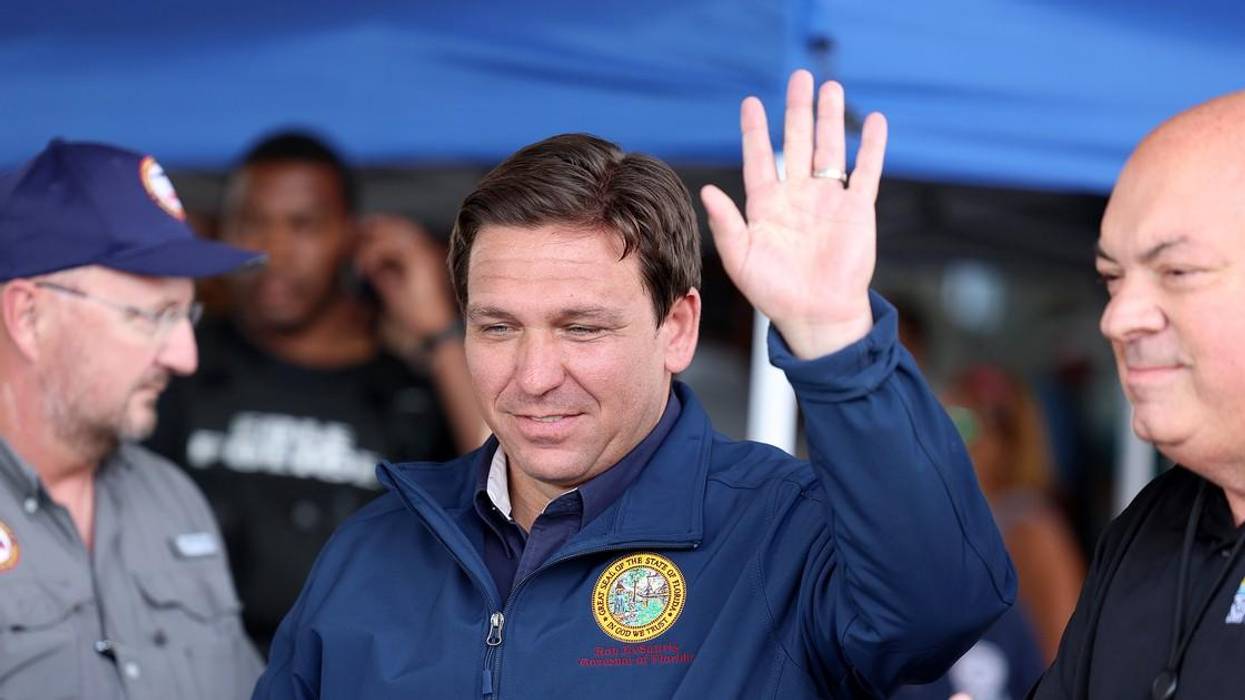
Playing the wannabe tough guy, he wants to troll his way to the White House as America's premiere culture warrior.
Ideological attacks on public education are central to the politics of Florida Gov. Ron DeSantis, who is carving out a brand as a book-burning, gay-phobic, transphobic, racist authoritarian. A Fauci-hater and anti-vax hero of right-wing media, DeSantis restricted instruction on gender identity and sexual orientation with his "Don't Say Gay" law. He limited what schools can teach about racism and diversity with his "Stop WOKE" law. He rejected math textbooks en masse for what the state called "prohibited topics," such as critical race theory; and he banned an Advanced Placement course in African-American studies for high school students on the grounds that it is a tool for "political indoctrination." Playing the wannabe tough guy, he wants to troll his way to the White House as America's premiere culture warrior.
His Trump-style, pugilistic approach was rewarded by Florida voters who reelected him by 19 percentage points. "Florida is where 'woke' goes to die" was DeSantis's sinister declaration in his inauguration speech, weaponizing "woke" to denounce any disliked policy from climate change to transgender rights, critical race theory, and the Black Lives Matter movement. He successfully appealed to the bigotries of the state's aging population, who were sadly bamboozled with racist culture war stunts like shipping legal migrants from Texas to Martha's Vineyard. They voted for a Trump poseur who performs cruelty for their enjoyment but wants to cut off Social Security and steal their nest eggs from under them.
As governor, DeSantis has failed to expand Medicaid, leaving hundreds of thousands of Floridians without health insurance. As a three-term congressman, DeSantis was a fierce opponent not just of the Affordable Care Act, but Social Security and Medicare. He voted to strip a quarter trillion dollars from programs that allow retired Americans to survive. Like most other Republicans in 2017, he voted to cut taxes on corporations, high-earners, and wealthy heirs. As president, he likely would slash what's left of the social safety net and use the proceeds to help the rich stay rich.
Single-minded about using the blunt-force gears of state to troll "the libs," DeSantis's anti-education crusade is doubly authoritarian—most obviously in its use of state power to suppress ideas and information, but also in its more subtle assumption that teaching is ultimately about imposing doctrines of one sort or another. As if he's auditioning for an anchor job, DeSantis is all over Fox News propagandizing the homophobic and racist laws he engineered.
"Gov. DeSantis understands culture war as public policy," barked Christopher Rufo, a DeSantis attack dog. Rufo—a MAGA activist who advised the DeSantis policy team on "Stop WOKE"—is essentially a chatbot who spews out an endless stream of culture war nonsense. A mini-DeSantis, he views anything related to addressing racism and diversity as "woke" while denouncing American schools as "hunting grounds" for pedophile teachers and suggesting that "parents have good reason" to worry about "grooming" in public schools.
Part of the "Stop WOKE" agenda pushed by DeSantis and Rufo, the "Individual Freedom" bill, bans the teaching of anything that might cause students to feel "guilt, anguish, or other forms of psychological distress." Yet the "freedom" it peddles is achieved by detaching Black children from knowledge of their own heritage and by "freeing" White children from dangerous feelings of solidarity with maltreated people. What DeSantis calls "psychological distress" is the spark of empathy children and adults feel from learning about the oppression of others. Even worse in the eyes of DeSantis, children might feel a sense of injustice and—inspired by the history of civil rights activists—want to better the world.
The legislation is part of a wave of "educational gag orders" banning the teaching of "divisive concepts"—all designed to chill classroom discussion of race and gender. Violations can trigger disciplinary action against faculty and enormous fines for their universities. But the gravest threat to academic freedom comes from a legal argument Florida has advanced in defense of the "Stop WOKE" Act.
In a brief filed in federal court, Florida's lawyers contend that faculty at public universities are government employees, in-classroom speech is "government speech," and the state "has simply chosen to regulate its own speech" with the "Stop WOKE" Act. Calling Florida's argument "positively dystopian" and noting it would give Florida "unfettered authority to muzzle its professors," the district court temporarily barred enforcement of the statute. But Florida has appealed, and the ultimate outcome of the case is uncertain.
With the various provisions of the "Stop WOKE" bill, "Don't Say Gay" bill, and now the rejection of the College Board's Advanced Placement African-American history, Florida leads an unrelenting, country-wide assault on truth and freedom of expression. Following Florida, other states want to suppress disfavored viewpoints in the form of laws that censor the histories and experiences of marginalized groups, especially Black and LGBTQ+ communities.
At least 18 states, for example, have laws or policies that restrict the teaching of race and gender. Typical prohibitions include outlawing "indoctrination"—viewed as teaching the history of slavery, racism, and Jim Crow—and forbidding discussions of gender identity, gender orientation, or critical race theory—the view that systemic racism is ingrained into American law and institutions. Along with promoting homophobia and hatred, this widespread attack on Black perspectives helps fuel the racial divisions that enable white supremacy, which serves to maintain the systemic racism that these laws try to ignore.
More than just "trolling the libs," these Florida laws have coerced librarians into becoming the reading police. DeSantis has made it clear that he doesn't want schools to acknowledge that LGBTQ+ people exist. He's banned the teaching of Black history classes on the grounds that lessons on people like Frederick Douglass or Rosa Parks "have no educational value." District officials there have launched reviews of the appropriateness of teachers' books as part of House Bill 1467, the state law mandating that school books be age-appropriate, free from pornography, and "suited to student needs." With the threat of legal action, Florida's Duval County Public Schools urged educators to "err on the side of caution" in determining whether a book "is developmentally appropriate for student use."
Some school districts even closed their libraries until all their books can be vetted to make sure they are in compliance and avoid felony charges. When a teacher raised concerns about such book removals, a school official warned the teacher that violating the state law could lead to third-degree felony charges for distributing "harmful materials" to minors. Students arrived in some Florida public school classrooms this month to find their teachers' bookshelves wrapped in paper. A Florida teacher was fired last week after posting a video of empty bookshelves that DeSantis called "a fake narrative." The efforts to conceal titles have stirred outrage from educators and parents, many of whom also shared images of bare wooden shelves or books veiled behind sheets of colored paper.
In his maniacal search for manufactured culture war assaults and new "libs to own," DeSantis has a bully's knack for finding easy targets among marginalized groups.
In his maniacal search for manufactured culture war assaults and new "libs to own," DeSantis has a bully's knack for finding easy targets among marginalized groups. He has fired the latest salvo in his educational culture war on New College—a tiny liberal arts school in Sarasota with a large LGBTQ+ population. Inaugurating a plan to remake Florida's educational system in his image and build his MAGA legitimacy ahead of a likely presidential run, DeSantis wants to fundamentally change the character of New College, which describes itself as "a community of free thinkers."
DeSantis's education commissioner has expressed a desire to transform the school into "Hillsdale of the South," referencing the conservative, Christian private college in Michigan that is a feeder school for right-wing politics and has close ties to both DeSantis and Trump. In response to a political assault on their academic freedom, New College students say they feel like they've been turned into guinea pigs in a right-wing social experiment.
The governor appointed a hard-right board of trustees that includes DeSantis' ventriloquist dummy Christopher Rufo, who decried what he called, "gender, grooming, and trans ideology in schools" and bragged on Twitter: "We are now over the walls and ready to transform higher education from within. Under the leadership of Gov. DeSantis, our all-star board will demonstrate that the public universities, which have been corrupted by woke nihilism, can be recaptured, restructured, and reformed."
The trustees promptly fired the school president and installed the former Republican state House Speaker and former DeSantis education commissioner Richard Corcoran as interim president. Corcoran told a Hillsdale National Leadership Seminar last summer that education was "100% ideological. Education is our sword. That's our weapon. Our weapon is education."
After ousting the college president, DeSantis unveiled higher education policies to weaken faculty tenure protections, eliminate diversity and equity programs, and mandate Western civilization courses. "The core curriculum must be grounded in actual history, the actual philosophy that has shaped Western civilization," said DeSantis. "We don't want students to go through, at taxpayer expense, and graduate with a degree in Zombie studies." Eliminating Zombie studies means students would not be able to explore the mysterious, malignant driving force of DeSantis's brain-dead voters.
Deepening a chill that had already taken hold across Florida's public schools and universities, the state asked students and faculty to fill out a survey about their political leanings and requested information about resources for transgender students. DeSantis' mouthpiece Rufo also targeted Florida State University, saying the school was led by a "sprawling bureaucracy dedicated to promoting left-wing narratives" that condemned American society as structurally racist, which FSU business professor Jack Fiorito called "exaggerated rubbish."
DeSantis attacks education as "indoctrination" to chase the votes of the most reactionary segment of the public. While claiming that the educational system is biased against conservatives, Christians, and white people and that teachers are pushing extreme leftist agendas, DeSantis legislates a system of right-wing indoctrination under the guise of fairness and impartiality. Aside from denouncing elite education, DeSantis—a graduate of Yale and Harvard—bashes the usual Fox News scourges and appeals to the grievance-fueled MAGA crowd. Like Trump, DeSantis harbors grudges and seeks revenge on enemies, real or perceived. In this, he echoes the MAGA mob's desire to punish and destroy immigrants, non-whites, and "woke" elites. The Trump-averse Republicans rallying to DeSantis are calculating that his synthetic, performative version of Trumpism will serve as an adequate substitute for the MAGA base.
The 2022 midterms hopefully showed that most people are sick of the MAGA clown show, the conspiracy theories, and the hate for its own sake. When voters get a whiff of DeSantis' boring act that strangely mimics Trump's gestures like a programmed automaton, they will find him as repulsive as Trump himself. His speech on Monday to the Fraternal Order of Police in a Chicago suburb provoked a fierce flurry of condemnations and criticism from the Illinois governor and Chicago mayoral contenders. Embattled incumbent mayor Lori Lightfoot got it right in her characterization: "Ron DeSantis has perfected being a bigoted, racist demagogue."

I’m so proud of my child, and the many thousands like them, claiming and proclaiming their right to pursue happiness by tearing down the old gender walls.
What makes a good society? Is it a guaranteed right to pursue happiness, as our Declaration of Independence proclaimed? Perhaps, as Gandhi said, it’s providing the poorest and most vulnerable among us with the means to control their own lives. But what happens when it’s the pursuit of happiness that makes someone most vulnerable?
Let me introduce you to my child, my one and only. They — and, no, it wasn’t as hard as I expected to get used to the gender-neutral plural pronoun that they prefer — are brown-skinned, Mexican-American, secular-Jewish, and gay-married. In a country where Donald Trump is still admired by some 40% of the public, don’t imagine for a second that my child, with all those identities, isn’t horrifyingly vulnerable.
Lately, however, the Trumpian movement (with the full support of the future president’s assumed Republican opponent in 2024, Florida Governor Ron DeSantis) has targeted its most intense hatred on another part of my child’s identity. They are a gender-non-binary (and highly successful) drag queen, bringing happiness not only to themselves but to their cheering audiences. That’s where their right to the pursuit of happiness is most threatened at the moment and what makes them most vulnerable.
My child has been safe from attack — so far. Others haven’t been so fortunate. The murderous shootings at a drag club in my home state of Colorado are just the most notorious in a string of hate crimes directed at drag shows. More than 120 of them reportedly experienced protests, were threatened, or even attacked in 2022. Some transgender folks have come to believe that it’s no longer safe to live in this country. Others are thinking they might be better off taking leave of life itself.
In such a world, what’s a proud, concerned, on-the-edge-of-frightened father to do? For me, a first step is to come out of retirement and try to write some helpful words.
It would be easy to simply denounce the spread of right-wing bigotry as misinformed, misguided, and unjust, but what good would that do? Right-wingers live in a Fox News-mediated world of their own, where their bigotry seems to make perfectly good sense to them, while otherwise reasonable arguments fall on deaf ears.
So I want to write for a different audience. I’m inspired by the words Martin Luther King, Jr., penned while sitting in a Birmingham jail. “The Negro’s great stumbling block in his stride toward freedom” was not, he said, the out-and-out racist. It was “the white moderate, more devoted to ‘order’ than to justice… Shallow understanding from people of good will is more frustrating than absolute misunderstanding from people of ill will. Lukewarm acceptance is much more bewildering than outright rejection.”
Of course, there are big differences between the Jim Crow South of his day and the gender-identity-biased world of today. Still, I’ve talked to people who would never countenance discrimination, much less violence, against any minority, yet offer, at best, the most lukewarm acceptance of drag queens, non-binary, or transgender folks. They tell me they aren’t quite sure how they feel about such people. Some admit to just not being comfortable going to a drag show and finding themselves surprisingly unnerved around anyone who claims to be transgender.
Often, their understanding of what’s going on in our world couldn’t be shallower. They may even refer to my child as transgender because they haven’t grasped the difference between that and non-binary. To put it all too briefly: a transgender person has a specific gender identity different from the sex assigned them at birth; a non-binary person doesn’t identify exclusively as male or female, but as both, neither, or some combination of the two. Acquaintances who do know the difference have said to me that it’s still not clear to them what category my beloved drag queen fits into. (In fact, drag queens come with all kinds of gender identities.)
Since many people of good will remain uncertain and confused on issues like these, they don’t raise their voices to protest such discrimination. To my mind, that hesitation holds the key to understanding the problem in a basic way — and also to reducing discrimination and violence, and so moving this society in a more just direction.
Reinforcing the Wall of Gender Separation
Why are many thoughtful, well-educated people so ready to lump drag queens, non-binary, and transgender people in a single rejectable category? I suspect it’s much the same reason that leads to attacks on all three from the bigoted right and the same reason media stories often lump all three together: they all challenge the traditional division of humanity into two simple categories, male and female. They seem to blur that line or even dissolve it. Think of them, then, as gender-blenders. And because of that, they threaten our sense of social order, which, as King pointed out, may be more important than justice, even to many well-meaning people.
In my professional field as an academic, the study of religion, we have often explored how people create order in their lives by translating the world into sets of binary opposites with firm values attached: up is better than down; God is better than the devil; our God is better than their devil; we are better than them. Religion is often remarkably devoted to shoring up the boundary lines that keep those opposites apart.
These days, scholars are more likely to stress the ways that religion can actually help people blur and cross boundaries, because most of us grasp the danger of maintaining a separation between categories that naturally blur in the real world. Doing so is a first step down the slippery slope to creating ever more extreme hierarchies, which all too often end in injustice, oppression, and violence. The quest for order, in other words, has a way of transforming itself into a license to suppress or even ultimately eliminate “those people” on the other side of the line.
One recent analyst of the right-wing’s hatred of gender-blenders, Nathan Robinson, explains that it comes from “a visceral distaste for that which is different.” And behind that distaste lies “a devotion to traditional hierarchies.” Trumpublicans hope, writes Amanda Marcotte, “that they can return men to some imaginary glory days when the line between the genders was thick and inflexible, and women’s role was unquestionably that of subservience to men… If people start questioning what gender even means, then the whole right-wing system of power allocation begins to crumble.”
To paraphrase Robert Frost, something there is about a bigot that does love a wall, whether it’s between Mexico and the U.S. or men and women. How appropriate, then, that the legendary beginning of the gay rights movement in this country was a 1969 police raid on a gay bar named the Stonewall Inn. Consider it an irony, then, that there is now a growing acceptance of gays and lesbians, in part because they are seen as maintaining (or even reinforcing) the clear difference between male and female.
Despite the bill Florida Governor DeSantis passed — dubbed by its opponents the “Don’t Say Gay” bill — the reactionary right-wing has largely lost the battle against gay and lesbian rights and is now turning to a more popular target: those who blur, or even dissolve, that gender boundary. And the bigots fight all the more fiercely because they’re not just defending a particular boundary, but the very existence of social demarcation itself.
Today, the appropriate metaphor for it may not be a wall at all, but a dam. Martin Luther King put it aptly so long ago, indicting those “more devoted to ‘order’ than to justice” because order without justice is a “dangerously structured dam that blocks the flow of social progress.” And a New York City politician proved King’s point all too well recently. Condemning schools and libraries that bring in drag queens to read books to children, that Republican (after mouthing the usual, totally unfounded charge of “sexual grooming”) revealed her deepest source of anger — that it’s “a program teaching little children about their gender fluidity.”
Fluids, of course, may dissolve whatever they touch, whatever kinds of boundaries we create to give us a sense of social order. If so, the satisfaction we get from believing those lines to be immutable will begin to dissolve, too. Hence, the fierce desire to attack “gender fluidity.”
There surely is a big difference between the right-wingers who actively hate gender-blenders and the moderates or liberals who offer lukewarm acceptance and shallow understanding. The latter earn the title “people of good will” because they’re not seized by the urge to maintain boundaries or strengthen hierarchies that give them power and control over others. They won’t, in other words, actively demand unjust laws and policies.
But neither will they take a strong stand for justice, because those binary categories and boundaries still offer them a sense of order in their own lives. Somewhere, somehow, they want our fast-changing world to remain stable, simple, and familiar. As a result, they do share with the bigots, though obviously to a lesser degree, discomfort at seeing that classic boundary between male and female, which used to feel so immutable, disappear before their very eyes.
If we look in the mirror honestly enough, we’re likely to recognize that all of us have some boundary lines that are truly important to us, even if it’s only “us well-meaning liberals against those nasty Trumpsters.” Each of us has our own bottom line, the place where the blurring of lines does indeed become disturbing or even intolerable.
For a lot of people, however unconsciously, the distinction between male and female may be the hardest one of all to surrender. No wonder, then, that even people of good will regularly offer only lukewarm acceptance and shallow understanding to their fellow Americans who are gender-blenders.
Tear Down the Dam, It’s Good for Us All
Make no mistake, though. Those same people of good will may hold the key to freeing the gender-blenders from oppression and violence, if they can be roused to active support.
Every successful movement for social change needs just such a broad base of support. That’s why Dr. King called those lukewarm white moderates the great stumbling block to his own movement’s success. Doug McAdam, a prominent scholar of the civil rights movement, notes that it had to “compel supportive intervention by liberal northern allies… to the point where sympathetic media coverage and broad public support for the movement could be mobilized.” He quotes famed civil rights leader Bob Moses: “When the interest of the country is awakened, the government responds to that issue.”
America’s laws now demand that schools, parks, restaurants, and the like be open to all. Even virulent racists no longer call for those laws to be repealed. That’s because things do indeed become unthinkable once a large enough chunk of the public views them that way. Just as no one talks openly about reinstituting Jim Crow laws anymore, nobody urges that the vote be taken away from women either.
How can we make the right of gender-blenders simply to be who they are an equally unquestionable part of American society? Perhaps the key is to persuade well-meaning but confused and hesitant Americans not merely to tolerate them, or even simply to speak out for their safety or rights, but to appreciate how they actually enrich life for us all.
How we treat the most marginal and vulnerable among us determines the quality of life for the rest of us, too. A good society takes care of the most vulnerable by assuring their safety and the means to sustain their lives, along with their liberty to choose their own unique paths in pursuing happiness. If some find happiness by blending familiar categories, or even erasing the lines between them totally, supporting their choice could make a better society for us all.
The famed poet Walt Whitman suggested that there are “two main constituents for a truly grand nationality: first, a large variety of character, and second, full play for human nature to expand itself in numberless and even conflicting directions.”
Gender-blenders serve us by bringing us closer to that ideal. They are a model for a truly free society where we don’t feel compelled to fit ourselves into narrow binary categories, where everyone can accept themselves and explore who they really are, safely and without shame.
If the gender-blenders are provocative, all the better. Then they’ll provoke us to think and talk more freely about individuality, acceptance, and true community. Why wouldn’t we want them teaching our children? Even a 10-year-old can see that drag performers are “the most encouraging thing ever.” Openly non-binary and transgender people can be similarly encouraging.
Just to speak for myself, I’m so proud of my child, and the many thousands like them, claiming and proclaiming their right to pursue happiness by tearing down the old gender walls. To me, they — and in this case I mean all of them — are heroes because, as Whitman put it, they “walk at their ease through and out of that custom or precedent or authority that suits them not.”
I will be equally proud of my country when enough of us stand up strongly for the right to, and value of, gender fluidity — so strongly that this innocent and socially constructive pursuit of happiness will never make anyone vulnerable again.