
SUBSCRIBE TO OUR FREE NEWSLETTER
Daily news & progressive opinion—funded by the people, not the corporations—delivered straight to your inbox.
5
#000000
#FFFFFF
To donate by check, phone, or other method, see our More Ways to Give page.


Daily news & progressive opinion—funded by the people, not the corporations—delivered straight to your inbox.
"This is a huge moment, a win that builds a foundation for a new precedent in the US," said one plaintiff. "Those who believe they are above the law will now think twice before violating human rights."
A federal appellate court on Thursday upheld a historic verdict against CACI Premier Technology, a military contractor found liable for its role in the torture of three prisoners at Abu Ghraib during the George W. Bush administration's invasion of Iraq in the early 2000s.
The three plaintiffs—middle school principal Suhail Al Shimari, fruit vendor Asa'ad Zuba'e, and journalist Salah Al-Ejaili—are represented by the Center for Constitutional Rights and two law firms. CCR noted Thursday that Al Shimari v. CACI was first filed in 2008 under the Alien Tort Statute and "is the only lawsuit brought by Abu Ghraib torture victims to make it to trial."
These three survivors of Abu Ghraib—where US captors subjected prisoners to broken bones, death threats, electric shocks, extreme temperatures, sexual abuse, and more torture—finally got their day in court in April 2024. The following November, a federal jury in Virginia ordered CACI to pay each plaintiff $3 million in compensatory damages and $11 million in punitive damages, for a total of $42 million.
"This victory isn't only for the three plaintiffs in this case against a corporation," Al-Ejaili said after the verdict. "This victory is a shining light for everyone who has been oppressed and a strong warning to any company or contractor practicing different forms of torture and abuse."
CACI unsuccessfully sought a new trial at the US District Court for the District of Virginia, then turned to the 4th Circuit, which heard arguments last September.
"We affirm the jury’s verdict in full," wrote Senior Judge Henry Floyd, joined by Judge Stephanie Thacker—both appointees of former President Barack Obama. Judge A. Marvin Quattlebaum Jr., who was appointed by President Donald Trump, dissented.
CCR legal director Baher Azmy, who argued the appeal, said Thursday that "we are gratified yet again that the 4th Circuit rejected CACI's cynical arguments for impunity for its responsibility for the torture of our clients, which the jury confirmed in a historic judgment last year. Our courageous clients have waited so long for recognition and justice, and we are happy for them that this judgment affirmed their entitlement to it."
Joining the center in this fight were the firms Akeel & Valentine and Patterson Belknap Webb & Tyler. Michael Buchanan, a partner at the latter and lead co-counsel for the plaintiffs, also expressed gratitude "for the court's careful review of this matter and for its decision to uphold a verdict that acknowledges the severe harm our clients endured at Abu Ghraib at the hands of CACI employees and military personnel."
"I have been honored to work on this appeal alongside an exceptionally skilled and dedicated team at Patterson Belknap, which included Andrew Haddad, Alex Mahler-Haug, and other lawyers and paralegals, and with our colleagues at the Center for Constitutional Rights," Buchanan said. "While no verdict can undo what these individuals suffered, this outcome affirms their courage and the fundamental principle that all must be held accountable for their actions."
Al-Ejaili also celebrated the development, declaring that "this is a huge moment, a win that builds a foundation for a new precedent in the US."
"This will cause a positive difference in the future. Those who believe they are above the law will now think twice before violating human rights," the plaintiff added. "Thank you to the US legal system and thank you to everyone who had anything to do with this win."
The appellate court's decision notably comes as the Trump administration and Israel have launched another war in the Middle East: a joint assault of Iran, alongside Israeli bombing of Lebanon. Evidence of war crimes—including attacks on schools, hospitals, and other civilian infrastructure—has quickly mounted, fueling global demands for a diplomatic resolution.
This article has been updated with comment from lead co-counsel for the plaintiffs Michael Buchanan.
Under the proposal, the US would take control after "voluntary" relocation of Palestinians from the strip, where proposed projects include an Elon Musk Smart Manufacturing Zone and Gaza Trump Riviera & Islands.
The White House is "circulating" a plan to transform a substantially depopulated Gaza into US President Donald Trump's vision of a high-tech "Riviera of the Middle East" brimming with private investment and replete with artificial intelligence-powered "smart cities."
That's according a 38-page prospectus for a proposed Gaza Reconstitution, Economic Acceleration, and Transformation (GREAT) Trust obtained by The Washington Post and published in a report on Sunday. Parts of the proposal were previously reported by the Financial Times.
"Gaza can transform into a Mediterranean hub for manufacturing, trade, data, and tourism, benefiting from its strategic location, access to markets... resources, and a young workforce all supported by Israeli tech and [Gulf Cooperation Council] investments," the prospectus states.
However, to journalist Hala Jaber, the plan amounts to "genocide packaged as real estate."
Here comes the Gaza Network State.A plan to turn Gaza into a privately-developed “gleaming tourism resort and high-tech manufacturing and technology hub” with “AI-powered smart cities” and “Trump Riviera” resortgift link:wapo.st/4g2eATo
[image or embed]
— Gil Durán (@gilduran.com) August 31, 2025 at 10:18 AM
The GREAT Trust was drafted by some of the same Israelis behind the controversial Gaza Humanitarian Foundation (GHF), whose aid distribution points in Gaza have been the sites of deliberate massacres and other incidents in which thousands of aid-seeking Palestinians have been killed or wounded.
According to the Post, financial modeling for the GREAT Trust proposal "was done by a team working at the time for the Boston Consulting Group"—which played a key role in creating GHF. BCG told the Post that the firm did not approve work on the trust plan, and that two senior partners who led the financial modeling were subsequently terminated.
The GREAT Trust envisions "a US-led multirlateral custodianship" lasting a decade or longer and leading to "a reformed Palestinian self-governance after Gaza is "demilitarized and de-radicalized."
Josh Paul—a former US State Department official who resigned in October 2023 over the Biden administration's decision to sell more arms to Israel as it waged a war on Gaza increasingly viewed by experts as genocidal—told Democracy Now! last week that Trump's plan for Gaza is "essentially a new form of colonialism, a transition from Israeli colonialism to corporate" colonialism.
The GREAT Trust contains two proposals for Gaza's more than 2 million Palestinians. Under one plan, approximately 75% of Gaza's population would remain in the strip during its transformation. The second proposal involves up to 500,000 Gazans relocating to third countries, 75% of them permanently.
The prospectus does not say how many Palestinians would leave Gaza under the relocation option. Those who choose to permanently relocate to other unspecified countries would each receive $5,000 plus four years of subsidized rent and subsidized food for a year.
The GREAT Trust allocates $6 billion for temporary housing for Palestinians who remain in Gaza and $5 billion for those who relocate.
The proposal projects huge profits for investors—nearly four times the return on investment and annual revenue of $4.5 billion within a decade. The project would be a boon for companies ranging from builders including Saudi bin Laden Group, infrastructure specialists like IKEA, the mercenary firm Academi (formerly Blackwater), US military contractor CACI—which last year was found liable for torturing Iraqis at the notorious Abu Ghraib prison—electric vehicle manufacturer Tesla, tech firms such as Amazon, and hoteliers Mandarin Oriental and IHG Hotels and Resorts.
Central to the plan are 10 "megaprojects," including half a dozen "smart cities," a regional logistics hub to be build over the ruins of the southern city of Rafah, a central highway named after Saudi Crown Prime Mohammed bin Salman—Saudi Arabia and other wealthy Gulf states feature prominently in the proposal as investors—large-scale solar and desalinization plants, a US data safe haven, an "Elon Musk Smart Manufacturing Zone," and "Gaza Trump Riviera & Islands" similar to the Palm Islands in Dubai.
In addition to "massive" financial gains for private US investors, the GREAT Trust lists strategic benefits for the United States that would enable it to "strengthen" its "hold in the east Mediterranean and secure US industry access to $1.3 trillion of rare-earth minerals from the Gulf."
Earlier this year, Trump said the US would "take over" Gaza, American real estate developers would "level it out" and build the "Riviera of the Middle East" atop its ruins after Palestinians—"all of them"—leave Palestine's coastal exclave. The president called for the "voluntary" transfer of Gazans to Egypt and Jordan, both of whose leaders vehemently rejected the plan.
"Voluntary emigration" is widely considered a euphemism for ethnic cleansing, given Palestinians' general unwillingness to leave their homeland.
According to a May survey by the Palestinian Center for Policy and Survey Research, nearly half of Gazans expressed a willingness to apply for Israeli assistance to relocate to other countries. However, many Gazans say they would never leave the strip, where most inhabitants are descendants of survivors of the Nakba, the ethnic cleansing of more than 750,000 Palestinians during the creation of Israel in 1948. Some are actual Nakba survivors.
"I'm staying in a partially destroyed house in Khan Younis now," one Gazan man told the Post. "But we could renovate. I refuse to be made to go to another country, Muslim or not. This is my homeland."
The Post report follows a meeting last Wednesday at the White House, where Trump, senior administration officials, and invited guests including former UK Prime Minister Tony Blair, investor and real estate developer Jared Kushner—who is also the president's son-in-law—and Israeli Minister of Strategic Affairs Ron Dermer discussed Gaza's future.
While Dermer reportedly claimed that Israel does not seek to permanently occupy Gaza, Israeli leaders including Prime Minister Benjamin Netanyahu—who is wanted by the International Criminal Court for alleged crimes against humanity and war crimes including murder and forced starvation in Gaza—have said they will conquer the entire strip and keep at least large parts of it.
"We conquer, cleanse, and stay until Hamas is destroyed," Israeli Finance Minister Bezalel Smotrich recently said. "On the way, we annihilate everything that still remains."
The Israel Knesset also recently hosted a conference called "The Gaza Riviera–from vision to reality" where participants openly discussed the occupation and ethnic cleansing of the strip.
The publication of the GREAT Trust comes as Israeli forces push deeper into Gaza City amid a growing engineered famine that has killed at least hundreds of Palestinians and is starving hundreds of thousands of more. Israel's 696-day assault and siege on Gaza has left at least 233,200 Palestinians dead, wounded, or missing, according to the Gaza Health Ministry—whose casualty figures are seen as a likely undercount by experts.
In a landmark verdict cheered by human rights defenders around the world, a federal jury in Virginia found a U.S. military contractor liable for the torture of three prisoners at the notorious Abu Ghraib prison during the invasion and occupation of Iraq in the early 2000s.
The jury ordered CACI Premier Technology to pay each of the three Iraqi plaintiffs $3 million in compensatory damages and $11 million in punitive damages, for a total of $42 million. It is the first time that a civilian contractor has been found legally responsible for abusing Abu Ghraib detainees.
The lawsuit against CACI—filed in 2008 by the Center for Constitutional Rights (CCR) on behalf of Suhail Al Shimari, Asa'ad Al Zuba'e, and Salah Al-Ejaili—alleged that company officials conspired with U.S. military personnel in subjecting the plaintiffs to torture and other crimes.
As CCR noted Tuesday:
The plaintiffs brought their case under the Alien Tort Statute, a 1789 federal law that allows foreign nationals to seek redress in U.S. courts for certain violations of international law. This historic outcome follows 16 years of litigation, more than 20 attempts by CACI to have the case dismissed, and a previous trial in which the jury was unable to reach a verdict. Never before this case had survivors of U.S. post-9/11 torture testified in a U.S. courtroom. It also featured testimony from U.S. generals, CACI employees, and former [military police officers] involved in the torture.
"Today is a big day for me and for justice," said Al-Ejaili. "I've waited a long time for this day."
"This victory isn't only for the three plaintiffs in this case against a corporation," he added. "This victory is a shining light for everyone who has been oppressed and a strong warning to any company or contractor practicing different forms of torture and abuse."
CCR legal director Baher Azmy said that "our clients have fought bravely for 16 years in search of justice for the horrors they endured at Abu Ghraib, against all of the challenges this massive private military contractor threw in their way over the years to avoid basic accountability for its role in this shameful episode in American history."
"We are awed by our clients' courage and by the power of their testimony in court, and we are grateful that this jury knew enough to credit their story over the deflections of CACI," Azmy added. "We thank the jury for affording our clients the measure of justice they came to a United States court to seek."
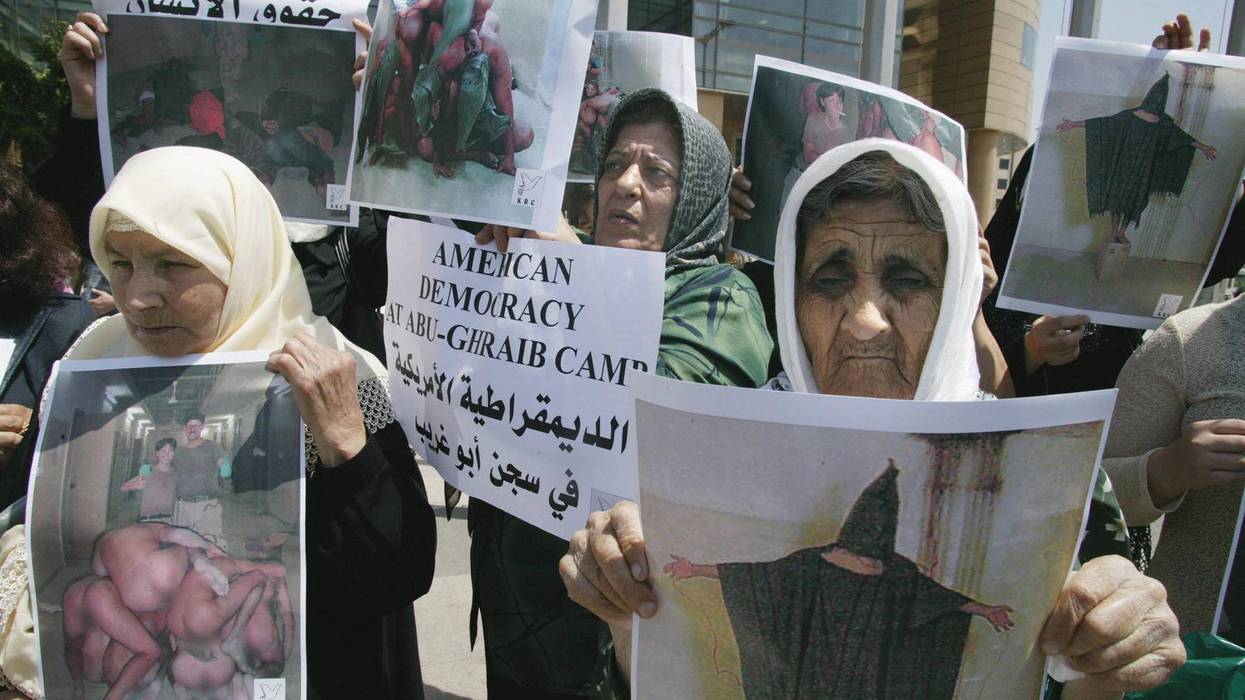
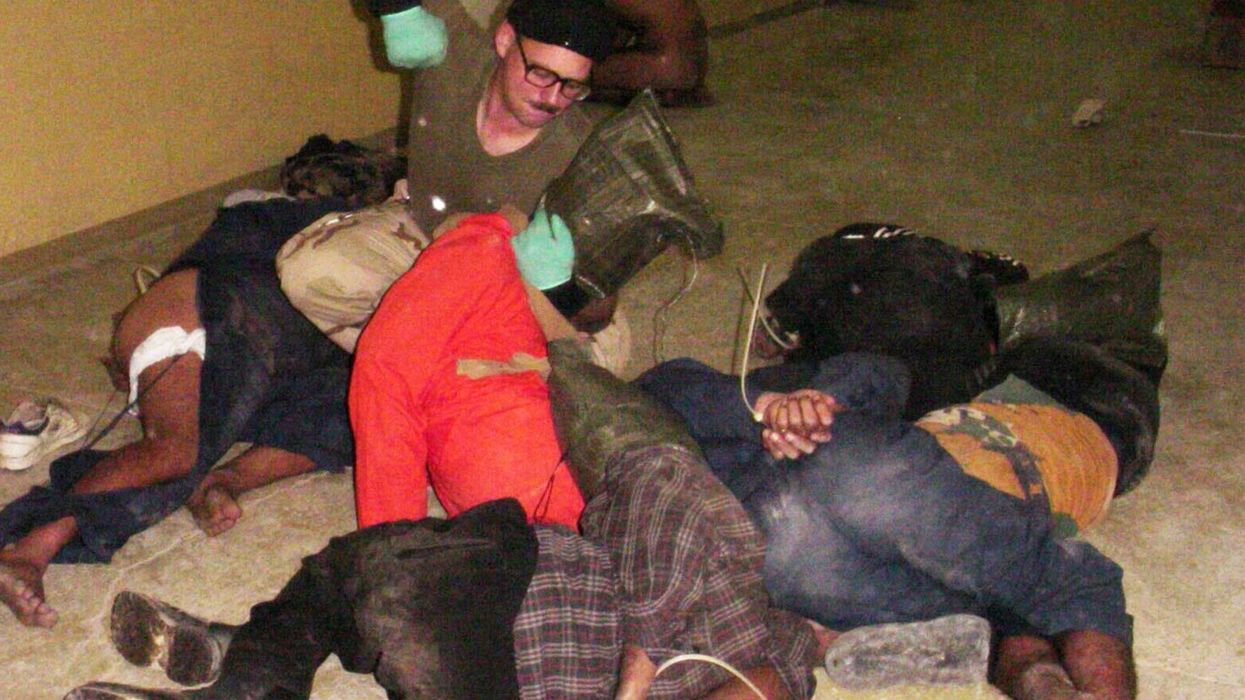
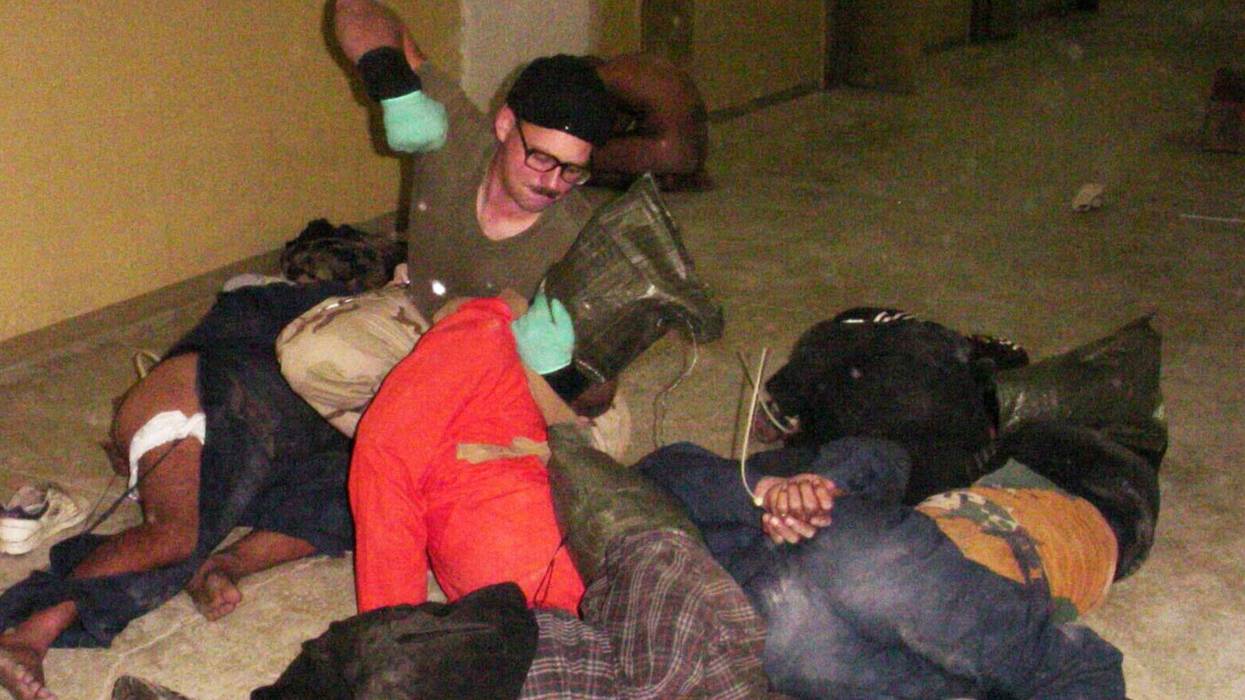
Like Guantánamo Bay, Abu Ghraib became a byword for U.S. torture during the Bush administration as it waged a worldwide war on terrorism following the September 11, 2001 attacks. The prison's worldwide notoriety stems from the leak and publication in 2004 of photos showing U.S. troops torturing and abusing Abu Ghraib detainees, both living and dead, often with smiles on their faces.
A 2004 investigation by U.S. Army Lt. Gen. Anthony Jones and Maj. Gen. George Fay found that CACI employees participated in and encouraged the torture of Abu Ghraib prisoners.
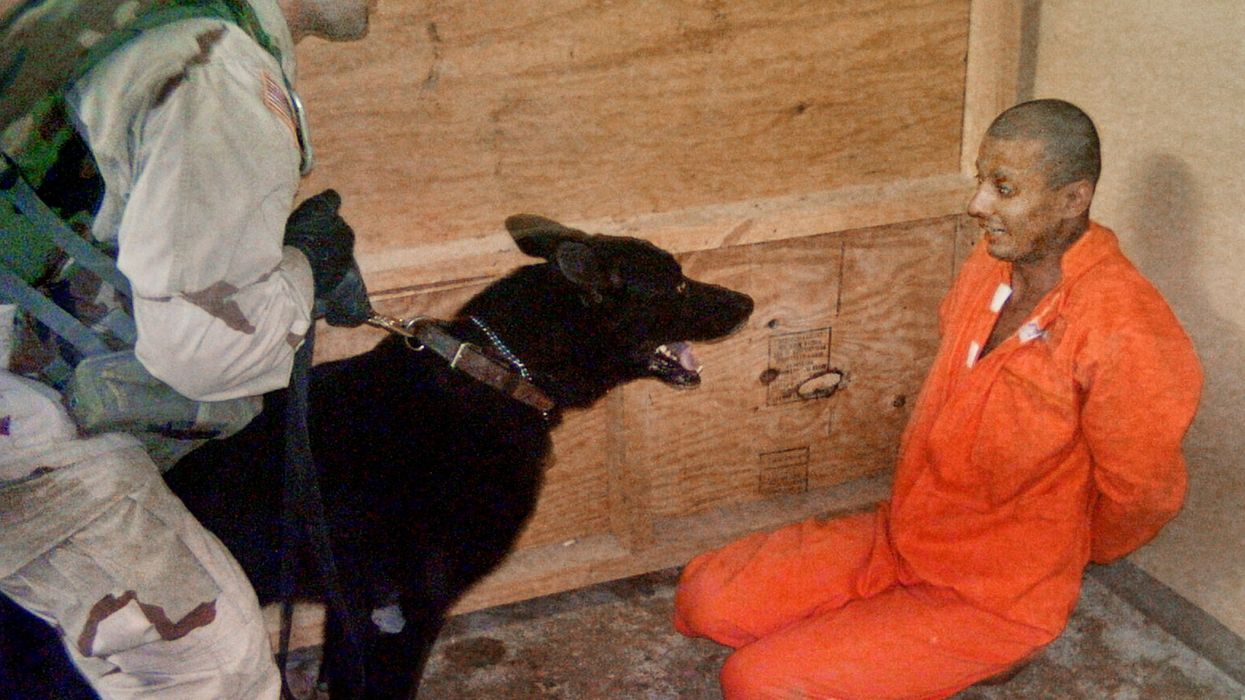
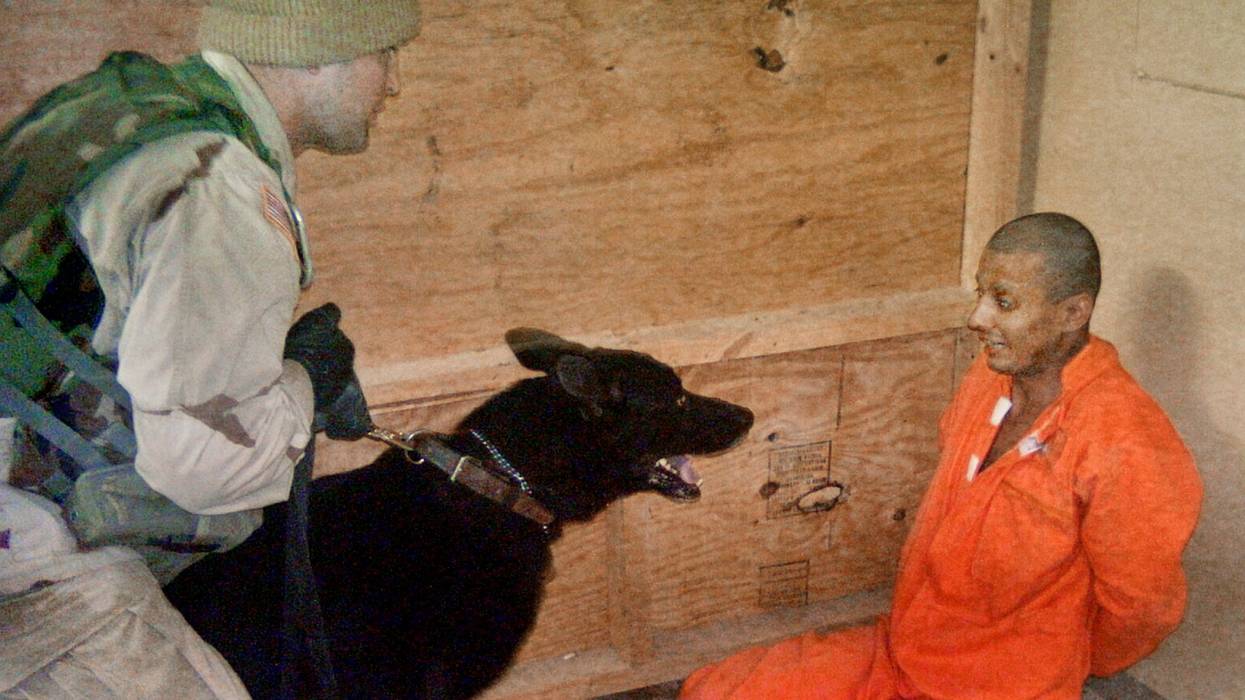
Investigators found that employees of CACI and Titan Corporation (now L3 Technologies) tortured Abu Ghraib detainees and encouraged U.S. troops to do likewise. Dozens of Abu Ghraib detainees died in U.S. custody, some of them as a result of being tortured to death. Abu Ghraib prisoners endured torture ranging from rape and being attacked with dogs to being forced to eat pork and renounce Islam.
A separate U.S. Army report concluded that most Abu Ghraib prisoners were innocent, with the Red Cross estimating that between 70-90% of inmates there were wrongfully detained. These include women who were held as bargaining chips to induce suspected militants to surrender.
Eleven low-ranking U.S. soldiers were convicted and jailed for their roles in Abu Ghraib torture. Brig. Gen. Janis Karpinski, the prison's commanding officer, was demoted. No other high-ranking military officer faced accountability for the abuse. Senior Bush administration officials—who had authorized many of the "enhanced interrogation techniques" used at prisons including Abu Ghraib and Guantánamo Bay—lied about their knowledge of the torture. None of them were ever held accountable.
"This will not be the final word; what happened in Abu Ghraib is engraved into our memories and will never be forgotten in history," one plaintiff vowed.
The federal judge presiding over a case filed by three Iraqis who were tortured by U.S. military contractors in the notorious Abu Ghraib prison two decades ago declared a mistrial Thursday after jurors were unable to reach a unanimous verdict.
After eight days of deliberation—a longer period than the trial itself—the eight civil jurors in Alexandria deadlocked over whether employees of CACI conspired with soldiers to torture detainees. The Virginia-based professional services and information technology firm was hired in 2003 during the George W. Bush administration to provide translators and interrogators in Iraq during the U.S.-led invasion and occupation, conspired with soldiers to torture detainees.
U.S. District Judge Leonie Brinkema—who said Wednesday that "it's a very difficult case"—declared a mistrial.
Plaintiff Salah Al-Ejaili told The Guardian that "it is enough that we tried and didn't remain silent."
"We might not have received justice yet in our just case today, but what is more important is that we made it to trial and spoke up so the world could hear from us directly," he added. "This will not be the final word; what happened in Abu Ghraib is engraved into our memories and will never be forgotten in history."
Baher Azmy, legal director of the Center for Constitutional Rights—which filed the case—said that "we are, of course, disappointed by the jury's failure to reach a unanimous verdict in favor of our plaintiffs despite the wealth of evidence."
"But we remain awed by the courage of our clients, who have fought for justice for their torment for 16 years," Azmy added. "We look forward to the opportunity to present our case again."
Al Shimari v. CACI, which was first filed in 2008 under the Alien Tort Statute—a law allowing non-U.S. citizens to sue for human rights abuses committed abroad—plaintiffs Suhail Al Shimari, Asa'ad Zuba'e, and Al-Ejaili accused CACI of conspiring with the U.S. military to perpetrate war crimes including torture at Abu Ghraib. The men suffered broken bones, electric shocks, sexual abuse, extreme temperatures, and death threats at the hands of their U.S. interrogators.
The case marked the first time a U.S. jury heard a case brought by Abu Ghraib survivors. Along with the Guantánamo Bay detention camp in Cuba, the prison became synonymous worldwide with U.S. torture during the War on Terror. Dozens of Abu Ghraib detainees died while in U.S. custody, some of them as a result of being tortured to death. Abu Ghraib prisoners suffered torture and abuse ranging from rape and being attacked with dogs to being forced to eat pork and renounce Islam.
A 2004 probe by Maj. Gen. Anthony Taguba found that the majority of Abu Ghraib prisoners—the Red Cross said 70-90%—were innocent. Women and girls were also imprisoned at Abu Ghraib as bargaining chips to lure militants wanted for resisting the U.S.-led invasion and occupation of their homeland. Some reported rape and sexual abuse by their captors, which reportedly led to the "honor killing" murders of multiple women.
CACI denies any wrongdoing and still gets millions of dollars worth of U.S. government contracts each year. In February, Fortune named CACI one of the "World's Most Admired Companies" for the seventh consecutive year.
"Meanwhile, the U.S. government STILL hasn't provided compensation or other redress to people tortured by U.S. troops in Iraq," said one observer. "These three men are the lucky few."
Two decades after they were tortured by U.S. military contractors at the notorious Abu Ghraib prison near Baghdad, three Iraqi victims are finally getting their day in court Monday as a federal court in Virginia takes up a case they brought during the George W. Bush administration.
The case being heard in the U.S. District Court in Alexandria, Al Shimari v. CACI, was first filed in 2008 under the Alien Tort Statute—which allows non-U.S. citizens to sue for human rights abuses committed abroad—by the Center for Constitutional Rights (CCR) on behalf of three Iraqis. The men suffered torture directed and perpetrated by employees of CACI, a Virginia-based professional services and information technology firm hired in 2003 by the Bush administration as translators and interrogators in Iraq during the illegal U.S.-led invasion and occupation.
"This lawsuit is a critical step towards justice for these three men who will finally have their day in court."
Plaintiffs Suhail Al Shimari, Asa'ad Zuba'e, and Salah Al-Ejaili accuse CACI of conspiring to commit war crimes including torture at Abu Ghraib, where the men suffered broken bones, electric shocks, sexual abuse, extreme temperatures, and death threats at the hands of their U.S. interrogators.
"This lawsuit is a critical step towards justice for these three men who will finally have their day in court. But they are the lucky few," Sarah Sanbar, an Iraq researcher at Human Rights Watch, wrote on Monday. "For the hundreds of other survivors still suffering from past abuses, their chances of justice remain slim."
"The U.S. government should do the right thing: Take responsibility for their abuses, offer an apology, and open an avenue to redress that has been denied them for too many years," Sanbar added.
U.S. military investigators found that employees of CACI and Titan Corporation (now L3 Technologies) tortured Iraqi prisoners and encouraged U.S. troops to do likewise. Dozens of Abu Ghraib detainees died in U.S. custody, some of them as a result of being tortured to death. Abu Ghraib prisoners endured torture ranging from rape and being attacked with dogs to being forced to eat pork and renounce Islam.
A May 2004 report by Maj. Gen. Anthony Taguba concluded that the majority of Abu Ghraib prisoners—the Red Cross said 70-90%— were innocent. In addition to thousands of men and boys, some women and girls were also jailed there as bargaining chips meant to induce wanted insurgents to surrender. Some of them said they were raped or sexually abused by their American captors; lesser-known Abu Ghraib photos show women being forced to expose their private parts. Some female detainees were reportedly murdered by their own relatives in so-called "honor killings" after their release.
Eleven low-ranking U.S. soldiers were convicted and jailed for their roles in the Abu Ghraib torture scandal. Brig. Gen. Janis Karpinski, the prison's commanding officer, was demoted. No other high-ranking military officer faced accountability for the abuse. Senior Bush administration officials—who had authorized many of the "enhanced interrogation techniques" used at prisons including Abu Ghraib and Guantánamo Bay—lied about their knowledge of the torture. None of them were ever held accountable.
Bush's successor, former President Barack Obama, promised to investigate—and if warranted, to prosecute—the Bush-era officials responsible for the torture that had become synonymous with the War on Terror. Instead, the Obama administration protected them from prosecution.
In 2013, L3 Technologies agreed to pay $5.28 million to 71 former Abu Ghraib detainees who were subjected to sexual assault and humiliation, rape threats, electrical shocks, mock executions, brutal beatings, and other abuse.
The following year, the 4th U.S. Circuit Court of Appeals overturned a lower court ruling prohibiting Abu Ghraib torture victims from suing U.S. companies implicated in their abuse. But the court later reversed itself, finding the case had sufficient ties to the United States to be heard in an American court. The suit was later dismissed under the political question doctrine, which prevents courts from ruling on issues determined to be essentially political.
However, in 2016, a 4th Circuit panel ruled that "the political question doctrine does not shield from judicial review intentional acts by a government contractor that were unlawful at the time they were committed," allowing the Iraqis' case to proceed.
"This is a historic trial that we hope will deliver some measure of justice and healing for what President Bush rightly deemed disgraceful conduct that dishonored the United States and its values," CCR senior attorney Katherine Gallagher told The Guardian on Monday.
"In many ways, this case may be seen as setting a precedent for holding contractors accountable for human rights violations should they happen in other contexts, too," she added.
CACI—which denies any wrongdoing—has tried to get the case dismissed 20 times. The company still lands millions of dollars worth of U.S. government contracts. In February, Fortune included the firm on its "World's Most Admired Companies" list for the seventh straight year.
"The ruling has cleared the way, almost 20 years hence, for our clients to tell their story in open court," said the legal director at the Center for Constitutional Rights, which filed suit on behalf of detainees.
Survivors of torture at the hands of U.S. troops and private interrogators cheered a federal judge's rejection this week of an infamous military contractor's latest bid to dismiss a lawsuit brought by Iraqis formerly jailed in the notorious Abu Ghraib prison during the early years of the American-led occupation.
On Monday, Judge Leonie Brinkema of the U.S. District Court for the Eastern District of Virginia in Alexandria refused to dismiss the torture suit against CACI Premier Technology, a military-industrial complex linchpin based in nearby Arlington with more than 22,000 employees and billions of dollars in government contracts.
"I am so happy to receive the news that our case can proceed toward trial."
The lawsuit against CACI—filed in 2008 by the Center for Constitutional Rights on behalf of former detainees Suhail Al Shimari, Asa'ad Al Zuba'e, and Salah Al-Ejaili—alleges that company officials conspired with U.S. military personnel in subjecting the plaintiffs to torture and other crimes. A 2004 investigation by U.S. Army Lt. Gen. Anthony Jones and Maj. Gen. George Fay found that CACI employees participated in and encouraged the torture of Abu Ghraib prisoners.
"I am so happy to receive the news that our case can proceed toward trial," plaintiff Salah Al-Ejaili—an Al Jazeera journalist imprisoned and tortured for two months at Abu Ghraib—said in a statement Tuesday.
"I have stayed patient and hopeful during the two years we have waited for this decision—and throughout the nearly two decades since I was abused at Abu Ghraib—that one day I would achieve justice and accountability in a U.S. court," he added. "Today brings me and the other plaintiffs one step closer."
At Abu Ghraib—where one U.S. torturer "welcomed" a new handcuffed and blindfolded prisoner by throwing him face-first from a vehicle and proclaiming, "You can't spell abuse without Abu"—detainees faced daily abuse described as "sadistic, blatant, and wanton" in a report by Army Maj. Gen. Antonio Taguba.
Beatings, death threats, and sexual, religious, and racial abuse were commonplace. Prisoners—up to 90% of whom were innocent, according to a Red Cross report—were also menaced or attacked by trained dogs, forced to masturbate in groups in front of male and female interrogators, and were raped by men and objects, in one instance while a female soldier photographed the teenaged victim. Others were forced to curse their religion or eat pork, which is strictly forbidden to Muslims.
In addition to men, women—some of whom said they were raped or sexually abused by their U.S. captors—were held at Abu Ghraib as bargaining chips meant to coerce wanted males to surrender to occupation authorities. One woman said she was thrown in a cell with the bloody corpse of her brother, one of dozens of Abu Ghraib detainees who died at the hands of U.S. troops, from medical neglect, or shelling by Iraqi insurgents.
Photographs of smiling U.S. troops posing beside the body Manadel al-Jamadi, who was tortured to death at Abu Ghraib, were among the hundreds of horrific images that shocked the world's conscience upon their release after Army whistleblower Sgt. Joe Darby leaked them.
Although 11 low-ranking soldiers were convicted and jailed for their roles in the Abu Ghraib torture scandal and Brig. Gen. Janis Karpinski, the prison's commanding officer, was demoted, no other high-ranking military officer faced accountability for the abuse. Nor did any of the officials in the George W. Bush administration or the Central Intelligence Agency who devised, approved, and ordered the torture of detainees in the so-called War on Terror.
CACI—which has tried to get the case dropped 18 times—argues it is not responsible for its employees' torture of Abu Ghraib prisoners, this time unsuccessfully citing the U.S. Supreme Court's 2021 Doe v. Nestle decision. In that case, the justices ruled 8-1 that companies could not be sued under the Alien Tort Statute—which grants federal courts jurisdiction over civil suits brought by foreign nationals alleging violations of international law—for their alleged complicity in the trafficking and enslavement of West African children in the cocoa industry.
In 2013, CACI shocked observers by suing four of the former Abu Ghraib plaintiffs for $15,000 in witness fees, travel allowances, and deposition transcripts incurred by the multibillion-dollar corporation.
Also in 2013, another contractor, Engility Holdings—formerly known as L-3 Services and Titan Corp.—agreed to pay $5.28 million to 71 former prisoners tortured at Abu Ghraib and other U.S. detention sites in Iraq during the American occupation.
Center for Constitutional Rights legal director Baher Azmy said Brinkema's decision "affirms that the human rights norms vindicated by the Alien Tort Statute remain vital and are available to address a case revealing substantial evidence identified by the court that CACI facilitated and promoted the torture and abuse of detainees at Abu Ghraib."
"The ruling," Azmy added, "has cleared the way, almost 20 years hence, for our clients to tell their story in open court."