

5
#000000
#FFFFFF
To donate by check, phone, or other method, see our More Ways to Give page.
Daily news & progressive opinion—funded by the people, not the corporations—delivered straight to your inbox.

“Polarization” cannot keep excusing a government that fails working people.
I’m tired of hearing the word “polarization.” It’s being used so much by older people that it’s starting to feel like an excuse.
An excuse for retaliation. An excuse for doing nothing. An excuse for why we should expect less from the people who ask for our votes.
Recently, while talking with someone about getting involved with my podcast, With All Due Respect, I encountered exactly that attitude. He told me he disagreed with what I was doing but would participate for a paycheck. When I pressed him about bringing people from different sides together to discuss solutions, he said the country was too polarized for it to matter.
I want this administration judged by that standard: Can people earn enough to live, and do workers have a meaningful say in the conditions of their employment?
That pissed me off.
I told him he could perhaps come back another time. That day, the disagreement wasn’t the problem. Declaring the effort pointless before we had even begun was.
Polarization may explain why a meeting is stalling. It should never explain why the conversation is over.
When people’s livelihoods, healthcare, and futures are involved, walking away has consequences. Someone still has to live with the problem after you’ve decided discussing it is a waste of time.
I’m a member of Gen Z and an Army veteran. My breaking point came when I could not afford to keep going to school while using the GI Bill.
The jobs I could reliably land were full-time. Meanwhile, taking at least one class in person could qualify me for a higher housing allowance than an online-only schedule. But those classroom hours competed with the hours I needed to work.
If I built my schedule around school, I lost work time. If I built it around work, I lost part of the housing allowance. My housing costs in Phoenix did not shrink to match. Credit cards filled the gap; interest made it deeper.
If a veteran cannot afford to use his benefit effectively, what good is the benefit to him?
The fight wasn’t with my neighbor. It was with a system whose promises did not add up to a life I could afford.
I hear older Americans talk about responsibility. I want that conversation. I want it to include responsibility for the decisions that shaped the country my generation inherited.
If your measure of success is how much your house has appreciated, what happens when the next generation cannot afford to buy it? If you tell young people to work hard, what are you prepared to change when their work still leaves them struggling?
Those questions deserve answers. Instead, I hear commentators, including on Fox News, mock my generation’s efforts at inclusion. I see those efforts as attempts to build a more perfect union. Disagree with our language or proposals, but engage with what we are trying to achieve.
Age and experience do not exempt anyone from explaining the results of their leadership.
This is why I keep thinking about Theodore Roosevelt.
Republican bosses in New York wanted Roosevelt out of the governor’s office. They helped move him into the vice presidency, where they hoped his capacity to disrupt their interests would be contained. Instead, after President William McKinley’s assassination in 1901, Roosevelt became president. He subsequently won election in 1904.
I cannot prove he would never have reached the presidency another way. He had substantial public appeal. But his story makes me ask how many capable leaders are sidelined because they threaten the people who control access to power.
America cannot afford to leave those openings to chance.
Roosevelt’s Square Deal sought fairer treatment for workers and limits on corporate power. What I admire is his willingness to use public authority when powerful interests would have preferred that government stay out of their way.
I am a democratic socialist. Roosevelt opposed socialism. My argument is that his willingness to confront concentrated power offers something we can learn from, even where our politics differ.
Bring back the Square Deal—and make the promise broader.
For me, it has to start with work. Get people into jobs that pay enough to build a life. I want this administration judged by that standard: Can people earn enough to live, and do workers have a meaningful say in the conditions of their employment?
Add healthcare people can use without financial ruin and housing working people can afford. These are the terms of the deal I am demanding.
Who creates the value at work? Who decides how it is divided? How much bargaining power does the worker actually have?
Hard work should deliver more than permission to keep struggling.
My interest in democratic socialism begins with that question of power. I want people to have more control over their work and communities. We should debate how to achieve that, what it would cost, and what could go wrong. I need to keep studying, too.
But a label should begin a discussion, not shut it down.
The same standard applies to leadership. You probably know someone closer to home who listens, shows up, and takes responsibility. It may even be you. We should help people like that learn how to organize, run, and serve.
And we should make demands concrete enough to judge. How will you help people find good-paying work? What will you do about housing and healthcare? How will workers gain a stronger voice? What can voters check a year after you take office?
A new face means little without a different standard of accountability.
That work begins before the 2028 presidential election. It belongs in local meetings, workplaces, neighborhood conversations, and every election where we can influence who exercises power.
Call your representatives. Ask specific questions. Compare their answers with their votes. Support challengers when incumbents fail. Build organizations that can keep demanding results after Election Day.
This week, talk to a neighbor. Find an organization working on something that affects your life. Attend a meeting. Take on one task. If you disagree with my politics, bring an argument and a willingness to listen.
There are already people passing out flyers, organizing meetings, and trying to bring others into this work. They need company. They need people willing to turn frustration into participation.
Roosevelt wrote that “progress is accomplished by the man who does the things”.
Today, that invitation belongs to all of us.
We must stand for ourselves. We must organize and elect people who will fight for a fairer deal, then hold them to it.
Stop using polarization to tell us why we cannot begin.
Let us begin.

New technology is enabling companies to reinvent the rip-off right under our noses; we need new laws to protect us.
Every day, companies find better, and sneakier, ways to reach deeper into our wallets.
They trap us in subscriptions, bury fees until checkout, use algorithms to collude with competitors, and mine our personal data to charge us the most we’re willing to pay. With each trick and tactic, companies are reinventing the rip-off right under our noses. And, as families strain under the rising cost of living, these practices are coming for every line of the household budget.
Algorithmic price-fixing is one of the most powerful tools in that arsenal. Price-fixing no longer requires a smoky back room. Today, technology can do CEOs’ dirty work for them. From rent to gasoline, this algorithmic price-fixing playbook is wreaking havoc on family budgets.
Putting food on the table and a roof over your head is hard enough without greedy corporations squeezing you for all you’re worth.
In June, a class-action lawsuit in California alleged that AI-powered pricing tool Kalibrate helped more than 1,700 gas stations coordinate and inflate prices at the pump. Drivers paid a hefty price, as Kalibrate allegedly pushed gas prices up by as much as 30 cents a gallon in some markets—a roughly $4 billion dollar dent in Californians’ budgets. Similar schemes could well be underway in other states.
Meanwhile, in the rental market, the blockbuster RealPage lawsuit alleged that the company’s leasing software pooled landlords’ data and spit out rent recommendations that helped landlords raise rents in lockstep. In some buildings using RealPage, rents jumped by as much as 33% in a single year—more than eight times the increase in a comparable building that didn’t use the software.
Another weapon in the gouger’s arsenal is dynamic pricing. Americans are familiar with prices that fluctuate when supply is scarce—say, seats on a plane or rooms at a hotel. But today, companies are pushing the practice well beyond contexts of scarcity.
For example, shoppers might find that sunscreen and bottled water have changed prices overnight in Las Vegas hotel lobby shops. And as stores like Walmart and Kroger install electronic shelf labels across thousands of stores, the infrastructure for high-frequency dynamic pricing in brick and mortar shopping is taking shape.
And companies aren’t just changing prices at high speed, they’re changing prices based on who’s shopping. Surveillance pricing, or the tactic of using personal data to squeeze each consumer to their breaking point, is being deployed all across the market.
Shoppers who are near a Target, for example, have been charged higher prices than those shopping at home. And on platforms like Booking.com, users from wealthier cities may see higher prices for identical hotel rooms. Companies have stopped merely pricing products. Now, they are pricing people, too.
Shoppers know the deck is stacked in corporations’ favor, and they’re tired of being spied on and ripped off.
A reckoning over what Americans are owed in the modern marketplace is long overdue. The market has changed at warp speed, but our guardrails haven’t kept up. Without new protections, the price tag we’ve taken for granted for more than 100 years is at risk of extinction.
In my new book Gouged, I offer one path forward: the Shoppers’ Bill of Rights.
From ensuring that the price you see is the price you pay to banning surveillance pricing to giving mom and pops on Main Street a fair shot against the big box stores and requiring AI assistants to act in shoppers’ best interest, it lays the baseline for a fair marketplace, putting simple guardrails around the technologies, tricks, and traps that companies are using to gouge us.
Lawmakers in some states are already taking strides independently, with roughly 90 bills introduced to counter these unfair pricing tactics in just the last two years.
But we shouldn’t settle for leaving shoppers vulnerable if they step across the street or cross state lines. Putting food on the table and a roof over your head is hard enough without greedy corporations squeezing you for all you’re worth. A Shoppers’ Bill of Rights would be a good place to start to restore the basic bargain between shoppers and corporations.
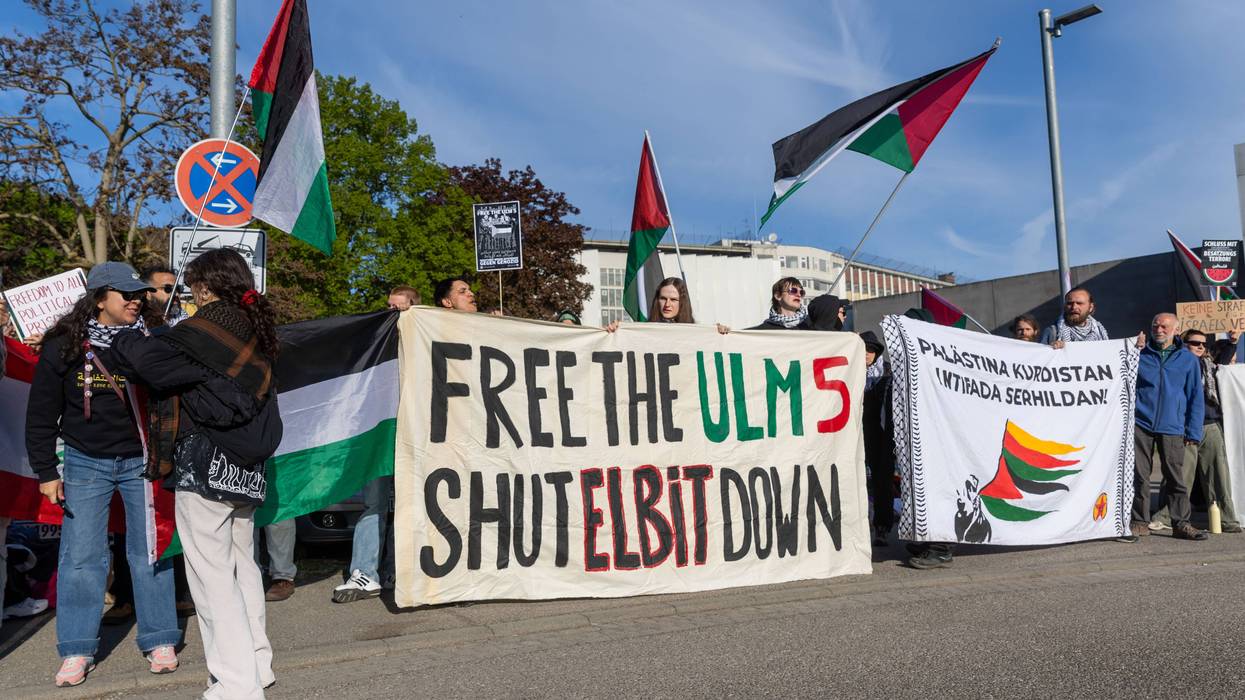
The trial of five Palestinian rights activists, now approaching its final stage, has exposed for all to see not only Germany’s increasingly neofascist playbook for silencing dissent but complicity in Israel’s genocide.
Germany is a country with a long and complex relationship to authoritarianism. It is also of course the country that gave birth to the most evil political regime, Nazism, in the modern era.
The Allies agreed on the denazification of Germany as a goal after the end of World War II, but the general consensus is that it wasn’t a success. Some high-ranking Nazis were put on trial and sentenced to death, others were removed from public positions, but the majority of Nazis were reintegrated into postwar German society and even landed high-ranking positions.
Now, Germany is again displaying worrying signs of authoritarianism, as evidenced by the meteoric rise of the far-right Alternative for Germany (AfD) party. However, Germany’s love affair with authoritarian rule runs deeper than the current surge of the AfD. Its legal and judicial system has become notorious for its restrictions on freedom of speech and its penchant for framing dissent “not as a democratic expression but as a threat to public order.”
The treatment of the Ulm5 young activists is in clear violation of European human rights law.
The Ulm5 trial underway in Stuttgart, and now approaching its final stage, has exposed for all to see not only Germany’s increasingly neofascist playbook for silencing dissent but complicity in Israel’s genocide.
In the early hours of September 8, 2025, five young pro-Palestinian activists broke into the German branch of Israeli arms manufacturer Elbit Systems in Ulm, southern Germany. Once inside, they broke windows and destroyed furniture and technical equipment. They also sprayed slogans on the walls, such as “Free Palestine” and “Germany finances, Israel bombs.” No one was injured in the attack, and the activists not only remained on site but called the police themselves and waited to be arrested.
Since their arrest, the five activists—Daniel Tatlow-Devally (an Irish citizen), Leandra Rollo (a Spanish-Argentinian citizen), Crow Tricks and Zo Hailu (British citizens), and Vi Kovarbasic (a German citizen)—have been held in separate prisons and under highly degrading conditions. They are subjected to solitary confinement conditions lasting 23 hours a day, with just a couple of very short family visits per month. Irish politicians who visited Daniel Tatlow-Devally in prison were shocked by what they witnessed.
The Ulm5 activists are being treated like terrorists; in fact, they are being treated in a similar fashion as were the kidnappers, bank robbers, and murderers of the militant “Red Army Faction” group during their arrest in the 1970s. It is thus no coincidence that the trial of the Ulm5 activists is being held at Stuttgart-Stammheim, the very venue where the terrorist trials of the 1970s were held.
The defense team of Ulm5 has asked repeatedly why the trial is being held at high-security Stuttgart-Stammheim courthouse when the five defendants merely caused property damage without anyone being hurt, but no answer has been provided. Yet the answer is clear. It’s because German authorities treat Palestine solidarity as support for terrorism. In the eyes of current German laws, especially in connection with the long-standing political assertion that “Israel’s security is Germany’s raison d’état,” the genocidal party must, by necessity, be protected and those who protest against its crimes must, by extension, be treated as nothing more than criminals or plain terrorists.
Conveniently enough, the Ulm5 pro-Palestinian activists are being charged under Section 129 of the German Criminal Law, which is directed toward ordinary organized crime and criminalizes “whosoever forms an organization, the objectives or activities of which are directed toward the commission of crimes, or whoever participates in such an organization as a member, recruits for it, or supports it.” Section 129 has two components. Subsection (a) is labeled “forming terrorist organizations” and applies to “whosoever forms an organization whose aims or activities are directed at the commission of murder… or genocide… or crime against humanity… or a war crime;” subsection (b) is directed toward any person or organization whose aim is to cause “serious physical or mental harm to another person;” commit offenses against the environment; and commit offenses under the provisions of the Weapons of War Act.
If anything, 129a applies to Israel for carrying out genocide, war crimes, and crimes against humanity. Israel’s crimes against Palestinians have been well documented by scores of international bodies and international human rights organizations while many Holocaust scholars, including Israeli organizations, have concluded that Israel’s actions in Gaza should be treated as a case of genocide. Hamas and other Palestinian armed groups also committed crimes against humanity on October 7, according to international human rights organizations such as Human Rights Watch.
Charging the Ulm5 pro-Palestine activists under Criminal Code Section 129 is a criminal act in itself by the German authorities. It shows that Germany is unwilling to tolerate any dissent or protest and will employ the repressive apparatus of the state to the possible maximum extent in order accomplish this goal. Indeed, this is not the first time that Criminal Code Section 129 has been used to suppress protests. A nationwide raid was carried out in May 2023 against the climate change protest group “Last Generation” after, ironically enough, the parliamentary body of the AfD had called on the Federal Government to examine the conditions for a ban on the organization, alleging that it was in violation of the constitutional order. And in March 2025 German public prosecutors filed charges against five members of the group for “forming a criminal organization.”
In Berlin alone, more than 3,000 climate activists have been sentenced over the past few years, according to the German newspaper Die Zeit.
Both climate activists and pro-Palestinian activists are being thoroughly pursued in Germany by its police state. Marginalized groups in cities like Berlin and elsewhere are also feeling “the politics of extreme policing,” as Berlin-based journalist and author Hanno Hauenstein put it.
The grotesque Ulm5 trial has multiple critical hearings scheduled for the month of October (the trial is slated to end in January 2027) as prosecutors seek to convict the young activists with being members of a criminal organization, which carries a sentence of up to five years in prison. The defendants are always handcuffed when they walk into the courtroom and are held in a bullet-proof glass cage.
This is an image straight out of Vladimir Putin’s Russia or Kim Jong Un’s North Korea. Or perhaps what one might have expected to see with the AfD in power. But it’s all quite revealing of how far contemporary Germany has gone into becoming once again a police state. And if this state of affairs has become again “normal” in mainstream German society, it is nonetheless an utterly disgraceful situation for the rest of Europe. The treatment of the Ulm5 young activists is in clear violation of European human rights law, as the defense lawyer of one of the accused young activists has already argued, and using the Criminal Code 129 to target protest movements and activists is plain fascism.
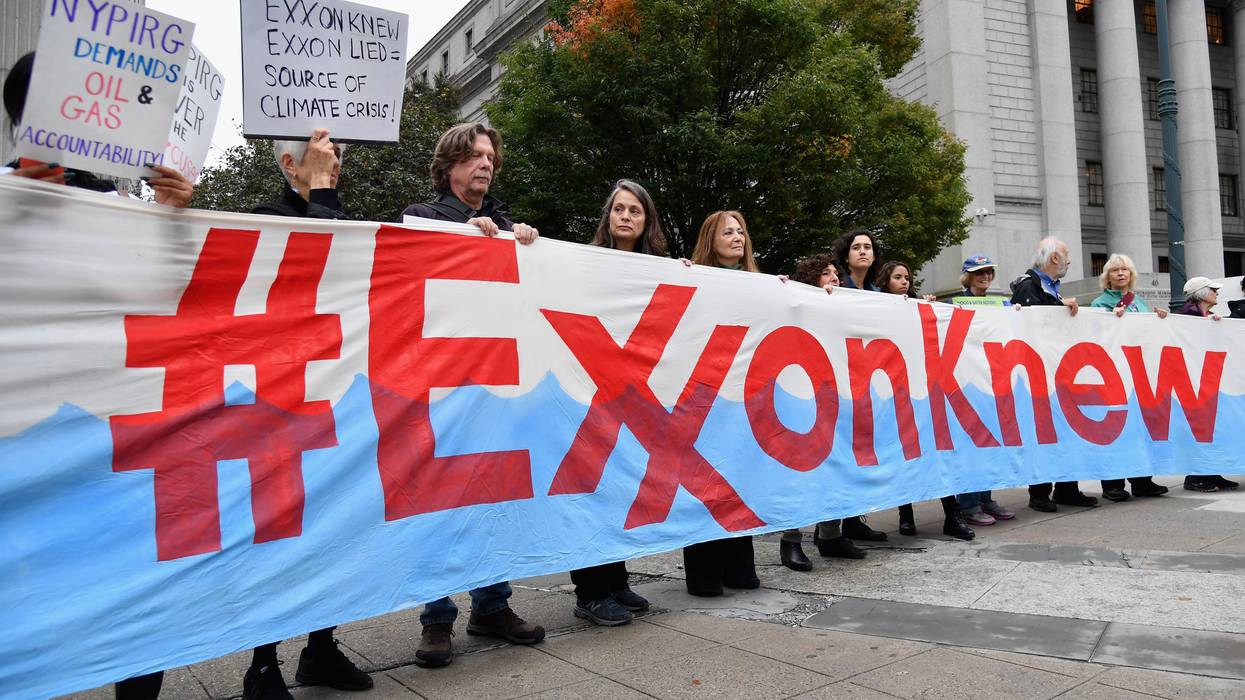
Fossil fuel companies are desperate to escape trial in climate deception lawsuits. The Supreme Court should not shield them from accountability.
No one knows how the US Supreme Court will rule in Suncor v. Boulder, the case that will kick off the court’s fall term next week and will likely decide whether the city and county of Boulder, Colorado, will be able to put oil giants ExxonMobil and Suncor Energy on trial for deceiving the public for decades about the climate harms of fossil fuels.
But one thing that can be said with certainty is that Big Oil and the fossil fuel industry are absolutely terrified of facing cases like Boulder’s at trial, where state and local governments will be able to present evidence of Big Oil’s decades-long climate deception to a jury. Big Oil’s own lawyers have admitted that the companies face “massive monetary liability” from the dozens of climate deception cases against them, and that stopping communities from having their day in court is a “big priority… for the entire industry.”
That’s because the evidence of Big Oil’s climate lies is overwhelming—and the discovery process in climate deception lawsuits could produce even more damaging proof that companies like Exxon have knowingly fueled climate chaos for decades while concealing the harm, undermining the science, and obstructing every effort to address the problem. As the Supreme Court prepares to hear Exxon’s pleas to escape trial in just one of the dozens of climate deception lawsuits, the Center for Climate Integrity has released a newly updated collection of 101 internal industry documents and other pieces of evidence that the fossil fuel industry is desperate to stop a jury of Americans from seeing.
All Boulder and other communities are asking Big Oil to do is to stop lying and pay for the harm their lies have caused. It speaks volumes about Big Oil companies that they’re going to such lengths to avoid telling the truth and paying to clean up the mess they’ve made.
Climate Fraud 101: Big Oil's Climate Deception Explained in 101 Documents, 1957-2026 shows how fossil fuel companies helped shape the emerging field of climate science beginning in the 1950s. By the late 1970s and early 80s, Exxon scientists were warning of “catastrophic” climate impacts if the world did not shift away from fossil fuels. Over the course of the 1980s, the oil giant and others came to understand that climate change posed two profound existential risks: one to “civilisation” itself, and the second to their business model, because the only way to “avoid the problem” was by “sharply curtailing the use of fossil fuels.”
Big Oil then chose their own interests over humanity’s and launched the most consequential corporate deception campaign in history to “emphasize the uncertainty” in climate science before measurable impacts became detectable and undeniable. By the 1990s, the oil and gas majors responded to increased public awareness of climate change by publicly contradicting what their own scientists had been telling them for decades, casting doubt on well-established climate science and obstructing efforts to mitigate the impacts of global warming. Then, once the problem became undeniable, Big Oil and the fossil fuel industry shifted to lie about the solutions—undermining the urgently needed transition to renewables while claiming they could make dirty fossil fuels more climate friendly through false solutions like natural gas and carbon capture and storage (CCS).
Throughout these decades, the impacts of the climate crisis became worse and worse for communities across the globe, with wildfires, floods, droughts, extreme heat, and other climate damages becoming more deadly and destructive as a result of the industry’s obstruction.
On October 5, Exxon and Suncor will beg the Supreme Court to shield them from having to face the evidence of their wrongdoing in a Colorado court. But the fossil fuel industry’s quest to escape accountability is much larger. They’re desperately lobbying Congress and state legislatures to give them outright immunity from climate lawsuits and place them above the law entirely. They’re attacking climate science and efforts to educate judges through a vast network of fossil-funded front groups. They’re enlisting the Trump administration to sue states that dare bring legal action against oil companies. And they’re flooding right-wing echo chambers with ridiculous fear mongering arguments that it's not our continued reliance on fossil fuels but climate deception lawsuits—which have not even gone to trial yet—that are blame for high gas prices and threats to our national security.
All Boulder and other communities are asking Big Oil to do is to stop lying and pay for the harm their lies have caused. It speaks volumes about Big Oil companies that they’re going to such lengths to avoid telling the truth and paying to clean up the mess they’ve made. Conservative and progressive legal scholars alike have explained why Exxon and Suncor’s arguments to escape Boulder’s lawsuit at this early stage should fail.
The Supreme Court should not shield these companies from having to face the evidence of their wrongdoing. We should all agree that we are still a nation of laws—of, by, and for the people—not a nation beholden to the interests of oil executives.
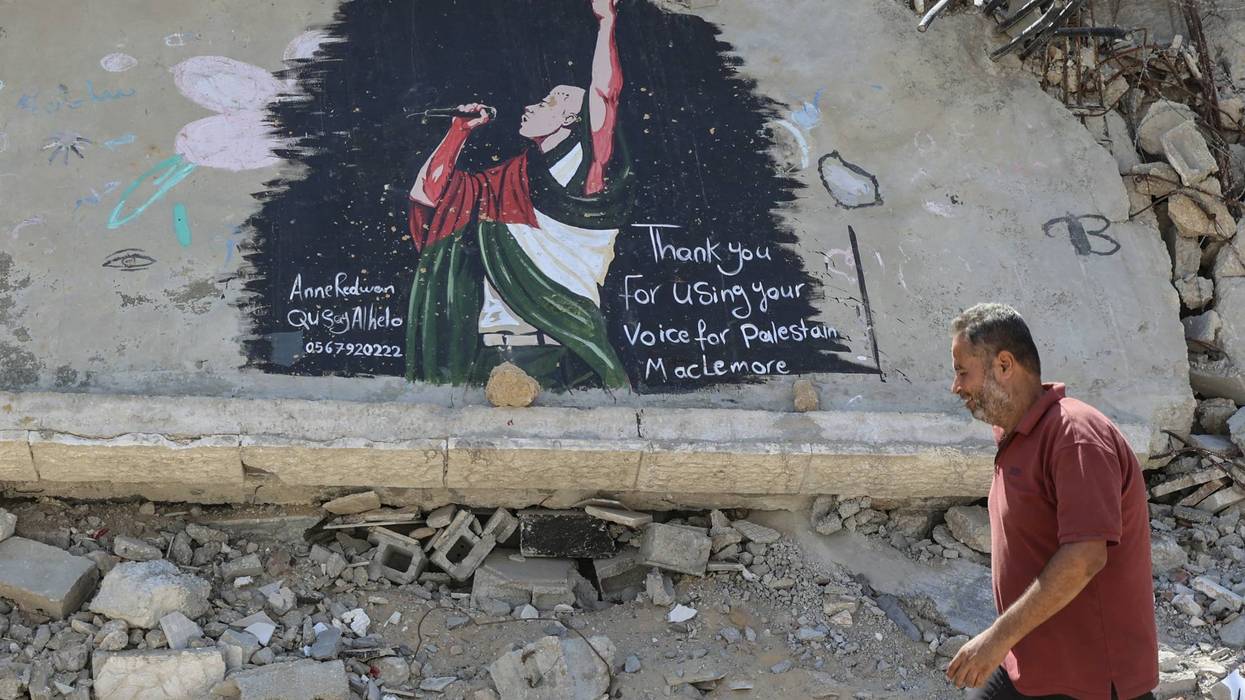
We need not only an indefinite halt to the shipment of all US weapons to Israel; we must also have legiSocial Schedulingslation that defines the conduct that the US demands of Israel as essential to restoring land and full rights to the Palestinian people.
With the US midterm elections drawing near, the growing support among the US public for the salvation and liberation of the Palestinian people is tremendously heartening and indicative that Israel’s 80-year war and lawless reign of terror and annihilation must and will come to an end. It is also encouraging that global Jewry writ large does not support the Israeli regime’s genocide and occupation of the Palestinians.
Dramatic evidence of global support for Palestinians came on September 16, 2026 when Emmy, Grammy, and MTV award-winning singer Ed Sheeran received tremendous backlash for kicking the singer Macklemore, champion of Palestinian rights, off his music tour. Sheeran said he did it under pressure from Boston Patriots football team and stadium owner Robert Kraft and other stadium owners. The situation escalated into a snowballing public relations disaster for Sheeran, with his entire tour lineup—including pop group Lukas Graham, singer Finneas, Aaron Rowe, and his own backing band Boega—withdrawing from the tour in solidarity with Macklemore.
Attempting to reverse his losses, Sheeran then issued a tearful apology at his Philadelphia concert on Saturday, September 19, which many have criticized as turning attention to his own pain and shame, rather than that of the Palestinians.
Given the way in which the US and Israel easily bulldozed the world’s elites into accepting the Board of Peace, we turn to a way to pressure the US governments, and all governments, to do the right thing: boycott.
The massive pro-Palestinian energy demonstrated by the Sheeran incident, on top of the already pronounced movement of US and world sentiment toward Palestinians, suggests success for pro-Palestinian candidates in the US midterm elections, and possibly the edge that will shift the control of the US House and Senate to the Democratic Party.
However, even with a shift in Congress to the Democrats, we need not only an indefinite halt to the shipment of all US weapons to Israel; we must also have legislation that defines the conduct that the US demands of Israel as essential to restoring land and full rights to the Palestinian people.
Fortunately, a detailed description of the conduct that the US must demand of Israel with respect to the Occupied Palestinian Territory (OPT) is clearly laid out in United Nations General Assembly Resolution ES/10/24, overwhelmingly approved by the UN General Assembly on September 18, 2024. The Occupied Territory includes all of Gaza, the West Bank, and East Jerusalem.
Here are the basic requirements of Israel with respect to the Occupied Territory under Resolution 10/24:
This is what, at a minimum, must become US policy toward Israel.
Trump and Israel have attempted to bury Resolution 10/24 under a US-commandeered Security Council Resolution 2803 of November 17, 2025 (Russia and China abstained), that created a so-called “Board of Peace.” This entity has acted as a diplomatic-public relations shield for the continued Israel genocide against the Palestinian people, the occupation and bombardment of much of Lebanon, the surreptitious expansion of its illegal occupation of southwest Syria, and all the killing that goes with it. The board allows Israeli occupation of the Gaza Strip to continue; no legitimate framework for Palestinian self-determination is provided.
Under cover of the Board of Peace, Israel continues to have control of what happens to Palestinians while it continues its brutal settler-colonial enterprise based on daily killing and abuse of Palestinians in Gaza, the West Bank, and East Jerusalem.
It is important to understand that General Assembly Resolution ES/10/24 still stands as a recognized action of the UN General Assembly, instructive not only to the US but all UN Member States, regardless of its de facto cancellation by the US and Israel that resulted in the creation of the Frankenstein’s monster Board of Peace.
General Assembly Resolution ES/10/24 not only incorporates all previous UN General Assembly, Security Council, and Human Rights Council resolutions pertaining to Israel’s illegal occupation of the OPT, it incorporates the landmark opinion issued in July 2024 by the International Court of Justice, the world’s highest court, which said that Israel’s occupation violated international law and should end "as rapidly as possible” and set a deadline for September 18 2025. That deadline has come and gone, requiring that new measures be taken.
In this moment, it is necessary for the political and financial elites of UN Member States to muster the courage to enforce General Assembly Resolution ES/10/24’s terms by cutting trade, commercial, and diplomatic ties with Israel. However, given the way in which the US and Israel easily bulldozed the world’s elites into accepting the Board of Peace, we turn to a way to pressure the US governments, and all governments, to do the right thing: boycott.
Many have likened the boycott of Ed Sheeran to the broader and intensifying global Boycott, Divestment, and Sanctions (BDS) campaign launched in 2005 to put economic, cultural, and political pressure on Israel to conform to international law, as the culmination of a Kairos moment which could and should lead the United Nations to boycott Israel as it did South Africa.
In 1985, the United Nations led a decades-long campaign of General Assembly resolutions calling upon member states to boycott, sanction, and embargo South Africa to end the country's system of apartheid. This led, in 1994, to South Africa officially ending its system of apartheid with the election of Nelson Mandela as the nation’s first Black president in the country's first fully democratic, non-racial general election.
Mohsen Mahdawi, Palestinian Buddhist peace activist, Columbia University graduate student, and the Fellowship of Reconciliation’s 2026-2027 Walter and June Wink Fellow, told us in an interview that the world is witnessing a pivotal moment as global civil society is coming together in ever-increasing numbers to demand that international law and human rights, including for Palestinians, be at the center and forefront of international actions.
“One important part of this,” he said, “is the Boycott, Divestment, and Sanctions Movement, which has been criminalized and shut down” however unsuccessfully, as was attempted by kicking Macklemore off of the Ed Sheeran concert tour.
Mahdawi said further:
People all over the world are not waiting for governments to liberate Palestine. We know that love, not hate, and the need for justice can and will concur. Through BDS, we are witnessing and manifesting a nonviolent global transformation not only for Palestine but the whole world, as the liberation of all humanity is deeply interconnected and interdependent. Macklemore is encouraging this and has shown that people who defend Palestine will prevail.
Mahdawi is convinced that the liberation of Israelis from their own moral injury, spiritual damage, and violation of Judaism’s core moral and ethical teachings also will occur.
“Government and institutional change at all levels will take some time,” he said. “In the meantime, we exercise our First Amendment Right to Free Speech and through speaking our truth, we manifest collective empathy, which is part of our innate nature, and manifest change. This is stronger than all of the weapons and censorship that they have.”
Sahar Alsahlani, board member of the Council on American-Islamic Relations in New York (CAIR-NY) and board member of the Parliament of World Religions, the oldest and largest interfaith organization in the world, concurs.
She said: "This is the moment for organizers for Palestine in the US to demand that requirements of UN General Assembly Resolution ES-10/24 become the requirements of US policy toward Israel, and to back up this demand by dramatically increasing BDS mobilization."
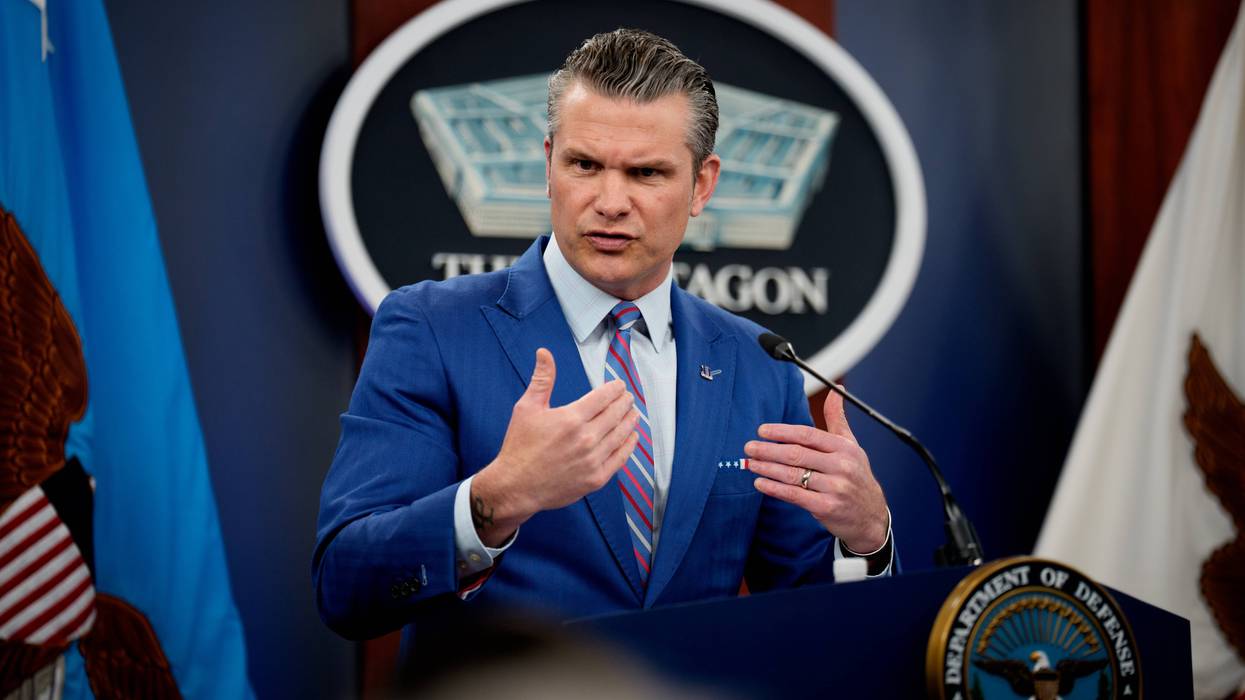
Defense Secretary Pete Hegseth has repeatedly attacked anonymous complaints while presenting his campaign against what he considers politically correct military culture as a return to strength, yet there is nothing strong about creating more fear around reporting abuse, harassment, or misconduct.
Nothing taught me more about the danger of silence in the military than surviving rape twice while wearing the uniform of the country I volunteered to serve, because I learned firsthand how quickly an institution built around honor, courage, and loyalty can become terrifying when the person who has been violated must decide whether speaking up will cost them even more.
Our service members understand that fear, which is why attacks on anonymous reporting should alarm anyone who actually cares about protecting the people who serve.
Being able to report misconduct without immediately exposing yourself can mean the difference between speaking and staying silent when rank, retaliation, career consequences, and the instinct to protect the institution are stacked against you.
Let us stop calling silence discipline, stop calling environmental disregard strength, and stop pretending accountability somehow makes our military weaker.
Once those protections are weakened, the misconduct does not magically disappear; the person experiencing it simply has fewer safe ways to expose it.
Defense Secretary Pete Hegseth has repeatedly attacked anonymous complaints while presenting his campaign against what he considers politically correct military culture as a return to strength.
Yet there is nothing strong about creating more fear around reporting abuse, harassment, or misconduct, especially inside an institution where power and rank shape nearly every part of a service member’s life.
I call that feeding the conditions where rape culture survives, because I know personally what happens when silence becomes easier for an institution than accountability.
Survivors should never have to prove their toughness by enduring abuse quietly.
Disregard for accountability also appears in Hegseth’s approach to another responsibility the military cannot escape: what it does to the land, water, and communities where it operates.
In his own words, “No more climate change worship,” but treating environmental responsibility as weakness ignores the damage military activity has already left behind in American communities.
Service members and Mother Earth have something painful in common: Both have been expected to absorb damage in the name of a mission and remain silent about the scars.
Pollution from military operations has contaminated land and groundwater on Guam, the island where I was born, where decades of military activity have left contamination near an aquifer our people depend upon for drinking water.
Our community here in Tucson knows another version of that story, with PFAS contamination threatening groundwater and military facilities, including Davis-Monthan, identified among the sources requiring investigation and cleanup.
Strength cannot mean demanding unlimited sacrifice from people, communities, and the planet while treating accountability as an inconvenience.
As a veteran, a survivor, and someone born on an island carrying the environmental scars of America's military presence, I cannot separate these issues, because both force us to confront what happens when powerful institutions decide that accomplishing the mission matters more than acknowledging who or what gets harmed along the way.
Bodies can be raped, land can be violated, water can be poisoned, and although those harms are not identical, they grow from a dangerous belief that something valuable can be used, damaged, and discarded because those holding power have decided the cost is acceptable.
Let us stop calling silence discipline, stop calling environmental disregard strength, and stop pretending accountability somehow makes our military weaker.
Enough: No service member, no community, and no piece of Mother Earth should ever be treated as disposable.
xoxo, military members & Mother Earth
P.S. Read the first letters of each paragraph.
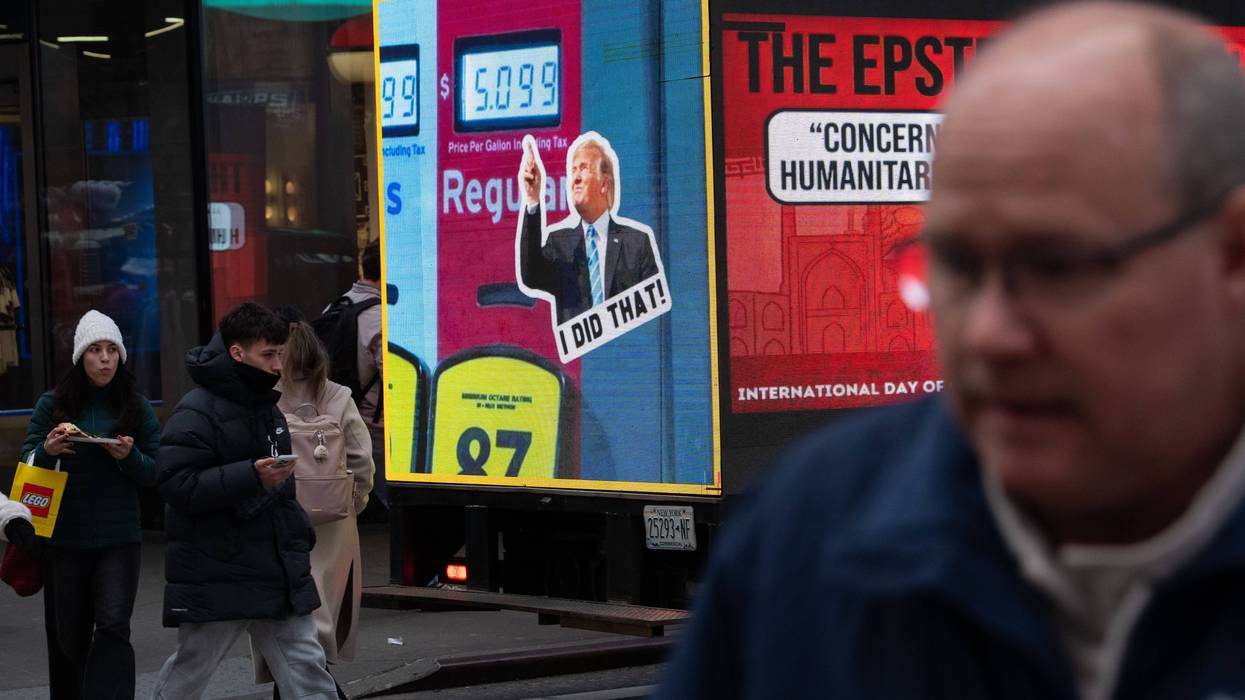
To be clear, this isn’t the cost of the weapons and soldiers fighting the war, which the Pentagon estimates to be around $44 billion. This is the higher cost you’re paying to fill up your gas tank and to buy products that cost more to move.
Affordability is getting worse, especially if you have to drive to work or anywhere else.
By late September, the total cost of the higher gas and diesel prices triggered by President Donald Trump’s war against Iran exceeded $103 billion, according to my organization’s analysis of the federal government’s energy data. And those higher prices aren’t showing any sign of slowing. If current trends hold, the price tag by the end of this year will approach $180 billion.
For the average household, that comes out to $750 extra so far, and that figure is on pace to top $1,300 by year’s end.
If life feels more expensive today, that’s because it is.
For a family of four with two drivers, those costs are even higher, topping $1,000 already and slated to be over $1,700 by the end of the year if the war continues. Our interactive tool, online at itep.org/iran-war-fuel-cost, lets you punch in your region and household size to get a sense of how much your family’s costs are rising.
To be clear, this isn’t the cost of the weapons and soldiers fighting the war, which the Pentagon estimates to be around $44 billion. This is the higher cost you’re paying to fill up your gas tank and to buy products that cost more to move.
In a normal year, fall is when drivers get some reprieve at the pump. As summer travel winds down, demand for gas falls, and prices should fall too. But not in 2026.
According to AAA, Americans have never paid this much for gas at this time of year. The national average gas price is $4.47 per gallon as of this writing, and a growing number of states are seeing average prices top $5 per gallon.
Equally troubling is the sky-high price of diesel fuel, which has hit record highs this year and now stands at $6.45 per gallon. When diesel prices rise, the cost of making and shipping products rises too. While most of us don’t buy diesel fuel ourselves, this raises the cost of everything else, bumping up the high rate of inflation we’ve already been seeing.
These soaring fuel costs hurt businesses, local governments, and families.
Businesses have had to shell out $48 billion extra for motor fuel this year, mostly on diesel, because of the Iran War.
Local governments also feel the squeeze. Higher fuel prices make it more expensive to operate school buses, garbage trucks, construction equipment, fire trucks, police cars, and other vehicles and machinery. So far this year our local and state governments have had to pay over $2.7 billion extra for fuel because of the Iran War, and we expect that figure to top $4 billion by the close of the year. This expense, of course, ultimately falls on local taxpayers.
These expenses come on top of other new costs for households like rising interest rates, the Trump administration’s widespread tariffs on products you buy every day, and high healthcare prices, made worse by cuts to government programs like food assistance and Obamacare.
If life feels more expensive today, that’s because it is. The higher price you’re paying for gas because of the Iran War isn’t the whole reason for that. But it sure doesn’t help.

Daunting structural obstacles will make it harder for voters to be heard during the upcoming midterms, and we can trace many of these back to the Supreme Court and its destructive rulings on democracy over the past two decades.
Will this be a “wave” election, sweeping new people into power? In some ways, it already is.
Due to retirements and primary defeats in safe districts, there will be 99 new members of Congress next year—and that’s before accounting for any seats that change party hands. A powerful anti-incumbent fervor pervades both parties.
Throughout history, there have been times when voters spoke loudly. The 1974 Watergate election, in which Democrats won 49 new seats. The 1994 “Republican Revolution” that made Newt Gingrich speaker after gaining 54 seats. The 2018 election, the first time voters rejected Donald Trump’s chaos. Polls do not suggest a swing of that magnitude. Democrats are lagging in popularity, even as voters recoil from Trump’s Republicans. But voter sentiment is not the only reason less may change than before.
Even if the Supreme Court does no further damage, it will have designed a dystopian political system where competition is scarce, billionaires dominate spending, and voters of color have little protection against abuse.
Daunting structural obstacles will make it harder for voters to be heard. We can trace many of these back to the Supreme Court and its destructive rulings on democracy over the past two decades. If the voice of voters is muffled this year, blame the Roberts Court.
To start, there are far too few competitive congressional districts. In 2019, in Rucho v. Common Cause, the Roberts Court refused to police gerrymandering. Then Louisiana v. Callais earlier this year finally demolished the Voting Rights Act and let Southern states eliminate seats held by Black lawmakers.
Political scientist Peter Miller of the Brennan Center for Justice explained it this way: “About 1 in 10 Americans are in a new US House district this year. Mid-decade redistricting in nine states ahead of the elections in November has scrambled the House elections (an 11th-hour attempt to redraw the map in Missouri was rejected by the US Supreme Court for the third and hopefully final time just last week). All of this effort to gerrymander the maps, however, may come to nothing as it is becoming clear that the two parties have fought the redistricting wars to a draw.”
But even amid electoral upheaval, nearly all seats are reliably Democratic or Republican. Political scientist Larry Sabato calculates there are only 21 competitive seats this year. The Cook Political Report counts 22 toss-up seats.
The Supreme Court has also demolished the laws that curbed big money in politics. Today big donors wield greater power than in memory. The top 20 donors have already spent $1.2 billion this year—all but two of them helping Republicans—and that figure is from before the start of the general election campaign. Elon Musk alone has already spent over $90 million. And while donors like Musk can be identified, much of this funding consists of “dark money,” where the identity of the donor is obscured.
It can all blur. But until 2010’s Citizens United and the cases that followed in lower courts, all this spending would have been flatly, explicitly illegal.
Then there are laws, big and small, by which states restrict the right to vote. The Supreme Court has not reversed a state voter suppression law this century. Shelby County v. Holder in 2013 first gutted the Voting Rights Act. Since then, our research shows, the turnout gap between white and nonwhite voters has grown all over the country. And it has grown at twice the rate in the places once covered by preclearance under the Voting Rights Act. That means hundreds of thousands fewer votes are expected this year than might have been the case otherwise.
Generally, the court has refrained from injecting itself into election contests. In 2020, after all, the justices refused to countenance Trump’s bid to overturn the election.
This year, the court’s record is mixed. Encouragingly, two weeks ago the justices upheld a ruling that blocked a Postal Service rule on mail voting. A different decision would have been a disaster, since 1 in 3 Americans votes with a mail ballot.
But on Friday, the justices let the administration use the “SAVE program.” This is a notoriously inaccurate and incomplete tool to verify citizenship status, which the Trump administration wants to use as a prod to purge voter rolls. The ruling will likely not affect this election. But this all augurs continued legal battles over voting in years to come, especially as the next presidential contest looms.
We want the justices, mostly, to stay out, and let state and local election officials do their work of protecting voters. At the same time, if politicians try to steal the election, crying “fraud” and “rigged,” we may need the Supreme Court to step up. Let’s hope it never faces that test.
The court’s term begins next Monday. It will hear major cases on the public funding of private religious schools, environmental laws, and more. Much of the most important work of the term has been done already with the emergency rulings on the “shadow docket” policing the elections.
But even if the Supreme Court does no further damage, it will have designed a dystopian political system where competition is scarce, billionaires dominate spending, and voters of color have little protection against abuse.
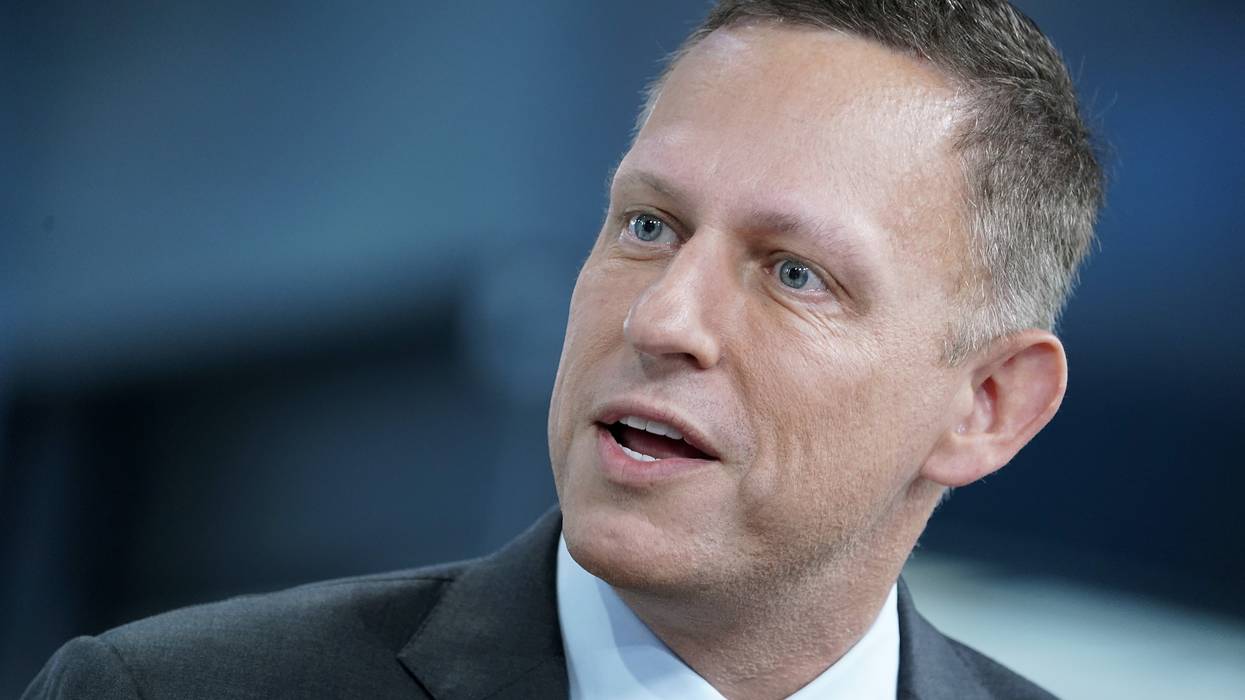
A small segment of the state’s 200-plus billionaires has stepped up to oppose Prop 40, a ballot proposal to tax billionaires, contributing millions to opposition groups and vocally speaking out against the one-time fee.
On November 3, 2026, California voters will vote on Proposition 40, a one-time 5% levy on the net worth of billionaires who were California residents on January 1, 2026. Ninety percent of the revenue would fund healthcare programs, with the remainder set aside for food assistance and education.
A small segment of the state’s 200-plus billionaires has stepped up to oppose Prop 40, contributing millions to opposition groups and vocally speaking out against the one-time fee.
In a brief report, California’s Billionaire Wealth Surge: Meet the 22 California Billionaires Opposing Prop 40 Billionaire Wealth Tax, we identified 22 California billionaires who are active funders and outspoken opponents of Prop 40. Together they have given over $150 million to oppose the initiative—with more rolling in every day. These 22 include a prince, several private jet flying chums of Jeffrey Epstein, and a bunch of crypto and tech bros designing the AI future for the rest of us.
Thiel’s wealth is 10,759 times the median wealth of a Californian household.
On January 1, 2025, these 22 billionaires had a combined wealth of $439.8 billion. By September 1, 2026, their wealth had grown to $722.1 billion.
In a little under 20 months, their combined wealth increased $282.6 billion, a gain of over 64%.
Just to be clear, these “snowflake billionaires” are whining, wailing, and donating money to fight a tax that would effectively require them to part with one-eighth of the wealth they’ve gained since January 1, 2025.
This group includes Google’s Sergey Brin who has been the single largest opposition donor, chipping in over $102 million to fight Prop 40. Brin has seen his wealth grow a whopping 70% in the last 20 months, from $148 billion on January 1, 2025 to $253 billion on September 1, 2026. Brin’s wealth is 83,498 times the median wealth of a Californian household, which is $303,000.
Palantir’s Peter Thiel gave $3 million to the No on 40 campaign and has called on other billionaires to move out of California. In the last 20 months, Thiel’s wealth increased a whopping 120.27%, from $14.8 billion on January 1, 2025 to $32.6 billion on September 1, 2026 (Forbes). Thiel’s wealth is 10,759 times the median wealth of a Californian household.
Chris Larsen, founder of cryptocurrency firm Ripple, has given over $5 million to the No on Prop 40 Campaign, along with another $5 million from Ripple and $12 million to Building a Better California. His personal wealth increased 23.5%, from $10.2 billion to $12.6 billion in the last 20 months. His wealth is 4,158 times the wealth of the median California family.
Venture capitalist John Doerr gave $10 million to No On 40. In the last 20 months, Doerr’s wealth increased 47.97%, from $14.8 billion on January 1, 2025 to $21.9 billion on September 1, 2026. Doerr’s wealth is 7,227 times the median wealth of a Californian household.
Three of the 20 saw their wealth decline over this 20-month period: Tony Xu, Marc Pincus, and Marco DeGeorge. But most have experienced substantial gains.
The number of billionaires in California has grown, with their average wealth remaining roughly between $9.1 to $9.4 billion. As of September 1, 2026, the 231 billionaires identified as living in California have a combined wealth of $2.117 trillion. Just 20 months ago, there were 178 billionaires in California with a combined wealth of $1.685 trillion.
To show how quickly billionaire wealth has accelerated since the pandemic, let’s go back in time six years. In early 2020, all 815 billionaires residing in the United States had a combined wealth of $2.9 trillion, only slightly more than what the 231 California billionaires have today in 2026.
Meanwhile, the median net worth of a California household has risen a marginal 5.2% increasing $15,000 from $288,000 in 2025 to $303,000 in 2026. A Californian with $1 billion dollars in wealth has 303 times the wealth of the median California household.
Under Prop 40, this billionaire will pay a one-time tax of $50 million to support healthcare, education, and food assistance for their fellow Californians leaving them $950 million to survive on.
In California, the state’s 231 billionaires (as of Sept 1, 2026) hold approximately $2.117 trillion in wealth ($2.3 trillion as of Sept 22, 2026) and pay incredibly low taxes on their riches.
According to an analysis published by economists Gabriel Zucman and Emmanuel Saez, from 2019 to 2025, while California billionaires’ wealth grew an average of over 15% per year, they paid, on average, just 0.26% of their wealth annually in state income taxes. Sergey Brin and Larry Page paid just 0.07% of their wealth annually in California income tax during that period. I guess we can see why they don’t want anything to change.
This analysis was prepared by the Institute for Policy Studies and Tax the Ultra-Rich Now (TURN). More detailed dossiers will be available soon. Press release HERE.
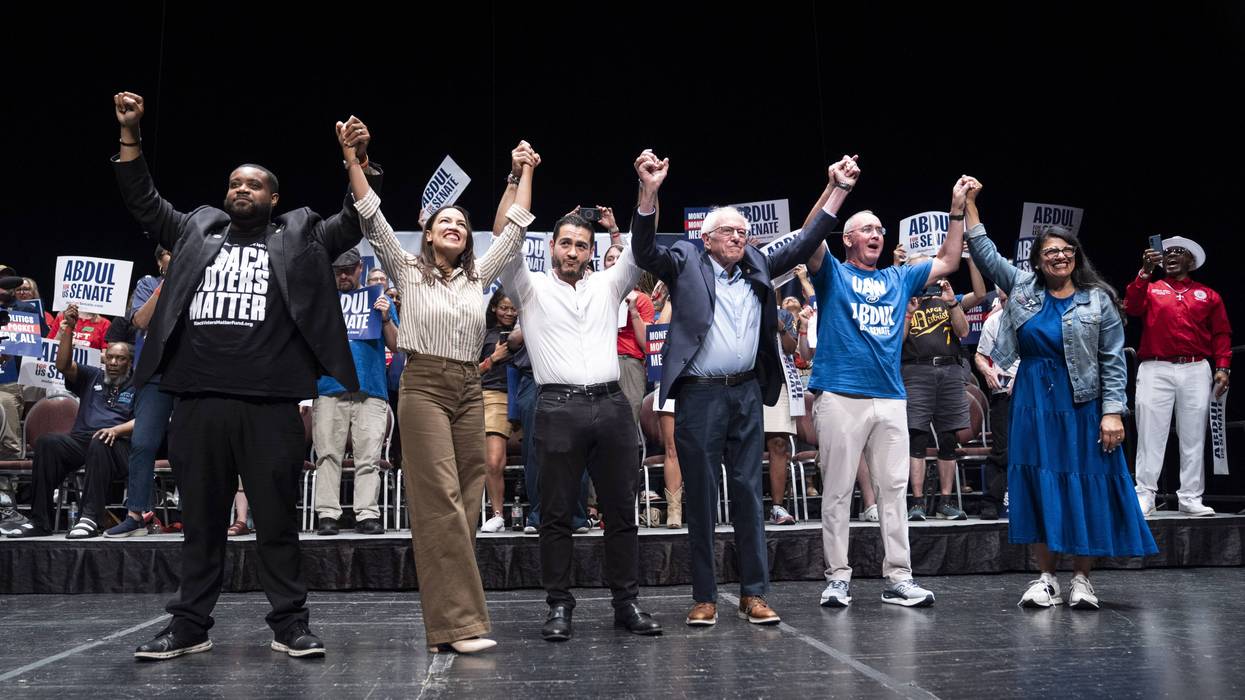
What’s different now compared to past crises is that many bold progressive leaders have won competitive primaries in this year’s midterms—often putting opposition to war and genocide at the center of their messaging.
In this run-up to the 2026 mid-term elections, progressive movements and candidates remain caught up in the challenges of rising authoritarianism and militarism both at home and around the world.
We are mobilizing against new US-Israeli wars against Iran and across the Middle East/West Asia region, including Israel’s US-enabled genocide in Gaza and ethnic cleansing in the West Bank. We face explosive US bombing raids and illegal military interventions in Latin America, Africa, and beyond, as well as threats to Canada, Greenland, Mexico, and elsewhere — with President Donald Trump at the center of all of it.
What’s different now compared to past crises is that many bold progressive leaders have won competitive primaries in this year’s midterms — often putting opposition to war and genocide at the center of their messaging.
While all of the self-defined democratic socialist and progressive candidates around the country have their own sets of priorities, the most common areas in their electoral platforms include opposition to ICE and military support for Israel, support for expanding health care, affordability, and housing, and anti-authoritarianism writ large.
What’s still needed, beyond the broad principles of progressive foreign policy (see also my 2018 article on the same question as the Squad was winning primaries) is a set of ideas for specific policy proposals to address at least some of the key priority foreign policy issues that will face a new Congress during two more years of the Trump administration and going forward into the elections of 2028.
Part 1 of this series identified key principles of a progressive foreign policy. Briefly, foreign policy should reject the goals of US military and economic domination and instead be grounded in global cooperation, international law, human rights, and real diplomacy. It must also take responsibility to repair damage that US military, economic, climate, and other policies have wrought.
This section looks at some of the key global issues that progressive members of Congress will face — and what initiatives may best respond to them.
Official “US foreign policy” will never completely match the much broader internationalist goals of progressive and left movements. But there are examples of good (however limited) and bad foreign policies chosen by past governments.
The Obama administration chose some of each. Its foreign policy victories were all diplomatic: the Paris climate accord, moves towards normalization with Cuba, and especially relevant now as the US-Israeli war against Iran continues to rage, the 2015 Iran nuclear deal. Its greatest foreign policy failures occurred because Obama chose military action instead of diplomacy, including its escalations and new illegal interventions in Afghanistan, Libya, Syria, Iraq, Yemen, and Somalia.
The Biden administration’s important (though still completely insufficient) domestic successes have already been largely relegated to the sidelines and will likely be forgotten by history when weighed against his massive international catastrophes — including the failure in execution (though not in principle) of the Afghanistan withdrawal and, especially, Biden’s enthusiastic arming, financing, and defense of Israel’s genocide against Gaza.
During both of those administrations, including during the periods when Democrats also controlled both House and Senate, only a few progressives in Congress directly challenged the White House — never enough to force an end to the dangerous policies. With more candidates winning elections backed by explicitly left and socialist organizations, as well as the broader progressive movement, their political base will likely expect much more. And the work of movements in highlighting the human and economic costs of wars means that the public will accept — and increasingly will demand — much more as well.
Here are some brief ideas on a few global priorities — and potential crisis points — with some ideas of what policy responses should look like.
This is the second article in a two-part series. The first part, Progressive Principles for a New US Foreign Policy, can be found here.

In directly challenging an international system that is arguably dead, his diatribe puts front and center the state of American decline on the global stage.
Hegemonic decline comes in many different forms. From the Roman empire to the Islamic caliphates of old, great powers of the world have repeatedly risen and collapsed under the weight of their excess. While the arc of human history and empire carry diverse experiences and paths, it is near the end of the imperial line that often sees some of humanity’s most volatile moments. Today, the United States represents the end of that line in a rapidly transforming world, with US President Donald Trump’s United Nations General Assembly speech embodying a challenge to the international system and the American decline accompanying and driving it.
To be sure, no one should be surprised by bombastic rhetoric at the UNGA’s annual gatherings. World leaders often use the international forum more as an opportunity to bolster their domestic image at home than for diplomacy and problem solving, as intended. This dynamic is understandable: As the adage goes, “All politics is local.”
Yet it is this exact cliché that makes Trump’s speech different.
The world understands the United States in this context: An empire at the height of its decline, hellbent on aggrandizement in a desperate attempt to grip what remains of its global primacy, even at the expense of the international system.
Approaching the UNGA podium on day one of the plenary session speeches by world leaders from countries like Brazil, Türkiye, and France, Trump understood his political position. The supposed leader of the free world, the American president is in his second and final term in the White House, which has reached a pinnacle moment that will define his legacy.
That moment and legacy are imperiled, if not already ruined. Trump’s sinking domestic approval rating, at its lowest across his two presidential terms, stems from a disastrous domestic and global economy hitting the working class and most vulnerable. His ongoing forever war with Iran and its allies in the Middle East with no end or direction drives those economic problems and the worsening polls.
As such, Trump finds himself underwater politically. His response has been clear: He is as stubborn as ever.
The president launched into a tirade at the UNGA. Opening with a statement that could understandably be confused for a stump speech on a campaign trail or rhetoric meant for the State of the Union, he boasted about his would-be accomplishments at home and abroad. Trump repeated his old lie that he has single-handedly ended multiple wars across the globe. He claimed to have saved the United States, kicking of a “Golden Age of America” while arguing that the country has never been stronger.
Yet it was his rhetoric on multiple American wars in 2026 that should speak. On Venezuela, Trump openly bragged about overthrowing a neighboring country to extract their natural resources—in this case, oil. He gloated about military strikes on alleged cartel boats in the Caribbean Sea, actions amounting to extrajudicial killings. He threatened military action against another neighbor—Cuba—in the near future.
If these boasts reflect a foreign policy disconnected from international law, then Trump’s comments on Iran mark an insult to humanity. In this regard, the American president openly used genocidal language to threaten the country he has taken the United States to war with for the last seven months, openly pondering: “Do I annihilate the Islamic Republic and do it quickly… Do I drive them into hell with no chance of survival and no hope of future greatness [f]or generations?”
To use such bombastic rhetoric at the UNGA—the heart of global diplomacy, even for all the UN’s warts—marks a new low for American leadership and foreign policy. In directly challenging an international system that is arguably dead, his diatribe puts front and center the state of American decline on the global stage.
These words represent the mindset of an American president who chose a war of aggression against a sovereign state without authorization from the US Congress, meaning American citizen approval, the UN Security Council, or any real international legal basis. These checks—largely cast aside in recent decades—exist with their own warts specifically because this war represents a strategic and humanitarian disaster, as have the wars of the past that informed the international legal system the world understands today.
Instead of leaning into concepts of diplomacy and humanity, playing a leading role in bringing nations together through diplomacy and in support of the principles of international law, the president of the United States has leaned deeper into imperial and interventionist desires, going so far as to hearken to a pre-World War II system of chaos in which the world operated on a simple rule: “To the winner goes the spoils.” Trump used this cliche when discussing American efforts to steal Venezuelan oil.
Instead of recognizing the pain that war, in no small part waged by US weapons and defended in the UNSC by American diplomats, Trump espoused the importance of it in perpetuity to fight some ill-defined “evil.” Instead of recognizing how the inertia of US foreign policy has become an illness for people at home and abroad alike that many akin to the true “evil,” he crowed on about war and violence as if they constitute abstract concepts and games, not real consequences for people around the globe.
The people of Minab, where American missiles hit a school full of children and teachers, killing over 150 civilians, would dispute the abstractness of American power and the giddy willingness to use it in such brutal fashion. Iranians writ large can and do contest the use of genocidal language against their country and civilization. The American people, tired of war amid major domestic problems at home, do not see strength in their president bragging about his would-be personal accomplishments abroad that reflect more of the same mistakes of the past.
People around the world did not see a man espousing American greatness at the UNGA. They witnessed a leader with immense power brag about his ability to cause unspeakable pain and suffering at will as his popularity at home collapses. This comes as the United States proves itself incapable of seriously using its position as a global power to enact real change for the better abroad. In fact, it uses that position in increasingly malign ways and has done so for years.
The world understands the United States in this context: An empire at the height of its decline, hellbent on aggrandizement in a desperate attempt to grip what remains of its global primacy, even at the expense of the international system.
From Ukraine to Gaza to Iran, the old world is regressing to a time before the international legal system was crafted in a way that proclaimed and systematized a simple term: “Never again.” While states will always act with raw power considerations and national interests in mind, the international system marked a valid and worthwhile attempt to temper humanity’s worst instincts. Trump and other leaders of the world, like Russia’s Vladimir Putin and Israel’s Benjamin Netanyahu, represent those worst instincts, explaining why they work to destroy ideals that ultimately improve the human experience—diplomacy, cooperation, development, and human rights.
The UNGA, despite Trump’s ramblings, can and should remind the world that these values matter, just as pure national interests can still be informed by such principles. Such an approach to foreign policy is not a contradiction as strength and humanism are not mutually exclusive. Instead, they must form the basis of how Washington and other capitals approach the world now and in the future.