

5
#000000
#FFFFFF
To donate by check, phone, or other method, see our More Ways to Give page.
Daily news & progressive opinion—funded by the people, not the corporations—delivered straight to your inbox.
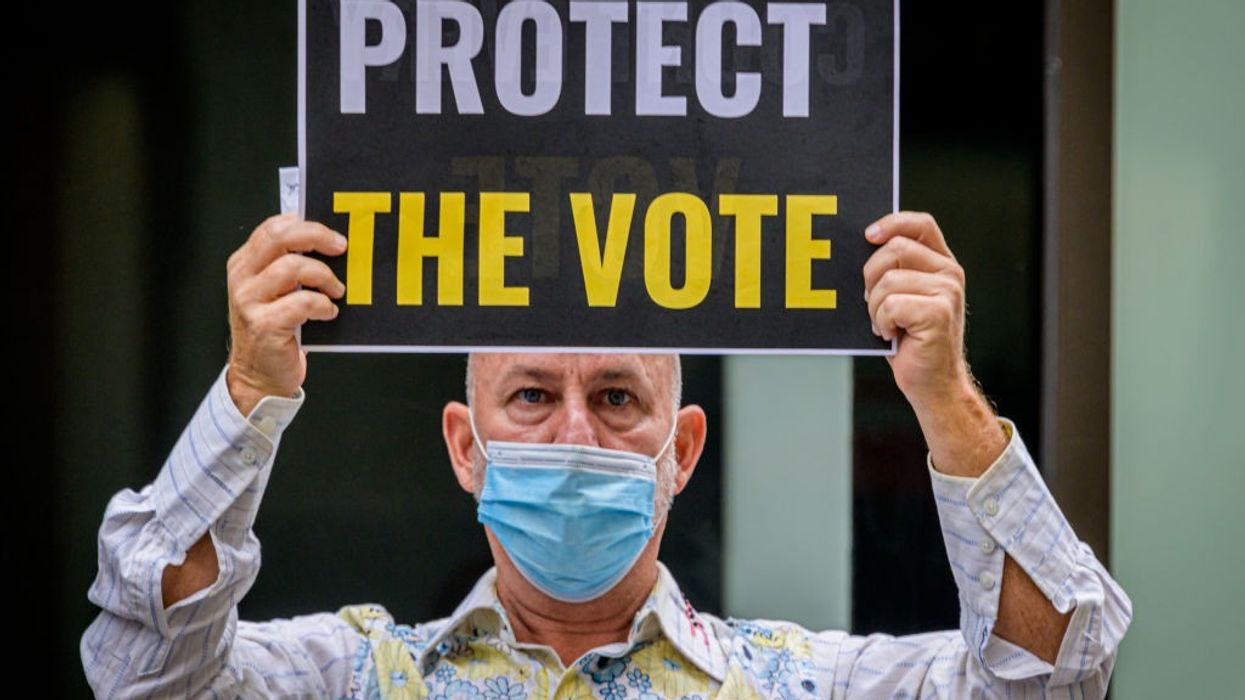
Republican secretaries of state are bragging about the millions of Americans whose right to vote they’re “purging” from the voting rolls this year. How are they getting away with it?
With virtually no mention or reporting in the corporate press, Republican-run states are again running the voter purge of millions that gave Donald Trump the White House in 2024.
On Wednesday morning, Reuters published a special report on the ways the Trump administration could “interfere” with the midterms, noting that a lawyer in Idaho’s Republican attorney general’s office bragged that his state had “taken a leading role in ensuring its voter registration list is purged….”
Yep, they used the word “purged.” They’re not even bothering with the polite terms anymore.
Your “right to a gun” is real but your “right to vote” is not, at least as long as corrupt Republicans control the Supreme Court and Congress.
And it’s not like the Republicans really believe the mythology they’re trying to sell the rest of us. The GOP-aligned, billionaire-funded Heritage Foundation spent over a decade doing a deep dive into every state looking for voter fraud and noncitizen voters, examining every American vote since 2000—more than a billion ballots cast nationwide—and found just 89 cases of noncitizen voters. In more than 20 years!
The libertarian Cato Institute did a similar analysis specifically on the 2020 election looking for any evidence that Trump’s claims were right that the election was “stolen” from him by “Mexicans” voting in the US election. They concluded the same thing:
There are likely many problems with America’s voting system and there is no doubt that a non-zero number of noncitizens illegally voted, but there is no good evidence that noncitizens voted illegally in large enough numbers to actually shift the outcome of elections or even change the number of electoral votes.
Nonetheless, Republicans keep promoting their lie that “illegals are voting” to justify massive purges of legal voters whose only crime is being Black, Hispanic, living in a college town, or being a big city dweller in a red state. A likely Democratic voter, in other words.
And let’s not forget that hypocrite Trump himself is all in on encouraging voter fraud; at his “midterm convention” in Dallas a few weeks ago he had thousands of people raise their hands and repeat an oath after him:
I don’t care if I’m registered or not, I’m going to try and cheat like hell...
And the Reuters story comes three weeks after six corrupt Republicans on the Supreme Court let Trump’s Department of Homeland Security, run by former plumber Markwayne Mullin, turn an Immigration and Customs Enforcement immigration database called SAVE into a bulk voter-purging machine right in the middle of an election.
When Texas ran its registered voters through SAVE they purged thousands of people wrongly flagged as noncitizens; League of United Latin American Citizens is suing to try to get these actual citizens voting rights restored.
Which all raises a question that I’ve been asking on the air (and in my book The Hidden History of the War on Voting) for years:
Why is it that if a Republican governor wants to take away your gun he has to go to court, but if he wants to take away your vote he doesn’t even have to notify you?
You’ll recall that back in 2008 five corrupt Republicans on the Supreme Court declared that we all have an absolute constitutional “right” to own a gun, and if any state or city wants to violate that right they have to go before a judge and present evidence that you can contest and even appeal all the way to the Supreme Court itself.
When we have a “right” in America and our government wants to take it away, they have to provide notice, irrefutable evidence, a courtroom and neutral judge, a finding, and a right to appeal. It’s called “due process” and is established by the Fifth and 14th Amendments.
And in 1993, Congress passed and Bill Clinton signed a law establishing—without any ambiguity—that your vote is also a “right.” The National Voter Registration Act (NVRA) lays it out clearly:
“[T]he right of citizens of the United States to vote is a fundamental right,” and that “it is the duty of the Federal, State, and local governments to promote the exercise of that right.”
And the phrase “right to vote” also appears five times in the Constitution itself, more than any other right that document names (guns get a single mention).
So, why is it that Republican secretaries of state are bragging about the millions of Americans whose right to vote they’re “purging” from the voting rolls this year? And how are they getting away with using junk-mail-appearing postcards to justify those purges?
In 1981, the Republican National Committee sent letters to Black and Hispanic voters in New Jersey to “verify” their voting status; they built a challenge list of 45,000 people and posted off-duty cops at polling places in predominantly Black and Democratic Newark and Trenton to check names to challenge those voters.
The Democratic Party sued against this practice, called “caging” in the direct mail industry, and won a court order blocking the Republicans from doing it. That consent decree expired in 2018, though, the same year that five corrupt Republicans on the Supreme Court told Ohio Secretary of State John Husted that he could resume the practice, but this time instead of the GOP paying for it the cost of mailing the postcards could be covered by Ohio taxpayers.
Justice Stephen Breyer’s dissent pointed out the obvious fraud of it, noting that on average around 4% of Americans move their residence every year but:
The record shows that in 2012 Ohio identified about 1.5 million registered voters—nearly 20% of its 8 million registered voters—as likely ineligible to remain on the federal voter roll because they [allegedly] changed their residences.
Now the practice has spread to virtually every Republican-controlled state. They send out millions of postcards that look like junk mail, and if you don’t return one and skip an election, you’re officially purged. They don’t even have to notify you; you find out when you show up on election day and they either turn you away or give you a “provisional” ballot.
During and after the 2024 election, my radio and TV show’s phone lines were jammed with people—many from big cities in Ohio and Georgia—complaining that this had happened to them and they’d just discovered it when they tried to vote. None had been notified.
And, sure enough, the provisional ballots were the tell that exposes this GOP scam. The Election Assistance Commission’s (EAC) own survey of the 2024 election found that 1,736,209 Americans were shunted onto provisional ballots that year, and that the single most common reason was that the voter “did not appear on the list of eligible voters.”
Provisional ballots are often not counted at all, unless the voter shows up at the Secretary of State’s office before the final count to certify that they are, in fact, a legal citizen and voter.
Since the Husted decision by the Supreme Court allowing this bizarre practice, Republicans have put their corrupt system into hyperdrive. That same EAC federal survey found that GOP-controlled states sent out nearly 40 million “confirmation postcards” in just the two years between the 2022 and 2024 elections.
As a result, more than 21 million registered voters were stripped from the voting rolls in the months leading up to the 2024 election, and the most common justification was that they failed to return that junk-mail postcard.
Reporter and former statistics professor Greg Palast testified about this in federal court for the NAACP and, here on Hartmann Report, detailed how his team went through Georgia’s purge list person-by-person.
They found 198,351 Georgians who’d been cancelled even though they hadn’t moved and were still (mostly Black) citizens. In Wisconsin, where former Vice President Kamala Harris lost by 29,397 votes, Republicans had purged 166,433 voters from the lists. Pennsylvania had purged 360,132 people, about three times Trump’s margin of victory in that state.
His conclusion was straightforward:
Trump lost. That is, if all legal voters were allowed to vote, if all legal ballots were counted, Trump would have lost the states of Wisconsin, Michigan, Pennsylvania, and Georgia. Vice-President Kamala Harris would have won the Presidency with 286 electoral votes.
And, if not for the mass purge of voters of color, if not for the mass disqualification of provisional and mail-in ballots, if not for the new mass “vigilante” challenges in swing states, Harris would have gained at least another 3,565,000 votes, topping Trump’s official popular vote tally by 1.2 million.
In other words, your “right to a gun” is real but your “right to vote” is not, at least as long as corrupt Republicans control the Supreme Court and Congress.
Imagine, for example, what would happen if your county sheriff started confiscating guns from people who failed to mail back a postcard. The right-wing press would be hysterical, and the court would strike it down in a New York minute.
So here’s where we are today. Georgia’s Brad Raffensperger (pronounced “Raff - ens - purger”) cancelled nearly 471,000 registrations last August, 6% of the entire state, the majority Democrats according to a Fair Fight analysis.
When Black Voters Matter asked for the records behind the purge, Raffensperger’s office handed over a stripped-down spreadsheet, and they had to sue him to try to get the names. Ohio’s Frank LaRose published a list of 352,389 names for cancellation just this past year, following a 2024 purge in which Ohio Democrats documented more than a thousand wrongly removed voters in Cuyahoga County alone.
Meanwhile Trump’s Justice Department has filed 31 lawsuits against states and the District of Columbia to seize their full voter files, including driver’s license and partial Social Security numbers, so the whole country can be run through his flawed SAVE purging database.
Republicans can’t win elections on their track record of taking away healthcare, gutting the Social Security Administration, and handing massive tax cuts to billionaires, so they send postcards into Black and Hispanic neighborhoods and college towns. The only thing that’s changed since Jim Crow, in other words, is the technology.
Democrats in Congress tried to fix this situation in 2022 with the Freedom to Vote: John R. Lewis Act. It passed the House and had a majority in the Senate, but every Republican in the Senate joined in a filibuster. If Sens. Kyrsen Sinema (I-Ariz.) and Joe Manchin (D- W. Va.) hadn’t stabbed us all in the back by voting with Republicans to sustain the filibuster, these crimes against our democracy would be explicitly illegal, as they already are in every other advanced nation in the world.
Fixing this—codifying our “right to vote” per the NVRA from 1993 and with new legislation—has to be right up there with overturning the other most-corrupt action to come from Republicans on the court, aka Citizens United.
But none of that will ever happen if Republicans continue to control the House and the Senate so Trump can further disintegrate our republic and turn us into his beloved Russia before the 2028 election.
So, vote!
And please share this article with your friends in red states, support independent journalism by subscribing to The Hartmann Report, and pass it on. They can’t purge all of us if we’re all watching.
Honestly, you couldn’t make most of this up, could you?
Here’s the truth of it: after all these years, today I don’t know what to write about.
I mean, in this ever-stranger world of ours, where even to start?
Oh, wait, give me a second and I’ll be right back! I don’t want to miss the latest ads featuring our president, paid for with millions of our tax dollars. It’s obviously important to check them out since, as he told us recently, “I’m not promoting myself because I’m not running for office. I’m promoting the country.” And who wouldn’t want him to reassure us about the state of this fair land of ours?
As he put it in one of those ads, “America will never be a communist country.” Whew! Who among us wasn’t worried about that!
Oops, and here I am again! It certainly seems as if my country (though, in truth, it doesn’t exactly feel like mine anymore) is now, to use a classic phrase, distinctly up shit’s creek without a paddle -- unless you consider Donald Trump a paddle. If so, there’s little question, of course, that he’s paddling us all to hell and back. And mind you, as I was writing this, the latest polls of voters for the upcoming November elections suggested that I wasn’t alone in thinking such thoughts. A surprising number of Americans, even ones who once voted for him (yes, him!), are now clearly worried that “our” president has put us on that very pathway to hell and, worse yet, the “and back” in that phrase (”to hell and back”) might no longer apply to this all-American world of ours.
Even more strikingly, we are evidently on a planet that, in terms of habitability -- from the historic (or do I mean ahistorical?) El Niño now developing in the Pacific Ocean to heat, drought, fire, you name it -- seems to be going down, down, down, again without a paddle in sight. We are, of course, living in an ever-hotter new world (and not faintly in the ancient all-American sense that the phrase “new world” once had). After all, with record seasonal heat from Europe to North America and distinctly beyond, we humans (not to speak of alligators, elephants, penguins, and turtles) are clearly living on a different planet in a fashion that should seem all too devastating to so many more of us than it evidently yet does.
Just consider it good luck that you and I aren’t polar bears living in a distinctly (yes, that word again!) heating Arctic -- its sea ice having “shrunk by nearly half a million square kilometers per decade since 1979, equivalent to losing an area the size of Spain every 10 years.” In fact, congratulate yourself if you’re not living in the Swiss Alps, where glaciers have lost nearly one-fifth of their volume over -- no, not the past half-century but the last five years! -- and between July and September of this year alone, around an additional 2.2 trillion liters of water. Oh, and it’s not just on land either. After all, “more than 90% of emperor penguin colonies could be near extinction by 2100 if sea ice loss persists at its current rate.”
Of course, in such a world, it won’t necessarily just be animals potentially going extinct but, perhaps somewhere down the line, we humans, too. (Okay, you’re right! We are indeed “animals.” I certainly didn’t mean to argue with you about that!)
Donald Trump Is Doing His Damnedest to Take Us All Down with Him
Although all of what I cited above represents the latest news and figures I could find, none of it should really surprise us. After all, it shouldn’t have been hard to learn that such a world was on the way, with one record year of heat succeeding another, and that far worse is clearly still to come. And yet, imagine that, somehow, in 2024, in a world already setting heat records globally, the American people elected a president -- for the second time, no less -- who refuses even to admit that anything whatsoever climate-related is happening on this planet. (I was tempted to write “of ours,” but it really isn’t anymore, is it?). He, of course, made it all too clear during that election campaign and thereafter that he considered climate change a “con job.” (Someday, he himself will undoubtedly be known as the con-job president.)
We’re talking about an 80-year-old guy who’s clearly starting to lose it (and given that I’m referring to Donald J. Trump, who even knows quite what that “it” means). In the process, he’s quite literally doing his -- yes, what an appropriate world under the circumstances! -- damnedest to take us all down with him.
Worse yet, in the midst of what should be the greatest crisis in human history, we -- in particular Donald Trump (Iran), Vladimir Putin (Ukraine), and Benjamin Netanyahu (Gaza and Southern Lebanon, not to speak of Iran, too), and of course local leaders from Myanmar to Sudan to Somalia (again with a helping hand from Donald Trump) -- seem to be doing our damnedest to make things so much worse, since war pours fossil fuels into the atmosphere in a stunning fashion.
And keep in mind that Vladimir Putin, the climate-change-averse leader of Russia, has now begun threatening to turn to that other method of global destruction humanity possesses for the first time since my country dropped atomic bombs on Hiroshima and Nagasaki in August 1945 to end World War II. I’m thinking about nuclear weapons, of course, to salvage (or do I mean savage?) his war in Ukraine. (Oh, and he seems to be planning, however indirectly, to harm Ukraine’s nuclear power plants as well.)
Honestly, you couldn’t make most of this up, could you? And who even knows what I’ve left out. As for the future, however uninventive we may be when it comes to lending this planet a hand, give us full credit, since we continue to be all too inventive when it comes to making war on each other and increasingly on the planet itself.
In early October, as I was writing this, the weather in my town, New York City, breached 80 degrees, and they’re predicting warmer-than-usual weather all fall here. (What a shock!) Of course, no one should be faintly surprised by that or any other news like it. Across the planet, an increasing heat hell seems to be causing violent avalanches in the Himalayas and wiping out glaciers in the Alps. In fact, you name it and it’s probably already happening on this ever more disturbed planet of ours.
And worse yet, count on this: unless we act with reasonable focus and speed, everything I’ve mentioned is likely to grow so much worse in the years to come. Yes, in terms of green energy, we increasingly have the means to put a brake on all of this. But perhaps it tells you everything you need to know that China, the greatest producer of green energy (and the equipment to make it) on this planet right now, also remains the greatest user of fossil fuels.
And don’t even get me started on that giant user of fossil fuels, AI!
All in all, tell me that we’re not indeed up shit’s creek without a paddle.
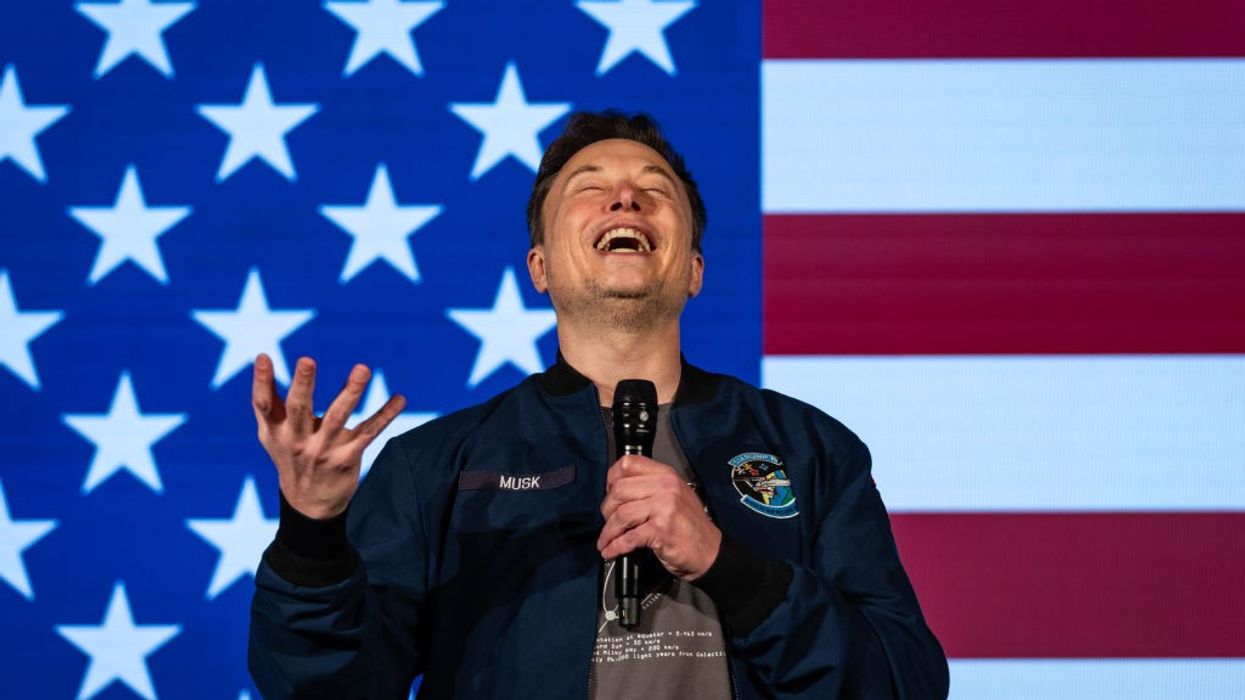
Not too long ago, Musk’s splurge would have been flatly illegal. A reckless Supreme Court and moribund Federal Election Commission took care of that. It should be made illegal again.
On a recent episode of the Bulwark podcast, journalist Ron Brownstein described the election as a contest between “the wave versus the wall.” The wave being voter anger and President Donald Trump’s plummeting popularity. The wall being structural impediments to voters’ voices, such as gerrymanders and the Republican Party’s stark spending advantage.
Now we know that much of that money comes from one man. Perhaps you’ve heard of him.
Elon Musk has contributed at least $366 million on behalf of Republicans since the last election. As The New York Times explained yesterday, “It means that when we talk about the Republicans’ considerable outside spending advantage over Democrats in this midterm, we are talking, in large part, about Musk’s personal contributions.”
Such a blatant attempt to buy the outcome of an election should be a big scandal. As is so often the case, the scandal is not what’s illegal, but what’s legal.
Not too long ago, Musk’s splurge would have been flatly illegal. A reckless Supreme Court and moribund Federal Election Commission took care of that. It should be made illegal again.
Musk’s spending is historic, and not in a good way. It is the biggest contribution during a campaign cycle by any human being in the history of American politics. (Billionaires Michael Bloomberg and Tom Steyer spent more in 2020, but on their own doomed presidential campaigns.)
At times, cautious donors have hedged bets, as lobbyists and PAC managers gave to lawmakers from both parties. Some years, small donors favor one side or another, evening things out in partisan terms.
But this year, big money has mobilized to defend Republican control. We have not had a major election where one party’s spending so dwarfs the other’s in at least a half century, likely since the 1972 election that brought us Watergate.
So much money sloshing around can produce odd or extravagant spending, such as expensive television commercials for a Texas Senate race running on football games and the ads boosting Sen. Susan Collins (R-Maine) that aired in Portland, Oregon, rather than Portland, Maine.
At this late date, more ads might yield minimal impact. That Musk’s contributions are paying for Republican get-out-the-vote operations may have a real impact in key states.
The Supreme Court led by John Roberts has told us that this is all glorious free speech, with campaign contributions “the whole point” of the First Amendment.
Elon Musk is a singular figure. We know of his destruction of foreign aid through DOGE, estimated to have cost hundreds of thousands of lives already around the world, his flamboyant celebrity, his status as the world’s first trillionaire.
Let’s not overthink it. The grubby reality is he’s a big federal contractor. According to The Washington Post, “Over the years, Musk and his businesses have received at least $38 billion in government contracts, loans, subsidies, and tax credits, often at critical moments.”
Musk has massive investments in artificial intelligence through platforms such as Grok, just as political debate finally has erupted around that technology. Defense Secretary Pete Hegseth just named Musk, another billionaire, and former House Speaker Newt Gingrich to lead Project Meridian to reshape the use of technology in warfare.
Such a blatant attempt to buy the outcome of an election should be a big scandal. As is so often the case, the scandal is not what’s illegal, but what’s legal.
Once, there were limits on what could be donated to campaigns. No longer. The Supreme Court’s Citizens United ruling, other court cases since then, and a Federal Election Commission that lacks even a quorum to act have deregulated money in politics. Operatives need no longer pretend these funds are “independent.” Musk’s spending is public, but this year at least $1.3 billion is dark money from undisclosed donors. (The candidates and officeholders know who they are. Just not voters.)
But candidates and lawmakers must do more than decry corruption. The aftermath of this election must lead to action, to reform that follows scandal.
The Brennan Center has proposed Nine Solutions for Political Corruption as part of our series, Solutions for a Stronger Democracy. One of them is especially relevant to the Musk news.
Statutes already purport to bar campaign gifts from federal contractors, but they are more loophole than law. In an article in Just Security published Wednesday, my colleague Eric Petry explains how an expanded and toughened contractor ban would work. It should cover, for example, not just the corporation that holds the contract but the major shareholders, parent company, and other “affiliated entities.” The ban should also extend to donations to inaugural funds, presidential libraries, and vanity projects like Trump’s White House ballroom. Above all, taxpayer money should go to the best contractors chosen under strict rules, not those who best curry favor.
The Watergate election and the scandals it produced led to major reforms, including contribution caps and public financing of presidential campaigns. That response came from lawmakers from both parties, many of them newly elected, demanding change. Ultimately it was voters who responded.
This year we’ve watched the effort to undermine the balloting, and fought back. One lesson may be: Why steal an election when you can buy it?

The Ilegal Immigration Reform and Immigration Responsibility Act of 1996 cast the very act of immigrating to the United States as potentially criminal, creating the concept of “criminal alienhood.
Under President Donald Trump, immigration enforcement agencies have launched a massive campaign of terror against immigrant families with raids, detentions, and deportations unequaled in recent history.
The effects of the president’s assault on immigrants is plain to see. But many people have forgotten that key parts of the legal infrastructure, and the very language around immigration and criminality to which we have become so accustomed, were built long before his administration.
Key foundations to Trump’s racist anti-immigrant policies were laid 30 years ago when the Clinton administration passed the Illegal Immigration Reform and Immigration Responsibility Act of 1996 (IIRAIRA).
Undoing IIRAIRA and its harmful consequences must be part of a broader plan to undo the tangle of laws that treat immigration as a pre-crime, and to dismantle the Department of Homeland Security and its punitive and militarized tools.
IIRAIRA cast the very act of immigrating to the United States as potentially criminal, creating the concept of “criminal alienhood.” The law vastly expanded the consequences on immigration status for convictions or for committing violations. It also blocked immigration judges in many cases from granting case-by-case protection to very sympathetic immigrants who had unusual circumstances.
Part of President Bill Clinton’s “tough on crime” wave of legislation in the 90s, IIRAIRA allowed immigration enforcement agencies to treat immigrants as criminals and laid the groundwork for the racist anti-immigrant policies we’re seeing today. IIRAIRA also created the 287(g) program, authorizing local police to arrest and detain immigrants on behalf of immigration enforcement agencies—which Immigration and Customs Enforcement (ICE) has used to terrorize immigrants across the country under the Trump administration.
IIRAIRA greatly increased the list of triggers for immigration penalties, as well as making them more vague. What started out as a focus on the worst offenses ballooned to sweep up lower-level offenses. IIRAIRA made it much harder for immigrants to apply for asylum and established grounds for detaining and deporting many more immigrants—including permanent legal residents. This included a bar on reentry for deported immigrants, and making reentry a criminal offense, which further criminalizes immigrants and which is currently the top charge for immigration prosecutions.
Another harm we can trace back to the passage of IIRAIRA is the legal framework the law created for mass detention without due process. The United States now has the largest immigration detention system in the world in which millions of people have been detained without guaranteed access to legal representation and in often inhumane conditions. As of July 2026, over 65,000 people were being held in ICE detention and—similarly to those already deported—over 70% had no criminal convictions.
Each administration after Clinton expanded the category of offenses for which immigrants could be detained and deported. By the Obama administration more than 20 categories of crimes were grounds for deportation. At the same time, criminal law and immigration law started working in tandem, in a process legal scholars dubbed “crimmigration.”
With the growth of “deportable offenses” came the rise in rhetoric that intertwined immigrants and criminality, despite repeated statistical studies showing lower crime commission rates among immigrants than among the native-born. By the time Trump said in his 2015 presidential campaign launch that Mexican immigrants were “bringing drugs… Bringing crime” and called them “rapists,” the US public had been well primed to associate criminality with immigrants.
In the decades since the passage of IIRAIRA, LatinoJustice PRLDEF and other immigrant rights organizations have repeatedly challenged both the perception of immigrants as criminals, and the laws and practices that have created the criminal charge-to-deportation express pipeline we are experiencing today. We brought our first case challenging 287(g) agreements in 2009, won $112 million last year for immigrants who had been illegally held in jail custody for handover to ICE, and filed our latest of these cases at the start of the current administration in 2025.
Over the past 30 years, IIRAIRA has frayed the fabric of our society by tearing apart families and criminalizing our immigrant neighbors. Undoing IIRAIRA and its harmful consequences must be part of a broader plan to undo the tangle of laws that treat immigration as a pre-crime, and to dismantle the Department of Homeland Security and its punitive and militarized tools. This is the only way we can once and for all have the immigration system we deserve.
If Democrats are serious about this promise, they should make a more ironclad commitment: A Democratic Congress will use its significant powers to deny any and all funding for continued US participation in this war.
The war on Iran—and the economic toll that President Donald Trump’s decision has taken on all aspects of Americans’ lives—is now the top issue on the campaign trail heading into November. Should Democrats take majorities in the House and Senate, they will have an unmistakable mandate to end the war.
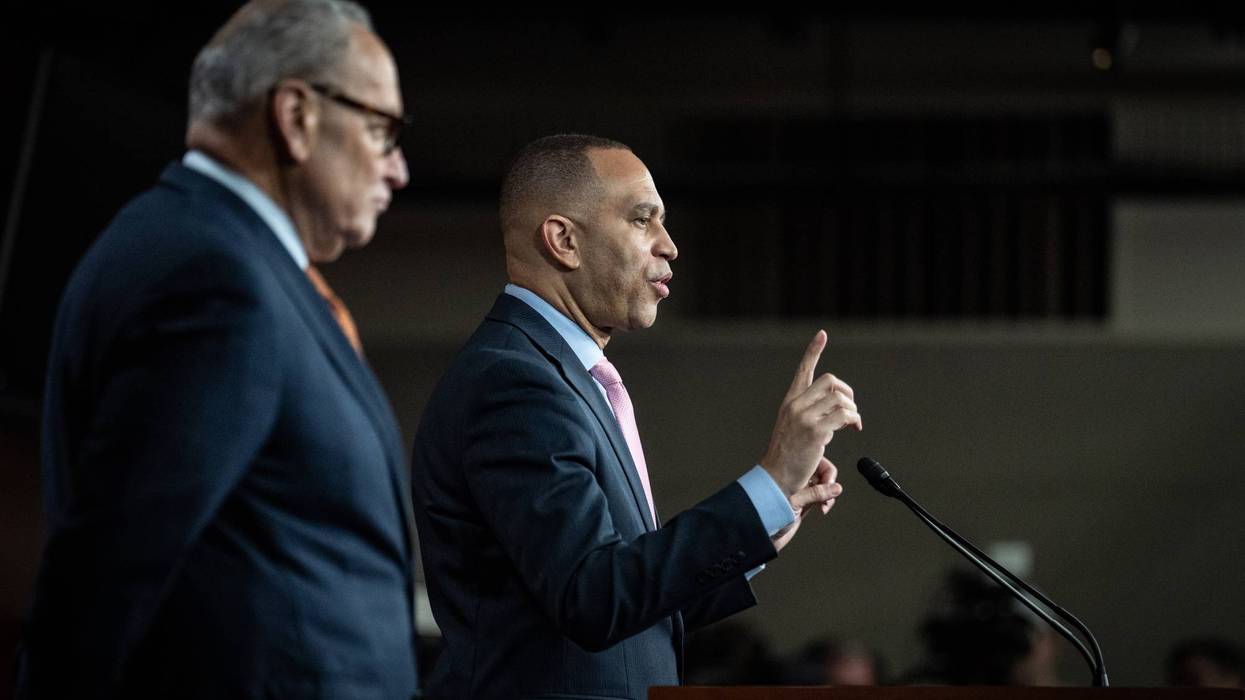
Yet many voters I talk to remain skeptical that a Democratic Congress would actually have the will and capability to stand up to Trump and force an end to the war. This is despite Rep. Hakeem Jeffries (NY), who hopes to be Speaker in a Democrat-led House, promising to end the war if they win. In a press conference outlining Democrats’ top priorities if they win the House, Jeffries said, “We should end, decisively, if it’s still going on, Donald Trump’s reckless and costly war in the Middle East.”
If Democrats are serious about this promise, they should make a more ironclad commitment: A Democratic Congress will use its significant powers to deny any and all funding for continued US participation in this war.
Voters need to know that if Democrats win back the Congress, they will actually use the significant leverage at their disposal and put their money where their mouth is by cutting off funding and end, decisively, this catastrophic war.
Anti-war rhetoric is good politics right now given the historic unpopularity of the Iran boondoggle, which over 70% of Americans now oppose. The conflict itself has already cost Americans over $50 billion in taxpayer funding and an additional $220 billion in economic costs from higher prices for gas, groceries, and other goods and services—more than $1,650 per household, according to an analysis by Moody’s Analytics.
The war is so politically toxic that Republican allies of the president who supported the war, like Rep. Ashley Hinson (R-Iowa) or Sen. Jon Husted (R-Ohio), have publicly called for the war to end as they face competitive elections. Yet when the time has come for those lawmakers to cast a yes or no vote to end the war, they have voted to continue it.
Can voters trust Jeffries and the Democrats to act differently than Republicans who say the war should end but who then enable its continuation through their actions?
Voters have heard promises about Iran before. Trump campaigned on ending forever wars and avoiding another war with Iran, only to do the opposite. Joe Biden promised to restore the Iran nuclear agreement ripped up by Trump, but then pursued a different strategy that failed to produce a deal and helped pave the way for the war. These broken promises are precisely why Democrats should understand that another open pledge to “end the war” will not be enough.
To their credit, congressional Democrats have forced—alongside a very small but growing number of Republicans—nearly two dozen votes in the House and Senate on war power resolutions to end the conflict, despite being in the minority. And their efforts have been historic—for the first time in history, both chambers of Congress passed a war powers resolution mandating the president terminate a war.
But now, the Iran war powers resolution risks withering on the vine of legal uncertainty. The president has ignored it and executive branch officials assert that the measure is not binding. Congressional efforts to challenge the White House’s interpretation in court remain nascent.
The war powers votes have been rightly applauded by activists, but most Americans still have no idea that Democrats forced passage of legislation to end the war. Voters can’t pay for gas with symbolic resolutions or buy groceries with stirring rhetoric.
Some believe that Democratic leadership unnecessarily dragged its feet on the war powers resolutions and were more eager to see Trump suffer politically from an ongoing war than actually using their power to end it. As the adage goes, “When your enemy is falling on his sword, get out of his way.” Others saw Jeffries and would-be Democratic Leader Sen. Chuck Schumer (NY) attacking Trump’s early diplomatic efforts with Iran and broad Democratic criticisms of the short-lived Memorandum of Understanding to end the war, and have been left with the impression that the anti-war rhetoric is political opportunism by lawmakers who are still beholden to pro-war groups like the American Israel Public Affairs Commttee.
It doesn’t help that certain senior officials from the previous Democratic administration have said Biden may have also attacked Iran if he got a second term and that a future Democratic successor to Trump will likely continue the war.
Sen. Mark Kelly’s (Ariz.) recent suggestion that Democrats will use the power of the purse to end the war is the best way to break this cycle, and this commitment should be publicly embraced by every Democratic candidate as well as anyone hoping to lead the party in the next Congress.
In the early days of Trump’s second term, Hakeem Jeffries infamously pushed back on activists demanding Democrats stand up to the President. “What leverage do we have? Republicans… control the House, the Senate, and the presidency. It’s their government,” he said. Voters need to know that if Democrats win back the Congress, they will actually use the significant leverage at their disposal and put their money where their mouth is by cutting off funding and end, decisively, this catastrophic war.
This article was first published by NIAC Insights.
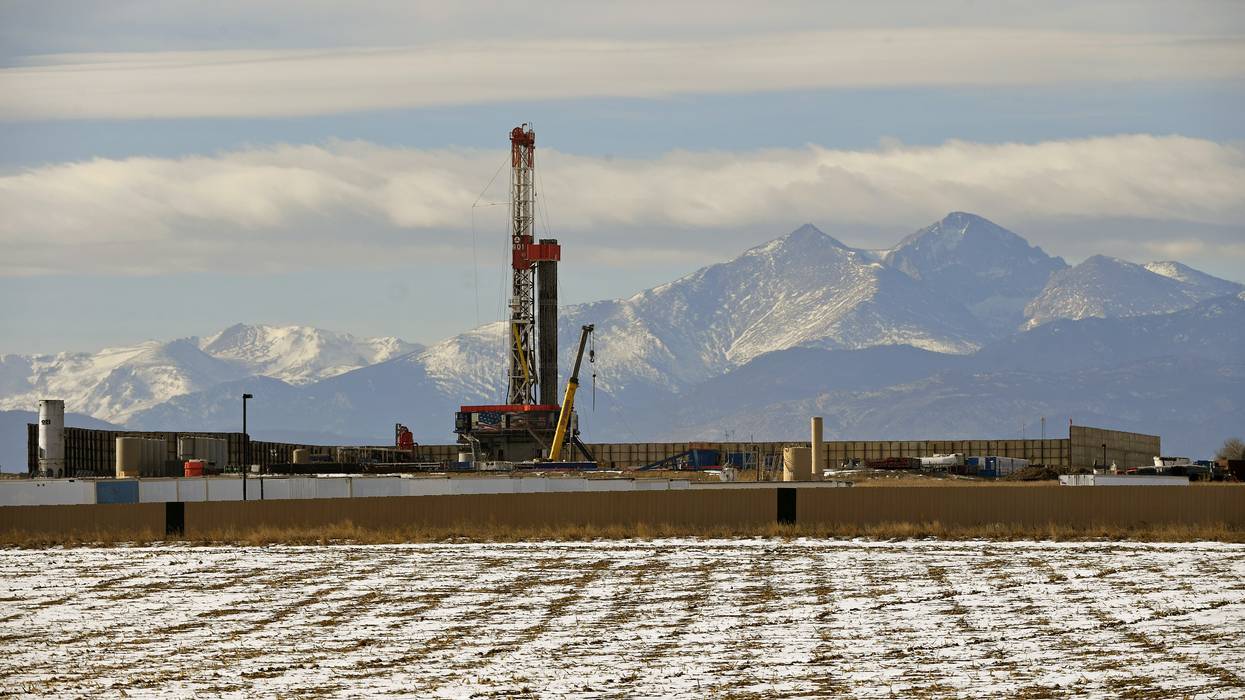
Something unprecedented is happening in Colorado: A dark money group is working to change the state Constitution to recognize a legal right to buy and sell natural gas.
This November, the Colorado voters will decide on a ballot initiative called Amendment 82. Despite its anodyne name, this initiative would radically change state policy for the worse. Amendment 82 would enshrine into the state Constitution the enforceable and perpetual right to buy and sell natural gas in Colorado, representing the wholesale capture of a state constitution by one industry.
The initiative is backed by Advance Colorado, a dark money group, backed by anonymous donors, that seeks to manipulate Colorado’s ballot initiatives to advance corporate and billionaire interests.
Amendment 82 is one such effort, and it’s breathtaking in its audacity. No other state carves out such special treatment for a single industry in its constitution. No other state constitution intervenes so forcefully to grant an industry the perpetual right to sell its products in order to make a profit. It would be the first time that US voters in any state enshrined such a blatant giveaway to an industry into its constitution.
If the industry succeeds with their effort in Colorado, they will not stop there—other states will clearly become targets for the next constitutional giveaway to the industry.
Amendment 82 invents a solution to a problem that simply does not exist. Buying and selling natural gas remains legal in Colorado—and is something that a majority of Coloradans do every day. Nothing on the horizon seeks to change that.
What Amendment 82 will do, however, is make sensible, reasonable, and necessary regulation protecting our air, water, and environment from the impacts of this industry nearly impossible.
Efforts to stop gas companies from fracking near homes and schools are at risk of being rolled back, because the industry will argue these rules infringe on their right to sell natural gas.
Regulations to limit the amount of toxins that the oil and gas industry can dump into a community’s air and water become impotent for fear that enforcement will infringe on the right to sell natural gas.
A town’s ordinance that regulates the use of methane camp stoves in times of high fire risk could now be overturned because it arguably infringes on the right to buy natural gas.
Amendment 82 will lock into Colorado’s constitution the ability of oil and gas industries to increase their profits at the expense of the health and safety of Colorado’s people. It gives the industry the right—affirmative and enforceable—to force communities to accept the dangers, risks, and pollution that come with oil and gas infrastructure.
Moreover, the deceptively simple language of Amendment 82 gives these special interests a powerful new tool to block common-sense environmental regulations—far beyond the scope of the oil and gas industry.
If passed, Amendment 82 will lock in fossil fuel extraction as official state policy, and quickly overwhelm pro-environment laws, regulations, policies, programs, innovation, and decision-making in Colorado. It will pose a credible—and likely successful—challenge to any government action that seeks to regulate or limit natural gas extraction, transportation, or pollution outputs, and to any government efforts that seek to reduce the state’s dependence on fossil fuels by advancing clean energy policies and projects.
Amendment 82 is a crisis moment for Colorado’s communities, environment, and the future generations who will be burdened by its impact. But it should also be a wake-up call for the rest of us. If the industry succeeds with their effort in Colorado, they will not stop there—other states will clearly become targets for the next constitutional giveaway to the industry.
Constitutions in the US belong to We the People, not corporations. We give these constitutions—both state and federal—power because they are the means by which we protect ourselves and our inalienable rights from powerful special interests that seek to infringe upon them.
Efforts like Amendment 82 seek to misappropriate that power and give industry titans new ways to infringe on the basic and essential rights of everyday people in the name of profit and exploitation. It cannot be allowed to succeed.

The closer his administration brings public resources to Republican campaigning, the more November’s midterms could become a referendum on presidential power.
On October 11, a federal judge ordered the Trump administration to stop using taxpayer funds for television ads featuring the president. Yet two commercials continued airing past the court’s deadline. By the following evening, Justice Department lawyers had apologized, explaining that agency counsel had not seen the order in time. What had been a political accusation had now become a judicial intervention. And now even the government’s response to the order was under scrutiny.
For President Donald Trump, the larger danger is electoral. His presidency has turned expansive executive authority into a political calling card. But when that authority appears to serve the president’s campaign interests rather than the public as a whole, it can become a liability. What began as a dispute over advertisements could help turn the November 3 midterms into a contest over where government ends and Trump’s political operation begins.
The polling explains why this issue is different from a familiar partisan quarrel. Eighty-six percent of Americans, including 80% of Republicans, consider taxpayer funding for election-related television advertisements featuring a president or Cabinet members inappropriate. Opposition that broad does not automatically translate into votes against Republican candidates. It does, however, suggest that the administration has stepped into territory where even loyal supporters recognize a boundary.
If elections cannot provide a meaningful check when a president turns public institutions toward his own political interests, the country risks a powerless ballot.
The White House calls the commercials public service announcements. Yet one used footage and narration almost identical to a Trump advertisement from the 2024 campaign, replacing the campaign’s sponsorship line with a government disclaimer. That resemblance is hard to reconcile with a purely informational purpose. The question for voters is not what officials call the message. It is why the government should finance a presentation that looks and sounds like electoral promotion.
Trump’s pledge to have his super PAC cover future advertising costs hardly closes the matter. The commitment does not reimburse spending already incurred, and it cannot resolve whether federal agencies were used to create and distribute messages that conferred a partisan advantage. The court order arose from a challenge by watchdog and labor groups; the Democratic National Committee has filed a separate lawsuit. Neither case needs to end in a final judgment against the administration for the episode to carry political costs. A concession made after criticism can look less like reassurance than retreat.
Disaster assistance in Ohio raises the same question in a more consequential setting. On October 2, Trump approved a major disaster declaration following severe storms in the state. The next day he appeared at a campaign rally for Republican Sen. Jon Husted, whose office had highlighted his role in seeking the declaration. Trump credited Husted and other Ohio Republicans with pressing for help. The storms were real, and the need for federal assistance should not be reduced to campaign calculations. Yet highlighting the approval beside a candidate and emphasizing his influence makes it easier to cast a public decision as a partisan reward.
The surrounding record sharpens that concern. When the Ohio declaration was granted, 15 other disaster requests remained pending. A broader review of disaster decisions during Trump’s second term found approval of roughly 80% of requests from Republican governors, compared with about 60% from Democratic governors. The figures do not prove improper motives in any single case; requests differ in their merits. But they make assurances of impartiality less persuasive when the president publicly connects relief with Republican candidates.
There is a serious defense of the administration’s conduct. Presidents of both parties advertise government programs, take credit for disaster aid, and appear alongside candidates. Officials must be allowed to explain what the government does. The White House maintains that the advertisements are public service messages and that disaster decisions are not politically motivated. Moreover, a temporary court order is not a final legal ruling.
Those arguments are relevant, but they do not answer the central objection. Taking credit for a policy is different from using public funds to broadcast messaging that resembles a campaign advertisement. Delivering disaster relief is different from presenting its approval at a rally as evidence of what a particular candidate can obtain through presidential favor. An action can be administratively defensible and still undermine confidence that government serves citizens regardless of party. That is the political vulnerability Trump cannot remove simply by insisting on legality.
The problem grows as individual episodes begin to reinforce one another. Government advertising and disaster declarations need not be legally connected to generate a common impression. Public unease also extends to restrictions on White House media access and proposals to name federal institutions after a sitting president. Democrats can connect these disputes without proving that every decision broke the law. Each new controversy then risks being read through the suspicion left by the last.
This is what makes the midterms a potential trap for Republicans. If voters judge the election mainly through the economy, immigration, taxes, or foreign policy, Trump can rely on familiar partisan divisions and the strength of his base. If the focus shifts toward whether public institutions are being used to preserve his own political influence, the constituency for criticism may widen. An independent who approves of some administration policies may still oppose campaign-style uses of public resources. So may a Republican who has no intention of abandoning the party.
That does not guarantee Democrats an electoral breakthrough. It gives them something potentially more useful than a series of lawsuits: a simple question voters can apply to otherwise unrelated decisions. Whose interests are being served when the machinery of government is deployed?
The administration could answer that question by making the public purpose and impartial criteria behind its decisions visible, rather than relying on legal defenses alone. Its ability to do so will shape whether these controversies fade or acquire a cumulative political force.
That is also what gives the ballot its power. If elections cannot provide a meaningful check when a president turns public institutions toward his own political interests, the country risks a powerless ballot—one that records votes without making power answerable to them. November will test whether that danger remains hypothetical. Trump has treated executive authority as the engine of his political strength. He may discover that voters’ willingness to draw a line between government and campaign is what ultimately determines its limits.

For the better part of a decade, progressives have heard some version of the same argument every election cycle: Fight as hard as you want in the primary. Organize. Debate. Challenge the establishment. But when Democratic voters make their choice, the fight is over. You rally behind the nominee because defeating Republicans matters more than whatever divided us in the primary. “Vote Blue No Matter Who.”
Progressives have not always embraced that bargain enthusiastically, but we have largely honored it. Now the Democratic Party is confronting a question it has rarely had to answer: What happens when the candidates progressives fought for are the ones Democratic voters choose?
That is no longer hypothetical. Abdul El-Sayed is the Democratic nominee for Senate in Michigan. Angie Nixon is the nominee in Florida. Troy Jackson is carrying the Democratic banner in Maine. William Lawrence and other progressives have won House primaries across the country. They are entering November not as protesters outside the Democratic coalition, but as Democratic nominees. And something more consequential is happening alongside those victories: Progressives are no longer simply asking Democratic leadership to respect the results. We are accumulating enough political infrastructure to make ignoring them more difficult.
Voters are demanding a Democratic Party that offers a real alternative to Trumpism, one willing to take on oligarchs, corporate power, and endless blank checks for war.
Florida offers an early glimpse of what that looks like. For weeks, progressives pressed national Democrats to invest in Nixon. She said she asked Senate Democratic leader Chuck Schumer directly for help and got a “we’ll see.” Then Sen. Bernie Sanders of Vermont announced that he would put his own campaign resources behind Nixon and other progressive nominees.
That commitment has since become tangible. Sanders has contributed directly to Nixon's campaign and is heading to Florida for a series of campaign events alongside her, with other progressive leaders, including Sen. Chris Murphy of Connecticut and Rep. Ro Khanna of California, also joining the effort.
That matters for reasons larger than the money. Bernie is putting resources behind the same principle Democrats have spent years demanding progressives honor: The primary is where we fight over the direction of the party. When voters decide, we fight for the nominee. But he was also demonstrating something new. If the existing Democratic infrastructure is reluctant to invest in candidates emerging from the progressive movement, the movement is increasingly capable of deploying infrastructure of its own.
Since then, Nixon says Schumer has stepped up his support for her campaign. While the shift cannot be attributed to progressive pressure alone, it reflects a larger reality after a decade of organizing: What began as an insurgency has become infrastructure, and infrastructure creates leverage.
With just 20 days until Election Day, the question is no longer whether progressives can win Democratic primaries.
We have.
The question now is whether Democratic leadership will invest in those nominees with the same urgency it demands from progressive voters, and what happens when those candidates arrive in Washington with a mandate of their own. The decisions Schumer and Jeffries make between now and November 3 will help determine not only who wins, but who has the power to shape what comes next.
And that question has immediate implications for Schumer, who has made clear he intends to seek another term as Senate Democratic leader after November. His political future is already the subject of renewed scrutiny, with some Democratic Senate nominees unwilling to commit to supporting him for another term.
If Schumer wants to lead a coalition increasingly shaped by candidates emerging from the progressive movement, that relationship cannot begin with a leadership vote after Election Day. It is being shaped RIGHT NOW through decisions about where Democrats invest, which nominees receive institutional support and whether progressive victories are treated as opportunities to build upon or problems to manage.
If Schumer wants to lead a coalition increasingly shaped by candidates emerging from the progressive movement, that relationship cannot begin with a leadership vote after Election Day.
The same test is playing out in the House. William Lawrence, now the Democratic nominee in Michigan’s 7th District, declined during the primary to commit to supporting Hakeem Jeffries for speaker.
But the challenge for Jeffries goes deeper than whether he supports individual progressive nominees. It is about recognizing what is changing underneath the Democratic coalition. The primary results and the organizing now underway across the country make clear that much of the energy, infrastructure and voter mobilization powering the next Democratic majority is coming from the progressive movement. Jeffries cannot watch that wave build, retreat on Medicare for All, keep courting money from Big Tech, crypto and AIPAC, and then expect progressives to rubber-stamp the old order after Election Day.
Voters are demanding a Democratic Party that offers a real alternative to Trumpism, one willing to take on oligarchs, corporate power, and endless blank checks for war. Schumer and Jeffries cannot spend the final weeks before Election Day asking progressive organizers to deliver votes, volunteers and resources, only to treat their priorities as negotiable once the ballots are counted.

With one seemingly off-hand comment, Pillay framed a comparison between a cause she has fought for her whole life on behalf of her fellow human beings and the smallness of a man who is doing his best to unravel that work.
Asked for her thoughts, after learning that the Nobel Committee had awarded her the 2026 Peace Prize, Navi Pillay added a one-liner to an appreciative response, “I’ll share the award with Trump.” The seemingly off-hand comment was anything but. Rather, it showed power and depth in its pointedness, irony, sarcasm, humor, wisdom, and humanity. Here, within the context in which it was made, is what I gleaned from the comment.
The Nobel Committee’s rationale for awarding Pillay the prize included her dedicated efforts to defend international institutions and protect human rights. As a justice on the International Criminal Court, she had secured the indictment of Israeli Prime Minister Benjamin Netanyahu for crimes against humanity committed against the people of Gaza, which amounted to genocide.
Perhaps the most obvious connection she was making with the comment was the futile gesture of Maria Corina Machado, 2025 Peace Prize winner. Machado attempted to leverage Trump’s support for her movement’s claim to the presidency of Venezuela, by sharing her Peace Prize with him—a move the Nobel Committee prohibits. In effect, Pillay was saying, ”Look what that got her, nothing.” The implication is that it is wrongheaded to believe that pandering to petty, aspiring dictators will yield anything positive for a righteous cause.
Her use of humor highlighted its essential role in dressing down bullies who blatantly seek to dominate other human beings and trample on their inherent rights.
At the same time, with her sarcastic jibe, she added emphasis to the cause for which she was awarded the prize, the defense of international institutions and protection of human rights. In citing Trump by name she implied that he is the “poster boy” for the very assault she has dedicated her life to countering, particularly through her work at the International Criminal Court and the United Nations Human Rights Commission.
Additionally, her use of humor highlighted its essential role in dressing down bullies who blatantly seek to dominate other human beings and trample on their inherent rights. Through implicit ridicule she deftly punctured an overblown ego. Whether the target of the jibe gathered the intent or not was immaterial. Others would get the gist.
Navi’s use of sarcasm also served another purpose. It eviscerated Trump’s assertions of power, making a distinction between real power that derives from righteous cause and mutual respect, and the semblance of power that comes from the fawning of sycophants. It also reinforced the absence of Trump’s moral standing as world leader and portrayed him appropriately as one for whom “I’ll scratch your back if you scratch mine” is his most notable achievement.
With one seemingly off-hand comment, Navi Pillay framed a comparison between a cause she has fought for her whole life on behalf of her fellow human beings and the smallness of a man who is doing his best to unravel an endeavor which, for a quarter of a millennium, has served as a beacon to the world for the ennoblement of humanity. More power to her!
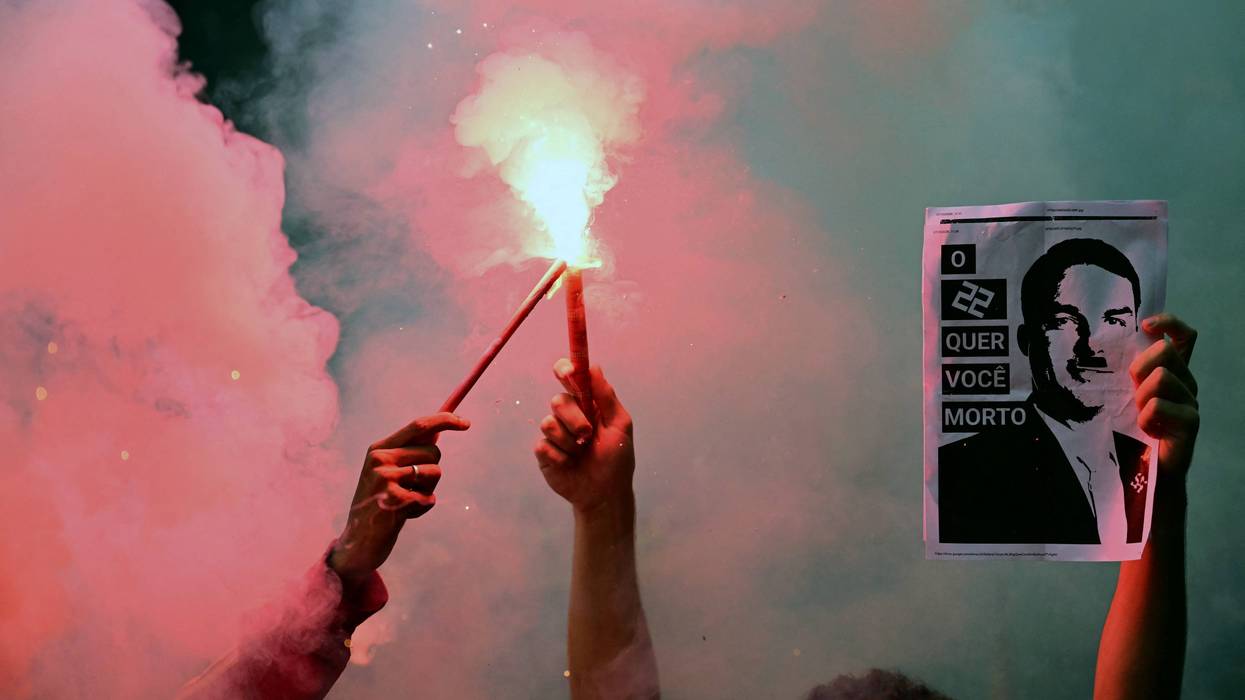
The choice on October 25 should not be about Lula’s limited social democratic tendencies. It is about protecting the Brazilian democratic project from a complete fascistic takeover.
On October 4, Brazilians handed the far-right their best result in decades. Sen. Flávio Bolsonaro, eldest son and political heir of convicted coup plotter and former neofascist President Jair Bolsonaro, finished first with 47.03% of valid votes to left-wing President Luiz Inácio Lula da Silva’s 45.16%, according to Brazil’s electoral court. The two meet in a runoff on October 25.
With a gap of about 2.2 million votes, more than 33.4 million registered Brazilians stayed home, the highest first-round abstention rate since 1998. Polling suggests the ideological blocs are holding firm, showing a dead heat or a narrow Bolsonaro edge. That is despite a cascade of scandals for Flávio, and despite an estimated 1 million people marching for democracy on São Paulo’s Avenida Paulista on October 11.
So the outcome may rest on those who sat out round one. Their choice will decide whether Latin America’s largest democracy, and the forest that regulates the planet’s climate, fall to an oligarchic, US-aligned far-right. Here is what hangs in the balance.
A Flávio Bolsonaro presidency would restore a movement that tried to overturn an election by force, now armed with a congressional majority, a revenge agenda, and the backing of the world's most powerful government and military.
Under Jair Bolsonaro, Amazon clearing rose about 60%, with more than 45,000 square kilometers destroyed from 2019 to 2022, according to official data. Under Lula, deforestation fell roughly 45%, to its lowest level in over a decade.
Flávio wants to resume his father’s project, which environmental groups call “ecocide.” He said in August he does not believe climate change is real, and his 76-page government plan never mentions it, Folha de S.Paulo found. Instead, it pledges to slash Ibama, Funai, and ICMBio, the agencies that enforce environmental law, protect Indigenous peoples, and manage national parks. It promises “agile” licensing that Folha reports would approve development (including fracking) permits automatically when agencies miss deadlines.
“There is concern that activities now considered illegal could simply be legalized,” warned Taciana Stec of the climate institute Talanoa. As Breno Rodrigues de Messias Leite of the Federal University of Amazonas put it, “He will have to respond to his electoral base, which is precisely rural producers.” That base of agribusiness, ranchers, miners, and land-grabbers could essentially destroy the Amazon.
Flávio is running as his father’s proxy. Jair Bolsonaro is serving a 27-year sentence, handed down by the Supreme Court in September 2025, for leading a plot to overturn the 2022 election that included plans to assassinate Lula, Vice President Geraldo Alckmin, and Justice Alexandre de Moraes. It culminated on January 8, 2023, when Bolsonaro supporters ransacked Congress, the presidential palace, and the Supreme Court, the darkest day for Brazilian democracy since the dictatorship.
Flávio announced his candidacy after his father anointed him from prison, and said his first priority would be to release him. His brother Eduardo spent 2025 in Washington lobbying the Trump administration to punish Brazil with tariffs and sanctions over the prosecution. The sanctions have already had a disastrous impact on Brazil’s economy and sovereignty, and are hybrid warfare to meddle in the election in favor of Bolsonaro.
Now Flávio promises to go further. On October 6, he vowed to use Congress’ new right-wing majority to “change the Constitution” and "redemocratize” Brazil, reports The Rio Times. Coming from open fascists, it’s hard to believe their definition of “democracy.” “There is no way to accept the Supreme Federal Court the way it is,” he said. His plan would curb the powers of the court that convicted his father. His ironically named Liberal Party won 121 House seats and the largest Senate bloc, and his allies are closing in on the 308 votes needed to amend the Constitution.
One of the Bolsonarista camp’s positions has been the impeachment of Supreme Court judges and a purge of federal bureaucracy. In Bolsonarista vocabulary, "redemocratization" means dismantling the institutions that held anti-democratic destruction accountable. Lula’s efforts to crack down on foreign meddling by oligarchs, the US, Israel, and others would also be stopped, meaning Brazil’s democracy would essentially be held hostage by capitalist and foreign interests.
Flávio poses as an anti-establishment outsider. Yet Federal Police are investigating him for possible “money laundering, currency evasion, corruption” over the financing of Dark Horse, a hagiographic biopic of his father. Daniel Vorcaro, owner of the collapsed Banco Master and the center of one of Brazil’s largest financial scandals, allegedly sent R$61 million toward the film at Flávio’s request. The Intercept Brasil published voice notes of Flávio asking him for money.
A crypto platform handed out tokens to users sharing pro-Flávio content, which election lawyers called an illegal donation. Days before the first round, Meta blocked Lula’s campaign from running ads, citing unspecified violations. And the Bolsonaros sit at the center of a transnational far-right network. It runs through President Donald Trump, who hosted Flávio at the White House in May; Steve Bannon; Elon Musk, who waged war on Brazil’s Supreme Court in 2024; and now-convicted Israel- and Trump-linked, Argentine disinformation operative Fernando Cerimedo, who spread a toxic sludge of baseless fraud claims on various platforms and his own media networks after Jair’s 2022 defeat.
The Bolsonaros’ economic program serves that same oligarchic, far-right capitalist class. Flávio’s economic coordinator, Daniella Marques, calls Javier Milei’s Argentina a “great example” and has promised a R$200 billion “tesouraço,” or giant scissors, to public programs. Milei’s chainsaw drove Argentine poverty above 50% in his first months and has wiped tens of thousands of companies off the formal economy. Most of the public workforce has also been gutted. Flávio promises tax cuts, privatization, and an end to what he calls “dependence” on welfare, a threat to programs like Bolsa Família that tens of millions of poor Brazilians rely on.
Flávio would also surrender the sovereignty Brazil has built, including Pix—a free public payment system so successful that Washington targeted it in a 2025 trade probe—and diversified trade with China, the BRICS, and Europe. Lula's Brazil has also been a significant force in recognizing a Palestinian state, and in reforming the United Nations Security Council to balance the scales in favor of the Global South. Brazil has been a leader in multilateral finance and post-American economic sovereignty. Bolsonaro would gut all of it.
On October 7, a fire tore through a lab building at the Federal University of Pernambuco, a day after students there protested Flávio’s candidacy. Hours earlier, students had received messages threatening to “blow up the department” in Flávio's name. Bolsonarismo has instilled a climate of fear and terror, as these kinds of attacks are now commonplace by the far-right in Brazil. Bolsonaro has borrowed the “God, Homeland, Family” slogan linked to fascist movements.
With the far-right sweeping institutions across the hemisphere, Lula may be the last shield against a full-blown reactionary counterrevolution.
Jair Bolsonaro’s government slashed university budgets, and his movement smears them as factories of communism and enemies of the “homeland.” Flávio’s plan would tie research funding to business metrics like “productive impact.” Scholarships, he said in September, must be “for developing technology, innovation, artificial intelligence,” not fields that “add nothing.” Social sciences and humanities funding would likely be slashed, while there is a fast-tracking of AI and military expansion.
This is the family that made science denial a governing principle. Jair called Covid-19 a “little flu” and sabotaged vaccine purchases while more than 700,000 Brazilians died. A Senate inquiry recommended he be charged with crimes against humanity.
The Bolsonaros’ home base is Rio de Janeiro, where far-right militias of current and former police control whole neighborhoods, running extortion, land-grabbing, gambling, and drug and arms trafficking.
These militias are also in an all-out war against the left, with ties to the Bolsonaros. As a state legislator, Flávio honored Adriano da Nóbrega, an ex-police captain later identified as the leader of the militia hit squad known as the Crime Office, and employed Nóbrega’s mother and ex-wife. Ronnie Lessa, the ex-officer who confessed to murdering socialist councilwoman Marielle Franco in 2018, lived in Jair Bolsonaro’s gated condominium. This is the fascistic, militaristic, sheltered, nihilistic world the Bolsonaros live in.
Flávio also wants Salvadorian President Nayib Bukele’s model on security. After meeting El Salvador’s security minister in August, he promised 500,000 new prison spaces. “Brazil has few people in prison,” he said, in a country with more than 850,000 behind bars. He backs lowering the age of criminal responsibility to 14 and a national facial-recognition database, Brookings reports. He and his brother lobbied Washington to designate Brazilian gangs as terrorist organizations, which invites a US invasion. When Pete Hegseth posted video of a US missile obliterating a boat (a war crime), Flávio replied that “there are boats like this here in Rio de Janeiro.” He has pledged to join Trump’s “Shield of the Americas,” which has been used to bully left-wing governments and weaponize “narcoterrorism” to go after guerrillas and opponents, while shielding allies. Bolsonaro has also hinted at declaring a “state of exception” on crime, a euphemism for martial law. Most right-wing states in Latin America are now under a state of exception. The term, taking its origin in Nazi theorist Carl Schmitt, has been used in many Latin American autocracies to ban opposition, protests, and justify extrajudicial torture and murder.
Bolsonaro also has a horrific record on gender and LGBT+ rights. His father told a congresswoman she didn't even “deserve” to be raped, and told Playboy he would rather a son “die in an accident” than be gay. Liberal Party star Nikolas Ferreira donned a wig in Congress to mock trans women, and this year led a campaign to keep trans congresswoman Erika Hilton from chairing the Women’s Rights Commission. This, in the country that leads the world in killings of trans people.
This war on women and LGBT+ Brazilians is inseparable from the movement’s alliance with the evangelical far-right. Flávio sealed a partnership with megachurch pastor Silas Malafaia in May, betting that moral panic over “gender ideology” and “trans bathrooms” (echoing Trumpism) will deliver one of the country’s largest voting blocs. Alongside them was PL leader Sóstenes Cavalcante, sponsor of a 2024 bill to punish abortion after 22 weeks as homicide, even for rape survivors. A Bolsonaro government would pursue that agenda aggressively, even more as they would control Congress and the Supreme Court.
Under Lula, Brazil backed South Africa’s genocide case against Israel at the International Court of Justice, defended the International Criminal Court, and refused to choose sides in Washington’s new cold war. Flávio would reverse it all. He has pledged that Brazil will be a “brother of Israel,” move its embassy to Jerusalem, and join Milei and Israeli Prime Minister Netanyahu's Isaac Accords. In June, he offered Secretary of State Marco Rubio his transition team at the “disposal” of the US government. Bolsonaro launched his presidential campaign alongside Netanyahu.
Regionally, the right now governs Argentina, Chile, Bolivia, Colombia, Peru, Paraguay, Ecuador, Costa Rica, El Salvador, Honduras, Panama, and the Dominican Republic. Venezuela is a de facto US vassal state, and the Trump administration has signaled Cuba and Nicaragua are next.
If Brazil falls, Mexico would be the last major Latin American economy outside Washington’s thumb. An emboldened Trump administration, which has already threatened military action against Mexican cartels, would turn up the pressure on Claudia Sheinbaum, and may even look to topple her government.
This runoff is a referendum on democracy, human dignity, and ecological survival. A Flávio Bolsonaro presidency would restore a movement that tried to overturn an election by force, now armed with a congressional majority, a revenge agenda, and the backing of the world's most powerful government and military.
Lula is not above criticism. His government has backed oil drilling near the mouth of the Amazon and made its peace with agribusiness. But the choice on October 25 should not be about Lula’s limited social democratic tendencies. It is about protecting the Brazilian democratic project from a complete fascistic takeover.
Brazil, Latin America’s largest democracy, has survived colonial plunder, slavery, a 21-year dictatorship, neoliberal devastation, and multiple coup attempts. With the far-right sweeping institutions across the hemisphere, Lula may be the last shield against a full-blown reactionary counterrevolution. The 33 million Brazilians who stayed home on October 4 will need to show up, otherwise the world will get a whole lot darker.
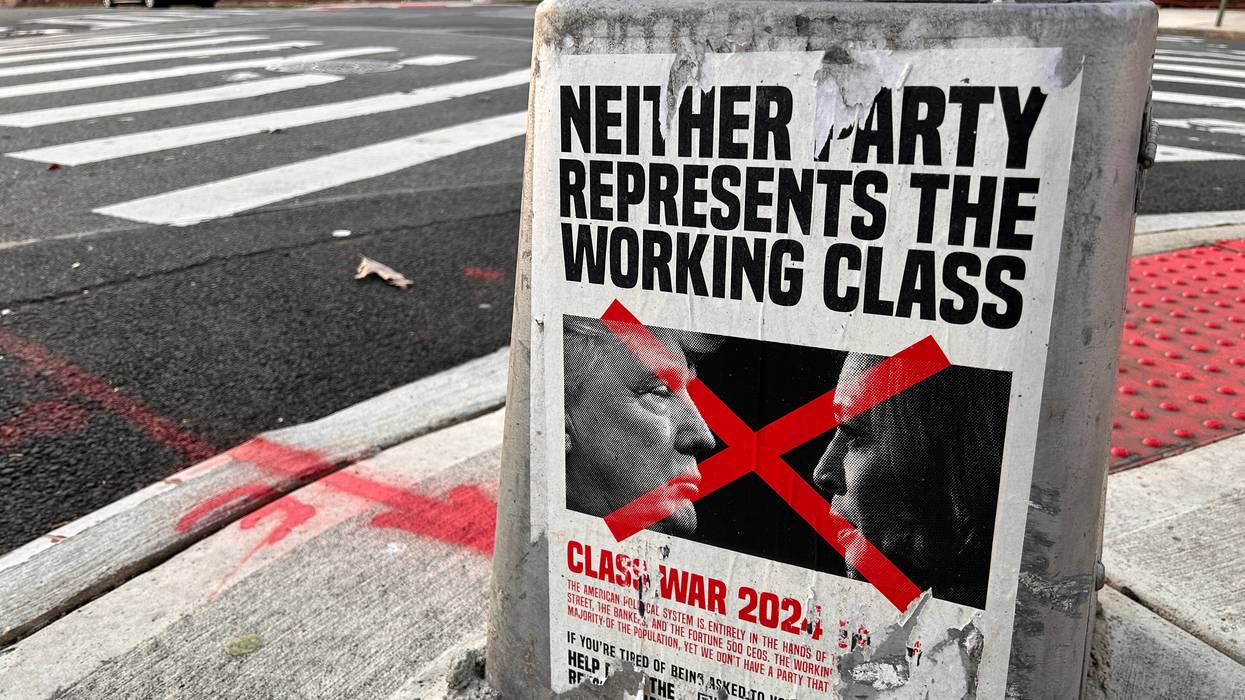
Even if Democrats reclaim Congress by a wide margin, they will still face a fundamental problem: The party has lost the trust of too many working people.
In the wake of Richard Nixon’s Watergate scandal, the Democrats picked up a net of 49 House seats and four Senate seats in 1974. Wouldn’t it be terrific if Democrats could do at least as well in November, given the unbearable chaos fomented by arguably the worst president in American history?
Let’s review the many Trump-gates:
And there is more. Much more. All of which makes the disgraced Nixon, in comparison, look like a Boy Scout.
A sweeping Democratic victory could limit Trump’s ability to carry out his agenda and help protect the democratic process.
But even if Democrats reclaim Congress by a wide margin, they will still face a fundamental problem: The party has lost the trust of too many working people. An electoral victory and the restoration of a durable working-class political base are two different, yet entangled issues.
Why the working-class departure?
The question, then, is not whether Democrats should win in November. They should. The question is how to build a political organization of, by, and for working people, especially in red areas where Democrats fail to compete.
Too many Democratic leaders, I believe, seem to resent the American working class. Not all Democratic officials, of course. But as more of the party’s fundraising and support comes from the well-to-do, many working people now believe that the party no longer represents them.
This disconnect provides Democratic functionaries with a convenient explanation for why they lost twice to Trump. The problem, in this view, is that working people—especially white working people—are more than a little sexist, racist, anti-gay, and anti-immigrant. They supposedly gravitate toward Trump precisely because of his racism, sexism, homophobia, and xenophobia.
Isn’t this why Hillary Clinton and Kamala Harris, two able women, lost to him? Isn’t this why Trump can violate presidential norms and still command nearly total Republican loyalty?
Racism and other forms of prejudice are real, and found within all demographic groups. But they cannot, by themselves, explain the working-class vote. My research shows that working people shifted away from the Democrats primarily due to job insecurity, not prejudice.
This anti-worker attitude I’m describing helps explain why the Democratic establishment failed to renounce Sen. Chuck Schumer (D-NY), who, in 2016, gleefully boasted:
For every blue-collar Democrat we lose in western Pennsylvania, we will pick up two moderate Republicans in the suburbs in Philadelphia. And you can repeat that in Ohio and Illinois and Wisconsin.
Schumer wasn’t criticized by party leaders for writing off the working class; he was rewarded with the Senate Democratic leadership.
Still, many of my colleagues see no choice but to work tirelessly on how best “to bring back the working class.”
My response is always, “To what?”
To a party that has written them off? To a party that caters to corporate and financial elites? To a party that failed to pass even moderate labor-law reform when it controlled Congress and the White House under Jimmy Carter, Bill Clinton, and Joe Biden?
“To what?” also requires a closer examination of the party’s ecosystem that is populated by functionaries who have grown wealthy by running it. Paul Rivera, the author of the 2024 Democratic Party autopsy report, released its most critical chapter that the party’s leadership failed to publish. In it he wrote:
…there are too many people who have become generationally wealthy off politics and drive too much of the decision-making within the ecosystem… [T]he senior staff, the media strategists, the pollsters, the digital consultants are financially secure.
A party whose decision-makers are generationally wealthy can become dangerously detached from people whose economic security has disappeared.
Let’s pause for a minute and think about what generationally wealthy actually means. It’s not just being well off so that you and your family can lead decent lives. It’s being so well off that your children, and their children, also will never face the economic hardships that plague the rest of America.
No wonder so many working people feel betrayed.
It’s going to take a lot of turnover and internal reform to remove the anti-worker stigma from the Democratic Party. Perhaps more Democratic senators will join Michael Bennet of Colorado to finally admit that the party is seriously flawed.
It is so hard to lose two general elections to Donald Trump, in political terms, to imagine a worse failure than losing two national elections to Donald Trump. And yet the establishment Democratic Party did, and I think of it as a failed enterprise.
A failed enterprise! He said that, not me.
But why did it fail? Bennet doesn’t mince words:
There’s something fundamentally wrong with the nature of our capitalist system that is delivering these outsize gains for the people at the very top at the expense of everybody else in the economy.
There it is.
For decades, the Democratic establishment did too little to stop runaway inequality, the destruction of jobs, and the overall economic insecurity that working people face. In important respects, the party’s embrace of neoliberalism and its dependence on wealthy donors made matters worse.
Now the party faces a credibility problem. It is one thing to promise an anti-corporate, pro-working-class agenda. It is another to persuade voters that a party deeply enmeshed with corporate and financial interests will actually carry it out.
It will take more than new slogans, better focus groups, or even new working-class candidates. It will require replacing the entire ecosystem of generationally wealthy operatives who shape the party’s priorities to reflect their own interests rather than the interests of working people.
Hopefully, a massive Democratic victory in November will stop Trump and his minions from robbing us blind. But even a historic victory would leave the party’s underlying problem unresolved.
You can’t “bring back the working class” to a party that working people believe has abandoned them. And you cannot rebuild their trust simply by telling them that the other party is worse.
The question, then, is not whether Democrats should win in November. They should. The question is how to build a political organization of, by, and for working people, especially in red areas where Democrats fail to compete.
Such an organization would need to organize people around their shared economic interests, develop a durable local base, recruit candidates from working-class communities, run independent candidates where they have a plausible path to winning, and promote ballot initiatives that improve living and working conditions. It would need to demonstrate, through its actions, that working people—not wealthy donors and political insiders—set its priorities.
Sticking with a “failed enterprise,” no matter what, will only create more space for the next version of MAGA to fester. Failing and fearing to discuss alternatives doesn’t make the problem go away.
But in the midst of this political morass, there is hope. Working people want something new.
It’s time we caught up with them.