SUBSCRIBE TO OUR FREE NEWSLETTER
Daily news & progressive opinion—funded by the people, not the corporations—delivered straight to your inbox.
5
#000000
#FFFFFF
To donate by check, phone, or other method, see our More Ways to Give page.
Daily news & progressive opinion—funded by the people, not the corporations—delivered straight to your inbox.

A Yemeni boy walks past a mural depicting a U.S. drone in the capital Sanaa.
Western powers appear almost eager to repeat their destructive mistakes in the Middle East.
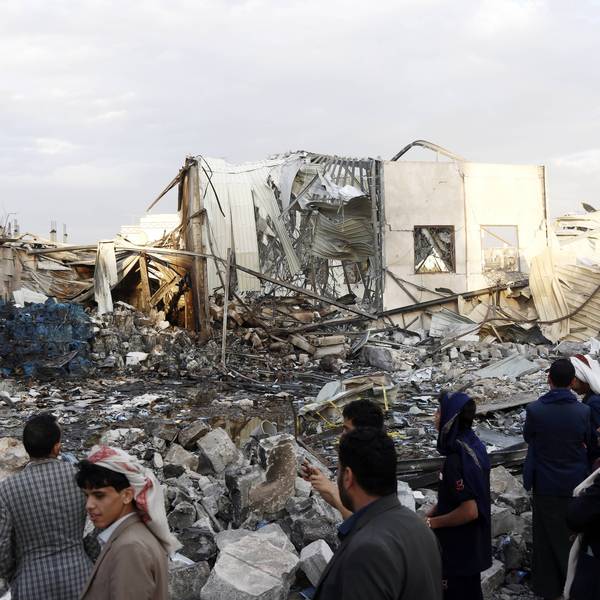
Early on Friday, the US and Britain launched military strikes against more than a dozen targets in Yemen controlled by the Houthi militia. The strikes were in response to more than 25 attacks by the Houthis on shipping in the Red Sea since November—a campaign instigated by the militia after Israel’s invasion of Gaza.
Western leaders, and especially the US president, Joe Biden, insist that they want to reduce the risk of the war in Gaza spreading to other parts of the Middle East. But the US-led air and naval strikes on Yemen are the most significant expansion of the conflict since Israel launched its devastating assault on Gaza after the 7 October attacks by Hamas. Instead of avoiding a wider war, the US and its allies are escalating regional tensions and adding fuel to a conflict that has already spilled over to Lebanon, Syria, Iraq, Yemen, and the Red Sea. The conflagration could spiral out of control, perhaps more by accident than design.
Biden became the fourth consecutive US president to order military strikes on Yemen, continuing two decades of failed US and western policies centered on bombing, counter-terrorism operations, and support for a dictator in the Middle East’s poorest country. Washington appears almost eager to repeat its mistakes: years of bombing by US allies during Yemen’s long civil war failed to dislodge the Houthis or persuade them to change course. In fact, the Houthis became stronger after each military confrontation.
The US-led retaliation against the Houthis also belies the Biden administration’s supposed pressure on Israel to wind down its invasion of Gaza, which has killed more than 23,000 Palestinians—and has a daily death toll surpassing that of any other major conflict in the 21st century, according to Oxfam. Israel’s assault has also displaced 1.9 million people, nearly 85% of Gaza’s population. The US and its allies are resisting the clearest path for de-escalation across the region: putting pressure on Israel to end its invasion and accept a ceasefire.
The US and its allies are resisting the clearest path for de-escalation across the region: putting pressure on Israel to end its invasion and accept a ceasefire.
A truce would remove the Houthis’ rationale for their aggression against commercial shipping in the Red Sea—and the movement’s leaders have said they will cease disrupting global trade once Israel stops bombing Gaza. The US-led military strikes are likely to have the opposite effect: already, Houthi leaders are defiant and have promised to continue their attacks on shipping and to target US and allied ships in the region.
The Houthis, who were losing support in Yemen before the Gaza war, have little incentive to change tactics since the conflict has increased their popularity throughout the Middle East. The militia is viewed as one of the few players in the region able to impose a strategic cost on the US and its Western allies for their support of Israel, in contrast to Arab governments that have failed to persuade Washington to lean on Israel.
The Houthis have also used the Gaza war to elevate their profile within the “axis of resistance,” a network of militias and other non-state actors supported by Iran. The alliance includes Hamas, the Houthis, the Lebanese militant group Hezbollah, and several Shia militias in Iraq and Syria—and these groups have struck at US and Israeli targets throughout the region as part of a campaign of pressure to disrupt the Gaza war.
Since 7 October, Hezbollah and Israeli forces have engaged in almost daily exchanges of fire across the Israel-Lebanon border, with Hezbollah saying it is trying to keep some Israeli military resources tied up away from the Gaza front. Before the US-British strikes on Houthi targets in Yemen, the Biden administration was most worried about a full-blown war erupting between Israel and Hezbollah. Meanwhile, Iran-backed militias in Iraq and Syria have carried out 130 drone, rocket, and missile attacks on US troops in those two countries since mid-October, injuring 66 soldiers. On 4 January, the US killed the commander of an Iraqi militia in an airstrike in Baghdad, saying he had been involved in planning attacks on US troops. That airstrike angered the Iraqi government and accelerated calls from Iraqi factions to expel about 2,500 US troops who are still based in Iraq to help fight Islamic State.
Washington’s unwavering support and billions of dollars in arms shipments to Israel are straining other US alliances in the region. It’s notable that two of the US’s closest allies in the Arab world, Saudi Arabia and the United Arab Emirates, have resisted joining an international naval coalition, assembled by the Biden administration last month, to confront the Houthis and protect shipping in the Red Sea. Saudi leaders are eager to preserve a tenuous truce with the Houthis, and they’re aware of the broad support for Palestinians, and anger at Israeli’s actions in Gaza, across the Arab world. Yemenis, in particular, have a long history of supporting Palestinian aspirations.
Yemen’s civil war has been a complex conflict for years—with the rulers of Saudi Arabia and Iran backing different sides – but it escalated dramatically in September 2014, when the Houthis marched into the capital, Sana’a, and threatened to overrun the rest of the country. In March 2015, Saudi Arabia, with US weapons and intelligence support, led a coalition of Sunni Arab states to intervene in the war, trying to dislodge the Houthis and restore Yemen’s internationally recognized government to power.
Despite a blockade and thousands of airstrikes, the Saudi-led alliance failed to force the Houthis from Sana’a. The Houthis essentially won the war, and they reached a UN-brokered ceasefire in 2022 with Saudi Arabia, although the two sides are still negotiating a permanent truce. Last March, after negotiations facilitated by China, Iran and Saudi Arabia agreed to restore diplomatic relations and de-escalate tensions. That deal paved the way for a wider agreement over Yemen.
For the US and Britain, that history should serve as a cautionary tale: the regional power they supported spent years trying to destroy the Houthis, only to be ground down and forced to negotiate a settlement.
Dear Common Dreams reader, It’s been nearly 30 years since I co-founded Common Dreams with my late wife, Lina Newhouser. We had the radical notion that journalism should serve the public good, not corporate profits. It was clear to us from the outset what it would take to build such a project. No paid advertisements. No corporate sponsors. No millionaire publisher telling us what to think or do. Many people said we wouldn't last a year, but we proved those doubters wrong. Together with a tremendous team of journalists and dedicated staff, we built an independent media outlet free from the constraints of profits and corporate control. Our mission has always been simple: To inform. To inspire. To ignite change for the common good. Building Common Dreams was not easy. Our survival was never guaranteed. When you take on the most powerful forces—Wall Street greed, fossil fuel industry destruction, Big Tech lobbyists, and uber-rich oligarchs who have spent billions upon billions rigging the economy and democracy in their favor—the only bulwark you have is supporters who believe in your work. But here’s the urgent message from me today. It's never been this bad out there. And it's never been this hard to keep us going. At the very moment Common Dreams is most needed, the threats we face are intensifying. We need your support now more than ever. We don't accept corporate advertising and never will. We don't have a paywall because we don't think people should be blocked from critical news based on their ability to pay. Everything we do is funded by the donations of readers like you. When everyone does the little they can afford, we are strong. But if that support retreats or dries up, so do we. Will you donate now to make sure Common Dreams not only survives but thrives? —Craig Brown, Co-founder |
Early on Friday, the US and Britain launched military strikes against more than a dozen targets in Yemen controlled by the Houthi militia. The strikes were in response to more than 25 attacks by the Houthis on shipping in the Red Sea since November—a campaign instigated by the militia after Israel’s invasion of Gaza.
Western leaders, and especially the US president, Joe Biden, insist that they want to reduce the risk of the war in Gaza spreading to other parts of the Middle East. But the US-led air and naval strikes on Yemen are the most significant expansion of the conflict since Israel launched its devastating assault on Gaza after the 7 October attacks by Hamas. Instead of avoiding a wider war, the US and its allies are escalating regional tensions and adding fuel to a conflict that has already spilled over to Lebanon, Syria, Iraq, Yemen, and the Red Sea. The conflagration could spiral out of control, perhaps more by accident than design.
Biden became the fourth consecutive US president to order military strikes on Yemen, continuing two decades of failed US and western policies centered on bombing, counter-terrorism operations, and support for a dictator in the Middle East’s poorest country. Washington appears almost eager to repeat its mistakes: years of bombing by US allies during Yemen’s long civil war failed to dislodge the Houthis or persuade them to change course. In fact, the Houthis became stronger after each military confrontation.
The US-led retaliation against the Houthis also belies the Biden administration’s supposed pressure on Israel to wind down its invasion of Gaza, which has killed more than 23,000 Palestinians—and has a daily death toll surpassing that of any other major conflict in the 21st century, according to Oxfam. Israel’s assault has also displaced 1.9 million people, nearly 85% of Gaza’s population. The US and its allies are resisting the clearest path for de-escalation across the region: putting pressure on Israel to end its invasion and accept a ceasefire.
The US and its allies are resisting the clearest path for de-escalation across the region: putting pressure on Israel to end its invasion and accept a ceasefire.
A truce would remove the Houthis’ rationale for their aggression against commercial shipping in the Red Sea—and the movement’s leaders have said they will cease disrupting global trade once Israel stops bombing Gaza. The US-led military strikes are likely to have the opposite effect: already, Houthi leaders are defiant and have promised to continue their attacks on shipping and to target US and allied ships in the region.
The Houthis, who were losing support in Yemen before the Gaza war, have little incentive to change tactics since the conflict has increased their popularity throughout the Middle East. The militia is viewed as one of the few players in the region able to impose a strategic cost on the US and its Western allies for their support of Israel, in contrast to Arab governments that have failed to persuade Washington to lean on Israel.
The Houthis have also used the Gaza war to elevate their profile within the “axis of resistance,” a network of militias and other non-state actors supported by Iran. The alliance includes Hamas, the Houthis, the Lebanese militant group Hezbollah, and several Shia militias in Iraq and Syria—and these groups have struck at US and Israeli targets throughout the region as part of a campaign of pressure to disrupt the Gaza war.
Since 7 October, Hezbollah and Israeli forces have engaged in almost daily exchanges of fire across the Israel-Lebanon border, with Hezbollah saying it is trying to keep some Israeli military resources tied up away from the Gaza front. Before the US-British strikes on Houthi targets in Yemen, the Biden administration was most worried about a full-blown war erupting between Israel and Hezbollah. Meanwhile, Iran-backed militias in Iraq and Syria have carried out 130 drone, rocket, and missile attacks on US troops in those two countries since mid-October, injuring 66 soldiers. On 4 January, the US killed the commander of an Iraqi militia in an airstrike in Baghdad, saying he had been involved in planning attacks on US troops. That airstrike angered the Iraqi government and accelerated calls from Iraqi factions to expel about 2,500 US troops who are still based in Iraq to help fight Islamic State.
Washington’s unwavering support and billions of dollars in arms shipments to Israel are straining other US alliances in the region. It’s notable that two of the US’s closest allies in the Arab world, Saudi Arabia and the United Arab Emirates, have resisted joining an international naval coalition, assembled by the Biden administration last month, to confront the Houthis and protect shipping in the Red Sea. Saudi leaders are eager to preserve a tenuous truce with the Houthis, and they’re aware of the broad support for Palestinians, and anger at Israeli’s actions in Gaza, across the Arab world. Yemenis, in particular, have a long history of supporting Palestinian aspirations.
Yemen’s civil war has been a complex conflict for years—with the rulers of Saudi Arabia and Iran backing different sides – but it escalated dramatically in September 2014, when the Houthis marched into the capital, Sana’a, and threatened to overrun the rest of the country. In March 2015, Saudi Arabia, with US weapons and intelligence support, led a coalition of Sunni Arab states to intervene in the war, trying to dislodge the Houthis and restore Yemen’s internationally recognized government to power.
Despite a blockade and thousands of airstrikes, the Saudi-led alliance failed to force the Houthis from Sana’a. The Houthis essentially won the war, and they reached a UN-brokered ceasefire in 2022 with Saudi Arabia, although the two sides are still negotiating a permanent truce. Last March, after negotiations facilitated by China, Iran and Saudi Arabia agreed to restore diplomatic relations and de-escalate tensions. That deal paved the way for a wider agreement over Yemen.
For the US and Britain, that history should serve as a cautionary tale: the regional power they supported spent years trying to destroy the Houthis, only to be ground down and forced to negotiate a settlement.
Early on Friday, the US and Britain launched military strikes against more than a dozen targets in Yemen controlled by the Houthi militia. The strikes were in response to more than 25 attacks by the Houthis on shipping in the Red Sea since November—a campaign instigated by the militia after Israel’s invasion of Gaza.
Western leaders, and especially the US president, Joe Biden, insist that they want to reduce the risk of the war in Gaza spreading to other parts of the Middle East. But the US-led air and naval strikes on Yemen are the most significant expansion of the conflict since Israel launched its devastating assault on Gaza after the 7 October attacks by Hamas. Instead of avoiding a wider war, the US and its allies are escalating regional tensions and adding fuel to a conflict that has already spilled over to Lebanon, Syria, Iraq, Yemen, and the Red Sea. The conflagration could spiral out of control, perhaps more by accident than design.
Biden became the fourth consecutive US president to order military strikes on Yemen, continuing two decades of failed US and western policies centered on bombing, counter-terrorism operations, and support for a dictator in the Middle East’s poorest country. Washington appears almost eager to repeat its mistakes: years of bombing by US allies during Yemen’s long civil war failed to dislodge the Houthis or persuade them to change course. In fact, the Houthis became stronger after each military confrontation.
The US-led retaliation against the Houthis also belies the Biden administration’s supposed pressure on Israel to wind down its invasion of Gaza, which has killed more than 23,000 Palestinians—and has a daily death toll surpassing that of any other major conflict in the 21st century, according to Oxfam. Israel’s assault has also displaced 1.9 million people, nearly 85% of Gaza’s population. The US and its allies are resisting the clearest path for de-escalation across the region: putting pressure on Israel to end its invasion and accept a ceasefire.
The US and its allies are resisting the clearest path for de-escalation across the region: putting pressure on Israel to end its invasion and accept a ceasefire.
A truce would remove the Houthis’ rationale for their aggression against commercial shipping in the Red Sea—and the movement’s leaders have said they will cease disrupting global trade once Israel stops bombing Gaza. The US-led military strikes are likely to have the opposite effect: already, Houthi leaders are defiant and have promised to continue their attacks on shipping and to target US and allied ships in the region.
The Houthis, who were losing support in Yemen before the Gaza war, have little incentive to change tactics since the conflict has increased their popularity throughout the Middle East. The militia is viewed as one of the few players in the region able to impose a strategic cost on the US and its Western allies for their support of Israel, in contrast to Arab governments that have failed to persuade Washington to lean on Israel.
The Houthis have also used the Gaza war to elevate their profile within the “axis of resistance,” a network of militias and other non-state actors supported by Iran. The alliance includes Hamas, the Houthis, the Lebanese militant group Hezbollah, and several Shia militias in Iraq and Syria—and these groups have struck at US and Israeli targets throughout the region as part of a campaign of pressure to disrupt the Gaza war.
Since 7 October, Hezbollah and Israeli forces have engaged in almost daily exchanges of fire across the Israel-Lebanon border, with Hezbollah saying it is trying to keep some Israeli military resources tied up away from the Gaza front. Before the US-British strikes on Houthi targets in Yemen, the Biden administration was most worried about a full-blown war erupting between Israel and Hezbollah. Meanwhile, Iran-backed militias in Iraq and Syria have carried out 130 drone, rocket, and missile attacks on US troops in those two countries since mid-October, injuring 66 soldiers. On 4 January, the US killed the commander of an Iraqi militia in an airstrike in Baghdad, saying he had been involved in planning attacks on US troops. That airstrike angered the Iraqi government and accelerated calls from Iraqi factions to expel about 2,500 US troops who are still based in Iraq to help fight Islamic State.
Washington’s unwavering support and billions of dollars in arms shipments to Israel are straining other US alliances in the region. It’s notable that two of the US’s closest allies in the Arab world, Saudi Arabia and the United Arab Emirates, have resisted joining an international naval coalition, assembled by the Biden administration last month, to confront the Houthis and protect shipping in the Red Sea. Saudi leaders are eager to preserve a tenuous truce with the Houthis, and they’re aware of the broad support for Palestinians, and anger at Israeli’s actions in Gaza, across the Arab world. Yemenis, in particular, have a long history of supporting Palestinian aspirations.
Yemen’s civil war has been a complex conflict for years—with the rulers of Saudi Arabia and Iran backing different sides – but it escalated dramatically in September 2014, when the Houthis marched into the capital, Sana’a, and threatened to overrun the rest of the country. In March 2015, Saudi Arabia, with US weapons and intelligence support, led a coalition of Sunni Arab states to intervene in the war, trying to dislodge the Houthis and restore Yemen’s internationally recognized government to power.
Despite a blockade and thousands of airstrikes, the Saudi-led alliance failed to force the Houthis from Sana’a. The Houthis essentially won the war, and they reached a UN-brokered ceasefire in 2022 with Saudi Arabia, although the two sides are still negotiating a permanent truce. Last March, after negotiations facilitated by China, Iran and Saudi Arabia agreed to restore diplomatic relations and de-escalate tensions. That deal paved the way for a wider agreement over Yemen.
For the US and Britain, that history should serve as a cautionary tale: the regional power they supported spent years trying to destroy the Houthis, only to be ground down and forced to negotiate a settlement.