SUBSCRIBE TO OUR FREE NEWSLETTER
Daily news & progressive opinion—funded by the people, not the corporations—delivered straight to your inbox.
5
#000000
#FFFFFF
To donate by check, phone, or other method, see our More Ways to Give page.
Daily news & progressive opinion—funded by the people, not the corporations—delivered straight to your inbox.
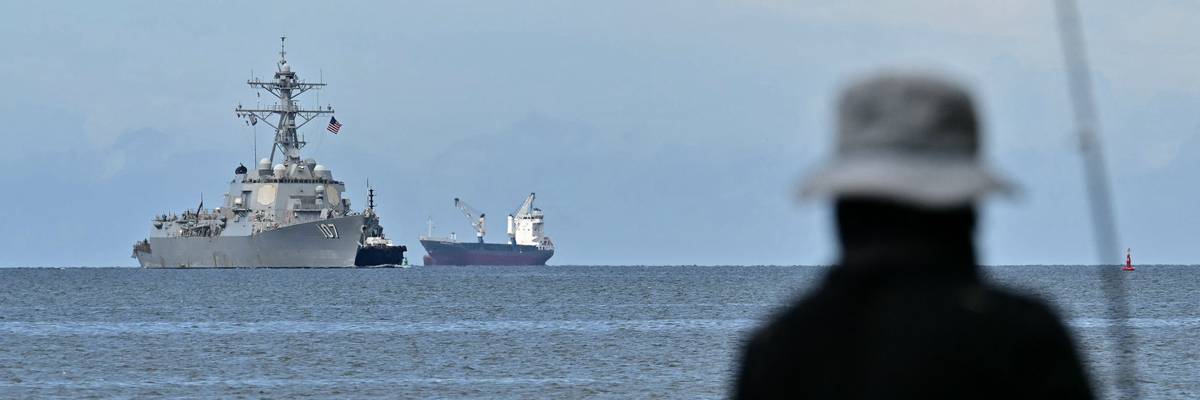
The USS Gravely warship is seen at a distance off the coast of Port of Spain on October 26, 2025, as fishermen look from the Trinidadian capital.
Members of the House and Senate must act to ensure the US does not go to war without the people's consent.
This is not a call for spectacle. It is not a public declaration. It is a sober appeal, written for those among you who still recognize the fragile architecture of our Republic and the danger that comes when its foundation is ignored. It is written for those who remember why Congress—not the Executive—is entrusted with the solemn power to send this nation to war.
Today, the United States Navy maintains a forward-deployed combat fleet off the coast of Venezuela. At least 12 warships now patrol waters once governed by diplomacy, now steered by executive will alone. And still, Congress has issued no declaration of war. No authorization of force. No public debate. No roll-call vote. The War Powers Resolution lies dormant—its reporting mandates ignored, its withdrawal timeline untriggered, its constraints publicly mocked.
This is no abstract concern. The precedent is Syria.
For over a decade, US troops have operated in Syria under the shifting pretexts of counterterrorism, chemical weapons enforcement, and later, oil field protection. All of it unfolded without a single Syria-specific authorization from Congress. The executive claimed continuity under the 2001 Authorization for the Use of Military Force, invoked Article II powers, and redefined “hostilities” so narrowly that armed conflict somehow ceased to qualify as war. Congress, through passivity or political caution, allowed this to become precedent. That precedent now extends to the Caribbean.
This is not just about Venezuela, or Syria, or this presidency. It is about whether Congress still holds the power the Constitution gave it—or whether that power has already been quietly surrendered.
The danger off Venezuela’s coast is not theoretical. Intelligence assessments confirm that anti-ship missile systems have already been deployed by foreign actors in response to US naval activity. We are, at this moment, one miscalculation away from open conflict. And we are there without legal cover, without strategic necessity, and, most concerningly, without your consent.
Some of you may be asking—why now? Why Venezuela? The official answer is narcotics. But the record speaks otherwise. The 2025 National Drug Threat Assessment does not list Venezuela as a major conduit for fentanyl or cocaine. Expert testimony, including from senior Drug Enforcement Administration officials, confirms that the overwhelming flow of narcotics originates elsewhere—Mexico, Colombia. The rationale, in short, does not withstand scrutiny.
So what then is the real purpose of this deployment?
The answer many of you already suspect—but may hesitate to say aloud—is political theater. A projection of military might as domestic performance. A maneuver meant not to protect the homeland, but to flex power unbound by law. This is war making as messaging, and that messaging is not to foreign governments—it is to political opponents here at home. The weaponization of the military for electoral ends is no longer a distant fear. It is present, palpable, and accelerating.
This moment bears a dangerous resemblance to the final phases of past democratic declines elsewhere—when legislatures abdicated their constitutional duties in the face of strongman rule, often for fear of public reprisal, partisan division, or political cost. But no cost compares to the one history will impose if this is allowed to proceed unchecked.
The truth is stark. The president has refused to honor a submission of a War Powers report as required by §4(a)(1). He has dismissed the 60-day withdrawal trigger under §5(b), where such a dismissal is deemed unconstitutional by the Justice Department’s Office of Legal Counsel since 1980. He has redefined “hostilities” to exclude the use of lethal force against targets unable to return fire—effectively nullifying the Resolution itself. He has removed independent legal advisers within the military who might challenge unconstitutional orders. He has promoted false pretexts for war. And he has called for the execution of members of Congress who questioned these actions.
These are not simply impeachable acts—they are an attempt to reorder the structure of government itself.
To those among you who still believe in deliberation, in institutional balance, in constitutional restraint—this is your moment. Congress must compel the executive to honor any submitted legal reports, as required. Failing that, it must move to demand withdrawal of US forces from Venezuelan waters absent a new authorization. This will require bipartisan courage, legislative resolve, and leadership that can transcend factionalism. But it can be done—quietly if necessary, firmly if unavoidable.
And if the president continues to deploy the military in open defiance of congressional authority, uses force under fabricated pretexts, retaliates against lawmakers for performing oversight, and purges legal constraints on command—then impeachment is not optional. It is the only lawful recourse left.
Neither path is easy. Both carry risk. But continued inaction carries more.
Consider the cascading consequences if this is not addressed now: a lethal escalation with foreign adversaries in the Caribbean, the collapse of US deterrence credibility, the internal fracturing of civil-military relations, and a precedent that may outlive us all—a presidency that may wage war without ever seeking the people’s consent.
Some of you may hope the moment will pass, that the ships will eventually turn around, that the next crisis will distract. But this time, the moment must not pass. The gravity is too great. The erosion has gone too far. This is not just about Venezuela, or Syria, or this presidency. It is about whether Congress still holds the power the Constitution gave it—or whether that power has already been quietly surrendered.
The decisive moment is before us. Once crossed, it cannot be undone. But there is still time.
Stand together. Speak through action. Enforce the law you swore to uphold. The Constitution does not protect itself. It relies on you.
Dear Common Dreams reader, It’s been nearly 30 years since I co-founded Common Dreams with my late wife, Lina Newhouser. We had the radical notion that journalism should serve the public good, not corporate profits. It was clear to us from the outset what it would take to build such a project. No paid advertisements. No corporate sponsors. No millionaire publisher telling us what to think or do. Many people said we wouldn't last a year, but we proved those doubters wrong. Together with a tremendous team of journalists and dedicated staff, we built an independent media outlet free from the constraints of profits and corporate control. Our mission has always been simple: To inform. To inspire. To ignite change for the common good. Building Common Dreams was not easy. Our survival was never guaranteed. When you take on the most powerful forces—Wall Street greed, fossil fuel industry destruction, Big Tech lobbyists, and uber-rich oligarchs who have spent billions upon billions rigging the economy and democracy in their favor—the only bulwark you have is supporters who believe in your work. But here’s the urgent message from me today. It's never been this bad out there. And it's never been this hard to keep us going. At the very moment Common Dreams is most needed, the threats we face are intensifying. We need your support now more than ever. We don't accept corporate advertising and never will. We don't have a paywall because we don't think people should be blocked from critical news based on their ability to pay. Everything we do is funded by the donations of readers like you. When everyone does the little they can afford, we are strong. But if that support retreats or dries up, so do we. Will you donate now to make sure Common Dreams not only survives but thrives? —Craig Brown, Co-founder |
This is not a call for spectacle. It is not a public declaration. It is a sober appeal, written for those among you who still recognize the fragile architecture of our Republic and the danger that comes when its foundation is ignored. It is written for those who remember why Congress—not the Executive—is entrusted with the solemn power to send this nation to war.
Today, the United States Navy maintains a forward-deployed combat fleet off the coast of Venezuela. At least 12 warships now patrol waters once governed by diplomacy, now steered by executive will alone. And still, Congress has issued no declaration of war. No authorization of force. No public debate. No roll-call vote. The War Powers Resolution lies dormant—its reporting mandates ignored, its withdrawal timeline untriggered, its constraints publicly mocked.
This is no abstract concern. The precedent is Syria.
For over a decade, US troops have operated in Syria under the shifting pretexts of counterterrorism, chemical weapons enforcement, and later, oil field protection. All of it unfolded without a single Syria-specific authorization from Congress. The executive claimed continuity under the 2001 Authorization for the Use of Military Force, invoked Article II powers, and redefined “hostilities” so narrowly that armed conflict somehow ceased to qualify as war. Congress, through passivity or political caution, allowed this to become precedent. That precedent now extends to the Caribbean.
This is not just about Venezuela, or Syria, or this presidency. It is about whether Congress still holds the power the Constitution gave it—or whether that power has already been quietly surrendered.
The danger off Venezuela’s coast is not theoretical. Intelligence assessments confirm that anti-ship missile systems have already been deployed by foreign actors in response to US naval activity. We are, at this moment, one miscalculation away from open conflict. And we are there without legal cover, without strategic necessity, and, most concerningly, without your consent.
Some of you may be asking—why now? Why Venezuela? The official answer is narcotics. But the record speaks otherwise. The 2025 National Drug Threat Assessment does not list Venezuela as a major conduit for fentanyl or cocaine. Expert testimony, including from senior Drug Enforcement Administration officials, confirms that the overwhelming flow of narcotics originates elsewhere—Mexico, Colombia. The rationale, in short, does not withstand scrutiny.
So what then is the real purpose of this deployment?
The answer many of you already suspect—but may hesitate to say aloud—is political theater. A projection of military might as domestic performance. A maneuver meant not to protect the homeland, but to flex power unbound by law. This is war making as messaging, and that messaging is not to foreign governments—it is to political opponents here at home. The weaponization of the military for electoral ends is no longer a distant fear. It is present, palpable, and accelerating.
This moment bears a dangerous resemblance to the final phases of past democratic declines elsewhere—when legislatures abdicated their constitutional duties in the face of strongman rule, often for fear of public reprisal, partisan division, or political cost. But no cost compares to the one history will impose if this is allowed to proceed unchecked.
The truth is stark. The president has refused to honor a submission of a War Powers report as required by §4(a)(1). He has dismissed the 60-day withdrawal trigger under §5(b), where such a dismissal is deemed unconstitutional by the Justice Department’s Office of Legal Counsel since 1980. He has redefined “hostilities” to exclude the use of lethal force against targets unable to return fire—effectively nullifying the Resolution itself. He has removed independent legal advisers within the military who might challenge unconstitutional orders. He has promoted false pretexts for war. And he has called for the execution of members of Congress who questioned these actions.
These are not simply impeachable acts—they are an attempt to reorder the structure of government itself.
To those among you who still believe in deliberation, in institutional balance, in constitutional restraint—this is your moment. Congress must compel the executive to honor any submitted legal reports, as required. Failing that, it must move to demand withdrawal of US forces from Venezuelan waters absent a new authorization. This will require bipartisan courage, legislative resolve, and leadership that can transcend factionalism. But it can be done—quietly if necessary, firmly if unavoidable.
And if the president continues to deploy the military in open defiance of congressional authority, uses force under fabricated pretexts, retaliates against lawmakers for performing oversight, and purges legal constraints on command—then impeachment is not optional. It is the only lawful recourse left.
Neither path is easy. Both carry risk. But continued inaction carries more.
Consider the cascading consequences if this is not addressed now: a lethal escalation with foreign adversaries in the Caribbean, the collapse of US deterrence credibility, the internal fracturing of civil-military relations, and a precedent that may outlive us all—a presidency that may wage war without ever seeking the people’s consent.
Some of you may hope the moment will pass, that the ships will eventually turn around, that the next crisis will distract. But this time, the moment must not pass. The gravity is too great. The erosion has gone too far. This is not just about Venezuela, or Syria, or this presidency. It is about whether Congress still holds the power the Constitution gave it—or whether that power has already been quietly surrendered.
The decisive moment is before us. Once crossed, it cannot be undone. But there is still time.
Stand together. Speak through action. Enforce the law you swore to uphold. The Constitution does not protect itself. It relies on you.
This is not a call for spectacle. It is not a public declaration. It is a sober appeal, written for those among you who still recognize the fragile architecture of our Republic and the danger that comes when its foundation is ignored. It is written for those who remember why Congress—not the Executive—is entrusted with the solemn power to send this nation to war.
Today, the United States Navy maintains a forward-deployed combat fleet off the coast of Venezuela. At least 12 warships now patrol waters once governed by diplomacy, now steered by executive will alone. And still, Congress has issued no declaration of war. No authorization of force. No public debate. No roll-call vote. The War Powers Resolution lies dormant—its reporting mandates ignored, its withdrawal timeline untriggered, its constraints publicly mocked.
This is no abstract concern. The precedent is Syria.
For over a decade, US troops have operated in Syria under the shifting pretexts of counterterrorism, chemical weapons enforcement, and later, oil field protection. All of it unfolded without a single Syria-specific authorization from Congress. The executive claimed continuity under the 2001 Authorization for the Use of Military Force, invoked Article II powers, and redefined “hostilities” so narrowly that armed conflict somehow ceased to qualify as war. Congress, through passivity or political caution, allowed this to become precedent. That precedent now extends to the Caribbean.
This is not just about Venezuela, or Syria, or this presidency. It is about whether Congress still holds the power the Constitution gave it—or whether that power has already been quietly surrendered.
The danger off Venezuela’s coast is not theoretical. Intelligence assessments confirm that anti-ship missile systems have already been deployed by foreign actors in response to US naval activity. We are, at this moment, one miscalculation away from open conflict. And we are there without legal cover, without strategic necessity, and, most concerningly, without your consent.
Some of you may be asking—why now? Why Venezuela? The official answer is narcotics. But the record speaks otherwise. The 2025 National Drug Threat Assessment does not list Venezuela as a major conduit for fentanyl or cocaine. Expert testimony, including from senior Drug Enforcement Administration officials, confirms that the overwhelming flow of narcotics originates elsewhere—Mexico, Colombia. The rationale, in short, does not withstand scrutiny.
So what then is the real purpose of this deployment?
The answer many of you already suspect—but may hesitate to say aloud—is political theater. A projection of military might as domestic performance. A maneuver meant not to protect the homeland, but to flex power unbound by law. This is war making as messaging, and that messaging is not to foreign governments—it is to political opponents here at home. The weaponization of the military for electoral ends is no longer a distant fear. It is present, palpable, and accelerating.
This moment bears a dangerous resemblance to the final phases of past democratic declines elsewhere—when legislatures abdicated their constitutional duties in the face of strongman rule, often for fear of public reprisal, partisan division, or political cost. But no cost compares to the one history will impose if this is allowed to proceed unchecked.
The truth is stark. The president has refused to honor a submission of a War Powers report as required by §4(a)(1). He has dismissed the 60-day withdrawal trigger under §5(b), where such a dismissal is deemed unconstitutional by the Justice Department’s Office of Legal Counsel since 1980. He has redefined “hostilities” to exclude the use of lethal force against targets unable to return fire—effectively nullifying the Resolution itself. He has removed independent legal advisers within the military who might challenge unconstitutional orders. He has promoted false pretexts for war. And he has called for the execution of members of Congress who questioned these actions.
These are not simply impeachable acts—they are an attempt to reorder the structure of government itself.
To those among you who still believe in deliberation, in institutional balance, in constitutional restraint—this is your moment. Congress must compel the executive to honor any submitted legal reports, as required. Failing that, it must move to demand withdrawal of US forces from Venezuelan waters absent a new authorization. This will require bipartisan courage, legislative resolve, and leadership that can transcend factionalism. But it can be done—quietly if necessary, firmly if unavoidable.
And if the president continues to deploy the military in open defiance of congressional authority, uses force under fabricated pretexts, retaliates against lawmakers for performing oversight, and purges legal constraints on command—then impeachment is not optional. It is the only lawful recourse left.
Neither path is easy. Both carry risk. But continued inaction carries more.
Consider the cascading consequences if this is not addressed now: a lethal escalation with foreign adversaries in the Caribbean, the collapse of US deterrence credibility, the internal fracturing of civil-military relations, and a precedent that may outlive us all—a presidency that may wage war without ever seeking the people’s consent.
Some of you may hope the moment will pass, that the ships will eventually turn around, that the next crisis will distract. But this time, the moment must not pass. The gravity is too great. The erosion has gone too far. This is not just about Venezuela, or Syria, or this presidency. It is about whether Congress still holds the power the Constitution gave it—or whether that power has already been quietly surrendered.
The decisive moment is before us. Once crossed, it cannot be undone. But there is still time.
Stand together. Speak through action. Enforce the law you swore to uphold. The Constitution does not protect itself. It relies on you.