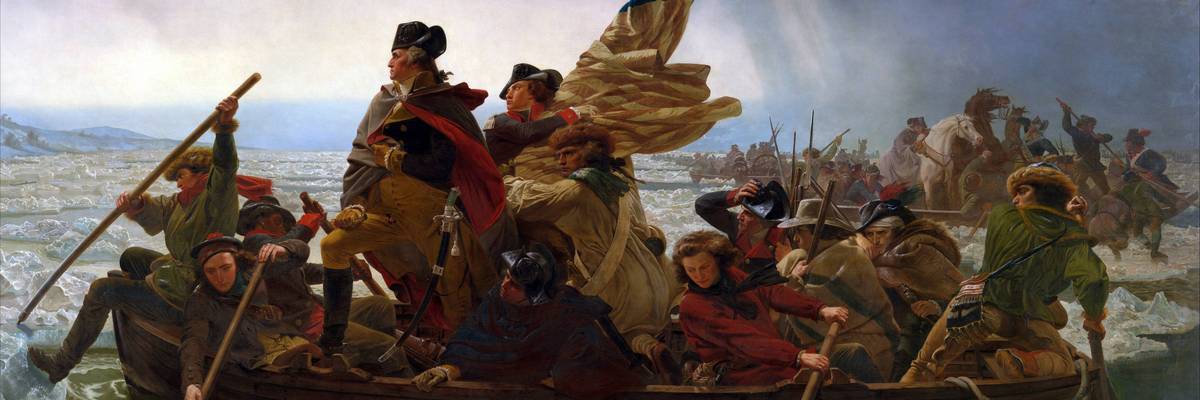
The famous painting "Washington Crossing the Delaware" is shown.
US Revolutionaries Had 1 Huge Advantage: They Didn’t Have to Fight Off the US
Time and again revolutions, independence movements, and reformist democratic governments have been so harshly attacked and manhandled by the US that the likelihood of the regime emerging from it being what was originally desired was rendered almost nil.
More than any revolutionaries in history, America's revolutionaries got what they wanted. The government the United States ended up creating and sustaining was, adjusting for 250 years of changes, very similar to the government that the American revolutionaries had sought to create.
Why? What was it that led to Americans getting the government they had fought for, when so many other revolutionaries and independence movements, both historical and more recent, did not?
The common answer is to attribute this success to the wisdom of America’s Founding Fathers, and there’s certainly some truth to that. But for the past century, the biggest reason revolutionaries in foreign countries didn’t get what they fought for, as the Americans did, has been… the Americans.
Time and again revolutions, independence movements, and reformist democratic governments have been so harshly attacked and manhandled by the US that the likelihood of the regime emerging from it being what was originally desired was rendered almost nil.
The phenomenon of a revolution, even a very democratic-spirited one, ending in dictatorship after harsh foreign intervention predates both communism and American interventionism.
In China, Nicaragua, Cuba, and others, the US armed opponents of the new revolutionary regimes, imposed economic embargoes, and more in attempts to strangle them.
After General MacArthur had provoked China into the Korean War, China lost over 200,000 men fighting the US. Nicaragua faced US-created and armed terrorists and saboteurs—the contras—who operated from safe havens in nearby Honduras. Cuba’s revolutionary government faced a US-backed invasion, numerous terrorist attacks, assassination attempts, as well as widespread economic damage from America’s Operation Mongoose sabotage campaign.
In Vietnam and Korea, the US waged wars against communist-led independence movements. Devastating bombing killed millions of civilians and laid waste to both countries. During the Korean War, US Air Force General Curtis LeMay explained, “[W]e killed off…20% of the population… We… burned down every town in North Korea.”
After the Bolshevik Revolution in November 1917, the US joined Britain, France, and nearly a dozen others in invading the newly-formed Soviet Union and aiding the White Armies against the Reds (Bolsheviks) during the Russian Civil War. This was what influential British leader Winston Churchill, then the British secretary of state for war and air, called "strangl[ing] Bolshevism in its cradle."
By the time the Reds had won, Russia had been at war for eight years, and the country the communists inherited was so poor, wrecked, and starved that cannibalism was widespread. According to United Nations data, in 1920 Russian life expectancy was a mere 20.5 years, as compared with 55.4 years in the US.
In other cases, the US targeted socialists or reformers who had gained power and sought egalitarian change through democratic systems. In Chile, Guatemala, and Iran, the US instigated and backed coups which overthrew democratically elected leaders—Salvador Allende in Chile, Jacobo Arbenz in Guatemala, Mohammad Mosaddegh in Iran—and installed murderous dictatorships.
In Indonesia, the US conspired to overthrow President Sukarno, who had led Indonesia to independence, and eliminate his communist supporters. In The Jakarta Method…the Mass Murder Program that Shaped Our World, journalist Vincent Bevins explains:
In 1965, the Indonesian military killed as many as 1 million of their own countrymen, destroying the third-largest communist party in the world and taking with it pretty much anyone seen as having left-wing tendencies (as well as hundreds of thousands who had nothing to do with anything).
The US Embassy prepared lists of the names of thousands of communists and suspected communists, and, Bevins says, “handed them over to the army, so that these people could be murdered and ‘checked off’ the list.”
The phenomenon of a revolution, even a very democratic-spirited one, ending in dictatorship after harsh foreign intervention predates both communism and American interventionism. For example, after the French Revolution in 1789, armies from Great Britain, Austria, Prussia, Russia, and others, aided by a revolt in Western France led by the Catholic Church, fought to destroy the revolutionary government and reinstitute the monarchy.
With the support of and extreme sacrifices from the French people, the Revolutionaries managed to beat all of them back, but were unable to return to the democratic system the Revolution had originally established. The Revolution ended with Napoleon Bonaparte’s 1799 coup, establishing a dictatorship.
America’s Founding Fathers were brilliant, but in establishing a new government they had a huge advantage that few revolutionaries of the past century have had—they didn’t have to fight America’s attempts to destroy it.
We are at a crossroads
This country and this world are at a monumental crossroads. In a few short weeks, US voters will have an opportunity to beat back the forces of fascism and confront the billionaires who are rigging the economy, our media system, and our democracy, making it increasingly impossible for ordinary people to get by. We’re not just talking about the election. We’re talking about what must be done once these fascist elements are vanquished from power. We need a bolder set of solutions than what either major party has so far been willing to offer and a working-class movement ready to fight like hell for it. Trump didn't emerge from nowhere. The conditions that fueled MAGA authoritarianism were created by decades of radical neoliberal economic policies and a corrupt political system dominated by corporate interests. They slashed taxes on the super-rich, promising that the benefits would trickle down. They said giveaways to the corporate titans would make life more affordable for the rest of us. It was all bullshit. And when a bitter, betrayed populace searches for someone to blame, right-wing demagogues have little trouble finding scapegoats. People know when they're being lied to, but you won't hear any of this from the corporate media. Only independent journalism—powered and funded by people who believe in building a better world—can deliver truly trustworthy daily news. Our Fall Campaign is underway, and we need your help. To power our newsroom through the rest of the year, we need to raise $125,000 by midnight on October 31. So if you share our vision, please contribute whatever you can to sustain our work. |
More than any revolutionaries in history, America's revolutionaries got what they wanted. The government the United States ended up creating and sustaining was, adjusting for 250 years of changes, very similar to the government that the American revolutionaries had sought to create.
Why? What was it that led to Americans getting the government they had fought for, when so many other revolutionaries and independence movements, both historical and more recent, did not?
The common answer is to attribute this success to the wisdom of America’s Founding Fathers, and there’s certainly some truth to that. But for the past century, the biggest reason revolutionaries in foreign countries didn’t get what they fought for, as the Americans did, has been… the Americans.
Time and again revolutions, independence movements, and reformist democratic governments have been so harshly attacked and manhandled by the US that the likelihood of the regime emerging from it being what was originally desired was rendered almost nil.
The phenomenon of a revolution, even a very democratic-spirited one, ending in dictatorship after harsh foreign intervention predates both communism and American interventionism.
In China, Nicaragua, Cuba, and others, the US armed opponents of the new revolutionary regimes, imposed economic embargoes, and more in attempts to strangle them.
After General MacArthur had provoked China into the Korean War, China lost over 200,000 men fighting the US. Nicaragua faced US-created and armed terrorists and saboteurs—the contras—who operated from safe havens in nearby Honduras. Cuba’s revolutionary government faced a US-backed invasion, numerous terrorist attacks, assassination attempts, as well as widespread economic damage from America’s Operation Mongoose sabotage campaign.
In Vietnam and Korea, the US waged wars against communist-led independence movements. Devastating bombing killed millions of civilians and laid waste to both countries. During the Korean War, US Air Force General Curtis LeMay explained, “[W]e killed off…20% of the population… We… burned down every town in North Korea.”
After the Bolshevik Revolution in November 1917, the US joined Britain, France, and nearly a dozen others in invading the newly-formed Soviet Union and aiding the White Armies against the Reds (Bolsheviks) during the Russian Civil War. This was what influential British leader Winston Churchill, then the British secretary of state for war and air, called "strangl[ing] Bolshevism in its cradle."
By the time the Reds had won, Russia had been at war for eight years, and the country the communists inherited was so poor, wrecked, and starved that cannibalism was widespread. According to United Nations data, in 1920 Russian life expectancy was a mere 20.5 years, as compared with 55.4 years in the US.
In other cases, the US targeted socialists or reformers who had gained power and sought egalitarian change through democratic systems. In Chile, Guatemala, and Iran, the US instigated and backed coups which overthrew democratically elected leaders—Salvador Allende in Chile, Jacobo Arbenz in Guatemala, Mohammad Mosaddegh in Iran—and installed murderous dictatorships.
In Indonesia, the US conspired to overthrow President Sukarno, who had led Indonesia to independence, and eliminate his communist supporters. In The Jakarta Method…the Mass Murder Program that Shaped Our World, journalist Vincent Bevins explains:
In 1965, the Indonesian military killed as many as 1 million of their own countrymen, destroying the third-largest communist party in the world and taking with it pretty much anyone seen as having left-wing tendencies (as well as hundreds of thousands who had nothing to do with anything).
The US Embassy prepared lists of the names of thousands of communists and suspected communists, and, Bevins says, “handed them over to the army, so that these people could be murdered and ‘checked off’ the list.”
The phenomenon of a revolution, even a very democratic-spirited one, ending in dictatorship after harsh foreign intervention predates both communism and American interventionism. For example, after the French Revolution in 1789, armies from Great Britain, Austria, Prussia, Russia, and others, aided by a revolt in Western France led by the Catholic Church, fought to destroy the revolutionary government and reinstitute the monarchy.
With the support of and extreme sacrifices from the French people, the Revolutionaries managed to beat all of them back, but were unable to return to the democratic system the Revolution had originally established. The Revolution ended with Napoleon Bonaparte’s 1799 coup, establishing a dictatorship.
America’s Founding Fathers were brilliant, but in establishing a new government they had a huge advantage that few revolutionaries of the past century have had—they didn’t have to fight America’s attempts to destroy it.
More than any revolutionaries in history, America's revolutionaries got what they wanted. The government the United States ended up creating and sustaining was, adjusting for 250 years of changes, very similar to the government that the American revolutionaries had sought to create.
Why? What was it that led to Americans getting the government they had fought for, when so many other revolutionaries and independence movements, both historical and more recent, did not?
The common answer is to attribute this success to the wisdom of America’s Founding Fathers, and there’s certainly some truth to that. But for the past century, the biggest reason revolutionaries in foreign countries didn’t get what they fought for, as the Americans did, has been… the Americans.
Time and again revolutions, independence movements, and reformist democratic governments have been so harshly attacked and manhandled by the US that the likelihood of the regime emerging from it being what was originally desired was rendered almost nil.
The phenomenon of a revolution, even a very democratic-spirited one, ending in dictatorship after harsh foreign intervention predates both communism and American interventionism.
In China, Nicaragua, Cuba, and others, the US armed opponents of the new revolutionary regimes, imposed economic embargoes, and more in attempts to strangle them.
After General MacArthur had provoked China into the Korean War, China lost over 200,000 men fighting the US. Nicaragua faced US-created and armed terrorists and saboteurs—the contras—who operated from safe havens in nearby Honduras. Cuba’s revolutionary government faced a US-backed invasion, numerous terrorist attacks, assassination attempts, as well as widespread economic damage from America’s Operation Mongoose sabotage campaign.
In Vietnam and Korea, the US waged wars against communist-led independence movements. Devastating bombing killed millions of civilians and laid waste to both countries. During the Korean War, US Air Force General Curtis LeMay explained, “[W]e killed off…20% of the population… We… burned down every town in North Korea.”
After the Bolshevik Revolution in November 1917, the US joined Britain, France, and nearly a dozen others in invading the newly-formed Soviet Union and aiding the White Armies against the Reds (Bolsheviks) during the Russian Civil War. This was what influential British leader Winston Churchill, then the British secretary of state for war and air, called "strangl[ing] Bolshevism in its cradle."
By the time the Reds had won, Russia had been at war for eight years, and the country the communists inherited was so poor, wrecked, and starved that cannibalism was widespread. According to United Nations data, in 1920 Russian life expectancy was a mere 20.5 years, as compared with 55.4 years in the US.
In other cases, the US targeted socialists or reformers who had gained power and sought egalitarian change through democratic systems. In Chile, Guatemala, and Iran, the US instigated and backed coups which overthrew democratically elected leaders—Salvador Allende in Chile, Jacobo Arbenz in Guatemala, Mohammad Mosaddegh in Iran—and installed murderous dictatorships.
In Indonesia, the US conspired to overthrow President Sukarno, who had led Indonesia to independence, and eliminate his communist supporters. In The Jakarta Method…the Mass Murder Program that Shaped Our World, journalist Vincent Bevins explains:
In 1965, the Indonesian military killed as many as 1 million of their own countrymen, destroying the third-largest communist party in the world and taking with it pretty much anyone seen as having left-wing tendencies (as well as hundreds of thousands who had nothing to do with anything).
The US Embassy prepared lists of the names of thousands of communists and suspected communists, and, Bevins says, “handed them over to the army, so that these people could be murdered and ‘checked off’ the list.”
The phenomenon of a revolution, even a very democratic-spirited one, ending in dictatorship after harsh foreign intervention predates both communism and American interventionism. For example, after the French Revolution in 1789, armies from Great Britain, Austria, Prussia, Russia, and others, aided by a revolt in Western France led by the Catholic Church, fought to destroy the revolutionary government and reinstitute the monarchy.
With the support of and extreme sacrifices from the French people, the Revolutionaries managed to beat all of them back, but were unable to return to the democratic system the Revolution had originally established. The Revolution ended with Napoleon Bonaparte’s 1799 coup, establishing a dictatorship.
America’s Founding Fathers were brilliant, but in establishing a new government they had a huge advantage that few revolutionaries of the past century have had—they didn’t have to fight America’s attempts to destroy it.