5
#000000
#FFFFFF
To donate by check, phone, or other method, see our More Ways to Give page.
“Ms. Rachel, can ICE take me?”
“What about my dad? Can they take my dad away?”
“I feel so angry about how ICE is grabbing people out of my neighborhood.”
“I feel traumatized ever since ICE stole my sister.”
“I’m afraid to walk to school. I’m afraid to leave my house.”
“I want my mom back.”
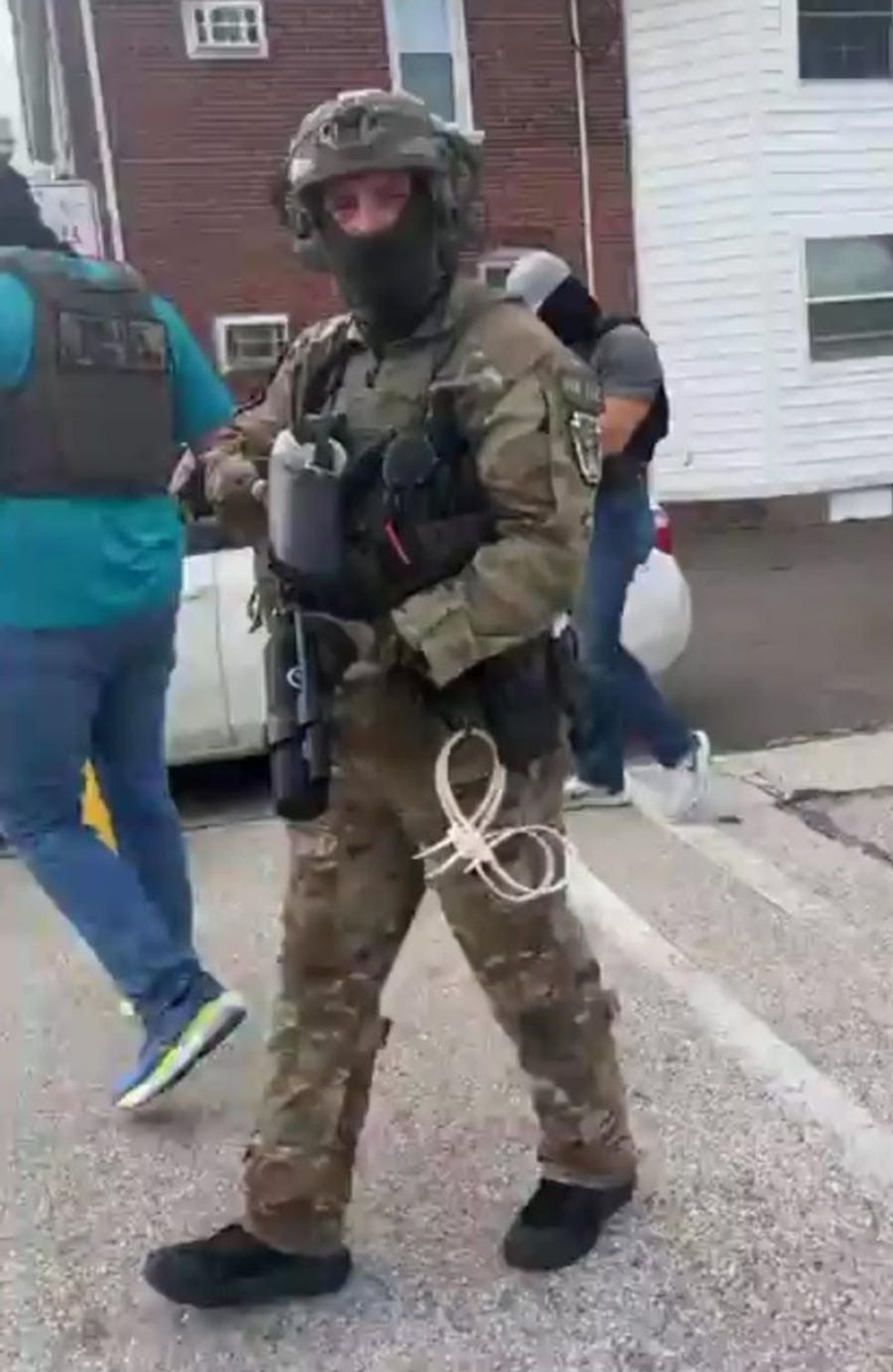 A military-style ICE raid occurs at a grocery story in West Norriton, Pennsylvania on July 16, 2025. How would you feel if you found this waiting for you on your next trip to buy groceries?
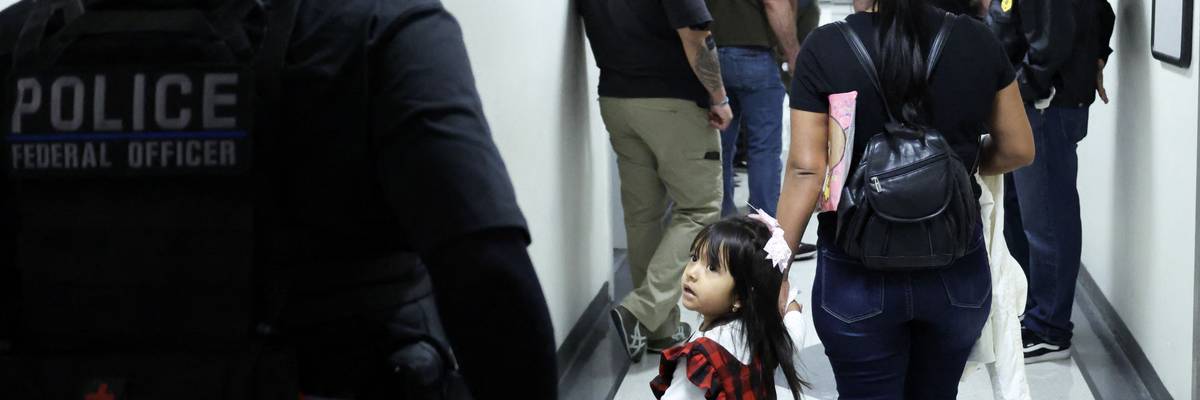
These are real questions and comments I’ve heard from the kids I work with at Project Libertad in recent days, as Immigration and Customs Enforcement (ICE) terrorizes their communities daily. While newcomers have always faced higher rates of anxiety, depression, Post-Traumatic Stress Disorder (PTSD), and other mental health challenges than their US-born peers, the divide is becoming more apparent each day. These conversations with my kids represent a stark increase in fear and anxiety among immigrant children—and it’s not just an anecdotal shift. The data are clear: The Trump administration’s increasingly hostile immigration policies are irreversibly harming children.
Pediatricians Susan Kressly and Michelle Barnes warn of the lifelong impact these policies have on children’s development and health into adulthood:
Witnessing harm to others and living in constant fear is traumatic to all children in the community. These stressors disrupt brain development and have long-term negative effects on the health and well-being of impacted children. Ultimately, the cumulative effects make these communities less healthy.
Similarly, nonprofit newsroom CalMatters documents strained mental health among schoolchildren across California after a summer of widespread, aggressive ICE raids and warns of the long-term harm to children:
Experts say these raids and their aftermath may also have long-term consequences. Constant vigilance and worry puts children at greater risk of developing chronic anxiety and depression. Those who are separated from a parent face a host of social and emotional challenges.
A 2025 study in the Children and Youth Services Review showed that childhood exposure to “severe immigration enforcement”—which includes not just deportation, but also things like fear or arrest—is “significantly associated” with having anxiety as a young adult. The study’s authors call for “reforming immigration policies that unnecessarily harm members of families… and encourages social workers and allied professionals to recognize exposure to enforcement as a traumatic experience...”
A new report in Psychiatry Online highlights the long-term, generational trauma caused by immigration enforcement and calls for the mental health community to not only improve treatment for immigrant youth and families, but also to join advocacy efforts in support of their immigrant patients.
Another recent study out of Florida from the from the National Bureau of Economic Research shows a 22% increase in student absences since January, a direct result of the Trump administration’s aggressive immigration enforcement there. The study blames fears of deportation and family separation for the decrease in school attendance. That same study showed a decrease in students’ test scores linked to immigration enforcement.
The trauma of mass deportation also impacts US-born children of immigrant parents, who live in constant fear of being separated from their parents. For many, that nightmare has now become a reality. CNN identified over 100 US citizen children who were left behind after a parent was deported, ranging in age from babies to teens.
The research is clear; there is no debate to be had: US immigration policy is hurting children. All that’s left to do is decide what type of society we want to be. Are we a society that cares about the well-being of children? It’s a yes or no question. There’s no “but” or “if” or “only certain children” or “they should’ve come here legally” (don’t even get me started—you can read more on that faulty argument here). We either care about human rights—or we don’t.
James Baldwin wrote in The Nation in a 1980 essay:
The children are always ours, every single one of them, all over the globe; and I am beginning to suspect that whoever is incapable of recognizing this may be incapable of morality.
His words ring truer today than ever before. If you care about children; if you say you’re “pro-life;” if you consider yourself a good or moral person: The children are ours. They are yours. And history will hold you responsible for how you did (or did not) protect them.
“Ms. Rachel, can ICE take me?”
“What about my dad? Can they take my dad away?”
“I feel so angry about how ICE is grabbing people out of my neighborhood.”
“I feel traumatized ever since ICE stole my sister.”
“I’m afraid to walk to school. I’m afraid to leave my house.”
“I want my mom back.”
A military-style ICE raid occurs at a grocery story in West Norriton, Pennsylvania on July 16, 2025. How would you feel if you found this waiting for you on your next trip to buy groceries?
These are real questions and comments I’ve heard from the kids I work with at Project Libertad in recent days, as Immigration and Customs Enforcement (ICE) terrorizes their communities daily. While newcomers have always faced higher rates of anxiety, depression, Post-Traumatic Stress Disorder (PTSD), and other mental health challenges than their US-born peers, the divide is becoming more apparent each day. These conversations with my kids represent a stark increase in fear and anxiety among immigrant children—and it’s not just an anecdotal shift. The data are clear: The Trump administration’s increasingly hostile immigration policies are irreversibly harming children.
Pediatricians Susan Kressly and Michelle Barnes warn of the lifelong impact these policies have on children’s development and health into adulthood:
Witnessing harm to others and living in constant fear is traumatic to all children in the community. These stressors disrupt brain development and have long-term negative effects on the health and well-being of impacted children. Ultimately, the cumulative effects make these communities less healthy.
Similarly, nonprofit newsroom CalMatters documents strained mental health among schoolchildren across California after a summer of widespread, aggressive ICE raids and warns of the long-term harm to children:
Experts say these raids and their aftermath may also have long-term consequences. Constant vigilance and worry puts children at greater risk of developing chronic anxiety and depression. Those who are separated from a parent face a host of social and emotional challenges.
A 2025 study in the Children and Youth Services Review showed that childhood exposure to “severe immigration enforcement”—which includes not just deportation, but also things like fear or arrest—is “significantly associated” with having anxiety as a young adult. The study’s authors call for “reforming immigration policies that unnecessarily harm members of families… and encourages social workers and allied professionals to recognize exposure to enforcement as a traumatic experience...”
A new report in Psychiatry Online highlights the long-term, generational trauma caused by immigration enforcement and calls for the mental health community to not only improve treatment for immigrant youth and families, but also to join advocacy efforts in support of their immigrant patients.
Another recent study out of Florida from the from the National Bureau of Economic Research shows a 22% increase in student absences since January, a direct result of the Trump administration’s aggressive immigration enforcement there. The study blames fears of deportation and family separation for the decrease in school attendance. That same study showed a decrease in students’ test scores linked to immigration enforcement.
The trauma of mass deportation also impacts US-born children of immigrant parents, who live in constant fear of being separated from their parents. For many, that nightmare has now become a reality. CNN identified over 100 US citizen children who were left behind after a parent was deported, ranging in age from babies to teens.
The research is clear; there is no debate to be had: US immigration policy is hurting children. All that’s left to do is decide what type of society we want to be. Are we a society that cares about the well-being of children? It’s a yes or no question. There’s no “but” or “if” or “only certain children” or “they should’ve come here legally” (don’t even get me started—you can read more on that faulty argument here). We either care about human rights—or we don’t.
James Baldwin wrote in The Nation in a 1980 essay:
The children are always ours, every single one of them, all over the globe; and I am beginning to suspect that whoever is incapable of recognizing this may be incapable of morality.
His words ring truer today than ever before. If you care about children; if you say you’re “pro-life;” if you consider yourself a good or moral person: The children are ours. They are yours. And history will hold you responsible for how you did (or did not) protect them.
“Ms. Rachel, can ICE take me?”
“What about my dad? Can they take my dad away?”
“I feel so angry about how ICE is grabbing people out of my neighborhood.”
“I feel traumatized ever since ICE stole my sister.”
“I’m afraid to walk to school. I’m afraid to leave my house.”
“I want my mom back.”
A military-style ICE raid occurs at a grocery story in West Norriton, Pennsylvania on July 16, 2025. How would you feel if you found this waiting for you on your next trip to buy groceries?
These are real questions and comments I’ve heard from the kids I work with at Project Libertad in recent days, as Immigration and Customs Enforcement (ICE) terrorizes their communities daily. While newcomers have always faced higher rates of anxiety, depression, Post-Traumatic Stress Disorder (PTSD), and other mental health challenges than their US-born peers, the divide is becoming more apparent each day. These conversations with my kids represent a stark increase in fear and anxiety among immigrant children—and it’s not just an anecdotal shift. The data are clear: The Trump administration’s increasingly hostile immigration policies are irreversibly harming children.
Pediatricians Susan Kressly and Michelle Barnes warn of the lifelong impact these policies have on children’s development and health into adulthood:
Witnessing harm to others and living in constant fear is traumatic to all children in the community. These stressors disrupt brain development and have long-term negative effects on the health and well-being of impacted children. Ultimately, the cumulative effects make these communities less healthy.
Similarly, nonprofit newsroom CalMatters documents strained mental health among schoolchildren across California after a summer of widespread, aggressive ICE raids and warns of the long-term harm to children:
Experts say these raids and their aftermath may also have long-term consequences. Constant vigilance and worry puts children at greater risk of developing chronic anxiety and depression. Those who are separated from a parent face a host of social and emotional challenges.
A 2025 study in the Children and Youth Services Review showed that childhood exposure to “severe immigration enforcement”—which includes not just deportation, but also things like fear or arrest—is “significantly associated” with having anxiety as a young adult. The study’s authors call for “reforming immigration policies that unnecessarily harm members of families… and encourages social workers and allied professionals to recognize exposure to enforcement as a traumatic experience...”
A new report in Psychiatry Online highlights the long-term, generational trauma caused by immigration enforcement and calls for the mental health community to not only improve treatment for immigrant youth and families, but also to join advocacy efforts in support of their immigrant patients.
Another recent study out of Florida from the from the National Bureau of Economic Research shows a 22% increase in student absences since January, a direct result of the Trump administration’s aggressive immigration enforcement there. The study blames fears of deportation and family separation for the decrease in school attendance. That same study showed a decrease in students’ test scores linked to immigration enforcement.
The trauma of mass deportation also impacts US-born children of immigrant parents, who live in constant fear of being separated from their parents. For many, that nightmare has now become a reality. CNN identified over 100 US citizen children who were left behind after a parent was deported, ranging in age from babies to teens.
The research is clear; there is no debate to be had: US immigration policy is hurting children. All that’s left to do is decide what type of society we want to be. Are we a society that cares about the well-being of children? It’s a yes or no question. There’s no “but” or “if” or “only certain children” or “they should’ve come here legally” (don’t even get me started—you can read more on that faulty argument here). We either care about human rights—or we don’t.
James Baldwin wrote in The Nation in a 1980 essay:
The children are always ours, every single one of them, all over the globe; and I am beginning to suspect that whoever is incapable of recognizing this may be incapable of morality.
His words ring truer today than ever before. If you care about children; if you say you’re “pro-life;” if you consider yourself a good or moral person: The children are ours. They are yours. And history will hold you responsible for how you did (or did not) protect them.