SUBSCRIBE TO OUR FREE NEWSLETTER
Daily news & progressive opinion—funded by the people, not the corporations—delivered straight to your inbox.
5
#000000
#FFFFFF
To donate by check, phone, or other method, see our More Ways to Give page.
Daily news & progressive opinion—funded by the people, not the corporations—delivered straight to your inbox.
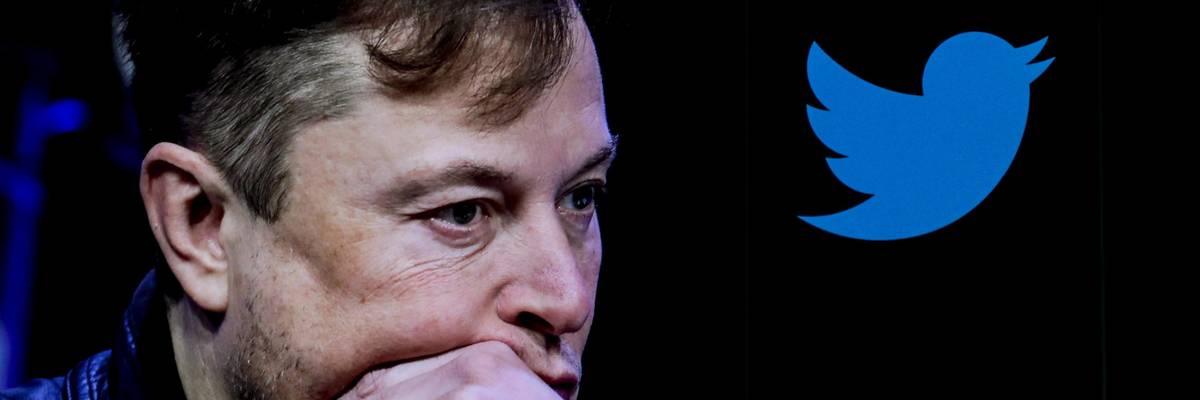
In this photo illustration, the image of Elon Musk is displayed on a computer screen and the logo of twitter on a mobile phone in Ankara, Turkiye, on October 06, 2022.
Consistent and enforceable content-moderation is the key to social-media success. It's also good for, you know... democracy.
Numbers don’t lie. And in this case they tell a tale of Twitter’s continued demise under the misguided reign of Elon Musk. They also suggest a clear path out of this mess, one Musk is highly unlikely to take.
According to data that researcher Travis Brown provided to Free Press, nearly a third of the tens of thousands of previously suspended accounts restored under Musk’s “general amnesty” have opted to subscribe to the Twitter Blue “verification” service.
This is noteworthy as the rate of blue-check subscribers among Twitter’s general population of regular users is far lower—well below a half of 1%—according to research from Brown, who Twitter just banned.
So what can we glean from this?
First, it shows that Absolutist Elon is continuing to silence his critics. Brown has been doing legitimate research that provides useful data for academics and journalists about Twitter’s performance—something Musk has repeatedly tried to conceal.
It also suggests that Musk is cozying up with people who were previously suspended under Twitter’s former content-moderation standards. While these pre-Musk standards were far from perfect, the platform at least had in place a team that dedicated itself to trust and safety issues.
The “amnestied” accounts include those belonging to neo-Nazis, anti-vaxxers, MAGA election deniers, Putin propagandists, trans- and homophobes, and misogynists—a relatively high percentage of them is now buying into Musk's blue-check regime.
Their high subscriber rate has turned Musk in their favor, if his bigotry- and disinformation-laced tweets and replies are any indication. Musk seems to believe that Twitter’s path to success involves stoking the fires of the “hellscape”—and reaping the subscription rewards of its toxic protagonists.
Good content moderation is good business.
Throughout his tenure as “Chief Twit,” Musk has had several opportunities to right Twitter’s ship, including restoring the platform's content-moderation and election-integrity capacity. But he’s consistently chosen to do the opposite—catering to fellow right-wing reactionaries while alienating the advertisers that once accounted for about 90% of Twitter’s revenues.
This approach has been disastrous for Twitter as a company. As we at Free Press have said repeatedly: Good content moderation is good business.
And the data bear this out. Since Musk announced his bid to take over the platform more than a year ago, Twitter revenues have tanked—down about 60% over the year, according to reporting by The New York Times’ Ryan Mac and Tiffany Hsu.
This downturn has coincided with Twitter’s steady retreat from moderation, exposing Musk’s phony free-speech rhetoric as a cover for “perpetuating racism resulting in direct threats to communities [of color],” in the words of one McDonald’s marketing exec.
Other platforms have sensed Musk's vulnerability and rushed into the online space to provide alternatives. (See: Bluesky, Mastodon, Spill, and Threads.)
Will these alternatives repeat Musk’s mistakes or will they learn a lesson from his many failures?
Some have been more successful than others at attracting a critical mass of users. Meta boss Mark Zuckerberg recently announced that Threads has surpassed 100 million new users since it launched last week.
And Twitter seems to be feeling its self-inflicted pain more and more. Recent press reports have the platform's traffic in decline since July 5. Similarweb reports that Twitter’s web traffic was down 5% following the Threads launch, and down 11% compared to the same period last year. Cloudflare also reported that Twitter's audience size was in steady decline since the beginning of the year.
Despite the new challengers, the question remains: Will these alternatives repeat Musk’s mistakes or will they learn a lesson from his many failures?
That lesson, again, is clear: Consistent and enforceable content-moderation is the key to social-media success. It's also good for democracy. Just look at the numbers.
Dear Common Dreams reader, It’s been nearly 30 years since I co-founded Common Dreams with my late wife, Lina Newhouser. We had the radical notion that journalism should serve the public good, not corporate profits. It was clear to us from the outset what it would take to build such a project. No paid advertisements. No corporate sponsors. No millionaire publisher telling us what to think or do. Many people said we wouldn't last a year, but we proved those doubters wrong. Together with a tremendous team of journalists and dedicated staff, we built an independent media outlet free from the constraints of profits and corporate control. Our mission has always been simple: To inform. To inspire. To ignite change for the common good. Building Common Dreams was not easy. Our survival was never guaranteed. When you take on the most powerful forces—Wall Street greed, fossil fuel industry destruction, Big Tech lobbyists, and uber-rich oligarchs who have spent billions upon billions rigging the economy and democracy in their favor—the only bulwark you have is supporters who believe in your work. But here’s the urgent message from me today. It's never been this bad out there. And it's never been this hard to keep us going. At the very moment Common Dreams is most needed, the threats we face are intensifying. We need your support now more than ever. We don't accept corporate advertising and never will. We don't have a paywall because we don't think people should be blocked from critical news based on their ability to pay. Everything we do is funded by the donations of readers like you. When everyone does the little they can afford, we are strong. But if that support retreats or dries up, so do we. Will you donate now to make sure Common Dreams not only survives but thrives? —Craig Brown, Co-founder |
Numbers don’t lie. And in this case they tell a tale of Twitter’s continued demise under the misguided reign of Elon Musk. They also suggest a clear path out of this mess, one Musk is highly unlikely to take.
According to data that researcher Travis Brown provided to Free Press, nearly a third of the tens of thousands of previously suspended accounts restored under Musk’s “general amnesty” have opted to subscribe to the Twitter Blue “verification” service.
This is noteworthy as the rate of blue-check subscribers among Twitter’s general population of regular users is far lower—well below a half of 1%—according to research from Brown, who Twitter just banned.
So what can we glean from this?
First, it shows that Absolutist Elon is continuing to silence his critics. Brown has been doing legitimate research that provides useful data for academics and journalists about Twitter’s performance—something Musk has repeatedly tried to conceal.
It also suggests that Musk is cozying up with people who were previously suspended under Twitter’s former content-moderation standards. While these pre-Musk standards were far from perfect, the platform at least had in place a team that dedicated itself to trust and safety issues.
The “amnestied” accounts include those belonging to neo-Nazis, anti-vaxxers, MAGA election deniers, Putin propagandists, trans- and homophobes, and misogynists—a relatively high percentage of them is now buying into Musk's blue-check regime.
Their high subscriber rate has turned Musk in their favor, if his bigotry- and disinformation-laced tweets and replies are any indication. Musk seems to believe that Twitter’s path to success involves stoking the fires of the “hellscape”—and reaping the subscription rewards of its toxic protagonists.
Good content moderation is good business.
Throughout his tenure as “Chief Twit,” Musk has had several opportunities to right Twitter’s ship, including restoring the platform's content-moderation and election-integrity capacity. But he’s consistently chosen to do the opposite—catering to fellow right-wing reactionaries while alienating the advertisers that once accounted for about 90% of Twitter’s revenues.
This approach has been disastrous for Twitter as a company. As we at Free Press have said repeatedly: Good content moderation is good business.
And the data bear this out. Since Musk announced his bid to take over the platform more than a year ago, Twitter revenues have tanked—down about 60% over the year, according to reporting by The New York Times’ Ryan Mac and Tiffany Hsu.
This downturn has coincided with Twitter’s steady retreat from moderation, exposing Musk’s phony free-speech rhetoric as a cover for “perpetuating racism resulting in direct threats to communities [of color],” in the words of one McDonald’s marketing exec.
Other platforms have sensed Musk's vulnerability and rushed into the online space to provide alternatives. (See: Bluesky, Mastodon, Spill, and Threads.)
Will these alternatives repeat Musk’s mistakes or will they learn a lesson from his many failures?
Some have been more successful than others at attracting a critical mass of users. Meta boss Mark Zuckerberg recently announced that Threads has surpassed 100 million new users since it launched last week.
And Twitter seems to be feeling its self-inflicted pain more and more. Recent press reports have the platform's traffic in decline since July 5. Similarweb reports that Twitter’s web traffic was down 5% following the Threads launch, and down 11% compared to the same period last year. Cloudflare also reported that Twitter's audience size was in steady decline since the beginning of the year.
Despite the new challengers, the question remains: Will these alternatives repeat Musk’s mistakes or will they learn a lesson from his many failures?
That lesson, again, is clear: Consistent and enforceable content-moderation is the key to social-media success. It's also good for democracy. Just look at the numbers.
Numbers don’t lie. And in this case they tell a tale of Twitter’s continued demise under the misguided reign of Elon Musk. They also suggest a clear path out of this mess, one Musk is highly unlikely to take.
According to data that researcher Travis Brown provided to Free Press, nearly a third of the tens of thousands of previously suspended accounts restored under Musk’s “general amnesty” have opted to subscribe to the Twitter Blue “verification” service.
This is noteworthy as the rate of blue-check subscribers among Twitter’s general population of regular users is far lower—well below a half of 1%—according to research from Brown, who Twitter just banned.
So what can we glean from this?
First, it shows that Absolutist Elon is continuing to silence his critics. Brown has been doing legitimate research that provides useful data for academics and journalists about Twitter’s performance—something Musk has repeatedly tried to conceal.
It also suggests that Musk is cozying up with people who were previously suspended under Twitter’s former content-moderation standards. While these pre-Musk standards were far from perfect, the platform at least had in place a team that dedicated itself to trust and safety issues.
The “amnestied” accounts include those belonging to neo-Nazis, anti-vaxxers, MAGA election deniers, Putin propagandists, trans- and homophobes, and misogynists—a relatively high percentage of them is now buying into Musk's blue-check regime.
Their high subscriber rate has turned Musk in their favor, if his bigotry- and disinformation-laced tweets and replies are any indication. Musk seems to believe that Twitter’s path to success involves stoking the fires of the “hellscape”—and reaping the subscription rewards of its toxic protagonists.
Good content moderation is good business.
Throughout his tenure as “Chief Twit,” Musk has had several opportunities to right Twitter’s ship, including restoring the platform's content-moderation and election-integrity capacity. But he’s consistently chosen to do the opposite—catering to fellow right-wing reactionaries while alienating the advertisers that once accounted for about 90% of Twitter’s revenues.
This approach has been disastrous for Twitter as a company. As we at Free Press have said repeatedly: Good content moderation is good business.
And the data bear this out. Since Musk announced his bid to take over the platform more than a year ago, Twitter revenues have tanked—down about 60% over the year, according to reporting by The New York Times’ Ryan Mac and Tiffany Hsu.
This downturn has coincided with Twitter’s steady retreat from moderation, exposing Musk’s phony free-speech rhetoric as a cover for “perpetuating racism resulting in direct threats to communities [of color],” in the words of one McDonald’s marketing exec.
Other platforms have sensed Musk's vulnerability and rushed into the online space to provide alternatives. (See: Bluesky, Mastodon, Spill, and Threads.)
Will these alternatives repeat Musk’s mistakes or will they learn a lesson from his many failures?
Some have been more successful than others at attracting a critical mass of users. Meta boss Mark Zuckerberg recently announced that Threads has surpassed 100 million new users since it launched last week.
And Twitter seems to be feeling its self-inflicted pain more and more. Recent press reports have the platform's traffic in decline since July 5. Similarweb reports that Twitter’s web traffic was down 5% following the Threads launch, and down 11% compared to the same period last year. Cloudflare also reported that Twitter's audience size was in steady decline since the beginning of the year.
Despite the new challengers, the question remains: Will these alternatives repeat Musk’s mistakes or will they learn a lesson from his many failures?
That lesson, again, is clear: Consistent and enforceable content-moderation is the key to social-media success. It's also good for democracy. Just look at the numbers.