SUBSCRIBE TO OUR FREE NEWSLETTER
Daily news & progressive opinion—funded by the people, not the corporations—delivered straight to your inbox.
5
#000000
#FFFFFF
To donate by check, phone, or other method, see our More Ways to Give page.
Daily news & progressive opinion—funded by the people, not the corporations—delivered straight to your inbox.
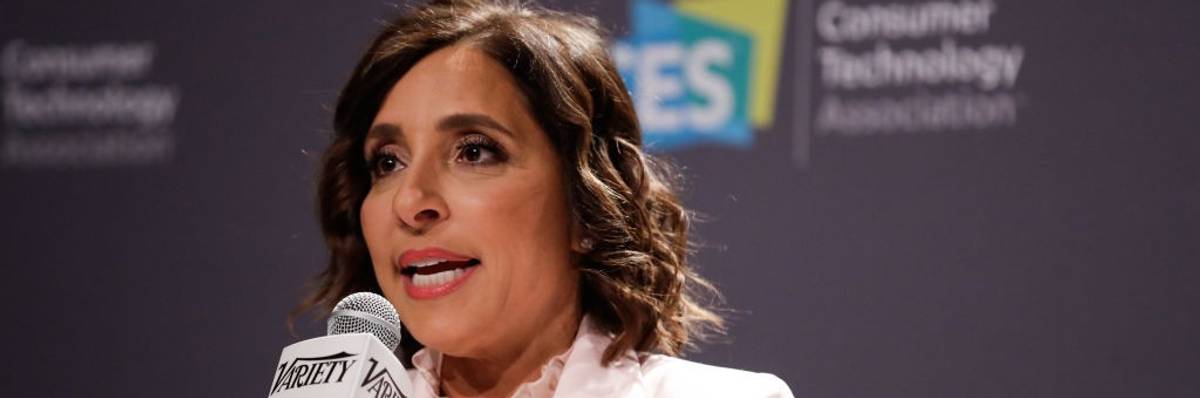
Linda Yaccarino pictured at the Variety Entertainment Summit at CES, Aria Resort and Casino, Las Vegas on January 8, 2020.
Unless Linda Yaccarino has the authority to reverse Musk’s many harmful policy decisions and reinvest in content moderation and enforcement, the social-media platform is headed for insolvency.
Twitter’s new boss has inherited a company in a tailspin—and unless Linda Yaccarino takes up advice Elon Musk has ignored, the social-media platform is destined to crash and burn.
According to reporting Monday by The New York Times, Twitter’s U.S. advertising revenue is down 59% from a year ago.
These are just the latest sinking business numbers for Twitter since Musk assumed control of the company in October 2022. And they came on the day Yaccarino is reportedly due to start work as the new CEO of the besieged social-media company.
Musk has decided to ignore an elemental truth: To grow healthy and profitable online communities, you need effective content moderation.
Twitter’s latest round of bad news recalls a meeting that Free Press and other racial-justice and digital-rights groups held during the first week of Elon Musk’s disastrous run as CEO.
We sat down with the new-media boss to gauge his commitment to community standards, election integrity, and content moderation. We urged Musk to retain and actually enforce existing content-moderation rules if he wanted advertisers to continue to spend money on Twitter.
He initially seemed to agree with us, but quickly reversed course, laying off many of those on the company’s trust and safety team in charge of this important work.
Musk then granted a “general amnesty” to legions of neo-Nazis, conspiracy theorists, and anti-vaccine trolls, reinstating thousands of previously banned accounts. He also gutted long-standing content-moderation rules and stopped enforcing Twitter’s ban on Covid-19 disinformation.
By then advertisers were leaving the platform in droves. Musk’s Twitter purchase saddled the company with $13 billion in loans, and his refusal to seriously consider content moderation and brand safety ensured that Musk wouldn’t have the revenue needed to pay off these debts.
Those who loaned him the money were banking on a “small chance that Elon is some sort of genius and can turn around an operational and financial situation that looks increasingly doomed,” William Cohan of Puck wrote at the time. But Musk’s erratic behavior has dashed those hopes.
A mistake-riddled attempt to recoup this lost revenue by selling Twitter Blue subscriptions hasn’t won over even 1% of the platform’s users, according to Bloomberg. The company is now worth only a fraction of the $44-billion sum Musk paid for it.
Recent research by the Center for Countering Digital Hate (CCDH) underscores the point we were making to Musk during our early November meeting: Allowing Twitter to become a hate-trolling hellscape has imperiled the company’s remaining business prospects.
According to a CCDH sampling, Twitter has failed to remove 99% of hate speech posted by Twitter Blue users. Instead Musk has enabled algorithms that amplify these and other paid accounts over those that don’t pay.
Twitter feels increasingly “unpredictable and chaotic,” Jason Kint of Digital Content Next told the Times. “Advertisers want to run in an environment where they are comfortable and can send a signal about their brand,” he said.
To make matters worse, Musk’s own politics have become increasingly reactionary and strident, so much so that he has started to sound like many of the most vitriolic hate trolls featured in CCDH's latest research.
“A stroll through Musk’s replies on the site reveals the extent to which one of the richest men in the world spends his time replying to far-right influencers and nodding in approval to their racist memes,” Charlie Warzel wrote in The Atlantic.
Musk rushed online to defend racist comic-strip author Scott Adams after he characterized Black people in the United States as a “hate group.” And Musk routinely boosts “anti-woke” influencers, adopting much of their anti-trans and homophobic rhetoric. He’s been binging on right-wing memes to fuel MAGA fears about alleged censorship of conservative voices and to bolster antisemitic claims about a global cabal that controls the media.
A new CEO, regardless of her marketing savvy, will likely do little to save Twitter from the extremist bent of her boss. As my colleague Jessica J. González told CNN: “Musk is setting Yaccarino up to fail—as long as he continues to make the platform toxic, it will be impossible to lure back advertisers and users.”
A CEO reshuffle won’t be enough—unless Yaccarino has the authority to reverse Musk’s many harmful policy decisions and reinvest in content moderation and enforcement. So far, Musk hasn’t given any indication that he’ll allow someone else to fix his long string of business screw-ups.
Musk has decided to ignore an elemental truth: To grow healthy and profitable online communities, you need effective content moderation. If Twitter becomes insolvent—which seems more likely by the day—it’ll be because he lacks this basic business sense about social media.
His decision to dismiss this advice offered by a small group of advocates during his first week on the job set Twitter on a path to ruin that today seems inevitable.
Dear Common Dreams reader, It’s been nearly 30 years since I co-founded Common Dreams with my late wife, Lina Newhouser. We had the radical notion that journalism should serve the public good, not corporate profits. It was clear to us from the outset what it would take to build such a project. No paid advertisements. No corporate sponsors. No millionaire publisher telling us what to think or do. Many people said we wouldn't last a year, but we proved those doubters wrong. Together with a tremendous team of journalists and dedicated staff, we built an independent media outlet free from the constraints of profits and corporate control. Our mission has always been simple: To inform. To inspire. To ignite change for the common good. Building Common Dreams was not easy. Our survival was never guaranteed. When you take on the most powerful forces—Wall Street greed, fossil fuel industry destruction, Big Tech lobbyists, and uber-rich oligarchs who have spent billions upon billions rigging the economy and democracy in their favor—the only bulwark you have is supporters who believe in your work. But here’s the urgent message from me today. It's never been this bad out there. And it's never been this hard to keep us going. At the very moment Common Dreams is most needed, the threats we face are intensifying. We need your support now more than ever. We don't accept corporate advertising and never will. We don't have a paywall because we don't think people should be blocked from critical news based on their ability to pay. Everything we do is funded by the donations of readers like you. When everyone does the little they can afford, we are strong. But if that support retreats or dries up, so do we. Will you donate now to make sure Common Dreams not only survives but thrives? —Craig Brown, Co-founder |
Twitter’s new boss has inherited a company in a tailspin—and unless Linda Yaccarino takes up advice Elon Musk has ignored, the social-media platform is destined to crash and burn.
According to reporting Monday by The New York Times, Twitter’s U.S. advertising revenue is down 59% from a year ago.
These are just the latest sinking business numbers for Twitter since Musk assumed control of the company in October 2022. And they came on the day Yaccarino is reportedly due to start work as the new CEO of the besieged social-media company.
Musk has decided to ignore an elemental truth: To grow healthy and profitable online communities, you need effective content moderation.
Twitter’s latest round of bad news recalls a meeting that Free Press and other racial-justice and digital-rights groups held during the first week of Elon Musk’s disastrous run as CEO.
We sat down with the new-media boss to gauge his commitment to community standards, election integrity, and content moderation. We urged Musk to retain and actually enforce existing content-moderation rules if he wanted advertisers to continue to spend money on Twitter.
He initially seemed to agree with us, but quickly reversed course, laying off many of those on the company’s trust and safety team in charge of this important work.
Musk then granted a “general amnesty” to legions of neo-Nazis, conspiracy theorists, and anti-vaccine trolls, reinstating thousands of previously banned accounts. He also gutted long-standing content-moderation rules and stopped enforcing Twitter’s ban on Covid-19 disinformation.
By then advertisers were leaving the platform in droves. Musk’s Twitter purchase saddled the company with $13 billion in loans, and his refusal to seriously consider content moderation and brand safety ensured that Musk wouldn’t have the revenue needed to pay off these debts.
Those who loaned him the money were banking on a “small chance that Elon is some sort of genius and can turn around an operational and financial situation that looks increasingly doomed,” William Cohan of Puck wrote at the time. But Musk’s erratic behavior has dashed those hopes.
A mistake-riddled attempt to recoup this lost revenue by selling Twitter Blue subscriptions hasn’t won over even 1% of the platform’s users, according to Bloomberg. The company is now worth only a fraction of the $44-billion sum Musk paid for it.
Recent research by the Center for Countering Digital Hate (CCDH) underscores the point we were making to Musk during our early November meeting: Allowing Twitter to become a hate-trolling hellscape has imperiled the company’s remaining business prospects.
According to a CCDH sampling, Twitter has failed to remove 99% of hate speech posted by Twitter Blue users. Instead Musk has enabled algorithms that amplify these and other paid accounts over those that don’t pay.
Twitter feels increasingly “unpredictable and chaotic,” Jason Kint of Digital Content Next told the Times. “Advertisers want to run in an environment where they are comfortable and can send a signal about their brand,” he said.
To make matters worse, Musk’s own politics have become increasingly reactionary and strident, so much so that he has started to sound like many of the most vitriolic hate trolls featured in CCDH's latest research.
“A stroll through Musk’s replies on the site reveals the extent to which one of the richest men in the world spends his time replying to far-right influencers and nodding in approval to their racist memes,” Charlie Warzel wrote in The Atlantic.
Musk rushed online to defend racist comic-strip author Scott Adams after he characterized Black people in the United States as a “hate group.” And Musk routinely boosts “anti-woke” influencers, adopting much of their anti-trans and homophobic rhetoric. He’s been binging on right-wing memes to fuel MAGA fears about alleged censorship of conservative voices and to bolster antisemitic claims about a global cabal that controls the media.
A new CEO, regardless of her marketing savvy, will likely do little to save Twitter from the extremist bent of her boss. As my colleague Jessica J. González told CNN: “Musk is setting Yaccarino up to fail—as long as he continues to make the platform toxic, it will be impossible to lure back advertisers and users.”
A CEO reshuffle won’t be enough—unless Yaccarino has the authority to reverse Musk’s many harmful policy decisions and reinvest in content moderation and enforcement. So far, Musk hasn’t given any indication that he’ll allow someone else to fix his long string of business screw-ups.
Musk has decided to ignore an elemental truth: To grow healthy and profitable online communities, you need effective content moderation. If Twitter becomes insolvent—which seems more likely by the day—it’ll be because he lacks this basic business sense about social media.
His decision to dismiss this advice offered by a small group of advocates during his first week on the job set Twitter on a path to ruin that today seems inevitable.
Twitter’s new boss has inherited a company in a tailspin—and unless Linda Yaccarino takes up advice Elon Musk has ignored, the social-media platform is destined to crash and burn.
According to reporting Monday by The New York Times, Twitter’s U.S. advertising revenue is down 59% from a year ago.
These are just the latest sinking business numbers for Twitter since Musk assumed control of the company in October 2022. And they came on the day Yaccarino is reportedly due to start work as the new CEO of the besieged social-media company.
Musk has decided to ignore an elemental truth: To grow healthy and profitable online communities, you need effective content moderation.
Twitter’s latest round of bad news recalls a meeting that Free Press and other racial-justice and digital-rights groups held during the first week of Elon Musk’s disastrous run as CEO.
We sat down with the new-media boss to gauge his commitment to community standards, election integrity, and content moderation. We urged Musk to retain and actually enforce existing content-moderation rules if he wanted advertisers to continue to spend money on Twitter.
He initially seemed to agree with us, but quickly reversed course, laying off many of those on the company’s trust and safety team in charge of this important work.
Musk then granted a “general amnesty” to legions of neo-Nazis, conspiracy theorists, and anti-vaccine trolls, reinstating thousands of previously banned accounts. He also gutted long-standing content-moderation rules and stopped enforcing Twitter’s ban on Covid-19 disinformation.
By then advertisers were leaving the platform in droves. Musk’s Twitter purchase saddled the company with $13 billion in loans, and his refusal to seriously consider content moderation and brand safety ensured that Musk wouldn’t have the revenue needed to pay off these debts.
Those who loaned him the money were banking on a “small chance that Elon is some sort of genius and can turn around an operational and financial situation that looks increasingly doomed,” William Cohan of Puck wrote at the time. But Musk’s erratic behavior has dashed those hopes.
A mistake-riddled attempt to recoup this lost revenue by selling Twitter Blue subscriptions hasn’t won over even 1% of the platform’s users, according to Bloomberg. The company is now worth only a fraction of the $44-billion sum Musk paid for it.
Recent research by the Center for Countering Digital Hate (CCDH) underscores the point we were making to Musk during our early November meeting: Allowing Twitter to become a hate-trolling hellscape has imperiled the company’s remaining business prospects.
According to a CCDH sampling, Twitter has failed to remove 99% of hate speech posted by Twitter Blue users. Instead Musk has enabled algorithms that amplify these and other paid accounts over those that don’t pay.
Twitter feels increasingly “unpredictable and chaotic,” Jason Kint of Digital Content Next told the Times. “Advertisers want to run in an environment where they are comfortable and can send a signal about their brand,” he said.
To make matters worse, Musk’s own politics have become increasingly reactionary and strident, so much so that he has started to sound like many of the most vitriolic hate trolls featured in CCDH's latest research.
“A stroll through Musk’s replies on the site reveals the extent to which one of the richest men in the world spends his time replying to far-right influencers and nodding in approval to their racist memes,” Charlie Warzel wrote in The Atlantic.
Musk rushed online to defend racist comic-strip author Scott Adams after he characterized Black people in the United States as a “hate group.” And Musk routinely boosts “anti-woke” influencers, adopting much of their anti-trans and homophobic rhetoric. He’s been binging on right-wing memes to fuel MAGA fears about alleged censorship of conservative voices and to bolster antisemitic claims about a global cabal that controls the media.
A new CEO, regardless of her marketing savvy, will likely do little to save Twitter from the extremist bent of her boss. As my colleague Jessica J. González told CNN: “Musk is setting Yaccarino up to fail—as long as he continues to make the platform toxic, it will be impossible to lure back advertisers and users.”
A CEO reshuffle won’t be enough—unless Yaccarino has the authority to reverse Musk’s many harmful policy decisions and reinvest in content moderation and enforcement. So far, Musk hasn’t given any indication that he’ll allow someone else to fix his long string of business screw-ups.
Musk has decided to ignore an elemental truth: To grow healthy and profitable online communities, you need effective content moderation. If Twitter becomes insolvent—which seems more likely by the day—it’ll be because he lacks this basic business sense about social media.
His decision to dismiss this advice offered by a small group of advocates during his first week on the job set Twitter on a path to ruin that today seems inevitable.