SUBSCRIBE TO OUR FREE NEWSLETTER
Daily news & progressive opinion—funded by the people, not the corporations—delivered straight to your inbox.
5
#000000
#FFFFFF
To donate by check, phone, or other method, see our More Ways to Give page.
Daily news & progressive opinion—funded by the people, not the corporations—delivered straight to your inbox.
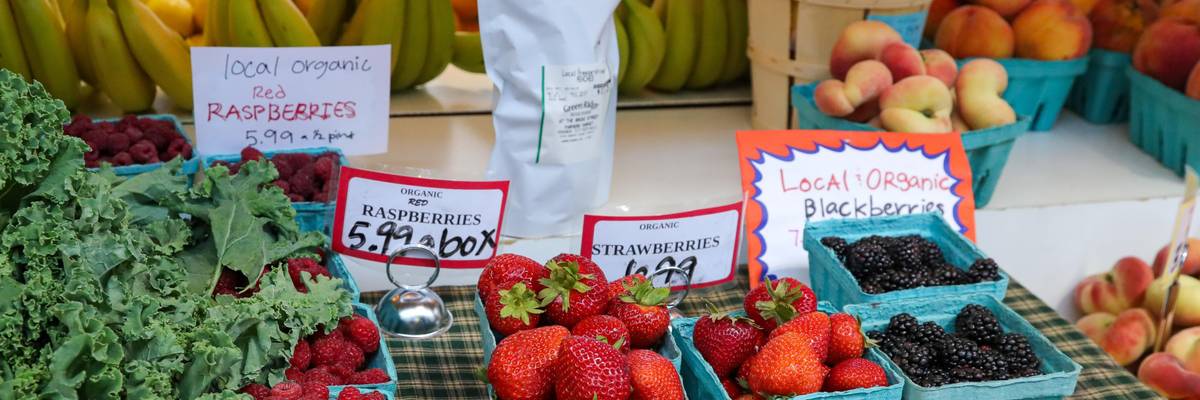
Organic berries are displayed for sale at the Broad Street Market in Harrisburg, Pennsylvania on August 5, 2022.
Corporate agribusinesses are playing fast and loose with the rules by choosing friendly compliant certifiers—and when they are caught in the act, the USDA often fails to take action.
Some of the oldest and largest U.S. Department of Agriculture-accredited certifiers have partnered with corporate agribusiness to change the working definition of organics, allowing large livestock factories; certified, uninspected imports; and soilless hydroponic produce grown in giant industrial greenhouses to be certified organic.
Organic certifiers are mixing lobbying, marketing, and activism with their certification responsibilities, and taking payola from the clients they certify. They are also certifying “producer groups” in Eastern Europe, Central America, and Asia without inspecting and certifying each individual farm.
This is against the law and an egregious conflict of interest—and it’s crushing U.S. farmers in the marketplace while raking in billions of dollars in profit for these large certifiers.
The corrupt practices employed by these certifiers have left authentic organic farmers, who focus on sound soil stewardship and humane animal husbandry based on pasture, highly disadvantaged in the marketplace.
In 1990, Congress passed the Organic Foods Production Act (OFPA), tasking the USDA with oversight of dozens of certifiers to ensure their independence and harmonization of standards.
Fast forward to today and the USDA is now allowing a handful of the largest certifiers to collude with corporate agribusiness to industrialize or import the organic food supply at the expense of high standards and the livelihoods of U.S. farmers who adhere to them.
As executive director of OrganicEye, an organic industry watchdog, I’ve witnessed family-scale organic farmers who abide by the USDA’s organic standards get crushed in the marketplace by dubious organic imports allowed into the U.S. without the certification or inspection that federal law requires.
In September, OrganicEye requested that the USDA Office of Inspector General investigate the National Organic Program for failing to prevent corporate influence—including financial payments made to certifiers over and above inspection fees—and failing to enforce other USDA regulations that prevent conflicts of interest, thus lowering the quality of certified organic food.
OrganicEye recently filed a third formal legal complaint against a certifier, Florida Organic Growers (FOG), and their certification arm, Quality Certification Services (QCS), for accepting contributions, conference sponsorships, and other payments over and above certification fees from operations they oversee.
FOG has joined two of the other largest “independent” certifiers in the country, California Certified Organic Farmers (CCOF) and Oregon Tilth, in selling out hard-working produce and livestock farmers by certifying giant industrial operations, many allegedly flagrantly breaking the law. Legal complaints against all three are currently pending.
When money changes hands between agribusiness clients and the profiting organizations that certify them, we call that “payola,” classically defined as corruption. These certifiers are acting as agents of the USDA. And the regulators in Washington responsible for auditing them are looking the other way.
Large organic certifiers should not be partnering with corporate agribusiness and cashing in on the growth of organics, especially while other certifiers are upholding the traditionally high standards.
In its first action to reign in certification abuses, OrganicEye filed an administrative law complaint against CCOF, the nation’s largest certifier, in November 2023 to address this out-of-control certification system.
We’ve seen organizations like CCOF, Oregon Tilth, and FOG morph from being among the founding farmer-led groups facilitating the growth of organic farming in the U.S. to multimillion-dollar business enterprises certifying multibillion-dollar corporate agribusinesses.
Recent IRS filings show these certification giants have reaped tens of millions of dollars a year in revenue while “masquerading” as tax-exempt public charities, with the vast preponderance of income derived from service fees paid by their business clients.
In addition to the controversies surrounding certification of livestock factories, a number of prominent certifiers, along with the industry’s primary lobby group, the Organic Trade Association, executed a stealthy campaign in 2017 that resulted in regulators allowing mammoth hydroponic greenhouses (soilless production) to be certified as organic, despite statutory and regulatory language requiring careful soil stewardship before a farm can be certified as organic under the USDA program.
That rich, organically-curated soil microbiome is the foundation of organic farming practices, resulting in superior nutrition density and flavor. That’s lacking in hydroponics, which uses liquid fertilizers derived from materials like conventional soybean meal.
The corrupt practices employed by these certifiers have left authentic organic farmers, who focus on sound soil stewardship and humane animal husbandry based on pasture, highly disadvantaged in the marketplace. With many small organic farms struggling economically—and hundreds more being forced out altogether—the devastating impacts are clear.
It doesn’t have to be this way. And not all certifiers are behaving badly.
For example, Maine Organic Farmers and Gardeners Association is universally viewed as one of the most ethical certifiers. They do not approve hydroponic greenhouses or factory farms as organic.
Since OrganicEye began publishing its research concerning alleged improprieties at the nation’s largest certifiers, we have received numerous inquiries from farmers indicating interest in switching certifiers.
We hope that our research inspires ethical farmers and certified organic business operations to consider switching their allegiance and economic patronage to certifiers who share their values and interpretations of federal law.
In the meantime, consumers and eaters can use the same guide that we have prepared for farmers to help identify some of the most creditable organic food in the marketplace. Federal law requires every package with the word “organic” on the front label to include the name of the certifier supervising the production process. This is commonly found on the back or side panel near the ingredient list.
With the USDA delegating so much authority to certifiers, there are now effectively two organic labels: corporate brands affiliated with OTA lobbyists and certified by their members, motivated by profit and industry growth, and other ethical brands that have not lost touch with the foundational precepts of the organic movement.
OrganicEye is offering free consulting and other resources to farmers around the country who are switching their patronage to certifiers who share their values rather than undercutting their livelihoods.
Dear Common Dreams reader, It’s been nearly 30 years since I co-founded Common Dreams with my late wife, Lina Newhouser. We had the radical notion that journalism should serve the public good, not corporate profits. It was clear to us from the outset what it would take to build such a project. No paid advertisements. No corporate sponsors. No millionaire publisher telling us what to think or do. Many people said we wouldn't last a year, but we proved those doubters wrong. Together with a tremendous team of journalists and dedicated staff, we built an independent media outlet free from the constraints of profits and corporate control. Our mission has always been simple: To inform. To inspire. To ignite change for the common good. Building Common Dreams was not easy. Our survival was never guaranteed. When you take on the most powerful forces—Wall Street greed, fossil fuel industry destruction, Big Tech lobbyists, and uber-rich oligarchs who have spent billions upon billions rigging the economy and democracy in their favor—the only bulwark you have is supporters who believe in your work. But here’s the urgent message from me today. It's never been this bad out there. And it's never been this hard to keep us going. At the very moment Common Dreams is most needed, the threats we face are intensifying. We need your support now more than ever. We don't accept corporate advertising and never will. We don't have a paywall because we don't think people should be blocked from critical news based on their ability to pay. Everything we do is funded by the donations of readers like you. When everyone does the little they can afford, we are strong. But if that support retreats or dries up, so do we. Will you donate now to make sure Common Dreams not only survives but thrives? —Craig Brown, Co-founder |
Some of the oldest and largest U.S. Department of Agriculture-accredited certifiers have partnered with corporate agribusiness to change the working definition of organics, allowing large livestock factories; certified, uninspected imports; and soilless hydroponic produce grown in giant industrial greenhouses to be certified organic.
Organic certifiers are mixing lobbying, marketing, and activism with their certification responsibilities, and taking payola from the clients they certify. They are also certifying “producer groups” in Eastern Europe, Central America, and Asia without inspecting and certifying each individual farm.
This is against the law and an egregious conflict of interest—and it’s crushing U.S. farmers in the marketplace while raking in billions of dollars in profit for these large certifiers.
The corrupt practices employed by these certifiers have left authentic organic farmers, who focus on sound soil stewardship and humane animal husbandry based on pasture, highly disadvantaged in the marketplace.
In 1990, Congress passed the Organic Foods Production Act (OFPA), tasking the USDA with oversight of dozens of certifiers to ensure their independence and harmonization of standards.
Fast forward to today and the USDA is now allowing a handful of the largest certifiers to collude with corporate agribusiness to industrialize or import the organic food supply at the expense of high standards and the livelihoods of U.S. farmers who adhere to them.
As executive director of OrganicEye, an organic industry watchdog, I’ve witnessed family-scale organic farmers who abide by the USDA’s organic standards get crushed in the marketplace by dubious organic imports allowed into the U.S. without the certification or inspection that federal law requires.
In September, OrganicEye requested that the USDA Office of Inspector General investigate the National Organic Program for failing to prevent corporate influence—including financial payments made to certifiers over and above inspection fees—and failing to enforce other USDA regulations that prevent conflicts of interest, thus lowering the quality of certified organic food.
OrganicEye recently filed a third formal legal complaint against a certifier, Florida Organic Growers (FOG), and their certification arm, Quality Certification Services (QCS), for accepting contributions, conference sponsorships, and other payments over and above certification fees from operations they oversee.
FOG has joined two of the other largest “independent” certifiers in the country, California Certified Organic Farmers (CCOF) and Oregon Tilth, in selling out hard-working produce and livestock farmers by certifying giant industrial operations, many allegedly flagrantly breaking the law. Legal complaints against all three are currently pending.
When money changes hands between agribusiness clients and the profiting organizations that certify them, we call that “payola,” classically defined as corruption. These certifiers are acting as agents of the USDA. And the regulators in Washington responsible for auditing them are looking the other way.
Large organic certifiers should not be partnering with corporate agribusiness and cashing in on the growth of organics, especially while other certifiers are upholding the traditionally high standards.
In its first action to reign in certification abuses, OrganicEye filed an administrative law complaint against CCOF, the nation’s largest certifier, in November 2023 to address this out-of-control certification system.
We’ve seen organizations like CCOF, Oregon Tilth, and FOG morph from being among the founding farmer-led groups facilitating the growth of organic farming in the U.S. to multimillion-dollar business enterprises certifying multibillion-dollar corporate agribusinesses.
Recent IRS filings show these certification giants have reaped tens of millions of dollars a year in revenue while “masquerading” as tax-exempt public charities, with the vast preponderance of income derived from service fees paid by their business clients.
In addition to the controversies surrounding certification of livestock factories, a number of prominent certifiers, along with the industry’s primary lobby group, the Organic Trade Association, executed a stealthy campaign in 2017 that resulted in regulators allowing mammoth hydroponic greenhouses (soilless production) to be certified as organic, despite statutory and regulatory language requiring careful soil stewardship before a farm can be certified as organic under the USDA program.
That rich, organically-curated soil microbiome is the foundation of organic farming practices, resulting in superior nutrition density and flavor. That’s lacking in hydroponics, which uses liquid fertilizers derived from materials like conventional soybean meal.
The corrupt practices employed by these certifiers have left authentic organic farmers, who focus on sound soil stewardship and humane animal husbandry based on pasture, highly disadvantaged in the marketplace. With many small organic farms struggling economically—and hundreds more being forced out altogether—the devastating impacts are clear.
It doesn’t have to be this way. And not all certifiers are behaving badly.
For example, Maine Organic Farmers and Gardeners Association is universally viewed as one of the most ethical certifiers. They do not approve hydroponic greenhouses or factory farms as organic.
Since OrganicEye began publishing its research concerning alleged improprieties at the nation’s largest certifiers, we have received numerous inquiries from farmers indicating interest in switching certifiers.
We hope that our research inspires ethical farmers and certified organic business operations to consider switching their allegiance and economic patronage to certifiers who share their values and interpretations of federal law.
In the meantime, consumers and eaters can use the same guide that we have prepared for farmers to help identify some of the most creditable organic food in the marketplace. Federal law requires every package with the word “organic” on the front label to include the name of the certifier supervising the production process. This is commonly found on the back or side panel near the ingredient list.
With the USDA delegating so much authority to certifiers, there are now effectively two organic labels: corporate brands affiliated with OTA lobbyists and certified by their members, motivated by profit and industry growth, and other ethical brands that have not lost touch with the foundational precepts of the organic movement.
OrganicEye is offering free consulting and other resources to farmers around the country who are switching their patronage to certifiers who share their values rather than undercutting their livelihoods.
Some of the oldest and largest U.S. Department of Agriculture-accredited certifiers have partnered with corporate agribusiness to change the working definition of organics, allowing large livestock factories; certified, uninspected imports; and soilless hydroponic produce grown in giant industrial greenhouses to be certified organic.
Organic certifiers are mixing lobbying, marketing, and activism with their certification responsibilities, and taking payola from the clients they certify. They are also certifying “producer groups” in Eastern Europe, Central America, and Asia without inspecting and certifying each individual farm.
This is against the law and an egregious conflict of interest—and it’s crushing U.S. farmers in the marketplace while raking in billions of dollars in profit for these large certifiers.
The corrupt practices employed by these certifiers have left authentic organic farmers, who focus on sound soil stewardship and humane animal husbandry based on pasture, highly disadvantaged in the marketplace.
In 1990, Congress passed the Organic Foods Production Act (OFPA), tasking the USDA with oversight of dozens of certifiers to ensure their independence and harmonization of standards.
Fast forward to today and the USDA is now allowing a handful of the largest certifiers to collude with corporate agribusiness to industrialize or import the organic food supply at the expense of high standards and the livelihoods of U.S. farmers who adhere to them.
As executive director of OrganicEye, an organic industry watchdog, I’ve witnessed family-scale organic farmers who abide by the USDA’s organic standards get crushed in the marketplace by dubious organic imports allowed into the U.S. without the certification or inspection that federal law requires.
In September, OrganicEye requested that the USDA Office of Inspector General investigate the National Organic Program for failing to prevent corporate influence—including financial payments made to certifiers over and above inspection fees—and failing to enforce other USDA regulations that prevent conflicts of interest, thus lowering the quality of certified organic food.
OrganicEye recently filed a third formal legal complaint against a certifier, Florida Organic Growers (FOG), and their certification arm, Quality Certification Services (QCS), for accepting contributions, conference sponsorships, and other payments over and above certification fees from operations they oversee.
FOG has joined two of the other largest “independent” certifiers in the country, California Certified Organic Farmers (CCOF) and Oregon Tilth, in selling out hard-working produce and livestock farmers by certifying giant industrial operations, many allegedly flagrantly breaking the law. Legal complaints against all three are currently pending.
When money changes hands between agribusiness clients and the profiting organizations that certify them, we call that “payola,” classically defined as corruption. These certifiers are acting as agents of the USDA. And the regulators in Washington responsible for auditing them are looking the other way.
Large organic certifiers should not be partnering with corporate agribusiness and cashing in on the growth of organics, especially while other certifiers are upholding the traditionally high standards.
In its first action to reign in certification abuses, OrganicEye filed an administrative law complaint against CCOF, the nation’s largest certifier, in November 2023 to address this out-of-control certification system.
We’ve seen organizations like CCOF, Oregon Tilth, and FOG morph from being among the founding farmer-led groups facilitating the growth of organic farming in the U.S. to multimillion-dollar business enterprises certifying multibillion-dollar corporate agribusinesses.
Recent IRS filings show these certification giants have reaped tens of millions of dollars a year in revenue while “masquerading” as tax-exempt public charities, with the vast preponderance of income derived from service fees paid by their business clients.
In addition to the controversies surrounding certification of livestock factories, a number of prominent certifiers, along with the industry’s primary lobby group, the Organic Trade Association, executed a stealthy campaign in 2017 that resulted in regulators allowing mammoth hydroponic greenhouses (soilless production) to be certified as organic, despite statutory and regulatory language requiring careful soil stewardship before a farm can be certified as organic under the USDA program.
That rich, organically-curated soil microbiome is the foundation of organic farming practices, resulting in superior nutrition density and flavor. That’s lacking in hydroponics, which uses liquid fertilizers derived from materials like conventional soybean meal.
The corrupt practices employed by these certifiers have left authentic organic farmers, who focus on sound soil stewardship and humane animal husbandry based on pasture, highly disadvantaged in the marketplace. With many small organic farms struggling economically—and hundreds more being forced out altogether—the devastating impacts are clear.
It doesn’t have to be this way. And not all certifiers are behaving badly.
For example, Maine Organic Farmers and Gardeners Association is universally viewed as one of the most ethical certifiers. They do not approve hydroponic greenhouses or factory farms as organic.
Since OrganicEye began publishing its research concerning alleged improprieties at the nation’s largest certifiers, we have received numerous inquiries from farmers indicating interest in switching certifiers.
We hope that our research inspires ethical farmers and certified organic business operations to consider switching their allegiance and economic patronage to certifiers who share their values and interpretations of federal law.
In the meantime, consumers and eaters can use the same guide that we have prepared for farmers to help identify some of the most creditable organic food in the marketplace. Federal law requires every package with the word “organic” on the front label to include the name of the certifier supervising the production process. This is commonly found on the back or side panel near the ingredient list.
With the USDA delegating so much authority to certifiers, there are now effectively two organic labels: corporate brands affiliated with OTA lobbyists and certified by their members, motivated by profit and industry growth, and other ethical brands that have not lost touch with the foundational precepts of the organic movement.
OrganicEye is offering free consulting and other resources to farmers around the country who are switching their patronage to certifiers who share their values rather than undercutting their livelihoods.