SUBSCRIBE TO OUR FREE NEWSLETTER
Daily news & progressive opinion—funded by the people, not the corporations—delivered straight to your inbox.
5
#000000
#FFFFFF
To donate by check, phone, or other method, see our More Ways to Give page.
Daily news & progressive opinion—funded by the people, not the corporations—delivered straight to your inbox.
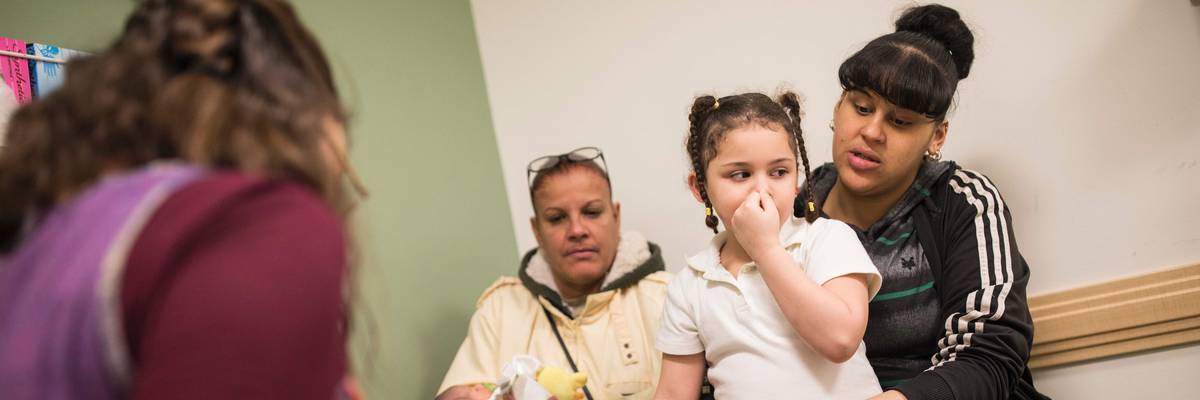
Leicha Clemente visits the pediatrician with her two children and her mother at the Esperanza Health Center in Philadelphia, Pennsylvania, on March 13, 2017.
Cuts to Medicaid don’t only hurt the poor, disabled, or seniors—as my family and I learned, they hurt all of us.
I was 13 years old. We’d just returned from Christmas vacation, and I was asleep in my room.
My mother tells me she heard a noise and found me in my bed, twisted up like a clam, frothing at the mouth. She was in shock. The paramedics came and took me to the ER. I don’t remember anything about it.
That night, I had a CT scan and an MRI. They found an abnormality in my brain called a cavernoma, and I needed surgery right away to correct it. Because it was a delicate operation, I needed not only a pediatric surgeon but a sub-specialist—a pediatric neurologist.
Little did my family know, there is a nationwide shortage of pediatric sub-specialists.
Medicaid and CHIP must be protected. Congress must invest in pediatric care so that no other children are told to wait months for necessary care.
The surgeon on-call that night assured us that I could be cured with surgery, but we needed to get it done as soon as possible to avoid another seizure and more damage. But when my mom called the hospital, they said the next available appointment was more than three months away due to a lack of pediatric neurosurgeons.
I was already isolating myself. Scared, missing school, I withdrew from sports and hid from my friends. At 13, you don’t want to be different, and you definitely don’t want anyone to know there’s something wrong with your brain. The depression and anxiety deepened. And I would have to go on like this for months?
My family was financially comfortable, we had private insurance, and we lived in Manhattan. Yet even someone as fortunate as I was had to wait because there’s a severe shortage of pediatric specialists.
What if it happens to a girl from a poor or middle class family without good insurance, or who lives farther away from good care? How long would her wait be? Would her family be able to afford it all?
Thankfully, I was lucky. I was able to get the surgery sooner before three months passed, and I’m cured now. But having gone through this experience, my mom and I wanted to find out the cause of the deficit in pediatric care—and how it can be fixed.
With the help of a bipartisan advocacy organization that works on these issues, First Focus On Children, we found out that most pediatric specialties are reimbursed largely through Medicaid and its state-tailored companion program, the Children’s Health Insurance Program (CHIP).
Half of the nation’s children receive health coverage through Medicaid or CHIP, and even children with private insurance rely on Medicaid when they need specialized care. So most pediatric specialists and sub-specialists have to rely on these government programs for reimbursement.
But unlike Medicare and private insurance, which reimburse adult and senior care specialists at much higher levels, Medicaid reimbursements are significantly smaller for pediatric care—though the doctors go through the same expensive training and have the same qualifications. Because of this, far fewer medical specialists go into pediatric care because it’s financially untenable.
As a result, there is a crisis in pediatric care. To make it worse, Congress’s partisan “Big Beautiful Bill” slashes almost $1 trillion from Medicaid over 10 years. At a time when we desperately need more investment in Medicaid, we are going in the opposite direction.
Cuts to Medicaid don’t only hurt the poor, disabled, or seniors—as my family and I learned, they hurt all of us. Healthcare in this country isn’t sufficiently serving those in need. If things continue this way, what will pediatric care look like for my own children one day?
We must do better. Medicaid and CHIP must be protected. Congress must invest in pediatric care so that no other children are told to wait months for necessary care. It’s not only about the “haves” and the “have-nots.” It’s about all of us.
Dear Common Dreams reader, It’s been nearly 30 years since I co-founded Common Dreams with my late wife, Lina Newhouser. We had the radical notion that journalism should serve the public good, not corporate profits. It was clear to us from the outset what it would take to build such a project. No paid advertisements. No corporate sponsors. No millionaire publisher telling us what to think or do. Many people said we wouldn't last a year, but we proved those doubters wrong. Together with a tremendous team of journalists and dedicated staff, we built an independent media outlet free from the constraints of profits and corporate control. Our mission has always been simple: To inform. To inspire. To ignite change for the common good. Building Common Dreams was not easy. Our survival was never guaranteed. When you take on the most powerful forces—Wall Street greed, fossil fuel industry destruction, Big Tech lobbyists, and uber-rich oligarchs who have spent billions upon billions rigging the economy and democracy in their favor—the only bulwark you have is supporters who believe in your work. But here’s the urgent message from me today. It's never been this bad out there. And it's never been this hard to keep us going. At the very moment Common Dreams is most needed, the threats we face are intensifying. We need your support now more than ever. We don't accept corporate advertising and never will. We don't have a paywall because we don't think people should be blocked from critical news based on their ability to pay. Everything we do is funded by the donations of readers like you. When everyone does the little they can afford, we are strong. But if that support retreats or dries up, so do we. Will you donate now to make sure Common Dreams not only survives but thrives? —Craig Brown, Co-founder |
I was 13 years old. We’d just returned from Christmas vacation, and I was asleep in my room.
My mother tells me she heard a noise and found me in my bed, twisted up like a clam, frothing at the mouth. She was in shock. The paramedics came and took me to the ER. I don’t remember anything about it.
That night, I had a CT scan and an MRI. They found an abnormality in my brain called a cavernoma, and I needed surgery right away to correct it. Because it was a delicate operation, I needed not only a pediatric surgeon but a sub-specialist—a pediatric neurologist.
Little did my family know, there is a nationwide shortage of pediatric sub-specialists.
Medicaid and CHIP must be protected. Congress must invest in pediatric care so that no other children are told to wait months for necessary care.
The surgeon on-call that night assured us that I could be cured with surgery, but we needed to get it done as soon as possible to avoid another seizure and more damage. But when my mom called the hospital, they said the next available appointment was more than three months away due to a lack of pediatric neurosurgeons.
I was already isolating myself. Scared, missing school, I withdrew from sports and hid from my friends. At 13, you don’t want to be different, and you definitely don’t want anyone to know there’s something wrong with your brain. The depression and anxiety deepened. And I would have to go on like this for months?
My family was financially comfortable, we had private insurance, and we lived in Manhattan. Yet even someone as fortunate as I was had to wait because there’s a severe shortage of pediatric specialists.
What if it happens to a girl from a poor or middle class family without good insurance, or who lives farther away from good care? How long would her wait be? Would her family be able to afford it all?
Thankfully, I was lucky. I was able to get the surgery sooner before three months passed, and I’m cured now. But having gone through this experience, my mom and I wanted to find out the cause of the deficit in pediatric care—and how it can be fixed.
With the help of a bipartisan advocacy organization that works on these issues, First Focus On Children, we found out that most pediatric specialties are reimbursed largely through Medicaid and its state-tailored companion program, the Children’s Health Insurance Program (CHIP).
Half of the nation’s children receive health coverage through Medicaid or CHIP, and even children with private insurance rely on Medicaid when they need specialized care. So most pediatric specialists and sub-specialists have to rely on these government programs for reimbursement.
But unlike Medicare and private insurance, which reimburse adult and senior care specialists at much higher levels, Medicaid reimbursements are significantly smaller for pediatric care—though the doctors go through the same expensive training and have the same qualifications. Because of this, far fewer medical specialists go into pediatric care because it’s financially untenable.
As a result, there is a crisis in pediatric care. To make it worse, Congress’s partisan “Big Beautiful Bill” slashes almost $1 trillion from Medicaid over 10 years. At a time when we desperately need more investment in Medicaid, we are going in the opposite direction.
Cuts to Medicaid don’t only hurt the poor, disabled, or seniors—as my family and I learned, they hurt all of us. Healthcare in this country isn’t sufficiently serving those in need. If things continue this way, what will pediatric care look like for my own children one day?
We must do better. Medicaid and CHIP must be protected. Congress must invest in pediatric care so that no other children are told to wait months for necessary care. It’s not only about the “haves” and the “have-nots.” It’s about all of us.
I was 13 years old. We’d just returned from Christmas vacation, and I was asleep in my room.
My mother tells me she heard a noise and found me in my bed, twisted up like a clam, frothing at the mouth. She was in shock. The paramedics came and took me to the ER. I don’t remember anything about it.
That night, I had a CT scan and an MRI. They found an abnormality in my brain called a cavernoma, and I needed surgery right away to correct it. Because it was a delicate operation, I needed not only a pediatric surgeon but a sub-specialist—a pediatric neurologist.
Little did my family know, there is a nationwide shortage of pediatric sub-specialists.
Medicaid and CHIP must be protected. Congress must invest in pediatric care so that no other children are told to wait months for necessary care.
The surgeon on-call that night assured us that I could be cured with surgery, but we needed to get it done as soon as possible to avoid another seizure and more damage. But when my mom called the hospital, they said the next available appointment was more than three months away due to a lack of pediatric neurosurgeons.
I was already isolating myself. Scared, missing school, I withdrew from sports and hid from my friends. At 13, you don’t want to be different, and you definitely don’t want anyone to know there’s something wrong with your brain. The depression and anxiety deepened. And I would have to go on like this for months?
My family was financially comfortable, we had private insurance, and we lived in Manhattan. Yet even someone as fortunate as I was had to wait because there’s a severe shortage of pediatric specialists.
What if it happens to a girl from a poor or middle class family without good insurance, or who lives farther away from good care? How long would her wait be? Would her family be able to afford it all?
Thankfully, I was lucky. I was able to get the surgery sooner before three months passed, and I’m cured now. But having gone through this experience, my mom and I wanted to find out the cause of the deficit in pediatric care—and how it can be fixed.
With the help of a bipartisan advocacy organization that works on these issues, First Focus On Children, we found out that most pediatric specialties are reimbursed largely through Medicaid and its state-tailored companion program, the Children’s Health Insurance Program (CHIP).
Half of the nation’s children receive health coverage through Medicaid or CHIP, and even children with private insurance rely on Medicaid when they need specialized care. So most pediatric specialists and sub-specialists have to rely on these government programs for reimbursement.
But unlike Medicare and private insurance, which reimburse adult and senior care specialists at much higher levels, Medicaid reimbursements are significantly smaller for pediatric care—though the doctors go through the same expensive training and have the same qualifications. Because of this, far fewer medical specialists go into pediatric care because it’s financially untenable.
As a result, there is a crisis in pediatric care. To make it worse, Congress’s partisan “Big Beautiful Bill” slashes almost $1 trillion from Medicaid over 10 years. At a time when we desperately need more investment in Medicaid, we are going in the opposite direction.
Cuts to Medicaid don’t only hurt the poor, disabled, or seniors—as my family and I learned, they hurt all of us. Healthcare in this country isn’t sufficiently serving those in need. If things continue this way, what will pediatric care look like for my own children one day?
We must do better. Medicaid and CHIP must be protected. Congress must invest in pediatric care so that no other children are told to wait months for necessary care. It’s not only about the “haves” and the “have-nots.” It’s about all of us.