SUBSCRIBE TO OUR FREE NEWSLETTER
Daily news & progressive opinion—funded by the people, not the corporations—delivered straight to your inbox.
5
#000000
#FFFFFF
To donate by check, phone, or other method, see our More Ways to Give page.
Daily news & progressive opinion—funded by the people, not the corporations—delivered straight to your inbox.
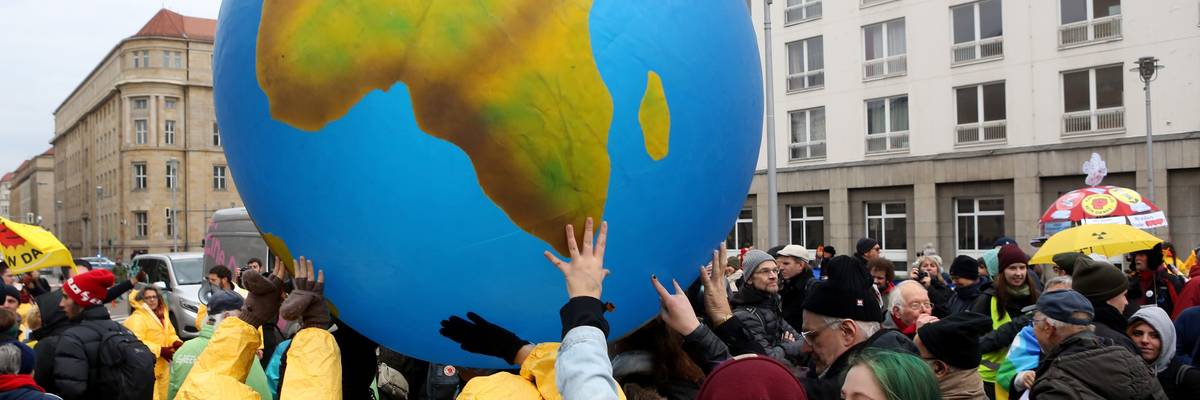
Activists march with an inflatable globe during a demonstration against nuclear weapons on November 18, 2017 in Berlin, Germany.
At this challenging time, 80 years since the founding of the United Nations and the bombings of Hiroshima and Nagasaki in a world torn apart by war, there is hope for a just, environmentally sustainable, and peaceful world.
With two significant interconnected anniversaries occurring this week, Sunday marked the 44th anniversary of the United Nations International Day of Peace. This year‘s theme, “Act Now for a Peaceful World,“ is a call to action, identifying individual responsibility and collective power in “cultivating a culture of peace.“
Noting that this year finds a time of global turbulence, tumult, and uncertainty, it is easy to find oneself despairing. Surrendering to this challenge fuels despair. Hope is realized in identifying our individual response and working together to realize collective power. We must discard outmoded “us and them” thinking, realizing that we are one interconnected human family on this fragile planet that will either learn to live together or perish together.
Everyone has a role to play, and each of us must decide what that role is. It is not necessarily a large role or a small role, it is our role. We can no longer assume that “they will take care of it.” They, are us! We must speak up against violence, hate, discrimination, and inequality. We must practice respect and embrace the diversity of our world. The International Day of Peace builds on the Sustainable Development Goals of the United Nations. The theme aligns with the broader UN goals of sustainable development, recognizing that a peaceful world is intrinsically linked to social justice, equality, and environmental sustainability.
This week also marks the 11th anniversary of the “UN International Day for the Total Elimination of Nuclear Weapons” on September 26. With current global nuclear arsenals numbering 12,241 weapons, there is no humanitarian, social, or environmental justice and no sustainability as long as these weapons exist. Everything and everyone we care about is threatened. We must recognize the social and economic costs of the continued existence of these weapons. The United States is spending over $110 billion on all nuclear weapons programs in FY 2025 equating to over $209,000 every minute of every day on these weapons with plans for massive expansion of these expenditures in the years to come under the misguided myths of deterrence and “more is better.“
Ultimately there cannot be peace with the planet until there is peace on the planet.
Fortunately, there is hope in the effort to eliminate these weapons both here at home and around the world. The International Campaign to Abolish Nuclear Weapons was instrumental in the development and adoption of the International Treaty on the Prohibition of Nuclear Weapons, which makes nuclear weapons illegal to have, develop, transfer, use, or threaten to use under international treaty, just as all other weapons of mass destruction are.
At a time when our world is closer to nuclear war than at any time since the bombings of Hiroshima and Nagasaki, 89 seconds till “Doomsday” per the Bulletin of Atomic Scientists, there is a growing movement here in the United States to eliminate these weapons. It is called Back From the Brink. This movement that supports the international effort is bringing communities together to abolish nuclear weapons and making the connection between our future and sustainability goals. Currently there are 502 national organizations, 78 municipalities and counties, eight state legislative bodies, 487 municipal and state officials, and 51 members of Congress endorsing. The people‘s voice is rising and being heard and is the best way to affect federal policy. When the people speak, the leaders will follow. This movement can be endorsed by all, and everyone is encouraged to take the simple action of reaching out to your elected officials, both in the US House, Senate, and local officials to endorse this campaign.
So at this challenging time, 80 years since the founding of the United Nations and the bombings of Hiroshima and Nagasaki in a world torn apart by war, there is hope for a just, environmentally sustainable, and peaceful world. Ultimately there cannot be peace with the planet until there is peace on the planet. The choice is ours. It is in our hands on this week of the International Day of Peace.
Dear Common Dreams reader, It’s been nearly 30 years since I co-founded Common Dreams with my late wife, Lina Newhouser. We had the radical notion that journalism should serve the public good, not corporate profits. It was clear to us from the outset what it would take to build such a project. No paid advertisements. No corporate sponsors. No millionaire publisher telling us what to think or do. Many people said we wouldn't last a year, but we proved those doubters wrong. Together with a tremendous team of journalists and dedicated staff, we built an independent media outlet free from the constraints of profits and corporate control. Our mission has always been simple: To inform. To inspire. To ignite change for the common good. Building Common Dreams was not easy. Our survival was never guaranteed. When you take on the most powerful forces—Wall Street greed, fossil fuel industry destruction, Big Tech lobbyists, and uber-rich oligarchs who have spent billions upon billions rigging the economy and democracy in their favor—the only bulwark you have is supporters who believe in your work. But here’s the urgent message from me today. It's never been this bad out there. And it's never been this hard to keep us going. At the very moment Common Dreams is most needed, the threats we face are intensifying. We need your support now more than ever. We don't accept corporate advertising and never will. We don't have a paywall because we don't think people should be blocked from critical news based on their ability to pay. Everything we do is funded by the donations of readers like you. When everyone does the little they can afford, we are strong. But if that support retreats or dries up, so do we. Will you donate now to make sure Common Dreams not only survives but thrives? —Craig Brown, Co-founder |
With two significant interconnected anniversaries occurring this week, Sunday marked the 44th anniversary of the United Nations International Day of Peace. This year‘s theme, “Act Now for a Peaceful World,“ is a call to action, identifying individual responsibility and collective power in “cultivating a culture of peace.“
Noting that this year finds a time of global turbulence, tumult, and uncertainty, it is easy to find oneself despairing. Surrendering to this challenge fuels despair. Hope is realized in identifying our individual response and working together to realize collective power. We must discard outmoded “us and them” thinking, realizing that we are one interconnected human family on this fragile planet that will either learn to live together or perish together.
Everyone has a role to play, and each of us must decide what that role is. It is not necessarily a large role or a small role, it is our role. We can no longer assume that “they will take care of it.” They, are us! We must speak up against violence, hate, discrimination, and inequality. We must practice respect and embrace the diversity of our world. The International Day of Peace builds on the Sustainable Development Goals of the United Nations. The theme aligns with the broader UN goals of sustainable development, recognizing that a peaceful world is intrinsically linked to social justice, equality, and environmental sustainability.
This week also marks the 11th anniversary of the “UN International Day for the Total Elimination of Nuclear Weapons” on September 26. With current global nuclear arsenals numbering 12,241 weapons, there is no humanitarian, social, or environmental justice and no sustainability as long as these weapons exist. Everything and everyone we care about is threatened. We must recognize the social and economic costs of the continued existence of these weapons. The United States is spending over $110 billion on all nuclear weapons programs in FY 2025 equating to over $209,000 every minute of every day on these weapons with plans for massive expansion of these expenditures in the years to come under the misguided myths of deterrence and “more is better.“
Ultimately there cannot be peace with the planet until there is peace on the planet.
Fortunately, there is hope in the effort to eliminate these weapons both here at home and around the world. The International Campaign to Abolish Nuclear Weapons was instrumental in the development and adoption of the International Treaty on the Prohibition of Nuclear Weapons, which makes nuclear weapons illegal to have, develop, transfer, use, or threaten to use under international treaty, just as all other weapons of mass destruction are.
At a time when our world is closer to nuclear war than at any time since the bombings of Hiroshima and Nagasaki, 89 seconds till “Doomsday” per the Bulletin of Atomic Scientists, there is a growing movement here in the United States to eliminate these weapons. It is called Back From the Brink. This movement that supports the international effort is bringing communities together to abolish nuclear weapons and making the connection between our future and sustainability goals. Currently there are 502 national organizations, 78 municipalities and counties, eight state legislative bodies, 487 municipal and state officials, and 51 members of Congress endorsing. The people‘s voice is rising and being heard and is the best way to affect federal policy. When the people speak, the leaders will follow. This movement can be endorsed by all, and everyone is encouraged to take the simple action of reaching out to your elected officials, both in the US House, Senate, and local officials to endorse this campaign.
So at this challenging time, 80 years since the founding of the United Nations and the bombings of Hiroshima and Nagasaki in a world torn apart by war, there is hope for a just, environmentally sustainable, and peaceful world. Ultimately there cannot be peace with the planet until there is peace on the planet. The choice is ours. It is in our hands on this week of the International Day of Peace.
With two significant interconnected anniversaries occurring this week, Sunday marked the 44th anniversary of the United Nations International Day of Peace. This year‘s theme, “Act Now for a Peaceful World,“ is a call to action, identifying individual responsibility and collective power in “cultivating a culture of peace.“
Noting that this year finds a time of global turbulence, tumult, and uncertainty, it is easy to find oneself despairing. Surrendering to this challenge fuels despair. Hope is realized in identifying our individual response and working together to realize collective power. We must discard outmoded “us and them” thinking, realizing that we are one interconnected human family on this fragile planet that will either learn to live together or perish together.
Everyone has a role to play, and each of us must decide what that role is. It is not necessarily a large role or a small role, it is our role. We can no longer assume that “they will take care of it.” They, are us! We must speak up against violence, hate, discrimination, and inequality. We must practice respect and embrace the diversity of our world. The International Day of Peace builds on the Sustainable Development Goals of the United Nations. The theme aligns with the broader UN goals of sustainable development, recognizing that a peaceful world is intrinsically linked to social justice, equality, and environmental sustainability.
This week also marks the 11th anniversary of the “UN International Day for the Total Elimination of Nuclear Weapons” on September 26. With current global nuclear arsenals numbering 12,241 weapons, there is no humanitarian, social, or environmental justice and no sustainability as long as these weapons exist. Everything and everyone we care about is threatened. We must recognize the social and economic costs of the continued existence of these weapons. The United States is spending over $110 billion on all nuclear weapons programs in FY 2025 equating to over $209,000 every minute of every day on these weapons with plans for massive expansion of these expenditures in the years to come under the misguided myths of deterrence and “more is better.“
Ultimately there cannot be peace with the planet until there is peace on the planet.
Fortunately, there is hope in the effort to eliminate these weapons both here at home and around the world. The International Campaign to Abolish Nuclear Weapons was instrumental in the development and adoption of the International Treaty on the Prohibition of Nuclear Weapons, which makes nuclear weapons illegal to have, develop, transfer, use, or threaten to use under international treaty, just as all other weapons of mass destruction are.
At a time when our world is closer to nuclear war than at any time since the bombings of Hiroshima and Nagasaki, 89 seconds till “Doomsday” per the Bulletin of Atomic Scientists, there is a growing movement here in the United States to eliminate these weapons. It is called Back From the Brink. This movement that supports the international effort is bringing communities together to abolish nuclear weapons and making the connection between our future and sustainability goals. Currently there are 502 national organizations, 78 municipalities and counties, eight state legislative bodies, 487 municipal and state officials, and 51 members of Congress endorsing. The people‘s voice is rising and being heard and is the best way to affect federal policy. When the people speak, the leaders will follow. This movement can be endorsed by all, and everyone is encouraged to take the simple action of reaching out to your elected officials, both in the US House, Senate, and local officials to endorse this campaign.
So at this challenging time, 80 years since the founding of the United Nations and the bombings of Hiroshima and Nagasaki in a world torn apart by war, there is hope for a just, environmentally sustainable, and peaceful world. Ultimately there cannot be peace with the planet until there is peace on the planet. The choice is ours. It is in our hands on this week of the International Day of Peace.