

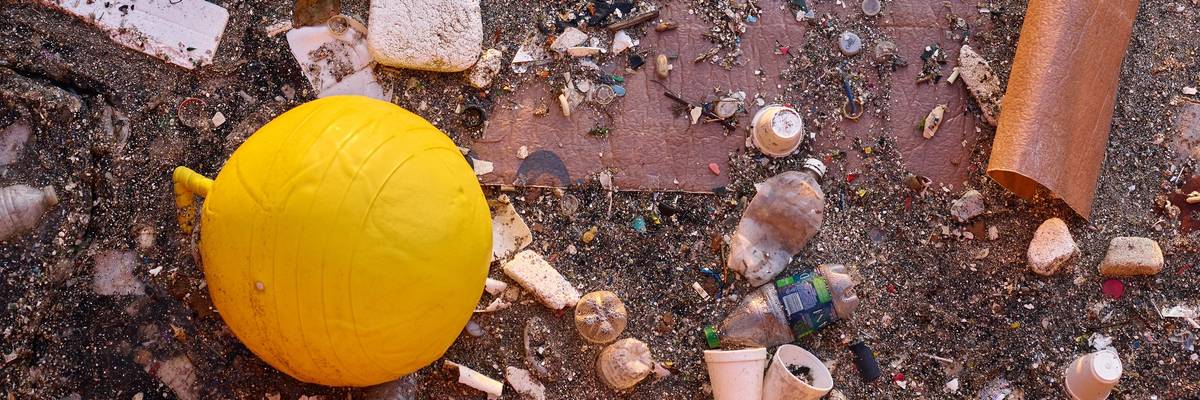
Plastic pollution washed up on a beach.
For Plastic Free July, the US Gov Should Hold Polluters Accountable
Federal legislation is needed to establish a strong national strategy to hold plastic producers responsible for reducing their plastic footprint.
Every summer the Alliance for the Great Lakes’ Adopt-a-Beach program mobilizes thousands of volunteers across eight states to collect trash from the Great Lakes shorelines. To date our volunteers have collected over half a million pounds of trash, of which 85% is plastic. The problem with plastic pollution, aside from its volume, is that it doesn’t really go away. It breaks down into much smaller pieces—microplastics—which have been found in our drinking water, our fish, and even in human tissue. Our concerns over the health effects of microplastics is one reason why the Alliance observes “Plastic Free July,” which is a worldwide effort to reduce the use of single-use plastics and to develop alternatives to reduce plastic waste.
Earlier this year the U.S. Environmental Protection Agency (EPA) released its Draft National Strategy to Prevent Plastic Pollution, which we were happy to see. The draft strategy, for which the public may provide comments until the end of this month, contains a host of recommendations to reduce, reuse, collect, and capture plastic pollution in order to reduce the use of single-use plastics and create a circular lifecycle for plastics currently in use. One of the strategy’s primary goals is to eliminate plastic pollution in the environment by 2040. While EPA’s draft strategy is a good start, the EPA will need to strengthen its accountability measures if they want to actually limit plastic pollution and the harm it causes.
Given that the Organization for Economic Cooperation and Development estimates that plastics pollution will triple worldwide by 2060, and with only about 9% of plastics currently recycled, the need for action is long overdue.
We encourage everyone to urge the EPA to establish a strong and accountable strategy for keeping our waterways free of plastic-associated pollution.
The EPA’s draft strategy is ambitious but, critically, entirely voluntary, and not sufficiently focused on producer responsibility to reduce plastic at its source. The EPA currently expects that businesses, citizens, and other stakeholders will work together to achieve a plastics-free environment by 2040 just because it’s the right thing to do. This voluntary approach is naïve and likely to be unsuccessful in ridding the environment of plastics.
The Plastics Industry Association has already vigorously opposed federal legislation to ensure that plastic pellets are not released into our waterways. With that opposition still in recent memory, it is hard to believe that the plastics industry would get behind voluntary efforts outlined in EPA’s strategy to do the same.
Instead, federal legislation is needed to establish a strong national strategy to hold plastic producers responsible for reducing their plastic footprint. This legislation should include specific targets for source reduction of single-use plastic; establish uniform standards and approaches to dealing with the challenges posed by single-use plastics and plastic waste; and adopt standardized drinking water monitoring programs.
Presently there is no consensus in Congress on dealing with plastic pollution, although recent hearings on plastic pollution in the Senate Environment and Public Works Committee are encouraging. Sen. Richard Durbin (D-Ill.) recently reintroduced the Plastic Pellet Free Waters Act which will significantly benefit the Great Lakes and other states by requiring the EPA to prohibit the discharge of plastic pellets and other pre-production plastics into waterways. This legislation is a good start to rid our waterways from the threats posed by microplastics.
In addition, Sen. Jeff Merkley (D-Ore.) is likely to reintroduce his Break Free From Plastic Pollution Act, which would also aim to reduce plastic pollution in our environment and encourage reuse and recycling efforts.
As the Alliance continues our work to protect the Great Lakes and ensure access to clean drinking water for over 40 million Americans, we encourage everyone to urge the EPA to establish a strong and accountable strategy for keeping our waterways free of plastic-associated pollution. Congress also needs to follow through on EPA’s strategy with effective federal legislation to establish a strong national strategy to reduce plastic pollution at its source. If we can do that, hopefully during next year’s Plastic Free July we’ll be marveling at just how far we’ve come.
We are at a crossroads
This country and this world are at a monumental crossroads. In a few short weeks, US voters will have an opportunity to beat back the forces of fascism and confront the billionaires who are rigging the economy, our media system, and our democracy, making it increasingly impossible for ordinary people to get by. We’re not just talking about the election. We’re talking about what must be done once these fascist elements are vanquished from power. We need a bolder set of solutions than what either major party has so far been willing to offer and a working-class movement ready to fight like hell for it. Trump didn't emerge from nowhere. The conditions that fueled MAGA authoritarianism were created by decades of radical neoliberal economic policies and a corrupt political system dominated by corporate interests. They slashed taxes on the super-rich, promising that the benefits would trickle down. They said giveaways to the corporate titans would make life more affordable for the rest of us. It was all bullshit. And when a bitter, betrayed populace searches for someone to blame, right-wing demagogues have little trouble finding scapegoats. People know when they're being lied to, but you won't hear any of this from the corporate media. Only independent journalism—powered and funded by people who believe in building a better world—can deliver truly trustworthy daily news. Our Fall Campaign is underway, and we need your help. To power our newsroom through the rest of the year, we need to raise $125,000 by midnight on October 31. So if you share our vision, please contribute whatever you can to sustain our work. |
Every summer the Alliance for the Great Lakes’ Adopt-a-Beach program mobilizes thousands of volunteers across eight states to collect trash from the Great Lakes shorelines. To date our volunteers have collected over half a million pounds of trash, of which 85% is plastic. The problem with plastic pollution, aside from its volume, is that it doesn’t really go away. It breaks down into much smaller pieces—microplastics—which have been found in our drinking water, our fish, and even in human tissue. Our concerns over the health effects of microplastics is one reason why the Alliance observes “Plastic Free July,” which is a worldwide effort to reduce the use of single-use plastics and to develop alternatives to reduce plastic waste.
Earlier this year the U.S. Environmental Protection Agency (EPA) released its Draft National Strategy to Prevent Plastic Pollution, which we were happy to see. The draft strategy, for which the public may provide comments until the end of this month, contains a host of recommendations to reduce, reuse, collect, and capture plastic pollution in order to reduce the use of single-use plastics and create a circular lifecycle for plastics currently in use. One of the strategy’s primary goals is to eliminate plastic pollution in the environment by 2040. While EPA’s draft strategy is a good start, the EPA will need to strengthen its accountability measures if they want to actually limit plastic pollution and the harm it causes.
Given that the Organization for Economic Cooperation and Development estimates that plastics pollution will triple worldwide by 2060, and with only about 9% of plastics currently recycled, the need for action is long overdue.
We encourage everyone to urge the EPA to establish a strong and accountable strategy for keeping our waterways free of plastic-associated pollution.
The EPA’s draft strategy is ambitious but, critically, entirely voluntary, and not sufficiently focused on producer responsibility to reduce plastic at its source. The EPA currently expects that businesses, citizens, and other stakeholders will work together to achieve a plastics-free environment by 2040 just because it’s the right thing to do. This voluntary approach is naïve and likely to be unsuccessful in ridding the environment of plastics.
The Plastics Industry Association has already vigorously opposed federal legislation to ensure that plastic pellets are not released into our waterways. With that opposition still in recent memory, it is hard to believe that the plastics industry would get behind voluntary efforts outlined in EPA’s strategy to do the same.
Instead, federal legislation is needed to establish a strong national strategy to hold plastic producers responsible for reducing their plastic footprint. This legislation should include specific targets for source reduction of single-use plastic; establish uniform standards and approaches to dealing with the challenges posed by single-use plastics and plastic waste; and adopt standardized drinking water monitoring programs.
Presently there is no consensus in Congress on dealing with plastic pollution, although recent hearings on plastic pollution in the Senate Environment and Public Works Committee are encouraging. Sen. Richard Durbin (D-Ill.) recently reintroduced the Plastic Pellet Free Waters Act which will significantly benefit the Great Lakes and other states by requiring the EPA to prohibit the discharge of plastic pellets and other pre-production plastics into waterways. This legislation is a good start to rid our waterways from the threats posed by microplastics.
In addition, Sen. Jeff Merkley (D-Ore.) is likely to reintroduce his Break Free From Plastic Pollution Act, which would also aim to reduce plastic pollution in our environment and encourage reuse and recycling efforts.
As the Alliance continues our work to protect the Great Lakes and ensure access to clean drinking water for over 40 million Americans, we encourage everyone to urge the EPA to establish a strong and accountable strategy for keeping our waterways free of plastic-associated pollution. Congress also needs to follow through on EPA’s strategy with effective federal legislation to establish a strong national strategy to reduce plastic pollution at its source. If we can do that, hopefully during next year’s Plastic Free July we’ll be marveling at just how far we’ve come.
- Our Reliance on Fossil Fuels and Plastic Caused the East Palestine Disaster ›
- Goldman Prize Goes to Activists Who Scored Huge Victories Over Corporate Polluters ›
- Anti-Plastic Coalition: East Palestine Disaster Exposes Need for 'Systemic Change' ›
- UN Provides Blueprint for 80% Cut to Global Plastic Pollution by 2040 ›
- Landmark Inquiry in Philippines Backs Accountability for 'Climate-Polluting' Corporations ›
- 'Turn Off the Tap on Plastic,' UN Chief Declares Amid Debate Over New Global Treaty ›
- Big Oil, Plastics Industry Led 'Campaign of Deception' to Push Recycling Fraud ›
- Opinion | How Changing Your Daily Coffee Habits Can Make a Difference This Plastic-Free July | Common Dreams ›
- US Plastics Industry Dumps Almost Half a Billion Gallons of Wastewater Daily | Common Dreams ›
Every summer the Alliance for the Great Lakes’ Adopt-a-Beach program mobilizes thousands of volunteers across eight states to collect trash from the Great Lakes shorelines. To date our volunteers have collected over half a million pounds of trash, of which 85% is plastic. The problem with plastic pollution, aside from its volume, is that it doesn’t really go away. It breaks down into much smaller pieces—microplastics—which have been found in our drinking water, our fish, and even in human tissue. Our concerns over the health effects of microplastics is one reason why the Alliance observes “Plastic Free July,” which is a worldwide effort to reduce the use of single-use plastics and to develop alternatives to reduce plastic waste.
Earlier this year the U.S. Environmental Protection Agency (EPA) released its Draft National Strategy to Prevent Plastic Pollution, which we were happy to see. The draft strategy, for which the public may provide comments until the end of this month, contains a host of recommendations to reduce, reuse, collect, and capture plastic pollution in order to reduce the use of single-use plastics and create a circular lifecycle for plastics currently in use. One of the strategy’s primary goals is to eliminate plastic pollution in the environment by 2040. While EPA’s draft strategy is a good start, the EPA will need to strengthen its accountability measures if they want to actually limit plastic pollution and the harm it causes.
Given that the Organization for Economic Cooperation and Development estimates that plastics pollution will triple worldwide by 2060, and with only about 9% of plastics currently recycled, the need for action is long overdue.
We encourage everyone to urge the EPA to establish a strong and accountable strategy for keeping our waterways free of plastic-associated pollution.
The EPA’s draft strategy is ambitious but, critically, entirely voluntary, and not sufficiently focused on producer responsibility to reduce plastic at its source. The EPA currently expects that businesses, citizens, and other stakeholders will work together to achieve a plastics-free environment by 2040 just because it’s the right thing to do. This voluntary approach is naïve and likely to be unsuccessful in ridding the environment of plastics.
The Plastics Industry Association has already vigorously opposed federal legislation to ensure that plastic pellets are not released into our waterways. With that opposition still in recent memory, it is hard to believe that the plastics industry would get behind voluntary efforts outlined in EPA’s strategy to do the same.
Instead, federal legislation is needed to establish a strong national strategy to hold plastic producers responsible for reducing their plastic footprint. This legislation should include specific targets for source reduction of single-use plastic; establish uniform standards and approaches to dealing with the challenges posed by single-use plastics and plastic waste; and adopt standardized drinking water monitoring programs.
Presently there is no consensus in Congress on dealing with plastic pollution, although recent hearings on plastic pollution in the Senate Environment and Public Works Committee are encouraging. Sen. Richard Durbin (D-Ill.) recently reintroduced the Plastic Pellet Free Waters Act which will significantly benefit the Great Lakes and other states by requiring the EPA to prohibit the discharge of plastic pellets and other pre-production plastics into waterways. This legislation is a good start to rid our waterways from the threats posed by microplastics.
In addition, Sen. Jeff Merkley (D-Ore.) is likely to reintroduce his Break Free From Plastic Pollution Act, which would also aim to reduce plastic pollution in our environment and encourage reuse and recycling efforts.
As the Alliance continues our work to protect the Great Lakes and ensure access to clean drinking water for over 40 million Americans, we encourage everyone to urge the EPA to establish a strong and accountable strategy for keeping our waterways free of plastic-associated pollution. Congress also needs to follow through on EPA’s strategy with effective federal legislation to establish a strong national strategy to reduce plastic pollution at its source. If we can do that, hopefully during next year’s Plastic Free July we’ll be marveling at just how far we’ve come.
- Our Reliance on Fossil Fuels and Plastic Caused the East Palestine Disaster ›
- Goldman Prize Goes to Activists Who Scored Huge Victories Over Corporate Polluters ›
- Anti-Plastic Coalition: East Palestine Disaster Exposes Need for 'Systemic Change' ›
- UN Provides Blueprint for 80% Cut to Global Plastic Pollution by 2040 ›
- Landmark Inquiry in Philippines Backs Accountability for 'Climate-Polluting' Corporations ›
- 'Turn Off the Tap on Plastic,' UN Chief Declares Amid Debate Over New Global Treaty ›
- Big Oil, Plastics Industry Led 'Campaign of Deception' to Push Recycling Fraud ›
- Opinion | How Changing Your Daily Coffee Habits Can Make a Difference This Plastic-Free July | Common Dreams ›
- US Plastics Industry Dumps Almost Half a Billion Gallons of Wastewater Daily | Common Dreams ›