SUBSCRIBE TO OUR FREE NEWSLETTER
Daily news & progressive opinion—funded by the people, not the corporations—delivered straight to your inbox.
5
#000000
#FFFFFF
To donate by check, phone, or other method, see our More Ways to Give page.
Daily news & progressive opinion—funded by the people, not the corporations—delivered straight to your inbox.
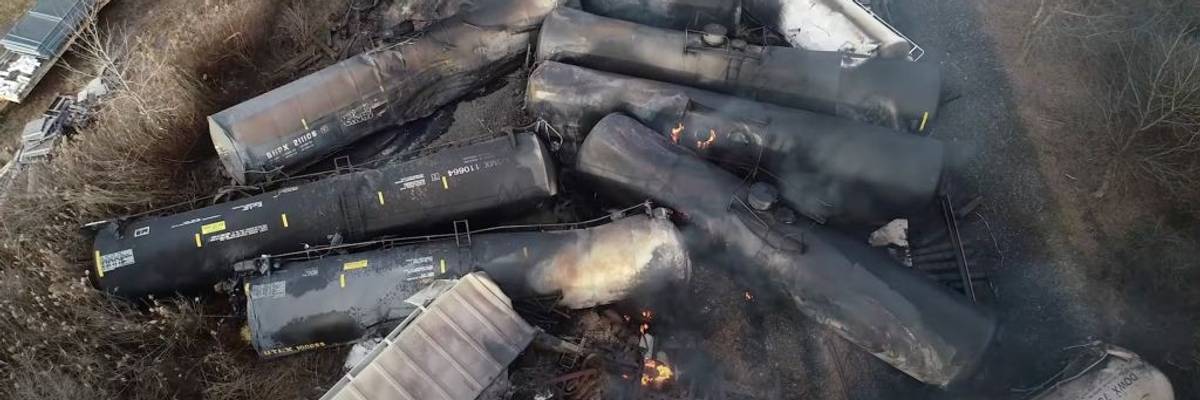
The hazardous chemicals being transported by the derailed train — including vinyl chloride, a known carcinogen — are used to make PVC, the world’s third most used type of plastic.
Last December, I testified in the US Senate at its first-ever public hearing about plastics. I called for a 50 percent reduction in the nation’s production of plastics over the next decade. That was immediately met with criticism by the plastics and chemical lobbyists. These lobbyists are not the ones living in East Palestine, Ohio, where a train derailment spewed dangerous chemicals into the air, soil, and water. They’re not the ones living in neighborhoods next to railroad tracks. They’re not the ones facing health risks from plastic production plants in their backyards every single day.
The East Palestine disaster was a direct result of the country’s reliance on fossil fuels and plastic. The hazardous chemicals being transported by the derailed train — including vinyl chloride, a known carcinogen — are used to make PVC, the world’s third most used type of plastic, typically used in pipes to deliver drinking water, packaging, gift cards, and toys that kids chew on.So let’s be clear about what happened this month in Ohio: Thousands of residents were ordered to evacuate — all to make PVC plastics. People reported rashes, headaches, and other symptoms associated with chemical exposure — all to make PVC pipes used to deliver drinking water, when alternatives to PVC piping exist. Thousands of fish in nearby streams were killed — all to make plastic toys our children play with and chew on. Ohioans’ drinking water may have been threatened — all to make cheap vinyl shower curtains.
When I talk to restaurant owners about the need to eliminate plastic packaging, they often say they use plastic because it’s cheap. Don’t tell residents of eastern Ohio and western Pennsylvania that plastics are cheap — or the people of Louisiana and Texas, living in the shadow of where PVC is manufactured.Plastic’s risks to human health shouldn’t be understated. Long-term exposure to vinyl chloride is associated with lymphoma, leukemia, and cancers of the brain and lungs. It can increase the risk of miscarriage and birth defects in pregnant women. Experts have advised East Palestine farmers and other residents to test their wells over the next few months in order to protect the health of both people and livestock. A Cornell University scientist stated that nearby soil should be tested to make sure crops aren’t contaminated.
Plastic is not cheap. Just ask the Americans living this nightmare. No parent should have to worry about their little ones digging in the dirt or splashing around in the local creek. Residents will be dealing with this toxic train derailment for years to come.
They deserve better. We all do. Plastic threatens human health at every stage of its life cycle, from the toxic substances released into the air during fossil fuel extraction, to the dangerous transport of these chemicals, to the plastic particles and toxins we consume from our food and drinking water, to the hazardous emissions from facilities burning or burying the waste after consumer use.
East Palestine made headlines because most people don’t expect these strikingly obvious displays of chemical contamination from plastic. However, in areas like Louisiana’s Cancer Alley — an 85-mile stretch of petrochemical plants along the Mississippi River — the danger is a daily reality. It consists primarily of Black and low-income neighborhoods, which suffer from an unusually high number of cancer cases on top of the constant threat of chemical accidents.Plastic is not cheap. And Americans will continue to pay the price as plastic production grows. In East Palestine, residents should be provided with long-term medical monitoring and Norfolk Southern Railway should be held fully accountable for all costs, including damages to natural resources.
On a national level, labor unions must be taken more seriously when they express safety concerns — and guaranteed more time off. Congress needs to stop caving to railroad industry lobbyists and require braking improvements and tighter regulation of rail cars.
Finally, our national leaders must pass federal policies reducing the production and use of unnecessary plastic. PVC is a great place to start — Taiwan, Korea, and New Zealand have already banned it in food packaging. In Massachusetts, state Representative Michael Day introduced a bill to reduce packaging and some of its toxic substances. The bill bans PVC and PFAS (also known as “forever chemicals”) in all consumer packaging.
Big Plastic has spent decades distracting the public from the industry’s responsibility in the plastic pollution crisis — which is also a climate and health crisis — and their lobbyists continue to shape legislation that prioritizes profits over people. It’s time our elected officials put their collective foot down, hold companies accountable, protect people from plastic, and pass policies curbing plastic production. Americans deserve better.
Dear Common Dreams reader, It’s been nearly 30 years since I co-founded Common Dreams with my late wife, Lina Newhouser. We had the radical notion that journalism should serve the public good, not corporate profits. It was clear to us from the outset what it would take to build such a project. No paid advertisements. No corporate sponsors. No millionaire publisher telling us what to think or do. Many people said we wouldn't last a year, but we proved those doubters wrong. Together with a tremendous team of journalists and dedicated staff, we built an independent media outlet free from the constraints of profits and corporate control. Our mission has always been simple: To inform. To inspire. To ignite change for the common good. Building Common Dreams was not easy. Our survival was never guaranteed. When you take on the most powerful forces—Wall Street greed, fossil fuel industry destruction, Big Tech lobbyists, and uber-rich oligarchs who have spent billions upon billions rigging the economy and democracy in their favor—the only bulwark you have is supporters who believe in your work. But here’s the urgent message from me today. It's never been this bad out there. And it's never been this hard to keep us going. At the very moment Common Dreams is most needed, the threats we face are intensifying. We need your support now more than ever. We don't accept corporate advertising and never will. We don't have a paywall because we don't think people should be blocked from critical news based on their ability to pay. Everything we do is funded by the donations of readers like you. When everyone does the little they can afford, we are strong. But if that support retreats or dries up, so do we. Will you donate now to make sure Common Dreams not only survives but thrives? —Craig Brown, Co-founder |
Last December, I testified in the US Senate at its first-ever public hearing about plastics. I called for a 50 percent reduction in the nation’s production of plastics over the next decade. That was immediately met with criticism by the plastics and chemical lobbyists. These lobbyists are not the ones living in East Palestine, Ohio, where a train derailment spewed dangerous chemicals into the air, soil, and water. They’re not the ones living in neighborhoods next to railroad tracks. They’re not the ones facing health risks from plastic production plants in their backyards every single day.
The East Palestine disaster was a direct result of the country’s reliance on fossil fuels and plastic. The hazardous chemicals being transported by the derailed train — including vinyl chloride, a known carcinogen — are used to make PVC, the world’s third most used type of plastic, typically used in pipes to deliver drinking water, packaging, gift cards, and toys that kids chew on.So let’s be clear about what happened this month in Ohio: Thousands of residents were ordered to evacuate — all to make PVC plastics. People reported rashes, headaches, and other symptoms associated with chemical exposure — all to make PVC pipes used to deliver drinking water, when alternatives to PVC piping exist. Thousands of fish in nearby streams were killed — all to make plastic toys our children play with and chew on. Ohioans’ drinking water may have been threatened — all to make cheap vinyl shower curtains.
When I talk to restaurant owners about the need to eliminate plastic packaging, they often say they use plastic because it’s cheap. Don’t tell residents of eastern Ohio and western Pennsylvania that plastics are cheap — or the people of Louisiana and Texas, living in the shadow of where PVC is manufactured.Plastic’s risks to human health shouldn’t be understated. Long-term exposure to vinyl chloride is associated with lymphoma, leukemia, and cancers of the brain and lungs. It can increase the risk of miscarriage and birth defects in pregnant women. Experts have advised East Palestine farmers and other residents to test their wells over the next few months in order to protect the health of both people and livestock. A Cornell University scientist stated that nearby soil should be tested to make sure crops aren’t contaminated.
Plastic is not cheap. Just ask the Americans living this nightmare. No parent should have to worry about their little ones digging in the dirt or splashing around in the local creek. Residents will be dealing with this toxic train derailment for years to come.
They deserve better. We all do. Plastic threatens human health at every stage of its life cycle, from the toxic substances released into the air during fossil fuel extraction, to the dangerous transport of these chemicals, to the plastic particles and toxins we consume from our food and drinking water, to the hazardous emissions from facilities burning or burying the waste after consumer use.
East Palestine made headlines because most people don’t expect these strikingly obvious displays of chemical contamination from plastic. However, in areas like Louisiana’s Cancer Alley — an 85-mile stretch of petrochemical plants along the Mississippi River — the danger is a daily reality. It consists primarily of Black and low-income neighborhoods, which suffer from an unusually high number of cancer cases on top of the constant threat of chemical accidents.Plastic is not cheap. And Americans will continue to pay the price as plastic production grows. In East Palestine, residents should be provided with long-term medical monitoring and Norfolk Southern Railway should be held fully accountable for all costs, including damages to natural resources.
On a national level, labor unions must be taken more seriously when they express safety concerns — and guaranteed more time off. Congress needs to stop caving to railroad industry lobbyists and require braking improvements and tighter regulation of rail cars.
Finally, our national leaders must pass federal policies reducing the production and use of unnecessary plastic. PVC is a great place to start — Taiwan, Korea, and New Zealand have already banned it in food packaging. In Massachusetts, state Representative Michael Day introduced a bill to reduce packaging and some of its toxic substances. The bill bans PVC and PFAS (also known as “forever chemicals”) in all consumer packaging.
Big Plastic has spent decades distracting the public from the industry’s responsibility in the plastic pollution crisis — which is also a climate and health crisis — and their lobbyists continue to shape legislation that prioritizes profits over people. It’s time our elected officials put their collective foot down, hold companies accountable, protect people from plastic, and pass policies curbing plastic production. Americans deserve better.
Last December, I testified in the US Senate at its first-ever public hearing about plastics. I called for a 50 percent reduction in the nation’s production of plastics over the next decade. That was immediately met with criticism by the plastics and chemical lobbyists. These lobbyists are not the ones living in East Palestine, Ohio, where a train derailment spewed dangerous chemicals into the air, soil, and water. They’re not the ones living in neighborhoods next to railroad tracks. They’re not the ones facing health risks from plastic production plants in their backyards every single day.
The East Palestine disaster was a direct result of the country’s reliance on fossil fuels and plastic. The hazardous chemicals being transported by the derailed train — including vinyl chloride, a known carcinogen — are used to make PVC, the world’s third most used type of plastic, typically used in pipes to deliver drinking water, packaging, gift cards, and toys that kids chew on.So let’s be clear about what happened this month in Ohio: Thousands of residents were ordered to evacuate — all to make PVC plastics. People reported rashes, headaches, and other symptoms associated with chemical exposure — all to make PVC pipes used to deliver drinking water, when alternatives to PVC piping exist. Thousands of fish in nearby streams were killed — all to make plastic toys our children play with and chew on. Ohioans’ drinking water may have been threatened — all to make cheap vinyl shower curtains.
When I talk to restaurant owners about the need to eliminate plastic packaging, they often say they use plastic because it’s cheap. Don’t tell residents of eastern Ohio and western Pennsylvania that plastics are cheap — or the people of Louisiana and Texas, living in the shadow of where PVC is manufactured.Plastic’s risks to human health shouldn’t be understated. Long-term exposure to vinyl chloride is associated with lymphoma, leukemia, and cancers of the brain and lungs. It can increase the risk of miscarriage and birth defects in pregnant women. Experts have advised East Palestine farmers and other residents to test their wells over the next few months in order to protect the health of both people and livestock. A Cornell University scientist stated that nearby soil should be tested to make sure crops aren’t contaminated.
Plastic is not cheap. Just ask the Americans living this nightmare. No parent should have to worry about their little ones digging in the dirt or splashing around in the local creek. Residents will be dealing with this toxic train derailment for years to come.
They deserve better. We all do. Plastic threatens human health at every stage of its life cycle, from the toxic substances released into the air during fossil fuel extraction, to the dangerous transport of these chemicals, to the plastic particles and toxins we consume from our food and drinking water, to the hazardous emissions from facilities burning or burying the waste after consumer use.
East Palestine made headlines because most people don’t expect these strikingly obvious displays of chemical contamination from plastic. However, in areas like Louisiana’s Cancer Alley — an 85-mile stretch of petrochemical plants along the Mississippi River — the danger is a daily reality. It consists primarily of Black and low-income neighborhoods, which suffer from an unusually high number of cancer cases on top of the constant threat of chemical accidents.Plastic is not cheap. And Americans will continue to pay the price as plastic production grows. In East Palestine, residents should be provided with long-term medical monitoring and Norfolk Southern Railway should be held fully accountable for all costs, including damages to natural resources.
On a national level, labor unions must be taken more seriously when they express safety concerns — and guaranteed more time off. Congress needs to stop caving to railroad industry lobbyists and require braking improvements and tighter regulation of rail cars.
Finally, our national leaders must pass federal policies reducing the production and use of unnecessary plastic. PVC is a great place to start — Taiwan, Korea, and New Zealand have already banned it in food packaging. In Massachusetts, state Representative Michael Day introduced a bill to reduce packaging and some of its toxic substances. The bill bans PVC and PFAS (also known as “forever chemicals”) in all consumer packaging.
Big Plastic has spent decades distracting the public from the industry’s responsibility in the plastic pollution crisis — which is also a climate and health crisis — and their lobbyists continue to shape legislation that prioritizes profits over people. It’s time our elected officials put their collective foot down, hold companies accountable, protect people from plastic, and pass policies curbing plastic production. Americans deserve better.