SUBSCRIBE TO OUR FREE NEWSLETTER
Daily news & progressive opinion—funded by the people, not the corporations—delivered straight to your inbox.
5
#000000
#FFFFFF
To donate by check, phone, or other method, see our More Ways to Give page.
Daily news & progressive opinion—funded by the people, not the corporations—delivered straight to your inbox.
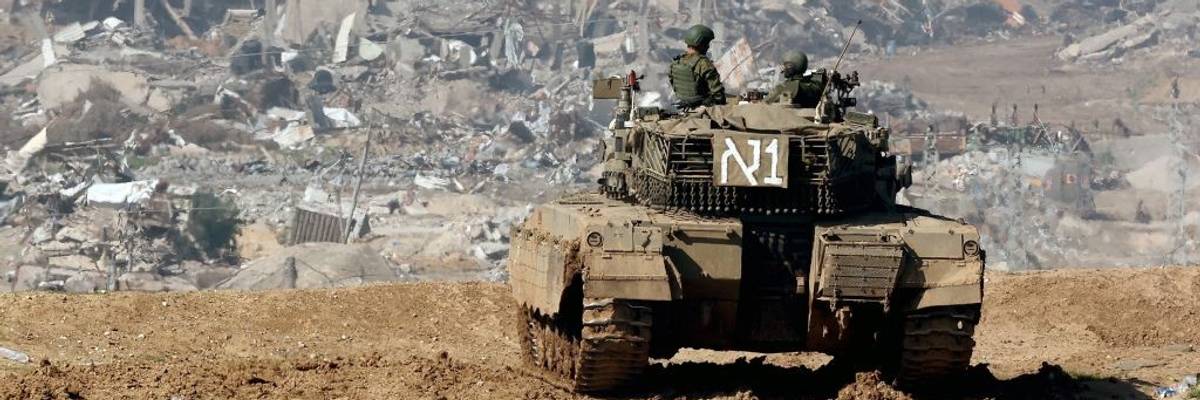
A picture shows a tank in southern Israel along the border with the Gaza Strip on January 19, 2024.
Presently, in regard to the Hamas-Israeli war, a succession of similarly incremental changes could open a path to the constructive transformation of the war.
In the face of an increasingly terrible conflict, political leaders, academic scholars, engaged officials, and media experts tend to explain how the conflict arose and is escalating badly. This has the effect of making the conflict appear inevitable and insurmountable short of totally defeating the adversary. Such thinking is evident in many of the current disorders in the United States and in many other countries. Such tendencies unfortunately fuel the intensity and gravity of the Israeli-Hamas war. Less attention tends to be given to constructive alternatives.
Fortunately, there are alternative approaches, deeds. and consequences. Attention might be given to what various actors might have done or failed to do to avert or transform tragic conflicts. These alternatives can point to ways of averting escalation and transforming the conflict constructively. In this way, some officials, non-governmental intermediaries, critics, and conflict resolution workers can eventually succeed in transforming tragic conflicts.
For example, consider the transformation of the Israeli-Egyptian conflict. In 1970, Egyptian President Gamal Nasser died, and Vice President Anwar El Sadat became president. In 1973, Sadat led Arab nations to another defeat in a war against Israel. Consequently, Israel took control of the Sinai peninsula. Sadat began to envision a different path to retrieving the Sinai. He reduced his dependence on the Soviet Union and improved his ties with the United States. In 1974, Yitzhak Rabin succeeded Golda Meier as the Israeli prime minister. Then in June 1977, Menachem Begin became the newly elected Israeli prime minister.
Each of the possible changes in the current conflict in Gaza looks improbable, until steps are taken to make it happen.
In a surprising gesture, Sadat flew to Jerusalem and spoke to the Israeli Knesset in November 1977. Despite this, Israeli-Egyptian negotiations regarding an Israeli withdrawal from the Sinai failed again and again, including U.S. President Jimmy Carter’s efforts in 1978 at Camp David. Finally, during Richard Nixon’s presidency, Henry Kissinger undertook mediation between the Egyptian and Israeli governments. Three agreements were reached for partial Israeli withdrawals from the Sinai, with United Nations monitoring. In March 1979, Egyptian and Israeli leaders signed a Treaty of Peace that endures. Egypt regained the Sinai, and Israel is secure from Egyptian military attack.
Presently, in regard to the Hamas-Israeli war, a succession of similarly incremental changes could open a path to the constructive transformation of the war. One possible change is being negotiated right now: a cease-fire that includes the exchange of Hamas-held hostages for Israeli-held Palestinian prisoners. Another imaginable change is a restructuring of the Palestinian Authority to play a major role in the governance of Gaza and the West bank, aided by the United Nations and a few Arab nations. A third possible change is a new Israeli government recognizing the security and other benefits of a Palestinian state. Egypt, Saudi Arabia, and a few other Arab states might then openly proclaim their readiness to work with Palestinians in Gaza and the West Bank to govern and rebuild Gaza. Finally, the political wing of Hamas might become dominant, recognize Israel, and foreswear violent attacks against it.
Any one of these changes would be more likely if it were understood to be met by the adversary’s move toward a constructive transformation. Many different non-governmental organizations, engaged citizens, government officials, and political leaders can act to make this change happen.
Not possible, you say? The same was said of the Israeli-Egyptian détente, until it happened. Each of the possible changes in the current conflict in Gaza looks improbable, until steps are taken to make it happen.
Dear Common Dreams reader, It’s been nearly 30 years since I co-founded Common Dreams with my late wife, Lina Newhouser. We had the radical notion that journalism should serve the public good, not corporate profits. It was clear to us from the outset what it would take to build such a project. No paid advertisements. No corporate sponsors. No millionaire publisher telling us what to think or do. Many people said we wouldn't last a year, but we proved those doubters wrong. Together with a tremendous team of journalists and dedicated staff, we built an independent media outlet free from the constraints of profits and corporate control. Our mission has always been simple: To inform. To inspire. To ignite change for the common good. Building Common Dreams was not easy. Our survival was never guaranteed. When you take on the most powerful forces—Wall Street greed, fossil fuel industry destruction, Big Tech lobbyists, and uber-rich oligarchs who have spent billions upon billions rigging the economy and democracy in their favor—the only bulwark you have is supporters who believe in your work. But here’s the urgent message from me today. It's never been this bad out there. And it's never been this hard to keep us going. At the very moment Common Dreams is most needed, the threats we face are intensifying. We need your support now more than ever. We don't accept corporate advertising and never will. We don't have a paywall because we don't think people should be blocked from critical news based on their ability to pay. Everything we do is funded by the donations of readers like you. When everyone does the little they can afford, we are strong. But if that support retreats or dries up, so do we. Will you donate now to make sure Common Dreams not only survives but thrives? —Craig Brown, Co-founder |
In the face of an increasingly terrible conflict, political leaders, academic scholars, engaged officials, and media experts tend to explain how the conflict arose and is escalating badly. This has the effect of making the conflict appear inevitable and insurmountable short of totally defeating the adversary. Such thinking is evident in many of the current disorders in the United States and in many other countries. Such tendencies unfortunately fuel the intensity and gravity of the Israeli-Hamas war. Less attention tends to be given to constructive alternatives.
Fortunately, there are alternative approaches, deeds. and consequences. Attention might be given to what various actors might have done or failed to do to avert or transform tragic conflicts. These alternatives can point to ways of averting escalation and transforming the conflict constructively. In this way, some officials, non-governmental intermediaries, critics, and conflict resolution workers can eventually succeed in transforming tragic conflicts.
For example, consider the transformation of the Israeli-Egyptian conflict. In 1970, Egyptian President Gamal Nasser died, and Vice President Anwar El Sadat became president. In 1973, Sadat led Arab nations to another defeat in a war against Israel. Consequently, Israel took control of the Sinai peninsula. Sadat began to envision a different path to retrieving the Sinai. He reduced his dependence on the Soviet Union and improved his ties with the United States. In 1974, Yitzhak Rabin succeeded Golda Meier as the Israeli prime minister. Then in June 1977, Menachem Begin became the newly elected Israeli prime minister.
Each of the possible changes in the current conflict in Gaza looks improbable, until steps are taken to make it happen.
In a surprising gesture, Sadat flew to Jerusalem and spoke to the Israeli Knesset in November 1977. Despite this, Israeli-Egyptian negotiations regarding an Israeli withdrawal from the Sinai failed again and again, including U.S. President Jimmy Carter’s efforts in 1978 at Camp David. Finally, during Richard Nixon’s presidency, Henry Kissinger undertook mediation between the Egyptian and Israeli governments. Three agreements were reached for partial Israeli withdrawals from the Sinai, with United Nations monitoring. In March 1979, Egyptian and Israeli leaders signed a Treaty of Peace that endures. Egypt regained the Sinai, and Israel is secure from Egyptian military attack.
Presently, in regard to the Hamas-Israeli war, a succession of similarly incremental changes could open a path to the constructive transformation of the war. One possible change is being negotiated right now: a cease-fire that includes the exchange of Hamas-held hostages for Israeli-held Palestinian prisoners. Another imaginable change is a restructuring of the Palestinian Authority to play a major role in the governance of Gaza and the West bank, aided by the United Nations and a few Arab nations. A third possible change is a new Israeli government recognizing the security and other benefits of a Palestinian state. Egypt, Saudi Arabia, and a few other Arab states might then openly proclaim their readiness to work with Palestinians in Gaza and the West Bank to govern and rebuild Gaza. Finally, the political wing of Hamas might become dominant, recognize Israel, and foreswear violent attacks against it.
Any one of these changes would be more likely if it were understood to be met by the adversary’s move toward a constructive transformation. Many different non-governmental organizations, engaged citizens, government officials, and political leaders can act to make this change happen.
Not possible, you say? The same was said of the Israeli-Egyptian détente, until it happened. Each of the possible changes in the current conflict in Gaza looks improbable, until steps are taken to make it happen.
In the face of an increasingly terrible conflict, political leaders, academic scholars, engaged officials, and media experts tend to explain how the conflict arose and is escalating badly. This has the effect of making the conflict appear inevitable and insurmountable short of totally defeating the adversary. Such thinking is evident in many of the current disorders in the United States and in many other countries. Such tendencies unfortunately fuel the intensity and gravity of the Israeli-Hamas war. Less attention tends to be given to constructive alternatives.
Fortunately, there are alternative approaches, deeds. and consequences. Attention might be given to what various actors might have done or failed to do to avert or transform tragic conflicts. These alternatives can point to ways of averting escalation and transforming the conflict constructively. In this way, some officials, non-governmental intermediaries, critics, and conflict resolution workers can eventually succeed in transforming tragic conflicts.
For example, consider the transformation of the Israeli-Egyptian conflict. In 1970, Egyptian President Gamal Nasser died, and Vice President Anwar El Sadat became president. In 1973, Sadat led Arab nations to another defeat in a war against Israel. Consequently, Israel took control of the Sinai peninsula. Sadat began to envision a different path to retrieving the Sinai. He reduced his dependence on the Soviet Union and improved his ties with the United States. In 1974, Yitzhak Rabin succeeded Golda Meier as the Israeli prime minister. Then in June 1977, Menachem Begin became the newly elected Israeli prime minister.
Each of the possible changes in the current conflict in Gaza looks improbable, until steps are taken to make it happen.
In a surprising gesture, Sadat flew to Jerusalem and spoke to the Israeli Knesset in November 1977. Despite this, Israeli-Egyptian negotiations regarding an Israeli withdrawal from the Sinai failed again and again, including U.S. President Jimmy Carter’s efforts in 1978 at Camp David. Finally, during Richard Nixon’s presidency, Henry Kissinger undertook mediation between the Egyptian and Israeli governments. Three agreements were reached for partial Israeli withdrawals from the Sinai, with United Nations monitoring. In March 1979, Egyptian and Israeli leaders signed a Treaty of Peace that endures. Egypt regained the Sinai, and Israel is secure from Egyptian military attack.
Presently, in regard to the Hamas-Israeli war, a succession of similarly incremental changes could open a path to the constructive transformation of the war. One possible change is being negotiated right now: a cease-fire that includes the exchange of Hamas-held hostages for Israeli-held Palestinian prisoners. Another imaginable change is a restructuring of the Palestinian Authority to play a major role in the governance of Gaza and the West bank, aided by the United Nations and a few Arab nations. A third possible change is a new Israeli government recognizing the security and other benefits of a Palestinian state. Egypt, Saudi Arabia, and a few other Arab states might then openly proclaim their readiness to work with Palestinians in Gaza and the West Bank to govern and rebuild Gaza. Finally, the political wing of Hamas might become dominant, recognize Israel, and foreswear violent attacks against it.
Any one of these changes would be more likely if it were understood to be met by the adversary’s move toward a constructive transformation. Many different non-governmental organizations, engaged citizens, government officials, and political leaders can act to make this change happen.
Not possible, you say? The same was said of the Israeli-Egyptian détente, until it happened. Each of the possible changes in the current conflict in Gaza looks improbable, until steps are taken to make it happen.