SUBSCRIBE TO OUR FREE NEWSLETTER
Daily news & progressive opinion—funded by the people, not the corporations—delivered straight to your inbox.
5
#000000
#FFFFFF
To donate by check, phone, or other method, see our More Ways to Give page.
Daily news & progressive opinion—funded by the people, not the corporations—delivered straight to your inbox.
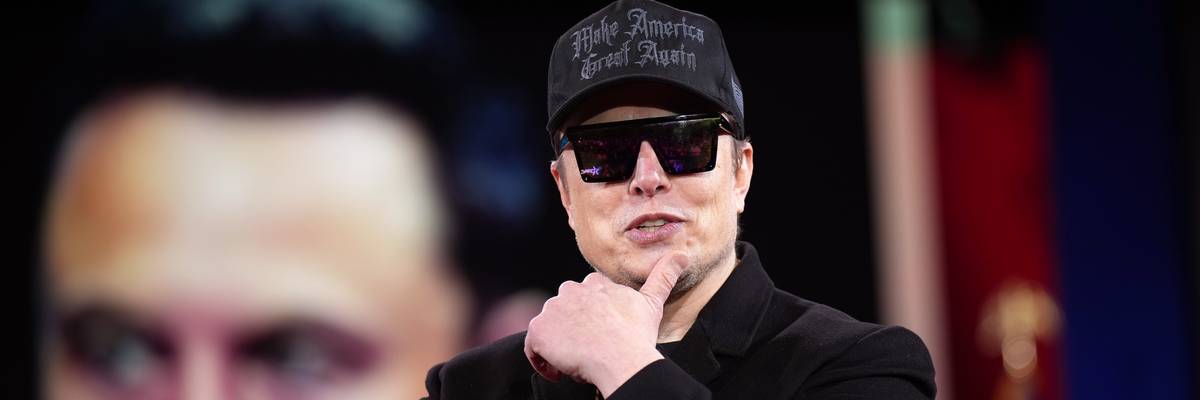
The Musk-led effort is neither a money-saving nor fraud-finding operation—it's an ideologically driven assault by far-right libertarians who seek to destroy a functioning government for their own greedy ends.
Donald Trump and Elon Musk keep claiming that their scorched-earth approach to remaking the federal government is made necessary by the prevalence of fraud and waste. Musk’s DOGE attack-squad tabulates its progress on a Wall of Receipts that currently purports to have saved Uncle Sam $65 billion.
That number appears to have been plucked out of thin air. The savings for the 2,300 individual contracts listed on the site add up to only $9.6 billion, and even that amount is shaky. For example, the single biggest savings, $1.9 billion, is attached to a Treasury Department contract that is reported to have ended during the Biden Administration.
DOGE gives no details of any fraud it may have found in the contracts. That is not surprising, since it is impossible to have done a careful examination of that many contracts in such a short amount of time.
Large numbers of the contracts are linked to agencies the Trump Administration is in the process of dismantling. USAID accounts for 246 contracts with total purported savings of $4.2 billion. The Consumer Financial Protection Bureau has 404 listings with savings of $109 million. The Education Department, reported to be headed for the chopping block, has 119 contracts with supposed savings of $659 million.
What we see in DOGE is instead the illusion of an attack on corruption that serves as a smokescreen for the Trump Administration’s scheme to dismantle large portions of the federal government.
It seems clear DOGE targeted those contracts because of the agency involved, not any evidence of misconduct. Among the remaining 769 contracts, there are many that seem to be targeted for ideological reasons. They include numerous awards whose descriptions refer to now-taboo areas such as DEI or environmental justice.
There are more than 100 listings for subscriptions, especially for expensive services such as Politico, Bloomberg Law, and Lexis Nexis. Those may not always be worth the cost, but there is nothing corrupt about the need for an agency to have good access to information.
Then there are listings for contracts that have not gone into effect. The second biggest saving amount, $318 million, is attached to an Office of Personnel Management pre-award. How can there be fraud when there is no contractor yet?
DOGE’s list also contains numerous entries with obvious errors. These include instances in which there are two links pointing to different contract awards, making it unclear which one is meant to be included. For example, there is a $149 million savings connected both to a contractor called Advanced Automation Technologies Inc. (for three assistants) and to Airgas USA for refrigerated liquid gases.
By pointing to DOGE’s sloppy work, I do not mean to deny the existence of contract fraud. The problem is that Musk’s people, whether through ignorance or design, are looking in the wrong places. They seem to be ignoring the types of large contractors that have repeatedly been found to have cheated federal agencies.
The classic examples are the big weapons producers. As of now, DOGE lists only $8 million in savings from Defense Department contracts—and those are mainly from DEI awards and subscriptions. The same is true for the Department of Health and Human Services, even though healthcare is a major source of contractor fraud.
What gets forgotten in the claims about fraud coming from Trump and Musk is that the federal government already had a robust system for fighting contractor misconduct. Audits were done by agency inspectors general—who have now been fired by Trump—and prosecutions were launched by the Justice Department using the False Claims Act. Over the past decade, the DOJ has collected about $30 billion in fines and settlements.
That is serious fraud fighting. What we see in DOGE is instead the illusion of an attack on corruption that serves as a smokescreen for the Trump Administration’s scheme to dismantle large portions of the federal government. It remains to be seen how long they can keep up the charade.
This piece was originally published in the Dirt Diggers Digest newsletter.
Dear Common Dreams reader, It’s been nearly 30 years since I co-founded Common Dreams with my late wife, Lina Newhouser. We had the radical notion that journalism should serve the public good, not corporate profits. It was clear to us from the outset what it would take to build such a project. No paid advertisements. No corporate sponsors. No millionaire publisher telling us what to think or do. Many people said we wouldn't last a year, but we proved those doubters wrong. Together with a tremendous team of journalists and dedicated staff, we built an independent media outlet free from the constraints of profits and corporate control. Our mission has always been simple: To inform. To inspire. To ignite change for the common good. Building Common Dreams was not easy. Our survival was never guaranteed. When you take on the most powerful forces—Wall Street greed, fossil fuel industry destruction, Big Tech lobbyists, and uber-rich oligarchs who have spent billions upon billions rigging the economy and democracy in their favor—the only bulwark you have is supporters who believe in your work. But here’s the urgent message from me today. It's never been this bad out there. And it's never been this hard to keep us going. At the very moment Common Dreams is most needed, the threats we face are intensifying. We need your support now more than ever. We don't accept corporate advertising and never will. We don't have a paywall because we don't think people should be blocked from critical news based on their ability to pay. Everything we do is funded by the donations of readers like you. When everyone does the little they can afford, we are strong. But if that support retreats or dries up, so do we. Will you donate now to make sure Common Dreams not only survives but thrives? —Craig Brown, Co-founder |
Donald Trump and Elon Musk keep claiming that their scorched-earth approach to remaking the federal government is made necessary by the prevalence of fraud and waste. Musk’s DOGE attack-squad tabulates its progress on a Wall of Receipts that currently purports to have saved Uncle Sam $65 billion.
That number appears to have been plucked out of thin air. The savings for the 2,300 individual contracts listed on the site add up to only $9.6 billion, and even that amount is shaky. For example, the single biggest savings, $1.9 billion, is attached to a Treasury Department contract that is reported to have ended during the Biden Administration.
DOGE gives no details of any fraud it may have found in the contracts. That is not surprising, since it is impossible to have done a careful examination of that many contracts in such a short amount of time.
Large numbers of the contracts are linked to agencies the Trump Administration is in the process of dismantling. USAID accounts for 246 contracts with total purported savings of $4.2 billion. The Consumer Financial Protection Bureau has 404 listings with savings of $109 million. The Education Department, reported to be headed for the chopping block, has 119 contracts with supposed savings of $659 million.
What we see in DOGE is instead the illusion of an attack on corruption that serves as a smokescreen for the Trump Administration’s scheme to dismantle large portions of the federal government.
It seems clear DOGE targeted those contracts because of the agency involved, not any evidence of misconduct. Among the remaining 769 contracts, there are many that seem to be targeted for ideological reasons. They include numerous awards whose descriptions refer to now-taboo areas such as DEI or environmental justice.
There are more than 100 listings for subscriptions, especially for expensive services such as Politico, Bloomberg Law, and Lexis Nexis. Those may not always be worth the cost, but there is nothing corrupt about the need for an agency to have good access to information.
Then there are listings for contracts that have not gone into effect. The second biggest saving amount, $318 million, is attached to an Office of Personnel Management pre-award. How can there be fraud when there is no contractor yet?
DOGE’s list also contains numerous entries with obvious errors. These include instances in which there are two links pointing to different contract awards, making it unclear which one is meant to be included. For example, there is a $149 million savings connected both to a contractor called Advanced Automation Technologies Inc. (for three assistants) and to Airgas USA for refrigerated liquid gases.
By pointing to DOGE’s sloppy work, I do not mean to deny the existence of contract fraud. The problem is that Musk’s people, whether through ignorance or design, are looking in the wrong places. They seem to be ignoring the types of large contractors that have repeatedly been found to have cheated federal agencies.
The classic examples are the big weapons producers. As of now, DOGE lists only $8 million in savings from Defense Department contracts—and those are mainly from DEI awards and subscriptions. The same is true for the Department of Health and Human Services, even though healthcare is a major source of contractor fraud.
What gets forgotten in the claims about fraud coming from Trump and Musk is that the federal government already had a robust system for fighting contractor misconduct. Audits were done by agency inspectors general—who have now been fired by Trump—and prosecutions were launched by the Justice Department using the False Claims Act. Over the past decade, the DOJ has collected about $30 billion in fines and settlements.
That is serious fraud fighting. What we see in DOGE is instead the illusion of an attack on corruption that serves as a smokescreen for the Trump Administration’s scheme to dismantle large portions of the federal government. It remains to be seen how long they can keep up the charade.
This piece was originally published in the Dirt Diggers Digest newsletter.
Donald Trump and Elon Musk keep claiming that their scorched-earth approach to remaking the federal government is made necessary by the prevalence of fraud and waste. Musk’s DOGE attack-squad tabulates its progress on a Wall of Receipts that currently purports to have saved Uncle Sam $65 billion.
That number appears to have been plucked out of thin air. The savings for the 2,300 individual contracts listed on the site add up to only $9.6 billion, and even that amount is shaky. For example, the single biggest savings, $1.9 billion, is attached to a Treasury Department contract that is reported to have ended during the Biden Administration.
DOGE gives no details of any fraud it may have found in the contracts. That is not surprising, since it is impossible to have done a careful examination of that many contracts in such a short amount of time.
Large numbers of the contracts are linked to agencies the Trump Administration is in the process of dismantling. USAID accounts for 246 contracts with total purported savings of $4.2 billion. The Consumer Financial Protection Bureau has 404 listings with savings of $109 million. The Education Department, reported to be headed for the chopping block, has 119 contracts with supposed savings of $659 million.
What we see in DOGE is instead the illusion of an attack on corruption that serves as a smokescreen for the Trump Administration’s scheme to dismantle large portions of the federal government.
It seems clear DOGE targeted those contracts because of the agency involved, not any evidence of misconduct. Among the remaining 769 contracts, there are many that seem to be targeted for ideological reasons. They include numerous awards whose descriptions refer to now-taboo areas such as DEI or environmental justice.
There are more than 100 listings for subscriptions, especially for expensive services such as Politico, Bloomberg Law, and Lexis Nexis. Those may not always be worth the cost, but there is nothing corrupt about the need for an agency to have good access to information.
Then there are listings for contracts that have not gone into effect. The second biggest saving amount, $318 million, is attached to an Office of Personnel Management pre-award. How can there be fraud when there is no contractor yet?
DOGE’s list also contains numerous entries with obvious errors. These include instances in which there are two links pointing to different contract awards, making it unclear which one is meant to be included. For example, there is a $149 million savings connected both to a contractor called Advanced Automation Technologies Inc. (for three assistants) and to Airgas USA for refrigerated liquid gases.
By pointing to DOGE’s sloppy work, I do not mean to deny the existence of contract fraud. The problem is that Musk’s people, whether through ignorance or design, are looking in the wrong places. They seem to be ignoring the types of large contractors that have repeatedly been found to have cheated federal agencies.
The classic examples are the big weapons producers. As of now, DOGE lists only $8 million in savings from Defense Department contracts—and those are mainly from DEI awards and subscriptions. The same is true for the Department of Health and Human Services, even though healthcare is a major source of contractor fraud.
What gets forgotten in the claims about fraud coming from Trump and Musk is that the federal government already had a robust system for fighting contractor misconduct. Audits were done by agency inspectors general—who have now been fired by Trump—and prosecutions were launched by the Justice Department using the False Claims Act. Over the past decade, the DOJ has collected about $30 billion in fines and settlements.
That is serious fraud fighting. What we see in DOGE is instead the illusion of an attack on corruption that serves as a smokescreen for the Trump Administration’s scheme to dismantle large portions of the federal government. It remains to be seen how long they can keep up the charade.
This piece was originally published in the Dirt Diggers Digest newsletter.