SUBSCRIBE TO OUR FREE NEWSLETTER
Daily news & progressive opinion—funded by the people, not the corporations—delivered straight to your inbox.
5
#000000
#FFFFFF
To donate by check, phone, or other method, see our More Ways to Give page.
Daily news & progressive opinion—funded by the people, not the corporations—delivered straight to your inbox.

Senator Angus King (I-ME) speaks at a press conference with other Senate Democrats who voted to restore government funding, in Washington, DC on November 9, 2025.
The establishment wing of the party has once again sold out the people they were elected to represent.
If there is one key lesson from last week's blowout victory for Democrats, it's that Democratic voters want fighters. In waiting less than a week after the elections to announce their unilateral surrender late on a Sunday night, the eight members of the Senate Democratic caucus who handed Trump and his Republican allies total victory in exchange for nothing sold those voters out.
While Democratic voters in the November 4th election were elated by the first triumph in quite a while, the cavers took the wind out of their sails. There's a serious danger that some of these constituents won't bother to vote in the 2026 elections. It could cost the Democrats the election and allow MAGA to keep control of the House and Senate, while impoverishing many poor and working-class Americans. With gerrymandering, there will likely be only about 40 competitive House districts (and six or seven competitive Senate races). Many of them will be likely decided by a few thousand (or even a few hundred) votes and there's a good chance that the disillusionment with Democratic cowardice could make the difference in deciding who controls both chambers of Congress.
The two biggest stars emerging from the November 4th elections are Zorhan Mamdani and Gavin Newsom. They're from different wings of the Democratic Party—Mamdani is an unyielding progressive while Newsom is generally a moderate. What they had most in common was their willingness in this election to be fighters.
While many Democrats were wringing their hands over Texas's midterm gerrymandering, which is likely to hand Republicans five House seats, Newsom came up with the idea to amend the California Constitution to pick up five House seats for Democrats. He managed to get it on the ballot, despite the opposition of some Democrats who argued that "two wrongs don't make a right." After being the leading voice in support of Proposition 10, Newsom's amendment won in a 20-point landslide.
The result is that the handsome and articulate governor is now the likely front-runner for the 2028 Democratic Presidential nomination.
On the other side of the country, Mamdani received over 50% of the votes in a 3-way race. He mobilized over 100,000 volunteers, brought out the greatest number of voters in a New York mayoral race in years, and held huge rallies of enthusiastic supporters. He won 70% of voters under age 45 and 75% of those under 30. Many of this age group are not regular voters but jammed the polls to vote for Mamdani. They're the future of the Democratic Party, if they continue to vote in such numbers.
With his fighting outsider campaign, Mamdani became one of the leading young faces in the Democratic Party.
The victory parties for Newsom's Proposition 10 and Mamdani's mayoral win were raucous, joyous, and filled with an overwhelming sense of relief.
But the eight moderate Senate cavers couldn't wait even a week to take the wind out of their sails. Many of them, including those who were first-time voters, may be so discouraged and disillusioned that they hey won't bother showing up at the polls next November.
It may be that Republicans would have never agreed to pass the extension to the Affordable Care Act subsidies. Sooner or later, Democrats who, unlike Republicans actually care about the well-being of SNAP recipients, may have had to let the Big Ugly Bill pass. But, honestly, what was the fucking rush? Why couldn't they wait for more than a week after the elections to cave? They could have at least taken the time to explain their actions to voters and then maybe given in around Thanksgiving so as not to spoil the holiday. But if they were so desperate to unilaterally surrender after letting the country suffer for over a month in return for a non-deal they could have gotten at the beginning, why was it worth bothering with a shutdown in the first place?
If the quick surrender of so-called "moderates" depresses many who voted Democratic on November 4th so much that they won't be motivated to return to the polls next November, the Democratic cowards caucus may have made it harder for the party to win in 2026.
In any case, it's clear that people who voted for Democrats and policies on November 4th wanted fighters, not cowards. The lesson is also clear: without fighters, we're lost.
Dear Common Dreams reader, It’s been nearly 30 years since I co-founded Common Dreams with my late wife, Lina Newhouser. We had the radical notion that journalism should serve the public good, not corporate profits. It was clear to us from the outset what it would take to build such a project. No paid advertisements. No corporate sponsors. No millionaire publisher telling us what to think or do. Many people said we wouldn't last a year, but we proved those doubters wrong. Together with a tremendous team of journalists and dedicated staff, we built an independent media outlet free from the constraints of profits and corporate control. Our mission has always been simple: To inform. To inspire. To ignite change for the common good. Building Common Dreams was not easy. Our survival was never guaranteed. When you take on the most powerful forces—Wall Street greed, fossil fuel industry destruction, Big Tech lobbyists, and uber-rich oligarchs who have spent billions upon billions rigging the economy and democracy in their favor—the only bulwark you have is supporters who believe in your work. But here’s the urgent message from me today. It's never been this bad out there. And it's never been this hard to keep us going. At the very moment Common Dreams is most needed, the threats we face are intensifying. We need your support now more than ever. We don't accept corporate advertising and never will. We don't have a paywall because we don't think people should be blocked from critical news based on their ability to pay. Everything we do is funded by the donations of readers like you. When everyone does the little they can afford, we are strong. But if that support retreats or dries up, so do we. Will you donate now to make sure Common Dreams not only survives but thrives? —Craig Brown, Co-founder |
If there is one key lesson from last week's blowout victory for Democrats, it's that Democratic voters want fighters. In waiting less than a week after the elections to announce their unilateral surrender late on a Sunday night, the eight members of the Senate Democratic caucus who handed Trump and his Republican allies total victory in exchange for nothing sold those voters out.
While Democratic voters in the November 4th election were elated by the first triumph in quite a while, the cavers took the wind out of their sails. There's a serious danger that some of these constituents won't bother to vote in the 2026 elections. It could cost the Democrats the election and allow MAGA to keep control of the House and Senate, while impoverishing many poor and working-class Americans. With gerrymandering, there will likely be only about 40 competitive House districts (and six or seven competitive Senate races). Many of them will be likely decided by a few thousand (or even a few hundred) votes and there's a good chance that the disillusionment with Democratic cowardice could make the difference in deciding who controls both chambers of Congress.
The two biggest stars emerging from the November 4th elections are Zorhan Mamdani and Gavin Newsom. They're from different wings of the Democratic Party—Mamdani is an unyielding progressive while Newsom is generally a moderate. What they had most in common was their willingness in this election to be fighters.
While many Democrats were wringing their hands over Texas's midterm gerrymandering, which is likely to hand Republicans five House seats, Newsom came up with the idea to amend the California Constitution to pick up five House seats for Democrats. He managed to get it on the ballot, despite the opposition of some Democrats who argued that "two wrongs don't make a right." After being the leading voice in support of Proposition 10, Newsom's amendment won in a 20-point landslide.
The result is that the handsome and articulate governor is now the likely front-runner for the 2028 Democratic Presidential nomination.
On the other side of the country, Mamdani received over 50% of the votes in a 3-way race. He mobilized over 100,000 volunteers, brought out the greatest number of voters in a New York mayoral race in years, and held huge rallies of enthusiastic supporters. He won 70% of voters under age 45 and 75% of those under 30. Many of this age group are not regular voters but jammed the polls to vote for Mamdani. They're the future of the Democratic Party, if they continue to vote in such numbers.
With his fighting outsider campaign, Mamdani became one of the leading young faces in the Democratic Party.
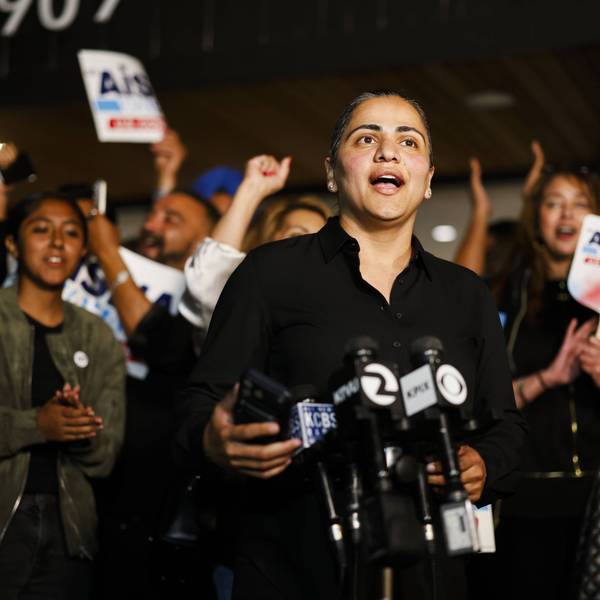
The victory parties for Newsom's Proposition 10 and Mamdani's mayoral win were raucous, joyous, and filled with an overwhelming sense of relief.
But the eight moderate Senate cavers couldn't wait even a week to take the wind out of their sails. Many of them, including those who were first-time voters, may be so discouraged and disillusioned that they hey won't bother showing up at the polls next November.
It may be that Republicans would have never agreed to pass the extension to the Affordable Care Act subsidies. Sooner or later, Democrats who, unlike Republicans actually care about the well-being of SNAP recipients, may have had to let the Big Ugly Bill pass. But, honestly, what was the fucking rush? Why couldn't they wait for more than a week after the elections to cave? They could have at least taken the time to explain their actions to voters and then maybe given in around Thanksgiving so as not to spoil the holiday. But if they were so desperate to unilaterally surrender after letting the country suffer for over a month in return for a non-deal they could have gotten at the beginning, why was it worth bothering with a shutdown in the first place?
If the quick surrender of so-called "moderates" depresses many who voted Democratic on November 4th so much that they won't be motivated to return to the polls next November, the Democratic cowards caucus may have made it harder for the party to win in 2026.
In any case, it's clear that people who voted for Democrats and policies on November 4th wanted fighters, not cowards. The lesson is also clear: without fighters, we're lost.
If there is one key lesson from last week's blowout victory for Democrats, it's that Democratic voters want fighters. In waiting less than a week after the elections to announce their unilateral surrender late on a Sunday night, the eight members of the Senate Democratic caucus who handed Trump and his Republican allies total victory in exchange for nothing sold those voters out.
While Democratic voters in the November 4th election were elated by the first triumph in quite a while, the cavers took the wind out of their sails. There's a serious danger that some of these constituents won't bother to vote in the 2026 elections. It could cost the Democrats the election and allow MAGA to keep control of the House and Senate, while impoverishing many poor and working-class Americans. With gerrymandering, there will likely be only about 40 competitive House districts (and six or seven competitive Senate races). Many of them will be likely decided by a few thousand (or even a few hundred) votes and there's a good chance that the disillusionment with Democratic cowardice could make the difference in deciding who controls both chambers of Congress.
The two biggest stars emerging from the November 4th elections are Zorhan Mamdani and Gavin Newsom. They're from different wings of the Democratic Party—Mamdani is an unyielding progressive while Newsom is generally a moderate. What they had most in common was their willingness in this election to be fighters.
While many Democrats were wringing their hands over Texas's midterm gerrymandering, which is likely to hand Republicans five House seats, Newsom came up with the idea to amend the California Constitution to pick up five House seats for Democrats. He managed to get it on the ballot, despite the opposition of some Democrats who argued that "two wrongs don't make a right." After being the leading voice in support of Proposition 10, Newsom's amendment won in a 20-point landslide.
The result is that the handsome and articulate governor is now the likely front-runner for the 2028 Democratic Presidential nomination.
On the other side of the country, Mamdani received over 50% of the votes in a 3-way race. He mobilized over 100,000 volunteers, brought out the greatest number of voters in a New York mayoral race in years, and held huge rallies of enthusiastic supporters. He won 70% of voters under age 45 and 75% of those under 30. Many of this age group are not regular voters but jammed the polls to vote for Mamdani. They're the future of the Democratic Party, if they continue to vote in such numbers.
With his fighting outsider campaign, Mamdani became one of the leading young faces in the Democratic Party.
The victory parties for Newsom's Proposition 10 and Mamdani's mayoral win were raucous, joyous, and filled with an overwhelming sense of relief.
But the eight moderate Senate cavers couldn't wait even a week to take the wind out of their sails. Many of them, including those who were first-time voters, may be so discouraged and disillusioned that they hey won't bother showing up at the polls next November.
It may be that Republicans would have never agreed to pass the extension to the Affordable Care Act subsidies. Sooner or later, Democrats who, unlike Republicans actually care about the well-being of SNAP recipients, may have had to let the Big Ugly Bill pass. But, honestly, what was the fucking rush? Why couldn't they wait for more than a week after the elections to cave? They could have at least taken the time to explain their actions to voters and then maybe given in around Thanksgiving so as not to spoil the holiday. But if they were so desperate to unilaterally surrender after letting the country suffer for over a month in return for a non-deal they could have gotten at the beginning, why was it worth bothering with a shutdown in the first place?
If the quick surrender of so-called "moderates" depresses many who voted Democratic on November 4th so much that they won't be motivated to return to the polls next November, the Democratic cowards caucus may have made it harder for the party to win in 2026.
In any case, it's clear that people who voted for Democrats and policies on November 4th wanted fighters, not cowards. The lesson is also clear: without fighters, we're lost.