
The Ed Sullivan Theater, where "The Late Show with Stephen Colbert" was recorded live, was seen in Midtown Manhattan on July 18, 2025.
Colbert's Termination Is a Win for Trump—and the Corporate Assault on Dissent
The conglomerates that dominate our media and our society have one and only one value: profit-maximization.
When media critic A.J. Liebling wrote in The New Yorker 65 years ago that “freedom of the press is guaranteed only to those who own one,” he might have glimpsed a media system dangerously dominated by a small number of companies.
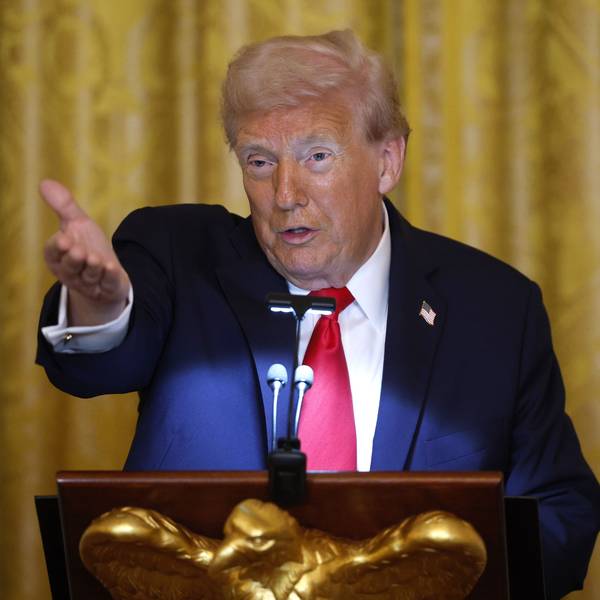
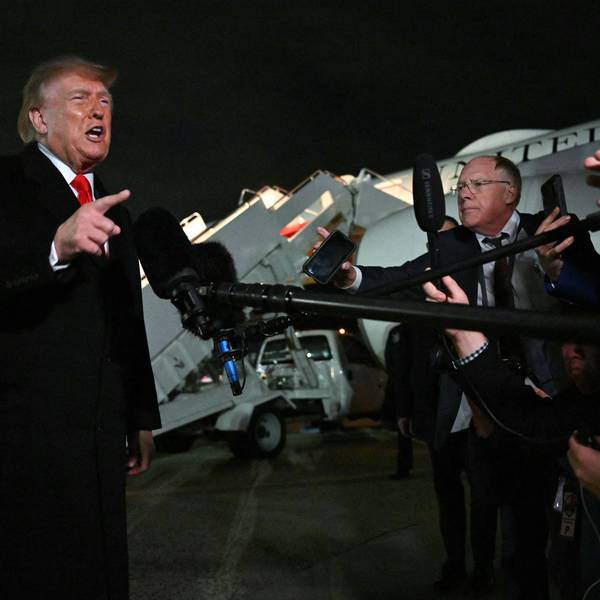
But it’s unlikely he could have foreseen a president as authoritarian as Donald Trump, and media conglomerates eager to capitulate to him.
Thanks to the Paramount conglomerate and its greed-fueled boss, Shari Redstone, the “Late Show with Stephen Colbert” will vanish next year. After the Trump administration responds by approving the Paramount merger with Skydance, Redstone will be roughly $2 billion richer than she is today, and Paramount/CBS may become even more Trump-friendly.
Months ago, when I predicted the demise of Colbert or “The Daily Show,” another Paramount property, it sounded paranoid. But now it’s reality. (“The Daily Show” may be next on the chopping block.)
In recent months, we’ve seen one media conglomerate after another offer what amounted to multimillion-dollar bribes to Trump by settling frivolous Trump lawsuits that these companies could not possibly have lost in court.
Last December, the Disney Company paid Trump a thinly-disguised bribe—$15 million to Trump’s future presidential library—to settle a harassment lawsuit against ABC News over a segment mentioning E. Jean Carroll’s victorious case against Trump.
In January, Mark Zuckerberg’s Meta made a bribe-like payment of $25 million to Trump to settle a ridiculous lawsuit after the company followed its own well-understood guidelines and suspended Trump from Facebook and Instagram for inciting violence on January 6, 2021 at the Capitol. (Zuckerberg dined with Trump at Mar-a-Lago in November and Meta donated $1 million to Trump’s 2025 inaugural fund.)
But there was a snag in settlement negotiations between Paramount and Trump over an even more laughable suit he could never win in court. This one concerned how CBS “60 Minutes” had edited an interview with Kamala Harris, a suit that Paramount had called “meritless.”
During negotiations, respected executive producer of “60 Minutes” Bill Owens resigned over Paramount meddling, soon followed by the resignation of the CEO of CBS News. But that wasn’t enough to get the suit settled, and it was far from sufficient to get the Trump administration to approve the Paramount merger. That’s when I worried that Colbert or Jon Stewart would have to be sacrificed to placate the authoritarian-in-chief and get Paramount and Redstone the riches that a merger would bring.
Three weeks ago, Paramount agreed to pay Trump $16 million to settle the suit, amid rumors of side deals that content would shift at the new Paramount. And now Colbert, one of Trump’s most effective critics, is being shown the door. On Monday’s show, Colbert carried on at length, making fun of what he called Paramount’s “big, fat bribe.”
Colbert is funny.
What’s not funny is that our country’s democratic experiment is on the verge of collapse—and it has less to do with Trump than with the capitulation of corporate liberals and corporate centrist institutions to Trump.
Big universities have capitulated. Big law firms have capitulated. Big media companies have capitulated.
The lesson to be learned from today’s political reality is that big corporate institutions don’t care about democracy or free speech. They will bend the political system toward their own economic benefit—and be complicit with authoritarianism if it keeps getting them wealthier.
The conglomerates that dominate our media and our society have one and only one value: profit-maximization. This was pretty much admitted by Shari Redstone’s late father, Sumner, who built the Viacom (now Paramount) media conglomerate. Sumner Redstone was considered a liberal, a son of Massachusetts who’d been friendly with Massachusetts Sen. John Kerry, the 2004 Democratic candidate for president. But Redstone famously endorsed George W. Bush for president in 2004.
As Redstone explained: “I vote for what’s good for Viacom. I vote, today, Viacom... I don’t want to denigrate Kerry, but from a Viacom standpoint, the election of a Republican administration has stood for many things we believe in, deregulation and so on.”
I know I’m not the only progressive who has survived the Trump years with my sanity intact thanks in large part to TV comedians employed by media conglomerates: Colbert (Paramount), Jon Stewart and team (Paramount), Jimmy Kimmel (Disney), Seth Meyers (Comcast); and the best investigative journalist on mainstream TV, John Oliver (Warner Discovery).
There’s a quote usually attributed—perhaps inaccurately—to George Orwell: “In a time of universal deceit, telling the truth is a revolutionary act.”
I’ve offered a twist on this quote for the Trump era: “In a time of political craziness, keeping one’s sanity is a revolutionary act.”
It’s hard to stay sane without laughter, and the comedians listed above are often uplifting. But just as we’ve moved to independent news outlets out of distrust for corporate news, we’re likely to be looking outside the media conglomerates for our comedy when many a truth is truly spoken in jest.
We are at a crossroads
This country and this world are at a monumental crossroads. In a few short weeks, US voters will have an opportunity to beat back the forces of fascism and confront the billionaires who are rigging the economy, our media system, and our democracy, making it increasingly impossible for ordinary people to get by. We’re not just talking about the election. We’re talking about what must be done once these fascist elements are vanquished from power. We need a bolder set of solutions than what either major party has so far been willing to offer and a working-class movement ready to fight like hell for it. Trump didn't emerge from nowhere. The conditions that fueled MAGA authoritarianism were created by decades of radical neoliberal economic policies and a corrupt political system dominated by corporate interests. They slashed taxes on the super-rich, promising that the benefits would trickle down. They said giveaways to the corporate titans would make life more affordable for the rest of us. It was all bullshit. And when a bitter, betrayed populace searches for someone to blame, right-wing demagogues have little trouble finding scapegoats. People know when they're being lied to, but you won't hear any of this from the corporate media. Only independent journalism—powered and funded by people who believe in building a better world—can deliver truly trustworthy daily news. Our Fall Campaign is underway, and we need your help. To power our newsroom through the rest of the year, we need to raise $125,000 by midnight on October 31. So if you share our vision, please contribute whatever you can to sustain our work. |
When media critic A.J. Liebling wrote in The New Yorker 65 years ago that “freedom of the press is guaranteed only to those who own one,” he might have glimpsed a media system dangerously dominated by a small number of companies.
But it’s unlikely he could have foreseen a president as authoritarian as Donald Trump, and media conglomerates eager to capitulate to him.
Thanks to the Paramount conglomerate and its greed-fueled boss, Shari Redstone, the “Late Show with Stephen Colbert” will vanish next year. After the Trump administration responds by approving the Paramount merger with Skydance, Redstone will be roughly $2 billion richer than she is today, and Paramount/CBS may become even more Trump-friendly.
Months ago, when I predicted the demise of Colbert or “The Daily Show,” another Paramount property, it sounded paranoid. But now it’s reality. (“The Daily Show” may be next on the chopping block.)
In recent months, we’ve seen one media conglomerate after another offer what amounted to multimillion-dollar bribes to Trump by settling frivolous Trump lawsuits that these companies could not possibly have lost in court.
Last December, the Disney Company paid Trump a thinly-disguised bribe—$15 million to Trump’s future presidential library—to settle a harassment lawsuit against ABC News over a segment mentioning E. Jean Carroll’s victorious case against Trump.
In January, Mark Zuckerberg’s Meta made a bribe-like payment of $25 million to Trump to settle a ridiculous lawsuit after the company followed its own well-understood guidelines and suspended Trump from Facebook and Instagram for inciting violence on January 6, 2021 at the Capitol. (Zuckerberg dined with Trump at Mar-a-Lago in November and Meta donated $1 million to Trump’s 2025 inaugural fund.)
But there was a snag in settlement negotiations between Paramount and Trump over an even more laughable suit he could never win in court. This one concerned how CBS “60 Minutes” had edited an interview with Kamala Harris, a suit that Paramount had called “meritless.”
During negotiations, respected executive producer of “60 Minutes” Bill Owens resigned over Paramount meddling, soon followed by the resignation of the CEO of CBS News. But that wasn’t enough to get the suit settled, and it was far from sufficient to get the Trump administration to approve the Paramount merger. That’s when I worried that Colbert or Jon Stewart would have to be sacrificed to placate the authoritarian-in-chief and get Paramount and Redstone the riches that a merger would bring.
Three weeks ago, Paramount agreed to pay Trump $16 million to settle the suit, amid rumors of side deals that content would shift at the new Paramount. And now Colbert, one of Trump’s most effective critics, is being shown the door. On Monday’s show, Colbert carried on at length, making fun of what he called Paramount’s “big, fat bribe.”
Colbert is funny.
What’s not funny is that our country’s democratic experiment is on the verge of collapse—and it has less to do with Trump than with the capitulation of corporate liberals and corporate centrist institutions to Trump.
Big universities have capitulated. Big law firms have capitulated. Big media companies have capitulated.
The lesson to be learned from today’s political reality is that big corporate institutions don’t care about democracy or free speech. They will bend the political system toward their own economic benefit—and be complicit with authoritarianism if it keeps getting them wealthier.
The conglomerates that dominate our media and our society have one and only one value: profit-maximization. This was pretty much admitted by Shari Redstone’s late father, Sumner, who built the Viacom (now Paramount) media conglomerate. Sumner Redstone was considered a liberal, a son of Massachusetts who’d been friendly with Massachusetts Sen. John Kerry, the 2004 Democratic candidate for president. But Redstone famously endorsed George W. Bush for president in 2004.
As Redstone explained: “I vote for what’s good for Viacom. I vote, today, Viacom... I don’t want to denigrate Kerry, but from a Viacom standpoint, the election of a Republican administration has stood for many things we believe in, deregulation and so on.”
I know I’m not the only progressive who has survived the Trump years with my sanity intact thanks in large part to TV comedians employed by media conglomerates: Colbert (Paramount), Jon Stewart and team (Paramount), Jimmy Kimmel (Disney), Seth Meyers (Comcast); and the best investigative journalist on mainstream TV, John Oliver (Warner Discovery).
There’s a quote usually attributed—perhaps inaccurately—to George Orwell: “In a time of universal deceit, telling the truth is a revolutionary act.”
I’ve offered a twist on this quote for the Trump era: “In a time of political craziness, keeping one’s sanity is a revolutionary act.”
It’s hard to stay sane without laughter, and the comedians listed above are often uplifting. But just as we’ve moved to independent news outlets out of distrust for corporate news, we’re likely to be looking outside the media conglomerates for our comedy when many a truth is truly spoken in jest.