SUBSCRIBE TO OUR FREE NEWSLETTER
Daily news & progressive opinion—funded by the people, not the corporations—delivered straight to your inbox.
5
#000000
#FFFFFF
To donate by check, phone, or other method, see our More Ways to Give page.
Daily news & progressive opinion—funded by the people, not the corporations—delivered straight to your inbox.
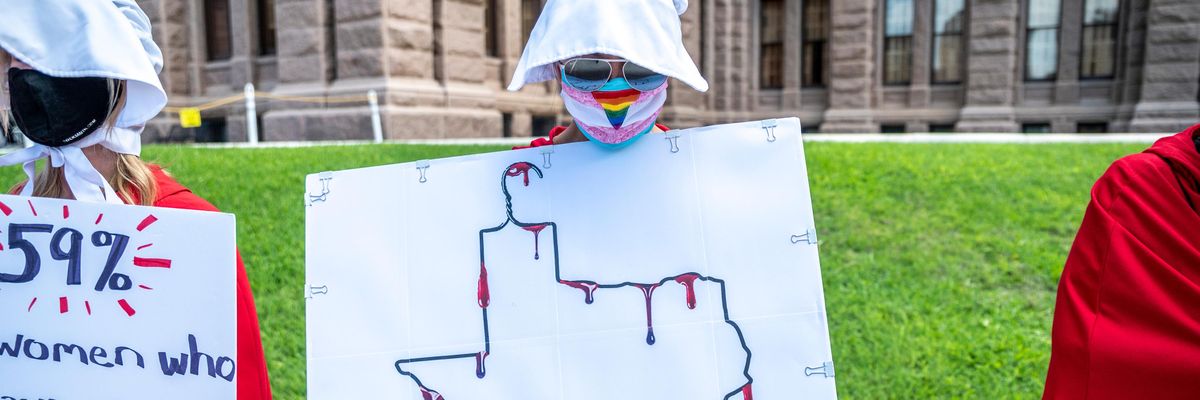
A protester dressed as a handmaiden in Gilead protests an anti-abortion bill outside the Texas capitol in Austin, Texas.
The principle of the separation of church and state is not just a constitutional provision but a safeguard crucial to preserving the autonomy and well-being of diverse populations.
In the ongoing battle for reproductive justice, the intersection of religious beliefs and public policy casts a long shadow over the fundamental rights of individuals, particularly those in marginalized communities, including LGBTQ+ and non-binary individuals. That’s why the newly elected Speaker of the House Mike Johnson’s remark that “the separation of church and state is a ‘misnomer’” is so chilling.
The principle of the separation of church and state is not just a constitutional provision but a safeguard crucial to preserving the autonomy and well-being of diverse populations, particularly in matters as personal as reproductive health.
Reproductive justice hinges on the right to make informed, personal decisions about one’s body, family, and future. However, the intrusion of religious ideologies into legislation poses a significant threat to this autonomy. The separation of church and state is not a mere abstraction; it is the cornerstone of protecting individual freedoms from the encroachment of religious doctrines that may not align with the diverse beliefs and circumstances of our society.
The separation of church and state provides the necessary framework to safeguard patients from being denied essential medications based on someone else’s religious beliefs.
The Women’s Reproductive Rights Assistance Project (WRRAP), the largest independent abortion fund, works with marginalized communities, including LGBTQ+ and non-binary individuals, who often bear the disproportionate brunt of restrictive reproductive policies driven by religious ideologies. These communities face unique challenges, including limited access to affirming healthcare and discriminatory practices that compound the impact of religiously motivated policies. The separation of church and state becomes a crucial shield against the intersectional barriers faced by individuals at the crossroads of multiple marginalized identities.
The role of all healthcare providers is pivotal in upholding medical ethics and ensuring that patient care is driven by evidence-based practices rather than religious doctrine. Physicians take an oath to prioritize the well-being of their patients, and this commitment should transcend religious biases. When the separation of church and state is compromised, healthcare professionals face the ethical dilemma of navigating between religiously motivated policies and their duty to provide comprehensive, unbiased care.
In societies where religious beliefs infiltrate legislative decisions on reproductive rights, doctors find themselves torn between upholding their commitment to patient well-being and adhering to laws that may compromise patient health. WRRAP and other abortion funds have seen countless cases through the years even prior to the overturning of Roe. The separation of church and state becomes a protective shield for doctors, allowing them the professional autonomy to prioritize evidence-based medical care over religious doctrines.
The impact of religious influence extends beyond doctor-patient interactions to the realm of pharmacies, where pharmacists may encounter moral objections to dispensing certain medications. When religious beliefs seep into legislation, pharmacists may be compelled to prioritize personal convictions over the immediate healthcare needs of patients. This not only infringes on the principle of secular governance but also jeopardizes individuals’ timely access to reproductive healthcare.
WRRAP has heard of many cases in which a patient was denied access to medications like misoprostol, which are used to manage other conditions like autoimmune diseases and gastric ulcers, but, because this drug is also used for medication abortions and treatment for ectopic pregnancies, these prescriptions are denied or delayed by some pharmacists, infringing on and jeopardizing these individual’s healthcare needs.
A pharmacist must dispense medication according to professional and ethical standards, without discrimination. The separation of church and state provides the necessary framework to safeguard patients from being denied essential medications based on someone else’s religious beliefs. Access to contraceptives, emergency contraception, and other reproductive healthcare necessities should be determined by medical necessity, not by the religious tenets of those dispensing them, nor should a patient have to be asked by a provider to take a pregnancy test to confirm they are not pregnant.
As we navigate the landscape of reproductive justice, the separation of church and state stands as a protection against the erosion of individual autonomy. It is an assertion that decisions about reproductive healthcare should be guided by medical ethics, evidence-based practices, and the diverse beliefs of individuals, including those in the LGBTQ+ and non-binary communities, not by the doctrines of any particular faith.
To truly champion reproductive justice, we must fiercely defend the separation of church and state. It is a collective responsibility to ensure that policies respect the autonomy of every individual, irrespective of their background, beliefs, or socio-economic status. In strengthening this separation through advocacy in our communities and through the leaders we elect, we fortify the foundation of a just society—one that upholds the dignity and rights of all.
Dear Common Dreams reader, It’s been nearly 30 years since I co-founded Common Dreams with my late wife, Lina Newhouser. We had the radical notion that journalism should serve the public good, not corporate profits. It was clear to us from the outset what it would take to build such a project. No paid advertisements. No corporate sponsors. No millionaire publisher telling us what to think or do. Many people said we wouldn't last a year, but we proved those doubters wrong. Together with a tremendous team of journalists and dedicated staff, we built an independent media outlet free from the constraints of profits and corporate control. Our mission has always been simple: To inform. To inspire. To ignite change for the common good. Building Common Dreams was not easy. Our survival was never guaranteed. When you take on the most powerful forces—Wall Street greed, fossil fuel industry destruction, Big Tech lobbyists, and uber-rich oligarchs who have spent billions upon billions rigging the economy and democracy in their favor—the only bulwark you have is supporters who believe in your work. But here’s the urgent message from me today. It's never been this bad out there. And it's never been this hard to keep us going. At the very moment Common Dreams is most needed, the threats we face are intensifying. We need your support now more than ever. We don't accept corporate advertising and never will. We don't have a paywall because we don't think people should be blocked from critical news based on their ability to pay. Everything we do is funded by the donations of readers like you. When everyone does the little they can afford, we are strong. But if that support retreats or dries up, so do we. Will you donate now to make sure Common Dreams not only survives but thrives? —Craig Brown, Co-founder |
In the ongoing battle for reproductive justice, the intersection of religious beliefs and public policy casts a long shadow over the fundamental rights of individuals, particularly those in marginalized communities, including LGBTQ+ and non-binary individuals. That’s why the newly elected Speaker of the House Mike Johnson’s remark that “the separation of church and state is a ‘misnomer’” is so chilling.
The principle of the separation of church and state is not just a constitutional provision but a safeguard crucial to preserving the autonomy and well-being of diverse populations, particularly in matters as personal as reproductive health.
Reproductive justice hinges on the right to make informed, personal decisions about one’s body, family, and future. However, the intrusion of religious ideologies into legislation poses a significant threat to this autonomy. The separation of church and state is not a mere abstraction; it is the cornerstone of protecting individual freedoms from the encroachment of religious doctrines that may not align with the diverse beliefs and circumstances of our society.
The separation of church and state provides the necessary framework to safeguard patients from being denied essential medications based on someone else’s religious beliefs.
The Women’s Reproductive Rights Assistance Project (WRRAP), the largest independent abortion fund, works with marginalized communities, including LGBTQ+ and non-binary individuals, who often bear the disproportionate brunt of restrictive reproductive policies driven by religious ideologies. These communities face unique challenges, including limited access to affirming healthcare and discriminatory practices that compound the impact of religiously motivated policies. The separation of church and state becomes a crucial shield against the intersectional barriers faced by individuals at the crossroads of multiple marginalized identities.
The role of all healthcare providers is pivotal in upholding medical ethics and ensuring that patient care is driven by evidence-based practices rather than religious doctrine. Physicians take an oath to prioritize the well-being of their patients, and this commitment should transcend religious biases. When the separation of church and state is compromised, healthcare professionals face the ethical dilemma of navigating between religiously motivated policies and their duty to provide comprehensive, unbiased care.
In societies where religious beliefs infiltrate legislative decisions on reproductive rights, doctors find themselves torn between upholding their commitment to patient well-being and adhering to laws that may compromise patient health. WRRAP and other abortion funds have seen countless cases through the years even prior to the overturning of Roe. The separation of church and state becomes a protective shield for doctors, allowing them the professional autonomy to prioritize evidence-based medical care over religious doctrines.
The impact of religious influence extends beyond doctor-patient interactions to the realm of pharmacies, where pharmacists may encounter moral objections to dispensing certain medications. When religious beliefs seep into legislation, pharmacists may be compelled to prioritize personal convictions over the immediate healthcare needs of patients. This not only infringes on the principle of secular governance but also jeopardizes individuals’ timely access to reproductive healthcare.
WRRAP has heard of many cases in which a patient was denied access to medications like misoprostol, which are used to manage other conditions like autoimmune diseases and gastric ulcers, but, because this drug is also used for medication abortions and treatment for ectopic pregnancies, these prescriptions are denied or delayed by some pharmacists, infringing on and jeopardizing these individual’s healthcare needs.
A pharmacist must dispense medication according to professional and ethical standards, without discrimination. The separation of church and state provides the necessary framework to safeguard patients from being denied essential medications based on someone else’s religious beliefs. Access to contraceptives, emergency contraception, and other reproductive healthcare necessities should be determined by medical necessity, not by the religious tenets of those dispensing them, nor should a patient have to be asked by a provider to take a pregnancy test to confirm they are not pregnant.
As we navigate the landscape of reproductive justice, the separation of church and state stands as a protection against the erosion of individual autonomy. It is an assertion that decisions about reproductive healthcare should be guided by medical ethics, evidence-based practices, and the diverse beliefs of individuals, including those in the LGBTQ+ and non-binary communities, not by the doctrines of any particular faith.
To truly champion reproductive justice, we must fiercely defend the separation of church and state. It is a collective responsibility to ensure that policies respect the autonomy of every individual, irrespective of their background, beliefs, or socio-economic status. In strengthening this separation through advocacy in our communities and through the leaders we elect, we fortify the foundation of a just society—one that upholds the dignity and rights of all.
In the ongoing battle for reproductive justice, the intersection of religious beliefs and public policy casts a long shadow over the fundamental rights of individuals, particularly those in marginalized communities, including LGBTQ+ and non-binary individuals. That’s why the newly elected Speaker of the House Mike Johnson’s remark that “the separation of church and state is a ‘misnomer’” is so chilling.
The principle of the separation of church and state is not just a constitutional provision but a safeguard crucial to preserving the autonomy and well-being of diverse populations, particularly in matters as personal as reproductive health.
Reproductive justice hinges on the right to make informed, personal decisions about one’s body, family, and future. However, the intrusion of religious ideologies into legislation poses a significant threat to this autonomy. The separation of church and state is not a mere abstraction; it is the cornerstone of protecting individual freedoms from the encroachment of religious doctrines that may not align with the diverse beliefs and circumstances of our society.
The separation of church and state provides the necessary framework to safeguard patients from being denied essential medications based on someone else’s religious beliefs.
The Women’s Reproductive Rights Assistance Project (WRRAP), the largest independent abortion fund, works with marginalized communities, including LGBTQ+ and non-binary individuals, who often bear the disproportionate brunt of restrictive reproductive policies driven by religious ideologies. These communities face unique challenges, including limited access to affirming healthcare and discriminatory practices that compound the impact of religiously motivated policies. The separation of church and state becomes a crucial shield against the intersectional barriers faced by individuals at the crossroads of multiple marginalized identities.
The role of all healthcare providers is pivotal in upholding medical ethics and ensuring that patient care is driven by evidence-based practices rather than religious doctrine. Physicians take an oath to prioritize the well-being of their patients, and this commitment should transcend religious biases. When the separation of church and state is compromised, healthcare professionals face the ethical dilemma of navigating between religiously motivated policies and their duty to provide comprehensive, unbiased care.
In societies where religious beliefs infiltrate legislative decisions on reproductive rights, doctors find themselves torn between upholding their commitment to patient well-being and adhering to laws that may compromise patient health. WRRAP and other abortion funds have seen countless cases through the years even prior to the overturning of Roe. The separation of church and state becomes a protective shield for doctors, allowing them the professional autonomy to prioritize evidence-based medical care over religious doctrines.
The impact of religious influence extends beyond doctor-patient interactions to the realm of pharmacies, where pharmacists may encounter moral objections to dispensing certain medications. When religious beliefs seep into legislation, pharmacists may be compelled to prioritize personal convictions over the immediate healthcare needs of patients. This not only infringes on the principle of secular governance but also jeopardizes individuals’ timely access to reproductive healthcare.
WRRAP has heard of many cases in which a patient was denied access to medications like misoprostol, which are used to manage other conditions like autoimmune diseases and gastric ulcers, but, because this drug is also used for medication abortions and treatment for ectopic pregnancies, these prescriptions are denied or delayed by some pharmacists, infringing on and jeopardizing these individual’s healthcare needs.
A pharmacist must dispense medication according to professional and ethical standards, without discrimination. The separation of church and state provides the necessary framework to safeguard patients from being denied essential medications based on someone else’s religious beliefs. Access to contraceptives, emergency contraception, and other reproductive healthcare necessities should be determined by medical necessity, not by the religious tenets of those dispensing them, nor should a patient have to be asked by a provider to take a pregnancy test to confirm they are not pregnant.
As we navigate the landscape of reproductive justice, the separation of church and state stands as a protection against the erosion of individual autonomy. It is an assertion that decisions about reproductive healthcare should be guided by medical ethics, evidence-based practices, and the diverse beliefs of individuals, including those in the LGBTQ+ and non-binary communities, not by the doctrines of any particular faith.
To truly champion reproductive justice, we must fiercely defend the separation of church and state. It is a collective responsibility to ensure that policies respect the autonomy of every individual, irrespective of their background, beliefs, or socio-economic status. In strengthening this separation through advocacy in our communities and through the leaders we elect, we fortify the foundation of a just society—one that upholds the dignity and rights of all.