SUBSCRIBE TO OUR FREE NEWSLETTER
Daily news & progressive opinion—funded by the people, not the corporations—delivered straight to your inbox.
5
#000000
#FFFFFF
To donate by check, phone, or other method, see our More Ways to Give page.
Daily news & progressive opinion—funded by the people, not the corporations—delivered straight to your inbox.
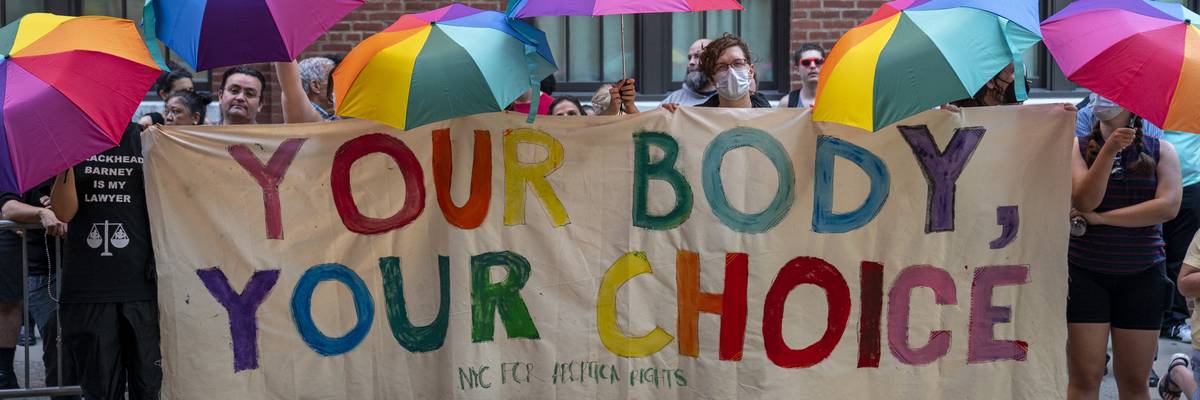
Pro-abortion rights protesters demonstrate outside the Planned Parenthood clinic and office in downtown Manhattan on August 6, 2022 in New York City.
New bills seek to reinforce a false binary between abortion care and care for pregnancy loss, but this will only harm pregnant patients and further restrict access to comprehensive sexual and reproductive healthcare.
People experiencing pregnancy complications in states that restrict abortion have died preventable deaths; others have been forced to bleed out while waiting for providers to deem their conditions were life-threatening enough to receive care under narrow legal exceptions or had to travel out of state for emergency abortion care. Meanwhile survivors of rape and incest have been denied care, despite exceptions that supposedly permitted abortion in those circumstances.
This is the new reality of seeking pregnancy-loss care and abortion care post-Dobbs. But instead of addressing the root issue—abortion bans and restrictions—policymakers are advancing a new strategy: redefining abortion itself. These new bills seek to reinforce a false binary between abortion care and care for pregnancy loss, but this will only harm pregnant patients and further restrict access to comprehensive sexual and reproductive healthcare.
For example, a bill in Utah would allow people who have obtained abortion care for certain reasons (such as treating an ectopic pregnancy; removing a dead fetus; or in the cases of fetal anomaly, rape, or incest) to request that their medical record state that the abortion was “involuntary.” The proposed legislation attempts to legally codify the distinction between “elective” abortions and those obtained for medical reasons to further stigmatize abortion care. The bill’s sponsor has been at the forefront of restricting abortion in Utah, and claims this bill is for medical records and to prevent patient “distress.” However, there is no need for legislators to define medical care for the sake of providers or patients. People’s reproductive experiences are highly personal, and the language they use to describe them should be up to them—not politicians.
In other states, attempts to omit care for pregnancy loss from the legal definition of abortion opens the door for abortion to be further restricted. In Missouri, Wisconsin, and South Dakota, bills are being pushed that change the definition of abortion to exclude a range of pregnancy-loss care. Wisconsin’s bill, for example, aims to “exempt [this care] from abortion restrictions,” implying that there is some reproductive healthcare that should be protected, while some should not.
The only way to ensure that people in medical emergencies or who have experienced violence can get the care they need is expanding and protecting abortion care for all.
These bills all also rely on language that personifies the fetus or embryo, advancing the long-held anti-abortion goal of granting full legal rights to embryos and fetuses. Fetal personhood directly undercuts pregnant people’s rights and can be used to target other reproductive healthcare such as forms of contraception and IVF. While this language was eventually removed from the South Dakota bill, its inclusion when it was first introduced exposes the policymakers' intention: to carve out some forms of pregnancy care and use that as a foundation to attack abortion care.
The push to “clarify” exceptions, or what care can be provided under abortion bans, stems from understandable public outrage—outrage we share. The horrific outcomes for pregnant people who have died preventable deaths are the direct result of abortion bans--but adding legal carve outs designed by the same policymakers who champion draconian abortion laws is not the way to ensure that everyone has access to essential pregnancy-loss care.
The truth is, it’s impossible to silo abortion care from the rest of reproductive healthcare through medical or legal frameworks. Abortion, pregnancy-loss care, and pregnancy care are interconnected by their practices, medications, and the people that provide and obtain them. The only way to ensure that people in medical emergencies or who have experienced violence can get the care they need is expanding and protecting abortion care for all.
Separating abortion care from pregnancy-loss care also does not align with many people's lived experiences. Guttmacher research shows that people’s understanding of the boundaries between reproductive experiences are deeply nuanced. The author and model Chrissy Tiegen, for example, has been public about redefining her own pregnancy loss as an abortion, which she proceeded with after learning she would not survive the pregnancy without medical intervention. Ultimately, how someone defines their pregnancy outcome and the care they receive is subjective, and policymakers’ efforts to establish clear legal distinctions ignore the frequently blurred boundaries between these experiences.
Categorizing abortions as elective or "involuntary” is not only stigmatizing and medically unnecessary but ignores the complexities of people’s reproductive lives. Likewise, “clarifying” exceptions is simply another tool of the anti-abortion movement to further restrict and stigmatize abortion. What pregnant people need is compassionate and personalized care, not further state involvement in their bodies and decisions.
Dear Common Dreams reader, It’s been nearly 30 years since I co-founded Common Dreams with my late wife, Lina Newhouser. We had the radical notion that journalism should serve the public good, not corporate profits. It was clear to us from the outset what it would take to build such a project. No paid advertisements. No corporate sponsors. No millionaire publisher telling us what to think or do. Many people said we wouldn't last a year, but we proved those doubters wrong. Together with a tremendous team of journalists and dedicated staff, we built an independent media outlet free from the constraints of profits and corporate control. Our mission has always been simple: To inform. To inspire. To ignite change for the common good. Building Common Dreams was not easy. Our survival was never guaranteed. When you take on the most powerful forces—Wall Street greed, fossil fuel industry destruction, Big Tech lobbyists, and uber-rich oligarchs who have spent billions upon billions rigging the economy and democracy in their favor—the only bulwark you have is supporters who believe in your work. But here’s the urgent message from me today. It's never been this bad out there. And it's never been this hard to keep us going. At the very moment Common Dreams is most needed, the threats we face are intensifying. We need your support now more than ever. We don't accept corporate advertising and never will. We don't have a paywall because we don't think people should be blocked from critical news based on their ability to pay. Everything we do is funded by the donations of readers like you. When everyone does the little they can afford, we are strong. But if that support retreats or dries up, so do we. Will you donate now to make sure Common Dreams not only survives but thrives? —Craig Brown, Co-founder |
People experiencing pregnancy complications in states that restrict abortion have died preventable deaths; others have been forced to bleed out while waiting for providers to deem their conditions were life-threatening enough to receive care under narrow legal exceptions or had to travel out of state for emergency abortion care. Meanwhile survivors of rape and incest have been denied care, despite exceptions that supposedly permitted abortion in those circumstances.
This is the new reality of seeking pregnancy-loss care and abortion care post-Dobbs. But instead of addressing the root issue—abortion bans and restrictions—policymakers are advancing a new strategy: redefining abortion itself. These new bills seek to reinforce a false binary between abortion care and care for pregnancy loss, but this will only harm pregnant patients and further restrict access to comprehensive sexual and reproductive healthcare.
For example, a bill in Utah would allow people who have obtained abortion care for certain reasons (such as treating an ectopic pregnancy; removing a dead fetus; or in the cases of fetal anomaly, rape, or incest) to request that their medical record state that the abortion was “involuntary.” The proposed legislation attempts to legally codify the distinction between “elective” abortions and those obtained for medical reasons to further stigmatize abortion care. The bill’s sponsor has been at the forefront of restricting abortion in Utah, and claims this bill is for medical records and to prevent patient “distress.” However, there is no need for legislators to define medical care for the sake of providers or patients. People’s reproductive experiences are highly personal, and the language they use to describe them should be up to them—not politicians.
In other states, attempts to omit care for pregnancy loss from the legal definition of abortion opens the door for abortion to be further restricted. In Missouri, Wisconsin, and South Dakota, bills are being pushed that change the definition of abortion to exclude a range of pregnancy-loss care. Wisconsin’s bill, for example, aims to “exempt [this care] from abortion restrictions,” implying that there is some reproductive healthcare that should be protected, while some should not.
The only way to ensure that people in medical emergencies or who have experienced violence can get the care they need is expanding and protecting abortion care for all.
These bills all also rely on language that personifies the fetus or embryo, advancing the long-held anti-abortion goal of granting full legal rights to embryos and fetuses. Fetal personhood directly undercuts pregnant people’s rights and can be used to target other reproductive healthcare such as forms of contraception and IVF. While this language was eventually removed from the South Dakota bill, its inclusion when it was first introduced exposes the policymakers' intention: to carve out some forms of pregnancy care and use that as a foundation to attack abortion care.
The push to “clarify” exceptions, or what care can be provided under abortion bans, stems from understandable public outrage—outrage we share. The horrific outcomes for pregnant people who have died preventable deaths are the direct result of abortion bans--but adding legal carve outs designed by the same policymakers who champion draconian abortion laws is not the way to ensure that everyone has access to essential pregnancy-loss care.
The truth is, it’s impossible to silo abortion care from the rest of reproductive healthcare through medical or legal frameworks. Abortion, pregnancy-loss care, and pregnancy care are interconnected by their practices, medications, and the people that provide and obtain them. The only way to ensure that people in medical emergencies or who have experienced violence can get the care they need is expanding and protecting abortion care for all.
Separating abortion care from pregnancy-loss care also does not align with many people's lived experiences. Guttmacher research shows that people’s understanding of the boundaries between reproductive experiences are deeply nuanced. The author and model Chrissy Tiegen, for example, has been public about redefining her own pregnancy loss as an abortion, which she proceeded with after learning she would not survive the pregnancy without medical intervention. Ultimately, how someone defines their pregnancy outcome and the care they receive is subjective, and policymakers’ efforts to establish clear legal distinctions ignore the frequently blurred boundaries between these experiences.
Categorizing abortions as elective or "involuntary” is not only stigmatizing and medically unnecessary but ignores the complexities of people’s reproductive lives. Likewise, “clarifying” exceptions is simply another tool of the anti-abortion movement to further restrict and stigmatize abortion. What pregnant people need is compassionate and personalized care, not further state involvement in their bodies and decisions.
People experiencing pregnancy complications in states that restrict abortion have died preventable deaths; others have been forced to bleed out while waiting for providers to deem their conditions were life-threatening enough to receive care under narrow legal exceptions or had to travel out of state for emergency abortion care. Meanwhile survivors of rape and incest have been denied care, despite exceptions that supposedly permitted abortion in those circumstances.
This is the new reality of seeking pregnancy-loss care and abortion care post-Dobbs. But instead of addressing the root issue—abortion bans and restrictions—policymakers are advancing a new strategy: redefining abortion itself. These new bills seek to reinforce a false binary between abortion care and care for pregnancy loss, but this will only harm pregnant patients and further restrict access to comprehensive sexual and reproductive healthcare.
For example, a bill in Utah would allow people who have obtained abortion care for certain reasons (such as treating an ectopic pregnancy; removing a dead fetus; or in the cases of fetal anomaly, rape, or incest) to request that their medical record state that the abortion was “involuntary.” The proposed legislation attempts to legally codify the distinction between “elective” abortions and those obtained for medical reasons to further stigmatize abortion care. The bill’s sponsor has been at the forefront of restricting abortion in Utah, and claims this bill is for medical records and to prevent patient “distress.” However, there is no need for legislators to define medical care for the sake of providers or patients. People’s reproductive experiences are highly personal, and the language they use to describe them should be up to them—not politicians.
In other states, attempts to omit care for pregnancy loss from the legal definition of abortion opens the door for abortion to be further restricted. In Missouri, Wisconsin, and South Dakota, bills are being pushed that change the definition of abortion to exclude a range of pregnancy-loss care. Wisconsin’s bill, for example, aims to “exempt [this care] from abortion restrictions,” implying that there is some reproductive healthcare that should be protected, while some should not.
The only way to ensure that people in medical emergencies or who have experienced violence can get the care they need is expanding and protecting abortion care for all.
These bills all also rely on language that personifies the fetus or embryo, advancing the long-held anti-abortion goal of granting full legal rights to embryos and fetuses. Fetal personhood directly undercuts pregnant people’s rights and can be used to target other reproductive healthcare such as forms of contraception and IVF. While this language was eventually removed from the South Dakota bill, its inclusion when it was first introduced exposes the policymakers' intention: to carve out some forms of pregnancy care and use that as a foundation to attack abortion care.
The push to “clarify” exceptions, or what care can be provided under abortion bans, stems from understandable public outrage—outrage we share. The horrific outcomes for pregnant people who have died preventable deaths are the direct result of abortion bans--but adding legal carve outs designed by the same policymakers who champion draconian abortion laws is not the way to ensure that everyone has access to essential pregnancy-loss care.
The truth is, it’s impossible to silo abortion care from the rest of reproductive healthcare through medical or legal frameworks. Abortion, pregnancy-loss care, and pregnancy care are interconnected by their practices, medications, and the people that provide and obtain them. The only way to ensure that people in medical emergencies or who have experienced violence can get the care they need is expanding and protecting abortion care for all.
Separating abortion care from pregnancy-loss care also does not align with many people's lived experiences. Guttmacher research shows that people’s understanding of the boundaries between reproductive experiences are deeply nuanced. The author and model Chrissy Tiegen, for example, has been public about redefining her own pregnancy loss as an abortion, which she proceeded with after learning she would not survive the pregnancy without medical intervention. Ultimately, how someone defines their pregnancy outcome and the care they receive is subjective, and policymakers’ efforts to establish clear legal distinctions ignore the frequently blurred boundaries between these experiences.
Categorizing abortions as elective or "involuntary” is not only stigmatizing and medically unnecessary but ignores the complexities of people’s reproductive lives. Likewise, “clarifying” exceptions is simply another tool of the anti-abortion movement to further restrict and stigmatize abortion. What pregnant people need is compassionate and personalized care, not further state involvement in their bodies and decisions.