

SUBSCRIBE TO OUR FREE NEWSLETTER
Daily news & progressive opinion—funded by the people, not the corporations—delivered straight to your inbox.
5
#000000
#FFFFFF
To donate by check, phone, or other method, see our More Ways to Give page.
Daily news & progressive opinion—funded by the people, not the corporations—delivered straight to your inbox.

Phone: (202) 225-5645
Today, the Congressional Progressive Caucus (CPC)announced four newly constituted Task Forces aimed at helping Democrats reclaim the House majority in 2026—with a sharp, populist, pro-working-class agenda that meets the moment.
These four Task Forces—focused on lowering costs, ending corporate greed, fighting corruption, and securing better pay and benefits—are part of a broader effort by the CPC to define a Democratic governing agenda that is clear, popular, easy to understand, and quickly delivers material benefits to working people.
Among other work, the Task Forces will be focused on advancing a slate of policy proposals members have been working on internally for several months that are not only progressive, but also enjoy support from voters across the ideological and demographic spectrum—from suburban voters to non-college-educated to independents—and could be passed by a Democratic House after the midterms. New polling from Data for Progress finds these policies enjoy a supermajority and give a 9-point advantage for Democrats who lead with these themes compared to a generic Democratic message against a Republican opponent.
The four new Task Forces are:
Chair: Rep. Yassamin Ansari
Chair: Rep. Dave Min
Vice Chair: Rep. Hank Johnson
Chair: Rep. Becca Balint
Chair: Rep. Emily Randall
Vice Chair: Rep. Mark DeSaulnier
In addition, CPC Deputy Chair Rep. Ilhan Omar will help lead the coordination of Task Force work and take over as Chair of the Caucus’s longstanding Peace & Security Task Force this Congress.
"Working people in America are getting screwed by corrupt politicians and big corporations that are driving costs up and keeping pay and benefits down,” said Rep. Greg Casar (TX-35). “Our four new task forces go directly at those big problems facing Americans: fighting corruption and corporate greed in order to lower costs and win better pay and benefits."
“In my home state of Arizona, families have been crushed by rising costs brought on by Trump and Republicans—whether it’s skyrocketing healthcare premiums, unaffordable housing, or the soaring costs of education, childcare, long-term care, and even just commuting to work,” said Rep. Yassamin Ansari (AZ-03). “I’m honored to lead the Lowering Costs Task Force as one of the ways we’re fighting back to deliver bold policies that will help working families.”
“Whether it was prosecuting fraud at the SEC or teaching the next generation of advocates as a law professor at UC Irvine, I’ve spent my career fighting to uphold the rule of law and root out corruption,” said Rep. Dave Min (CA-47). “Americans are fed up with an economy and a government that are rigged in favor of the powerful and well connected while failing to serve working people. I’m proud to continue the anti-corruption fight in Congress and look forward to working with my colleagues in the Progressive Caucus to fight for transparency and fairness.”
“I came to Congress to unrig a system that makes it so hard for so many Americans to get a fair shot,” said Rep. Becca Balint (VT-AL). “And today, I’m fired up to launch the Ending Corporate Greed Task Force alongside my progressive colleagues to do the real work necessary to build an America that gives people a real chance at an easier life. Corporate greed is at the root of so many of the struggles working people face. And it’s time we take back power over our rigged economy and fight back against the greed that makes everything harder for the rest of us. Because we have a vision for a reality where we can all afford to make rent, have affordable health care, get paid fair wages, and get an education without crippling debt. ”
“In my family and in my community, I’ve seen firsthand how good Union wages and pensions open doors to stability, to opportunity, to economic security. I’ve seen my grandparents, my teachers, my neighbors afford homes and vacations and childcare because they had good jobs. But over the years, affording a good life has gotten harder and harder,” said Rep. Emily Randall (WA-06). “Our neighbors deserve leaders who put people before profits and stand up for what’s right. They deserve leaders who understand that an economy that is centered on working people is a stronger economy for everyone. As Chair of the Better Pay and Benefits Task Force, I’m committed to fighting for fairer wages, stronger benefits, safer workplaces, and an economy that puts working people first – right at the center of our policies.”
“In a time of record-breaking income inequality and rampant corporate greed, it is more important than ever that we as Democrats reassert and reinforce our commitment to working people,” said Rep. Mark DeSaulnier (CA-10). “As both a former union member and small business owner, I have seen firsthand how American workers have for too long been taken advantage of by big corporations and greedy CEOs. I am proud to help lead the Task Force for Better Pay and Benefits as Vice Chair to restore power to working people, the engine of our economy, so they can continue to be the best, most productive labor force in the world while living with the respect and dignity they deserve.”
“I am thrilled to take over as Chair of the Promoting Peace and Security Task Force and follow in the footsteps of my mentor, the incredible Barbara Lee,” said Rep. Ilhan Omar (MN-05). “This task force is needed now more than ever to hold this corrupt administration accountable. Our task force will focus on limiting our global armed presence and instead investing in diplomacy that will allow us to reorient our engagement with the world.”
The Congressional Progressive Caucus (CPC) is made up of nearly 100 members standing up for progressive ideals in Washington and throughout the country. Since 1991, the CPC has advocated for progressive policies that prioritize working Americans over corporate interests, fight economic and social inequality, and advance civil liberties.
(202) 225-3106
"Donald Trump promised to lower costs for American families," said the co-chair of the Not Above the Law Coalition. "Instead, he turned the presidency into his family's most profitable business."
A report released Thursday details how the family of President Donald Trump "pocketed more than $2.9 billion"—including "in cash and gifts from crypto ventures, legal settlements, a luxury jet from a foreign government, and corporate deals"—while Republican cuts to the Supplemental Nutrition Assistance Program left millions of Americans without critical food aid.
The report, "Let Them Eat Cake: Cost of Corruption," was published by the Not Above the Law Coalition—a group of more than 150 advocacy organizations mobilized against the Trump administration's corruption—and cites data from the Center for American Progress revealing over $2.9 billion in cash and gifts received by the Trump family since the 2024 election.
The bulk of that amount—more than $2.4 billion—comes from the cryptocurrency industry. Trump has boasted about how his administration won't investigate alleged crypto-related crimes.
Not only has Trump embraced crypto deregulation, he also pardoned Changpeng Zhao, the founder of cryptocurrency exchange Binance, who pleaded guilty to money-laundering charges in 2023. Binance has provided critical support for World Liberty Financial, the crypto venture enriching the Trump family.
"The Trump family cashed in on the presidency while American families paid the price," Not Above the Law said in a statement. "Over the same period, Trump signed a budget law that cut almost $187 billion from SNAP, leaving 5.2 million fewer people with help buying groceries."
That law, the so-called One Big Beautiful Bill Act, ushered in the biggest cuts to both SNAP and Medicaid in those programs' histories.
According to the report, "The Trump family's take alone could cover a full year of groceries for about 1.3 million people on SNAP."
"At the same time, Trump's pardons let wealthy allies and fraudsters walk away from nearly $1.7 billion owed to victims and taxpayers," the publication adds.
Not Above the Law noted that "foreign money flowed straight to the [Trump] family" via an investment vehicle controlled by the United Arab Emirates' national security adviser, who "put $500 million into World Liberty Financial, and the administration soon cleared advanced [artificial intelligence] chip exports to the UAE."
The report highlights that "Trump also accepted a roughly $400 million luxury jet from Qatar."
Not Above the Law said that, in addition to groceries for 1.3 million people for a year, the $2.9 billion could buy "more than 600 million free school lunches, or three months of groceries for the 5.2 million people who lost SNAP benefits."
In addition to the nearly $3 billion the report says Trump's family pocketed, the coalition noted "companies backed by Trump's sons have collected $3.2 billion in federal funds, including a fast-tracked $620 million Pentagon loan" to a business in which Donald Trump Jr. invested.
"Donald Trump promised to lower costs for American families. Instead, he turned the presidency into his family's most profitable business," said Lisa Gilbert, Not Above the Law co-chair and co-president of the consumer advocacy group Public Citizen. "While the Trumps collected nearly $3 billion from crypto schemes, foreign governments, and corporations seeking favors, millions of Americans lost help putting food on the table. Congress must stop the self-dealing and hold this administration accountable."
The new analysis follows a report published earlier this year by a group of Democratic US senators accusing the president and his family of turning “the power of the presidency into eye-popping profits,” with Trump increasing his personal net worth by more than $2 billion during his second term alone, according to official disclosures.
Also on Thursday, The Washington Post reported on companies and billionaire CEOs who donated a combined $333 million to Trump’s White House ballroom project, as well as previously undisclosed donors who have benefited from a presidential pardon, government contracts, and at least one closed federal investigation.
"This is what corruption is all about," Sen. Bernie Sanders (I-Vt.) said in response to the Post report. "We don’t want a government of, by, and for the billionaire class. FIGHT BACK."

"No words can adequately express the grief our community is experiencing," said the Bend-La Pine Schools superintendent.
A 16-year-old boy killed three children—ages 5, 8, and 11—and a teacher in a Thursday shooting at Silver Rail Elementary in Bend, Oregon.
Bend Police Chief Mike Krantz confirmed their deaths during an evening press conference, where he was joined by department communications manager Sheila Miller, Bend-La Pine Schools Superintendent Steven Cook, Mayor Melanie Kebler, and Gov. Tina Kotek.
Krantz said the shooter was killed by a community member who saw the teenager enter the school with a long gun. Neither of them has been named publicly, nor have any of the victims—including a 7-year-old child and another teacher who were transported to the medical facility St. Charles Bend.
During an earlier press conference, Miller told journalists that just minutes after receiving 911 calls that an unknown person had shot into a car and entered the school, police officers were on the scene at 1:02 pm Pacific time—and they reported that the suspect had been shot and killed inside the school.
Miller said that there will be a large law enforcement presence in the area, and Federal Bureau of Investigation Director Kash Patel confirmed that includes FBI agents. A reunification location for families was set up at Journey Church.
As The Oregonian reported:
Kayla Jensen, the president of the school’s Parent Teacher Organization, said she and other parents were gathered at the church, awaiting word about their children.“ We are unsure. We have not gotten any news. We are all here,” Jensen said. She said she could not offer any further comment.
"We are stunned and heartbroken by this senseless tragedy," Cook, the superintendent, said in a statement. "We extend our deepest sympathy to the families and to everyone affected by this violence."
"No words can adequately express the grief our community is experiencing," Cook added. "Our immediate priorities are caring for our students and staff and assisting law enforcement and emergency responders."
US Sen. Jeff Merkley (D-Ore.) said that "as details continue to come out, my heart is with the Bend community and all of the students and families affected. No one should have to fear violence at school."
Congresswoman Maxine Dexter (D-Ore.) wrote on social media that "this is a devastating day for Oregon. My heart is with the Bend community, and every family who is being impacted by this tragic, senseless shooting. Schools should be places of learning, friendship, and joy. It is incumbent on me, and every lawmaker, to do everything we can to ensure our kids are safe."
Sen. Ron Wyden (D-Ore.) also stressed the need for policy action, saying: "My heart is with the victims of today’s shooting at Silver Rail Elementary School and their loved ones now facing the consequences of another school shooting in America. Once again, we must ask how many schools must be shot up before Republicans agree to act to curb gun violence."
Angela Ferrell-Zabala, executive director of the advocacy group Moms Demand Action, said that "today, families in Bend are living through every parent's worst nightmare... No parent should have to wonder whether the school drop-off will be the last time they see their child. This is not normal, and we cannot allow it to become normal."
"In an average year, 655 people die and 719 are wounded by guns in Oregon," she noted. "Guns are also the leading cause of death among children and teens in the state, with an average of 34 children and teens dying by guns every year."
Giffords—a gun violence prevention group led by former Congresswoman Gabrielle Giffords, an Arizona Democrat who survived an assassination attempt—said that "our hearts are with the terrified children and the families anxiously waiting to hear that their loved ones are safe. We cannot keep accepting this as a fact of life."
The former congresswoman similarly said that "my heart is completely broken for the children, families, teachers, and entire Silver Rail Elementary community in Bend, Oregon today. Elementary school should be about jungle gyms, math class, and making new friends—not learning where to hide from a shooter. We cannot keep asking our children to be brave enough to survive school shootings. Our leaders must be brave enough to stop them."
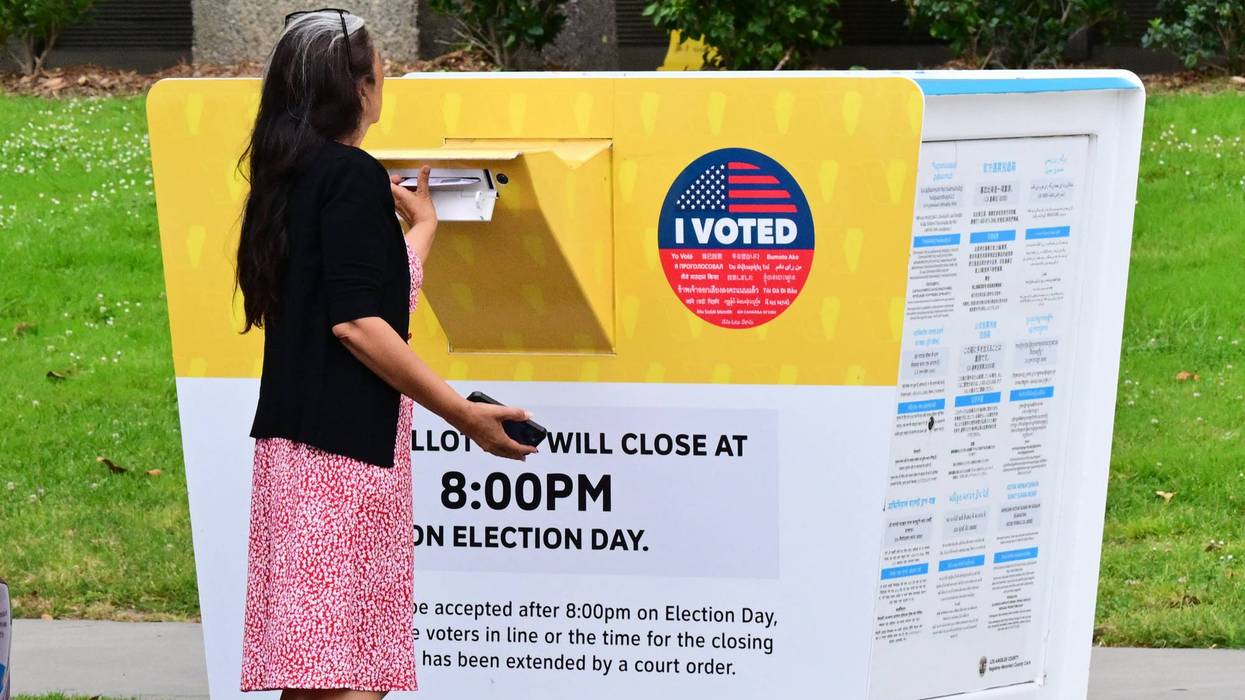
California Secretary of State Shirley Weber said DOJ was “demanding unprecedented measures that threaten thousands of Californians' right to vote, based on unverifiable information."
In what one former election official called a significant "escalation" of President Donald Trump's interference in the midterm elections, his Department of Justice sued California on Thursday for not disqualifying over 20,000 mail ballots from voters it claims could be noncitizens.
The suit comes two days after acting Deputy US Attorney General Trent McCotter sent a letter demanding that, within 48 hours, state election officials set aside ballots from a list of voters it determined were ineligible to vote using federal databases administered by the Department of Homeland Security (DHS)—systems that have previously been shown to regularly spit out errors.
When other states, like Nevada, Texas, and Missouri, have used the DHS system to vet their voter rolls for noncitizens, investigations have found that it incorrectly flagged hundreds of US citizens as ineligible to vote.
California officials have said the list of names was provided to them on a thumb drive, which came with a password written on a sticky note. They did not consider this to be a secure device and refused to open it. The letter was sent more than a week after California began sending mail ballots to 23 million registered voters.
The state refused to set the ballots aside, saying that the administration had not provided credible evidence that the voters were not citizens and that eligible voters could be disenfranchised. In its complaint Thursday, the DOJ called on the court to stop the ballots from being tallied until the citizenship status of each voter could be independently verified. It also requested that the state not send a ballot to anyone who has not yet received one.
The DOJ's batch of roughly 20,000 supposedly ineligible voters is a significant reduction from the 190,000 that Homeland Security Secretary Markwayne Mullin alleged were registered in the state back in July. When California asked for the underlying data and methodology for that figure, DHS declined to provide it.
"What happened to those 170,000?" said California Attorney General Rob Bonta at a press conference on Thursday. "They just got those wrong."
This highlights the concerns states have expressed about using the DHS system to purge their voter rolls. In refusing the DOJ's request, state officials have noted that in Nevada, the system flagged 185 voters as possible noncitizens only for state officials to determine that every single one of them was a US citizen.
California Secretary of State Shirley Weber responded to the DOJ's lawsuit with a sharply worded letter, accusing it of “demanding unprecedented measures that threaten thousands of Californians' right to vote, based on unverifiable information or methodology that you still fail to explain or provide.”
Weber described it as an effort to block “thousands of Californians’ right to vote” weeks before an election and said, “The extraordinary measures you demand are contrary to both federal and state law.” Federal law prohibits states from systematically purging voter rolls within 90 days of an election.
“We are not impressed with the federal government’s letter. We are not impressed with its lawsuit," Bonta said. “This is what the federal government does. They lie, they advance misinformation, disinformation, they advance conspiracy theories. They try to sow distrust with those lies."
“Their timing is rife with and smacks of and reeks of desperation and bad faith, to do this during an election,” he said.
Stephen Richer, the former Republican Maricopa County recorder in Arizona, described the government's lawsuit as "a real escalation by the federal government."
"I've mostly said 'Calm, calm. It's going to be OK' with respect to federal involvement in election administration," he wrote on social media. "This lawsuit—in October, in the middle of early voting—that asks election officials to disqualify certain voters based on suspect databases, not conclusive evidence, which definitely could have been alleged before early voting began... This does represent an escalation."
The University of California, Los Angeles (UCLA) Voting Rights Project filed an emergency brief on Thursday seeking to stop the DOJ from using its list to withhold ballots.
"With voting already underway, eligible citizens should not have their ballots withheld based on a federal list they have never seen and have had no opportunity to challenge," said its director, Chad Dunn. "We are asking the court to intervene before voters suffer harm that cannot be corrected after Election Day."
Sen. Alex Padilla (D-Calif.) said in a statement that the Trump DOJ "is now actively trying to interfere in the 2026 elections and strong-arm California into purging names from our voter rolls and blocking mail ballots based purely on vague allegations less than three weeks before Election Day."
He added, "This lawsuit has no legal basis or evidence behind it and is nothing more than a blatant abuse of power designed to sow distrust in our elections and threaten Americans’ right to vote."

"If she was Israeli, this image would be front-page news," said one observer.
A Palestinian toddler watched, screaming in horror, as her mother was burned alive in an Israeli airstrike on their Gaza City home early Wednesday that left the wounded girl orphaned—and received almost no coverage in US corporate media.
Reem Asaad Awad was killed when an Israeli helicopter attacked her family's apartment in the Rimal neighborhood at approximately 3:48 am local time Wednesday, the Palestinian Center for Human Rights reported.
Trapped inside the burning apartment was Awad's daughter, Maryam Ahmed Ghanem, whose age has been reported as between 2 and 4 years old. Prominent Palestinian author Mosab Abu Toha said family friends confirmed the child was born in February 2024.
Palestinian journalist Ali al-Jaafrawi witnessed and recorded the immediate aftermath of the strike.
"There are children are screaming alive inside," al-Jaafrawi is heard saying as he approached the building.
"I went up to the apartment. There were flames everywhere," al-Jaafrawi told Al Jazeera. "I went in despite the fire and smoke and heard a little girl screaming inside. I went in, found her, and rescued her immediately. I carried her and handed her to people so they could take her to hospital."
"I went back to rescue others and to document what happened, but I suffocated and lost consciousness because of the thick smoke," he added. "I saw a woman on fire inside the apartment."
Photos and video recordings show Ghanem being treated for injuries, including burns, at al-Shifa Hospital in Gaza City, which is struggling to operate after much of the facility was destroyed or damaged by Israeli forces, who besieged and raided the complex multiple times since October 2023.
Abu Toha, who saw Ghanem in the hospital, said the child "kept repeating the same heartbreaking words: 'I want my mum. My body hurts. There was a lot of fire.'"
Ghanem—whose father, Ahmad Ghanem, was reportedly killed by Israeli forces early in their genocidal assault—has joined the ranks of the more than 56,000 Gaza children who have lost at least one of their parents in the war, according to the United Nations Children's Fund.
"Reem and Ahmad had waited four years to conceive Maryam," Abu Toha wrote. "Four years of waiting and hoping to bring a child into this world. Ahmad never lived to see his daughter’s face. Reem lived long enough to watch her little girl grow for two-and-a-half years before she was burned alive in front of her. Now Maryam is an orphan, fighting to survive her horrific burns."
Ghanem's grandfather told Middle East Eye that the child and her mother "did nothing wrong."
"They were sleeping quietly at night," he said. "There was no one in the apartment except the two of them."
Israel said it is investigating the strike, which it claimed—without providing evidence—targeted a member of Hamas.
Dismissing a nominal yearlong ceasefire during which at least 1,500 Palestinians have been killed and over 5,000 others wounded by Israeli attacks, the grandfather said that "honestly, there is no security."
"I fear for my family," he added. "All people are afraid, not just me. There is still assassination, war, hunger, poverty, and destruction... Nothing has changed."
The horrific footage of the strike's fiery aftermath evoked imagery from earlier in Israel's onslaught, including video of a 7-year-old girl trying to escape an inferno caused by bombing that killed dozens of Palestinians—among them her mother and siblings—and a teenager photographed burning alive after Israeli forces bombed a tent encampment.
Some observers noted the almost complete absence of US media reporting on the story, with the apparent exception of CBS News, which published video of the burning apartment in a Facebook Reel.
"This little girl watched her mother be burned alive in Gaza. If she was Israeli, this image would be front-page news. But Israel can kill Palestinians in the most horrific ways without generating any headlines," US historian, author, and political analyst Assal Rad said on social media.
"Video has been circulating all day; you can hear the little girl cry and see her engulfed in smoke," Rad said in a separate post. "I can’t find headlines in Western media *because* the story is horrific. They want you to forget."
The Washington, DC-based Council on American-Islamic Relations (CAIR) issued a statement calling on members of Congress "to condemn Israel for burning a Palestinian mother alive while her daughter watched in Gaza."
“The horrific video of a little girl surrounded by fire as her mother burns to death in their home exemplifies the reality of Israel’s genocide in Gaza," CAIR said. "We cannot comprehend how any political leader with a conscience could continue to fund the sheer cruelty of the Israeli government and the war criminals who carry out its orders."
"Members of Congress must condemn this atrocity and demand an immediate end to all US support for Israel’s ongoing genocide in Gaza," the group added.
The US has provided Israel with tens of billions of dollars in armed aid, as well as diplomatic cover, including repeated vetoes of a series of United Nations Security Council ceasefire resolutions, throughout the three-year annihilation of Gaza, which has left more than 250,000 Palestinians dead or wounded.
Trita Parsi, executive vice president of the Quincy Institute for Responsible Statecraft, weighed in on the attack on Bluesky.
"I have reached the limits of my ability to put words to pure evil," he wrote. "Once again, Israel burned another family in Gaza alive. But the image of the... daughter in the family watching the rest of her family die in the flames will haunt me for the rest of my life."
"But," Parsi added, "will it haunt Israel?"
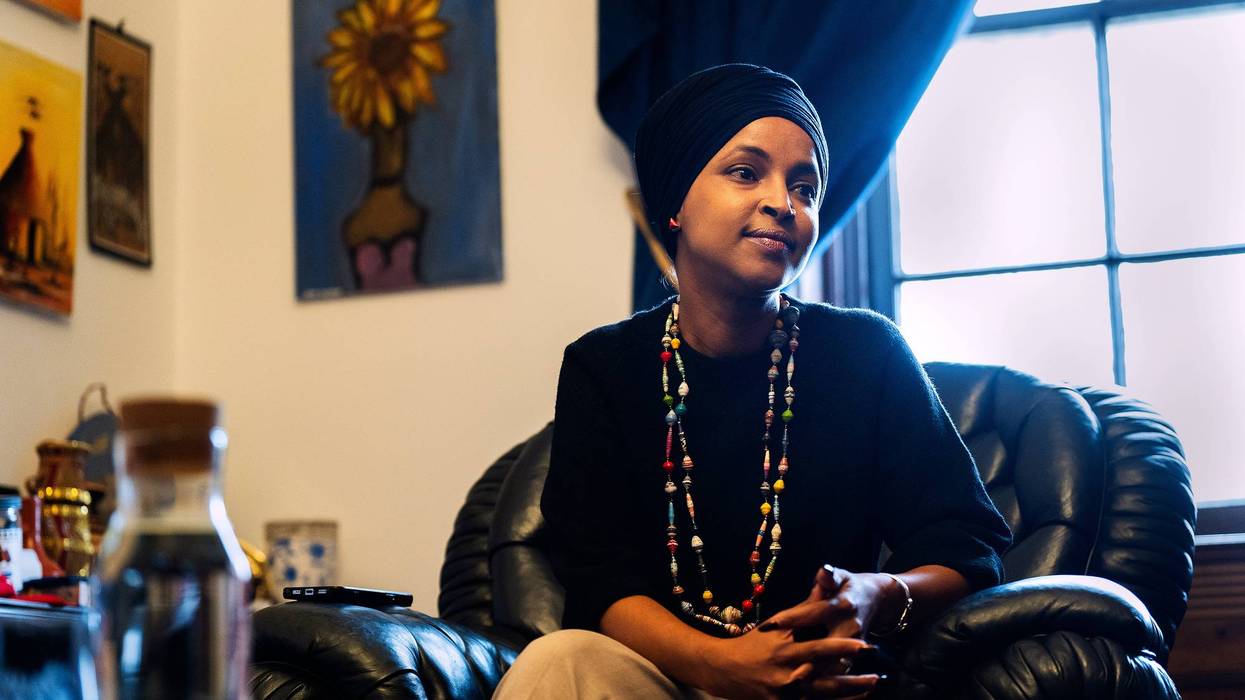
"To Trump, no American value or principle is too important to be shredded for his own personal gain."
The office of Rep. Ilhan Omar slammed the Trump administration on Thursday over its reported plot to have the Minnesota Democrat stripped of her US citizenship.
On Wednesday, The Wall Street Journal reported that the raid on Omar's home carried out earlier this week by Department of Homeland Security agents was part of and effort to build "a case to strip her of her US citizenship and ultimately deport her."
"The multipronged effort is focused at least in part on how Omar obtained her citizenship after she arrived in the US from Somalia decades ago," the Journal explained. "Investigators are focused both on the congresswoman and actions of her deceased father."
Omar spokesperson Jackie Rogers responded to the report by accusing President Donald Trump of engaging in "desperate attempt to justify his extraordinary abuse of power."
"This is politically motivated and an escalation of Trump’s personal vendetta against her lasting over a decade," Rogers told HuffPost. "He has lied about her family, about her immigration history, and about her love of this country."
Rogers also accused Trump of acting like a dictator by singling out a member of the opposition party for punishment.
"This isn’t a legitimate law enforcement action," said Rogers, "it is an authoritarian move to silence an opponent right before an election where he and his party will be rejected by Americans in historic proportions... To Trump, no American value or principle is too important to be shredded for his own personal gain."
Author John Ganz on Thursday published an analysis of the reported Omar deportation plot, which he said is "undoubtedly driven by racial and religious animus" and also "a serious assault on the constitutional order being carried out through the executive branch’s legal and bureaucratic machinery."
Ganz argued that a serious attempt to strip Omar of her citizenship and remove her from the country would be a major escalation from the Trump administration toward establishing an outright totalitarian state.
"Authoritarian governments suppress political opposition and deprive their subjects of particular rights," Ganz explained. "Totalitarian movements aspire to something much more radical: the destruction of the independent political and juridical personhood. They attack not merely the liberties of particular citizens they seek to repress, but the concept of citizenship itself—and then, ultimately, the concept of shared humanity."
Even 67% of Republican voters think states should be allowed to sue oil companies for climate damage. But Trump and GOP lawmakers are pushing to kill these suits for good.
President Donald Trump and Republicans in Congress have sought to stop state-level lawsuits aimed at holding oil and gas companies responsible for climate-related damage. But most voters don't think they should be immune from accountability.
In a poll released last week by Data for Progress, 75% of likely voters said they would oppose legislation that would give fossil fuel companies "legal immunity from having to pay for the damages they have caused by worsening climate change."
Just 20% said they would either "somewhat" or "strongly" support such legislation. Meanwhile, more than half (53%) said they would "strongly" oppose it.
Opposition was strong across political affiliations: 83% of Democrats and 76% of independents said they opposed giving oil companies immunity from lawsuits, but so did 67% of Republicans.
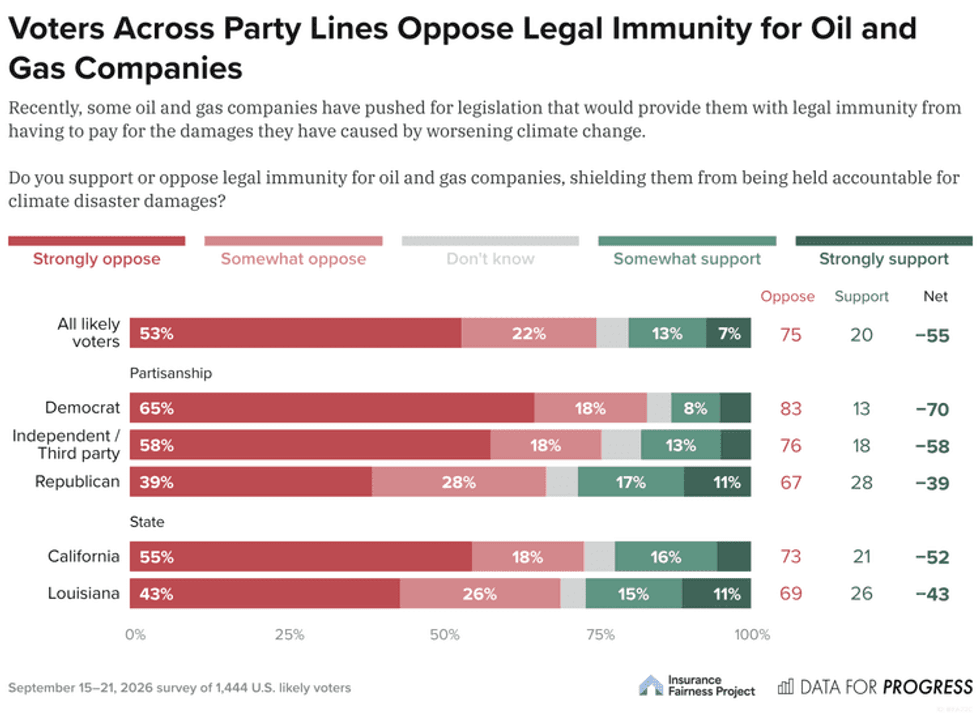 (Graphic by Data for Progress)
In recent years, states and municipalities have sued fossil fuel companies over their well-documented history of misleading the public about their products' role in warming the planet. These lawsuits have sought compensation for damages from worsening floods, wildfires, droughts, and other climate-related disasters.
Eleven US states—California, Connecticut, Delaware, Hawaii, Maine, Massachusetts, Michigan, Minnesota, New Jersey, Rhode Island, and Vermont—as well as the District of Columbia, have active lawsuits, as do at least two tribal governments and dozens of municipalities around the country, according to a tracker by the Center for Climate Integrity.
The new poll suggests voters are even more opposed to shielding oil companies from these lawsuits than they were five months ago. Another Data for Progress poll in May showed just 65% opposed legislation to shield oil companies, compared with 75% now.
"Big Oil is desperate to secure legal immunity and escape accountability for its role in the climate crisis—and the billions of dollars of damages that have followed," said Iyla Shornstein, the political director at the Center for Climate Integrity. "These poll results show that Americans across the political spectrum are opposed to putting Big Oil above the law.”
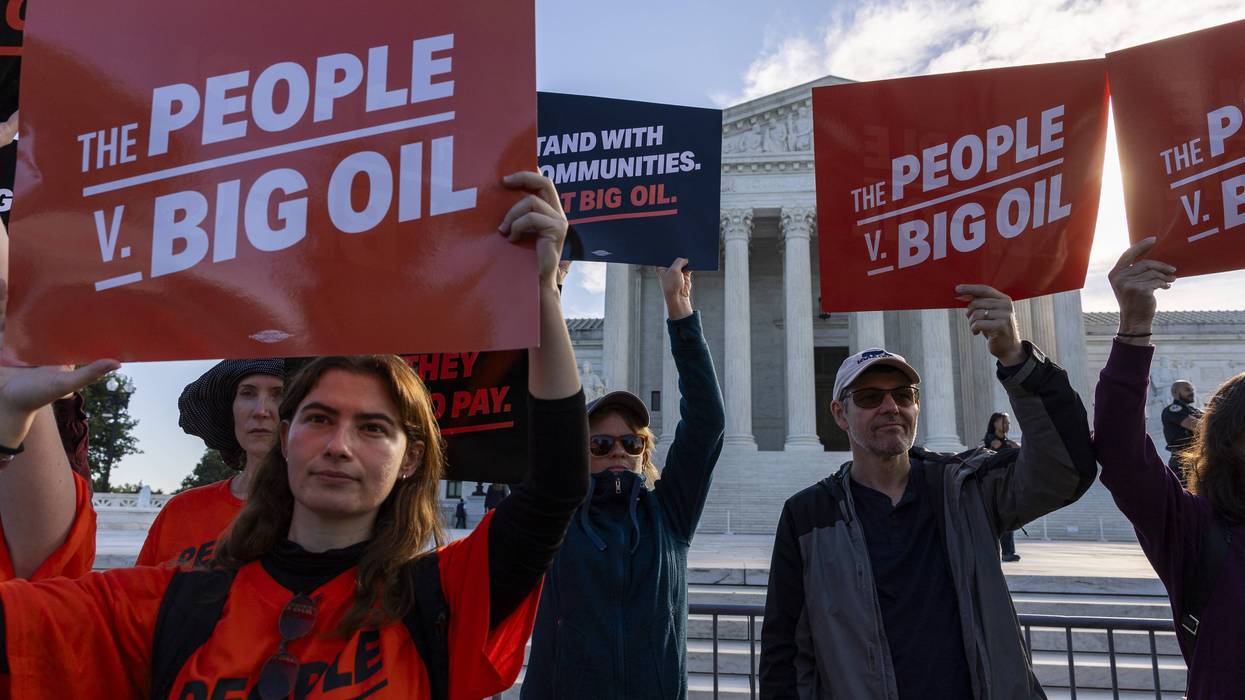
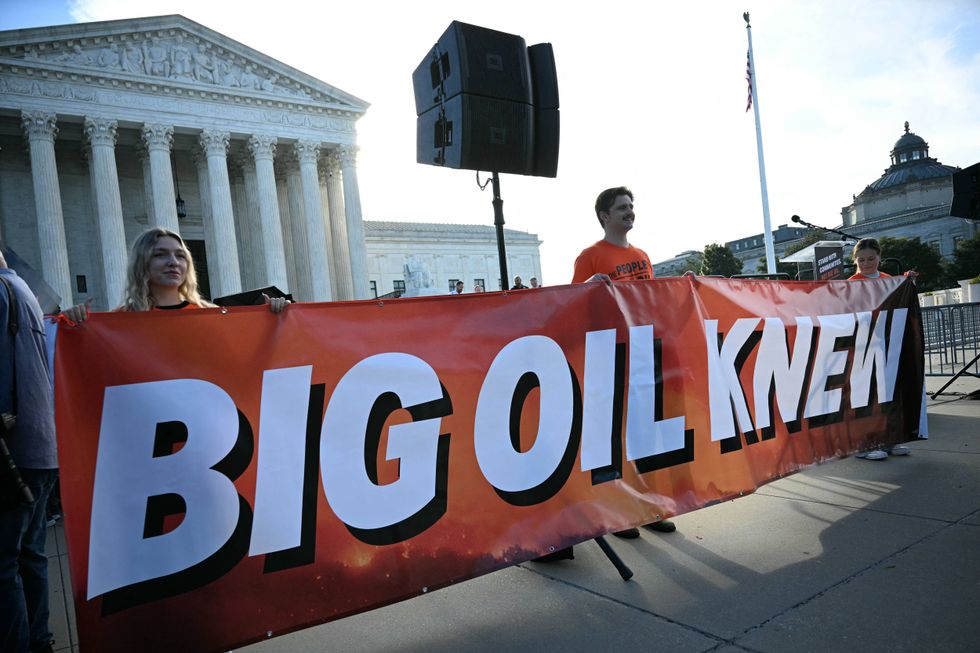 Protesters hold a banner outside the US Supreme Court as it considers the Suncor v. Boulder case in Washington, DC, on October 5, 2026. (Photo by Jim Watson/AFP via Getty Images)
The oil industry's lobbying arm, the American Petroleum Institute, has described stopping state climate lawsuits as a top priority for 2026. Their Republican allies have pushed at all levels of government to advance that goal.
In April, Sen. Ted Cruz (R-Texas) and several GOP cosponsors joined Rep. Harriet Hageman (R-Wyo.) to introduce legislation that would shield fossil fuel companies from any climate-related lawsuits, dismiss pending cases, and overturn state "superfund" laws requiring the industry to pay for climate damages.
That bill failed to pass out of the House Judiciary Committee last month but could be brought forth again during the "lame-duck" session after the midterm elections in November.
ProPublica has identified at least 15 bills across 11 states that have either been enacted or proposed to shield companies, either by granting them broad immunity from liability for greenhouse gas emissions or restricting the ability of communities to sue over climate-related damages. Groups linked to Leonard Leo, the co-chair of the right-wing Federalist Society, have coordinated many of these efforts.
Republican attorneys general in 16 states have proposed creating a "liability shield" for fossil fuel companies modeled on the one that protects gun manufacturers from liability for the misuse of their products. The American Legislative Exchange Council (ALEC), a leading conservative policy shop, approved a model bill in August aiming to establish this shield in state legislatures nationwide.
The oil industry has also pushed for the right-wing Supreme Court to step in to block these lawsuits. Earlier this month, during oral arguments, oil giants ExxonMobil and Suncor urged the court to block a lawsuit brought by Boulder, Colorado, that accused oil companies of deceiving the public about climate change and sought to hold them financially responsible.
If the court blocks the Boulder suit before it gets to trial, it could set a precedent that derails dozens of similar lawsuits around the country.
Meanwhile, Trump, who pledged to help Big Oil executives in exchange for their donations to his presidential campaign, signed an executive order last year directing the Department of Justice (DOJ) to identify and challenge state lawsuits that seek to impose financial penalties on fossil fuel companies.
His DOJ has weighed in on the Suncor v. Boulder case on the side of the oil industry and has sued at least five states that have sought to hold fossil fuel companies accountable.
The question about climate lawsuits was part of a broader set of questions Data for Progress asked voters about rising insurance costs and corporate accountability in partnership with the Insurance Fairness Project. Other results showed that many Americans want legal recourse against insurers and other companies that impose costs on consumers.
"As rising home insurance costs directly threaten housing affordability for the majority of Americans, voters are tired of their prices rising while insurance companies, energy providers, and the oil and gas industry go unchecked," said Grace Adcox, senior climate strategist for the Insurance Fairness Project. "There is a strong appetite for holding corporations accountable, both for their role in driving up costs and their role in contributing to the climate crisis."

"Under Donald Trump, there’s a two-tiered justice system," said one watchdog leader. "Big Tech plays by a different set of rules because they bought their way in."
A newly revealed list of companies and billionaire CEOs who donated millions of dollars to President Donald Trump's ballroom construction project shows that Big Tech, according to one government watchdog, "bankrolled it fully expecting a return on their investment."
The list, first reported by The Washington Post, doesn't just show the $25 million donations from tech giant Apple, the pro-Israel Adelson Family Foundation, and microchip firm Nvidia—the latter of which requested anonymity.
It also reveals previously undisclosed donors who have benefited from a presidential pardon as well as government contracts and at least one closed federal investigation.
The 57 donors whose names were published by the Post had committed to contributing at least $100,000 to the ballroom construction project, which is proceeding for now following a Supreme Court ruling in August.
The list shows a total of $333 million contributed from private donors, but does not include Trump's name, though the president has said the demolition of the White House's East Wing and the construction of the ballroom would be "paid for a hundred percent by me and some friends of mine."
It also falls short of the $600 million projected price tag; according to the Post, taxpayer funds have been used to partially fund the project, along with donations from companies with business before the government.
Nvidia's $25 million donation came three months after the company reached a deal with the Trump administration to sell advanced microchips to China.
A $25 million donation from Charles Ergen, co-founder and chairman of the telecommunications company Dish Network, came shortly after the Federal Communications Commission (FCC) dropped an investigation into the failure of EchoStar, which owns Dish Network, to upgrade its cellphone network.
FCC Commissioner Brendan Carr had threatened last May to revoke government licenses from EchoStar, and a month later, Ergen met with Carr and Trump in a closed-door meeting where his political donations were discussed, Bloomberg reported.
Ergen then negotiated a deal to sell some of the licenses to AT&T. Carr dropped the investigation the following month, and months later, with the sale pending, the executive donated $12.5 million to Trump's ballroom construction. A second $12.5 million contribution came soon after, according to the list published by the Post.
“Big Tech giants didn’t just chip in for Trump’s ballroom," said Sacha Haworth of the Tech Oversight Project, a watchdog group. "The same companies funding Trump’s vanity project lined up for tax breaks, chip deals, federal contracts, and a blind eye to lawbreaking. Under Donald Trump, there’s a two-tiered justice system. Big Tech plays by a different set of rules because they bought their way in."
The Post also detailed a $2.5 million contribution from Isabela Herrera, the daughter of international banker Julio Herrera Velutini, whom the US Department of Justice indicted on bribery charges in 2022.
Herrera Velutini's charges were reduced to a misdemeanor months after his daughter donated millions of dollars to Trump's MAGA Inc. political action committee, and a month later, she committed to a $2.5 million donation for the ballroom. Soon after, Herrera Velutini was pardoned.
The transactions detailed by the Post amount to "blatant corruption," said progressive news outlet The Tennessee Holler.
Companies with massive stakes in decisions before President Trump and his administration gave many millions to the White House ballroom project, which the President has made clear is important to him. So are you confident he'll make those decisions based only on what's good for the American people?
[image or embed]
— Noah Bookbinder (@noahbookbinder.bsky.social) October 15, 2026 at 10:43 AM
Cryptocurrency investors Tyler and Cameron Winklevoss donated more than $5 million in bitcoin—a portion of the more than $18 million the industry contributed to the ballroom. Trump has pushed for loose regulations for the industry.
Other top donors include Google, Lockheed Martin, Amazon, and Palantir.
Government watchdog Public Citizen said a new tax filing from the Trust for the National Mall, a nonprofit charity that manages the donations for the ballroom, shows that $169.7 million came from just 10 big donors.
“One year after the people’s house was abruptly bulldozed for a gold-plated ballroom that most Americans will never be allowed inside, we are uncovering who paid the most to fund it," said Jon Golinger, democracy advocate for Public Citizen. "The question these ballroom megadonors all now need to answer is—why?”
Haworth said that "when Democrats take back gavels in January, they need to investigate Google, Apple, Meta, Amazon, OpenAI, and others for potentially breaking the law to buy get-out-of-jail-free passes and sweetheart deals in exchange for their donation."

“The public is furious about the corruption they see."
A poll released by Fox News on Wednesday reveals that voters' biggest concern heading into the 2026 midterm elections isn't gas prices, but government corruption.
In total, the Fox poll shows that 60% of voters say they are "extremely concerned" about government corruption, which is higher than the 58% who are extremely concerned about inflation and the 50% who are extremely concerned about gas prices.
This concern with corruption appears likely to benefit Democratic candidates, as respondents say they trust Democrats to handle corruption better than Republicans by a 10-point margin.
Overall, the poll finds Democrats hold a nine-point lead on the generic congressional ballot.
Trump's personal net worth has increased by billions of dollars since the 2024 election, driven in large part by his family's cryptcurrency venture, which is nearly half owned by a fund backed by the United Arab Emirates.
Many legal experts also believe that Trump brazenly violated the US Constitution's emoluments clause when he accepted a $400 million luxury jet as a gift from the Qatari government.
Lisa Gilbert, co-president of Public Citizen, said that widespread concerns about corruption were not surprising given how President Donald Trump and his family have shamelessly enriched themselves since returning to power.
"The public is furious about the corruption they see from the government," said Gilbert. "Even Fox News polling says as much."
Gilbert emphasized that Democrats must hit the ground running to further uncover Trump corruption if they win the upcoming 2026 elections, as voters will be demanding accountability.
"If we see a shift in power in the next Congress," Gilbert said, "the American people will expect the new holders of the gavels to deliver oversight and accountability in a strategic and disciplined way that zeroes in on the real harms that the current regime, in cahoots with corporate power, have carried out at the expense of everyday Americans."
Drop Site reporter Ryan Grim similarly argued that the Fox poll shows a hunger on the part of voters for accountability.
"The last time Democrats took congress they barely investigated Trump administration corruption," Grim wrote. "Voters are very clear they don’t want that same mistake made again."
Journalist Isaac Saul found it "refreshing" to see voters taking corruption seriously, and he said the issue would likely be Trump's downfall.
"I've been saying for a while that Trump's fate will be like Orban's," wrote Saul. "His nationalist rhetoric is resonant, but his comical corruption will cost him. It's been unlike anything we've ever seen, and it gets worse daily."
Adam Carlson, founding partner of Zenith Polls, predicted that voters' concerns about government corruption would endure beyond the 2026 midterms.
"Corruption is going to be one of the biggest issues of the 2028 election," Carlson wrote. "And candidates who can speak about it in a compelling way—and can effectively draw a direct line from corruption to other top issues, like how it affects the cost of living—will be rewarded by voters."
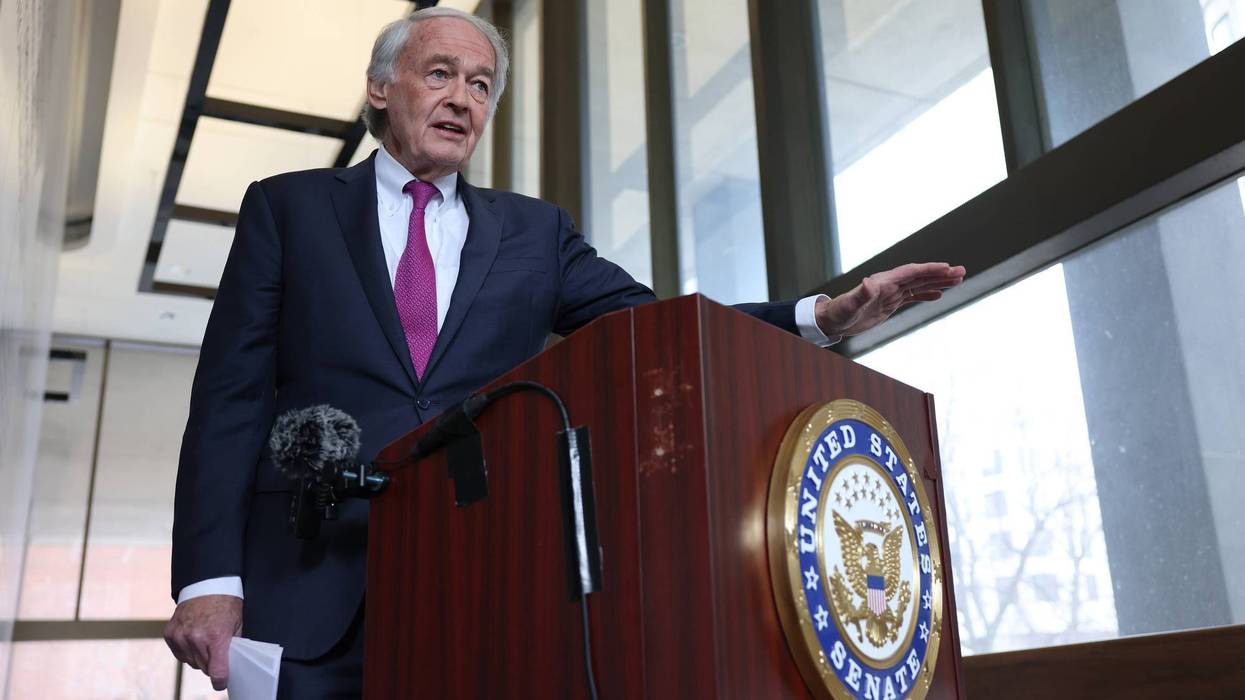
"We can't sleepwalk into a decision this consequential. The law gives Congress the power to review and block a deal like this, and the Senate will now have the chance to fulfill its statutory responsibility before it's too late."
US Sens. Ed Markey and Jeff Merkley on Thursday continued to push back against President Donald Trump's proposed nuclear energy agreement with Saudi Arabia, setting up a vote on legislation that could block the deal before it takes effect.
"Giving Saudi Arabia access to US civilian nuclear energy technology without ironclad protections to make sure it doesn't provide a foundation for a nuclear bomb is unacceptable," declared Merkley (D-Ore.), a senior member of the Senate Foreign Relations Committee who co-chairs the Nuclear Weapons and Arms Control Working Group with Markey (D-Mass.).
Under Section 123 of the Atomic Energy Act, Congress has 90 days of continuous session to review the deal. The pair of senators introduced a joint resolution of disapproval, on which the Senate is set to vote after November 29. The JRD would need to pass both GOP-controlled chambers by veto-proof majorities to actually block the agreement.
I refuse to let the U.S. sleepwalk into a dangerous nuclear deal with Saudi Arabia. The law gives Congress the power to review and block a deal like this.@markey.senate.gov and I are making sure the Senate fulfills that responsibility before it’s too late.
[image or embed]
— Senator Jeff Merkley (@merkley.senate.gov) October 15, 2026 at 12:37 PM
The senators are alarmed that Trump's agreement lacks a "gold standard" provision barring Saudi Arabia from reprocessing spent fuel or enriching uranium. They are also alarmed that the proposal doesn't require allowing International Atomic Energy Agency investigators to confirm that the nation is not trying to develop a nuclear weapon.
"It is essential that nations pursuing civilian energy programs agree to the 'gold standard' of restrictions on fuel reprocessing and enrichment and rigorous inspections to ensure that a nuclear energy program doesn't become a covert nuclear weapons program," Merkley argued. "We can't sleepwalk into a decision this consequential. The law gives Congress the power to review and block a deal like this, and the Senate will now have the chance to fulfill its statutory responsibility before it's too late."
The details of the agreement have concerned not only progressive senators, but also nuclear nonproliferation experts.
"The US-Saudi nuclear deal is about megatons, not megawatts. Trump should not be sharing nuclear bomb technology with a nation that US intelligence says may want nuclear weapons," said Markey. "This deal is the starting gun for a Middle East nuclear arms race. Congress must reject it."
The introduction came roughly a month after Markey and Merkley partnered with Sen. Bernie Sanders (I-Vt.) for another JRD designed to block a $5 billion conventional weapons sale to Saudi Arabia, which includes over 10,000 joint direct attack munition guidance kits and a similar number of "dumb bombs" that can be combined to create precision weapons.
"I am deeply concerned by the kingdom's human rights abuses, the security of the region as the war in Iran rages on, and the proxy war that is escalating between Iran and Saudi Arabia in Yemen," Markey said at the time. "Further escalation in the Saudi-Iran proxy war will worsen an already dire humanitarian catastrophe in Yemen and risks setting off a nuclear arms race between Iran and Saudi Arabia."
One policy analyst wrote sardonically that the administration doesn't "want to remind voters before the midterms of the mass killing of schoolchildren on the first day of Trump's glorious war."
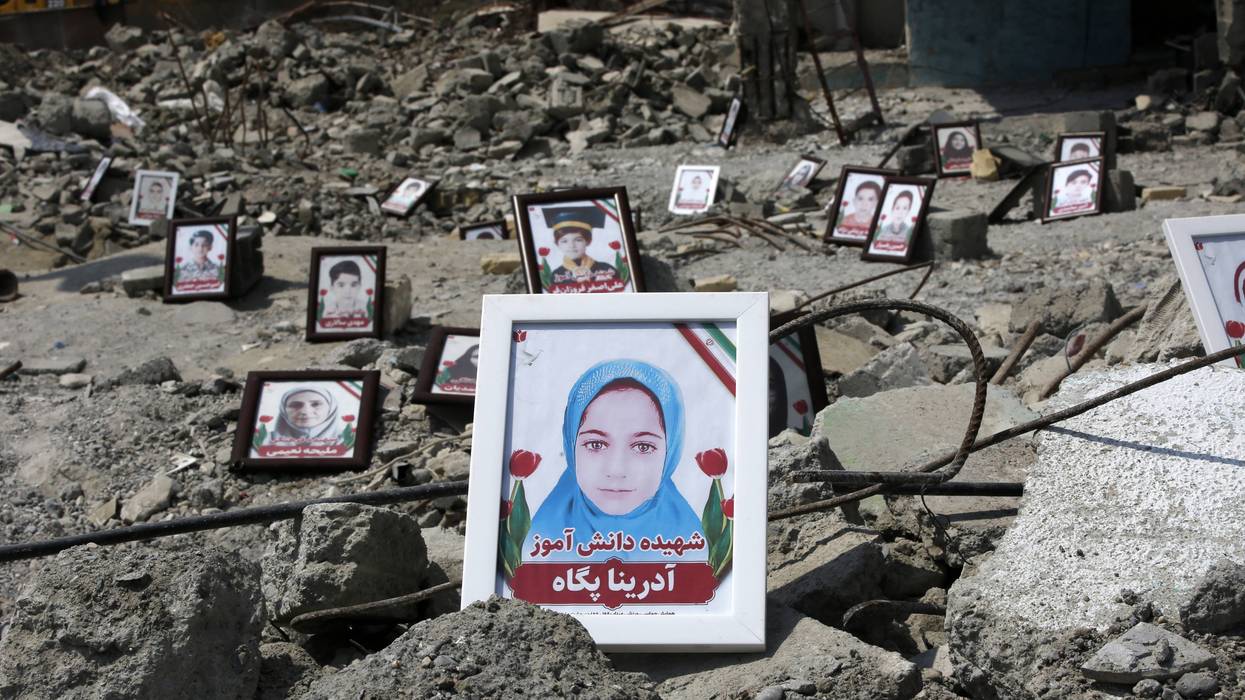
The Pentagon is reportedly planning to withhold until after the midterm elections the completed findings of its investigation into a devastating US strike on an elementary school in southern Iran, which killed more than 150 people—including 120 children—on the first day of President Donald Trump's illegal and deeply unpopular war.
Bloomberg reported on Thursday that "top Pentagon officials have expressed their intention to hold off on releasing an internal report into the attack" on Shajareh Tayyebeh Elementary School in Minab until after next month's midterms "at the earliest." The internal assessment is believed to have been effectively complete for months, and preliminary findings reported in early March determined that American forces hit the school with a Tomahawk missile due to "outdated" targeting information.
According to Bloomberg, Pentagon investigators "discovered that flawed intelligence, outdated imagery, and an overreliance on AI contributed to the attack," which is regarded as one of the US military's worst atrocities against civilians in decades. Trump brushed off the massacre in remarks to reporters in June, saying: "Mistakes are made. War is nasty."
Ryan Costello, policy director at the National Iranian American Council (NIAC), said in a statement that "the refusal to come clean about the attack on Minab is not just a shameful exercise to dodge accountability for a horrific war crime; it is actively risking these errors being repeated again."
"As the administration has dodged accountability on Minab and [a deadly strike on a sports hall hours later], it has engaged in further attacks that may be war crimes, including the bombing of a civilian home on Qeshm Island that killed a family and the bombing of a wedding party in Kuhestak that killed five, including two children," said Costello. "Ensuring these tragedies don’t repeat starts with accountability on Minab.”
International policy analyst Brian Finucane wrote sardonically that the Pentagon doesn't "want to remind voters before the midterms of the mass killing of schoolchildren on the first day of Trump's glorious war."
Bloomberg's reporting came as CNN published a story detailing internal US "strike plans" that include possibly dropping the so-called "mother of all bombs" on Iranian energy infrastructure.
The GBU-43/B Massive Ordnance Air Blast Bomb (MOAB) is the largest nonnuclear bomb in the US arsenal. In 2017, Trump became the first US president to deploy the weapon, authorizing the military to drop it on Afghanistan.
Sina Toossi, a senior fellow at the Center for International Policy, warned that using the bomb against Iran would risk "triggering another major escalatory spiral, potentially including Iranian attacks on critical regional energy infrastructure, with consequences for global markets and the US economy."
"This only reinforces the fundamental problem: Trump has no viable military solution to the Iran conflict," Toossi wrote. "Is he looking for one spectacular strike to project strength and declare victory? Or is he prepared to plunge the US into an even deeper, potentially endless war that could devastate the rest of his presidency, legacy, and the economy?"
Costello of NIAC said that "the Trump administration’s threats to commit war crimes in Iran cannot be normalized."
"President Trump acts on many of his threats, necessitating more urgent action to bring this illegal war of choice to a definitive end," he added.