

SUBSCRIBE TO OUR FREE NEWSLETTER
Daily news & progressive opinion—funded by the people, not the corporations—delivered straight to your inbox.
5
#000000
#FFFFFF
To donate by check, phone, or other method, see our More Ways to Give page.
Daily news & progressive opinion—funded by the people, not the corporations—delivered straight to your inbox.

Corey Goldstone; cgoldstone@campaignlegal.org; 301-233-0580
Today, the U.S. Supreme Court will hear arguments in Brnovich v. DNC, a case which could have profound implications for the future of voting rights in America. The case focuses on the role of Section 2 of the Voting Rights Act (VRA), a federal statute providing protection against racial discrimination in voting. Since the VRA was signed into law in 1965, it has been our country's best defense against racially discriminatory voting policies, enabling advocates to advance more equitable voting systems that better represent communities of color.
"The Supreme Court should issue a ruling that upholds the Voting Rights Act, our nation's most effective defense against racially discriminatory voting policies," said Paul Smith, vice president of Campaign Legal Center (CLC). "Now is not the time to weaken the key provisions of the Voting Rights Act. Instead, we should be working to strengthen protections for communities of color to make sure every voice is heard in our democracy. Far too many people continue to face discriminatory barriers that make voting access needlessly difficult."
Our democracy works best when everyone can participate. However, after a record-breaking 160 million Americans voted in the 2020 elections, politicians have pushed back with a rash of legislative proposals introduced across the country attempting to limit access to voting in future elections. Many of these measures - like rollbacks to mail voting or cuts to early voting hours - would disenfranchise communities of color at a disproportionately high rate.
Brnovich began in 2016 when several groups affiliated with the Democratic party, including the Democratic National Committee (DNC), sued the state of Arizona, challenging two state laws that prohibited the counting of ballots cast in the wrong precinct and the collection of absentee ballots by third parties. Voters of color in Arizona are twice as likely to cast an out-of-precinct ballot than white voters. On average, they also tend to use ballot collection services at a higher rate because they have less reliable mail service and live further from ballot drop off centers and post offices. The U.S. Court of Appeals for the Ninth Circuit ultimately concluded that Arizona's out-of-precinct policy and ballot-collection prohibition violated Section 2 of the VRA. The court found that these laws resulted in a racially disparate impact, particularly on Arizona's Latino and Native American communities.
While the case deals with Arizona's laws, the Supreme Court's ruling will have national implications. Especially over the last decade, there has been a concerted effort to chip away at the VRA. Proponents of Arizona's laws want to dispense with Section 2 and are using Brnovich as a vehicle to do that - not just in Arizona - but around the country.
Every eligible voter should be able to exercise their right to vote and have their voice heard. The court must affirm its vital role in preserving voting rights by striking down Arizona's discriminatory laws.
Campaign Legal Center (CLC) advances democracy through law, fighting for every American's right to participate in the democratic process. CLC uses tactics such as litigation, policy advocacy, communications and partnerships to win victories that result in a more transparent, accountable and inclusive democracy.
(202) 736-2200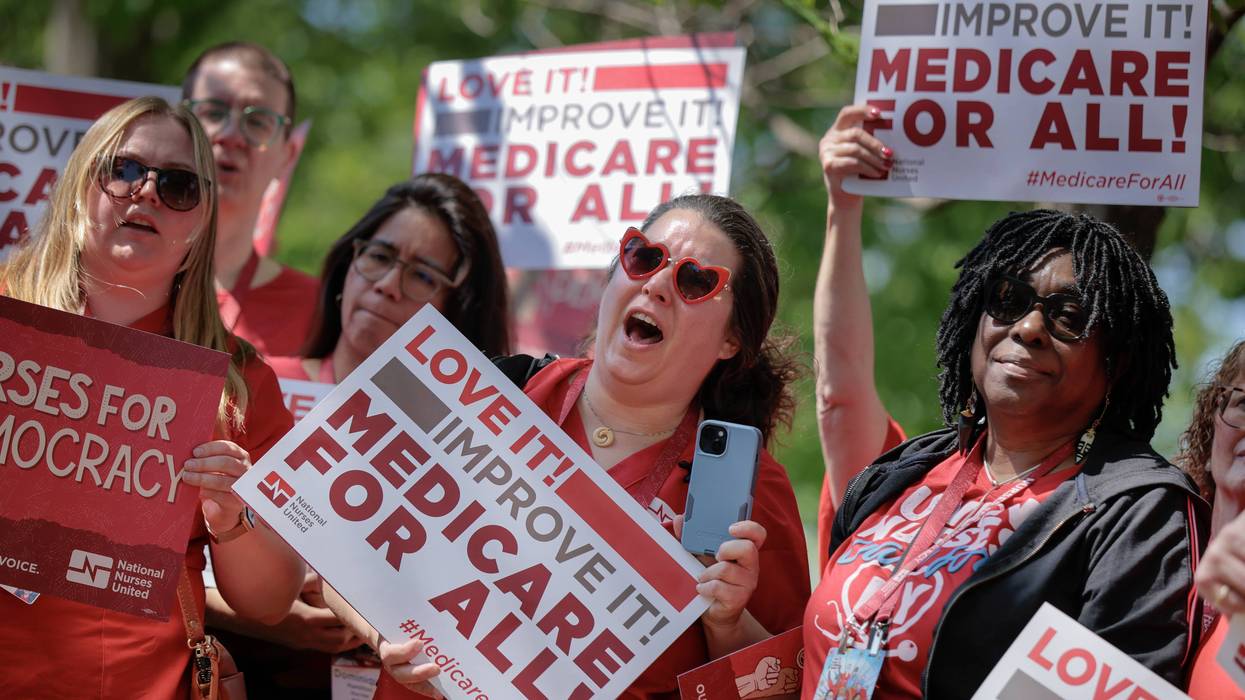
"We know what high-performing health systems look like—other countries have them and are building them. It’s high time the US did better.”
An annual analysis that examines healthcare systems across nearly two dozen wealthy countries around the world once again highlighted the United States' "uniquely poor performance relative to its peers," with this year's US Health Care from a Global Perspective report focusing on "insurance coverage and access to care, affordability of care, delivery of care, and equity of health outcomes."
As advocates for expanding the US Medicare system to the entire population have long warned, the country's for-profit healthcare system—which ties the ability to get care to one's employment and allows insurance companies to boost profits by denying care to patients—"The US, on average, has the poorest health outcomes of any high-income country," the Commonwealth Fund's report reads.
The report examines the US system compared with other countries in the Organization for Economic Cooperation and Development (OECD), including the United Kingdom, France, New Zealand, Japan, and Mexico.
It finds that the US spent 18% of its gross domestic product on healthcare in 2024—nearly twice the OECD average.
Life expectancy in the US reached an all-time high in 2024, but was still among the shortest when compared to the 19 other countries, nearly five years shorter than Japan, Spain, and Switzerland, and longer than the average lifespan in Turkey and Mexico.
While the US and Mexico also both rank high on the list in terms of preventable deaths, the latter nation announced last month that it would soon be joining every other country included in the analysis by shifting to a universal, government-run healthcare system.
In the United States, the for-profit health sector—which spent a record $877.69 million on lobbying last year—contributes to the high number of avoidable deaths, which stands at 312 per 100,000 people. About 27 million Americans are still uninsured, more than 16 years after the passage of the Affordable Care Act, and the Republican Party's refusal to continue ACA subsidies last year as well as its $1 trillion in Medicaid cuts over the next decade, according to Thursday's report, are "projected to increase the number of uninsured Americans by an additional 17 million by 2034, potentially leading to more than 50,000 additional preventable deaths annually."
"By contrast, Mexico’s recently established Universal Health Service will provide all residents with access to free care at any public health institute, starting in 2027," the report states. "The US is one of the only countries to have enacted policies that reduce coverage."
High out-of-pocket costs may also contribute to poor outcomes and the high number of preventable deaths in the US, the Commonwealth Fund suggests. Americans spend $400 per person, per year, on out-of-pocket costs for prescription drugs, while people in France spend $100.
"The US is one of the only countries to have enacted policies that reduce coverage."
"In the US, where approximately 8% of the population is uninsured and one-quarter has coverage that comes with high out-of-pocket costs or deductibles, people are far more likely to forgo needed care because of costs than people in peer countries," reads the report. "This can mean not filling prescriptions, not obtaining diagnostic tests, treatment, or follow-up care, or being unable to adhere to clinician-recommended care plans."
The report also identifies the US as a country that lags behind its peers in producing new doctors, contributing to a crisis in primary care, with the US having the fewest number of primary care providers per 1,000 people. The country also has the "highest medical tuition fees of any country in our analysis," said the Commonwealth Fund.
The organization also found that in 2023, the US had nearly 19 maternal deaths for every 100,000 live births, representing a decline for the country that has long had "among the highest rates of maternal deaths related to complications of pregnancy and childbirth."
"By contrast, in 11 of the 18 countries we studied there were less than five maternal deaths per 100,000 live births," reads the report, which also notes that in the US, maternal mortality is "exceptionally high" among Black women, at 50 deaths per 100,000 live births.
"This far exceeds national maternal mortality in any of the other countries," the report states. "Inequities in access to care and patients’ care experiences—often rooted in discrimination and clinician bias—may be prime contributing factors."
Dr. Joseph Betancourt, president of the Commonwealth Fund, noted that "the US has long prided itself on having the best healthcare in the world, but the population benefits from this excellence unevenly, and it remains largely out of reach for many Americans."
"We spend more than any other nation on healthcare, so our poorer health outcomes aren’t due to a lack of resources—it is about how we choose to use them," said Betancourt. "We know what high-performing health systems look like—other countries have them and are building them. It’s high time the US did better."
"Other countries have shown that alternatives work. What’s striking isn’t the absence of solutions; it’s our reluctance to implement them."
The report does not explicitly call on the US to shift to a universal, government-funded healthcare system, but studies have shown that expanding Medicare to the entire US population, as lawmakers including Sen. Bernie Sanders (I-Vt.) and Reps. Pramila Jayapal (D-Wash.) and Alexandria Ocasio-Cortez (D-NY) have consistently demanded, would address many of the problems listed in the report.
Studies by the Congressional Budget Office and Yale University have shown that Medicare for All would save an estimated $650 billion and prevent 68,000 avoidable deaths each year.
The policy, which has been proposed in Congress numerous times, is also broadly popular; 65% of US voters—including 78% of Democrats, 71% of Independents, and 49% of Republicans—support creating a national, government-run healthcare program, according to a Data for Progress poll last year.
Despite this, both Republican and Democratic lawmakers continue to insist the proposal is unpopular and too expensive, with Michigan state Sen. Mallory McMorrow (D-8), who is running against vehement Medicare for All advocate Abdul El-Sayed in the Democratic US Senate primary, insisting recently that "the support for a true single-payer system isn't there yet."
Reginald Williams II, senior vice president at Commonwealth Fund, emphasized that it is "not inevitable" that "Americans pay more for healthcare and get less in return."
"It’s the result of different choices," he said. "Other countries have shown that alternatives work. What’s striking isn’t the absence of solutions; it’s our reluctance to implement them. The failure of the US health system is not a failure of ideas. It’s a failure of will to act on them.”

The head of a pro-Israel lobbying group called it "a blatant violation of the ceasefire and clear undermining of any plan for post-conflict Gaza."
As Israel expands its control over the Gaza Strip in violation of last year's ceasefire agreement, Prime Minister Benjamin Netanyahu said on Thursday that he had ordered the military to take over even more territory.
During a conference at the Ein Prat pre-military academy in an illegal Israeli settlement in the occupied West Bank, the prime minister acknowledged that Israel has gradually expanded its control over Gaza since the ceasefire agreement was implemented in October.
"We are now in 60% of the Gaza Strip, more or less. We were at 50%; now we’ve moved to 60%," he told the crowd.
"My directive," he continued, "is to move to—"
Members of the audience then interrupted with shouts of "100! 100!"
"Wait, let's go in order," Netanyahu responded. "First 70%. Let's start with that."
The Euro-Mediterranean Human Rights Monitor has said Israel's expansion of control in Gaza and construction of fortified military sites “directly contradicts the requirements of the second phase of the ceasefire agreement" and is creating conditions of "de facto annexation."
That agreement required Israeli forces to withdraw behind a so-called "yellow line" that left the military occupying about 53% of the country. Even that occupation was meant to be temporary, with later stages of the agreement involving a full pullout of Israeli troops as Hamas and other militant groups in the strip disarm.
But in recent months, the opposite has happened. The Israel Defense Forces have gradually pushed the yellow line deeper into Palestinian territory to the point where it encompasses more than 60% of the coastal strip, leaving Palestinians near the yellow line to wake up and learn they are in an "open-fire zone" where they can be shot on sight.
According to data from the United Nations Human Rights Office shared with Reuters on Wednesday, 152 Palestinians—comprising 102 men, 15 women, and 35 children—had been killed near the boundary during the ceasefire period up to February 5, which the office's head said raises "serious concerns that the Israeli army is shooting at and killing presumed civilians simply on the basis of their proximity to the so-called yellow line."
Netanyahu's remark follows Israel's orders on Wednesday for more than 200,000 residents of southern Lebanon to forcibly evacuate north of the Zahrani River despite an ongoing ceasefire that began last month.
Israel has systematically razed villages across southern Lebanon since the beginning of March, gradually pushing northward to the point where it now effectively controls about a fifth of the country's territory.
Those ordered to flee their homes on Wednesday joined more than 1 million Lebanese already forcibly displaced by Israel's forced expulsion orders and bombardments. More than 3,200 Lebanese have been killed, including hundreds of women and children.
Israel's far-right settler movement—represented in the Netanyahu government by figures like Security Minister Itamar Ben-Gvir and Finance Minister Bezalel Smotrich—speaks openly about ethnically cleansing Gaza and Lebanon of their residents to make way for permanent Israeli settlers, in a similar fashion to the intensifying annexation of the West Bank.
On Wednesday, Defense Minister Israel Katz said that Israel was pushing for the mass “voluntary migration” of Palestinians from Gaza and said the government would implement a plan for it “at the right time and in the right manner."
Human rights groups have said that the creation of unlivable conditions in Gaza to push its residents to leave would amount to the war crime of forced transfer.
Itay Epshtain, an Israeli expert in international law and the law of armed conflict, said Katz had "publicly committed himself to the mass deportation of Palestinians from Gaza" and that "members of Israel’s government openly endorsed conduct in gross and systemic breach of peremptory norms of international law."
Netanyahu, meanwhile, has previously expressed sympathy for the idea of "Greater Israel," which involves the expansion of the nation's borders to conquer all or part of current-day Lebanon, Jordan, Syria, Egypt, Iraq, and Saudi Arabia in accordance with Biblical descriptions.
The International Criminal Court has issued an arrest warrant for Netanyahu for war crimes and crimes against humanity during Israel's genocidal military campaign in Gaza, and is reportedly taking actions against Smotrich and Ben-Gvir as well.
Dylan Williams, the vice president for government affairs at the Center for International Policy, said that Netanyahu's pledge on Thursday to further expand Israel's territorial control in Gaza was "a war criminal admitting to his crimes."
Ilan Goldberg, the senior vice president of the pro-Israel lobbying group JStreet, said plans to expand were "a blatant violation of the ceasefire and clear undermining of any plan for post-conflict Gaza."
"Yes, Hamas needs to disarm," he said. "But Israel cannot be launching plans to retake all of Gaza."
Owen Jones, a British journalist, lamented the lack of coverage of the slow-motion ethnic cleansing in the Western press.
"Israel doesn't try to hide its crimes. It broadcasts them to the world, knowing it has impunity," he said on Thursday. "Netanyahu boasts of annexing Gaza. Yesterday, his defense minister said the plan was to remove Gaza's population. No front page headlines. No Western denunciations."

"If an economic policy will make life harder for American families, you can count on President Trump to try it," said one leading House Democrat.
A key federal inflation measure released Thursday shows that US prices jumped to a three-year high last month as President Donald Trump's illegal Iran war and tariffs continued to push up consumer costs at gas pumps and grocery stores across the country.
The personal consumption expenditures (PCE) index, closely watched by the Federal Reserve, rose at an annualized clip of 3.8% in April, the fastest pace since May 2023. Even when food and energy prices were stripped out of the measurement, the index rose 3.3% last month compared to a year ago—the highest level since November 2023.
"Today’s numbers tell the story: Families are paying more for gas, food, and housing and utilities," said Sen. Elizabeth Warren (D-Mass.). "Donald Trump promised to lower costs ‘on day one,' but instead inflation is running ahead of wages as his failed economic agenda hollows out Americans’ paychecks."
The US Bureau of Economic Analysis (BEA) also found that Americans' personal savings rate fell to its lowest level since June 2022, plummeting to 2.6% as higher prices force households to spend more on basic necessities.
"This is stunning," Heather Long, chief economist at Navy Federal Credit Union, wrote on social media, noting that the personal savings rate was 5.5% in April of last year. "That's a sharp plunge. It underscores how squeezed Americans are right now with higher prices and incomes not keeping up."
Consumer spending grew by $111.1 billion last month, according to BEA data, with "gasoline and other energy goods" making up the largest portion of the increase. Trump administration officials have attempted to spin rising consumer spending as evidence of broad optimism about the US economy, even with consumer sentiment at an all-time low.
"Prices remain stubbornly high because President Trump refuses to bring down the cost of living for working families," said Breyon Williams, chief economist at the Groundwork Collaborative. "Trump is making Americans pay more, first via his tariffs and now because of his war in Iran, causing prices at the pump to skyrocket. At the same time, he remains fixated on his lavish billion-dollar ballroom that the taxpayers will fund and a $1.8 billion slush fund for his supporters.”
"Unless you can cut a check for his ballroom, Donald Trump clearly couldn’t care less about you."
Rep. Brendan Boyle (D-Pa.), the ranking member of the House Budget Committee, similarly ripped Trump for focusing on securing private and taxpayer funding for his White House ballroom project as families struggle with unnecessarily high costs throughout the economy.
“If an economic policy will make life harder for American families, you can count on President Trump to try it," Boyle said in a statement following the PCE data. "His tariff taxes were bad enough, but now his disastrous Iran war has sent prices at the pump skyrocketing. By driving up fertilizer and transportation costs, Trump’s Iran war is also making Americans pay even more at the grocery store."
"Americans are struggling, but Trump and Republicans in Washington can’t be bothered to help," he added. "Unless you can cut a check for his ballroom, Donald Trump clearly couldn’t care less about you."