

SUBSCRIBE TO OUR FREE NEWSLETTER
Daily news & progressive opinion—funded by the people, not the corporations—delivered straight to your inbox.
5
#000000
#FFFFFF
To donate by check, phone, or other method, see our More Ways to Give page.
Daily news & progressive opinion—funded by the people, not the corporations—delivered straight to your inbox.
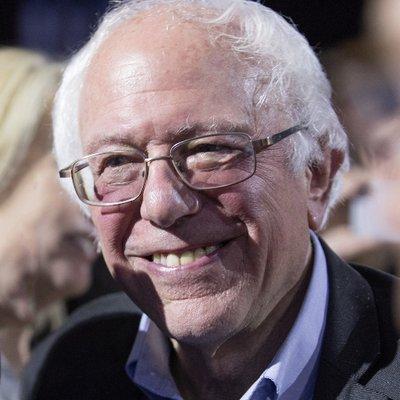
Senator Bernie Sanders (I-Vt.) stated today on the Senate floor that given the enormity of the current economic crisis, the Senate must pass a $1,200 direct payment for working class adults and $500 for their children as part of any COVID-19 relief package. He is filing an amendment today to the one-week Continuing Resolution to do just that.
Sanders said that it would be unacceptable for Congress to adjourn for the holidays while turning its back on the economic desperation facing tens of millions of Americans.
In a speech on the floor today, he stated: "When a national emergency occurs the United States government must respond. And we are in an economic emergency today. To get out of Washington, to turn our backs on the suffering of so many of our people would be immoral, would be unconscionable, and cannot be allowed to happen." Sanders' speech can be watched here, and the prepared remarks can be read below:
"Mr. President: This country today faces an unprecedented crisis both in terms of the pandemic and the economic meltdown.
I understand that there are negotiations going on in terms of coming up with an economic package dealing with COVID-19 relief. I applaud the hard work that each of the negotiators are doing. But the truth is that the results up to this point are totally unsatisfactory given the economic desperation facing tens of millions of working families.
Back in March, at the beginning of the pandemic, the United States Congress unanimously - Democrats and Republicans - worked with President Trump to come up with an economic package that went a long way toward preventing absolute misery and destitution for so many of our people. Through no fault of their own, COVID-19 resulted in millions of people losing their jobs and their income. And, in response, Democrats and Republicans in the Congress came together, worked with the President of the United States and, in a very significant way, responded to that crisis.
Mr. President, what I don't understand is that at a time when, in many ways, the crisis is worse today than it was in March, why we are not responding accordingly. In March, we passed the $2.2 trillion CARES Act which included a $600 supplement to unemployment benefits for 4 months, and a $1,200 direct payment for every working class adult plus $500 for their kids.
Once again, we did this unanimously and we did it by working with President Trump.
If we could do it together in March, if we could succeed 9 months ago by working together, there is no reason why we cannot do the same thing right now. And that is why I will insist that any agreement in terms of a COVID-19 relief package must include not only strong unemployment benefits, but a $1,200 direct payment for the working families of this country similarly structured to what was included in the CARES package of March.
And I will be introducing an amendment to the 1-week Continuing Resolution to make sure that that occurs - that every working class adult in this country receives another $1,200 direct payment, plus $500 for their kids.
Mr. President, every member of this body wants to get out of Washington to get home to their families for the holiday season. And put me at the top of that list.
But at a time when so many American families are suffering, when so many people don't know how they're going to feed their kids or prevent being evicted from their homes, or how they're going to pay for a doctor's visit, we cannot leave Washington and return to our families unless we address the economic suffering that so many other families are facing.
When a national emergency occurs the United States government must respond. And we are in an economic emergency today. To get out of Washington, to turn our backs on the suffering of so many of our people would be immoral, would be unconscionable, and cannot be allowed to happen.
Again, we must make certain that every working family in this country receives a $1,200 direct payment, plus $500 for their kids.
Mr. President, let me be as clear as I can be. Today, as a result of the horrific pandemic and economic meltdown, the American working-class is hurting like they have never hurt before.
Yesterday alone, over 220,000 Americans were diagnosed with COVID-19 and, tragically, over 3,000 died from this horrific virus.
In other words, more Americans were killed by the coronavirus yesterday than were killed on 9-11.
Further, Mr. President, the working class of this country is in the worst financial shape since the Great Depression of the 1930s.
Tens of millions of our fellow citizens have lost their jobs. They have lost their incomes. They have lost their health insurance. They have depleted their life savings. They cannot afford to pay the rent. They cannot afford to put food on the table. And they are scared to death that any day now they will get a knock on the door from the sheriff evicting them from their homes and throwing them and their belongings out on the street.
In America today, over half our workers are living paycheck to paycheck while 1 out of every 4 workers in this country are either unemployed or make a starvation wage of less than $20,000 a year.
During the holiday season over one-third of Americans expect to lose income and are already having a difficult time paying for basic household expenses.
In America today, hunger is at its highest level in decades, more than 500,000 Americans are homeless and over 30 million tenants are on the brink of eviction. While 15 million Americans have tested positive for the COVID-19 virus, over 90 million Americans are uninsured or under-insured and cannot afford to go to a doctor when they get sick.
And as bad as the economy has been in general it has been far worse for African Americans and Latinos. During the pandemic, nearly 60% of Latino families and 55% of African American families have either experienced a job loss or a pay cut.
Meanwhile, Mr. President, not everyone is hurting in America. While the middle class is collapsing and poverty is growing, we are witnessing a massive increase in income and wealth inequality. Over the past 9 months, 650 billionaires have seen their wealth go up by over $1 trillion and now own over twice as much wealth as the bottom 50 percent of Americans.
That is the state of the economy in America today. The very rich get much, much richer, while tens of millions of Americans get poorer and poorer and face an unprecedented level of economic desperation.
Mr. President. This is the United States of America, the richest country in the history of the world. No one should be going hungry. No one should have to live in fear of becoming homeless. No one should be denied the health care that they need, especially during the worst public health crisis in over a hundred years.
But that is precisely what is going on all over America as we speak.
Mr. President. This is an unprecedented moment in American history and the Senate needs to take unprecedented action now to improve the lives of the American people. If we could act effectively in March through the CARES Act, we can act effectively today as we enter the holiday season.
I very much appreciate the hard work that has gone into the current $908 billion proposal being drafted by a number of Democratic and Republican Senators. But, simply stated, given the horrific extent of the current crisis and the desperation that working families all over this country are experiencing, this proposal does not go anywhere near far enough. In truth, rather than the $3.4 trillion which we Democrats called for in the HEROES Act and passed in the House, this bill only allocates $348 billion in new money. The remaining $560 billion are funds transferred from the CARES Act that have not yet been obligated.
In other words, this bill is allocating roughly 10% of what was passed in the House. That's absurd.
Unlike the CARES Act, which we passed in March, this proposal only provides a $300 supplement for unemployed workers rather than $600 a week. Further, unlike the $1,200 direct payment for every working class individual and $500 for each child, it provides absolutely no direct payment.
Moreover, this proposal does nothing to address the health care crisis impacting tens of millions of Americans who cannot afford medical care and has totally inadequate financial assistance for the most vulnerable.
The American people need help and they need help now.
We have got to make sure that every working class American receives at least $1,200 in direct payments and that we do not provide a liability shield to corporations who break the law.
We cannot continue the status quo of coming in at 5:30pm on Monday and leaving at 2pm on Thursday - while nothing gets done to help millions of Americans living in economic desperation.
We've got to be working 24 hours, 7 days a week until we pass a bill that provides emergency assistance to the American people in their time of need."

"Handing Stephen Miller a loaded howitzer is not something any senator should even contemplate. Period."
With a vote expected as soon as Monday on a far-reaching permitting reform bill in the US Senate, opponents to the legislation are raising the alarm over legislation they warn represents the worst kind of bipartisanship: the kind where corporate interests have twisted enough arms in each party to get what they want while the public and the common good get the short end of the stick.
The looming vote to advance S.5653, the so-called Bipartisan American Affordability and Jobs Act, BAAJA for short, has largely been overshadowed by the midterm elections, but coming on the heels of the Democratic Party's routing of Republicans last Tuesday, it is being pitched as one final chance for the current Congress to pass at least one piece of legislation before President Donald Trump becomes a truly lame duck president come January.
The Democratic co-sponsors in the Senate—Sens. Sheldon Whitehouse of Rhode Island and Martin Heinrich of New Mexico—have tried to thread the bipartisan needle by arguing that the benefits of their proposal outweigh what Republicans demanded in exchange.
“We need a fast, fair transition to clean energy, but not one built on the backs of communities that live next to mines and pipelines. These communities are the ones drinking the water and breathing the air and this bill gives them fewer protections."
But the problem, according to critics, is that it's a horrible and counterproductive bill that will empower utility conglomerates, mining companies, data center operators, and oil and gas behemoths to extract huge concessions on the future buildout of polluting projects while hiding behind the promise of a more efficient permitting process for clean energy infrastructure—a noble goal.
The crux, as summarized by The Verge, is that while the legislation, if passed, "could be a catalyst for lots of clean energy, it could also speed up polluting projects and limit oversight of new data centers."
Green groups in the days leading up to Monday have intensified their opposition, even as lawmakers have introduced changes to make the bill more palatable. On Saturday, the Senate Democratic Caucus met in Washington, DC to discuss the bill and offer "manager's amendments" in hopes of garnering enough votes for passage.
According to Elizabeth Bast, executive director of Oil Change International, however, “No amount of last-minute tinkering can disguise that this bill is a massive giveaway to fossil fuel companies and Big Tech at the expense of communities, the climate, and people’s energy bills."
The bill, Bast added, "is exactly what the fossil fuel industry has been asking for years" and called on all lawmakers to vote against it.
Earthworks, one of the hundreds of advocacy groups lining up against BAAJA, warns that the legislation would give the public and Tribes less say in major energy projects, creating conditions that are a giveaway to the mining, data center, and fossil fuel industries.
"The bill would expand the 1872 Mining Law so companies could claim nearly unlimited public land for waste dumps, roads, pipelines and power lines," Earthworks said in a statement. "The demand for minerals for the energy transition is real, but it is no excuse to let mining companies take more public land with fewer safeguards, under a law that already prioritizes mining ahead of other land use."
The group's policy director, Lauren Pagel, said, “We need a fast, fair transition to clean energy, but not one built on the backs of communities that live next to mines and pipelines. These communities are the ones drinking the water and breathing the air, and this bill gives them fewer protections."
Veteran climate organizer Bill McKibben, writing about the legislation on Saturday, also pointed out the fundamental problem with legislation that treats permitting reform for clean energy projects and dirty energy projects as an equal endeavor.
While acknowledging that currently it remains "too hard to build stuff we badly need—housing, transit, energy," when it comes to building energy infrastructure, "there’s a problem, and that problem (as so often) is climate change. Building more housing produces…more housing. But if you take climate change seriously, you have to build more clean energy and less dirty energy, or otherwise you don’t get anywhere."
It's a similar argument made by groups like Public Citizen, who said Friday that while some of the bill's provisions—like those related to transmission lines and ratepayer protections from data centers—are "strong and sorely needed," the problem remains that "the bill’s drawbacks are greater, more immediate, and more certain."
Whatever benefits the legislation might secure, explained David Arkush, director of Public Citizen’s Climate Program, the downsides will be far worse, undercutting existing laws designed to protect public lands, endangered species, and the nation's natural resources, including clean air and water.
BAAJA, said Arkush, "seriously weakens the Clean Water Act and Endangered Species Act and guts the National Environmental Policy Act and the National Historic Preservation Act. It fast-tracks the permitting of all manner of projects, then makes it virtually impossible to regulate or arguably even enforce existing rules against them, without an act of Congress."
"Among other effects," he continued, "the bill will open the door to a vast increase in exports of liquefied natural gas and facilitate a hasty and reckless buildout of data centers powered by fossil gas. And the bill would make it significantly more difficult to moderate, regulate, or alter these actions later, regardless of what public health, climate destruction, or public sentiment demand."
As far as McKibben is concerned, "I think that if this deal had been made 30 years ago, it might have made sense—we’d be reaping the benefits now. But the fossil fuel industry made sure we didn’t. And this bill, which they’re backing with great enthusiasm, seems an awful lot like a hedge to make sure they can string their business model out for a few more decades—a way to lock in the fruits of their decades of political obstructionism."
With Democrats soon returning to power, opponents of the permitting reform bill said it makes no sense to bend to Republicans now to pass a bill that falls short in such fundamental ways.
“In the November 3 elections, voters across the country resoundingly rejected data centers," said Arkush. "This is not the time to pass a bill that enables Big Tech to charge forward with them, powered by fossil fuels, over the objection of local communities."
Come January, he said, "the makeup of Congress will change substantially," making it likely that a significantly "better deal can be reached then—one that enacts the laudable and important provisions in this bill, and more, without so many sacrifices."
In October, veteran Democratic operator John Podesta warned that providing legislation like BAAJA to the Trump administration would be like giving the president and his party a "loaded howitzer" with which to attack environmental protections.
With Trump's appointment on Friday of Stephen Miller to be his new White House chief of staff, McKibben connected that choice of the "single most vile character I've ever seen on our national scene" with Podesta's comments and offered this guidance: "Handing Stephen Miller a loaded howitzer is not something any senator should even contemplate. Period."

"How? By scrapping the cap and demanding that the wealthy pay their fair share of taxes."
Sen. Bernie Sanders (I-Vt.) said Saturday that one of his top priorities, once he takes control of the chamber's Social Security Subcommittee in January, will be to lift the cap on taxable income that funds the program and increase benefit payments by at least $2400 per year.
Vowing to extend "Social Security’s solvency for generations" to come, Sanders explained that the way to do that is to raise the limit at which wealthy people stop paying into the program—currently set at $184,500—so that extremely wealthy individuals pay in at the same rate as working-class taxpayers.
By "demanding that the wealthy pay their fair share of taxes," Sanders said the government could pay out higher benefits each month and strengthen the program long into the future.
In the wake of Tuesday's massive midterm defeat of the Republican Party, Nancy Altman, executive director of the advocacy group Social Security Works, said the outcome was a major win for Social Security, the nation's most successful anti-poverty program.
With Social Security "on the ballot" in the midterms, Altman said the message sent by US voters was "resoundingly clear: Hands off our earned benefits!"
"Democrats ran on making the wealthy pay their fair share into Social Security," she said, and now they have a chance to show the American people what that looks like.
"In the next two years," Altman said, "lawmakers should vote on legislation that expands benefits with no cuts. This legislation should restore Social Security to long-range balance by requiring the wealthiest Americans, like Elon Musk, to finally start paying their fair share."
Altman also called on Democrats to use their new power in Congress to "investigate Musk and his henchmen in the so-called 'Department of Government Efficiency,' who committed the largest data theft in American history by stealing all of our most personal and private Social Security data."
"Democrats should seek to reverse all the damage that Donald Trump and his cronies have done to the Social Security Administration," she concluded, "so that the American people can get the first-rate service they have paid for and deserve."

“We are poor people in Gaza," said one man whose family of our lost their makeshift home to the storm water. "We want to live. We do not want to die from the bombing or the cold."
The suffering of the people of Gaza went from horrific and beyond comprehension to something worse on Saturday after storm waters overnight destroyed tens of thousands of tents and flooded tens of thousands of people into further desperation, all while the US and Israeli governments continue to maintain a cruel blockade on life-saving supplies despite a fast-approaching winter and a military occupation with no end in sight.
"At least 70,000 tents have been flooded & blown away by the torrential downpour and tempestuous wind in Gaza since last night," reported Palestinian journalist Abubaker Abed, citing statements from health and media officials. "Families are shelterless. Food prices are soaring. Children are starving and shivering with cold. Caravans and mobile homes must enter Gaza now to avert this cataclysm."
Gaza’s Government Media Office on Saturday, holding Israel wholly responsible for the disaster, said initial losses from flooded and destroyed tents were estimated at $3 million and that dozens of walls of homes had collapsed, resulting in injuries, while the threat of broader building collapse remained a serious risk.
In a statement, Palestinian Health Minister Dr. Majed Abu Ramadan said, “What is happening in Gaza is not a passing winter crisis. I urgently call on the international community, the United Nations, and health, humanitarian, and relief organizations to intervene immediately to save the lives of hundreds of thousands of displaced people in the Gaza Strip, following the flooding of thousands of tents with rainwater and the absence of basic safe shelter conditions."
Al-Jazeera reports:
According to the United Nations Office for the Coordination of Humanitarian Affairs (OCHA), about 950,000 displaced people in Gaza are living in areas exposed to flooding. Low-lying locations and sites near the coast are particularly vulnerable, with more than 400,000 people living in areas considered at high risk of flooding.
About 44,000 Palestinians are living in structurally unsafe buildings, while more than 4,000 buildings across the territory are estimated to require full or partial demolition due to damage caused by Israeli air strikes. About 294,250 families need shelter assistance ahead of winter, but the available supplies cover only 18 percent of their needs.
Ramadan further warned of "a catastrophic deterioration in health and environmental conditions, alongside growing risks of the spread of diseases and epidemics" if an emergency response was not rapidly and comprehensively deployed.
Video footage and eyewitness accounts offered a heartbreaking picture of those hit by the floods.
“We woke up and found ourselves surrounded by water," a man named Mansour al-Sakni, 33, told the Middle East Eye. "The children were crying. I did not know what to do, and I started crying too."
“We stood inside the tarpaulin shelter waiting for the rain to stop so we could try to push the water out of the room,” he said. “We are poor people in Gaza. We want to live. We do not want to die from the bombing or the cold. Enough. Have mercy on us.”
According to NBC News:
The territory’s civil defence service said it had received 1,500 distress calls from displaced residents. Three abandoned houses collapsed without causing injuries, it added.
At a tent encampment in Gaza City, some people tried to repair their tents, while others used sand to reinforce them and prevent water from entering. Some were busy getting their children out of flooded tents.
Olfat Magdoub, a Gaza resident, tried in vain to sweep water away from her tent.
“This is the first day of rain, and of course we are already flooded. What will happen if it rains again the next day? This is only the first day and we’re already overwhelmed,” said the woman.
“Two weeks ago when it rained, I swear to God, I spent four days sleeping on blankets spread on the floor because the rainwater had flooded the bedding. Same now, the mattresses are wet so we sleep on the ground.”
While the flooding devastated the people and families trapped by the blockade of life-saving aid and shelter, fresh ire was pointed at the US government for refusing to rebuke the Israeli government for its wanton disregard for human life and suffering.
On the ground in Gaza, the anguish of Palestinians, including children, was on display in videos of the devastation and ongoing catastrophe posted to social media:
🚨 CATASTROPHIC SCENES IN GAZA RIGHT NOW.Heavy rainfall is flooding displaced Palestinians’ tents, leaving families exposed to the harsh winter with no alternative shelter.This is their fourth winter since Israel destroyed their homes and continues to block essential materials from entering Gaza.
— Gaza Notifications (@gazanotice) November 7, 2026
"How long are we supposed to live like this?" declares the young boy featured in the video. "I swear I don't know what to do. Have mercy on us for God's sake! For the sake of God, have mercy on us!"
Rain is worsening the suffering of Gaza’s children as water pours into homes damaged by Israeli bombardment, soaking bedding and clothes. With no shelter repair materials or tarpaulins available, families are left unable to protect their children from the flooding. https://t.co/OzVMGHzssI
— Government Communication Center (@pal_gcc_en) November 7, 2026
Children are particularly impacted by the rainwater and vulnerable to the increasingly dangerous conditions imposed by the floods
The image of a little girl in Gaza standing in the rain captures a stark, painful contrast: the innocence of childhood set against the harsh reality of life in Gaza. 🍉 The winter rain has transformed the scene into a tableau that blends spontaneous, childlike joy with profound human suffering. Our tattered tents—and everything we own—have been completely submerged today. 🥹💔 Please, speak about us; be our voice to the world. Please share, or leave a comment—even just a dot—to help boost this post. Thank you, from Gaza.
— Sondos Gaza 🍉🇵🇸 (@SondosMurtaja) November 7, 2026
"What remains of Gaza’s homes is collapsing under heavy rain, amid the ongoing genocide and deafening silence," said Ramy Abdul, chairman of the human rights group Euro-Med Monitor.
"For the fourth consecutive year," Abdul added, "Gaza remains under a suffocating Israeli siege that prevents even the recovery of victims’ bodies from beneath the rubble."

"We are calling on every member of the incoming 120th Congress to vote against Hakeem Jeffries for Speaker in January 2027 and choose a different candidate."
An online petition demanding that Rep. Hakeem Jeffries (D-NY) not be the next Democratic Speaker of the House surpassed one million signatories on Saturday as the clamor for a leadership change within the party exploded after historic midterm wins driven by populist demands.
As of this writing, the Change.org petition—titled "House Democrats: CHOOSE A NEW SPEAKER"—has 1,004,752 verified signatories, with the number rapidly rising.
While the final totals are not yet established, Democrats emerged from Tuesday's elections with at least 254 seats in the next Congress, reclaiming the majority from the Republicans, who currently can count on just 162 seats when new members are sworn in come January.
While Jeffries is clearly the presumptive choice for Democrats, and he formally put himself in the running on Wednesday with a letter to all members, outside progressives have voiced serious opposition given his failure to embrace many of the positions—including backing Medicare for All, taking on entrenched corporate power, and restricting military assistance to Israel over its genocide in Gaza—that have animated voters nationwide this election cycle.
According to the petition:
We believe the Speaker should represent the Democratic voters, not just the Democratic establishment.
The Speaker has enormous influence over the House's direction, including its legislative priorities and agenda. Before casting their votes, representatives should closely examine Jeffries's public record, policy positions, campaign donor record, and leadership...and listen to constituents who do not want him elevated to Speaker.
This is not a foregone conclusion. There is still time for other Democratic members of the House to step forward and seek the nomination for Speaker, someone whose priorities more closely reflect the voters who hope to elect the Democratic majority.
We are calling on every member of the incoming 120th Congress to vote against Hakeem Jeffries for Speaker in January 2027 and choose a different candidate.
Axios reported Friday that members of Congress have been "inundated" with calls urging them not to elect Jeffries and suggested that some of the hesitations are not just among progressives.
The outlet reported, interviewing "nearly a half-dozen incoming House Democrats in deeply red seats Thursday who declined to state a firm position one way or another on voting for him."
As Corbin Trent, the former top aide to Rep. Alexandria Ocasio-Cortez (D-NY) who now runs a progressive organizing outfit called A Fight Worth Having, wrote in a column published at Common Dreams on Friday, "the Democratic leadership we have today is completely ill-suited for this moment. They do not have the vision for what it’s going to take to rebuild the trust the American people have lost in their government, their institutions, and the Democratic Party itself."
"Democrats have spoken loudly and clearly that they want new leadership," Trent said of the election. "Unfortunately, too many of the people in Washington aren’t listening."
While the large Democratic majority in the House makes it easier for Jeffries to maneuver leading up to the leadership vote, and given that no challenger has stepped forward to take him on directly, the betting money is still safe that Jeffries will be the next Speaker of the House.
But the public push denouncing him as the wrong choice of leadership at a moment when Democratic voters are clearly demanding—and expecting—a much bolder agenda may still affect his calculations.

"Donald, if you're watching, we'll put your name on it. You get to be the American president who finally guaranteed health care for every single American."
Dr. Abdul El-Sayed, the Democratic Senator-elect from Michigan who ran on a progressive platform with Medicare for All at its center, said Friday that he doesn't care what the policy is called as long as it passes, even during President Donald Trump's lame-duck term, which begins in January.
Appearing on Zeteo with editor-in-chief Mehdi Hasan, El-Sayed was asked whether he agreed with Sen. Bernie Sanders (I-Vt.), who the night before said he wasn't so sure that if Democratic majorities in the US House and Senate passed a Medicare for All bill, Trump wouldn't sign it.
"If he wants to pass Trumpcare-for-All, I'm ok with it. He seems to like to put his name on things," said El-Sayed.
"That's a pretty good compromise—that's bipartisan," Hasan quipped. "You'll offer him the name, and everyone gets healthcare?"
"Yeah," responded El-Sayed. "Donald, if you're watching, we'll put your name on it. You get to be the American president who finally guaranteed health care for every single American—met the unmet promise of America. You get to be that guy, so let's talk about it."
“If he wants to pass Trumpcare-for-All, I'm ok with it.. Donald, if you're watching, we'll put your name on it. You get to be the American president who finally guaranteed health care for every single American."@AbdulElSayed to me today, lol.Full intv: https://t.co/W8g8V0efSF https://t.co/m4QC14saNE
— Mehdi Hasan (@mehdirhasan) November 7, 2026
In Sanders' remarks Thursday, which he made on MS-NOW with Chris Hayes, the Independent Senator from Vermont interrupted when Hayes said the chances of Trump ever signing Medicare for All into law were extremely low.
"Hold it, hold it, hooooold it," Sanders said, waving his hand. "Two points. Trump has the constitutional right to veto—if he wants to. But we have the constitutional right to represent the American people and to pass the damn thing and to show the American people that we are sick and tired of maintaining a broken [healthcare] system."
Hayes on Medicare for All: "The odds of Donald Trump signing that into law, pretty small--"Sen. Sanders: "Hold it, hold it, hold it... Our job is to produce it. He wants to veto it, Republicans want to sustain that veto, that is their responsibility, the American people will see it."
— NewsNewsNews (@RealCrookedNews) November 6, 2026
"Number two," Sanders continued. "Donald Trump may be a bit crazy, but he is not stupid. And he is a good politician. I mean this guy looks out all over the country, and he says, 'Everyone knows this system is broken. You know what, what do I gotta lose?' So I am not absolutely certain that Trump wouldn't sign it. But whether he would or not, our job is to produce it. He wants to veto it, and Republicans want to sustain that veto—that is their responsibility and the American people will see it."
Poll after poll have shown that Medicare for All—which would cover everyone in the country for less money overall than the current system dominated by for-profit insurers—is incredibly popular, not just among Democrats but also independents and increasing numbers of those who identify as Republican or conservative.
Many social media users applauded the idea. "I just had this discussion with someone," said one user in response to comments separate Sanders made about the subject earlier in the week. "Call it Trumpcare-for-All, who cares as long as we get it. People around him have been taking advantage of his narcissism for years; he doesn't have any real beliefs himself, it's worth a shot."
In response to El-Sayed's strategic idea of renaming "Medicare for All" to "Trumpcare-for-All," Hasan admitted that while he thought it was a "good move," he'd have a hard time seeking care if it meant invoking Trump's name at the doctor's office.
"I just want people to have healthcare," said El-Sayed.

“There are entities that seek to hold the government accountable, and so the government uses the tools in its toolkit to try to silence them.”
President Donald Trump is reportedly considering a major escalation of his war against left-wing nonprofits with an executive order that would seek to suspend their tax-exempt status with the stroke of a pen.
The Wall Street Journal reported Friday that the order plans to label some nonprofit groups as having "terrorist" ties—an act that would immediately suspend their tax-exempt status, dramatically imperiling their ability to operate and raise money.
According to the report, the administration is seeking to use a little-known provision in the federal tax code to strip nonprofits of their status without going through the normal Internal Revenue Service investigation and appeals process.
The law, signed in 2003 by then-President George W. Bush, allows the president to identify an organization in an executive order as supporting or engaging in terrorism. The law also prevents organizations from challenging designation or suspension in proceedings concerning federal tax liability.
It’s not clear yet which groups will be targeted, but the administration and its allies in Congress have already signaled their intent to go after left-leaning groups like George Soros’ Open Society Foundations, the Southern Poverty Law Center (SPLC), and the Council on American-Islamic Relations (CAIR).
The latter was forced to cease operations in Florida Thursday following a state-level "terrorism" designation by Republican Gov. Ron DeSantis.
In September 2025, weeks after the assassination of right-wing activist Charlie Kirk, Trump signed National Security Presidential Memorandum 7 (NSPM-7), which identified “anti-capitalism,” “anti-Christianity,” “extremism on migration, race, and gender,” and “hostility towards those who hold traditional American views on family, religion, and morality” as ideological characteristics associated with “domestic terrorism.”
The memo directed the IRS and other federal agencies to investigate nonprofits and their funders for alleged connections to political violence.
Shanna Singh Hughey, a policy strategist at the anti-authoritarian watchdog group Protect Democracy, said in September that the memo's vague and subjective language gave the administration expansive powers to target the nonprofits of its political foes.
“It goes way beyond that to the organizations that are connected to the folks who might be accused [of violence], including board members and staff, as long as that organization is accused of either funding or facilitating the violence done by the target," she told Inside Philanthropy.
“This is exactly what we expect to see when authoritarians attempt to consolidate and hold power,” she said. “There are entities that seek to hold the government accountable, and so the government uses the tools in its toolkit to try to silence them.”
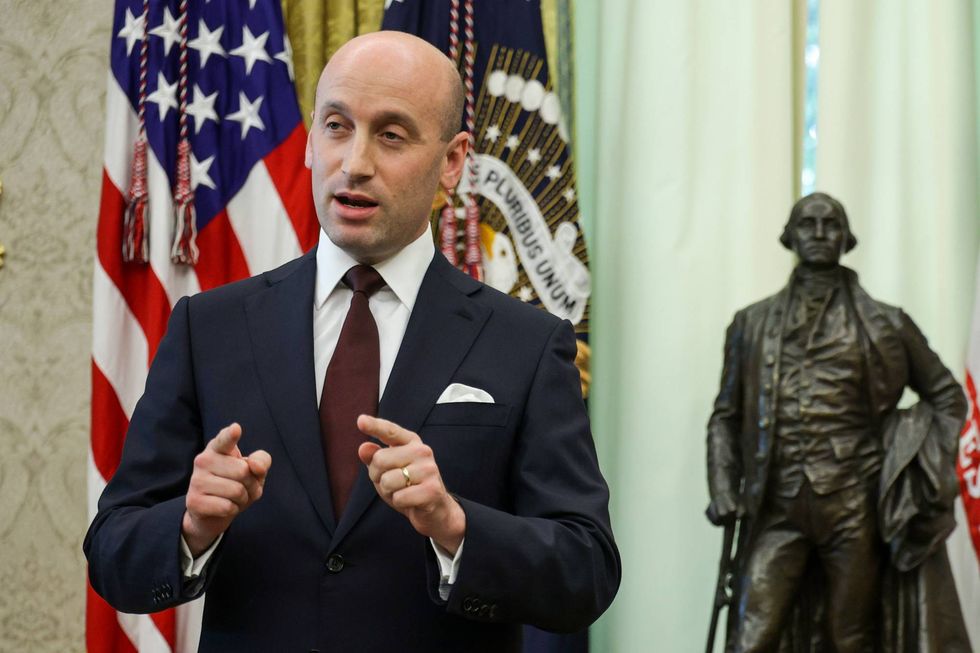 Then-White House Deputy Chief of Staff and Homeland Security Advisor Stephen Miller speaks during an event with US President Donald Trump in the Oval Office of the White House on August 6, 2026, in Washington, DC. (Photo by Alex Wong/Getty Images)
Trump's reported plan to attack nonprofits comes on the same day that he named Stephen Miller, the chief architect of NSPM-7, as his new White House chief of staff.
Weeks before the memo was signed, Miller vowed to "dismantle and take on the radical left organizations in this country that are fomenting violence." He has said that descriptions of Trump and his immigration policies as "authoritarian" or "fascist" were examples of language that "incites" violence.
He has also referred to the Democratic Party itself as "not a political party," but "a domestic extremist organization."
During a State Department ministerial on terrorism in July, Miller said that under NSPM-7, the administration was empowered to “disrupt, identify, defund, debank, arrest, and prosecute” what it called terrorist organizations.
In the same speech, he claimed that left-wing extremists invoke "civil liberties" disingenuously to evade criminal punishment.
Describing leftists as the "enemies of civilization," he said, "It is essential that we are wise enough and strong enough to understand that these appeals must fall on deaf ears."

"He's the vice president of the United States of America. He is not just some commentator online. And there has to be a reckoning."
New York City Mayor Zohran Mamdani this week was unimpressed with Vice President JD Vance's attempt at soberly diagnosing the problem that caused the Republican Party to lose their majorities in the US Senate and House, with Democrats flipping seven Senate seats and 43 House seats and stunning the GOP with victories in Texas, Kansas, and South Carolina.
After the election, Vance wrote a lengthy post on the social media platform X, saying, “The reason we lost is the war" in Iran, which President Donald Trump joined Israel in launching in February—sending gas prices soaring to over $4 per gallon in a country where working families were already struggling with the cost of living, a problem Trump had pledged to solve.
Vance was initially unsupportive of Trump's decision to go to war, but has been one of the administration's staunchest defenders of the United States' actions in Iran—declaring that the US "never targets civilians" despite multiple bombings of schools; writing another verbose social media post falsely claiming that the decision to go to war lies only with the president—not Congress; and denying in September that the conflict that has killed more than 3,400 Iranians, 13 US service members, and thousands of people across the Middle East, is a war at all.
On Thursday, Mamdani expressed disbelief that Vance, thought to be the likely heir to Trump's MAGA movement and a potential 2028 presidential contender, would attempt to distance himself from the war the US is waging while still serving as one of the highest-ranking political officials in the country.
Holy shit! I 'd like to report a murder. https://t.co/pqABCoLTS9
— Bill Madden (@maddenifico) November 5, 2026
"I find it quite ironic to read a post from the vice president as if he's describing the actions of a different administration," said Mamdani. "He's the vice president of the United States of America. He is not just some commentator online. And there has to be a reckoning of the fact that this is a war that they started."
"It's a war they can end," continued the democratic socialist mayor, who since entering the mayoral race in a long-shot bid early last year has rapidly become one of the most influential and popular Democratic politicians in the country. "If they think it was a part of their political demise, then why don't they actually start to take some action to reflect that?"
Vance said in his post that Republicans must focus on ending the Iran War, bringing down the cost of living, putting "America First," and changing the US relationship with Israel, which the administration has said pushed it to launch its attacks on Iran.
Vance's comments were taken by some as an initial attempt to begin distancing himself from the actions of an increasingly unpopular administration, in preparation to run for president.
Mamdani's response, said Jacobin writer Branko Marchetich, offered a "preview of the struggles" that the vice president will face in doing so.
"He's done his best to leak stories that he opposed it and thread the needle in public," said Marchetich. "But end of the day it's his administration too, so he owns it."

After a Democratic "tsunami" in this week's midterm elections that has been widely seen as "a mandate to deliver big change," progressives within and beyond Congress have cast doubt on whether the New York Democrats likely to lead both chambers are actually up for facing Republican President Donald Trump's veto threats and fighting for the "bold agenda" sought by US voters.
As critics of artificial intelligence data centers prepared for a Friday protest outside the Brooklyn home of Senate Minority Leader Chuck Schumer over a "dirty" bill that House Minority Leader Hakeem Jeffries is suddenly speaking out about, political organizer Corbin Trent argued that "Schumer is bad at his job" and "Jeffries is not ready for this moment."
Although some races haven't yet been called, "Democratic voters, independent voters, and even some Republican voters spoke loudly and clearly: They want this country to go in a different direction," wrote Trent, a former communications director for Rep. Alexandria Ocasio-Cortez (D-NY) and two-time presidential campaign staffer for Sen. Bernie Sanders (I-Vt.).
Trent, who also co-founded Justice Democrats and now runs the super political action committee A Fight Worth Having, stressed that "this is an amazing, unprecedented moment in my lifetime. I'm 46 years old, and this is the most hopeful political moment I've ever experienced."
"Democrats have spoken loudly and clearly that they want new leadership. Unfortunately, too many of the people in Washington aren't listening," he added. While Trent and his group are far from alone in calling for new Democratic leadership when the party takes over Congress in January, Schumer and Jeffries are expected to become majority leader and speaker, respectively.
"Do you expect to face any kind of challenge in the election for Senate majority leader?" Michael Barbaro, who hosts The New York Times' podcast The Daily asked Chuck Schumer on Friday. He simply responded, "No."
Schumer ultimately added that "our caucus is focused on moving forward. Everyone's very happy with what we all did. But this is just the beginning. As I said before, and I'll say it again and again to my caucus, to the country, to everybody: If we don't deliver, all this will go away. This is just the first step. But I think we're united together to do that."
He delivered a similar message of unity during a Thursday night appearance on MS NOW, telling host Lawrence O'Donnell that the victorious Democrats—so far the party has 54 seats in the Senate and 253 in the House of Representatives, but those numbers could rise—were "all running on the same basic themes: costs, chaos, corruption."
As both majority and minority leader in recent years, Schumer has faced criticism from the party's left flank—and, as Al Jazeera noted Thursday, at least seven Democratic senators-elect have signaled or outright said they will not support him: Abdul El-Sayed (Mich.), Peggy Flanagan (Minn.), Adam Hamilton (Kan.), Chris Pappas (NH), Juliana Stratton (Ill.), and James Talarico (Texas).
However, as Fox News chief congressional correspondent Chad Pergram explained Friday, basic math and a lack of clear challengers suggest Schumer will win: "The selection of Senate majority leader is not a vote which plays out on the floor. The concept of 'Senate majority leader' has only been around since the early 20th Century and is not mentioned in the Constitution."
"Let's say Democrats do win Mississippi and Alaska, giving them 56 senators who caucus with the Democrats. All Schumer needs is 29 Democrats to support him in caucus, and he's the next majority leader," Pergram wrote on social media.
He noted that other possible contenders are Democratic Sens. Brian Schatz (Hawaii) and Chris Van Hollen (Md.), but the former is running to succeed retiring Senate Minority Whip Dick Durbin (D-Ill.) and the latter reportedly isn't seeking the post—though Van Hollen has said publicly that Democrats should demand an ambitious progressive agenda before backing Schumer or anyone else.
"Progressives are flipping Republican seats and winning critical battlegrounds where pundits told us our politics could never compete. Abdul El-Sayed in Michigan. Troy Jackson in Maine. James Talarico in Texas. Sam Forstag in Montana. Randy Villegas in California. Bob Brooks in Pennsylvania," said Joseph Geevarghese, executive director of Our Revolution, which grew out of Sanders' 2016 presidential run. "We gave people something to vote FOR, and they showed up."
"The progressive movement drove this victory. We spent a decade building the infrastructure, developing leaders, and making the argument that brought us here... This is a vindication of our politics and our theory of change: Organized people can beat organized money when we advance an anti-corporate, working-class agenda," he stressed, recalling when "the talking heads, academics, and party establishment scoffed at Bernie Sanders and our movement for talking about oligarchy."
The organizer said that "this was the corruption election. Affordability was central, but people were also asking why life keeps getting more expensive and who keeps cashing in. From AI and data centers to healthcare, Big Pharma, crypto, oil, and the war industry, people want a say over decisions being made at their expense. Corporate control of government is making their lives harder."
The American Israel Public Affairs Committee (AIPAC)—which notably congratulated Jeffries and Schumer, who wasn't even on the ballot this cycle, by name on Wednesday—along with GOP megadonor Elon Musk "and other billionaires and corporate interests have poured money into shaping our politics," Geevarghese continued. "Our victories show that their money does not make their agenda inevitable. People can organize, fight back, and win."
In the wake of these victories "powered by a progressive wave," Geevarghese called on Democrats to "use every committee, hearing, and budget negotiation. Follow the contracts and conflicts of interest. Put executives and administration officials under oath. Fight for concrete gains and make Trump answer for what he blocks."
"People need to see Democrats using every bit of power they have to fight for them," he said. "That requires leadership ready to meet the moment. Chuck Schumer should step aside. Bernie Sanders has provided the clarity and urgency a real opposition party needs. Leadership must match that ambition, including by investing in candidates and communities too often written off."
Aru Shiney-Ajay, executive director of the youth-led climate group Sunrise Movement, similarly said in a statement after the midterms that "young people voted for change. We deserve a Senate majority leader who will end the filibuster so we can stop the Iran Oil War, end corporate control of our government, and create good green jobs, not more data centers."
"Young people won't get that with the same old Democratic leadership. Schumer, it's time to put the American people first–commit to ending the filibuster or step aside," Shiney-Ajay added, referring to controversial chamber rules that effectively block legislation unless at least 60 of the 100 senators support advancing it to a final vote.
As for Jeffries, he got "the majority of his dreams," as Axios put it earlier this week. The outlet reported:
The left's strategy is "going to look different from what it would have been with a smaller margin," one incoming House progressive told Axios, noting that "leaders have more flexibility when they have big majorities.
Progressives "can't really extract much now [with this] colossal majority," a progressive strategist acknowledged, adding that "we don't have to do this high-stakes Jeffries fight."
Although Jeffries is on track to secure the role, there are calls for him to not be the next speaker. Nearly 900,000 people have signed a related Change.org petition, Nicole Whitted, an author and social media creator who receives compensation in connection with the effort.
"After historic wins on Tuesday, I believe the Democratic Party and our country as a whole is at a crossroads," Whitted told Newsweek. "My opposition to Hakeem Jeffries is about more than any single policy disagreement. It's about real leadership that aligns with today's Democratic voter, real accountability, and whether the party is genuinely listening to the voters demanding change."
In anticipation of Jeffries serving as speaker, the outlet Sludge examined his "financial backing from executives at Anduril and Palantir, cryptocurrency industry interests, and major Wall Street investors—business interests with a stake in how aggressively the new majority pursues corporate beneficiaries of Trump's presidency."
In response to that reporting, Melanie D'Arrigo, executive director of the pro-single-payer Campaign for New York Health, said that "you can't lead the opposition party while being bankrolled by the opposition. This should not be a controversial take."

“Let’s call this what it is,” said one conservationist. “It’s a goddamned bounty.”
Idaho lofficials paid hunters $24,000 to kill a dozen newborn wolf pups this spring, including what appears to have been at least one entire litter massacred in or near its den, according to Friday reporting that has sparked outrage among conservationists and wildlife advocates.
The killings—which were first reported by the investigative news site Public Domain—took place in late April in Idaho's northern panhandle. Three hunters received reimbursements of $2,000 per wolf through a state-backed program intended to reduce the Idaho's wolf population in service of the livestock industry and big game hunters.
“It's an abomination,” said Brooks Fahy, executive director of the conservation group Predator Defense. "Let's call this what it is—it's a goddamned bounty."
"What kind of receipts are you going to show for 12 pups who weigh 12 pounds?" she asked. "It's ridiculous on its face, and the state of Idaho should be ashamed.”
The records obtained by Public Domain describe the killings as “still stalk,” suggesting hunters spotted and approached the animals before shooting them. But wolf experts questioned that account, suggesting the hunters may instead have located dens and removed the pups.
In one instance, a full litter was apparently massacred in or near its den. Doug Smith, a biologist who formerly oversaw Yellowstone National Park's wolf program, warned in an interview with The Guardian that killing entire litters can fracture or dissolve packs.
Contrary to popular belief, wolves typically do not protect their young; they usually flee about 50 yards and bark.
“It’s easy to do,” Smith said of taking a whole litter of pups. “If you can’t reach them, you dig them out with a shovel.”
“Wolves breed once a year, so the birth of the pups is a very important thing,” Smith said. “The pack’s life hinges on those pups. They’re the glue that holds the pack together.”
The killings were made possible by Idaho's increasingly permissive wolf management regime. In 2021, Republican lawmakers passed Senate Bill 1211, which established year-round wolf trapping on private property, eliminated limits on the number of wolf tags an individual could purchase, expanded permissible killing methods, and authorized private contractors to kill wolves.
That same year, Idaho wildlife officials signed an agreement with the Foundation for Wildlife Management, which reimburses hunters and trappers for expenses associated with killing wolves. Covered costs include fuel, ammunition, vehicle payments, and outdoor clothing. The program is financed through a combination of public money, hunting license revenue, and private contributions.
The state's 2023 wolf management plan called for reducing the population to approximately 650 animals during the spring, when wolf numbers typically peak. Idaho's estimated population nevertheless remained above 1,100 this year, down from a peak of approximately 1,600 in 2019.
The Idaho controversy comes amid broader concerns about the future of gray wolves in the United States. In September, President Donald Trump signed an executive order directing the Interior Department to consider removing federal Endangered Species Act protections for gray wolves across the continental United States.
Wolves remain federally protected in most of the Lower 48 states, while Idaho, Montana, and Wyoming have authority over their populations.
Those are the only three states that received the nation's lowest grade—a "D"—on the conservationist group Team Wolf's "State Wolf Management Report Card."
Idaho, Montana, Wyoming and Wisconsin all scored a D on humane treatment of wolves.All four are among the worst in the country on animal protection law, Idaho at 48th of fifty.teamwolf.org/report-card
[image or embed]
— wombar.bsky.social (@wombar.bsky.social) November 6, 2026 at 12:27 PM
"Trump says you can go out and kill wolves now—how many people took him at his word?” Fahy told Public Domain. “These are sentient creatures. They’re basically dogs. They form family bonds. They mate for life, pretty much. They have a pack structure that is very similar to our social structure. How could we be so wantonly cruel to something that is so similar to us?”

House Democratic leader Hakeem Jeffries said Miller is a "dangerous xenophobe and reckless extremist who has American blood on his hands."
Stephen Miller, the chief architect of the Trump administration's widely decried mass deportation policy, has received a promotion to be the next White House chief of staff.
In a Friday social media post, President Donald Trump announced that Miller next week will take over for Susie Wiles, who served as his chief of staff for the past two years.
Critics of the administration were quick to denounce the appointment of Miller, who has a long documented history of promoting white nationalist literature and conspiracy theories.
"Stephen Miller is a vile, hate-filled extremist who has made cruelty his life’s work," wrote the social media account of Democrats serving on the US House Committee on Homeland Security. "America just rejected the fear and bigotry he peddles and Trump handed him a promotion. They have learned nothing."
House Minority Leader Hakeem Jeffries (D-NY)—likely the chamber’s next speaker—described Miller as a "dangerous xenophobe and reckless extremist who has American blood on his hands."
"His presence in government should be eradicated like a malignant tumor," Jeffries added. "Fire him today."
Rep. Robert Garcia (D-Calif.), who is in line to be the next chair of the House Oversight Committee, issued a statement advising Miller to "lawyer up," echoing his message to Trump earlier this week.
"Stephen Miller is the architect of the unconstitutional [US Immigration and Customs Enforcement] raids that have terrorized our communities and kidnapped and killed American citizens and immigrant families," Garcia said. "Oversight Democrats will continue to investigate Miller for his misconduct, and we will fight against his hateful policies in Congress and the courts."
Rep. Pramila Jayapal (D-Wash.) said appointing Miller was "a giant middle finger to every single voter who came out to the polls and demanded a change from the corruption and cruelty of the last two years."
Jayapal vowed that Democrats in Congress would deliver "real accountability for the corruption that Stephen Miller and Trump profited from."
Rep. Mark Pocan (D-Wis.) marveled that Trump elevated a hard-liner like Miller, even after his party suffered a historic defeat this week in the 2026 midterm elections.
"Tell me you learned nothing about why you had a devastating loss at the polls in November without telling me you don’t know why," wrote Pocan. "Stephen Miller. The solution to nothing."
Pocan's remarks were echoed by Democratic Illinois Gov. JB Pritzker, who responded to news of Miller's appointment by writing, "These losers learned nothing."
Rep. Delia Ramirez (D-Ill.), in a statement sent to independent journalist Marisa Kabas, warned Miller to not "get too comfortable with your new title."
"Part of the benefits package for your promotion is accountability for all the pain you have caused," Ramirez added.
Democrats weren't the only ones panning the appointment of Miller, as some Republicans criticized the decision as well.
Rep. Marlin Stutzman (R-Ind.), who earlier this week called for Miller's firing, told Semafor reporter Nicholas Wu that making him White House chief of staff was a "horrible decision" by the president.
Outgoing Rep. Don Bacon (R-Neb.) told CNN's Jake Tapper that picking Miller was "not a good choice" on Trump's part.
"He’ll have an antagonistic relationship with many," Bacon explained. "He did take the immigration issue for President Trump from a two-to-one favorable to a two-to-one unfavorable. He went from the Biden extreme to the other extreme. He cost us seats in Texas and Arizona by alienating many Hispanic voters who voted for Trump in 2024."
Olivia Troye, former homeland security and counterterrorism adviser to Vice President Mike Pence, expressed disgust at Miller's promotion.
"Stephen. Fucking. Miller," she wrote. "What a dangerous joke. Except no one is laughing."
Discussing the political ramifications of Miller's appointment, New York Times columnist Jamelle Bouie mused that it could be a long-term benefit to Democrats.
"On the one hand, I think putting Miller in the driver's seat puts all of us in genuine danger," Bouie wrote. "On the other hand, if you want a path to 60-plus Senate seats in 2029, this is it."
MS NOW host Chris Hayes expressed a similar sentiment.
"If you were thinking: What could Trump do to push his approval rating down even further and open up the possibility of a 1964/1980/2008-style victory for Dems in 2028?" wrote Hayes. "The answer is: put Stephen Miller in charge of everything. And guess what?"