November, 03 2020, 11:00pm EDT
On Defending Democracy and Advancing Workers' Rights at the Ballot Box and Beyond
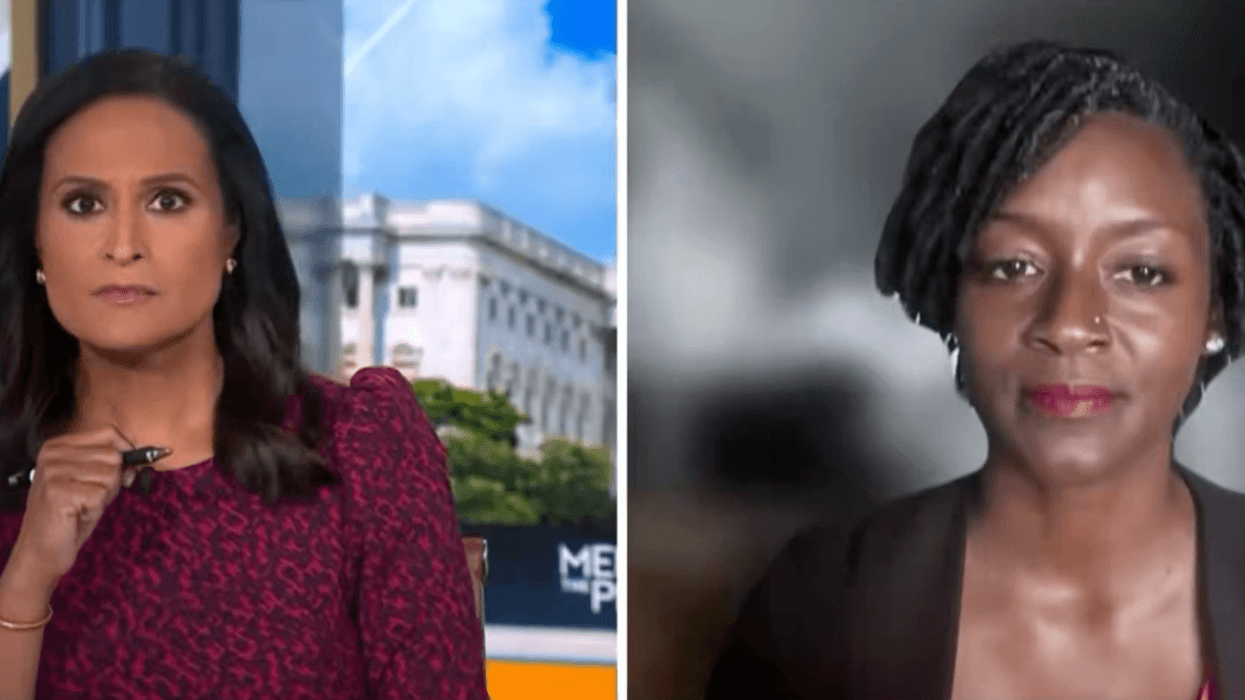
Following is a statement by Rebecca Dixon, executive director of the National Employment Law Project:
"As we await the final results of the presidential election at this pivotal moment for our democracy, the National Employment Law Project (NELP) joins in solidarity with people all around the country who are coming together to defend our democracy and demand that every vote is counted. The will of the voters decides elections.
WASHINGTON
Following is a statement by Rebecca Dixon, executive director of the National Employment Law Project:
"As we await the final results of the presidential election at this pivotal moment for our democracy, the National Employment Law Project (NELP) joins in solidarity with people all around the country who are coming together to defend our democracy and demand that every vote is counted. The will of the voters decides elections.
"While the huge volume of absentee and early ballots still to be counted may be unique to the 2020 elections, counting absentee ballots after Election Day is not--it happens routinely and is a normal part of the process and must be completed.
"In the midst of the ongoing COVID-19 pandemic and despite deliberate voter suppression comprised of disinformation, attempts to eliminate drop-off locations, intimidation, and white supremacist violence --more than 100 million people voted early. Now, the people who are calling for our democracy to be protected and for every vote to be counted must be kept safe in the days to come, online and on the streets.
"No matter the result of these elections, NELP will contribute to strengthening our democracy by supporting Black, immigrant workers in building power and fighting for a just recovery and secure, stable, and safe jobs.
Results of Key Workers' Rights Proposals Around the Country
"Over the past four years, workers' rights have been under attack while corporations' power has been further consolidated--yet workers and advocates have fought back at the state and local levels. That trend continued this election season with key ballot box efforts in Arizona, California, Colorado, Florida, and Maine.
- In Florida, voters embraced Amendment 2, which will gradually raise the minimum wage to $15 an hour by the year 2026--continuing the momentum of the Fight for $15 movement and making Florida the eighth state (and the second most populous one) to get on the path to $15. Including Florida, 36 percent of the U.S. labor force will now be covered by laws gradually raising the minimum wage to $15. This is a big win for the Fight for $15 movement and shows once again that raising wages for workers in lowest-paid jobs is an issue that all voters can get behind.
- In Maine, voters in two cities--Portland and Rockland--approved measures gradually raising the minimum wage to $15 by 2024 (and furthermore in Portland, a $22.50 "hazard pay" minimum wage during states of emergency).
- In Colorado, voters approved Proposition 118, the Paid Medical and Family Leave Initiative, which will allow for 12 weeks of paid family and medical leave funded through a payroll tax paid by both employers and employees. Workers earning less than half of the state's average pay would get the highest percentage of their salaries, at 90 percent. Under this new law, workers are also protected from employer discipline or retaliation for requesting or using paid leave.
- In Arizona, voters passed Proposition 208, the Invest in Education Act, which will raise teacher salaries by increasing taxes on the state's highest earners.
- California voters, however, passed Proposition 22, the App-Based Drivers as Contractors and Labor Policies Initiative. NELP is proud to be in solidarity with the courageous workers and advocates in California who led the #NoOnProp22 campaign, and with the global movement to defeat these efforts to undermine workers' rights championed by Uber, Lyft, DoorDash, and Instacart. We will continue to fight racist anti-worker laws pushed by corporations that sell labor on apps, and together we will win the protections that Black, immigrant, and all workers need. The passing of Prop 22 means that California app-based workers--notably the Black and Latinx workers who are overrepresented in these jobs--will not be able to claim the rights to fair pay, economic stability, and safety on the job that justly belong to them as employees. The corporations behind the "Yes on Prop 22" campaign resorted to dirty and dangerous online harassment and pressured workers nonstop to vote for their racist business model. Instead of providing basic protections to their workers, Uber, Lyft, DoorDash, and Instacart spent close to $200 million to mislead voters. In spite of Prop 22's passage, NELP is committed to ensuring that all workers have economic security and protections against exploitation.
"As we await the final outcome of the presidential race, people of conscience around the country are rising up and speaking out against disinformation, white supremacist ideology, and voter suppression. We must continue to denounce intimidation and fight against premature cut-offs of the counting process and frivolous lawsuits seeking to invalidate people's votes. At this crucial time, all of us must join together to ensure that every vote is counted and the will of the people is honored and upheld in our democracy."
LATEST NEWS
Anthropic CEO 'Cannot in Good Conscience Accede' to Pentagon's AI Demand
"Anthropic and Dario deserve credit for standing up for two very basic and obvious principles: no mass surveillance and no autonomous killer robots," said one progressive commentator.
Feb 26, 2026
Defense Secretary Pete Hegseth gave Anthropic until Friday evening to agree to let the Pentagon use the company's artificial intelligence technology however it wants, or else. Roughly 24 hours ahead of the deadline, CEO Dario Amodei announced that "we cannot in good conscience accede to their request," and reiterated opposition to enabling autonomous weapons or surveillance of US citizens.
Anthropic's Claude was the first AI model allowed to handle classified US military data. While the Department of Defense (DOD) has now signed an agreement with Elon Musk's xAI and "is getting close to making a deal with Google," as the New York Times reported Monday, Hegseth demanded "unfettered" access to Claude during a Tuesday meeting with Amodei.
Hegseth threatened to declare the Anthropic a "supply chain risk," effectively blacklisting it for military use and ending its current contract, or invoke the Defense Production Act, which would force Anthropic to tailor the product to the DOD’s needs, if Amodei refused to drop the company's guardrails.
The CEO responded publicly with a Thursday blog post. Using President Donald Trump's preferred name for the Pentagon, he wrote that "Anthropic understands that the Department of War, not private companies, makes military decisions. We have never raised objections to particular military operations nor attempted to limit use of our technology in an ad hoc manner."
"However, in a narrow set of cases, we believe AI can undermine, rather than defend, democratic values. Some uses are also simply outside the bounds of what today's technology can safely and reliably do," Amodei continued. He explained the company's position that "using these systems for mass domestic surveillance is incompatible with democratic values."
"AI-driven mass surveillance presents serious, novel risks to our fundamental liberties. To the extent that such surveillance is currently legal, this is only because the law has not yet caught up with the rapidly growing capabilities of AI," he wrote. "For example, under current law, the government can purchase detailed records of Americans' movements, web browsing, and associations from public sources without obtaining a warrant, a practice the Intelligence Community has acknowledged raises privacy concerns, and that has generated bipartisan opposition in Congress. Powerful AI makes it possible to assemble this scattered, individually innocuous data into a comprehensive picture of any person's life—automatically and at massive scale."
The CEO also argued that "frontier AI systems are simply not reliable enough to power fully autonomous weapons. We will not knowingly provide a product that puts America's warfighters and civilians at risk." He noted that Anthropic offered to work directly with the department on research and development to "improve the reliability of these systems, but they have not accepted this offer."
Amodei concluded by expressing hope that the Pentagon revises its position, writing that "our strong preference is to continue to serve the department and our warfighters—with our two requested safeguards in place. Should the department choose to offboard Anthropic, we will work to enable a smooth transition to another provider, avoiding any disruption to ongoing military planning, operations, or other critical missions."
Amodei's blog post followed CBS News reporting earlier Thursday that "Pentagon officials on Wednesday night sent Anthropic their best and final offer in negotiations for use of the company's artificial intelligence technology."
It also came just hours after Pentagon spokesperson Sean Parnell responded to a related post from a Google scientist on Musk's social media platform X. The DOD official claimed that "the Department of War has no interest in using AI to conduct mass surveillance of Americans (which is illegal) nor do we want to use AI to develop autonomous weapons that operate without human involvement. This narrative is fake and being peddled by leftists in the media."
"Here's what we're asking: Allow the Pentagon to use Anthropic's model for all lawful purposes. This is a simple, commonsense request that will prevent Anthropic from jeopardizing critical military operations and potentially putting our warfighters at risk. We will not let ANY company dictate the terms regarding how we make operational decisions," Parnell added, noting the Friday deadline and the threat to "terminate our partnership with Anthropic and deem them a supply chain risk."
While Amodei and observers await the Pentagon's next move, several Anthropic employees, other tech experts, and critics of the Trump administration praised the CEO for "standing on principle" and choosing "war with the Department of War."
"Anthropic and Dario deserve credit for standing up for two very basic and obvious principles: no mass surveillance and no autonomous killer robots," said progressive commentator Krystal Ball. "Perhaps this is a low bar but it isn’t clear any of the other leading AI companies would put principle above profits in ANY scenario. The Pentagon is sure to make Anthropic pay for daring to defy them."
Keep ReadingShow Less
Trump's Revived Anti-Worker Rules Condemned as 'Outright Grift'
"Every day, little by little, the Trump administration is rigging the system to benefit giant corporations and shortchange workers," said one senator.
Feb 26, 2026
President Donald Trump's "barrage of attacks on workers" continued on Thursday with announcements about two key labor rules.
The US Department of Labor (DOL) proposed an independent contractor rule that the National Employment Law Project (NELP) called "yet another example of the administration siding with major corporations and stacking the deck against working people" by "effectively allowing employers to strip workers of federal minimum wage and overtime protections."
The DOL's Wage and Hour Division proposal would replace the Biden administration's widely celebrated 2024 policy for when employers can treat workers as independent contractors under the Fair Labor Standards Act with business-friendly guidance that resembles a rule adopted just before the end of Trump's first term.
"This rule will have profound real-world consequences for working people," warned NELP. "Misclassification is common in many labor-intensive, poorly paid jobs—jobs like home healthcare, janitorial work, landscaping, personal services, and increasingly, app-dispatched ride-hail and delivery—where people of color and immigrants are overrepresented, and workers lack the bargaining power to negotiate higher wages and better working conditions."
NELP pointed to research showing that low-paid independent contractors "lag behind their employee counterparts," and some "do not even earn the federal minimum wage." The organization stressed that "this rule threatens to enshrine a two-tiered labor system where similarly situated workers receive vastly different rights and protections based on the classification chosen by the business employing them."
The new rule—which now faces a 60-day public comment period—focuses on two "core factors" to determine an employee's classification: the nature and degree of control over the work, and the worker's opportunity for profit or loss based on initiative or investment.
NELP argued that "by elevating two factors above other equally important factors, the Trump administration's test fails to account for the economic realities of many working relationships. Many workers labeled as independent contractors are not really in business for themselves because they are integrated into the operations of a larger business structure that sets most of the terms of the work."
"In app-dispatched ride-hail and delivery jobs, for example, corporations like Uber, Lyft, DoorDash, and Amazon use apps and algorithms to offer shifts or assignments to so-called independent contractors doing the core work of the business, set the wages these workers receive, surveil and assess their performance, and determine if they are offered future assignments or get 'deactivated,'" the group noted. "App-based ride-hail and delivery workers perform difficult and dangerous work without basic employment protections like the right to minimum wage and overtime, workers' compensation, and unemployment insurance."
As NELP and other critics sounded the alarm over the DOL proposal on Thursday, the National Labor Relations Board (NLRB) also revived an effort from Trump's first term, reinstating that administration's 2020 rule on joint employers.
During Trump's initial administration, the NLRB required joint employers to "possess and exercise substantial direct and immediate control" over at least one aspect of the workers' employment. In 2023, under former President Joe Biden, the board decided that two or more entities could be considered joint employers if they had an employment relationship with the workers and helped to determine their terms and conditions of employment. However, the latter was blocked by a Trump-appointed judge the next year.
Unlike the DOL proposal, the board's rule is final. The NLRB—which has two Trump appointees, one Biden appointee, and two vacancies—said in the Federal Register that "the 2023 rule was vacated by the district court, and the action the board takes today merely implements the court's decision. Our action is ministerial and therefore will have no separate economic effect."
US Sen. Patty Murray (D-Wash.), a senior member and former chair of the Senate Health, Education, Labor, and Pensions Committee, declared in a Thursday statement that "every day, little by little, the Trump administration is rigging the system to benefit giant corporations and shortchange workers—it's an outright grift and working people should be furious."
"The joint employer rule is nothing more than a return to Trump's anti-worker policies that let giant corporations skirt their basic obligations to employees—Trump is giving the biggest corporations cover to deny workers their ability to band together for better wages and working conditions and leaving millions of workers in the lurch, vulnerable to egregious violations of their rights," she said.
"At the same time, today, the Trump administration announced they're working to rescind the independent contractor rule," Murray continued. "Trump wants to let giant corporations classify workers as contractors so that they don't have to pay them minimum wage and overtime—these workers deserve fair pay."
The senator then took aim at the so-called One Big Beautiful Bill Act that congressional Republicans passed and the president signed last summer, saying that "under the Trump administration, giant corporations get giant tax breaks paid for by cutting Medicaid—the healthcare that the poorest workers are forced to rely on."
"Now, Trump wants those same corporations off the hook for every benefit, protection, and dollar they'd otherwise owe to millions of workers—it's a shakedown," she asserted. "Republicans are proving time and again, they don't care about workers—they don't want to even let workers have crumbs, but billionaires can get trillions in tax breaks that will blow up our national debt."
Murray isn't up for reelection in November's closely watched midterms, but could lead the Senate Appropriations Committee if Democrats reclaim the chamber. On Thursday, she vowed that "I am going to keep fighting for laws on the books that protect workers and build an economy that grows the middle-class, not just profit margins for the largest corporations on Earth."
Keep ReadingShow Less
Israel Responsible for Two-Thirds of Journalist Deaths in 2025: Press Freedom Group
The number of journalists killed by Israel is remarkably high even when compared to the number of journalists killed in other conflict zones.
Feb 26, 2026
A new report from a major press freedom group has found that a record 129 journalists were killed in 2025, and that Israel was responsible for two-thirds of the worldwide total.
The Tuesday report from the Committee to Protect Journalists says that the Israeli military has cumulatively killed more journalists than any other government since CPJ started tracking reporter deaths in 1992, with the vast majority being Palestinian media workers in Gaza.
The report also finds an increase in the use of drones to attack journalists, with Israel accounting for more than 70% of the 39 documented instances of reporters killed by drone strikes.
The number of journalists killed by Israel is remarkably high even when compared to the number of journalists killed in other conflict zones.
Only nine journalists were killed in Sudan, for example, while just four journalists were killed in Ukraine, despite both countries being in the midst of brutal conflicts that have collectively killed hundreds of thousands of people.
A report issued in December by Reporters Without Borders similarly found that Israel was responsible for the most journalists deaths in 2025, the third consecutive year that the country had held that distinction.
The CPJ report also points the finger at governments for not taking their responsibilities to protect journalists seriously.
"The rising number of journalist deaths globally is fueled by a persistent culture of impunity," the report states. "Very few transparent investigations have been conducted into the 47 cases of targeted killings (classified as 'murder' in CPJ’s longstanding methodology) documented by CPJ in 2025—the highest number of journalists deliberately killed for their work in the past decade—and no one has been held accountable in any of the cases."
CPJ CEO Jodie Ginsberg said that attacks on the media are "a leading indicator of attacks on other freedoms, and much more needs to be done to prevent these killings and punish the perpetrators," adding that "we are all at risk when journalists are killed for reporting the news.”
Keep ReadingShow Less
Most Popular