

SUBSCRIBE TO OUR FREE NEWSLETTER
Daily news & progressive opinion—funded by the people, not the corporations—delivered straight to your inbox.
5
#000000
#FFFFFF
To donate by check, phone, or other method, see our More Ways to Give page.
Daily news & progressive opinion—funded by the people, not the corporations—delivered straight to your inbox.

Liz Jardim, ejardim@greenpeace.org, 704.582.3634
In response to Microsoft's announcement today about its commitment to be "Carbon Negative by 2030", Greenpeace Senior Climate Campaigner Elizabeth Jardim said:
"Microsoft's announcement shows the company is trying to address the climate crisis in a more serious and holistic way than it has in the past. Until today, Microsoft has largely relied on renewable energy credits to offset its use of dirty energy throughout its operations, including the massive data centers that power its Azure cloud. Microsoft's commitment to 100% renewable electricity for its own operations by 2025 with an additional goal to halve supply chain emissions by the end of this decade demonstrates that it is a company that understands climate science and the shrinking window for action. By giving its customers greater transparency about their cloud-related emissions, Microsoft will help catalyze climate action by a broader range of businesses, who increasingly have their own sustainability goals.
"While there is a lot to celebrate in Microsoft's announcement, a gaping hole remains unaddressed: Microsoft's expanding efforts to help fossil fuel companies drill more oil and gas with machine-learning and other AI technologies. Teaming up with Exxon, BP, Chevron and others to extract more oil and gas is a major disconnect and makes the climate crisis worse. To truly become carbon negative, Microsoft must end its AI contracts with Big Oil."
Greenpeace is a global, independent campaigning organization that uses peaceful protest and creative communication to expose global environmental problems and promote solutions that are essential to a green and peaceful future.
+31 20 718 2000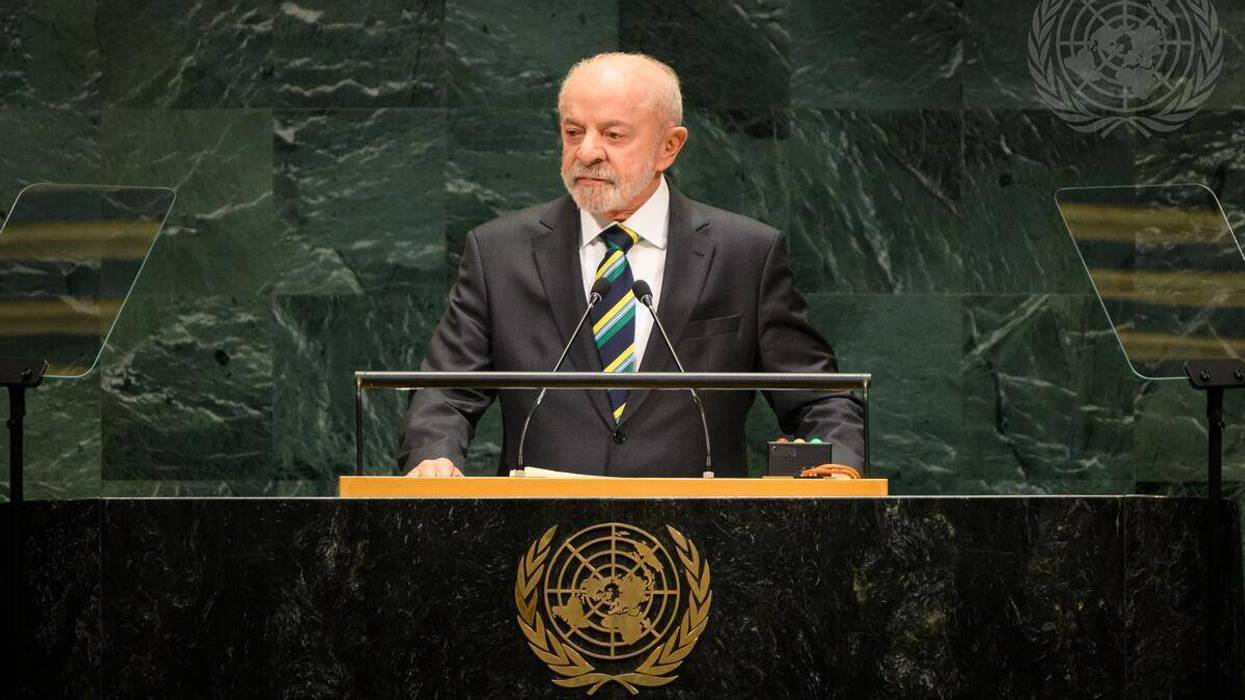
"Brazil has only one owner: The Brazilian people," said Brazilian President Luiz Inácio Lula da Silva.
The campaign of Brazilian President Luiz Inácio Lula da Silva released new advertisements this week that sounded alarms about the threat posed by US President Donald Trump to the country's sovereignty and resources.
One ad, released on Tuesday, features a Portuguese version of Puerto Rican music star Bad Bunny's song "Lo Que Le Pasó a Hawaii," the lyrics of which decry the damage done by US imperialism throughout the Western Hemisphere.
The ad consists of a video montage highlighting Brazil's rich cultural, ethnic, and ecological diversity, and ends with Lula saying, "Brazil has only one owner: The Brazilian people."
Do Latim, Silva é a própria selva: a raiz que brota do solo, o verde que resiste e a força viva da terra.
Durante séculos quiseram diminuir a nossa gente, mas foi na garra, no suor e na dignidade que cada Silva construiu este país.
A nossa força não se curva, a nossa bandeira… pic.twitter.com/iwujl0ojq0
— Lula (@LulaOficial) September 23, 2026
"Lo Que Le Pasó a Hawaii" was one of the songs that Bad Bunny performed during his acclaimed Super Bowl halftime show in February, which some critics saw as a joyful rebuke to the colonialist vision for Latin America that Trump has embraced throughout his second term.
According to a report published Thursday in Correio Braziliense, Bad Bunny gave Lula's team permission to use his music in the campaign video.
Another ad, released on Thursday, is more explicit in its warnings about Trump's ambitions for Latin America.
Unlike the video released Tuesday, the later ad directly links the unpopular US president to far-right politician Flávio Bolsonaro, who has emerged as Lula’s top rival for the presidency in upcoming elections and is the son of former Brazilian President Jair Bolsonaro, still serving a criminal sentence for efforts to overthrow Lula's government.
"Flávio Bolsonaro is Trump's candidate," says that ad's narrator. "And what Trump wants is to colonize Brazil, take our wealth, steal our future, and leave us behind."
"Flávio Bolsonaro," the narrator concludes, "is playing against the Brazilian people."
Flávio Bolsonaro é o candidato do Trump.
Quer entregar o nosso país e as nossas riquezas para os Estados Unidos.
Se depender dele, o Brasil vira colônia de novo.
Mas o Brasil só tem um dono: o povo brasileiro. pic.twitter.com/jOSJ83xcKb
— Lula (@LulaOficial) September 25, 2026
In a Thursday social media post, Lula said Bolsonaro “wants to deliver our country and our wealth to the United States,” adding that, if it were up to Bolsonaro, “Brazil will become a colony again.”
During a speech delivered at the United Nations General Assembly on Tuesday, Lula called out efforts to treat Brazil as a colony, although he didn’t mention the US directly.
“Brazil is no one’s backyard,” the Brazilian president said at one point.
“We will not allow the enemies of democracy—internal or external—to attack the will of the people," he said. "Brazilian democracy belongs to the Brazilians.”
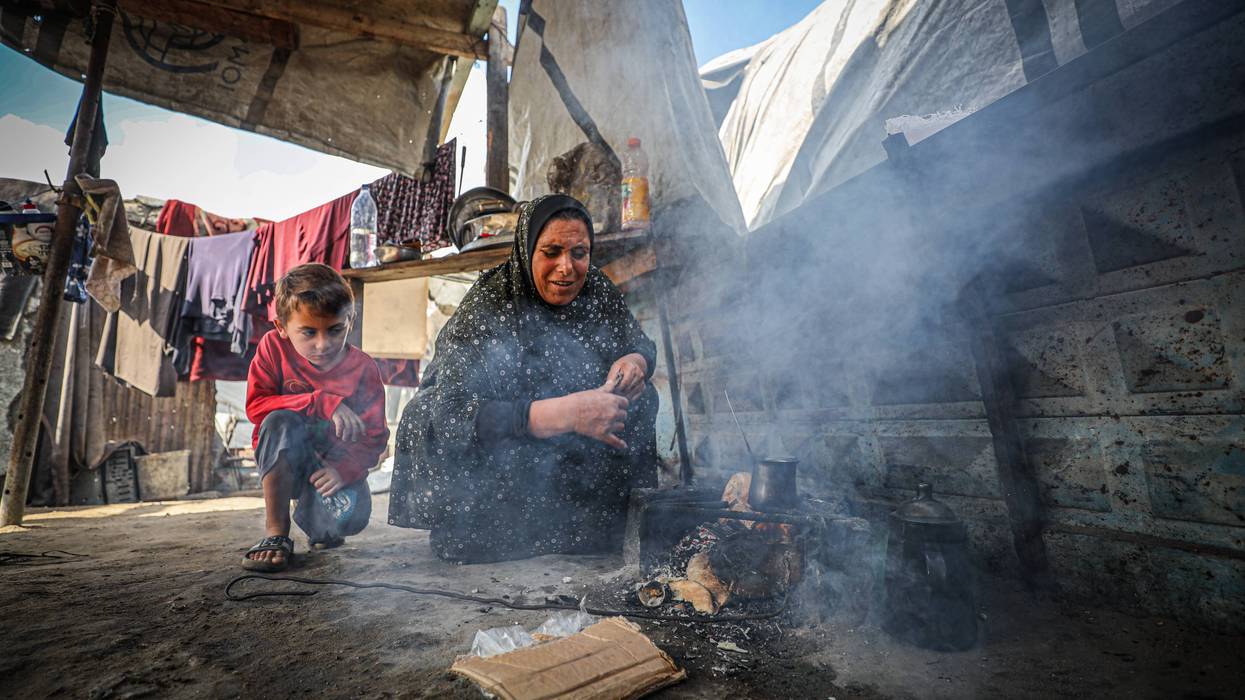
"We have moved from development blocked to development reversed," said the UN official behind a new report.
Israel’s US-backed military assault on Gaza has not only caused mass death and destruction; it has also created “the world’s most severe economic crisis on record,” according to Pedro Manuel Moreno, the acting secretary-general of the United Nations Conference on Trade and Development.
Moreno presented a recent report at a press conference on Thursday showing that 92% of economic establishments in Gaza—including shops, factories, restaurants, and farms—have been damaged or destroyed since Israel launched its assault on the territory in October 2023 and reduced most of its infrastructure to rubble.
Less than 1.5% of cropland across the strip remained accessible and undamaged, while more than half of its hospitals and primary health clinics have been rendered nonfunctional.
Compared with 2022, Gaza’s main productive sectors have been almost entirely wiped out: Agricultural and industrial output were each down 94%, while construction was down 99% in 2025. With most of its economic capacity destroyed, unemployment in the exclave skyrocketed to 78% in 2025, while tremendous scarcity led prices to soar to 274% above 2022 levels.
Dropping to just 17% of its 2022 level, Gaza’s gross domestic product (GDP) per capita cratered to $212 in 2025, equivalent to about 58 cents per person per day.
"Productive capacity is wiped out while the entire population is displaced and condemned to multidimensional poverty," said UNCTAD's coordinator for assistance to the Palestinians, Mutasim Elagraa, who led work on the report. "By multidimensional poverty I mean not just income poverty; it's also a lack of proper shelter, a lack of access to basic services like health and education and sanitation."
"Before the onset of this crisis in October 2023, two out of three residents were poor," Elagraa continued. "Today, everyone in Gaza is multidimensionally poor."
These conditions have increased the territory's reliance on outside aid, which Israel has often blocked, leading UN experts and human rights organizations to accuse its leaders of using starvation and deprivation as "weapons of war."
The International Criminal Court has found reasonable grounds to believe that Israeli Prime Minister Benjamin Netanyahu—who gave a defiant speech denying Israel's responsibility for genocide at the UN General Assembly Thursday—bears criminal responsibility for the war crime of starvation as a method of warfare.
The report estimates that $71.5 billion will be needed for recovery and reconstruction, as well as $35.2 billion in physical infrastructure damage and $22.7 billion in economic and social losses.
"Restoring the collapsed health system, rebuilding destroyed education infrastructure and other public infrastructure will need to go together while restoring productive capacity, employment, functioning markets and the ability for businesses to operate," Moreno said. "Peace cannot be built on a collapsed economy."
Though the report emphasizes how Israel's bombardment has brought near-apocalyptic conditions upon the strip, it notes that Gaza's economic deprivation dates back decades before the Hamas-led attack in October 2023, which was the catalyst for the unprecedented assault.
It noted that 59 years of Israeli occupation of Palestine had severely stunted its economic growth, particularly as it tightened its blockade of Gaza in the last two decades.
Previous UNCTAD analyses have shown that between 2006, a year before Israel began its land, air, and sea blockade of Gaza, and 2022, Gaza's real GDP per capita fell by 37% while its productive economy, including agriculture and manufacturing, was hollowed out by Israel's restrictions on movement and imports. Even before 2023, nearly half of Gaza's workforce was unemployed, roughly two-thirds lived in poverty, and 80% depended on international aid.
“The central message of this report we are talking about today is that about six decades of occupation have hollowed out the Palestinian economy and de-developed it,” Elagraa said. “We have moved from development blocked to development reversed, and now decades of human development that has been achieved in Gaza has been wiped out."
"Although the intensity of destruction is far more in Gaza" than in the West Bank, he said, the report showed the "destruction" to be "a dramatic escalation of a pattern that dates back to 1967 with the onset of occupation."
"The report," he said, "maintains that history did not start in October 2023."
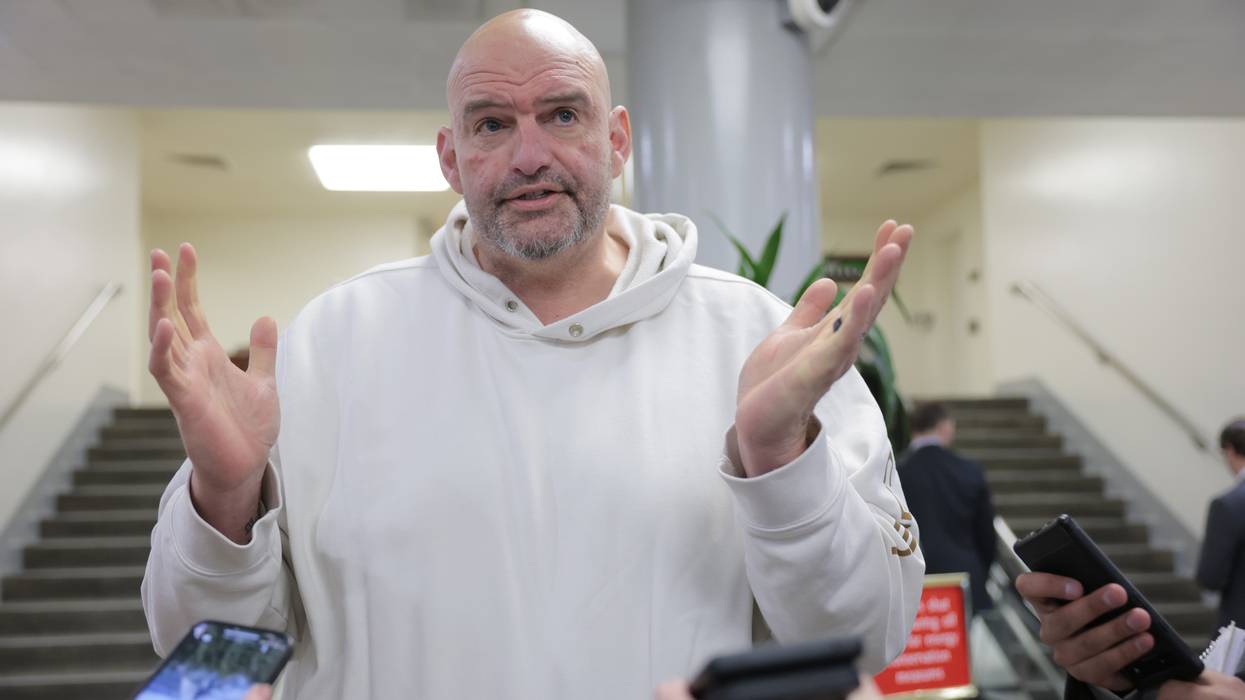
"This reckless war has cost American lives, innocent lives, tens of billions of dollars, and higher prices on nearly everything here at home. John and 49 Republican Senators voted in favor of all of that."
Democratic Sen. John Fetterman of Pennsylvania was the lone Democrat on Thursday to help Republicans in the US Senate vote down a resolution to end the "illegal" war of choice launched against Iran by President Donald Trump earlier this year.
In the 49-50 vote, the Republican majority blocked the latest resolution calling for an end to the war. While four Republicans—Susan Collins of Maine, Alaska's Lisa Murkowski, Rand Paul of Kentucky and Thom Tillis of North Carolina—joined Democrats by voting in favor, Fetterman became the deciding vote.
Rep. Chris Deluzio (D-Pa.) was among those expressing frustration with Fetterman, a lawmaker who has become a thorn in the side of his party since taking office and taking a hard right with his pro-war positions, accommodations to Trump, and determined support for pro-Israeli policies.
"John Fetterman just cast the deciding vote to keep the Iran War raging," said Deluzio. "This reckless war has cost American lives, innocent lives, tens of billions of dollars, and higher prices on nearly everything here at home. John and 49 Republican Senators voted in favor of all of that."
"Fetterman never fails to disappoint," said Susan Wild, a former Democratic member of the US House from Pennsylvania.
The vote came on the same day that an advocacy group representing American citizens with Iranian heritage sued the Trump administration for usurping the powers of Congress when it launched an "unconstitutional" war against Iran—a military conflict that has lasted nearly 7 months with no end in sight, causing misery across the Middle East and economic pain worldwide, including in the United States.
Filed in the US District Court for the District of Columbia on Thursday, the lawsuit, filed on behalf of the National Iranian American Council Action (NIAC Action), asks the court to declare that President Donald Trump's unprovoked attack on Iran violates the Constitution’s Declare War Clause.
In a statement, NIAC Action said the suit was brought "on behalf of its members whose families have been injured, displaced, economically devastated and are in continuing mortal danger as a result of a war that was never lawfully authorized."
Launched on Feb. 28, the US attack, in coordination with the Israeli government of Prime Minister Benjamin Netanyahu, was launched despite ongoing diplomatic efforts and active talks over US sanctions against Iran and questions about Iran's domestic nuclear program and its conventional missile capabilities. The war was initiated, according to the group,
without a declaration of war or other congressional authorization and that the war has continued, including repeated heavy bombardments and a naval blockade, despite this lack of authorization and the passage by both chambers of Congress of an explicit directive to terminate unauthorized hostilities against Iran.
“No President should have the power to take this country into an indefinite war by himself,” said NIAC Action president Jamal Abdi, in a statement. “Congress never authorized this war. Yet Iranian families are being bombed, American service members have been killed, and communities on both sides are being forced to bear the consequences. This lawsuit asks a fundamental question: can one person decide, on his own, to keep an entire nation at war?”
NIAC Action offered the example of one plaintiff, Nima Dilmaghani, whose cousin in Iran was injured when the company warehouse where she worked was bombed. Dilmaghani's cousin, the group explained, "suffered a broken leg, serious damage to their eardrums, and the loss of their index finger, which surgeons reattached but which has lost motion. Approximately ten of her coworkers were killed, and approximately ten more were injured. In a separate bombing, their apartment was destroyed while they were away at work. They are now working two jobs to survive." Other NIAC Action members have detailed similar stories.
Lawyers behind the lawsuit said that just because President Trump and other officials, including Secretary of Defense Pete Hegseth, have tried to argue that war against Iran is not a "war," that does not make it so.
“President Trump has spent months waging a war that Congress never authorized, while insisting that changing the terminology somehow changes the constitutional question,” said attorney Bruce Fein. “Calling a war a ‘military operation’ or an ‘excursion’ does not erase the Declare War Clause. The question before the Court is whether the President can continue these hostilities without the authorization the Constitution requires.”
While War Powers resolutions have been passed in the House to cease military operations in Iran, none of those have been binding on President Trump, and overall, Congress has stood aside in the face of what critics have described as criminal aggression and war crimes by Trump.
Sen. Bernie Sanders (I-Vt.) and other members of the Democratic Caucus in the US Senate, have continued to voice their opposition to Trump's war as poll after poll show that the US voting public—across the political spectrum—want the war, and the economic harm it has wrought—to end.
"The American people, overwhelmingly, want to end this horrific war in Iran," Sanders said after the failed vote. "Pathetically, today, nearly every Republican voted with Trump to keep the war going. When will Republicans represent their constituents and have the courage to oppose their mentally unstable leader?"

“No lie can change the fact that he remains the subject of an International Criminal Court arrest warrant alleging war crimes and crimes against humanity,” New York City's mayor said of the Israeli prime minister.
New York City Mayor Zohran Mamdani hit back Thursday after Israeli Prime Minister Benjamin Netanyahu took to the United Nations General Assembly podium to accuse him of supporting Hamas and making Jewish New Yorkers feel unsafe—remarks that came after delegates from scores of countries walked out of the chamber to protest the far-right fugitive's presence.
Refuting allegations that Israel is committing genocide in Gaza—where Israeli forces have killed more than 73,000 Palestinians, including more than 21,500 children, since the Hamas-led attack of October 2023—Netanyahu said, "To all those spreading these lies about my country and about our brave soldiers, whether they sit in this hall or in the office of the antisemitic mayor of New York City, I say this: Shame on you."
"Mr. Mamdani, since you were elected mayor of this city, many Jews no longer feel safe in New York," the prime minister claimed. "It’s no wonder... You falsely and repeatedly accuse Israel of genocide. Israel didn’t commit genocide. Israel prevented genocide. And that’s exactly what Mr. Mamdani’s Hamas buddies would have done to us had we not stopped them. They would have killed every last one of us."
Mamdani issued a statement later Thursday saying: “As he has done time and again, Prime Minister Netanyahu used his speech to repeat baseless lies meant to sanitize his genocide of Palestinians. Yet no lie can change the fact that he remains the subject of an International Criminal Court arrest warrant alleging war crimes and crimes against humanity."
Netanyahu and Yoav Gallant, his former defense minister, are fugitives from the International Criminal Court, where they are accused of murder and forced starvation of Palestinians in Gaza. The ICC also issued arrest warrants for three Hamas leaders, but Israel assassinated them.
While neither Israel nor the United States is a party to the Rome Statute governing the ICC, the treaty states that people from nonsignatory states who commit alleged crimes in states that are party to the treaty—as Palestine is—can be arrested in third countries and subsequently tried by the court.
Mamdani has said that Netanyahu should be arrested and brought before the Hague-based tribunal for trial, but that he lacks the legal authority to apprehend the prime minister in New York.
The International Court of Justice—also located in The Hague, Netherlands—is currently processing a genocide case filed against Israel by South Africa and formally supported by nearly 20 nations. The case is based on what the ICJ called the plausibility that Israel is committing genocide in Gaza. The court has issued a series of provisional orders for Israel to adhere to the Genocide Convention—orders that critics say Israel has simply ignored.
Last year, an independent UN commission of inquiry found that Israel had committed genocide in Gaza, a conclusion shared by the International Association of Genocide Scholars and other experts including many Israeli and diaspora Jewish academics, jurists, human rights campaigners, and others.
As Netanyahu prepared to deliver his UN speech Thursday, delegates from a reported 77 nations walked out of the chamber in protest.
"If there are any other moral cowards who haven’t yet left this hall—please do so now," the prime minister said. "Thank you very much."
While some observers applauded the display of solidarity with Palestinians, others expressed disgust that Netanyahu was allowed to address the world body and that he has not yet been brought to justice.
"The head of the genocidal Israeli apartheid regime, a fugitive indicted for crimes against humanity, was allowed to enter the US and to address the UNGA today, without arrest," said Craig Mokhiber, a former senior UN official who resigned in protest of what he described as the world body’s failure to stop Israel’s genocidal war.
"Netanyahu insulted delegations, openly celebrated the regime’s many crimes, bragged about its terrorist pager attacks on Lebanon, repeated the regime’s debunked genocide propaganda, defended the illegal occupation of Palestine and Syria, lied incessantly, called violent, racist, illegal Zionist settlers 'peaceful' and 'honorable people,' labeled human rights defenders as 'antisemites,' even arrogantly attacked American citizens and officials for speaking out against the regime’s crimes," he continued.
"This violent psychopath cannot hide behind [US President Donald] Trump’s skirts forever," Mokhiber added. "He (and his collaborators) must be captured and brought to justice. And the UN must finally act to isolate the regime and hold it accountable. "
Referring to Netanyahu's address and Trump's threat on Tuesday to "annihilate" Iran during his rambling, lie-laden General Assembly speech, University of Colorado Law School associate professor Maryam Jamshidi said on social media, "Between Trump threatening Iran w/annihilation and Netanyahu bragging about Israel’s pager attacks, the UN podium has become a venue for promoting genocide, crimes against humanity, and war crimes."
Meanwhile, people took to the streets of New York to protest Netayahu's presence in the city, US complicity in Israeli crimes, and to show solidarity with Palestinians.
Hundreds of protesters gathered outside UN headquarters in Turtle Bay for a sit-in demonstration led by Jewish Voice for Peace. Demonstrators blocked roads while chanting slogans including, "Netanyahu you can't hide, you are wanted for genocide!"
As Common Dreams reported earlier Thursday, more than 100 demonstrators were arrested.
THEY’RE PUTTING THEM IN THE BUS!
Susan Sarandon Chelsea Manning, and MANY OTHER CELEBS ARRESTED at UN protest ahead of Israeli Prime Minister Benjamin Netanyahu's address! 👀
The 79-year-old actress – who has previously said she's been blacklisted over pro-Palestinian comments… pic.twitter.com/pvzuRGwGG4
— SANTINO (@TheRealSantino) September 24, 2026
Among those reportedly arrested were progressive congressional candidate Darializa Avila Chevalier; actors Susan Sarandon, Hannah Einbinder, and Cynthia Nixon; New York state Assemblymember Emily Gallagher (D-50); Democratic New York City Councilmembers Chi Ossé and Alexa Avilés; former Army whistleblower Chelsea Manning; and Palestinian American political activist Linda Sarsour.
"I will never, ever be silent," Sarsour said on Facebook. "I will never just accept the world as it is. I want history to record for future generations of Palestinians that we fought. At every turn. In every way. When it was easy and when it was hard."
"I want Palestinian girls in Gaza to see me in my hijab and my unapologetic Palestinian blood fighting for them to live FREE," she added. "This is bigger than all of us. Netanyahu is a war criminal and belongs in The Hague, not the United Nations."

"Not exactly the cancer cure we were promised," quipped one critic.
Artificial intelligence proponents claim AI will make healthcare more efficient, but an analysis published Wednesday suggests that the burgeoning technology is instead helping hospitals identify more lucrative diagnoses—and is driving nearly $1 billion in additional costs for patients and insurers.
The Blue Cross Blue Shield Association (BCBSA) analysis found that the share of inpatient cases billed as "medically complex" rose from 37% at the beginning of 2023 to 40% by the end of 2025. While that may seem like a small increase, it translated into an estimated $942 million in additional costs for Blue Cross plans over two years, including $653 million attributable to secondary diagnoses that pushed hospital claims into higher-paying categories.
“Critically, what we found is underneath all of that data [was] no change in corresponding care for a more complex patient,” Luke Chalker, BCBSA’s senior vice president of product and data science and a co-author of the analysis, told reporters. “We find no evidence of a corresponding change in care.”
The analysis' findings underscore an intensifying battle between hospitals seeking maximum reimbursement and insurers trying to contain payouts—a conflict increasingly mediated by AI. AI-powered coding systems can scan medical records, doctors' notes, and laboratory results for additional diagnoses that can increase the amount hospitals are paid. Ambient AI systems can also listen to clinician-patient conversations and automatically document them.
While AI can have legitimate benefits—like reducing paperwork and administrative burdens—BCBSA contends that the financial incentives built into the nation's fee-for-service healthcare system can turn those capabilities toward maximizing profits.
"Not exactly the cancer cure we were promised," More Perfect Union quipped on social media.
In one example, the analysis examined secondary diagnoses like anemia following major bowel surgery.
“If patients are truly sicker, we'd expect to see more treatment,” Chalker said. “For example, we're seeing significantly more anemia diagnoses at these hospitals without a corresponding increase in transfusions. The disconnect between diagnoses and treatment suggests that AI is identifying more billable conditions, not sicker patients.”
The analysis' findings echo an earlier BCBSA study of maternity care, which found that some hospitals dramatically increased diagnoses of acute posthemorrhagic anemia, while transfusion rates barely changed. BCBSA estimated that the increase in that single diagnosis alone added $22 million to maternity admission costs in one year.
Progressive healthcare advocates argue that the problem cannot be solved by tweaking the current system. Advocates for a Medicare for All-type system, including US Sen. Bernie Sanders (I-Vt.) and Rep. Pramila Jayapal (D-Wash.), propose replacing the for-profit insurance system with a universal public program.
In August, Sanders cited a Yale study estimating that his Medicare for All legislation could save 114,000 lives each year, while reducing national healthcare spending by more than $1 trillion annually.
“We do not suffer from scarcity in this country; we suffer from greed,” Jayapal said at a July Medicare for All shadow hearing.
"Medicare for All is the path to fix the broken healthcare system that has let corporate interests determine who lives and dies," Jayapal added. "The reality is that Medicare for All is the only solution that guarantees care for everyone in the US, brings down costs for working families, and generates savings for the country.
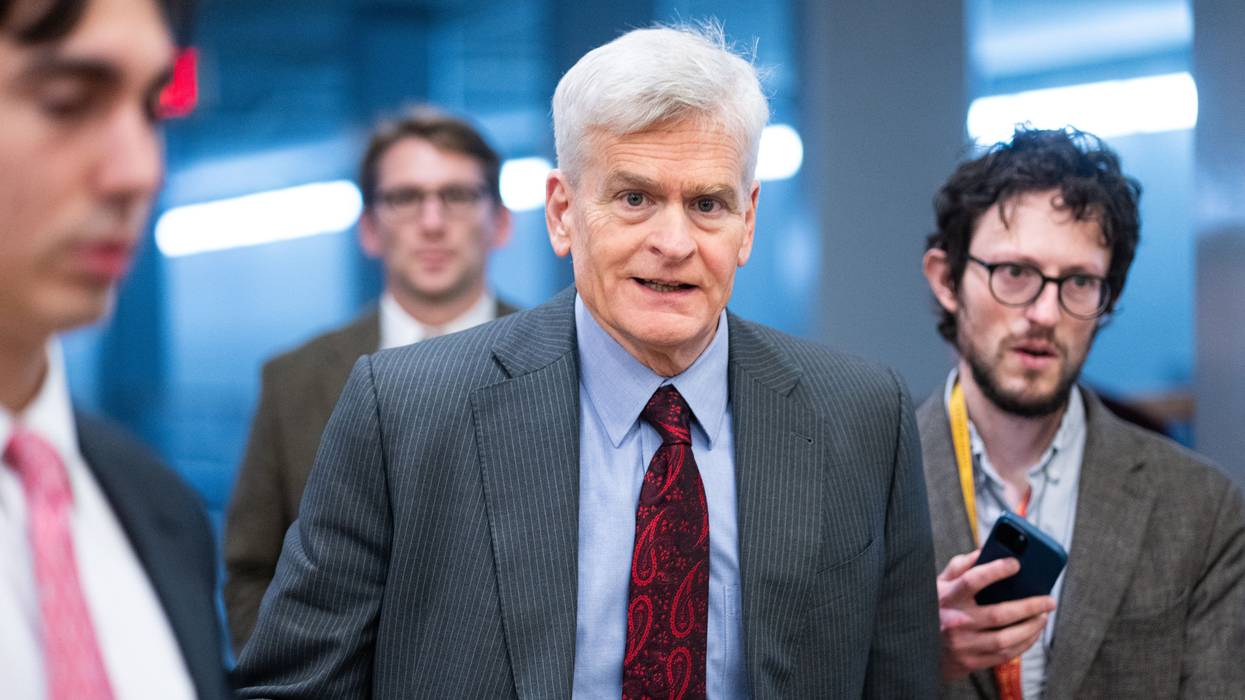
Sen. John Fetterman was the lone Democrat to vote against the resolution.
Even as some swing-state Republican US Senate candidates are suddenly calling for an end to President Donald Trump's unpopular and illegal war with Iran, the vast majority of elected GOP senators are voting to keep the conflict going.
A war powers resolution that would have compelled Trump to end the war he started more than six months ago was narrowly defeated in the US Senate on Thursday.
Just four Republicans—Sens. Rand Paul (R-Ky.), Susan Collins (R-Maine), Lisa Murkowski (R-Alaska), and Thom Tillis (R-NC)—voted in favor of the resolution, which failed by a vote of 49-50. Sen. John Fetterman (D-Pa.) was the lone Democrat to vote against the resolution.
The Iran War, which Trump launched in February without congressional authorization, has led to a massive spike in energy prices, including record-high prices for diesel fuel.
As reported by NPR, Senate Majority Leader John Thune (R-SD), who voted against Thursday's resolution, nonetheless acknowledged the economic toll the war is taking on Americans while speaking with reporters earlier this week.
"Everybody wants to see wars come to a conclusion," said the South Dakota Republican. "We are hopeful that the administration's efforts will lead to getting... the shipping lanes open and taking some of the pressure off of the American peoples' pocketbooks via a lower price at the pump for gasoline."
Rep. Pramila Jayapal (D-Wash.), who led the war powers resolution in the US House of Representatives, decried the Senate's failure to pass it as "a slap in the face to the millions of American people who want this war to end."
"The Senate had the opportunity to send a clear message to this administration that they would not stand for another day of his war of choice," said Jayapal. "Instead, a majority of Senate Republicans acted as a cult party and stood by Trump’s unpopular and devastating war."
The Washington Democrat vowed that the House "will continue to pass these resolutions and demand an end to the war."
Cavan Kharrazian, senior policy adviser for Demand Progress, had a more optimistic take on the resolution's failure, arguing that the close vote count "shows that the tide continues to turn against this illegal war."
Kharrazian also noted that "Congress has already passed a legally binding war powers resolution directing him to remove US forces from the fighting," but the president "ignored it and kept waging a war that was illegal from day one."
During an unhinged speech before the United Nations General Assembly on Tuesday, Trump threatened to "annihilate" Iran by driving the country "into hell with no chance of survival and no hope of future greatness or generations."

One anti-arms trade advocate said it showed the UK's new policy toward Israel was "nothing more than a soundbite designed to appease voters, whilst failing to deliver meaningful policy change."
Earlier this month, the UK government announced plans to cut off trade with Israel's illegal settlements in the West Bank—including weapons shipments.
But according to new disclosures made to Parliament, reported Thursday by Declassified UK, the sanctions regime has not actually led to any weapons licenses being suspended or revoked, validating warnings by some critics that the new Labour government's effort to cut ties with Israel's occupation was only skin-deep.
Back in 2024, as Israel's genocidal assault on Gaza was raging, then-Prime Minister Keir Starmer had suspended 30 out of approximately 350 arms export licenses to the country.
According to the UK-based Campaign Against Arms Trade (CAAT), the UK has still approved at least £178 million ($235 million) worth of fixed-value military export licenses to Israel since October 2023—a figure that excludes exports authorized under open licenses, including much of Britain's contribution to the F-35 program.
UK Foreign Secretary Ed Miliband described the new restriction on arms export licenses as a “double lock against arms sales” to Israel under which the government would continue its existing suspensions and refuse applications for arms that "materially contribute to the occupation” of Palestine.
However, CAAT warned the following day that the policy, while welcome, "does not go far enough," and included several loopholes—including one that allowed the UK to continue supplying F-35 fighter jet parts to an international pool used by the Israeli military and another allowing Israel to potentially use military equipment exported there for use by third countries.
Several prominent leftists in Parliament, including Your Party co-founders Jeremy Corbyn and Zarah Sultana, as well as Green Party leader Zack Polanski, said that the trade bans should ultimately be just a first step on the way to a full arms embargo.
On September 16, the UK's trade department acknowledged, following a question from MP Iqbal Mohamed, that "no additional licenses have been revoked or suspended since September 8," according to Declassified.
The department explained that this was "largely because licenses for items that might materially contribute to the occupation have already been suspended because of Israel’s conduct in the Gaza conflict."
Declassified called this into doubt, however:
The government insists that many of the extant licenses for Israel cover items that are for re-export to a third country or military-grade goods for civilian use such as body armor.
Yet fighter jet components are still being exported to global spares pools used by Israel, and UK-made trainer aircraft parts, which help to sustain the F-35 program, continue to flow directly to Tel Aviv.
When asked about trainer aircraft, the trade department told Parliament that such components “are not used in Gaza and… do not materially contribute to Israel’s illegal occupation.”
This is despite the Foreign Office previously acknowledging that Israel’s M-346 trainer aircraft are “used to train [Israeli Air Force] fast-jet pilots” and “facilitate the development of an offensive capacity.”
Dearbhla Minogue, a lawyer from Global Legal Action Network, which took the UK to court over arms exports to Israel in 2024, told the outlet that these revelations appear to indicate that there will be "no concrete consequences for Israel after this government recognized the likelihood of war crimes, ethnic cleansing, and what it terms Israeli terrorism."
"Successive governments have done everything in their power to continue aiding and abetting genocide and war crimes with deadly and devastating consequences," said Sam Perlo-Freeman, CAAT’s research coordinator. "The new so-called ‘double-lock’ on arms exports to Israel exemplifies this."
He added that it is "nothing more than a soundbite designed to appease voters, whilst failing to deliver meaningful policy change, and continuing to allow arms dealers to profit from Israel’s genocide in Gaza."
This news comes days after Prime Minister Andy Burnham also affirmed that the UK would provide military support—specifically “defensive” air-to-air refueling—to Saudi Arabia as it launches new strikes on Yemen’s Houthis.
A new CAAT report says the UK approved £464.8 million in military exports to Saudi Arabia in just the first quarter of 2026, with most of the value consisting of air-to-surface weapons.
The Saudi-led war against Yemen that lasted from 2015-22 killed an estimated 377,000 people from direct and indirect causes. During that time, CAAT found that the UK approved £7.1 billion ($9.4 billion) worth of military goods to Saudi Arabia.

"I want elected leaders here in this country to catch up to the American people," said actor and activist Cynthia Nixon, "who understand that what is happening in Gaza and Palestine is a war crime."
As she waited to be loaded into a police vehicle with several other pro-Palestinian protesters in New York City on Thursday, Democratic US House candidate Darializa Avila Chevalier said she was among hundreds of New Yorkers who had risked arrest "because we can't allow a war criminal to roam the streets of our city."
"He needs to be tried in The Hague," she added, speaking about Israeli Prime Minister Benjamin Netanyahu, whose arrival in the city for the United Nations General Assembly sparked the protest outside the UN headquarters.
Other politicians who joined the protest included Brad Lander, Chris Rabb of Pennsylvania, Melat Kiros of Colorado, and Adam Hamawy of New Jersey, while celebrities who have been outspoken supporters of Palestinian rights, including actors Hannah Einbinder, Susan Sarandon, Elliot Page, Cynthia Nixon, and writer Tony Kushner also joined the demonstration led by Jewish Voice for Peace (JVP).
"I'm here because I want to stop US complicity in the genocide that is happening in Gaza and the West Bank," said Nixon. "I want to stop us funding Israel, I want to block the bombs, and I want elected leaders here in this country to catch up to the American people and people everywhere around the globe who understand that what is happening in Gaza and Palestine is a war crime, it's unacceptable, and it's wrong, and history will judge them very harshly."
Mass anti-war sit-in outside Netanyahu's speech https://t.co/iKJas2TeBG
— Jewish Voice for Peace (@jvplive) September 24, 2026
The demonstrators blocked roads outside the UN headquarters, and The New York Daily News reported that more than 100 people were arrested.
“There’s an arrest warrant out for Benjamin Netanyahu for the war crimes he’s committing in Gaza," said Sumaya Awad, director of the New York-based Organizing for Adalah Justice Project. " Trump is refusing to arrest him so we’re taking to the streets to make it clear to our government, and to future generations who will look back on this moment, that we refuse to normalize genocide. We refuse to normalize sending billions to commit war crimes, meanwhile our own schools and hospitals here are underfunded."
The US has provided at least $17.9 billion in military aid to Israel since the country began its military campaign in Gaza—on top of $3.8 billion it provides annually.
But as Nixon noted, public approval for US funding of the Israel Defense Forces has plummeted in recent years. A Quinnipiac University poll last year found that 60% of Americans no longer support providing Israel with weapons and military funding.
Nixon was among many attendees who wore a T-shirt emblazoned with the words, "Fund People, Not Bombs." Protesters chanted, "Netanyahu, you can't hide, you are wanted for genocide!" and "Not another penny, not another dime, no more money for genocide!"
Netanyahu has been welcomed to the US multiple times since the International Criminal Court (ICC) issued a warrant in November 2024 for his arrest, along with that of former Israeli Defense Minister Yoav Gallant and Hamas leader Mohammed Deif, who was killed several months later.
Netanyahu has been accused of war crimes and crimes against humanity for the military campaign his government has ordered in Gaza since October 2023, in retaliation for a Hamas-led attack—which, according to a report by Israeli newspaper Haaretz earlier this month, the prime minister was alerted about ahead of time by the United Arab Emirates.
In Gaza, Israeli forces have killed more than 73,000 Palestinians, decimated the vast majority of housing units, and bombed hospitals, schools, and refugee camps. According to testimony from IDF soldiers, commanders have explicitly allowed the mass killing of civilians.
The government has also blocked humanitarian aid, leading to the starvation of hundreds of people, including at least 130 children. Amnesty International said last year that Netanyahu's government had used starvation as a "weapon of war," and the group is one of numerous human rights organizations that have called the assault on Gaza a genocide.
Netanyahu has joined US politicians in accusing critics of the Israeli government of "antisemitism," but JVP noted that a majority of people who took part in Thursday's protests were "Jewish New Yorkers, joined by Palestinian, Lebanese, and Iranian New Yorkers, including parents, teachers, nurses, grandmothers, and descendants of Holocaust survivors who were determined to raise their voices as Netanyahu roamed free in the streets of New York City."
Stefanie Fox, executive director of JVP, noted that "as we protest, the Israeli military expands its genocide in Gaza and destruction across the region," while "we are living through the crushing conditions of expanding fascism here in the US."
"But this is a movement that refuses to give up, and we know we can end this," said Fox. "From the streets of NYC to the halls of Congress we will be relentless in our demands to stop arming Israel."
Inside the UN headquarters, a number of delegations walked out of the room as Netanyahu began addressing the General Assembly on Wednesday afternoon—leading to jeers from the prime minister, who called the leaders "moral cowards" for objecting to the presence of an accused war criminal at the UN.
By continuing to back Israel, said Utah state Sen. Nate Blouin (D-13), "The US is very much not in step with the rest of the world."

US Sen. Bernie Sanders noted that the expected dinner attendees "have nearly doubled their wealth since Trump's election."
The combined net worth of the tech executives expected to attend US President Donald Trump's private dinner Thursday night with his Chinese counterpart, Xi Jinping, is around $2 trillion, underscoring the staggering wealth and political influence of the small group of moguls poised to profit immensely from rapid developments in artificial intelligence—which researchers and industry insiders say is a threat to humanity.
The dinner attendee list is expected to include Tesla and SpaceX CEO Elon Musk, the world's richest man; OpenAI CEO Sam Altman; Nvidia CEO Jensen Huang; Meta CEO Mark Zuckerberg; Google CEO Sundar Pichai; and Microsoft CEO Satya Nadella. A Forbes analysis released earlier this week estimated that the tech executives are worth a combined $2.2 trillion.
The Trump White House has published the dinner menu for the event but has not released any details on what will be discussed on Thursday night. Given the expected guest list—and intensifying competition between the US and China on AI development—artificial intelligence is expected to be a major topic of discussion.
Earlier this week, during a speech at the United Nations General Assembly in New York, Trump dismissed efforts to regulate AI and said he plans to "encourage" the technology, "not rein it in."
US Sen. Bernie Sanders (I-Vt.), who introduced legislation earlier this week that would ban AI superintelligence and pause advanced AI development, wrote in a social media post on Thursday that "the function of AI must be to improve life for all humanity, not just make a handful of billionaires even richer."
Sanders pointed to the guest list for the Trump-Xi dinner and noted that the expected attendees "have nearly doubled their wealth since Trump's election."
Trump invited 10 Big Tech Oligarchs to his private dinner with President Xi of China.
They have nearly doubled their wealth since Trump's election & are now worth almost $2 trillion. Here's how much richer each of them got since Trump was elected:
Elon Musk: ⬆️ $658 billion…
— Bernie Sanders (@BernieSanders) September 24, 2026
Bloomberg reporter Jonathan Tamari argued that the Trump-Xi dinner shows how the US president has "treated Silicon Valley execs almost like an extension of his administration."
Other executives expected to attend the dinner are Citigroup’s Jane Fraser, Amazon’s Jeff Bezos, and Apple's Tim Cook.

"Wow! The American people are so excited to know now that!" US Sen. Bernie Sanders sarcastically said of Trump's false prescription drugs claim.
Sen. Bernie Sanders on Thursday grilled President Donald Trump's nominee to lead the US Food and Drug Administration about the president's false claims about the price of prescription drugs in the US.
During a Senate confirmation hearing, Sanders (I-Vt.) asked Dr. Heidi Overton about Trump's boast at this year's State of the Union address about giving Americans the cheapest medications of any country in the world.
“President Trump has claimed... that he took prescription drugs from the highest price in the entire world to the lowest,” Sanders said in an incredulous tone.
“Wow!" he continued sarcastically. "The American people are so excited to know now that we pay the lowest prices in the world for prescription drugs.”
BERNIE SANDERS: Trump claims we pay the lowest prices in the world for prescription drugs. Wow! Is the president telling the truth?
FDA NOMINEE HEIDI OVERTON: There has been immense progress--
SANDERS: Do we pay the lowest prices like the president said? You just told us you… pic.twitter.com/X7gWNbSmik
— Aaron Rupar (@atrupar) September 24, 2026
"What do you think?" Sanders asked Overton. "Are we paying the lowest prices in the world for prescription drugs?"
"Senator... there has been immense progress, especially on individual products," Overton replied. "Right now, 89% of branded drugs have signed agreements to lower their prices and make that available..."
Sanders at this point interjected.
"Do we pay the lowest prices?" he asked. "The president said it. He's your boss... He just said we pay the lowest prices in the world for prescription drugs. It's true or it's not true. Is it true?"
"Senator, we have seen..." Overton began.
"Is it true that we pay the lowest prices in the world for prescription drugs, as President Trump has said?" Sanders persisted.
"So, senator, the results that we have seen for the American people... have dropped prices," she replied. "And right now [the Consumer Price Index] says that, for the first time in 60 years, prescription drug prices have gone down by 3%."
"Which may have something to do with the legislation that we passed several years ago," said Sanders, in reference to provisions in the 2022 Inflation Reduction Act that granted Medicare the power to negotiate lower prices for certain prescription drugs.
Even if Trump's policies were solely responsible for a 3% drop in drug prices, that would not make them the lowest in the world by any stretch of the imagination.
A 2024 study from the RAND Corporation found that Americans pay nearly three times as much for prescription drugs compared to the rest of the world.
Sanders' office last year released a report showing that, during the first year of Trump's second term, drug companies raised prices on 688 medications, with a median increase of 5.5%.
Trump has a long history of making false claims about reducing prescription drug costs, and has even said that he has slashed them by as much as 600%, which would mean that pharmaceutical companies are paying consumers to take their medications.