June, 26 2019, 12:00am EDT
For Immediate Release
Contact:
For Physicians for Human Rights: Samantha Kupferman, media@phr.org, Cell: 917-679-0110
For Center for Victims of Torture: Jenni Bowring, jbowring@cvt.org, Direct: 612-436-4886, Cell: 651-226-3858
Report Documents Pervasive Deficiencies in Medical Care of Detainees at Guantanamo Bay Detention Center
A new report from Physicians for Human Rights and the Center for Victims of Torture details denial of medical care, widespread distrust of Guantanamo medical personnel, and refusal to confront medical impact of U.S. torture
WASHINGTON
This week, the Center for Victims of Torture (CVT) and Physicians for Human Rights (PHR) released a report detailing widespread medical deficiency at the Guantanamo Bay detention center. Following an in-depth review of publicly available information related to medical care at Guantanamo - both past and present - as well as consultations with independent medical experts and detainees' lawyers, CVT and PHR found pervasive shortcomings that belie U.S. officials' claims that care for detainees is equivalent to that afforded U.S. service members - or, as one former Guantanamo commander put it: "as good as or better than anything we would offer our own soldiers, sailors, airmen or Marines."
The report, "Deprivation and Despair: The Crisis of Medical Care at Guantanamo," finds systemic and longstanding deficiencies in care, including the subordination of medical needs to security functions resulting in the denial of care, patient distrust of medical professionals due to a history of medical complicity in torture, patient neglect, rapid rotation of medical professionals in and out of Guantanamo causing discontinuity of care, and denial to detainees of access to their own medical records. In conjunction with the International Day in Support of Victims of Torture on June 26, the report provides evidence of significant defects in medical care at Guantanamo and reaffirms the call to permanently close the detention facility as a necessary step toward fully addressing the human rights issues illuminated in this latest review.
"The problems at Guantanamo cannot be resolved without structural, operational, and cultural reform," said Vincent Iacopino, MD, PhD, Physicians for Human Rights senior medical advisor. "As the detainees age under these conditions, the longstanding medical and psychological impacts of their torture continue to be compounded. Given the constraints of Guantanamo's medical operations and history of care, their increasingly urgent medical needs can't be dealt with safely or effectively."
The report outlines a systemic failure by medical professionals to gather and document information from detainees regarding torture and abuse suffered at CIA black site prisons, where some detainees were held captive for years following their apprehensions, as early as 2002. Prisoners at black sites were kept naked in pitch black cells with their wrists and ankles shackled to a ring on the wall while loud music blared 24 hours a day in cells that were infested with rats and insects. Detainees experienced multiple forms of interrogation tactics, including hooding, waterboarding, the use of stress positions, isolation, exploitation of phobias, and forced nudity and sexual humiliation. The absence of documented trauma histories in detainees' medical records has led to inaccurate diagnoses and improper treatment.
"Many of the men who remain at Guantanamo are torture survivors or victims of similarly significant trauma, and all of them are either suffering from or at high risk of the additional profound physical and psychological harm associated with prolonged indefinite detention," said Scott Roehm, director of the Center for Victims of Torture's Washington, D.C. office and lead author of the report. "This trauma history is at the root of several of the medical care deficiencies we identified, and it exacerbates all of them.
"The medical care situation at Guantanamo is not sustainable and should be expected to worsen if the status quo continues and as the detainee population ages. Of course, Guantanamo should be closed, but unless and until it is, the medical care deficiencies there must be acknowledged and addressed - by Congress, the courts, and the executive branch. The system itself is broken, and so systemic change is necessary."
PHR and CVT's report reinforces previous statements from former Guantanamo commanding officers that the detention center is unprepared to address the medical needs of an aging population, especially given current U.S. laws that prohibit transferring detainees to the United States for any reason. Forty men are still held at the detention center, 31 of whom have never been charged with a crime. Five detainees have long been cleared for transfer by consensus of the executive branch's national security apparatus, which determined that the men pose no meaningful threat to the United States.
The report details case studies of Guantanamo detainees, including Abd al-Hadi al-Iraqi (aka Nashwan al-Tamir), who was captured in 2006, rendered to a CIA black site, then transferred to Guantanamo the following year. In 2018, al-Tamir collapsed in his cell from a degenerative spinal condition that was diagnosed in 2010 and previously disclosed to Guantanamo medical personnel. After multiple emergency surgeries conducted at Guantanamo by off-island medical professionals to avoid paralysis, al-Tamir's condition is still unresolved. The U.S. government has continued with his prosecution proceedings, requiring al-Tamir to attend court on a gurney, take powerful pain medication during legal proceedings, and sleep in the courtroom when the predictable effects of that medication set in.
Among other recommendations, CVT and PHR are calling for the U.S. executive branch to allow meaningful and regular access to Guantanamo by civilian medical experts, including permitting such experts to evaluate detainees in an appropriate setting, without the use of restraints and outside the presence of any other personnel, and to have timely access to all medical records, subject to detainees' consent. The report calls on Congress to create a new position of chief medical officer - who would be stationed at Guantanamo but report outside the Guantanamo chain of command and who would oversee the provision of medical care to detainees - and to establish a commission comprised of independent, senior medical experts to assess, report on, and provide additional recommendations with respect to the provision of medical care at Guantanamo.
"These are hardly radical proposals," Iacopino said. "They are basic steps toward bringing medical care at Guantanamo in line with accepted standards of care. Congress has an opportunity to take these steps right now, in the context of this year's defense authorization bill. Lawmakers should seize that opportunity."
Additional PHR resources on the U.S. government's use of torture at Guantanamo Bay detention center:
- Focus Area: Torture
- Press Release: "PHR Condemns Trump Executive Order on Guantanamo Bay Detention Center," January 30, 2018
- Press Release: "American Psychological Association Maintains Ban on Psychologists at Guantanamo," August 8, 2018
- Press Release: Letter to APA Opposing Proposal to Weaken Anti-Torture Ethics Protections in National Security Detention for Psychologists," August 6, 2018
- Blog: "The Human Cost of Guantanamo," January 7, 2016
- Press Release: "PHR: United States Must Close Guantanamo and End Indefinite Detention," February 23, 2016
- Blog: "Closing Guantanamo Is Imperative, But Not Enough," January 23, 2015
- Report: "Broken Laws, Broken Lives," June 1, 2008
Additional CVT resources on the U.S. government's use of torture at the Guantanamo Bay detention center:
- Focus Area: Confronting the Legacy of U.S. Torture
- Amicus Brief: Amicus brief in support of Majid Khan's sentencing before the military commissions, May 1, 2019
- Article: "For the Military Commissions, a Fork in the Road on Torture," May 6, 2019
- Amicus Brief: Amicus brief filed with the U.S. District Court for the District of Columbia in support of the joint habeas motion filed by 11 of the remaining Guantanamo Bay detainees, January 24, 2018
- Article: "Today's Mass Guantanamo Habeas Petition and the Ongoing Human Cost of America's 'Battle Lab," January 11, 2018
- Article: "Two Updates in Mass Guantanamo Habeas Case," January 25, 2018
- Press Release: "CVT Letter to APA Questions Effort to Return Military Psychologists to Guantanamo," August 2, 2018
- Blog: "It's Time to Close this Ugly Chapter in America's History," January 11, 2017
- Press Release: "Guantanamo's Closure Must Include an End to Indefinite Detention," February 23, 2016
- A Call to Reject Torture, September 2016
PHR was founded in 1986 on the idea that health professionals, with their specialized skills, ethical duties, and credible voices, are uniquely positioned to investigate the health consequences of human rights violations and work to stop them. PHR mobilizes health professionals to advance health, dignity, and justice and promotes the right to health for all.
LATEST NEWS
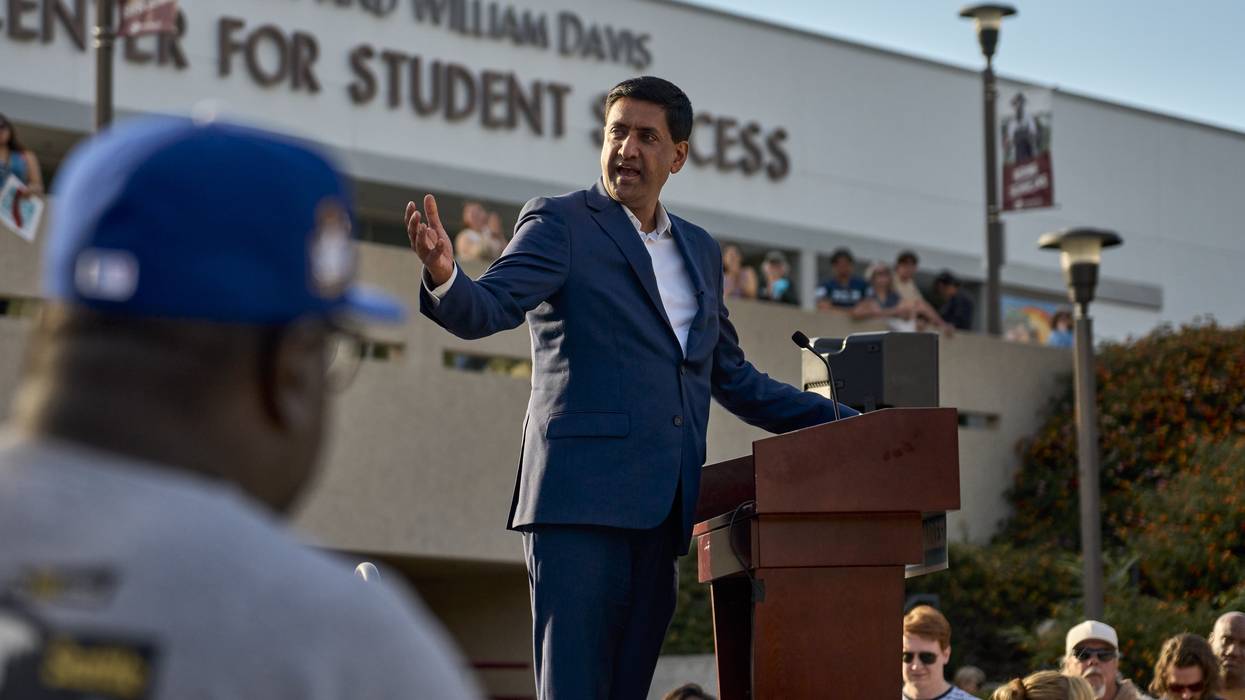
AOC Rallies for Progressive Aftyn Behn in Surprisingly Close Race in Tennessee's Trump Country
Rep. Alexandria Ocasio-Cortez said the tight race shows that "people are increasingly recognizing that our fights are not left and right, but they are top and bottom. They are about all of us as working Americans."
Dec 02, 2025
Just over a year after President Donald Trump carried Tennessee's 7th District by more than 20 points, US Rep. Alexandria Ocasio-Cortez said Monday night that the final polls in the district's special election race between a Trump ally and a progressive state lawmaker are "a testament to how the American people are feeling in this moment."
Ocasio-Cortez (D-NY) was speaking at a virtual get-out-the-vote rally for state Rep. Aftyn Behn (D-51), who is facing GOP candidate Matt Van Epps in the district in Tuesday's special election. GOP Rep. Mark Green stepped down earlier this year for a private sector job after winning by 21 percentage points last year.
The electoral history of the district would suggest that Republicans could expect to easily win Tuesday's election, but with Van Epps ahead by just one or two percentage points in recent polling, Trump, House Speaker Mike Johnson (R-La.), and other Republicans are signaling fears that Behn could pull off an upset.
The president attacked Behn in a social media post Monday, warning that only Van Epps "cherishes Christianity and Country Music."
Like other progressive candidates in this year's elections, Behn has focused heavily on the need to make life more affordable for residents in the district, which was gerrymandered by state Republicans in 2022. The GOP eliminated a Democratic district in Nashville and its voters were added to three Republican districts, but Behn has worked to mobilize voters in predominantly Black areas that were added to the 7th District and told canvassers Monday evening that the redistricting scheme "backfired" on the Republicans.
AFTYN: “Clearly I’m living rent-free in President Trump’s mind.”
JUST NOW IN FRANKLIN — Rep. @aftynfortn Behn gave a pep talk to a group of fired up canvassers on the eve of an unexpectedly tight #TN7 special election.
(And a group hug) pic.twitter.com/1e0sNmNHEd
— The Tennessee Holler (@TheTNHoller) December 1, 2025
Behn has focused on high prices during the campaign, attacking Trump's tariff policies and decrying the One Big Beautiful Bill Act's cuts to Medicaid and nutrition assistance—calling the law the "Big Bullshit Bill."
"This is a wake-up call," she said after the law passed in July. "If we don't bring change to Congress, the billionaires and bought-out politicians will continue to rig the system against us."
As a state lawmaker, Behn proposed the Homes, Not Hedge Funds bill to stop private equity firms from buying up neighborhoods and advocated "for fair funding for rural communities" with her Rural Prosperity Act.
She's also spoken out and organized on the ground against Trump's mass deportation operation, which she's called a "flagrant abuse of power and state-sanctioned violence."
At the virtual rally on Monday night, Ocasio-Cortez said Behn's decision to take on a Trump-backed opponent in a heavily Republican district "takes a special kind of guts."
"That kind of guts is what we need more of in this country," she said. "A kind of person that says, 'We're not gonna do something because it's easy, we're gonna do it because it's the right thing to do.' And she is leading by putting herself on the line and raising her hand up first to say, 'I am going to fight for my neighbors no matter the odds.'"
🔥 WATCH — @AOC: “Tennessee is ready to elect @aftynfortn Behn. Miracles can happen… to run in an R+22 seat takes a very special kind of person with a very special kind of guts. That the race is so tight is a testament to how the 🇺🇸 people are feeling in this moment.” #TN7 pic.twitter.com/2QKr6EQUMI
— The Tennessee Holler (@TheTNHoller) December 2, 2025
Ocasio-Cortez added that the close race shows "people are increasingly recognizing that our fights are not left and right, but they are top and bottom. They are about all of us as working Americans and working-class people that are standing up against the injustices and the greed of our healthcare system, of our low wages."
Van Epps has sought to attack Behn for speaking out for the rights of immigrants, telling voters at a rally with the president, "The only way to stop crazy is to vote against crazy."
John Geer, a political scientist at Vanderbilt University, told the Washington Post that the fact that a Democratic candidate is being targeted so heavily by her Republican opponent in the 7th District and attracting the attention of the president shows the GOP is "worried."
“It’s interesting that Van Epps isn’t in a strong enough position just to ignore her,” said Geer.
Behn suggested that even if Van Epps ekes out a win in the close race, the competitive election has offered the latest proof of deep dissatisfaction with Trump's agenda.
“If we get close,” she told the Post, it will be due to the “affordability crisis that we are experiencing in Tennessee and the fact that the federal administration has not delivered an economic agenda to address the needs of working people in the state.”
Keep ReadingShow Less
'Sounds Like Another Way' to Cut Benefits as Trump Social Security Chief Aims to Slash Office Visits
The Social Security Administration's plan, warned one Senate Democrat, will likely lead to "worse service and more challenges."
Dec 02, 2025
The Trump administration is reportedly looking to dramatically reduce the number of people who visit Social Security field offices across the United States, a plan that Democratic lawmakers warned is yet another scheme to disrupt and ultimately cut benefits.
Nextgov/FCW viewed internal Social Security Administration (SSA) planning documents showing that the agency is aiming for "no more than 15 million total" in-person visits to field offices in fiscal year 2026—half the level of the prior fiscal year.
"Under Social Security Commissioner Frank Bisignano, the agency is aiming to push people to interact with Social Security online instead of going to a field office or calling the agency, although Bisignano told lawmakers in June that, even with his focus on technology, the agency is not 'getting rid of field offices,' despite reports of planned closures," Nextgov/FCW reported Monday.
One anonymous SSA staffer told the outlet that agency leadership wants "fewer people in the front door and they want all work that doesn't require direct customer interactions to be centralized."
"They appear to be quietly killing field offices," the staffer said.
The plan comes after the Trump administration carried out the largest staffing cut in SSA history, cutting the agency's workforce by around 7,000. The cut left one SSA worker for every 1,480 beneficiaries, resulting in understaffed field offices and overwhelmed phone operations.
Beneficiaries have also repeatedly faced issues this year attempting to access the Social Security website, problems that SSA's plan to curb field office visits could exacerbate.
Sen. Elizabeth Warren (D-Mass.), one of the lawmakers spearheading a probe into Bisignano's questionable tenure at the fintech company Fiserv, said in response to the new reporting that "this sure sounds like another way to make it even harder for Americans to get the benefits they've earned."
In a social media post on Monday, Warren highlighted testimony from seniors who have faced long wait times and other difficulties while seeking assistance from SSA under Bisignano's leadership:
Sen. Ron Wyden (D-Ore.), the top Democrat on the Senate Finance Committee, told Nextgov/FCW that "between staffing reductions, more restrictive documentation requirements for Americans to get assistance on the phones, and rapid reorganization of offices around the country, it’s difficult to see how" SSA's goal of slashing visits to field offices "will lead to anything other than worse service and more challenges at Social Security."
Keep ReadingShow Less
'Fighting for Our Lives': Youth Sue to Block Utah Fossil Fuel Permits
"Some days I can't even go outside because the air is so polluted," said one plaintiff. "I get headaches, feel dizzy when it’s too hot, and sometimes I can't even see down my own street because of smoke from wildfires."
Dec 01, 2025
Following the Utah Supreme Court's dismissal of a youth-led constitutional climate lawsuit earlier this year, 10 young Utahns on Monday launched a new case intended to block state permits for coal, gas, and oil development.
Backed by Our Children's Trust—a legal group behind various youth climate suits, including Juliana v. United States and Held v. State of Montana—the plaintiffs are suing the Utah Board of Oil, Gas, and Mining; the Division of Oil, Gas, and Mining; and the director of the latter, Mick Thomas, in state court.
"Plaintiffs bring this action to protect their fundamental rights to life, health, and safety that defendants are violating by permitting fossil fuel development, when doing so is harmful, unnecessary, and more expensive than clean, renewable forms of energy," says the complaint.
"Due to localized air and climate pollution caused by defendants' permitting activities, plaintiffs live in some of the worst air quality of any state in the nation and face climate disruptions, including elevated temperatures and deadly heatwaves, frequent and severe wildfires and smoke, exceptional drought, exacerbated medical conditions, and increased health risks," the filing continues.
"Defendants' fossil fuel permitting challenged here is unconstitutional because it harms the health and safety of plaintiffs, interferes with their healthy development, and takes years off of their lives," the document adds.
When the Utah Supreme Court upheld the dismissal of the earlier lawsuit in March, Our Children's Trust called it a "partial win" because, as lead attorney Andrew Welle explained at the time, "the decision opens a clear path forward for continuing our challenge to the state's actions in promoting fossil fuel development."
🚨Ten Utah youth filed a constitutional climate lawsuit against their state for issuing fossil fuel permits that endanger their health, lives, and safety. Learn more: bit.ly/49LVqA0
[image or embed]
— Our Children’s Trust (@youthvgov.bsky.social) December 1, 2025 at 4:07 PM
The lead plaintiff for both cases is Natalie Roberts, an 18-year-old who lives in Salt Lake City. In April, the American Lung Association's annual State of the Air report gave the state capital's metro area an "F" grade for both ground-level ozone (smog) and particle (soot) pollution.
"Both ozone and particle pollution can cause premature death and other serious health effects such as asthma attacks, heart attacks and strokes, preterm births, and impaired cognitive functioning later in life. Particle pollution can also cause lung cancer," said Nick Torres, advocacy director for the American Lung Association, in a statement when the report was released.
"Unfortunately, too many people in the Salt Lake City metro area are living with unhealthy levels of ozone and particle pollution," Torres continued. "This air pollution is causing kids to have asthma attacks, making people who work outdoors sick and unable to work, and leading to low birth weight in babies. We urge Utah policymakers to take action to improve our air quality, and we are calling on everyone to support the incredibly important work of the US Environmental Protection Agency."
Roberts, in a Monday statement, shared her experiences with her city's polluted air and increasingly hot temperatures.
"Some days I can't even go outside because the air is so polluted," the teenager said. "I get headaches, feel dizzy when it's too hot, and sometimes I can't even see down my own street because of smoke from wildfires. I worry every day about my health, my future, and what kind of world I'll live in if the state keeps approving these fossil fuel permits. We're fighting for our lives and asking the court to protect us before it's too late."
The complaint details similar experiences by other plaintiffs. When 21-year-old Park City resident Sedona Murdock "is exposed to dangerous air quality, she experiences pain in her chest and lungs, difficulty breathing, and coughing, and it can trigger life-threatening asthma attacks," it says. "Sedona experiences stress and anxiety because of the harms to her health that she has already suffered."
Otis W. and Lev W., brothers from Salt Lake City who are respectively 16 and 13, "experience painful headaches from bad air quality and have often had days where their schools have not allowed them or their peers to go outside," according to the filing. "Increasingly intense rain events have resulted in flooding and water intrusion in Otis and Lev's home, threatening their shelter and presenting a risk of dangerous mold growth."
"Decreased snowfall, snowpack, precipitation, and warming temperatures are diminishing water sources that provide water for Otis and Lev's family and community, threatening their water security," the complaint says. "Several trees in Otis and Lev's yard that provided shade for their home have already died from increased heat and drought conditions, making their home hotter and increasing the dangers to them of rising temperatures and heatwaves."
The document also points out how the pair and other youth plaintiffs have had to alter or abandon beloved outdoor activities, from team sports such as soccer to camping, hiking, mountain biking, rafting, running, and skiing, because of the fossil fuel-driven climate emergency.
"The state cannot continue issuing fossil fuel permits that put children's lives and health in jeopardy," said Welle, the lead attorney. "This case is about holding Utah accountable to its constitutional obligations to protect youth from serious harm caused by air pollution, climate impacts, and unsafe fossil fuel development. The court now has what it says it needs to hear and decide this case and prevent further harm to these young people and ensure the state governs responsibly."
Keep ReadingShow Less
Most Popular