

SUBSCRIBE TO OUR FREE NEWSLETTER
Daily news & progressive opinion—funded by the people, not the corporations—delivered straight to your inbox.
5
#000000
#FFFFFF
To donate by check, phone, or other method, see our More Ways to Give page.
Daily news & progressive opinion—funded by the people, not the corporations—delivered straight to your inbox.

Over the past year and a half, the news from inside the Trump administration has been disturbing: reports of studies cancelled, public-facing information altered or removed from websites, and scientists coming under political pressure. A survey released today with responses from nearly 5,000 federal scientists provides a look into 16 agencies, providing the scientists who work at them the first opportunity to share openly and anonymously what they are experiencing.
A project of the Union of Concerned Scientists (UCS) in partnership with Iowa State University's Center for Survey Statistics and Methodology, the survey shows that there are profound problems facing science in the Trump era--but also bright spots that show federal scientists are still firmly committed to public service and science can still play an important role in policy.
"At several federal agencies and departments, scientists reported that political and capacity pressures are compromising their ability to protect public health and the environment," said Jacob Carter, a research scientist with the Center for Science and Democracy at UCS and a co-author of "Science Under Trump," a report based on the survey. "In many of the critical science agencies--especially the agencies that handle environmental regulation--scientists reported that they are having trouble doing their jobs because of political interference, staff reductions and a lack of qualified leadership."
Many federal scientists reported that science is under pressure at their agencies. Nearly 80 percent of respondents reported that the scientific workforce is getting smaller through retirements, buyouts and hiring freezes--and 87 percent of those respondents said that this has made their agency less effective.
The threat of political interference is also constraining federal science. At key agencies, scientists reported, some political appointees don't have sufficient subject-matter expertise, and in many cases are hostile to the mission of the agency. Senior political appointees, scientists said, often direct, edit or block scientists' work, including their communications with the public.
"Hundreds of scientists reported that they've had the work they do or the words they use censored," said Carter. "Hundreds also reported self-censorship to avoid becoming a political target. In some agencies, political appointees are pressuring scientists to avoid controversial topics or silencing scientists' work if it runs contrary to the administration's political goals. You just can't do good science in that kind of environment."
UCS researchers noted that the news isn't all bad--at agencies with leadership committed to the agency's mission, scientists reported higher morale and more ability to carry out their work.
"The good news is that science isn't being compromised throughout the entire administration," said Carter. "Agencies such as the FDA and CDC stand out compared to other agencies we surveyed because scientists there said that their leadership respects their work and includes them in the policymaking process."
Scientists also reported that they're glad to have scientific integrity policies and whistleblower protections in place to protect their work, and that they have been well-trained in their use--though these policies can't always prevent the worst abuses coming from political appointees.
Unfortunately, many of the agencies where scientists reported the worst atmosphere are those that oversee vital environmental and public health laws. Scientists at the EPA and agencies within the Department of Interior reported higher levels of workforce reductions and political interference.
"When federal scientists can't carry out their work, it's the public that suffers," said Charise Johnson, a UCS research analyst who worked on the survey. "When you can't research threats and share accurate information with the public, there are real consequences. People depend on federal science to protect them from pollution, chemical exposure and natural disasters. This work really matters."
This is the ninth survey of federal scientists UCS has carried out since 2005. It is also the largest, examining 16 different agencies and sub-agencies. The survey offered scientists the chance to speak out anonymously about the state of science in their agency.
"The challenges we're seeing for scientists in the Trump administration are serious," said Andrew Rosenberg, director of the Center for Science and Democracy and a former senior NOAA scientist. "These are public servants. They want to be able to do their jobs to the best of their abilities, and the public deserves to be able to benefit from their expertise. We can't afford to have these agencies hollowed out or let their work be manipulated for political reasons."
The Union of Concerned Scientists is the leading science-based nonprofit working for a healthy environment and a safer world. UCS combines independent scientific research and citizen action to develop innovative, practical solutions and to secure responsible changes in government policy, corporate practices, and consumer choices.
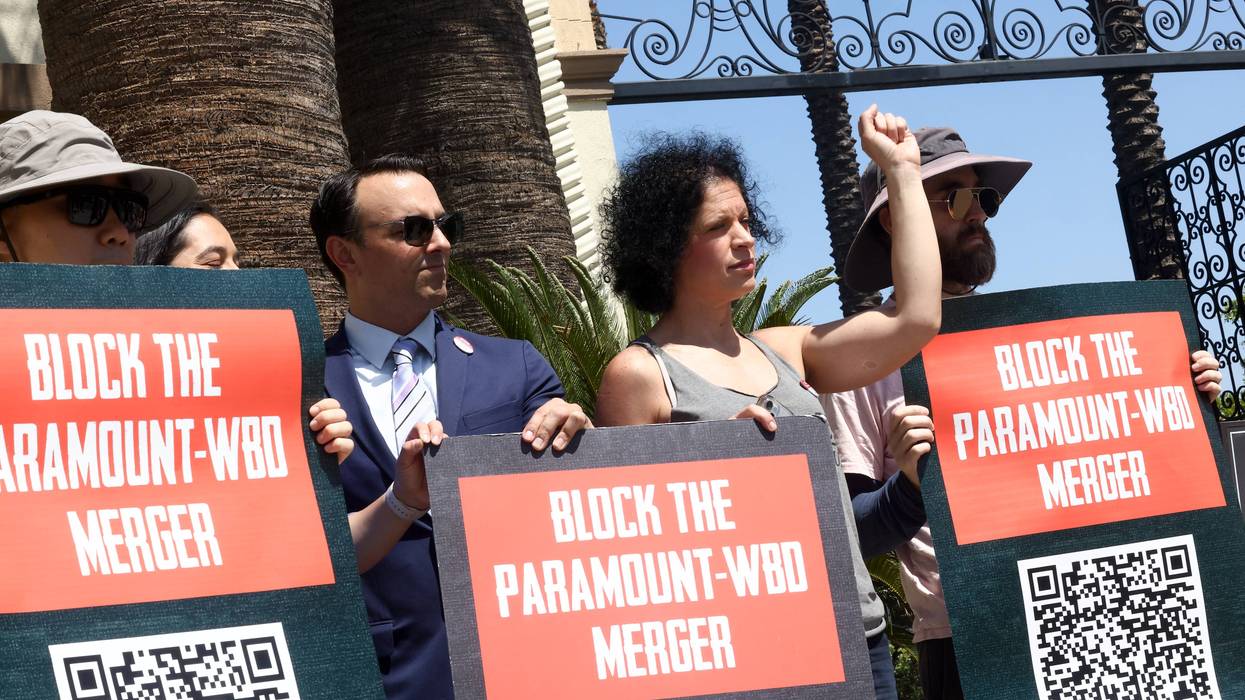
Lina Khan, former head of the Federal Trade Commission, called ongoing settlement talks "troubling."
Paramount and a coalition of state attorneys general led by California's Rob Bonta are reportedly in advanced talks to settle a high-stakes lawsuit and allow the media conglomerate's proposed merger with Warner Bros. Discovery to proceed.
The Wall Street Journal reported late Sunday that Bonta and Paramount executives have "discussed a series of potential concessions" as part of the ongoing settlement negotiations, "including a $1.5 billion investment by the company in production in California." The talks have also explored a potential promise by Paramount to stay in California and a requirement that the company sell off some cable channels and establish "a board to ensure that CNN retains editorial independence," according to the Journal. (Warner Bros. is CNN's parent company.)
Lina Khan, the former head of the Federal Trade Commission, was among those raising concerns about details trickling out of settlement talks between state attorneys general and Paramount, which is led by David Ellison—the son of billionaire Republican megadonor Larry Ellison. In a social media post, Khan wrote that the proposed megamerger "seems facially illegal, and the state AG lawsuit challenging it is very strong."
"It’s troubling to hear that the states may now settle for behavioral remedies, allowing the deal to go through subject to various promises from the firms," Khan wrote. "Behavioral remedies routinely fail, and the stakes here are particularly high given that a strong democracy requires open markets for sound journalism and creative expression."
"The states were right to step up," she added, "and I hope they keep fighting to protect this market, its workers, and the millions of Americans who value a free press and a vibrant film industry."
Matt Stoller, an antitrust researcher and author of the BIG newsletter, was more blunt, calling the settlement talks "fucking pathetic."
"Bonta's reputation will never recover," Stoller wrote.
The coalition of 12 state attorneys general sued to block the proposed merger in July after the Trump Justice Department shut down its antitrust investigation into the Paramount-Warner Bros. merger and backed the deal. The Writers Guild of America has also sued over the proposed merger, arguing it "violates federal antitrust law and would cause specific harm to writers."
The state AGs' lawsuit warned that the merger would "extinguish competition between Paramount and Warner Bros. and inflict substantial harm on movie theatres, basic cable distributors, and, ultimately, audiences nationwide," as well as "tens of thousands of workers across the production ecosystem."
Some attorneys general in the coalition are reportedly pushing back against some of the terms sought by Bonta and others. New York Attorney General Letitia James "has been resisting the deal terms and seeking additional protections for workers," according to CNN.
"Connecticut and at least two other states also have reservations about the settlement and are not currently on board," CNN added. "The holdouts are seeking additional remedies from Paramount."
Actor Mark Ruffalo, one of the most prominent opponents of the megamerger, implored the state attorneys general to reject a settlement deal and take the lawsuit to trial.
"Don't you dare," Ruffalo wrote in a message directed at Bonta. "Do not cave."
"You work for the people," he added, "the very people who will be hurt if you let this lousy deal filled with empty promises go forward."
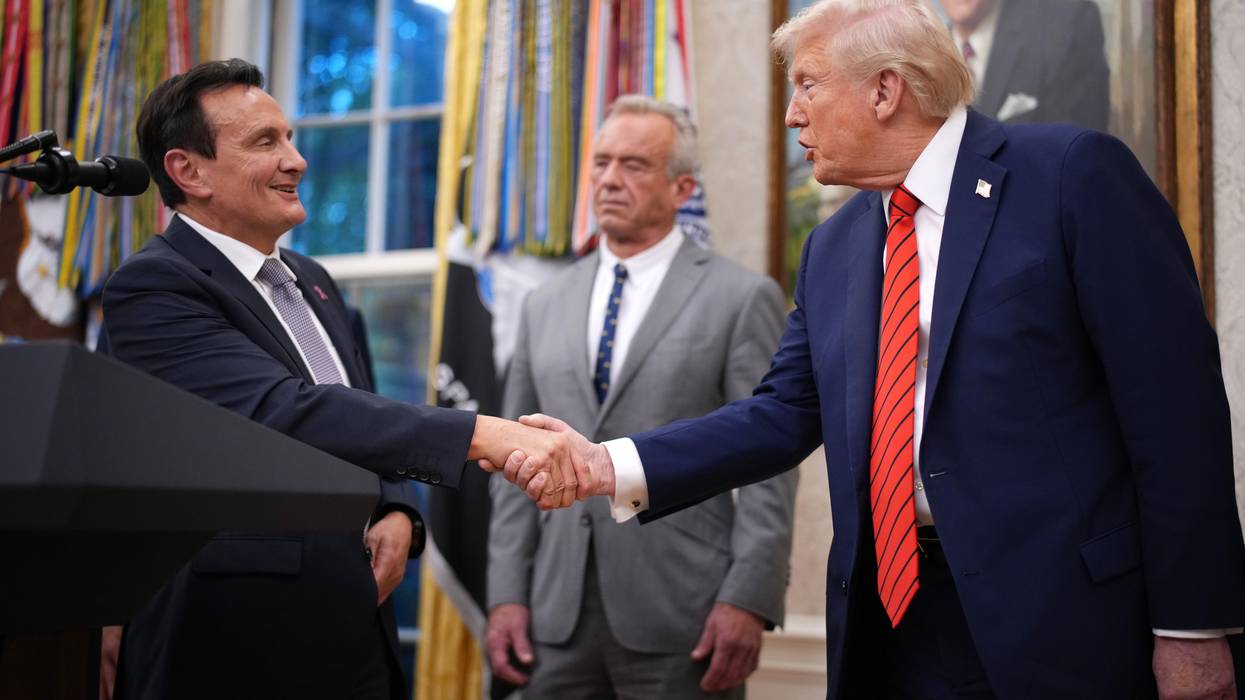
"The Trump team appears to be doing more to protect pharma profits than patients’ pocketbooks,” said Public Citizen.
The Trump administration’s secretive deals with Big Pharma to lower prescription drug prices included benefits for the companies that were not publicly disclosed, according to documents obtained by the consumer advocacy group Public Citizen via a Freedom of Information Act request and published Saturday.
Public Citizen said the deals allow drugmakers to raise prices overseas and limit the scope of promised savings for American patients.
“Trump’s drug pricing deals are a mirage, designed to convince Americans that he’s taken significant action on drug pricing while creating minimal, if any, downside for Big Pharma,” Peter Maybarduk, director of Public Citizen’s Access to Medicines program, said Saturday.
“The texts show Trump handing out favors to Big Pharma, undercutting his own models to lower prices, and throwing the support of the US government behind corporate decisions to deny medicines entirely to other countries,” he added.
Read Public Citizen’s analysis of Trump’s secretive deals with pharma: www.citizen.org/article/publ...
[image or embed]
— Access to Meds | Public Citizen (@pcmedsaccess.bsky.social) September 19, 2026 at 1:19 PM
The disclosures come as President Donald Trump continues to tout his “most-favored nation” (MFN) drug-pricing initiative. On Friday, the administration announced that all 50 states, Washington, DC, and Puerto Rico had applied to participate in a Medicaid program built around MFN pricing, under which participating drugmakers are supposed to offer certain medicines at prices comparable to those charged in other wealthy nations.
However, Public Citizen said the newly disclosed contracts raise questions about how much patients will actually save. The deal with Eli Lilly excludes the company’s blockbuster GLP-1 drugs Mounjaro and Zepbound from the definition of products subject to certain MFN discounts. Public Citizen said a similar carveout for Novo Nordisk could reduce potential Medicaid savings by $1.7 billion.
Eli Lilly’s agreement also permits the company to stop supplying a medicine to another country under certain circumstances, removing that nation’s price from the calculation used to determine the US MFN price.
“That practice threatens patients’ health,” Public Citizen said, adding that such provisions could effectively encourage pharmaceutical companies to make medicines unavailable abroad rather than reduce US prices.
“By agreeing to terms that endorse and facilitate pharma companies discontinuing supplying drugs in other countries, so they can continue to charge US customers more, the Trump team appears to be doing more to protect pharma profits than patients’ pocketbooks,” it said.
Public Citizen also said that the documents do not publicly reveal the full scope of tariff exemptions and other incentives provided to drugmakers, including reported benefits involving expedited US Food and Drug Administration reviews. The Pfizer agreement indicates that the company may share additional revenue generated by higher prices abroad with the US government. But crucial portions are redacted, leaving the public unable to determine how much money is involved, who receives it, or how it would be spent.
“The Trump administration continues to favor secrecy in these limited disclosures under FOIA today,” Maybarduk said, noting that the government has blacked out “the prices, product lists, and information needed to assess whether Trump accomplished anything of substance.”
Public Citizen's disclosures follow months of criticism over Trump's claims that his administration has dramatically reduced drug prices. In August, Sen. Elizabeth Warren (D-Mass.) accused the administration of failing to make the agreements public despite Health and Human Services Secretary Robert F. Kennedy Jr.’s previous commitment to provide them, saying, “still crickets.”
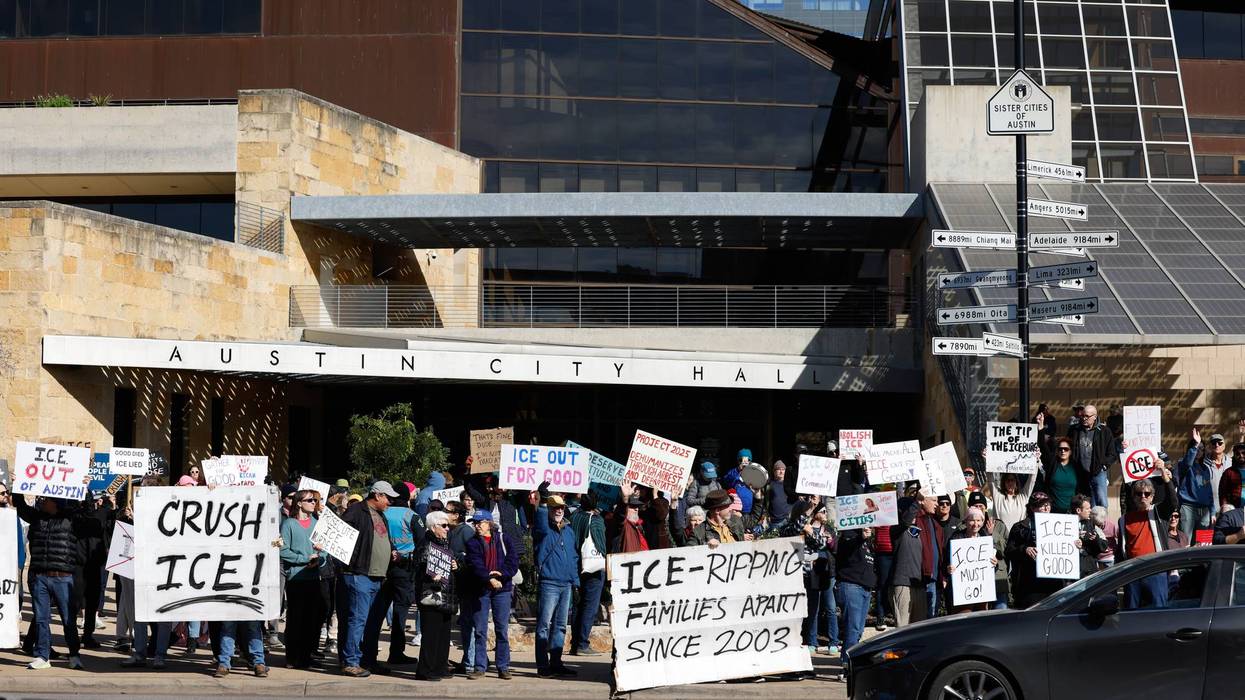
"ICE has been terrorizing our country for far too long," said Congressional Progressive Caucus Chair Greg Casar, who represents the district where the shooting occurred.
An Immigration and Customs Enforcement agent shot and wounded a man in Austin, Texas on Sunday, prompting demands for an independent investigation and renewed calls from progressive lawmakers and activists to abolish ICE amid the Trump administration's deadly immigration crackdown.
Local ABC affiliate KVUE reported that the shooting occurred in the 7000 block of West Anderson Lane, near the intersection of Research Boulevard and Anderson Square. An unidentified man was taken to a hospital. His condition was initially unclear; the Austin American-Statesman later reported that he was alert and talking.
The circumstances leading to the shooting are under investigation.
Independent journalist Emiliano Tahui Gómez spoke with two witnesses.
"Nedevia Bolaños and her husband, Carlos, own a business just off the intersection where the shooting happened," Gómez reported on social media. "Shortly before 1 pm they say they heard what sounded like two gunshots. Carlos ran out first. A blue Toyota sedan and a black Escalade were stopped under the highway."
Carlos said he saw a man who looked like he was in his 30s "leaning backwards against his seat. A masked agent was standing outside the car. The agent refused to answer questions. Within a few minutes, as many as 10 other ICE agents arrived."
Gómez continued:
Carlos asked the victim if he was ok. “Yes,” the man said in Spanish, but he looked exhausted. Carlos asked why they had shot him. “Because I didn’t stop.”
Bolaños ran up next. She said she continuously asked the ICE agents about why they’d shot him and if they were going to render aid. They didn’t answer her. It was an [Austin Police Department] officer who later arrived and cut open the young man's shirt, revealing a deep hole between his shoulder blades.
The ambulance arrived about 10 minutes after and carried him off.
“I’ve never seen all this. Thank God I’m a citizen,” Bolaños said in Spanish. “Or I’d be living like this. In a dream of terror.”
CBS Austin reporter Vinny Martorano said on social media that Austin City Councilman Mike Siegel told him that "an ICE agent, who is well-known in the city’s Latino community, sideswiped the man’s car. Then the officer got out and shot the driver five times through the windshield."
Congressional Progressive Caucus Chair Greg Casar (D-Texas)—who represents the district where the shooting occurred—said on social media that "the horror has come to our city: ICE has shot a person in Austin this morning."
"As the facts emerge, I am demanding a full, independent investigation, immediate release of the body camera footage, and accountability for any ICE officer who broke the law," he continued. "Over and over, ICE has shot people and then lied about what happened. We can see the lies with our own eyes. We will demand truth, transparency, and accountability."
"Just like Americans have from Minneapolis to Houston, Austinites will speak out peacefully against this deadly mass deportation machine," Casar added. "ICE has been terrorizing our country for far too long. We will not be silent."
Breaking: ICE shot and injured a man in Austin, Texas, earlier today. Trump has allowed ICE to flood our streets and put our communities in harms way again and again and Governor Abbott is complicit every time.I am demanding the body camera footage and full accountability.
[image or embed]
— Joaquin Castro (@joaquincastrotx.bsky.social) September 20, 2026 at 1:39 PM
Austin Mayor Kirk, a Democrat, said at a press conference: "I'm very angry about this. I'm extremely unhappy. A person being shot on the streets of Austin by someone purporting to be law enforcement, particularly when it's ICE, is something that causes me to be unhappy and angry about it."
"And while I'm unhappy and I'm angry about it, I'm not surprised at all. It's happened in other cities with the nature of ICE and the way ICE is doing its business these days and the chaos that we see it performing and fomenting. There's no reason for us to be surprised by it."
Texas state Rep. Vikki Goodwin (D-47), who is running for lieutenant governor, said that "this violence cannot continue."
Congresswoman Delia Ramirez (D-Ill.) contended that the US Department of Homeland Security (DHS) "remains the biggest threat to our collective safety."
"This weekend, after abusing and hurting peaceful protesters in Illinois, they have just shot another person in Austin, Texas," she added. "The pattern is clear. The agency can't be reformed. I’ve heard the community: I am ready to melt ICE and dismantle DHS! My colleagues in Congress should be too."
Sunday's shooting came 10 weeks after an ICE agent fatally shot Lorenzo Salgado Araujo, a 52-year-old Mexican man, in Houston. Salgado's death followed a series of shootings involving federal immigration agents, including the January killing of US citizens Renée Good and Alex Pretti in Minneapolis.
A letter sent in July by Democratic lawmakers to DHS officials noted that agents had shot at least 22 people since President Donald Trump's return to office, with six of those shootings fatal. The lawmakers said that in multiple cases, federal authorities had made allegations against shooting victims that were later contradicted by evidence.
More than 50 people have died in ICE custody during Trump's second term.
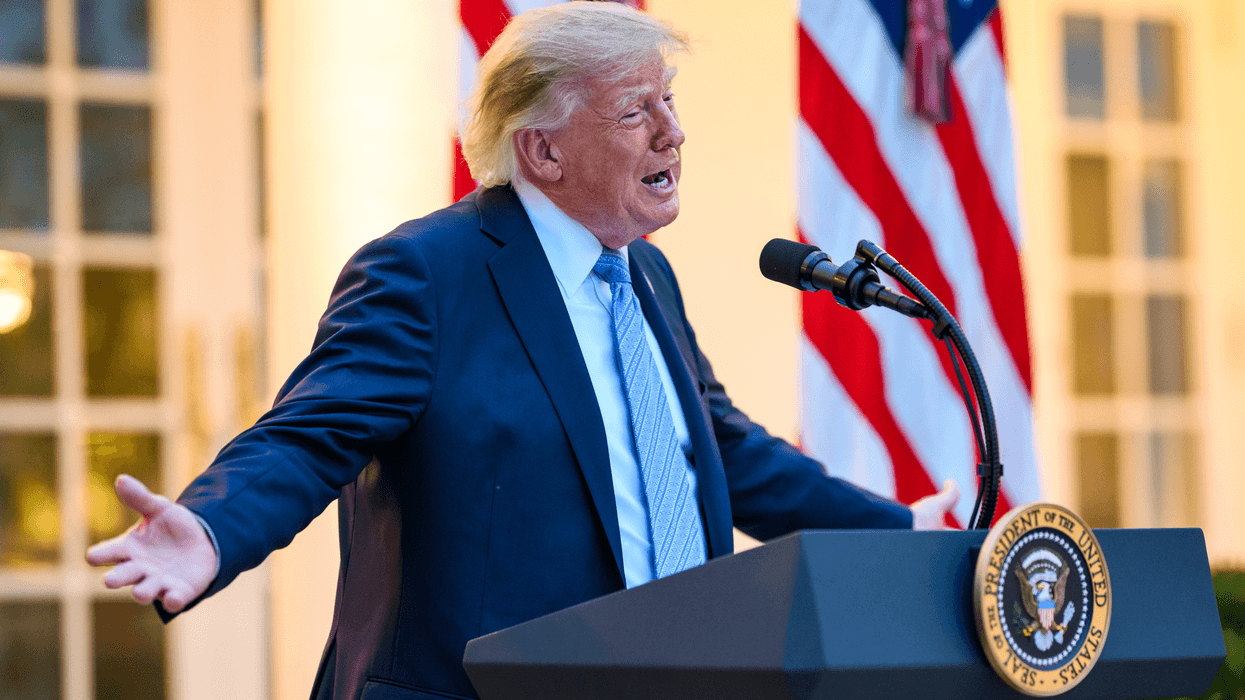
A senior Iranian official said that “our conditions are an end to the war on all fronts, the release of our frozen funds, and an end to the naval blockade."
Three days after saying that he's weighing whether or not to “annihilate” Iran in a bid to end his increasingly unpopular and protracted war against the Middle Eastern nation, US President Donald Trump on Sunday again said that he is deciding if he should destroy the entire country of over 90 million people.
Fox News chief foreign correspondent Trey Yingst reported he "just spoke with President Trump about the situation with Iran" and that the US leader said he's "in a deciding mode and that very big things are going to be happening in the not-so-distant future."
Trump said he is considering three strategies for ending the 204-day war: "wiping Iran out, letting them rot economically, or making a deal."
"My question is, if and when do I blow the entire nation up, they better behave," Trump added, according to Yingst.
Fox correspondent: "The president said the US is in constant communication with the Houthis, and that they've agreed not to fight the United States. But the big headline here is the president said he's in a deciding mode as it relates to Iran, adding that the Iranians better… pic.twitter.com/nCTMRlEvWY
— Aaron Rupar (@atrupar) September 20, 2026
On Saturday, Mohsen Rezaei, the secretary of Iran's Supreme National Security Council, told Al Jazeera that Tehran has conveyed its conditions for ending the war to Qatari mediators and is "awaiting President Trump's response."
“Our conditions are an end to the war on all fronts, the release of our frozen funds, and an end to the naval blockade,” Rezaei added. “It is in Washington’s interest to accept these conditions. Trump’s threats will not achieve any results. We are prepared for a decisive war.”
Iran's military responded to Trump's latest threat by warning US allies Sunday that they will be considered "complicit" if American strikes resume, vowing "painful attacks" in retaliation.
Trump—who has been threatening to destroy Iran since at least 2019—is facing pressure on multiple fronts to end his highly unpopular and illegal war of choice, in which at least 23 US troops have died and tens of thousands of Iranians have been killed or wounded.
Americans are feeling the pain of higher consumer prices, especially for gasoline and diesel fuel, for a war that many say is making the country less safe. Six in 10 US voters queried in a new Fox News poll said Trump was wrong to wage war on Iran, while 7 in 10 respondents believe that his administration has no clear strategy for ending the conflict.
Republican lawmakers are also increasingly expressing dissatisfaction with the war and distancing themselves from the conflict ahead of November's midterm elections, with some going as far as helping to pass a war powers resolution directing Trump to withdraw US forces from hostilities with Iran, and one—outgoing Rep. Thomas Massie of Kentucky—supporting the impeachment of Defense Secretary Pete Hegseth.

"Trump did an incredible job negotiating for things we already had in Greenland," said one US critic.
Danish and international commentators dismissed President Donald Trump's claim that the deal he announced Friday gives the United States "permanent control" over Greenland's security as what one journalist called a "repackaging" of long-standing agreements spun as a foreign policy win.
Trump—who has repeatedly threatened to gain control of the autonomous Danish territory, including by military force—said on his Truth Social network: "I am pleased to announce that the United States of America has entered into an Agreement with The Kingdom of Denmark, and Greenland, that gives the United States permanent control over security, and all other needs, in Greenland, completely addressing ALL of our many US concerns. There will be NO COST to the United States!"
"Additionally, from now on, no US adversary can EVER have a base in Greenland, have a military presence in Greenland, or make sensitive investments in Greenland, without our express written approval," the president continued. "This is an 'Infinite Life' Agreement, there is no end!"
"We look forward to working with the wonderful people of Denmark and Greenland toward a magnificent future with respect to this large, and highly strategic, parcel of land," Trump added. "We will be very protective of it! This is a dream come true for the United States of America, one that is very important, historic, and special."
US Secretary of State Marco Rubio hailed what he called a "historic deal" and "a huge win for the United States and the American people."
A joint statement released by the office of Danish Prime Minister Mette Frederiksen and Jens-Frederik Nielsen, who chairs the Naalakkersuisut—Greenland's governing body—confirmed that "Greenland, Denmark, and the United States are expected to sign an agreement on strengthened security in the Arctic and the North Atlantic area next week" at the United Nations General Assembly in New York.
Frederiksen stressed that the agreement "recognizes the sovereignty and territorial integrity of the Kingdom [of Denmark] and the Greenlandic people’s right to self-determination," while Nielsen said the pact "is to the benefit of us all."
While the official text of the deal is not yet public, observers said it is unclear how it differs from the terms of a Cold War-era agreement that already gives the US broad military access to Greenland.
“In terms of rights, they were already allowed quite a lot under the original agreement,” Mikkel Runge Olesen, a researcher at the Danish Institute for International Studies in Copenhagen, said of the United States in a Saturday interview with The New York Times. “Is there anything here that one could not have achieved without this crisis?”
Trump did an incredible job negotiating for things we already had in Greenland.
— Ron Filipkowski (@ronfilipkowski.bsky.social) September 18, 2026 at 6:10 PM
University of Maryland government and politics professor David Karol said on Bluesky that "this seems to be largely a rebranding of the status quo to claim a win."
Karol likened the Greenland deal to the United States-Mexico-Canada Agreement that replaced the Clinton-era North American Free Trade Agreement—which Trump called the "worst trade deal ever made"—during the president's first term. Critics noted that differences between the two pacts were "mostly cosmetic," as one expert put it.
As the illegal US-Israeli war of choice against Iran dragged on with no end in sight, the US president also pursued a deal to end the conflict that observers noted was broadly similar, and even more favorable to Tehran, to the Joint Comprehensive Plan of Action—better known as the Iran nuclear deal—signed during the Obama administration and unilaterally abandoned by Trump during his first term, despite Iranian compliance.
Sofie Pultz, an international policy research fellow at the progressive UK think tank Institute for Public Policy Research, told LBC on Saturday that "it does sound like the Americans have accepted a repackaging of all deals and agreements, maybe with Denmark footing some of the defense bill. But overall, there's not a lot of new stuff in here."
Some Danish commentators were more blunt in their assessment of the deal. Henrik Højgaard Sejerkilde wrote for Jyllands-Posten that “everything suggests that Donald Trump’s agreement on the military presence in Greenland is a flea market find, found in diplomatic recycling.”
Other Danish observers expressed relief that what many viewed as an utterly unnecessary clash between two NATO allies has seemingly been defused.
"One can hope that the crisis of Greenland ends here—but one can never be sure," Jacob Heinel Jensen of the Danish daily newspaper Berlingske said. “There is reason to be cautiously optimistic that this nonsense of taking over Greenland is now over. But with Trump, you can never be sure."

"When the federal government puts fear between people and the ballot box, that is voter intimidation—plain and simple."
A coalition of civil rights and labor groups led by the NAACP sued the Trump administration Friday in a bid to prevent armed federal agents from being deployed at or near polling places during November's midterm elections, warning that the threatened presence of such officers could intimidate voters of color and repress turnout.
The lawsuit was filed in the US District Court for the District of Columbia by the NAACP, National Urban League, Mi Familia en Accion, OCA-Asian Pacific American Advocates, SEIU, American Federation of Teachers, International Union of Painters, and United Food and Commercial Workers International.
The complaint names senior Trump administration officials as defendants, including Homeland Security Secretary Markwayne Mullin, Attorney General Todd Blanche, FBI Director Kash Patel, and White House border czar Tom Homan. The lawsuit seeks an order barring the administration from "deploying agents in a manner that unlawfully intimidates voters or anyone urging or aiding voters."
The plaintiffs are represented by the Legal Defense Fund, Asian American Legal Defense and Education Fund (AALDEF), Brennan Center for Justice at NYU Law, LatinoJustice PRLDEF, National Immigration Law Center, Protect Democracy, and Democracy Defenders Fund. They argue that the administration's policies and statements have created a reasonable fear among Black, Latino, Asian American, naturalized, immigrant, and mixed-status voters that they could face questioning, surveillance, detention, or force while voting.
Asked in May whether he would send National Guard troops or ICE agents to polling locations, President Donald Trump refused to rule out such a move, saying that he would “do anything necessary to make sure we have honest elections.”
Other senior administration officials have similarly refused to rule out the deployment of federal forces to polling places in the name of fighting voter fraud—which is extremely rare.
The Justice Department, meanwhile, has denied that it is preparing to send agents to polling places. Spokesperson Kiersten Pels called such suggestions "fearmongering," while Mullin has said ICE would not patrol polling locations.
The coalition is suing under Section 11(b) of the Voting Rights Act, which prohibits intimidation, threats, or coercion of people for voting or attempting to vote, as well as those assisting others in voting.
“All American voters have the sacred right to have a voice in our democracy, and should be able to exercise that right freely and without fear,” said Janai Nelson, president and director-counsel of the Legal Defense Fund.
“Using federal law enforcement as a scare tactic to target and intimidate Black communities is illegal and antithetical to the promise of a multiracial democracy that was enshrined in the Voting Rights Act," Nelson added. "Neither Black, Latino, Asian, or any other voters nor any other communities should ever again face the threats of terror and intimidation at the ballot box that defined the Jim Crow era.”
“We are experiencing a level of voter intimidation like we haven’t seen since the civil rights era."
AALDEF executive director Bethany Li asserted that "when the federal government puts fear between people and the ballot box, that is voter intimidation—plain and simple."
“We are experiencing a level of voter intimidation like we haven’t seen since the civil rights era, when local governments and the KKK openly intimidated Black voters," Li added. "This time, it is the federal government ordering ICE and other federal law enforcement to intimidate naturalized citizen voters and immigrant communities. In 2026, voters should not have to choose between their safety and their right to vote.”
NAACP general counsel Kristen Clarke said the threatened deployment would turn polling places into "militarized zones."
"Turning the fundamental right of exercising our vote into a high-stakes encounter with the militarized strong arm of the current administration isn't protection and it isn't oversight; it's disenfranchisement, period," she argued.
The lawsuit comes one week after a similar challenge was filed by the League of United Latin American Citizens, UnidosUS, Common Cause, and the city and county of Denver, Colorado. That case cites an 1865 federal law that generally prohibits federal officials from bringing "troops or armed men" to places where elections are being held, except when necessary to repel armed enemies of the United States.
“The Trump administration has been waging a campaign to undermine American elections, and their insinuations that federal law enforcement agents might be at the polls this November are part of that effort,” Jasleen Singh, senior counsel and manager in the Brennan Center’s Democracy Program, said during Friday's announcement of the new suit. “We’re bringing this lawsuit so that voters are protected against intimidation and can have their voices heard.”

"When the government hides the true cost of its war, it misleads the country and dishonors the fallen," said one veterans' group.
The Trump administration—which calls itself the "most transparent administration in history"—is once again under fire for its lack of transparency after The Washington Post on Friday published a report in which US officials said more American troops have died during the Iran War than the Pentagon has disclosed.
Five officials familiar with the Pentagon's internal casualty accounting told the Post under condition of anonymity that at least 22 US service members have died since Trump launched the Iran War on February 28—four more than the 18 fatalities currently listed in the Pentagon's public Defense Casualty Analysis System, or DCAS. A sixth official put the number at 23.
The officials said that not all of the additional deaths were necessarily caused directly by Iranian attacks, but rather involved US personnel stationed in the Middle East.
The report raises questions regarding transparency, as well as the military's line-of-duty investigations following service member deaths that can affect survivors' benefits.
Retired US Army Brig. Gen. Steve Anderson asked some of those questions in a Friday Substack post directed at Hegseth and calling the reported obfuscation an "unforgivable sin":
Responding on social media to the Post report, US Defense Secretary Pete Hegseth wrote, "This is DISGUSTING and FAKE. A complete LIE."
"Shame on The Washington Post—they’re worse than Iranian state media," Hegseth added.
Hegseth's denial follows earlier controversies over the Pentagon's casualty reporting.
In July, the department's public database briefly excluded four US service members killed during renewed fighting, even though the Pentagon had separately announced the deaths. Officials subsequently blamed the discrepancy on technical problems.
Also in July The New York Times revealed that the Pentagon hid dozens of US military injuries from Iranian strikes on bases in Jordan.
Sen. Tammy Duckworth (D-Ill.), a disabled Iraq War veteran, wrote on Bluesky in response to the Post report that "22 of our service members have been killed in Trump's illegal war. Not 18 like we were told."
"The Pentagon hid four more heroes' deaths from us for months," she added. "Congress cannot let them get away with this."
To that end, Duckworth and other Democratic lawmakers in both the House and Senate have introduced legislation aimed at preventing the Pentagon from manipulating troop casualty data.
Last month, Duckworth led 17 upper chamber colleagues in introducing the Honoring the Sacrifices of Our Troops in War Act, which her office said came partly in response to the Trump administration's "shameless attempt to downplay the damage done and evade accountability to the American people."
Outgoing Congressman Thomas Massie (R-Ky.) on Thursday separately moved to force a House vote on impeaching Hegseth, accusing the defense secretary of violating provisions of the War Powers Resolution by continuing hostilities without congressional authorization.
After several failed attempts, both houses of Congress in June passed a war powers resolution directing Trump to withdraw US forces from hostilities with Iran. Trump did not comply.
The number of US troops killed and wounded in the Iran War pales in comparison to Iranian casualty figures. Thousands of Iranians—including more than 3,500 civilians, more than 380 of them children—have been killed and tens of thousands more wounded by US and Israeli attacks since February 28, according to Iranian and international officials.
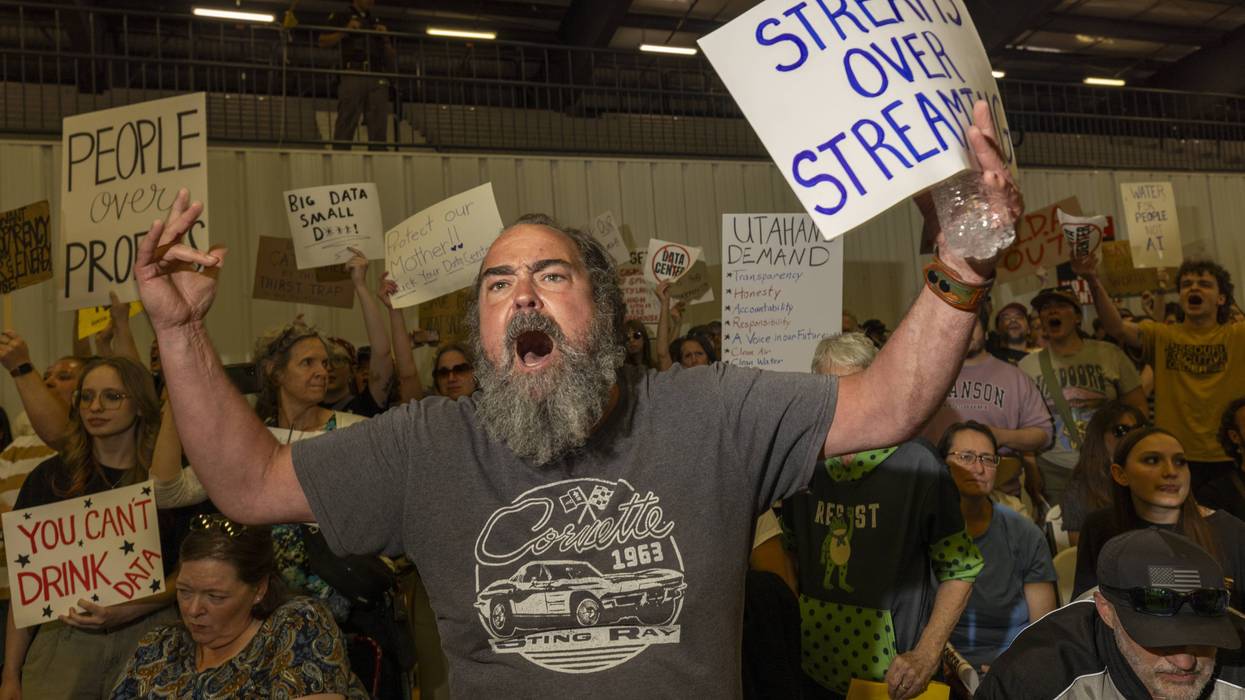
One expert asserted that "the tax breaks are a windfall rewarding Big Tech companies for building what they would build anyway."
The Trump administration is considering construction of at least a dozen artificial intelligence data centers on thousands of acres of public land across six Western states, reporting revealed Friday, while a separate analysis found that Big Tech is receiving tens of billions of dollars in tax breaks for AI investments they were already likely to make.
The US Bureau of Land Management (BLM) is reviewing proposals for at least 12 data centers and related infrastructure projects on 17,600 acres of public land across Arizona, Idaho, Nevada, Oregon, Utah, and Wyoming, according to an investigation published Friday by The Washington Sun's Mara Hoplamazian and Jade Lozada. Many of the proposals had not previously been publicly reported.
The Sun's report came on the heels of an Institute on Taxation and Economic Policy (ITEP) analysis published Thursday that found that five major technology companies—Amazon, Alphabet, Meta, Microsoft, and Oracle—received approximately $70 billion in federal tax breaks in 2025.
The Trump administration is considering proposals for at least 12 data centers and data center-related infrastructure projects to be built on federal public lands — far more than previously known.
[image or embed]
— The Washington Sun (@washingtonsun.bsky.social) September 18, 2026 at 4:00 AM
Matthew Gardner, who authored the ITEP analysis, wrote that "AI leaders have acknowledged that the demand from other companies for data centers is 'insatiable,' suggesting that the tax breaks are a windfall rewarding Big Tech companies for building what they would build anyway."
According to Gardner:
Few investments in the American economy look less in need of encouragement right now than the hundreds of billions of dollars the world’s largest technology companies are already racing to spend on AI. And it’s hard to think of an investment that American taxpayers value less: Polling shows that Americans dislike data centers, distrust AI, and are concerned about the economic and environmental effects it may bring.
At the same time, Interior Secretary Doug Burgum has directed BLM officials to identify federal lands "ripe for data center development," according to the Sun. State BLM officials were reportedly given only three days to compile lists, with the effort described as a "top priority."
Burgum has also been meeting with Big Tech executives about accelerating data center development, an effort stemming from an executive order President Donald Trump signed in July 2025 directing the federal government to identify lands that could be used for data centers.
Mary Jo Rugwell, president of the Public Lands Foundation—a nonprofit advocacy group—and a former BLM state director, recently accused the Trump administration of “bending [the] knee to the tech oligarchs and letting them do whatever they need to do” without adequate consideration for the impact of data centers on public lands.
Environmentalists warn that building on public land would help tech companies skirt growing public opposition to data centers, which is increasingly transcending the political divide. It would also have outsized consequences for Western states where public lands comprise a disproportionate share of total land area.
“In Oregon, this would be a really bad precedent,” Ben Brint , the senior climate program director at the Oregon Environmental Council, told the Sun. “Some very large percentage of the state is public lands, and if we’re starting to allow that, that’s large swaths of the state that really could be at risk of further development.”
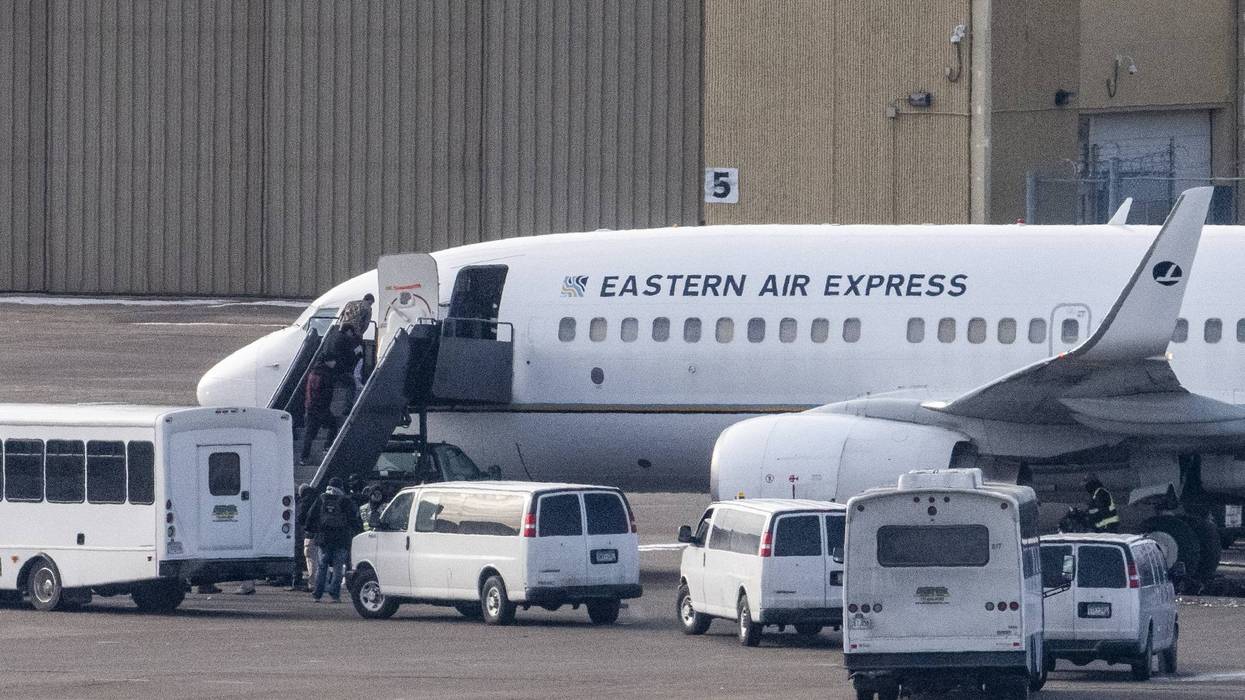
The group believes Ahmed Soliman and Samson Birhane were targeted by police in Equatorial Guinea for speaking out about poor treatment in the hotel they were detained in following their deportation.
As Amnesty International warned that two men are now at risk of being tortured in detention in Equatorial Guinea, where the Trump administration deported them earlier this year under one of several secretive deals, US. Rep. Adelita Grijalva said that the "ultimate responsibility lies with" the White House, which sent the men "into harm's way."
The human rights group issued an urgent appeal, calling on supporters to send letters to the vice president of Equatorial Guinea, Teodoro Nguema Obiang Mangue, saying that that Ahmed Soliman, an Egyptian national, and Samson Birhane, who is from Eritrea, were "beaten and violently taken by police officers from the Hotel Bamy in Malabo," the capital of Equatorial Guinea.
They had been "arbitrarily" held at the hotel along with dozens of other people since US Immigration and Customs Enforcement (ICE) sent them there on deportation flights earlier this year. Soliman and Birhane had protection from refoulement to their countries of origin from US immigration courts, but President Donald Trump's administration has arranged with five governments, through direct payments of tens of millions of dollars in taxpayer money, to send hundreds of migrants to countries where they have never lived—many with records of human rights abuses.
Soliman has publicly spoken out against their arbitrary detention, and international media recently published a video showing a police officer at Hotel Bamy pointing a weapon at him and another man.
Last Friday, days after the video went public, said Amnesty, Soliman and Birhane were "targeted" by police, who arrived at the hotel and took them away briefly.
Amnesty continued in its letter and call to action:
Later during the day police officers went back to the hotel, bringing Ahmed Soliman and Samson Birhane back with them, who had their heads covered with bags tied with a rope. Police officers beat them in their heads, backs, and ribs with their elbows, knees, and guns, asking them where they hid the phones. They pushed one of the men down the stairs of the hotel and said to others that they may never see Ahmed Soliman and Samson Birhane again.
The group wrote that the men were taken "the Malabo gendarmery station known as 'La Luna'" and were accused of breaking a mirror at the hotel.
"Since then, they have not been informed of the charges against them, nor allowed to speak to their lawyers, and are held in an overcrowded police cell, in inhumane conditions," reads the sample letter. "I am concerned that they are at heightened risk of torture."
The New York Times reported that a lawyer who has been able to get some information about Soliman and Birhane's condition said they have been denied food and are "covered in bruises."
"The authorities must immediately release them, inform them of any charges against them, and allow them unimpeded access to counsel," said Amnesty International.
Officials in the Trump administration, said Grijalva (D-Ariz.), "need to take responsibility and demand Ahmed’s immediate release."
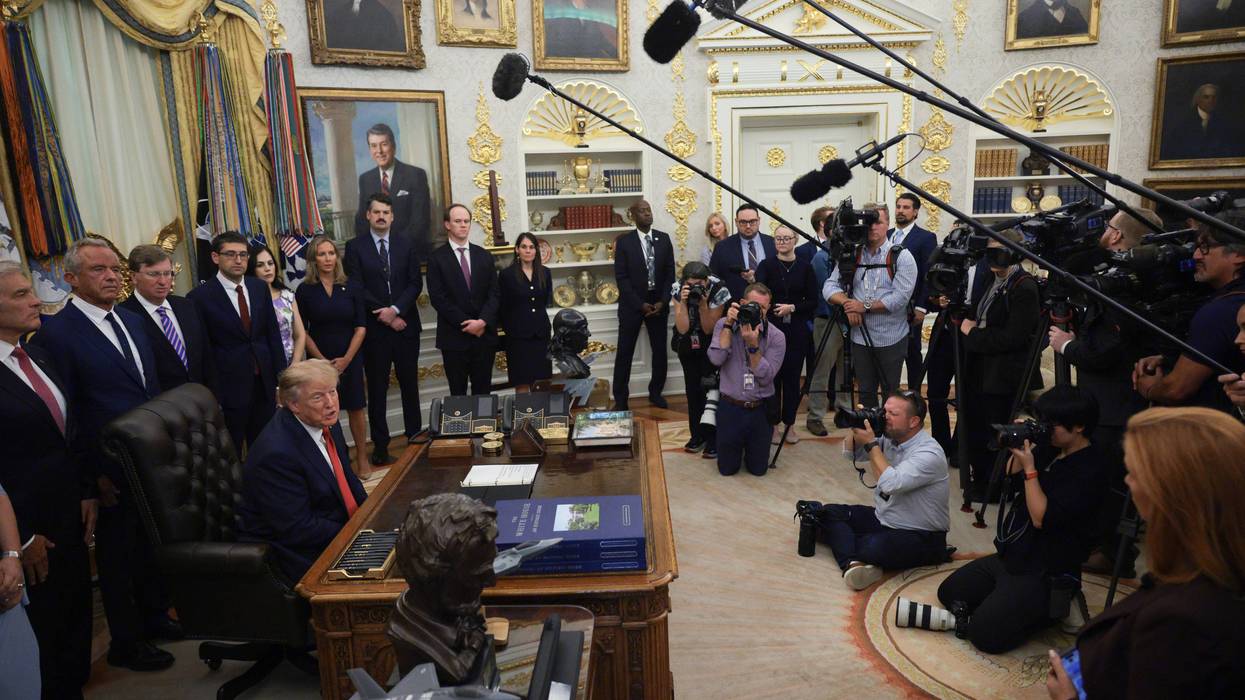
One press freedom advocate said it was "difficult to imagine a more blatant violation of the First Amendment."
In one of his most direct assaults on the First Amendment, President Donald Trump announced in a Friday afternoon tirade that he would ban CNN, MSNOW (formerly MSNBC), and Politico from the White House.
"I am proud to announce that, effective immediately, I am banning Fake News CNN, MSNOW... and Politico from the White House as a result of their constant 'reporting' FAKE NEWS!" the president wrote in a rambling Truth Social post.
"Media Outlets shouldn’t be able to constantly write or report FICTION and LIES when they’re covering the President of the United States, the Trump Administration, or the United States of America," he added, though he did not specify any particular reports he objected to. He added that bans on "Other Fake News Media Outlets" would soon follow.
Trump, who has long portrayed himself as a defender of free speech, has taken unprecedented actions to censor news outlets during his second term, including threatening networks' broadcast licenses through the Federal Communications Commission over unfavorable programming.
As of Friday afternoon, it's unclear whether Trump actually plans to follow through on his White House ban.
Reacting to the news on the air, CNN anchor Brian Stelter said that the network's reporting team "remains at the White House working just like a usual normal Friday afternoon." He added that "right now, there is no indication that the administration is taking any steps to actually follow through on his threat."
"Certainly, if there is an attempt to remove journalists from the White House, well, our cameras are rolling. I think viewers will see it happen," he said.
"CNN stands fully behind our White House team and their fair and accurate reporting," the network said in a statement following news of the ban. "We have a right under the US Constitution to do that reporting without hindrance or interference from the government."
Bruce D. Brown, the president of the Reporters Committee for Freedom of the Press, told Common Dreams in an email Friday that simply banning news organizations from the White House over the content of their reporting "would be flatly unconstitutional."
"The First Amendment is clear that once the White House invites in some journalists, it can't ban others because it doesn't like their reporting," he said. "This is textbook viewpoint discrimination and will be quickly struck down by the courts if challenged."
Federal courts have previously struck down attempts by Trump to bar certain press outlets on First Amendment grounds. Last year, a judge ruled that Trump's removal of the Associated Press from the White House press pool for its refusal to adopt the name "Gulf of America" for the Gulf of Mexico was an unconstitutional form of viewpoint discrimination.
Defense Secretary Pete Hegseth's rule banning reporters from obtaining information not authorized by the Pentagon, which led dozens of journalists to turn over their press badges and walk out of the building in protest, was also struck down as a violation of press freedom.
In light of these previous failures, Jameel Jaffer, the executive director of the Knight First Amendment Institute at Columbia University, expressed bewilderment that Trump was once again trying to ban news outlets from the White House.
"With so many courts having ruled against him on exactly this point, you’d think President Trump would have learned this lesson by now," he said in a statement.
Seth Stern, chief of advocacy at the Freedom of the Press Foundation, agreed it was "difficult to imagine a more blatant violation of the First Amendment than Trump banning news outlets from the People’s House for criticizing the government."
"It’s also hard to imagine a dumber move," he said. "The historically unpopular president has been retaliating against the press for years, but it hasn’t helped him. The press keeps exposing his corruption and his failures. These outrageous attacks only demonstrate how scared he is of an informed public."
He added that the press must "fight back to protect their rights, not only to access the White House but to access the public records and whistleblowers this administration so desperately wants to keep from them."
Trump's announcement was met with outrage from Democrats in Congress, who described it as an assault on a basic constitutional freedom.
Sen. Mark Warner (D-Va.) responded to the news simply by posting the full text of the First Amendment on X.
"Fascist and communist governments limit press access to only favorable outlets, persecute journalists, and suppress truthful reporting," said Rep. Jim McGovern (D-Mass.) in a post to social media. "Trump’s administration is doing all of that."
Sen. Ruben Gallego (D-Ariz.) agreed the move was "straight out of the authoritarian playbook."