

SUBSCRIBE TO OUR FREE NEWSLETTER
Daily news & progressive opinion—funded by the people, not the corporations—delivered straight to your inbox.
5
#000000
#FFFFFF
To donate by check, phone, or other method, see our More Ways to Give page.
Daily news & progressive opinion—funded by the people, not the corporations—delivered straight to your inbox.

The Leadership Conference on Civil and Human Rights and 155 civil and human rights groups today called upon the Executive Branch to respond more quickly and forcefully to hate-based incidents, which have been occurring at an alarming rate in recent months. The statement follows:
"Our diversity is part of what makes America great, and incidents motivated by hate are an affront to the values we share. No one should face acts of violence or intimidation because of their race, ethnicity, religion, sexual orientation, gender, gender identity, disability, or national origin.
The Leadership Conference on Civil and Human Rights and 155 civil and human rights groups today called upon the Executive Branch to respond more quickly and forcefully to hate-based incidents, which have been occurring at an alarming rate in recent months. The statement follows:
"Our diversity is part of what makes America great, and incidents motivated by hate are an affront to the values we share. No one should face acts of violence or intimidation because of their race, ethnicity, religion, sexual orientation, gender, gender identity, disability, or national origin.
Just this year, we have seen an alarming increase in accounts and reports of hate-based acts of violence and intimidation. Some recent examples include:
While we welcome President Trump's remarks to the joint session of Congress, where he noted 'we are a country that stands united in condemning hate and evil in all of its very ugly forms,' it was the first public acknowledgement he had made on specific recent events. It is clear that the President has been slow to respond to hate incidents, when he has responded at all. We strongly believe the President has a moral obligation to use his bully pulpit to speak out against acts of hatred when they occur.
Moreover, the President and his surrogates have too frequently used rhetoric and proposed and enacted policies that have fostered a hostile environment toward many, including African Americans, Muslims and those perceived to be Muslim, and immigrant and refugee communities. The President cannot condemn hate in one sentence and then in the same speech, promote falsehoods that can lead to bias and hate violence.
We as a nation are stronger when we are inclusive. We encourage the President, his staff and members of his Cabinet to condemn hate incidents when they happen. We appreciate Secretary of Homeland Security Kelly's recent condemnation of these acts and his pledge for support and outreach by the Department's Office for Civil Rights and Civil Liberties. Especially given the unique obligations and responsibilities of the Department of Justice, we strongly urge Attorney General Sessions to take similar actions.
We also urge the President to continue the tradition of a White House interagency task force on hate violence, and make available the full resources of the federal government to track and report hate crimes, to investigate and prosecute the perpetrators, and to aid affected communities. Our inclusive democracy demands no less."
Signed,
The Leadership Conference on Civil and Human Rights
9to5, National Association of Working Women
The Aafia Foundation
AAUW
ACRS
The African American Policy Forum
American Association for Access, Equity and Diversity
American Constitution Society for Law & Policy
American Federation of Teachers
American Islamic Congress
American-Arab Anti-Discrimination Committee
Americans for Democratic Action (ADA)
Americans United for Separation of Church and State
Amnesty International USA
Anti-Defamation League
Arab American Institute
Arizona Asian Chamber of Commerce
Asian & Pacific Islander American Health Forum
Asian American Legal Defense and Education Fund (AALDEF)
Asian American Organizing Project
Asian American Psychological Association
Asian Americans Advancing Justice - AAJC
Asian Americans Advancing Justice - Atlanta
Asian Americans Advancing Justice - Chicago
Asian Americans Advancing Justice-Los Angeles
Asian Americans United
Asian and Pacific Islander American Vote
Asian Counseling and Referral Service
Asian Law Alliance
Asian Pacific American Labor Alliance, AFL-CIO (APALA)
Asian Pacific American Legal Resource Center
Asian Pacific American Network of Oregon (APANO)
Asian Pacific American Senior Coalition
Asian Pacific Development Center
Asian Services In Action
Association of Asian Pacific Community Health Organizations (AAPCHO)
AZAPIAVote Table
Bend the Arc Jewish Action
Black Women's Roundtable
Black Youth Vote!
B'nai B'rith International
Center for Asian American Media
Chinese Community Center, Houston
Church of Scientology National Affairs Office
Church World Service
Coalition for Disability Health Equity
Coalition on Human Needs
DC Coalition Against Domestic Violence
Disability Rights Education & Defense Fund
Domestic Worker Legacy Fund
Equal Justice Society
Equal Rights Advocates
Equality California
Farmworker Justice
Global Justice Institute, Metropolitan Community Churches
GLSEN
Hindu American Foundation
Hispanic Federation
Housing Choice Partners
Human Rights Campaign
Human Rights First
Institute for Science and Human Values
Interfaith Alliance
The Interfaith Center of New York
International Association of Official Human Rights Agencies
Islamic Networks Group (ING)
Japanese American Citizens League
Jewish Labor Committee
Labor Council for Latin American Advancement
Lambda Legal
LatinoJustice PRLDEF
Lawyers' Committee for Civil Rights Under Law
League of United Latin American Citizens
Matthew Shepard Foundation
MiNDS & the #Beyond2016 Initiative
Muslim Advocates
NAACP
NAACP Legal Defense and Educational Fund, Inc.
NANAY Community Economic Development Corporation
National Action Network
National Association of Councils on Developmental Disabilities
National Association of Human Rights Workers
National Association of Social Workers
National Bar Association
National Black Justice Coalition
National CAPACD
National Center for Law and Economic Justice
National Center for Lesbian Rights
National Center for Transgender Equality
National Coalition Against Domestic Violence
National Coalition on Black Civic Participation
National Collaborative for Health Equity
National Council of Asian Pacific Americans (NCAPA)
National Council of Churches
National Council of Jewish Women
National Council on independent living
National Disability Rights Network
National Domestic Workers Alliance
National Education Association
National Employment Law Project
National Fair Housing Alliance
National Hispanic Media Coalition
National Immigration Law Center
National Iranian American Council
National Korean American Service & Education Consortium (NAKASEC)
National LGBTQ Task Force
National Network for Arab American Communities
National Organization for Women
National Partnership for New Americans
National Partnership for Women and Families
National Religious Campaign Against Torture
National Women's Law Center
National Youth Employment Coalition
NETWORK Lobby for Catholic Social Justice
New Mexico Asian Family Center
OCA
OCA Greater Houston
Ohio Council of Churches
OneAmerica
People For the American Way
PFLAG National
PolicyLink
Poligon Education Fund
Population Connection Action Fund
Presbyterian Feminist Agenda
Presbyterian USA
Pride at Work
Progressive Congress Action Fund
Project Vote
Public Advocates Inc.
Retail, Wholesale and Department Store Union
The Revolutionary Love Project
SABA North America
Service Employees International Union
Sikh American Legal Defense and Education Fund (SALDEF)
The Sikh Coalition
South Asian Americans Leading Together (SAALT)
South Asian Bar Association of North America
South Asian Fund For Education, Scholarship & Training (SAFEST)
Southeast Asia Resource Action Center (SEARAC)
Southern Poverty Law Center
State Innovation Exchange (SiX)
TASH
Transformative Justice Coalition
The Trevor Project
T'ruah: The Rabbinic Call for Human Rights
Union for Reform Judaism
United Church of Christ, Justice and Witness Ministries
United Church of Christ, OC Inc.
The United Methodist Church - General Board of Church and Society
The Voter Participation Center
We Belong Together
Women's League for Conservative Judaism
Women's Voices.Women Vote Action Fund
Woodhull Freedom Foundation
YWCA USA
The Leadership Conference on Civil and Human Rights is a coalition charged by its diverse membership of more than 200 national organizations to promote and protect the civil and human rights of all persons in the United States. Through advocacy and outreach to targeted constituencies, The Leadership Conference works toward the goal of a more open and just society - an America as good as its ideals.
(202) 466-3311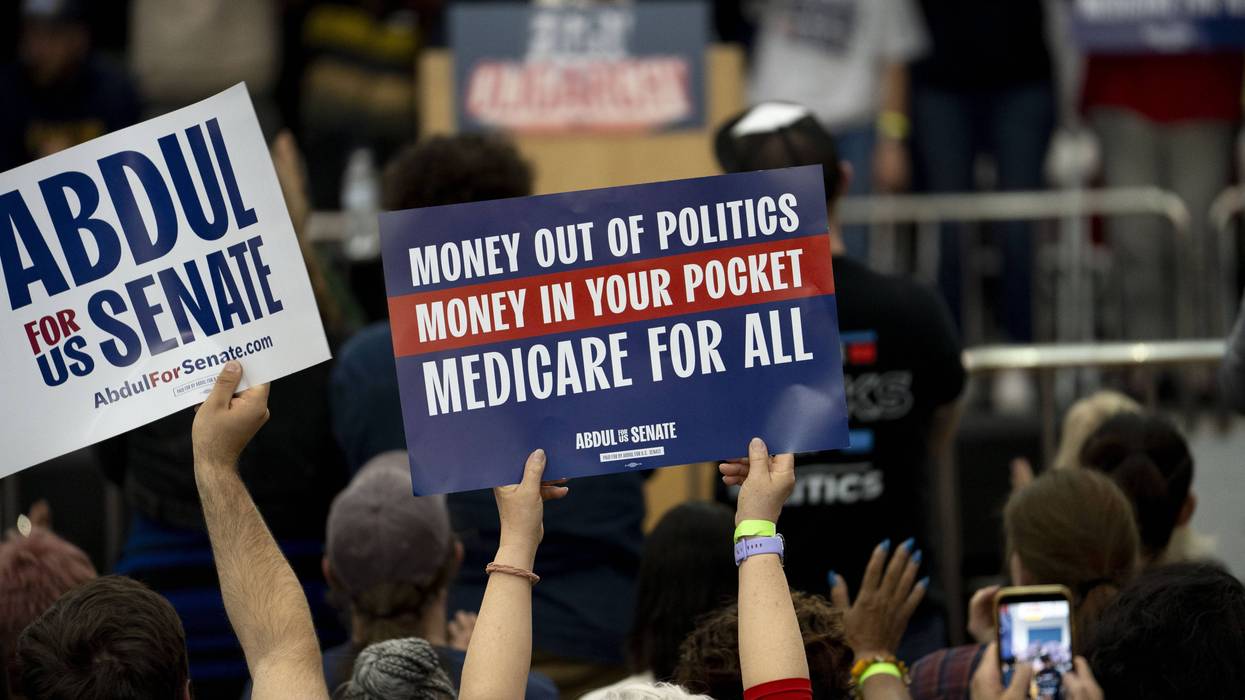
"My votes will never be influenced by AIPAC or any corporate PAC because I don't take money from them," said Abdul El-Sayed.
At Thursday evening's Democratic primary debate on Mackinac Island, Michigan, former public health official and US Senate candidate Abdul El-Sayed suggested the three contenders play a game: "If you're on the stage and you have never taken a corporate PAC check from Blue Cross Blue Shield, raise your hand."
The progressive Medicare for All advocate put his hand up, while his two opponents—US Rep. Haley Stevens and state Sen. Mallory McMorrow—looked on.
El-Sayed's challenge on campaign donations from the for-profit healthcare industry followed McMorrow's comment that "people can't afford to wait for a revolution that may never come"—a remark on progressives' push to expand the existing Medicare program to the entire population that, as journalist David Sirota said, appeared recycled nearly verbatim from former US presidential candidate "Hillary Clinton's talking points from a decade ago."
The people of Michigan are sick and tired of politicians who tell us what we can't have and shouldn't fight for...
We can fight for a world where everybody can be guaranteed healthcare. pic.twitter.com/AoqNVoI4zl
— Dr. Abdul El-Sayed (@AbdulElSayed) May 28, 2026
"Well, I'll tell you this, the revolution is definitely not coming if we're not fighting for it," El-Sayed said in response to McMorrow. "Anyway, all of that is to say, I think we really can fight for a world where everybody can be guaranteed healthcare."
"It is important for us to recognize that all of these issues go back to how we finance campaigns," he added.
According to state and federal campaign finance records, Stevens' US House campaign took $2,500 from Blue Cross Blue Shield's political action committee (PAC) last year, while McMorrow took $5,500 from the PAC over the course of six years.
"The only reason we do not have Medicare for All," said Rep. Ro Khanna (D-Calif.), who has endorsed El-Sayed, "is the corruption of private health insurance money and Democrats who have been unwilling to fight for it."
One observer pointed to a recent poll showing 65% of voters support a Medicare for All system, and emphasized that "the revolution in healthcare is here despite what Mallory McMorrow thinks."
"We just need dedicated fighters like Abdul El-Sayed to make it a reality," they said.
Along with campaign donations from the for-profit healthcare industry, the topic of the powerful but increasingly toxic pro-Israel lobby came up when moderator Nolan Finley asked the candidates how they decide "how much influence" their donors have "over what you do, how you cast your vote."
"Haley Stevens, you take money from [the American Israel Public Affairs Committee]," said Finley. "Walk us through what that money means, and what it buys, and maybe what it doesn't buy."
Stevens responded by expressing her gratitude to various people whom she said had donated to her Senate campaign, including "grocery store workers" and "retired teachers," as well as pointing to political leaders who have endorsed her candidacy—but said nothing in reply to Finley's direct question about how she might be influenced by the more than $5.4 million she's received from pro-Israel lobby groups, including AIPAC, over her political career.
During a Michigan Democratic Senate debate, moderator Nolan Finley calls out Haley Stevens for completely dodging a question on how AIPAC's support of her campaign could influence her votes in the Senate.
"You're also just not answering the question." pic.twitter.com/3dGpQJ6F5R
— Heartland Signal (@HeartlandSignal) May 29, 2026
El-Sayed confronted Stevens for "just not answering the question" before offering his view on what AIPAC and other pro-Israel lobby donations "buys" from lawmakers.
Such contributions ultimately pay for "$3.5 billion sent to a foreign military that can be used here to give classes here, to provide healthcare here, to build schools here," said El-Sayed, referring to the military funding the US provides to Israel each year—including at least $16.3 billion the government has sent to Israel since it began its assault on Gaza in October 2023, helping the Israel Defense Forces to kill more than 75,000 Palestinians as the country blocked humanitarian aid and destroyed over 90% of residential buildings.
Resources for Michigan and other US states, said El-Sayed, is "where our money should be used.”
As The Detroit News reported Thursday, AIPAC has not directly sent donations to Stevens' campaign during the Senate election, but has instead appealed to its direct donors to also send contributions to Stevens.
More than 30% of donors who gave at least $200 to Stevens' campaign also donated to AIPAC since the beginning of 2025, according to The Detroit News' investigation—"well above her current primary opponents and her own benchmarks from prior US House bids."
AIPAC's apparent effort to direct its supporters to also back Stevens is legal under campaign finance law, but Ryan Grim of Drop Site News argued that the group's use of "obvious backdoor vehicles to move money to Haley Stevens only ends up making her look more corrupt."
AIPAC is hosting a fundraising page on its website, "paid for and authorized by Stevens' campaign," according to The Detroit News, while ensuring its name is not attached to the donations that are sent to the candidate through the page. Since Israel began attacking Gaza, approval of both the Israeli government and AIPAC have plummeted, particularly among Democratic voters.
Ahead of the debate, Stevens took umbrage at being asked about AIPAC's efforts to direct contributions to her campaign.
“I’m not breaking [Federal Elections Communications] laws by any stretch of the means," said Stevens. "Look, why would you ask me that question, first of all?”
Haley Stevens when pressed about AIPAC quietly funneling a massive chunk of donations to her camping and tens of millions of outside expenditures:
"Why would you ask me that question?" 💀 pic.twitter.com/LGGBeU9bJK
— umichvoter (@umichvoter) May 28, 2026
At the debate on Thursday, El-Sayed—who has rejected donations from corporate PACs—explained "what would absolutely not shape my perception" should he win the US Senate race.
"It's AIPAC money, which is being spent already in this race to pump up one of my colleagues on this stage," said El-Sayed. "I'm the only candidate today who didn't ask AIPAC for their support. I don't think that our taxpayer dollars which we pay every April ought to be going to bomb children, to fund bombs and tanks for other countries, when we got kids who can't afford basic things in our own."
Should he be elected to the Senate, he said on social media, "my votes will never be influenced by AIPAC or any corporate PAC because I don't take money from them."

"Taxpayer dollars should serve the American people, not finance political favors or reward blind, and sometimes violent, loyalty to a single politician," said the head of one advocacy group.
A federal judge in Virginia on Friday temporarily blocked the Trump administration from moving to create a so-called "Anti-Weaponization Fund" that would use nearly $1.8 billion in taxpayer money to reward supporters, including people convicted of seditious and violent felonies during the January 6 insurrection.
Judge Leonie M. Brinkema of the Federal District Court for the Eastern District of Virginia issued a 2-page order barring any action “pursuant to the creation or operation of the Anti-Weaponization Fund, which includes the transferring of money to the Fund; the consideration of any claims submitted to the Fund; and the disbursing of any funds from the Fund.”
Brinkema—a nominee of former President Bill Clinton—set a June 12 hearing date for arguments on whether she should extend the pause amid numerous legal challenges to what critics have called a "felon-to-felon slush fund," a reference to President Donald Trump's 34 felony convictions and the serious crimes, including violent assaults on police officers with dangerous weapons, committed by January 6 insurrectionists who were later pardoned by the president.
In January, Trump sued the Internal Revenue Service and Treasury Department for $10 billion over the leak of his tax returns by a former IRS contractor. Trump’s own Justice Department settled the case earlier this month by agreeing to create the roughly $1.776 billion settlement slush fund for people claiming they were unfairly targeted by the government.
January 6 insurrectionists are expected to be among the fund's beneficiaries. Trump was accused of rewarding political violence by granting clemency to roughly 1,500 Capitol attackers, dozens of whom have since been charged or convicted for serious crimes, including child sex crimes, rape, grand larceny, burglary, home invasion, gun violations, death threats against public officials, and fatal DUI incidents.
Brinkema's decision came less than 24 hours after plaintiffs in one of the legal challenges to the fund, who are represented by Democracy Forward, filed a motion for emergency relief. Plaintiffs' attorneys told Brinkema that they’re “already being irreparably harmed by the unconstitutional and unlawful creation of the Anti-Weaponization Fund," and that such harm "will be permanent if the administration takes action, including by irreversibly disbursing funds, before this court can act."
Democracy Forward president and CEO Skye Perryman said following Friday's ruling, "Today, a federal court recognized the urgent need to prevent taxpayer dollars from being distributed through a secretive and unprecedented political compensation scheme before the legality of that program can be fully reviewed by the court."
“This is a victory for transparency, the rule of law, and the American people," Perryman added. "No administration has the authority to spend public money through a political rewards program that Congress never authorized. We look forward to the next stages in this case.”
Case plaintiffs issued a statement following Brinkema's order:
We are pleased that the court granted our request to ensure the administration does not distribute taxpayer funds until our motion has been considered. The court acted quickly to stop this unlawful scheme before money could start flowing out the door. The Trump-Vance administration attempted to create a secretive, taxpayer-funded program that rewards political allies, operates without oversight, and evades the constitutional safeguards that protect our democracy. We are grateful that the court recognized the urgency of the situation and acted to preserve the status quo before further irreparable harm occurred.
Democratic lawmakers welcomed Brinkema's order, with Senate Majority Leader Chuck Schumer (D-NY) calling it "an important win."
"Of all Trump’s corrupt schemes, his insurrectionist slush fund is one of the most depraved," said Schumer, who acknowledged the battle over Trump's fund is far from over. "We’ll keep fighting in the courts and in Congress to make sure this $2 billion giveaway to cop beaters, criminals, and MAGA cronies never sees the light of day."
Congresswoman Pramila Jayapal (D-Wash.) posted on social media: "I’ve said from the start that this is an absolute waste of taxpayer dollars. This needs to be stopped permanently."
Stand Up America executive director Christina Harvey said in a statement that “today’s ruling is a critical reminder that no one is above the law, not even the president of the United States."
"Trump’s $1.8 billion slush fund for his friends and diehard loyalists—including those who tried to overthrow our democracy on January 6—is a blatant abuse of power, and the court rightly blocked it," Harvey added. "Taxpayer dollars should serve the American people, not finance political favors or reward blind, and sometimes violent, loyalty to a single politician."
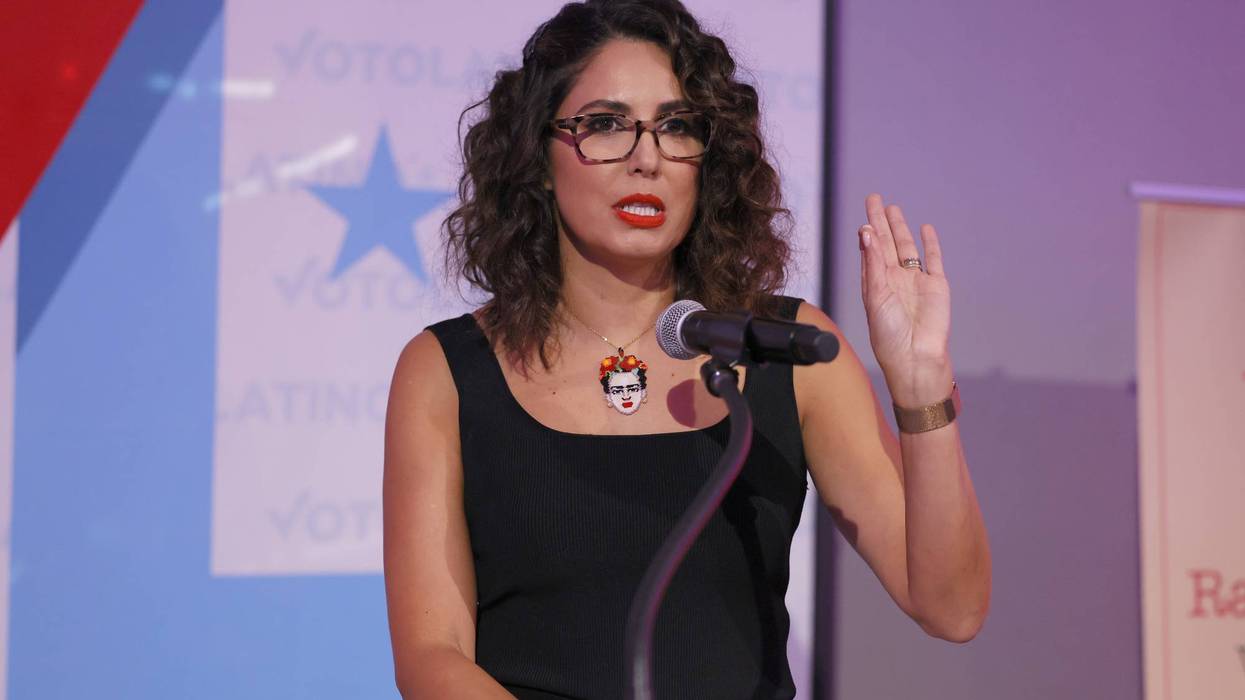
Cecilia Vega, one of several journalists ousted from the show, said many of her colleagues "have had to fight to maintain editorial independence" under CBS News' new Trump-aligned corporate owners.
A group of veteran “60 Minutes” journalists was fired on Thursday as CBS News’ recently installed right-wing editor-in-chief, Bari Weiss, moves to reshape the network in her image. Some of the ousted employees are describing their mass firing as a clear act of political “censorship.”
News had already broken earlier this week that correspondent Sharyn Alfonsi was on the way out after more than ten years on the flagship news program, after she'd publicly criticized Weiss' decision to delay her story on the Trump administration's deportation of immigrants to a notorious Salvadoran torture prison, the Terrorism Confinement Center (CECOT), late last year.
But Alfonsi's departure was rumored to be part of a larger shakeup by Weiss, who has been accused of molding the network into a mouthpiece for the Trump administration following the government-approved acquisition of CBS's parent company, Paramount, by billionaire David Ellison, owner of Skydance.
On Thursday, the hammer finally fell. In addition to the formal firing of Alfonsi, The Washington Post reported that Weiss had also fired Tanya Simon, who’d worked on the show for a quarter-century and had recently taken on the role of executive producer. Correspondent Cecilia Vega—who had also covered CECOT for the network before Weiss' arrival—was canned as well, even though her contract was not set to expire until March 2027. So was executive editor Draggan Mihailovich.
In a memo to staff on Thursday, Weiss and CBS News President Tom Cibrowski said the firings were the result of them “building a show that thrives in the 21st century.”
“That requires a new approach,” they said, outlining their goals of “expanding ‘60 Minutes’ beyond a one-hour television broadcast, deepening its role across CBS News, and holding everything we produce to the ambition, fairness, and fearlessness that have defined ‘60 Minutes’ at its best.”
To fill the role of executive producer, Weiss brought in a network outsider, Nick Bilton, a former technology columnist at The New York Times and producer of documentaries for HBO and Netflix. Weiss called him “one of the most entrepreneurial journalists of our time and the perfect leader for one of the most entrepreneurial news brands of all time.”
Though Weiss reportedly viewed Simon as a “bad leader” who “couldn’t control the staff,” according to one source who spoke anonymously with The New York Post, Simon announced her departure with warm words for those who’d continue working on “60 Minutes.”
“While leadership has decided it is time for a new chapter—I want to be unequivocally clear about one thing: It has been an immense privilege to lead this broadcast, and I could not be prouder of what we have built, fought for, and delivered together over the last year," Simon said in a statement published Thursday. "'60 Minutes' has always been more than just a broadcast: It is an institution built on independence, grit, and rigorous search for the truth.“
But Vega gave a more candid explanation for her and her colleagues' firings.
"In recent months, my producing teams and I have experienced efforts to insert political bias into our stories," she said in a statement Thursday. "Reporting teams have held back on submitting story pitches about important news topics out of fear of the internal repercussions."
"Let's call this what it is: censorship, both imposed and self-driven," she continued. "It is dangerous for the show and dangerous for democracy."
Vega's criticisms mirror those made earlier this week by Alfonsi, who said her firing was "a deliberate choice to penalize a journalist for refusing to sanitize factually accurate reporting."
In December, Weiss abruptly pulled Alfonsi's story featuring the testimony of some of the men who were tortured in the CECOT prison shortly before it was set to air, citing a lack of commentary in the segment from Trump administration officials, who had repeatedly ignored the journalists’ requests for an interview. At the time, Alfonsi said Weiss had effectively given the government a “kill switch” on critical reporting. The segment eventually went to air the next month with some editing.
Following her ouster on Thursday, Vega described her own efforts to oppose what she viewed as politically-motivated meddling by network higher-ups.
"I held the line and refused to incorporate suggestions that offend the conscience," she said. "I know from many conversations with colleagues that many producing teams and correspondents working on the show today have had to fight to maintain editorial independence with regularity."
“I am far from the only ‘60 Minutes’ correspondent who has asked herself, ‘What is my personal red line? How much can I push back before I pay the price?'" Vega added.
She said she was proud of her work at '60 Minutes' and cited her reporting on CECOT for the program, which won a DuPont Columbia journalism award, as one of her finest achievements.
Weiss' overhaul of '60 Minutes' comes as Ellison eyes the merger of Paramount with another major media conglomerate, Warner Bros. Discovery, which owns CNN.
President Donald Trump has said it's “imperative” that any acquisition of Warner Bros. includes CNN and has publicly denounced a rival bid for the company by Netflix.
Earlier this week, Reuters reported that antitrust regulators at the Department of Justice appeared ready to approve a $110 billion takeover by Paramount following meetings with Ellison and other company executives.
A group of journalists—including tech reporter Kara Swisher, former CNN White House correspondent Jim Acosta, and NBC News legal analyst Katie Phang—warned at an event hosted earlier this week by a coalition of press freedom groups that, especially in the wake of Alfonsi's firing, the government-approved consolidation of media posed a dangerous threat to the future of journalistic freedom.
“I think what’s happening right now is pretty dangerous,” Acosta said. “To essentially announce the departure of Sharyn Alfonsi from 60 Minutes is a very in-your-face move by some people who don’t care very much about the First Amendment.”
“Folks need to use a little bit of their imagination here to recognize what may be coming down the pike,” he said, warning that the Trump administration was building a “strange oligarchical empire… attempting to do state media.”