April, 05 2016, 11:30am EDT

France: Inadequate Mental Health Care in Prisons
Detention Conditions, Lack of Treatment Increase Suffering
PARIS
Thousands of men and women with psychosocial disabilities in French prisons are at risk of suicide or harming themselves because of the neglect of their physical and mental health, Human Rights Watch said in a report released today.
The 69-page report, "Double Punishment: Inadequate Conditions for Prisoners with Psychosocial Disabilities in France," documents the lack of adequate mental health care and appropriate conditions for prisoners with psychosocial disabilities. The situation is exacerbated by overcrowding, stigma, and isolation, Human Rights Watch found. A shortage of mental health professionals in many prisons means that appointments are infrequent and often brief and limited to prescribing medication. The lack of adequate conditions and care also results in difficult working conditions for prison staff.
"It's shameful for a country like France to keep people with mental health conditions locked up for months or years in prisons without adequate access to mental health care," said Izza Leghtas, Western Europe researcher at Human Rights Watch. "The lack of adequate mental health treatment effectively amounts to additional punishment for prisoners who need this care."
Human Rights Watch interviewed 50 prisoners, prison staff, and medical professionals in eight prisons, as well as government officials and others.
When their condition deteriorates, prisoners with psychosocial disabilities are in some cases transferred to psychiatric hospitals against their will and isolated in conditions that can constitute cruel, inhuman, or degrading treatment under international law, Human Rights Watch found.
"I prefer 1,000 times to be in a cell than in an isolated room in the hospital, my arms and feet tied down as if I were an animal," said Sarah (pseudonym), a prisoner who has previously been sent to psychiatric hospitals.
Return to the prison environment - without adequate support or appropriate accommodations - can lead to a recurrence of mental health conditions and re-hospitalization, sometimes ensnaring prisoners in an endless cycle of hospitalization, discharge, deterioration, and re-hospitalization. Such a cycle is both harmful to the patient's health and disruptive and costly to the prison and the hospital involved.
Suicide rates in French prisons are higher than in the general population - seven times as high, according to a study of suicides from 2006 to 2009 by the National institute for demographic studies. But prisoners with psychosocial disabilities are more likely to harm themselves or commit suicide than other prisoners. According to the French government, there were 113 suicides in French prisons in 2015.
Sarah, who had scars from self-inflicted wounds on her arms, said people she had met in prison later committed suicide, "So of course I thought, if she can't cope, will I be able to?" she said.
The last comprehensive study of mental health in French prisons was published in 2004. It found that almost a quarter of inmates had psychosis - which can include depression, bipolar disorder, or schizophrenia - much higher than the 0.9 percent among the general population. A frequent explanation is that judges and juries have viewed people with psychosocial disabilities as more dangerous than others and handed down longer sentences.
A 2014 law seeking to rectify that tendency provides that sentences should be reduced by one-third for defendants whose state of mind during a crime was compromised by a mental health condition.
Adeline Hazan, France's general inspector of all places of deprivation of liberty, expressed to Human Rights Watch her concerns about the high number of prisoners with psychosocial disabilities and the lack of appropriate mental health care.
The overcrowding in French prisons - 178 percent of capacity in one prison Human Rights Watch visited - creates difficult working conditions for prison guards who can be responsible for up to 100 prisoners each. They have little time to respond to requests from individual prisoners or to notice signs of mental health conditions. Guards also lack training on mental health, and overcrowding is an obstacle to their ability to attend training that may be available.
Human Rights Watch found particularly harsh conditions for women prisoners. To avoid any contact between men and women, prison officials often restrict women prisoners' movements more than men's, making women feel even more isolated. Female prisoners also face discrimination in their access to mental health care. Only one of 26 specialized mental health care units in French prisons has beds for women.
As a party to the European Convention on Human Rights, France has a duty to ensure that prisoners are detained "in conditions which are compatible with respect for [their] human dignity" and that they are not subjected to hardship or distress beyond "the unavoidable level of suffering inherent in detention," according to the case law of the European Court of Human Rights.
The Convention on the Rights of Persons with Disabilities, which France has ratified, requires French authorities to provide people with disabilities with the highest attainable level of health without discrimination on the basis of their disability, and to provide reasonable accommodation - or appropriate modifications to access services or support. France has also ratified the Convention on the Elimination of Discrimination against Women, which prohibits discrimination on the basis of gender.
The French government should commission a new independent study of the mental health of prisoners and publish more accurate figures on the number of people with psychosocial disabilities in French prisons, Human Rights Watch said. The government should provide appropriate living conditions and ensure that no prisoner with a psychosocial disability is in solitary confinement. France should also address the shortage of mental health professionals in prisons and improve their working conditions.
"Dostoyevsky said that you can judge a society by entering its prisons," Leghtas said. "France has the means to provide dignified conditions to those in prison and can and should do much better when it comes to the way it treats prisoners with psychosocial disabilities."
Human Rights Watch is one of the world's leading independent organizations dedicated to defending and protecting human rights. By focusing international attention where human rights are violated, we give voice to the oppressed and hold oppressors accountable for their crimes. Our rigorous, objective investigations and strategic, targeted advocacy build intense pressure for action and raise the cost of human rights abuse. For 30 years, Human Rights Watch has worked tenaciously to lay the legal and moral groundwork for deep-rooted change and has fought to bring greater justice and security to people around the world.
LATEST NEWS
'Insane This Is Legal': Bettors Make Huge Profits From Suspiciously Timed Wagers on Iran War
"Reminder that Donald Trump Jr. sits on Polymarket's advisory board and his firm invested double-digit millions into the platform last year."
Mar 01, 2026
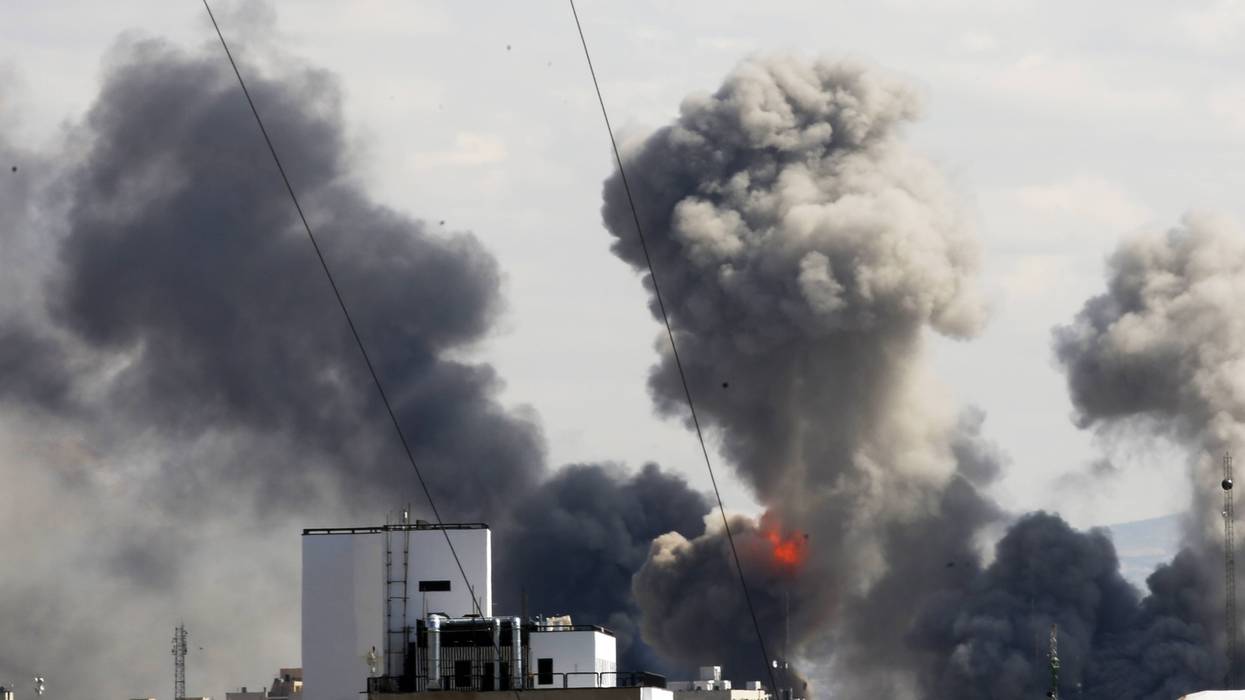
Bettors on the prediction platform Polymarket made a killing with suspiciously timed wagers that the United States would attack Iran by February 28, the day President Donald Trump announced a bombing campaign against the Middle East nation.
Bloomberg reported that six accounts on Polymarket, all newly created this month, "made around $1 million in profit" by betting on the timing of the US attack on Iran. The accounts, according to Bloomberg, "had only ever placed bets on when US strikes might occur," and "some of their shares were purchased, in some cases at roughly a dime apiece, hours before the first explosions were reported in Tehran."
One account with the name Magamyman raked in over $515,000 by betting roughly $87,000 that the "US strikes Iran by February 28, 2026."
The lucrative bets quickly drew scrutiny from lawmakers. US Sen. Chris Murphy (D-Conn.) wrote on social media that "it’s insane this is legal."
"People around Trump are profiting off war and death," Murphy alleged. "I’m introducing legislation ASAP to ban this."
Rep. Mike Levin (D-Calif.) wrote that "prediction markets cannot be a vehicle for profiting off advance knowledge of military action" and demanded "answers, transparency, and oversight."
"Reminder that Donald Trump Jr. sits on Polymarket's advisory board and his firm invested double-digit millions into the platform last year," Levin wrote, referring to the president's eldest son. "The [Justice Department] and [Commodity Futures Trading Commission] both had active investigations into Polymarket that were dropped after Trump took office."
There's no concrete evidence that Trump administration officials or staffers were behind the hugely profitable bets, but the wagers heightened concerns about the possibility of insider trading using increasingly popular prediction market platforms such as Polymarket and Kalshi. Last month, bettors used Polymarket to make big profits on suspiciously timed wagers on when the US would oust Venezuelan President Nicolás Maduro.
Polymarket currently allows users to bet on when Iran will have a new supreme leader, when the US and Iran will reach a ceasefire agreement, and when the US will invade Iran.
The celebrity news tabloid TMZ reported Saturday that "a group at a Washington, DC restaurant was talking openly in the bar area Friday afternoon about a national secret that was about to literally explode hours later—the bombing of Iran."
As journalist David Bernstein noted, that—if true—leaves open the possibility that "these 'insider' bets have been placed by any rich person with good ears in DC."
"Not to mention that for all we know these administration clowns were probably gossiping about it on a text chain with half a dozen people they accidentally invited," Bernstein added. "This is hardly the locked lips brigade we’re dealing with."
Keep ReadingShow Less

Experts Pillory Trump Case for War on Iran: 'Flimsiest Excuse for Initiating a Major Attack' in Decades
"What they posed as the threat they were trying to preempt—an attack by Iran against US forces—is so extremely implausible, it is also laughable," said one analyst.
Mar 01, 2026
Senior Trump administration officials attempted during a briefing with reporters on Saturday to make their case for the joint US-Israeli military assault on Iran that has so far killed hundreds and plunged the Middle East into chaos.
According to experts who listened to the briefing, which was conducted on background, the justification for war was incredibly weak. Daryl Kimball, president of the Arms Control Association, told Laura Rozen of the Diplomatic newsletter that the administration's argument was "the flimsiest excuse for initiating a major attack on another country without congressional authorization, in violation of the UN Charter, in many decades."
During his early Saturday remarks announcing the attacks, President Donald Trump claimed that "imminent threats from the Iranian regime" against "the American people" drove him to act. But Kimball said that administration officials "provided absolutely no evidence" to back that assertion during the briefing.
"What they posed as the threat they were trying to preempt—an attack by Iran against US forces—is so extremely implausible, it is also laughable," said Kimball.
Following the start of Saturday's assault, which Trump explicitly characterized as a war aimed at overthrowing the Iranian government, unnamed administration officials began leaking the claim that Trump feared an Iranian attack on the massive US military buildup in the Middle East, prompting him to greenlight the bombing campaign in coordination with Israel and with a nudge from Saudi Arabia.
Kimball, in a social media post, took members of the US media to task for echoing the administration's narrative. "Reporters need to do more than stenography," he wrote in response to Punchbowl's Jake Sherman.
"The American people were lied to about Iraq. The American people are being lied to again today—and once again, it is ordinary people who will pay the price."
Trump and top administration officials also repeated the longstanding claim from US warhawks that Iran is bent on developing a nuclear weapon, something Iranian leaders have publicly denied—including during recent diplomatic talks. Neither US intelligence assessments nor international nuclear watchdogs have produced evidence indicating that Iran is moving rapidly in the direction of nukes, as claimed by the administration.
Rozen noted that some remarks from administration officials during Saturday's briefing "suggested Trump’s negotiators"—a team that included Jared Kushner and Steve Witkoff—"may not have had the expertise or experience to understand the Iranian proposal to curb its nuclear program." Rozen reported that one administration official kept misstating the acronym for the International Atomic Energy Agency (IAEA), the UN nuclear watchdog.
Trump administration officials, according to Rozen, seemed astonished that Iranian negotiators would not accept the US offer to provide free nuclear fuel "forever" for Iran's peaceful energy development, viewing the rejection as a suspicious indication that Iran was opposed to a diplomatic resolution—even though, according to Oman's foreign minister, Iran had already made concessions that went well beyond the terms of the 2015 nuclear accord that Trump abandoned during his first stint in the White House.
Experts said it should be obvious—particularly given Trump's decision to ditch the previous nuclear accord—why Iran would not trust the US to stick by such a commitment.
The administration's inability to provide a coherent justification for war tracks with the rapidly shifting narrative preceding Saturday's strikes—an indication, according to some observers, that Trump had made the decision to attack Iran even in the face of diplomatic progress and left officials to try to cobble together a rationale after the fact.
In a lengthy social media post, Pentagon Secretary Pete Hegseth insisted war was necessary because Iran "refused to make a deal" and because the Iranian government "has targeted and killed Americans," hardly the claim of an imminent threat push by the president and other administration officials.
Brian Finucane, a senior adviser to the US Program at the International Crisis Group, noted in response that the Trump administration has "sidelined anyone who could articulate... a coherent argument, partly because expertise is deep state and woke and partly because they just don't care."
The result is another potentially catastrophic war that runs roughshod over US and international law, puts countless civilians at risk, and threatens to spark a region-wide conflict.
"President Trump, along with his right-wing extremist Israeli ally Benjamin Netanyahu, has begun an illegal, premeditated, and unconstitutional war," US Sen. Bernie Sanders (I-Vt.) said in a statement on Saturday. "Tragically, Trump is gambling with American lives and treasure to fulfill Netanyahu's decades-long ambition of dragging the United States into armed conflict with Iran."
"The American people were lied to about Vietnam. The American people were lied to about Iraq," Sanders added. "The American people are being lied to again today—and once again, it is ordinary people who will pay the price."
Keep ReadingShow Less
Democratic Leaders Face Backlash Over 'Cowardly' Responses to Trump War on Iran
"As we plunge headlong into another catastrophic war, Sen. Schumer and Rep. Jeffries’ throat-clearing and process critique only serves Trump and the war machine."
Mar 01, 2026
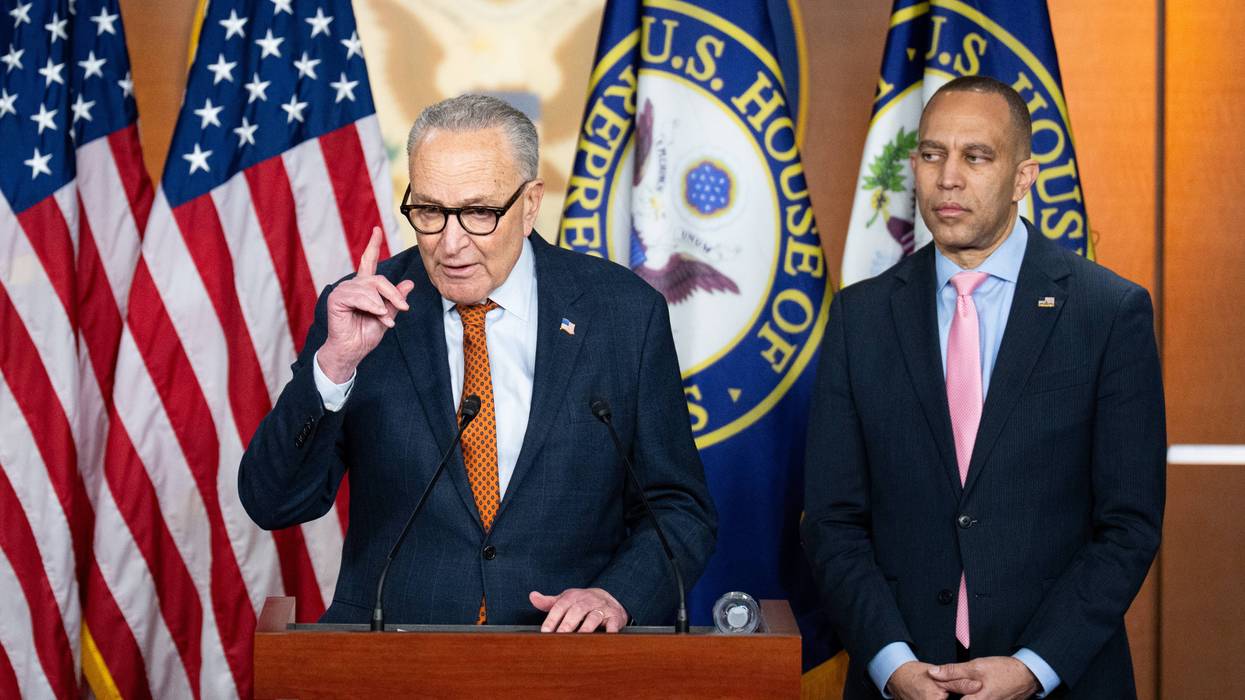
The top Democrats in the US Congress, Senate Minority Leader Chuck Schumer and House Minority Leader Hakeem Jeffries, faced backlash on Saturday over what critics described as tepid, equivocal responses to President Donald Trump's illegal assault on Iran—and for slowwalking efforts to prevent the war before the bombing began.
While both Democratic leaders chided Trump for failing to seek congressional authorization and not adequately briefing lawmakers on the details of Saturday's attacks, neither offered a full-throated condemnation of a military assault that has killed hundreds so far, including dozens of children, and hurled the Middle East into chaos.
Schumer (D-NY)—who infamously worked to defeat the 2015 nuclear deal that Trump later abandoned during his first White House term, setting the stage for the current crisis—said he "implored" US Secretary of State Marco Rubio to "be straight with Congress and the American people about the objectives of these strikes and what comes next."
"Iran must never be allowed to attain a nuclear weapon," he added, "but the American people do not want another endless and costly war in the Middle East when there are so many problems at home."
Jeffries (D-NY), a beneficiary of AIPAC campaign cash, said in his response to the massive US-Israeli assault that "Iran is a bad actor and must be aggressively confronted for its human rights violations, nuclear ambitions, support of terrorism, and the threat it poses to our allies like Israel and Jordan in the region."
"The Trump administration must explain itself to the American people and Congress immediately, provide an ironclad justification for this act of war, clearly define the national security objective, and articulate a plan to avoid another costly, prolonged military quagmire in the Middle East," said Jeffries.
The Democratic leaders' responses bolstered the view that their objections to Trump's attack on Iran are based on procedure, not opposition to war.
This is a disgusting and cowardly statement handwringing about process and the need for a briefing.
No you idiot. This war is a horror and a disaster and must be directly opposed. Any Democrat who can’t say that needs to resign and ESPECIALLY the ones in leadership. https://t.co/CdZoEyNkOy
— Krystal Ball (@krystalball) February 28, 2026
Claire Valdez, a New York state assemblymember who is running for Congress, said that "as we plunge headlong into another catastrophic war, Sen. Schumer and Rep. Jeffries’ throat-clearing and process critique only serves Trump and the war machine."
"Democrats should speak clearly and with one voice: no war," Valdez added.
Schumer and Jeffries both committed to swiftly forcing votes on War Powers resolutions in their respective chambers. But reporting last week by Aída Chávez of Capital & Empire indicated that top Democrats worked behind the scenes to slow momentum behind the resolutions, helping ensure they did not come to a vote before Trump launched the war.
"The preferred outcome of many AIPAC-aligned Senate Democrats, according to a senior foreign policy aide to Senate Democratic Leader Chuck Schumer, is that Trump acts unilaterally, weakening Iran while absorbing the domestic backlash ahead of the midterms," Chávez wrote.
Neither Schumer nor Jeffries backed legislation last year aimed at forestalling US military intervention in Iran.
The top Democrats' responses to Saturday's US-Israeli attacks on Iran, which Trump said would continue "uninterrupted" even after the killing of the nation's supreme leader, contrasted sharply with statements of rank-and-file congressional Democrats—and even some members of leadership—who condemned the president for shredding the Constitution and driving the US into another deadly war that the American public opposes.
Rep. Alexandria Ocasio-Cortez (D-NY), who has been floated as a possible 2028 challenger to Schumer, said Saturday that "the American people are once again dragged into a war they did not want by a president who does not care about the long-term consequences of his actions."
"This war is unlawful. It is unnecessary. And it will be catastrophic," said Ocasio-Cortez. "This is a deliberate choice of aggression when diplomacy and security were within reach. Stop lying to the American people. Violence begets violence. We learned this lesson in Iraq. We learned this lesson in Afghanistan. And we are about to learn it again in Iran. Bombs have yet to create enduring democracies in the region, and this will be no different."
Rep. Rashida Tlaib (D-Mich.), a vice chair of the Congressional Progressive Caucus, was more blunt.
"Congress must stop the bloodshed by immediately reconvening to exert its war powers and stop this deranged president," she said. "But let’s be clear: Warmongering politicians from both parties support this illegal war, and it will take a mass anti-war movement to stop it."
Keep ReadingShow Less
Most Popular