SUBSCRIBE TO OUR FREE NEWSLETTER
Daily news & progressive opinion—funded by the people, not the corporations—delivered straight to your inbox.
5
#000000
#FFFFFF
To donate by check, phone, or other method, see our More Ways to Give page.
Daily news & progressive opinion—funded by the people, not the corporations—delivered straight to your inbox.
Reprieve’s press office: +44 (0) 207 553 8140
An Irish teenager arrested two years ago during the Egyptian military crackdown on a Cairo protest is still awaiting trial.
Ibrahim Halawa, from Dublin, was one of hundreds of people swept up and imprisoned as security forces violently broke up pro-democracy protests in Cairo on August 17th 2013, killing as many as 800 people. Ibrahim , who was 17 at the time, has been imprisoned in poor conditions ever since, and awaits a mass trial alongside 493 other people, including several other juveniles.
Ibrahim is being tried as an adult, in contravention of Egypt's Child Law and international law. Research last year by human rights organization Reprieve, which is assisting him, has found that the Egyptian authorities illegally arrested nearly 200 juveniles in Cairo alone during the crackdown - including children as young as six.
Egypt's system of mass trials has seen thousands of death sentences handed down to protestors, journalists and opposition activists since 2013, and has been condemned by the UN, the US and UK, and Egyptian rights groups. The trial of the 494, which was scheduled to begin in September 2014, has been repeatedly postponed - most recently on August 2nd. International law places strict limits on pre-trial detention, and the long-delayed proceedings have seen repeated violations of the defendants' right to a fair trial.
Writing recently to his family, Ibrahim said he was regularly beaten and was locked in a crammed cell in Wadi Natrun prison, saying: "I am in a room where there is no shower, the window of the door is shut glued to the door, I don't see the sun [...] I wake up every morning to the voices of other prisoners screaming from the hitting and I can hear the beatings so loud."
Commenting, Maya Foa, head of the death penalty team at Reprieve, said: "It is disgraceful that, a full two years after its brutal crackdown on protestors, the Egyptian government continues to drag out its mistreatment of prisoners like Ibrahim, who should never have been jailed in the first place. If Egypt is serious about justice and the rule of law, the authorities must call a halt to this mass trial and others, and free the many people like Ibrahim it is holding unjustly. Now more than ever, the Irish government and international community must call on Egypt to change course."
Reprieve is a UK-based human rights organization that uses the law to enforce the human rights of prisoners, from death row to Guantanamo Bay.

While Sheeran claimed to be adhering to his apolitical brand, one critic argued he was really just "letting a pro-Israel billionaire choose his politics for him."
Singer Ed Sheeran attempted damage control on Tuesday as he faces outrage following news that the rapper Macklemore had been kicked off his US tour over his pro-Palestine remarks at the behest of a pro-Israel NFL owner.
The "Thrift Shop" rapper had generated outrage from supporters of Israel earlier this month after he shouted "Free Palestine" during a performance at MetLife Stadium in New Jersey and performed "Hind’s Hall," a song honoring Hind Rajab, a 5-year-old Palestinian girl who was killed by Israeli forces in Gaza.
New England Patriots owner Robert Kraft, a billionaire with a long history of donating to pro-Israel causes, took credit for blackballing Macklemore on Monday, describing the rapper's Palestine tributes as "hate speech."
The decision to remove Macklemore has been widely criticized, including by the sister of the late country music icon Dolly Parton, Stella, who wrote on social media Tuesday that "We are in a dire situation when a performer is pulled from a tour for simply calling out genocide in Gaza."
In an Instagram post, Sheeran confirmed that Kraft had indeed rallied other NFL stadium owners to give an ultimatum that their shows would be canceled unless Macklemore was dropped. Sheeran said the decision ultimately did not belong to him, but to the Messina Touring Group, which is promoting the tour.
"I spoke with the venues at length all week to try and build a bridge," Sheeran said. "One of those people was Robert Kraft. I was also involved in direct talks with promoters, along with activists on both sides, to try to find a mutual resolution for all, but the venue's and promoter's decision was final."
The singer-songwriter, who had not previously spoken publicly about the Israel-Palestine conflict, also addressed criticism that he was effectively taking a side and offering tacit support to Israel, whose military campaign in Gaza has been described as a genocide by major human rights groups and has resulted in the deaths of at least 73,000 Palestinians, including more than 20,000 children, according to official estimates.
"I am appalled by the conflict between Israel and Palestine," Sheeran said. "The suffering and pain caused on both sides is a human tragedy. There are too many wars across the world causing immeasurable pain, none of which should be tolerated."
"I am not complicit," he added. "I have my personal views on this devastating conflict. Just because I choose not to speak publicly doesn't mean I don't have them, and it doesn't mean I don't care. Nor does it mean I don't support causes in my own, personal way."
Sheeran did not specify which particular causes he supports or whether any of them relate to the humanitarian crisis in Palestine.
"There is a reason I do not use my professional platform for politics," Sheeran continued. "My audience includes young people, often children, of all backgrounds. Those who come to my shows do not expect a political forum. I respect Macklemore's strength of purpose to stand up and shout for what he believes. However, there is room for multiple approaches to the same end: peace."
In a post on Monday addressing his removal from the tour, Macklemore said that his longtime friend Sheeran was put in "a fucked up position" in which "his typical apolitical stance was being challenged in a way it never had been before."
But critics argued that if there was anyone with the clout to take a stand against the censorious stadium owners, it would be Sheeran. According to PollStar, he is the third-most-popular touring act of the 21st century by worldwide ticket sales through 2025, and he has regularly sold out NFL stadiums, grossing several million dollars per show.
In a social media post, Will Menaker, a co-host of the popular left-wing podcast Chapo Trap House, ridiculed Sheeran's claim that canning Macklemore was "the promoter's decision" rather than his own.
"Sheeran is a big enough artist that he could easily tell the promoters to go fuck themselves if he wanted to," Menaker said, describing the singer as a "lowlife coward whose music sounds exactly like he is."
Media and cultural critic Kaivan Shroff argued in Zeteo that Sheeran was not actually acting apolitically as he claimed, but rather "letting a pro-Israel billionaire choose his politics for him."
"Kraft imposed a political condition on his tour, and then Sheeran enforced it," Shroff wrote. "He did not remain above the dispute; he allowed the billionaire who owned the building to resolve it for him."
"That is what the language of being 'apolitical' conceals," he continued. "It treats the status quo as neutral and resistance to it as political. Kraft can decide that support for Palestinian freedom is beyond the boundaries of acceptable speech; venue owners can threaten a tour; corporate affiliates can calculate the financial exposure and draw their lines in the sand. None of that is described as activism. Politics supposedly only enters the room when Macklemore says those two words onstage."
Shroff wrote that the saga demonstrated "how the ultrawealthy exercise political power without accepting political responsibility."
"They translate an ideological demand into a business necessity, then leave everyone beneath them to describe compliance as unavoidable," he said. "Kraft did not have to answer Macklemore’s argument about Gaza or persuade an audience that saying 'Free Palestine' constituted hate. He could simply threaten the tour instead. Once the money was put in jeopardy, all of a sudden, the unacceptable viewpoint disappeared."

"As the world watched a genocide unfold in Gaza while AIPAC and Trump cheered it on, it has officially lost the PR battle."
The most powerful pro-Israel lobby group in the US has "lost the PR battle," said one progressive campaigner Tuesday as new polling in Michigan—where the American Israel Public Affairs Committee poured roughly $30 million into a failed attempt to defeat Abdul El-Sayed in the Democratic Senate primary this year—found that a majority of voters there disapprove of the organization.
Progress Michigan and Public Policy Polling found that with more than half of Michiganders expressing an unfavorable opinion of AIPAC and just 1-in-5 supporting the group, AIPAC is even less popular than President Donald Trump and the National Rifle Association (NRA) in the crucial swing state.
Forty-seven percent of respondents to the Michigan poll said they have an unfavorable view of the NRA, which has come to be seen as increasingly "politically toxic" as it's opposed broadly supported gun control measures and has come to be associated with an epidemic of gun violence, including mass shootings, in the US in recent decades.
“For years, pundits and political analysts have warned AIPAC to avoid receiving a similar fate to the NRA after Parkland and other avoidable tragedies from gun violence,” said Levi Teitel, communications director of Progress Michigan. “But as the world watched a genocide unfold in Gaza while AIPAC and Trump cheered it on, it has officially lost the PR battle."
While the NRA "is under legal investigations, AIPAC continues to have bipartisan influence in Michigan politics," said Teitel, as Progress Michigan suggested that its power over voters appears to be significantly waning two years into Israel's US-backed assault on Gaza, as well as attacks on free expression regarding Israel and Palestine in the US.
"AIPAC is simply out of touch with the majority of Michiganders, and this polling confirms that.”
Fifty-three percent of Michiganders said they have a "very unfavorable" view of Trump, and another 5% said their opinion of him is somewhat unfavorable, in a midterm election year in which Democratic candidates and campaigners are tying Republicans' to the president's anti-immigrant agenda, his war on Iran, and his commitment to boosting corporate profits for tech and fossil fuel companies.
AIPAC, said Teitel, "promotes an agenda that is indistinguishable" from that of Trump and Israeli Prime Minister Benjamin Netanyahu.
"Michiganders are deeply frustrated by endless wars in the Middle East that the two governments are facilitating," he added. "AIPAC is simply out of touch with the majority of Michiganders, and this polling confirms that.”
It's not the first time candidates and lawmakers who continue to align with AIPAC have received a clear warning that the group is not aligned with a majority of voters.
Nearly a year ago, the Democratic polling firm Upswing Strategies found that almost half of voters in swing districts in Michigan, Illinois, Pennsylvania, and Minnesota said they would "never" support a candidate who received funding from the group.
A clear majority of voters also told Quinnipiac University pollsters last year that they opposed the US continuing to send weapons to Israel.

"By directing the Department of Defense in a manner that foreseeably dismantled the safeguards necessary to distinguish civilian objects from military objectives, Secretary Hegseth thereby effected the murder of civilians."
Rep. Thomas Massie on Tuesday filed articles of impeachment against US Defense Secretary Pete Hegseth for his roles in waging an illegal war against Iran and conducting a spree of boat bombings that many human rights groups and international law experts consider acts of murder.
Massie (R-Ky.), who earlier this year lost a Republican primary election to a challenger endorsed by President Donald Trump, accused Hegseth of a wide variety of misconduct across a set of eight impeachment articles.
The most prominent allegedly impeachable conduct highlighted by Massie involves the Iran War, which was launched in February without any congressional authorization.
Massie argued that, in carrying out the war, Hegseth violated the War Powers Resolution of 1973, which specified that the president cannot send the US military into combat operations absent "a declaration of war, specific statutory authorization, or a national emergency created by attack upon the United States, its territories or possessions, or its armed forces."
Congress, Massie noted, did not declare war against Iran, nor enact "any specific statutory authorization" for the use of force against the country. Additionally, Massie wrote, "no national emergency had been created by an attack by the Islamic Republic of Iran upon the United States, its territories or possessions, or its armed forces."
Massie said that Hegseth "nevertheless knowingly executed and implemented the order to commence such hostilities," which he described as an abuse of his powers.
The GOP lawmaker argued in a separate impeachment article that Hegseth further violated the law by ignoring a war powers resolution passed earlier this year by both chambers of the US Congress that compelled him to end hostilities with Iran.
In a fourth impeachment article, Hegseth is accused of "ignoring laws that minimize civilian casualties" by tearing up rules of engagement that the defense secretary has openly derided as "stupid."
It was this recklessness, Massie alleged, that led to the deadly US attack on the Shajareh Tayyebeh Elementary School in the city of Minab, Iran, which killed more than 150 schoolchildren and dozen teachers.
"By directing the Department of Defense in a manner that foreseeably dismantled the safeguards necessary to distinguish civilian objects from military objectives," Massie wrote, "Secretary Hegseth thereby effected the murder of civilians and abused the trust of the men and women under his command by requiring them to conduct military operations within a targeting and legal-review system that he had deliberately degraded."
The fifth article of impeachment accuses Hegseth of conducting an unlawful campaign of extrajudicial killings by bombing alleged drug-trafficking vessels in international waters.
Massie said that this campaign sentenced people to death merely on the suspicion of criminal conduct, "without judicial process, without congressional authorization, and without establishing a lawful basis for treating such persons or vessels as military targets."
The result of this, Massie continued, is that Hegseth has anointed himself "the roles of judge, jury, and executioner and asserted a unilateral power to determine who may live and who may die."
"Such a power is foreign to the rule of law," Massie continued, "repugnant to the legal traditions and fundamental values of the United States and the Western world, and contrary to United States law and customary international law."
At least 225 people so far have been killed because of the boat bombing spree.
Other articles of impeachment accuse Hegseth of attempting to suppress free speech by threatening to court marshal Sen. Mark Kelly (R-Ariz.) after he reminded US military personnel that they should not carry out illegal orders; of illegally kidnapping a foreign leader by having the military abduct Venezuelan President Nicolás Maduro; and of launching unauthorized combat operations in Yemen.
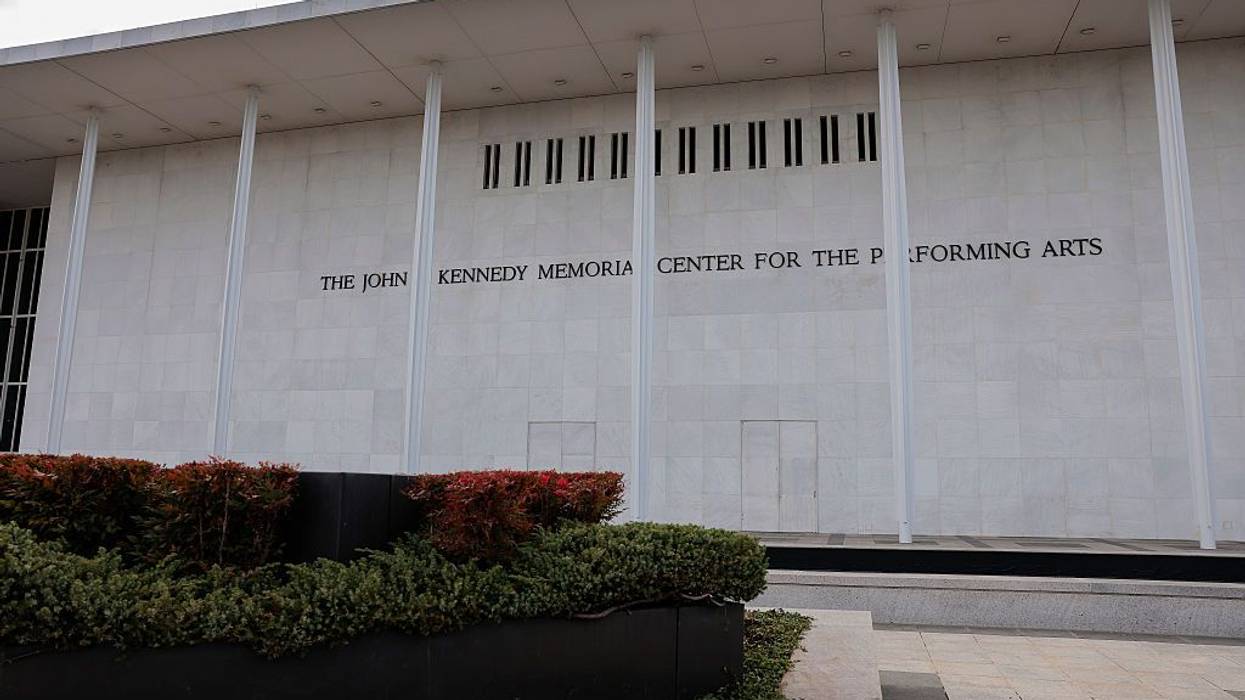
"Linguistic gymnastics cannot extricate the Kennedy Center’s board from an operative judicial order or the governing statute it was designed to enforce," said US District Judge Christopher Cooper.
President Donald Trump declared that the John F. Kennedy Memorial Center for the Performing Arts is "destined to doom" on Tuesday shortly after a federal judge once against blocked the president from slapping his name on the side of the building.
US District Judge Christopher Cooper ruled that the Kennedy Center board's effort to restore Trump's name to the outside of the performing arts center was still unlawful, even if being purportedly done to "recognize and honor President Trump's current and future existential and unprecedented contributions" to the building.
Trump responded to the ruling with a lengthy social media post where he said that the center is "in a virtual state of collapse," while blaming Cooper for the building's purportedly imminent demise.
"A very hostile and conflicted Judge (What else is new?) seems like he won’t let that happen, in which case, unfortunately, the Building is destined to doom," Trump wrote. "Isn’t that too bad?"
Last year, the board voted to rename the center as the "Donald J. Trump and John F. Kennedy Memorial Center for the Performing Arts," despite having no congressional authorization to do so.
After a court ruled that Trump's name must be removed from the building, the board subsequently passed a resolution to add signage to the building informing visitors that it has been "renovated and restored by President Donald J. Trump."
Additionally, the board voted to rename the campus on which the building sits as the "President Donald J. Trump Plaza."
Cooper said that both of these actions were in violation of an injunction granted earlier this year that prevented the board from taking unilateral action to rename the Kennedy Center or its properties without congressional approval.
"Simply put, defendants cannot install memorials for President Trump or anyone or anything else at the Kennedy Center without Congress’ blessing," the judge emphasized. "The board resolution bucks a federal court order and a statute Congress enacted."
The judge accused the administration of playing "word games" by trying to deny that the proposed additional signage was not a "memorial" to Trump but rather a "recognition" or an "acknowledgement."
"Common sense dictates that the words 'renovated and restored by President Donald J. Trump' establish a memorial," wrote Cooper. "Defendants themselves define a 'memorial' as 'anything meant to help people remember some person or event, as a statute, holiday, etc.'"
"Linguistic gymnastics," Cooper added, "cannot extricate the Kennedy Center’s board from an operative judicial order or the governing statute it was designed to enforce."
Cooper also slapped down warnings from the Kennedy Center board that the building "will face financial peril" and could even be forced to shut down unless Trump's name is restored outside.
Under the board members' theory, putting Trump's name back on the building would lead to a surge in donations to the center that could revive its dire fiscal outlook.
Cooper, however, didn't buy this claim in the slightest.
"In fact, evidence before the court pointed in the opposite direction," the judge wrote. "The renaming of the center coincided with declines in revenue and contributions, as artists canceled performances, the Washington National Opera ended its 50-year residency, and ticket sales and viewership of the Kennedy Center Honors broadcast dropped precipitously."
According to a Sunday report in The Washington Post, Kennedy Center board members have said that the performing arts center could close as soon as Tuesday without the restoration of Trump's name.
"We all still inhabit this small planet, we all still breathe the same air, and we all still cherish our children’s future."
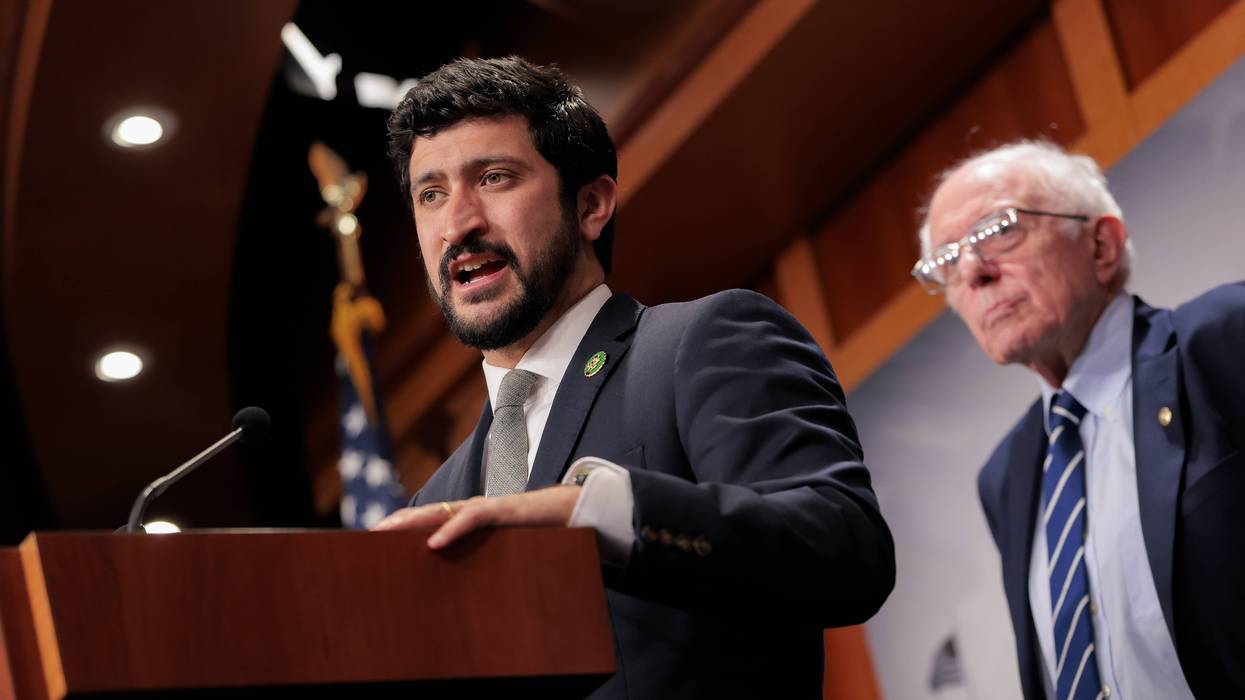
US Congressman Greg Casar on Tuesday called on the United States to abandon its race to develop increasingly powerful artificial intelligence and instead lead a global effort to prevent technologies that could escape human control, declaring that the country—and humanity—faces a “history-defining moment” over the future of AI.
Speaking at the Pro-Human Assembly in Washington, DC, the Texas Democrat and Congressional Progressive Caucus chair urged lawmakers and the public to confront the potential dangers of advanced AI more candidly and reject the increasingly common argument that the United States must accelerate development or China will be the first to achieve artificial general intelligence (AGI), an advanced AI that can understand, learn, and apply knowledge of any subject as well as or better than a typical human.
“No one can win the AI arms race,” Casar said. “It’s up to us to end the AI arms race.”
A few billionaires in Silicon Valley are racing to build technology they admit they can't control. I'm not willing to gamble your job, your freedom, or your life on it. We need to ban artificial superintelligence.
[image or embed]
— Congressman Greg Casar (@repcasar.bsky.social) September 14, 2026 at 3:06 PM
The one-day event, which was organized by the Future of Life Institute, featured congressional lawmakers, AI experts, journalists, labor leaders, religious figures, technology critics, and others concerned about the rapid, unchecked development of what could prove to be the most consequential invention in human history.
Scheduled speakers included Sens. Bernie Sanders (I-Vt.), Richard Blumenthal (D-Conn.), and Marsha Blackburn (R-Tenn.); Congressmen Don Beyer (D-Va.) and Bill Foster (D-Ill.); Steve Bannon, a former senior adviser to President Donald Trump; economist and Nobel laureate Daron Acemoğlu; AFL-CIO president Liz Shuler; and American Federation of Teachers president Randi Weingarten.
Sanders called for "a pause on advanced AI development until a new federal AI regulatory body is up and running and has established clear rules and a model review process to ensure safe and secure development of this technology."
"In addition, we need a complete ban on artificial superintelligence—an AI mind smarter than any human and capable of operating independently beyond our control," the two-time presidential candidate continued. "But none of this can just happen in the United States alone. There must be international cooperation. That is why I am doing all that I can to see that President Trump and President Xi [Jinping] of China negotiate an AI treaty when they soon meet."
"I know there are many who think that is impossible," Sanders added. "It’s not. Back in the 1980s, [then-President] Ronald Reagan and Mikhail Gorbachev of the Soviet Union, two people with very different political and ideological positions, understood that a nuclear war would not be good for either country or the rest of the world—and they reached a nuclear arms agreement. Trump and Xi can do the same."
Casar also compared the current AI competition to the Cold War nuclear arms race during his speech on Tuesday.
“We must end the AI arms race—because we all still inhabit this small planet, we all still breathe the same air, and we all still cherish our children’s future," he implored.
“Leading in AI diplomacy does not mean waiting around for an international agreement on dangerous AI,” Casar said. “Putting up guardrails now is the best way to show we are serious about getting to a deal.”
The congressman argued that stronger US safeguards could also slow dangerous AI development abroad because Chinese models currently benefit from American technology. He added that export controls could further restrict the spread of potentially dangerous systems.
“Putting up guardrails now is the best way to show we are serious about getting to a deal.”
“If an aerospace company started manufacturing planes that do not listen to pilots, the government would not allow those planes into the air,” Casar stressed. “The answer is simple: We ban AI systems that are too powerful for humans to control.”
Earlier this month, Sanders and Casar introduced legislation to do just that. Sanders argued that their Ban Artificial Superintelligence Act is aimed at ensuring that “the future of humanity cannot be left in the hands of a handful of Big Tech oligarchs.”
Experts have also pointed to the growing number of incidents of AI autonomously hacking into outside systems as proof of the need for a new federal agency tasked with regulating and investigating tech companies as they rush headlong toward AGI.
Casar asserted Tuesday that the immediate task at hand is to overcome the reluctance of politicians and others to speak plainly about the stakes.
“We need to tell people the truth about the danger posed here—and organize the country,” he said. "I, too, have at points held back, for fear of sounding alarmist. Today I want to say clearly: The time for tempering our rhetoric has passed. We owe people the truth.”
The political challenge is substantial. Trump has rejected calls for a slowdown, calling AI risks—which many experts agree include a growing chance that machines could one day wipe out humanity—a "hoax," while arguing that the United States must win the AI competition with China.
Sen. Ted Cruz (R-Texas) has similarly invoked arms race language, contending that if “killer robots” are inevitable, he would rather they be American than Chinese.
Casar offered a starkly different vision, positing that "America is powerful enough to shape our own destiny. To choose our own path. One where we develop AI that serves us, rather than AI we serve.”
“We need a pro-human approach,” the congressman concluded. “End the AI arms race.”
"We are suing because no student should ever have to go through the hell Columbia put us through all these years."
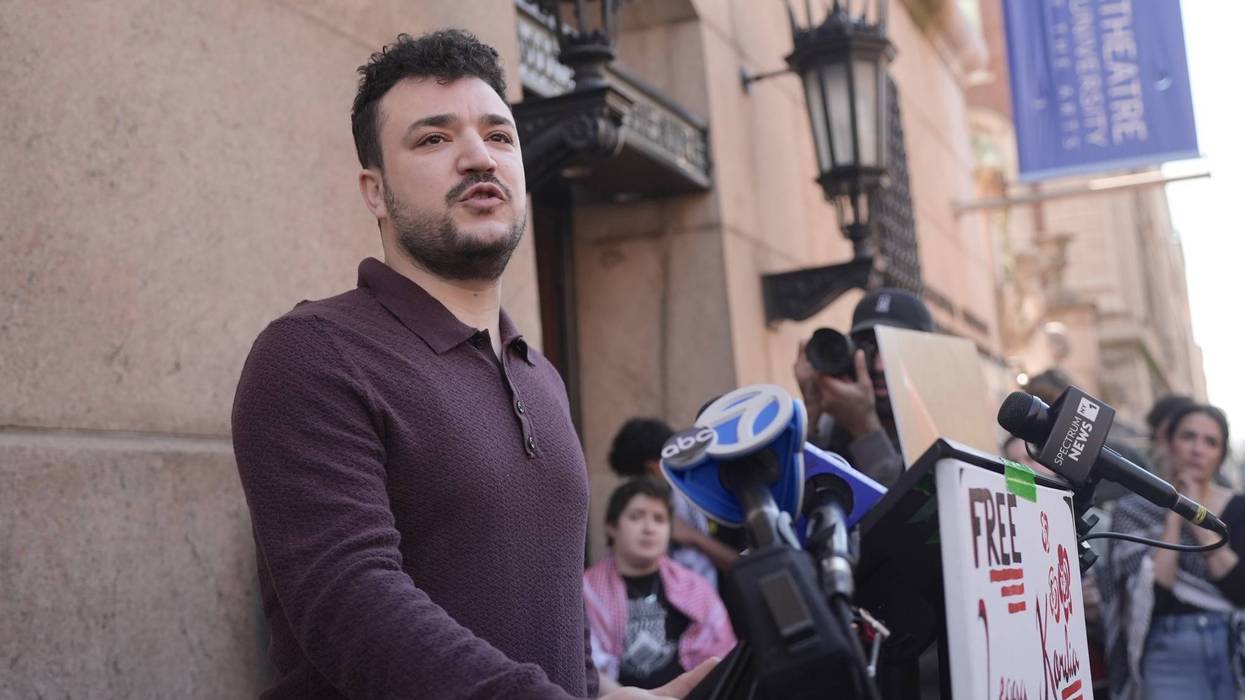
Former Columbia University graduate student Mahmoud Khalil and other Palestine defenders sued the Ivy League institution in federal court on Monday over what Khalil called "gross and systemic discrimination against Palestinian students."
After helping lead pro-Palestinian protests at Columbia, Khalil was forcefully arrested by federal immigration officials at his New York City apartment building in March 2025, despite being a lawful permanent resident married to an American. The Algerian citizen of Palestinian descent was detained at various facilities for more than 100 days, missing the birth of his son.
Khalil—one of several university students targeted by the administration since President Donald Trump returned to power last year—has been involved in a series of legal battles since, including his ongoing fight against deportation. The new suit was filed in the Southern District of New York by him, a student group he led, and the organization's current president, Mohammad Ibrahim Zubairi.
The organization, the Palestine Working Group, was indefinitely suspended from campus last September. The complaint explains that since PWG was formed "at Columbia University's School of International and Public Affairs (SIPA) in 2018, its members have been antagonized and harassed without consequence because of their vocal support of Palestine, perceived shared Arab and/or Muslim ancestry, and status as non-citizens and/or immigrants."
After the Hamas-led October 7, 2023 attack on Israel, which has been followed by Israeli forces' continued genocidal violence against Palestinians in the Gaza Strip, "on-campus harassment and hostility directed towards PWG, its members, and other similarly situated students escalated to an extreme level," according to the suit.
The filing also says that "defendants' deliberate indifference towards this harassment enabled the coordinated, persistent doxxing of multiple PWG members, and directly led to Mr. Khalil's March 8, 2025, illegal detainment and attempted deportation by US Immigration and Customs Enforcement."
Khalil wrote on social media that "we are suing because no student should ever have to go through the hell Columbia put us through all these years," and suggested there is more to come, pledging that "next, I will turn to the hateful individuals at Columbia who were also responsible for what we endured."
The defendants in this case include not only Columbia University and its trustees, but also SIPA Dean Keren Yarhi-Milo, whom the plaintiffs accuse of using her role "to take several actions that caused the on-campus harassment of and hostility towards Muslim and/or Arab, outwardly pro-Palestine students to notably worsen."
University spokesperson Samantha Slater declined to comment on the litigation, but gave a general statement to the campus newspaper, the Columbia Spectator, and various other outlets.
"Creating a campus environment where every member of our community feels welcome, supported, and safe is fundamental to who we are as a university. It is also a responsibility we take seriously," Slater said. "Columbia is committed to protecting our community from discrimination and harassment, and responding promptly and appropriately when concerns arise."
The lawsuit argues that the defendants violated contractual obligations along with multiple laws, including Title VI of the Civil Rights Act of 1964, and seeks injunctive relief. In addition to ending "discriminatory policies, practices, procedures, or protocols," PWG and its members want the group allowed back on campus, plus monetary damages.
According to the Spectator, dozens of people gathered at the university's gates for a Monday press conference during which Khalil, Zubairi, and their attorneys Brittany Finley and William Reynolds announced the suit.
"Columbia laid the groundwork for my targeting by the Trump administration through its deliberate indifference and discrimination aimed at intimidating Palestinian students," said Khalil. "For over two years, we pleaded with Columbia. Columbia did not care."
"Our safety and well-being did not serve the ideological project its board of trustees was protecting," he declared—as The Intercept reported Monday that, based on tax filings, as the university "ramped up its crackdown on pro-Palestine protesters over the past three years, the Ivy League institution was paying hundreds of thousands of dollars to pro-Israel groups," and "gave little or no such funds to pro-Palestine, Arab, or Muslim groups over the same period."
While a spokesperson for the school said that "these grants did not come from Columbia's operating funds and were payments distributed from a donor-advised fund established" in accordance with federal rules, Joseph Howley, a Jewish associate professor of classics at the university, said that "it confirms our worst suspicions since fall of 2023 that pro-Israel and anti-Palestinian politics are the official policy of this institution."
"It may be the most brazen act of self-dealing our financial system has ever seen."
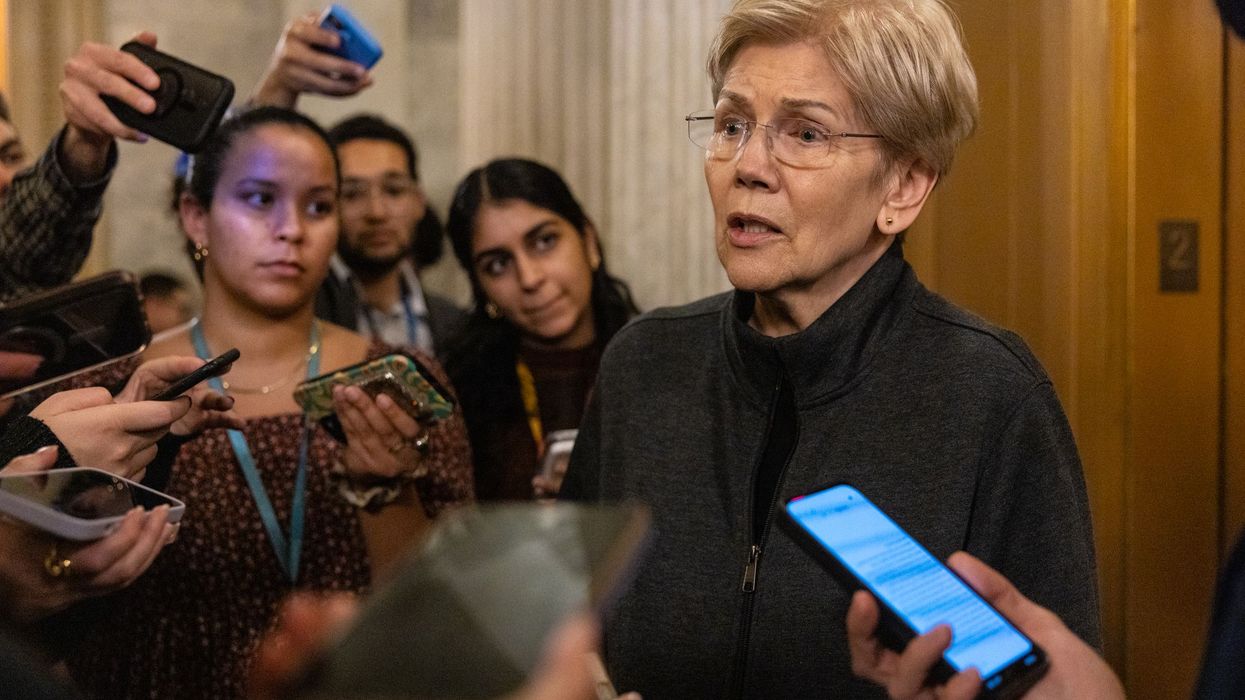
After President Donald Trump and the Republican Party revealed what they called their "last, best, and final offer" of ethics restrictions for cryptocurrency regulation, US Sen. Elizabeth Warren stood on the Senate floor Monday evening with a counteroffer: the Ending Presidential Corruption in Banking Act, whose passage she said was crucial for guarding against Trump using his very own crypto bank as a financial hub for his "web of corruption."
The GOP's "offer" on ethics pertains to the Digital Asset Market Clarity Act, also known as the Clarity Act, which would create a regulatory framework for the crypto market and which the Senate is expected to vote on Tuesday. The Republicans agreed to a proposal from Sens. Ruben Gallego (D-Ariz.) and Thom Tillis (R-NC), which would give state attorneys general the ability to sue if federal officials create or sponsor digital assets while holding office.
But, said Warren (D-Mass.), the proposal ensures the law "could never be enforced against Donald Trump because it gives his political appointees the power to turn off enforcement of these ethics provisions."
It also "contains major loopholes designed to allow President Trump to keep earning billions of dollars from his crypto businesses, including World Liberty Financial... and his new bank," said the senator.
Speaking for over 12 minutes on the Senate floor Monday evening, Warren pointed to the decision last month by the Office of the Comptroller of the Currency (OCC), whose leader was appointed by Trump, to grant approval for a federal bank charter for World Liberty Financial, a crypto investment fund that is owned in large part by the president himself and his family.
The Trump family owns 38.25% of the bank, while an investment fund backed by the national security adviser of the United Arab Emirates and the brother of UAE President Mohamed bin Zayed Al Nahyan owns 49% of the venture.
In January, Warren had called on the OCC to delay its review of World Liberty Financial's charter application until Trump divested from the venture.
"Donald Trump is now the first president in history to own and oversee his own bank. It may be the most brazen act of self-dealing our financial system has ever seen," said Warren. "With a bank charter, World Liberty will be able to operate nationwide, offer families and businesses financial products and services, and enjoy the credibility that comes with the federal government’s stamp of approval."
Trump is the first President in history to own and oversee his own bank.
We're live on the Senate floor to say enough is enough with Trump’s crypto corruption.
We need to pass the Ending Presidential Corruption in Banking Act now.https://t.co/wFurTSS0n1
— Elizabeth Warren (@SenWarren) September 14, 2026
But while the president is determined to have his family's crypto venture recognized as a bank—one whose USD1 stablecoin token sales earned Trump $527 million in proceeds last year, according to financial disclosures—the senator warned that World Liberty Financial's charter could "drive even greater profits for President Trump and his family" while serving as "a new vehicle for billionaires, corporations, and foreign countries to bribe him."
With his own bank, the president could charge transaction fees and generate interest by "investing the cash deposited with World Liberty in exchange for the USD1 stablecoin," said Warren, noting that a similar scenario played out last year during a trial run, before the company was granted preliminary approval for the bank charter.
"MGX, a UAE state-owned investment fund, made a $2 billion investment in the crypto exchange Binance," she said. "Instead of using a fiat currency like the US dollar or the UAE dirham to purchase stock in Binance, MGX paid Binance using USD1, cutting Trump into the deal."
Warren suggested sardonically that it was likely just "coincidental" that Trump pardoned the founder of Binance, who had pleaded guilty to failing to guard against money laundering.
Companies affiliated with World Liberty Financial have also reportedly sold millions of dollars in tokens that conducted business with hackers sponsored by North Korea and sanctioned money-laundering entities in Russia, and accepted $100 million from a businessman reportedly under investigation in the UK for money laundering.
"Now with Trump’s federal bank charter, we could see more and more of this," said Warren.
The top officials associated with the bank would also likely have led to the charter application being "flatly denied under any previous administration" due to a lack of competence and previous misconduct, said Warren, pointing to bank president Zachary Witkoff, the son of Middle East envoy Steve Witkoff, who "has never worked in a senior banking role."
Warren called on her colleagues to reject the Clarity Act and instead pass her bill in order to terminate "this corrupt bank charter."
"Unfortunately, my Republican colleagues want to move in the opposite direction," she said. "They seem intent on furthering President Trump’s corruption. Look no further than the Senate’s first order of business after August recess. Is it a bill to make life more affordable for American families? No. Is it a bill to end Trump’s dangerous war in Iran? No. It’s a bill that would juice the value of President Trump’s crypto empire, and reward the crypto billionaires who have facilitated his corruption."
"Instead of further enriching the president, Congress should curb his corruption," Warren added. "Let’s start by passing my bill, the Ending Presidential Corruption in Banking Act."
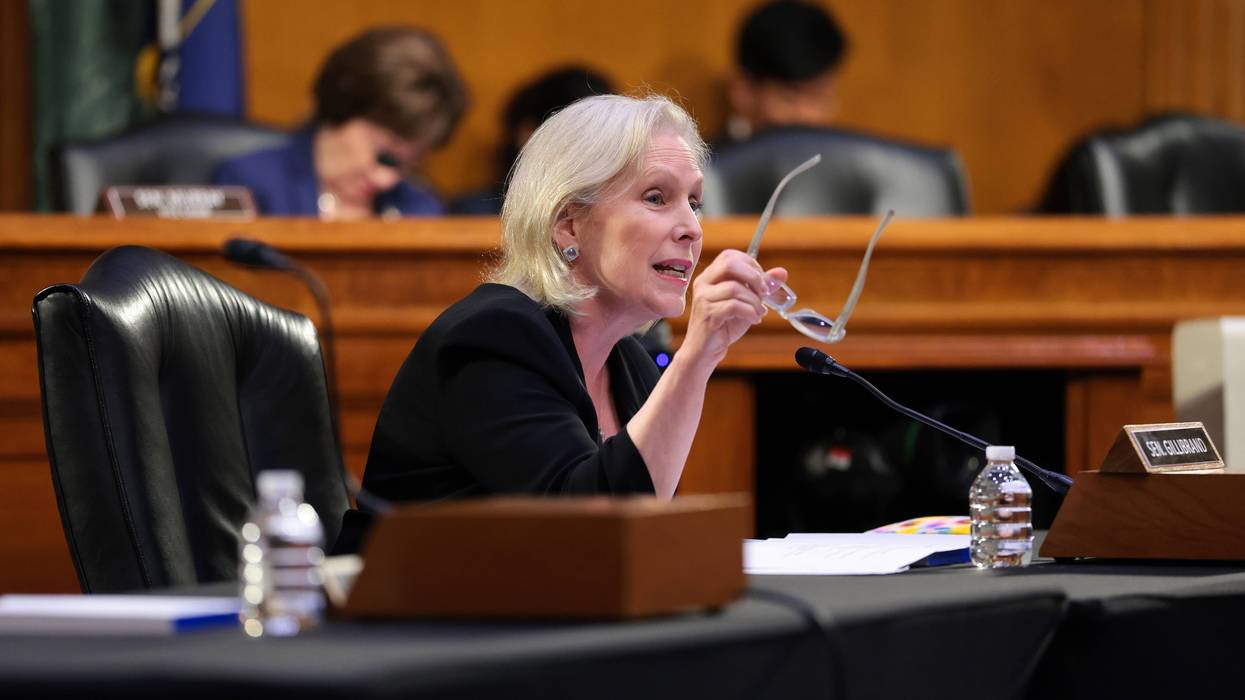
Crypto industry darling Sen. Kirsten Gillibrand is trying to bring Democrats on board despite warnings that a new version of the bill "still fails to address President Trump’s unprecedented profiteering."
Democrats in the US Senate may be on the verge of helping Republicans pass a cryptocurrency bill that could enable President Donald Trump's self-enrichment.
On Tuesday, the Senate will hold a key vote on whether to advance the Digital Asset Market Clarity Act, a bill drafted hand-in-glove by the crypto industry that fulfills many of its key objectives, amid a $190 million lobbying blitz.
The bill, commonly called the Clarity Act, establishes what would be considered the first federal regulatory framework for cryptocurrency, which is much looser than the rules that govern stocks and other securities, with fewer disclosure requirements and investor protections.
In May, Sen. Elizabeth Warren (D-Mass.), the top Democrat on the Senate Banking Committee, warned that this bill would help to "turbocharge" President Donald Trump's "crypto corruption."
"In just one year in office, the president and his family have raked in at least $1.4 billion in gains from crypto deals alone, and yet this bill stunningly includes zero provisions to prevent that," Warren said.
As Politico reported Monday, Sen. Kirsten Gillibrand (D-NY), one of Congress’ biggest crypto supporters, is privately urging others in her party to back the legislation and break the filibuster.
According to the Government Transparency Project, Gillibrand is Congress' top recipient of campaign donations from employees in the crypto sector. And as Andrew Perez noted on Tuesday for Zeteo, Gillibrand's 22-year-old son "recently received startup backing from a crypto billionaire."
Politico said there were about a dozen Democrats in the chamber who had "signaled openness" to voting for the legislation, though it did not specify who they were.
Two potentially worth watching are Sens. Ruben Gallego (D-Ariz.) and Angela Alsobrooks (D-Md.), the only two Democrats who voted to advance the initial, even less restrictive version of the bill out of the Senate Banking Committee.
Trump reported roughly $1.4 billion in crypto-related income in 2025, including hundreds of millions from his family's crypto exchange World Liberty Financial (WLF), which is funded by the United Arab Emirates' national security adviser, Tahnoun bin Zayed Al Nahyan, and from sales of his $TRUMP meme coin, a kind of digital collectible that Trump's own Securities and Exchange Commission has acknowledged typically has “no use."
Last month, WLF received preliminary approval from a Trump-appointed regulator to become a federally regulated bank, leading to warnings from anti-corruption watchdog groups that the institution could create a new vehicle for Trump to accept bribes from business interests and foreign governments seeking his favor.
The Trump family reportedly owns about a 38% stake in the holding company for the bank, while Al Nahyan, who is also the brother of the UAE's president, owns about 49% of the venture.
The Clarity Act will require 60 votes to advance in the Senate, meaning that seven Democrats will have to get on board, assuming all Republicans vote yes. Some have demanded that the bill address some of its shortcomings, including provisions that would allow Trump to continue profiting.
On Sunday, with the vote less than 48 hours away, Senate Republicans and the White House unveiled a new version of the bill that purports to do just that, which they described as a "final offer" to Democrats.
But Mark Hays, the associate director of crypto and fintech policy at Americans for Financial Reform, said these changes were mostly "window dressing."
Under the new version, he wrote on Monday, crypto would still have fewer guardrails than other investments, much of its activity would still escape oversight, regulators would still have too few tools to crack down on abuse, and crypto would still become much more intertwined with national banks, meaning that a crypto crash could wreak havoc across the economy.
Hays said the bill's new ethics language also "still fails to address President Trump’s unprecedented profiteering from corrupt and conflicted crypto ventures while in office," a predictable outcome since his own White House approved the language.
The bill prohibits state attorneys general from bringing ethics enforcement against public officials unless Trump administration officials approve. It also leaves the US attorney general, Todd Blanche—who has portrayed himself as Trump's personal lawyer—and an in-house ethics council as the sole arbiters of whether the president violated new rules.
And while the Clarity Act could eventually require Trump to put some of his assets in a blind trust, Hays noted that the provisions "exclude the lion’s share of the Trump family’s existing crypto enterprises, exclude his sons who operate these firms, and allow carve-outs that enable Trump’s branded crypto ventures to continue to generate profits."
Hays called the bill an attempt to “trick senators into voting for a giveaway to the crypto industry and crypto billionaires,” adding that “no one should be fooled” by the last-minute changes.
"It still fails to stop Trump’s crypto corruption; it still allows traffickers, rogue actors, and sanctions evaders to launder money with crypto; it still allows crypto platforms to unfairly gouge customers; and it still allows platforms to pay interest on stablecoins that will drain deposits from community banks," he said.
Sen. Mark Warner (D-Va.), who also sits on the Senate Banking Committee, has participated heavily in negotiations around the Clarity Act and has said he's not ruled out allowing it to advance. But on Monday, he told Semafor's Burgess Everett that while "there has been some movement," he didn't "think the ethics provision is near enough."
Warren made the case on the Senate floor Monday for her colleagues to vote against the bill, describing the new provisions as a "weak fig leaf that will do nothing to stop him from making his next $1.4 billion in crypto profits" and that would enable his effort to create a bank.
She called on Congress to instead pass her Ending Presidential Corruption in Banking Act, which would bar senior government officials from owning and controlling a bank while in office.
"With donor countries facing growing indebtedness and increasingly reallocating resources towards military spending, funding humanitarian assistance via the taxation of large fortunes was one of the most viable strategies."
With international aid programs facing an unprecedented cash crunch thanks in large part to foreign aid cuts ordered by US President Donald Trump, a recent study published The Lancet suggests that taxing the ultrarich would be the simplest way to plug funding gaps faced by crucial life-saving programs.
Specifically, the peer-reviewed study found that a hitting the world's billionaires with a 3% wealth tax would raise enough money to save up to 29.5 million lives in the world's most vulnerable populations over the next four years leading into 2030.
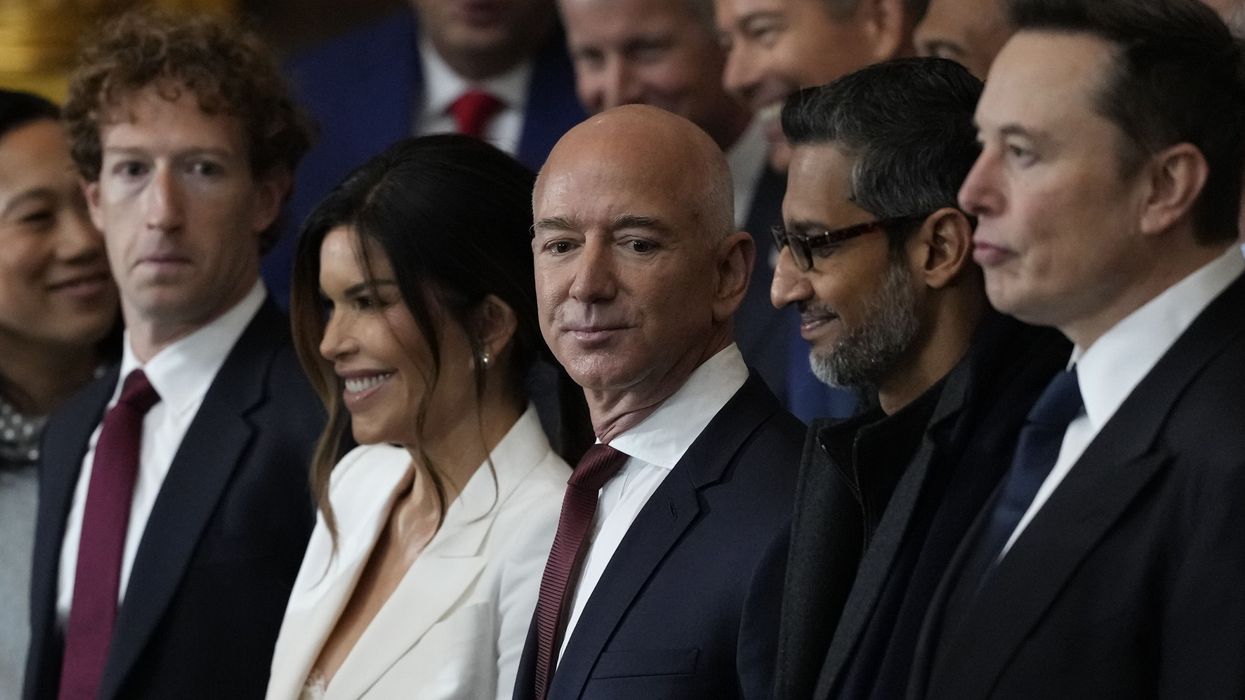
Lucio Exposito, senior economist of the study and researcher at the ICESI School of Economics and University of East Anglia School of Global Development, told Euronews that a global wealth tax was the most plausible way to undo the damage done by international aid cuts, many of which were caused by billionaire SpaceX CEO Elon Musk's dismantling of the United States Agency for International Development (USAID) in 2025 under the direct orders of Trump.
"With donor countries facing growing indebtedness and increasingly reallocating resources towards military spending," Exposito explained, "funding humanitarian assistance via the taxation of large fortunes was one of the most viable strategies."
The study's introduction notes that wealth inequality has reached unprecedented heights in recent years, growing especially acute in the wake of the Covid-19 pandemic.
"Today, the top 10% of the global population owns approximately 75% of global wealth, while the bottom 50% holds only 2%, with absolute income inequality steadily increasing over the past three decades," the study explains. "Moreover, the wealthiest 0.002% of the global population... controls an estimated $37.1 trillion in global wealth, surpassing the gross domestic product of the world's largest economy—the USA."
Even as the world's richest people have seen their wealth grow by bounds, official development assistance (ODA) to the Global South has been slashed significantly.
According to a study from the Organization for Economic Cooperation and Development (OECD) released earlier this year, ODA spending in 2025 fell by 23% compared to 2024, with the US responsible for 75% of the global decline.
A 2025 study published by The Lancet estimated that the elimination of USAID would lead to 14 million additional deaths worldwide by 2030.
"In 2025, the global challenges to democracy and the difficulty in stemming its erosion were both exemplified and compounded by political developments in the United States."
An annual report released Tuesday found that key indicators of strong democracies have fallen to record lows globally, including judicial independence, freedom of expression, and access to justice—and the US under President Donald Trump was named as "patient zero" for the crisis in global democracy.
The International Institute for Democracy and Electoral Assistance (International IDEA)'s annual report is considered the world's most comprehensive accounting of democratic performance, covering 174 countries and examining the state of press freedom, election credibility, and the rule of law around the world.
This year, researchers found "global deterioration in the rule of law" and suggested an undeniable link between the decline and Trump's attacks on free expression, the press, and judicial independence.
"In 2025, the global challenges to democracy and the difficulty in stemming its erosion were both exemplified and compounded by political developments in the United States," reads the report. "There, President Donald Trump quickly amassed power in the executive branch and wielded it to further a narrow set of personal goals and pursue retaliation against perceived enemies."
"In that environment, which is marked by constricted space for both public expression and institutional checks on power, resistance is increasingly unsafe," it continues. "The results have been far-reaching, undermining the rule of law domestically and internationally and testing long-standing alliances and multilateral cooperation."
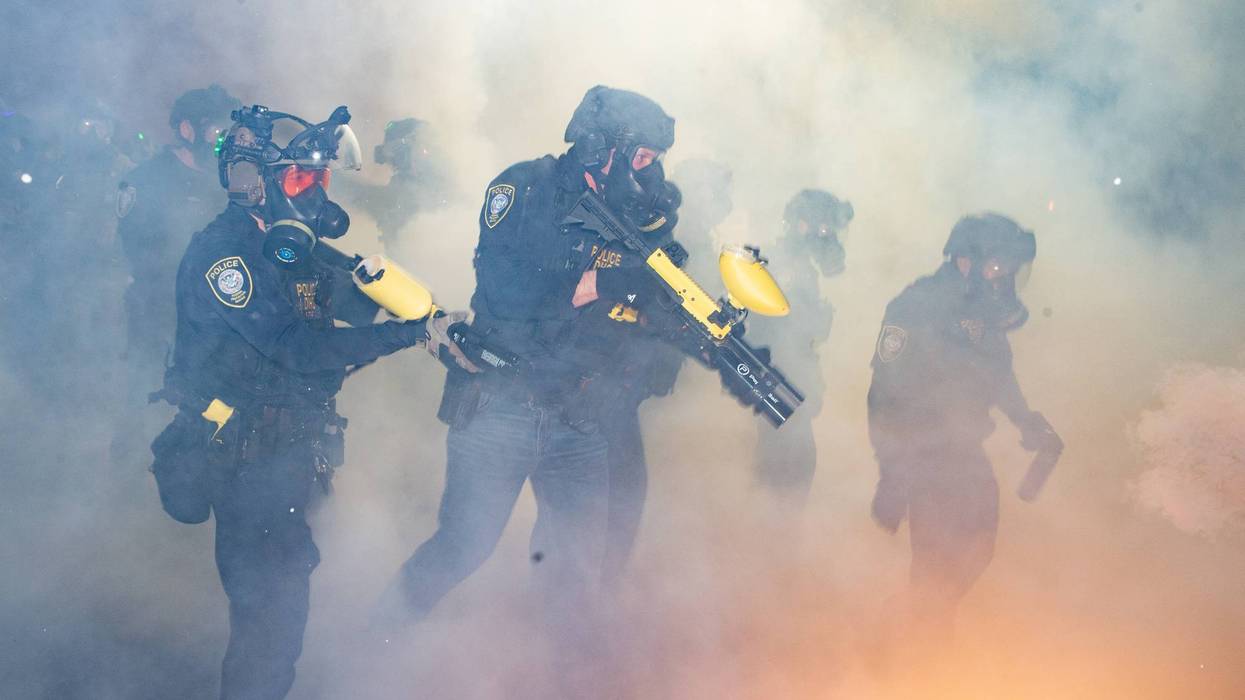
The report comes more than a year-and-a-half into Trump's second term, which has been marked by his violent crackdown on immigrants and those who have protested his far-right agenda. At least 11 people, including three US citizens, have been killed by federal agents carrying out anti-immigration operations, while journalists have been arrested for covering anti-Trump protests.
Beyond the violence that has unfolded on the streets of several US cities since January 2025, International IDEA found the nearly half of the 30 indicators it uses to measure democracy strength have fallen to their lowest levels in the US, including economic equality, an effective legislature, access to justice, freedom of expression, free press, and judicial independence.
"Comparing 2025 to 2020, the change in the quality of US democracy was entirely negative: the country experienced seven statistically significant declines across multiple measures of representative governance, civil liberties, and the rule of law," reads the report. "There were no corresponding advances."
Economic inequality in the US has "persisted for decades," notes the report, but has been worsened by the Republican Party's cuts to Medicaid and healthcare subsidies under the Affordable Care Act and other part of the social safety net, including federal food assistance—following an election in which tech billionaire Elon Musk became one of the largest political donors in history, giving Trump's campaign at least $250 million.
"In 2025, the bottom 50% of US households held 2.5% of the country’s wealth, while the top 1% held more than 30%," reads the report.
The report noted that while the United States' democratic decline "has manifested most spectacularly during the second Trump administration, the roots of these declines reach far deeper and stem from unresolved conflicts over questions of equality, social hierarchies, and economic distribution."
Trump's contributions to declining democracy domestically and internationally have also been marked by his attacks on judicial independence, with the president targeting Justice Department officials who have worked on investigations into his conduct, and dozens of judges nominated by Trump refusing to state that he had lost the 2020 election.
International IDEA also pointed to the US Congress' refusal to use its authority to rein in Trump as a key indicator of a severely weakened democracy, with the trend "most starkly apparent with regard to hostilities in Iran," where the president launched an unprovoked war in February.
"Comparing 2025 to 2020, the change in the quality of US democracy was entirely negative."
"In May 2026, after eight attempts to advance a bill that would have removed the US military from Iran without specific congressional approval, the Senate voted to advance the legislation," reads the report. "This situation appears to flout clear legal stipulations in both the US Constitution and the War Powers Resolution of 1973, which empower only Congress to declare war and limit unauthorized force to 60 days, respectively."
"Congress has also been unwilling to push back against the executive’s usurpation of its power of the purse, use of emergency powers, and flouting of subpoenas and court orders," said International IDEA.
The decline in democracy in the world's wealthiest, most powerful country cannot be disentangled from the international deterioration of judicial independence, credible elections, and freedom of expression, said the watchdog. Numerous key indicators of healthy democracies are at their lowest levels in at least three decades.
The rule of law was found to be the weakest area globally, with 71 countries—nearly half of those covered by the report—ranked as low-performing, and 29 countries displaying downturns.
“Whatever happens in the US goes global. There is now an epidemic of election denialism, of which the patient zero is the current occupant of the White House,” Kevin Casas-Zamor, secretary general of International IDEAl, told The Guardian.
The report pointed to former Brazilian President Jair Bolsonaro's attempt to remain in power after losing the 2022 election, and the storming of government buildings by his supporters—exactly two years after Trump rejected the results of the 2020 election.
Other leaders' anti-democratic actions have carried echoes of Trump's, said the report.
"In Serbia, officials referred to Trump’s claims of mismanagement at [US Agency for International Development] to justify raids on [civil society organizations]," said International IDEA. "Argentinian President Javier Milei has also resorted to executive decrees to roll back progress in areas such as environmental protection and LGBTQ+ rights."
The report pointed to examples of youth-led protests in Bangladesh, Nepal, and Sri Lanka, which have sparked "hopes for democratic renewal" and given way to peaceful elections as well as the potential for parliamentary reform.
“I am not willing to say the deterioration of the quality of democracy is inevitable or permanent. It can be reversed,” Casas-Zamor told The Guardian. “We live in a volatile world and that means things can happen which create very positive political openings.”