

SUBSCRIBE TO OUR FREE NEWSLETTER
Daily news & progressive opinion—funded by the people, not the corporations—delivered straight to your inbox.
5
#000000
#FFFFFF
To donate by check, phone, or other method, see our More Ways to Give page.
Daily news & progressive opinion—funded by the people, not the corporations—delivered straight to your inbox.
The Park Center for Independent Media at Ithaca College has announced that its fourth annual Izzy Award for outstanding achievement in independent media will be shared by a journalist who reported firsthand on the Tahrir Square uprising in Egypt and a public interest newsgroup that probed efforts by a corporate-funded organization to generate state and federal legislation.
The award will be presented to Sharif Abdel Kouddous and to the Center for Media and Democracy (CMD) at a ceremony at the college on Tuesday, April 10. Kouddous and CMD executive director Lisa Graves will each speak at the ceremony, with details on the time and location of the event to be announced at a later date.
The Izzy Award is named after dissident journalist I.F. "Izzy" Stone, who launched his muckraking newsletter I.F. Stone's Weekly in 1953 during the height of the McCarthy witch hunts. Stone, who died in 1989, exposed government deceit and corruption while championing civil liberties, racial justice and international diplomacy.
Sharif Abdel Kouddous
Kouddous covered the 18-day Tahrir Square uprising of Egyptians against dictatorship and the upheaval that followed as a correspondent and senior producer for Democracy Now! The Izzy Award judges noted that, "With breathtaking bravery, Sharif's unflinching on-the-street reporting simultaneously brought us the voices and faces of Egyptians, the drama of the moment and big-picture analysis -- sometimes while tear gas or live rounds exploded in the background."
An HBO documentary, In Tahrir Square, chronicled the uprising through the reporting of Kouddous. His tweets, reports and analysis from Egypt have been widely posted in other media outlets, including The Nation, Foreign Policy, Egypt Independent and the Pulitzer Center on Crisis Reporting.
Born in the United States and raised in Egypt, Kouddous joined Democracy Now! in 2003 as a volunteer before becoming a producer. In 2008 he was arrested while covering protests at the Republican National Convention in St. Paul, Minnesota. He is a fellow at The Nation Institute.
Center for Media and Democracy
The Center for Media and Democracy is being honored for its investigative work on "ALEC Exposed," which probed the American Legislative Exchange Council, a corporate-funded organization that has promoted a wish list of pro-corporate legislation into law in state after state and in Congress. Triggered by a whistleblower, CMD's investigation analyzed and exposed more than 800 ALEC "model bills" -- on issues ranging from the environment and education to workers' rights and voting rights -- that were developed in secret by legislators sitting side-by-side with corporate lobbyists. CMD made its investigation public in July in collaboration with The Nation magazine, and the expose has sparked months of news coverage in mainstream and independent outlets.
The Izzy Award judges commended CMD for its "high-impact journalistic work that turned a bright light on a powerful institution that had largely operated in darkness."
CMD has been doing investigative reporting since 1993, with a special focus on corporate and government propaganda. It is the publisher of PRWatch, SourceWatch and BanksterUSA.
Judges of the Izzy Award are Park Center for Independent Media director Jeff Cohen; University of Illinois communications professor and author Robert W. McChesney; and Linda Jue, executive director and editor of the San Francisco-based G.W. Williams Center for Independent Journalism.
"Both Sharif Abdel Kouddous and the Center for Media and Democracy continue the Izzy Stone legacy of fearless journalism that stands up to the powerful and stands with the forces for change," said Cohen.
"This year's winners were selected from an exceptional pool of diverse nominees," said Jue. "Amid social upheaval at home and abroad, independent media outlets had a stellar year monitoring institutional power, chronicling systemic problems and pointing toward solutions."
Previous winners of the Izzy Award are author/columnist Robert Scheer; New York's in-depth outlet City Limits; investigative journalist Jeremy Scahill; blogger Glenn Greenwald; and Democracy Now! host/executive producer Amy Goodman.
The Park Center for Independent Media, launched in 2008, is a national center for the study of media outlets that create and distribute content outside traditional corporate systems and news organizations. Throughout history, technological and social upheaval have given rise to independent media voices. Today, independent media are growing amid crisis and conglomeration in mainstream journalism, and the rise of the Internet and new forms of media production and distribution. The Center's mission is to engage media producers and students in conversation about career paths in independent media, and financially viable ways to disseminate news and information. The center examines the impact of independent media institutions on journalism, democracy, and a participatory culture. Jeff Cohen is the foundi
"This executive order was a blatant power grab designed to silence voters and undermine our elections, but it failed because the people and the law were on our side."
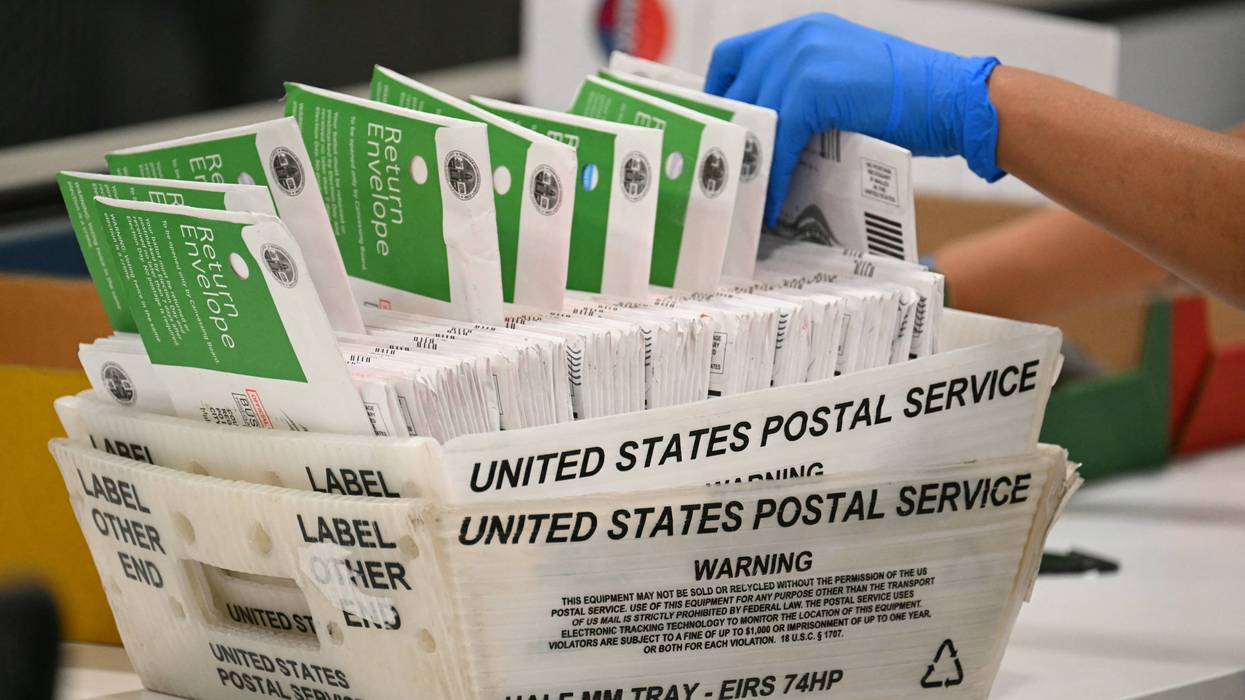
The US Supreme Court on Monday night rejected a bid by the Trump administration to keep onerous US Postal Service rules for mail-in ballots in place, which defenders of voting rights said risked depriving millions of people of the franchise in this year's midterm elections.
After a back-and-forth legal battle over the USPS rules that dragged on for months, the nation's highest court issued the 7-2 ruling without elaborating on its legal reasoning, though right-wing Justices Samuel Alito and Clarence Thomas issued dissents in favor of President Donald Trump's side.
The ruling in USPS v. California was in response to a legal challenge brought by the League of Women's Voters, the attorneys general of numerous states, and others who argued that newly-announced rules by the Postal Service regarding mail-in ballots, changes prompted by an executive order issued by Trump, would prevent people from having their ballots counted and cause chaos for those trying to administer this year's elections.
In response to the ruling, the plaintiffs' legal team said the decision was "a critical step to ensuring free and fair elections this November by maintaining access to mail voting for millions of eligible voters across the United States and lifting the dire threat that the Postal Service would disenfranchise them."
"Mail voting is safe, secure, and reliable—and the Trump administration has presented no evidence to the contrary, as the courts have repeatedly recognized," the statement continued. "We will remain vigilant in countering threats to free and fair elections and ensuring that every eligible voter is able to cast a ballot and have it count.”
“Today’s decision is a victory for our democracy and a powerful affirmation of the rule of law,” said California Attorney General Rob Bonta in a statement. “The stakes in this litigation could not have been higher.”
Virginia Kase Solomón, president and CEO of Common Cause, was among the other pro-democracy advocates who welcomed the decision.
“Today’s decision is a major win for the millions of everyday Americans who count on vote-by-mail—our seniors, service members, busy parents, rural voters, and voters with disabilities," said Solomón in a statement. "Vote-by-mail is safe, proven, and vital; even the president uses it. This executive order was a blatant power grab designed to silence voters and undermine our elections, but it failed because the people and the law were on our side. Our Constitution is clear: states run our elections, and voters choose their leaders—not the other way around. No administration can strip the people of their power.”
Michael McNulty, senior policy director for Issue One, a nonpartisan group that works to defend free and fair elections, also welcomed the ruling, but said vigilance would still be necessary going forward.
“The fight to preserve states’ authority to administer elections is far from over," warned McNulty.
"President Trump continuously and falsely claims fraud in mail-in voting without evidence," he added. "Despite voting multiple times with this method, he remains obsessed with centralizing control over elections to tilt the playing field. However, for now, one piece of that centralization effort is blocked, and it ensures that mail-in voting for the midterms won't be disrupted.”
"They oppose the things for us that they give to themselves," said universal healthcare advocate Melanie D'Arrigo.
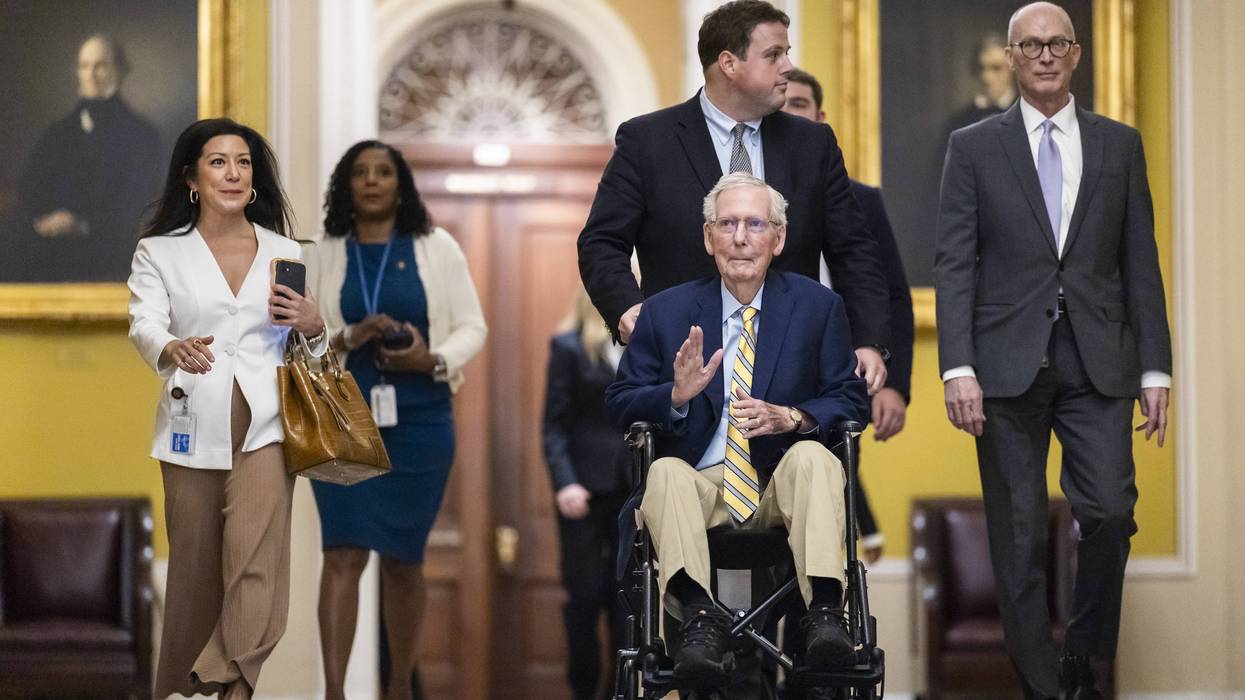
Former US Senate Majority Leader Mitch McConnell finally came back to the Capitol on Monday after a three-month absence that fueled calls for the Kentucky Republican's resignation and widespread speculation over whether he was even still alive.
The 84-year-old senator, who plans to retire after this term, has not been seen in public since he was hospitalized following a fall in mid-June. However, he announced Monday evening that he would return to the Senate floor to cast a vote.
"My recovery has been a long and often frustrating process, and the lingering effects of childhood polio haven't made it any easier," said McConnell, who had reporters capture footage of him leaving his home and arriving at the Capitol.
McConnell said he was "still not quite back to 100%" but had assured Senate Majority Leader John Thune (R-SD) that, as he continues with physical therapy, he will do his "best to be present for tough votes" when the GOP needs him.
According to NBC News' Frank Thorp V, the senator told reporters at the Capitol: "I must admit, after two years, two decades after dodging your questions, I wasn't sure how many of you would be here today. So I'm glad to see you. Time to get back to work to finish the job for this Congress."
"I'm here to work on the farm bill... and as you know, I have an ongoing interest in NATO and backing up our good friends who are totally in the fight against the Russians," added McConnell.
Punchbowl News' Andrew Desiderio said that the reporters he spoke with on Monday "were barred from recording video."
Melanie D'Arrigo, executive director of the Campaign for New York Health, which advocates for universal, single-payer healthcare, forcefully called out the Republican senator in response to this statement on social media Monday.
"Mitch McConnell has spent his career opposing paid sick leave and cutting healthcare," she said. "He just took three months of paid leave, with healthcare... subsidized by taxpayers. They oppose the things for us that they give to themselves."
With McConnell due to finish his term at the end of this congressional session, Republican US Rep. Andy Barr and former Democratic Congressman Charles Booker are facing off to replace him in the November midterms—in which Democrats are aiming to win back majorities in both chambers.
Before McConnell announced his return, Booker highlighted his "absolutely embarrassing" absence on social media, writing that "Kentuckians are getting crushed by the rising costs of groceries, healthcare, and gas while McConnell gets a taxpayer-funded paycheck and Kentucky gets an empty seat."
Booker and Democratic Kentucky Gov. Andy Beshear—a potential 2028 presidential candidate—are among those who have criticized McConnell over his lack of transparency regarding his absence over the past few months.

“Donald Trump and his administration are obsessed with election conspiracy theories and operate under the wrong assumption that they are above the law—they are not."
US Senate Minority Leader Chuck Schumer and Democratic Sen. Alex Padilla on Monday accused the Trump administration of directing federal immigration officers to violate state laws in an aggressively quixotic campaign to identify supposed “unlawful voters,” warning that the operation could ensnare American citizens and undermine the November midterm elections.
At a press conference, Padilla (Calif.) and Schumer (D-NY) cited a whistleblower disclosure alleging that US Citizenship and Immigration Services (USCIS) personnel were instructed to access sensitive state voter records by misrepresenting their identities and falsely claiming authorization to obtain individual voters’ information.
According to the disclosure:
An anonymous federal whistleblower disclosed that USCIS headquarters has directed USCIS Fraud Detection and National Security Directorate (FDNS) officers to use individuals’ personal information to search state voter registration systems—likely resulting in thousands of violations of state laws. If necessary, officers are even told to lie and misrepresent themselves as voters on state election agency websites. USCIS leaders are directing officers to generate law enforcement records against so-called “unlawful voters” based on adding “magic” to data which in many cases will be inaccurate. Tens or hundreds of thousands of people in all 50 states, including naturalized US citizens, are being swept up in this rushed effort in the lead-up to Election Day.
The New York Times noted that the whistleblower disclosure "offers an inside view of what the Department of Homeland Security is calling the 'Unlawful Voter Initiative,'" which the paper revealed earlier this month.
According to the whistleblower, hundreds of FDNS employees were abruptly pulled from their regular immigration and national security work to investigate alleged noncitizen voting—a practically nonexistent occurrence.
For example, a Brennan Center for Justice analysis of around 23.5 million votes cast during the 2016 election cycle found 30 suspected cases of noncitizens voting, or 0.0001% of all votes cast. A 25-year-audit in Republican-controlled Georgia found zero votes cast by noncitizens.
The two senators said in a joint statement that the whistleblower's allegations "are especially alarming because they come just weeks before the November 2026 midterm elections."
"The administration is publicly asserting, without evidence, that large numbers of noncitizens are unlawfully registered to vote and deploying federal law enforcement resources to investigate those claims," they added.
Schumer warned that the US Department of Homeland Security "is sending hundreds of officers who should be focused on our security on a wild goose chase to prove [President Donald] Trump’s long-debunked election conspiracy theories—and DHS is telling officers to lie to do it."
"This new DHS initiative is nothing more than an unlawful order by the government to silence the voices of Americans," he added.
Padilla said that “Donald Trump and his administration are obsessed with election conspiracy theories and operate under the wrong assumption that they are above the law—they are not."
“The whistleblower’s disclosure outlines shocking allegations of unlawful and unethical conduct that includes potentially thousands of violations of state law and the use of highly questionable data, which they refer to as ‘supplemental magic,’ to falsely flag naturalized US citizens as ineligible voters in federal law enforcement records," the son of Mexican immigrants continued.
"At the same time, USCIS is directing employees to ignore the law in search of voters’ personal information because this administration’s unlawful attempts to coerce states to hand over their voter rolls have been rejected by the courts," Padilla said. "I thank the whistleblower for the bravery and integrity to come forward with these shocking reports and for standing up for the rule of law."
Padilla added that US Homeland Security Secretary Markwayne Mullin "must be transparent and shut down this sham ‘investigation’ now."
On Sunday, Padilla and Schumer sent a letter to Mullin and USCIS Director Joseph Edlow accusing DHS of prioritizing "manufacturing evidence for election conspiracy theories, rather than FDNS’ fraud detection and national security mission."
"The disclosure shows how DHS is deploying federal law enforcement resources to go around those judicial rulings and gather state voter information by any means, regardless of state laws," the senators continued. "Further, the administration’s continued claims of election fraud signal its intent to use this unreliable evidence of 'unlawful voters' in ways that can disenfranchise eligible voters, disrupt state and local election administration, and subject election officials to additional unwarranted threats of prosecution."
The lawmakers demanded that DHS and USCIS "be transparent about what they intend to do with the unreliable records they are generating, immediately stop this initiative and related activities, and remove any TECS or other law enforcement or administrative records generated from it."
The legal nonprofit advocacy group Democracy Defenders Fund—which is representing the whistleblower—said Monday that its client "feels it is their duty to come forward and reveal potentially unlawful conduct related to the 'unlawful voteri nitiative.”
"Our client is understandably extremely concerned about retaliation by administration officials should their identity become known," the group continued. "As such, we ask that reasonable steps be taken to maintain their anonymity throughout the whistleblowing process."
"The whistleblower makes this disclosure out of concern that law enforcement records used against individuals, including US citizens, being created through potentially unlawful means and based upon unreliable information," Democracy Defenders Fund added. "That is a dangerous abuse of the power of the federal government. We respectfully submit this disclosure for inquiry and investigation."
League of Women Voters of the United States CEO Celina Stewart said in a statement that “if these reports are true, this is not merely alarming. It is a five-alarm fire for American democracy."
"Allegations that federal workers were pressured to fabricate evidence and falsely frame citizens as criminals strike at the heart of the Constitution and the rule of law," she continued. “The power of government must never be used to manufacture suspicion, silence dissent, or, as reported, create false justification for investigations. Yet these reports suggest an effort to further fuel unfounded narratives about our elections while placing eligible voters at risk of intimidation and government scrutiny."
“Every eligible voter deserves to participate in our democracy free from fear, harassment, or wrongful investigation," Stewart added. "The federal government has a duty to protect constitutional rights, not undermine them through unreliable data, flawed processes, or political pressure."

Center on Budget and Policy Priorities experts said the move “would harm people who are immigrants and their families, including many US citizen children, who are critical to the nation’s future prosperity.”
Hundreds of thousands of US citizen children could lose access to key benefits as part of a Trump administration proposal to strip tax credit refunds away from immigrant families, including those with legal status.
In August, the US Treasury Department and Internal Revenue Service (IRS) proposed rules redefining four tax credits—the adoption tax credit, child tax credit (CTC), American opportunity tax credit, and earned income tax credit (EITC)—as "federal public benefits" under a decades-old welfare reform law, meaning that certain groups of noncitizens, not considered "qualified aliens," would be ineligible to claim refunds from them.
Among them are undocumented immigrants, but also many people with temporary nonimmigrant visas, as well as holders of Temporary Protected Status (TPS), and recipients of Deferred Action for Childhood Arrivals (DACA).
According to the Treasury and IRS, the average refunded benefit among all taxpayers whose claims contain at least one of the affected credits is $3,656.
Reporting on the proposal last month, CNBC described it as an effort to "use the nation’s financial safety net as a way to implement stricter immigration policy" and noted that low-income recipients, who are less likely to have large income tax bills to refund, would be hit the hardest.
In a policy brief published on Monday, a group of experts at the Center on Budget and Policy Priorities (CBPP)—director of federal tax policy Kris Cox, vice president for immigration policy Shelby Gonzales, deputy director of federal tax policy Samantha Jacoby, and senior research analyst Claire Zippel—examined the likely effects of the policy.
They estimated that the proposal would take away access to the refundable portion of the CTC and/or the EITC for 1 million people in affected families, including US citizens and people with lawful immigration statuses.
While the proposed rule estimates that between 200,000 and 700,000 taxpayers would become ineligible, the researchers said this understated the potential impact because it only included the tax filers themselves, without noting that their family members would also be hurt.
Using immigration status data from the Department of Homeland Security, the researchers said they determined that "the rule would take access to refundable credits away from hundreds of thousands of US citizen children if both parents—or their parent, for single-parent families—have an immigration status that is not a 'qualified' status."
"For 30 years, no administration, Democratic or Republican, has treated refundable tax credits this way," the researchers said. "The proposed rule includes a misguided reinterpretation of a 1996 law that created restrictive immigration-related eligibility standards for 'federal public benefits,' taking away access to basic needs programs from many immigrants with lawful statuses."
"The Trump administration is seeking to apply those same immigration-related restrictions—which require people to have a 'qualified' immigration status—to the refunded portion of certain tax credits," they continued. "This contradicts both the clear reading of the statutory text and congressional intent, which Congress has demonstrated by legislating on immigrant eligibility for tax credits several times since the 1996 law, most recently in 2025."
They noted that the new policy follows other efforts by the administration to restrict access to other programs for families with immigrants, including Head Start, child welfare services, and health services, all of which are being challenged in court.
Many of the people who'd be barred from receiving the credit refunds, the researchers said, are especially vulnerable, including:
"Taking away these tax credits would harm people who are immigrants and their families, including many US citizen children, who are critical to the nation’s future prosperity," the researchers said, pointing to studies linking additional income from tax credits with improved health, education, employment, and earnings."
"People who are immigrants and their families contribute to our communities and nation in immeasurable ways," they concluded. "These restrictions on tax credits create a higher effective tax rate for people who are filing their taxes solely based on their immigration status."
"This global trend towards expanding PFAS production raises the frightening prospect that the partial restrictions on PFAS favored by some politicians will be swept aside by a tidal wave of new output."
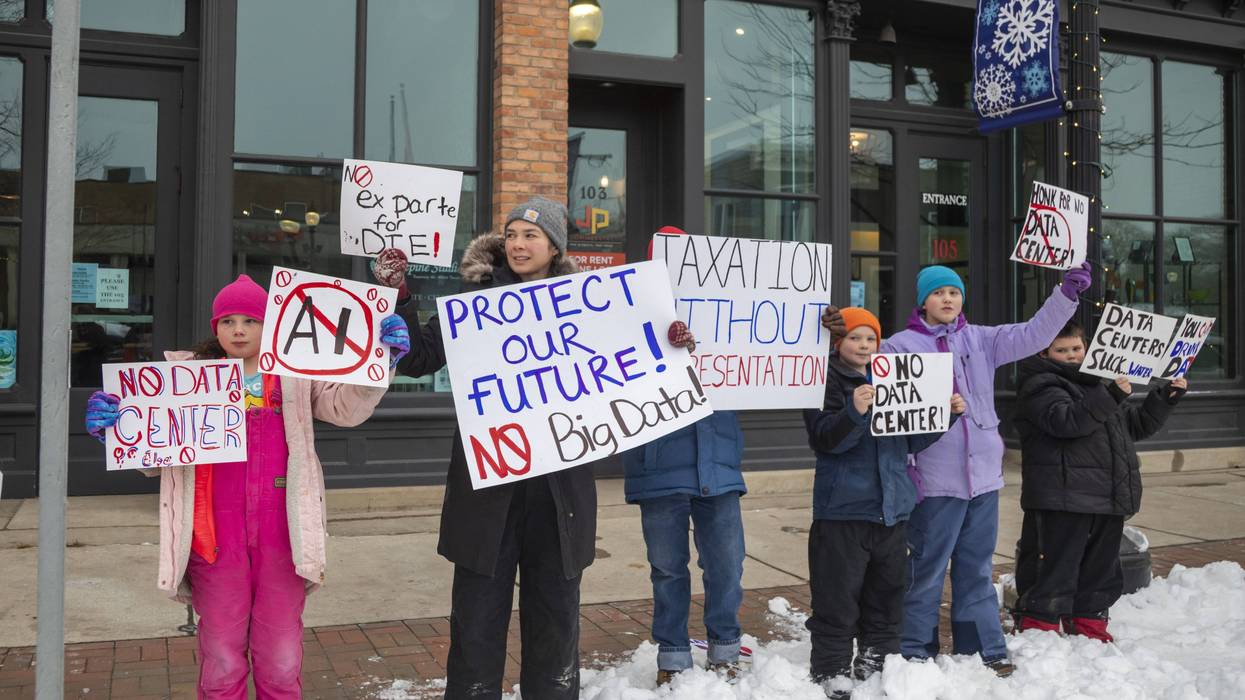
As a United Nations expert reiterated a call for a global ban on nonessential uses of per- and polyfluoroalkyl substances, a Swedish nonprofit on Monday released research on how rapidly advancing artificial intelligence and related data centers are helping to drive a surge in PFAS production.
Often called "forever chemicals" because they don't easily break down in human bodies or the environment, PFAS are tied to range of health issues, including various cancers. For months, advocacy groups, journalists, and researchers have stressed that "data centers have a PFAS problem."
That's illustrated clearly in the new report from the International Chemical Secretariat, or ChemSec, which found that an ongoing expansion by many of the world's top 10 PFAS producers "is driven by three main sources of demand—AI and data center infrastructure, semiconductor manufacturing, and lithium-ion battery materials."
Covering the report, The Guardian explained that "PFAS are used for a new form of data center cooling touted as more water- and energy-efficient. In 'two-phase immersion cooling' systems, servers are immersed in a pool of PFAS with a low boiling point. As the hardware gets hot, the fluid boils, drawing heat away as vapor. That rises to a water-cooled condensing coil at the top of the tank, cools back to a liquid state, and reenters the cycle."
ChemSec highlighted that "PFAS manufacturers all over the world are explicitly framing their investments around 'the AI revolution' and microchip fabrication. Battery-grade fluoropolymers are a parallel growth area, in which Arkema and Syensqo are expanding their existing production and building new manufacturing facilities."
In addition to those companies—based in France and Belgium, respectively—the report examines AGC and Daikin in Japan, Archroma in Switzerland, BASF and Bayer in Germany, Chemours and Solstice in the United States, and Orbia Fluor & Energy Materials in Mexico. It also mentions US-based 3M, which "pioneered PFAS production when the chemicals were first invented back in the 1940s" and has plans to leave the industry, though that exit "is still very recent and shrouded in secrecy."
The report points out that "the CEO of US manufacturer Solstice told investors in June that strong AI demand represents a 'generational opportunity' for growth. And we know what that means: a lot more PFAS. Japanese multinational Daikin plans to more than triple its fluoropolymer production capacity in response to the rapidly growing semiconductor market. It is building a new factory, set to start manufacturing more PFAS next year."
"This global trend towards expanding PFAS production raises the frightening prospect that the partial restrictions on PFAS favored by some politicians will be swept aside by a tidal wave of new output," ChemSec warned. "It confirms that the only effective method to end this toxic pollution crisis is to implement universal bans with strictly time-limited derogations to enable certain sectors to adjust."
"The only clear exceptions are 3M and BASF, which have announced they will cease production as expensive legal challenges to their PFAS pollution pile up, and Archroma, which markets PFAS-free alternatives," the group noted. "These companies are sending a signal to the rest of the industry—it can be done, and it must be done."
Bethanie Carney Almroth, an environmental scientist and researcher who became the United Nations' special rapporteur on toxics and human rights last month, spotlighted a recent UN report on PFAS—which urged a ban on nonessential uses—and emphasized that "this is an issue of global environmental justice."
Melanie Benesh, the US-based Environmental Working Group's vice president for government affairs, said in a Monday statement that "PFAS have been linked to kidney, liver, pancreatic, and testicular cancers; as well as immune system suppression, thyroid disease, reduced vaccine efficacy, reproductive and developmental harm, low birth weight, increased cholesterol, weight gain in children and dieting adults, and a growing list of serious health effects."
"For decades, US regulators have let industry set the pace on PFAS. Communities pay the price, like in North Carolina, where Emily Donovan's group Clean Cape Fear is leading the fight to make polluters pay," she continued. "The United States helped create this crisis. It has a responsibility to help end it."
"The world's governments now have a UN report telling them exactly what needs to happen," she added. "The only question left is whether they'll act on it. We must stop making the problem worse and ensure that polluters—not contaminated communities—pay for the damage."
Separately—and on the heels of various artificial intelligence experts sounding the alarm about the pace at which the technology is advancing—UN High Commissioner for Human Rights Volker Türk argued Monday in an open letter that "to protect human rights now and into the future, we must govern AI urgently."
In the United States, the current administration and Republican-controlled Congress have resisted restricting AI, data center construction, or PFAS. Amid mounting calls for limits on the first of those, President Donald Trump claimed on Monday that "the only control or 'guardrails' that AI needs is a STRONG AND SMART (High IQ!) PRESIDENT, and the USA has that, in spades!"
"We have brought this extraordinary challenge because, for us, the Big Bend is not an empty place on a map. It is our home."
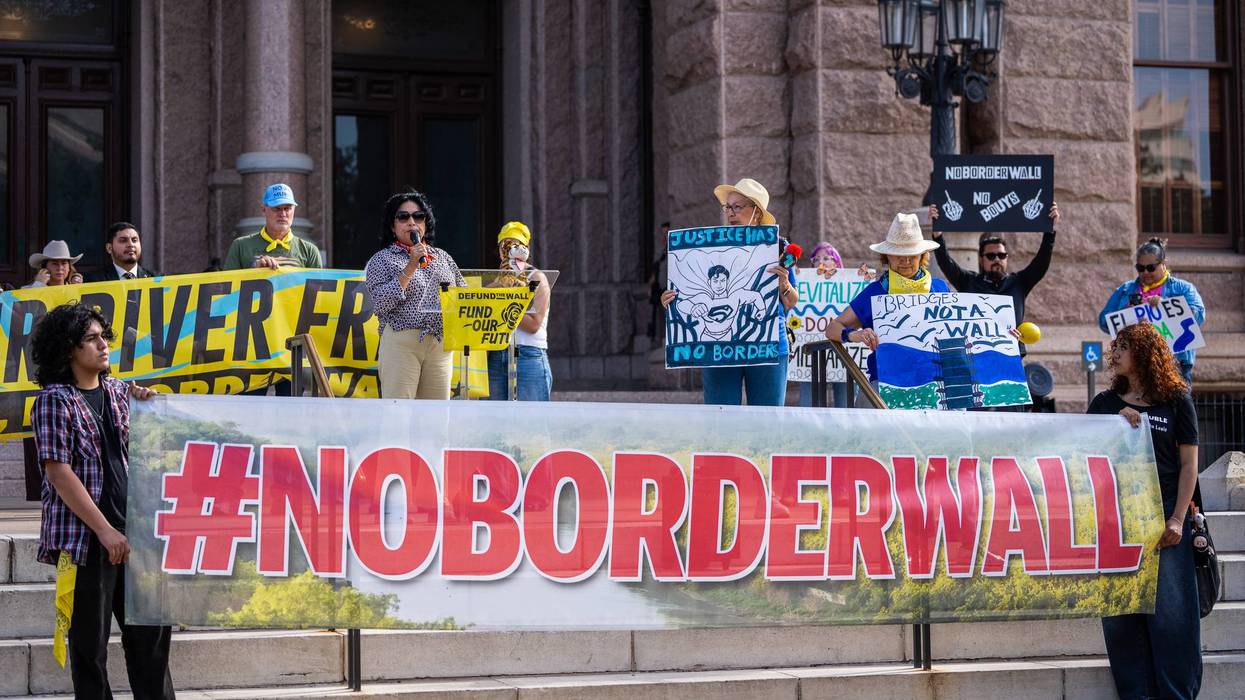
A coalition of Texas ranchers, landowners, business owners, and conservationists in the Big Bend region on Monday sued the Trump administration over plans to build border barriers and other destructive infrastructure across one of the most remote and environmentally sensitive stretches of the US-Mexico border.
The lawsuit—filed in the US District Court for the District of Columbia by Conserve Big Bend and six landowners with the backing of many others—challenges the administration’s determination that the region is an area of “high illegal entry" under Section 102 of the Illegal Immigration Reform and Immigrant Responsibility Act (IIRIRA) of 1996, a finding the plaintiffs say is contradicted by the government’s own statistics.
"That high illegal entry determination is the legal predicate for defendants’ invocation of extraordinary power to immediately construct a 30-foot-high border wall while bypassing all federal, state, and local procedural protections," the complaint states. "That determination is legally and factually unsound and unsupported."
"A host of government statistics and other public reporting [show] that the opposite is true," the lawsuit notes. "The Big Bend sector is the area of the lowest illegal entry along the southwest border... The Big Bend sector has recorded the fewest yearly apprehensions of any Southwest sector for the last 53 years, with last year’s numbers being the lowest yearly apprehension total recorded by any sector in the region since 1967."
The suit comes as the Trump administration presses forward with a $46 billion border security construction program authorized by Congress, including 30-foot steel bollard walls, vehicle barriers, roads, lighting, cameras, and other surveillance infrastructure.
The plaintiffs argue that the administration is abusing the extraordinary authority granted to the Department of Homeland Security (DHS) under the IIRIRA, to sidestep laws protecting wildlife, water, Indigenous rights, historic resources, and private property.
“Thank you, President Trump. You’ve secured the border. But now let it go. It’s time," Laura Allen said at a Monday press conference in Marfa announcing the lawsuit. A former Val Verde County judge and two-time Trump voter, Allen's family owns a ranch that would be divided by the proposed border barrier.
David Keller, an archaeologist and historian who lives in the region, spoke at the press conference. He accused officials supporting the administration's proposal of being "woefully unprepared for the hornet’s nest they stirred up because they had no idea how much we love this place."
“For us, the Big Bend is not an empty place on the map,” Keller stressed. “It is our home.”
Earlier this year, the Trump administration waived dozens of environmental laws—including the National Park Service Organic Act, Endangered Species Act, and National Wild and Scenic Rivers Act—to expedite the construction of border roads and barriers through Big Bend National Park.
This isn't the first court challenge to the administration's Big Bend border barrier plans. Last month, the Presidio Municipal Development District sued to stop construction, citing alleged violations of the Rivers and Harbors Act. But after DHS added that law to its waiver, US District Judge Reggie Walton—an appointee of former President George W. Bush—ruled that the plaintiffs could not prevail on the merits and declined to block construction plans, declaring that the administration was legally allowed to bypass the legislation.
“Under federal statute, the secretary of homeland security is granted extraordinary, expedited powers to construct border barriers and sweep aside dozens of federal protections, environmental laws, and ordinary due process,” Clara Bensen, a board member with Conserve Big Bend and head of communications for the No Big Bend Wall initiative, said in a statement Monday. “But Congress explicitly set a strict legal prerequisite for that extraordinary power: it can only be invoked in designated areas of ‘high illegal entry.’”
"The government’s own official statistics tell the real story," Bensen added. "You cannot legally bypass the laws of this country by fabricating an emergency that does not exist. Declaring over 500 miles of steep cliff faces and perilously rugged desert an area of ‘high illegal entry’ is not just detached from reality, under federal law, it is arbitrary, capricious, and unlawful.”
Also last month, People of La Junta for Preservation—a Native American advocacy group focused on protecting Indigenous historical and cultural sites in the Big Bend region—sued the administration, arguing that construction threatens sacred sites of the Lipan Apache people. The complaint also challenges DHS' authority to conduct work inside Big Bend National Park.
Amid intense opposition spanning the political spectrum, US Customs and Border Protection Commissioner Rodney Scott last month announced a temporary pause on construction in Big Bend National Park pending an “on-the-ground evaluation."
Some conservatives who oppose the administration's plans have cited the inviolability of private property rights, which Lico Miller, whose land is in the path of the border barrier, called "the bedrock of Texas sovereignty" during Monday's press conference.
“The moment we allow any government—state or federal—to come in and seize private land and tell us what is good for us and what constitutes an emergency, we set a precedent that will come back and bite every single Texan,” he argued. “If they can take our land along the river today, they can come for yours tomorrow.”
"It’s clear that these industry leaders think they are best positioned to craft AI policy for the good of all humanity. We think that’s horseshit."
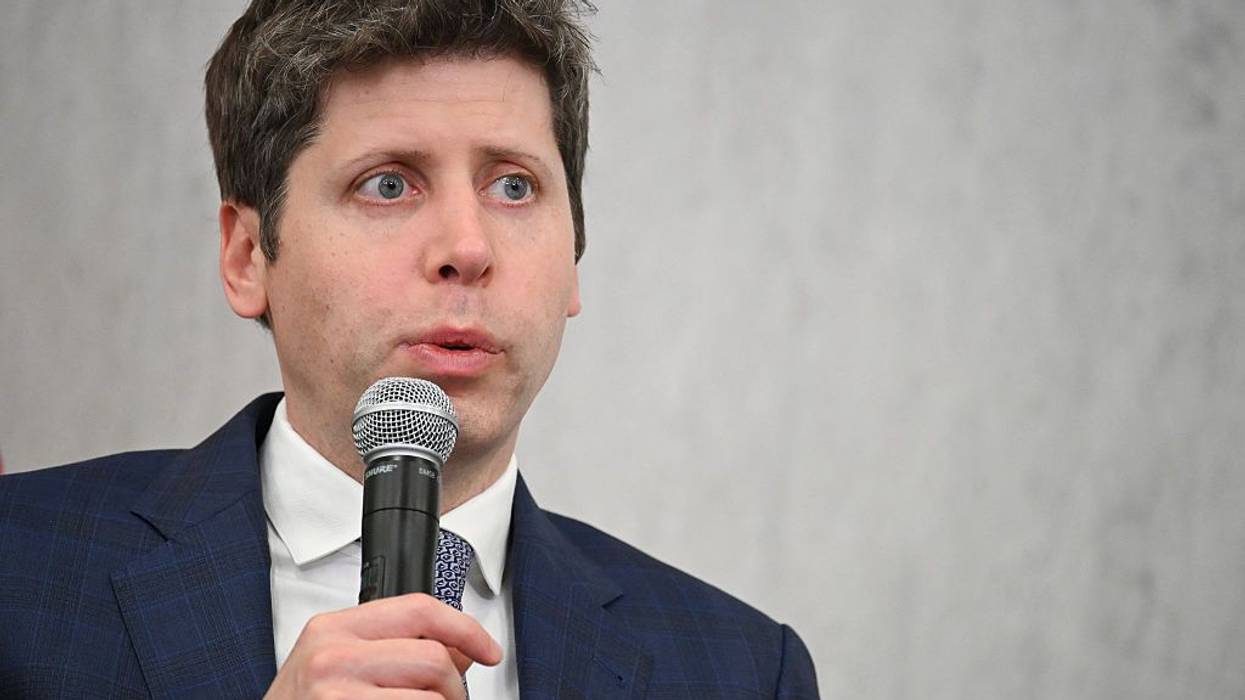
Several Big Tech CEOs over the weekend called for a slowdown in the development of artificial intelligence, but some advocates are warning that these Silicon Valley oligarchs are not to be trusted.
Evan Greer, director of digital rights group Fight for the Future, on Monday dismissed the recent statements made by Anthropic CEO Dario Amodei, X CEO Elon Musk, and OpenAI CEO Sam Altman calling for more guardrails to be placed on AI development.
"We can’t trust the AI industry to regulate itself," said Greer. "We can't really trust anything these self-interested billionaires say."
Greer conceded that the CEOs' warnings about the potential dangers of AI deserved to be heeded, but argued that allowing them to craft their own safeguards would be a grave mistake.
"It’s clear that these industry leaders think they are best positioned to craft AI policy for the good of all humanity," said Greer. "We think that’s horseshit. Lawmakers should be listening to independent experts, researchers, civil society, and the communities most impacted."
"Congress should act," Greer added, "but they shouldn’t just do whatever the AI bros tell them to."
Greer's sentiment was echoed by Colorado Democratic congressional candidate Melat Kiros, who wrote in a Sunday social media post that "we need to regulate AI for all of the existential threats it poses," before adding that "we cannot expect the very people who got us into this mess to self-regulate their way out."
"Congress needs to act now," Kiros emphasized, "and guard against ANY corporate influence."
However, House Speaker Mike Johnson (R-La.) on Sunday indicated that he was perfectly content to allow the AI industry to regulate itself.
During an interview with CNN's Jake Tapper, Johnson said that "Congress is obviously less qualified" to write rules for AI development "than the people who are pushing this frontier to know the ins and outs of it." Johnson then insisted that any effort to regulate AI needs to be "a partnership with the industry itself, with the corporations that are doing this."
Mike Johnson punts on oversight of AI companies: "Congress is obviously less qualified than the people who are pushing this frontier to know the ins and outs of it" pic.twitter.com/EXU1raDExB
— Aaron Rupar (@atrupar) September 13, 2026
This drew an incredulous reaction from Rep. Ted Lieu (D-Calif.), who said the speaker appeared to be making excuses for congressional inaction.
"Based on the speaker’s excuse, Congress could never pass laws or do oversight on medicine, energy, airplanes, etc.," wrote Lieu in a Sunday social media post. "Members of Congress don’t need to be [computer science] majors to understand it’s a good idea to require AI companies to be able to turn off AI models/agents if they go rogue."
Johnson isn't the only Republican to oppose AI regulation, as President Donald Trump on Monday suggested that his own intellect was singlehandedly capable of regulating the technology, which is so complicated that even its own creators have acknowledged difficulties in understanding it.
“The only control or ‘guardrails’ that AI needs is a STRONG AND SMART (High IQ!) PRESIDENT,” Trump wrote in a social media post, “and the USA has that, in spades!”
Rep. Ro Khanna (D-Calif.)—whose district includes multiple Silicon Valley giants—argued on Saturday that the AI industry feels emboldened to regulate itself due to a crisis of "elite impunity," in which no one in the American ruling class faces consequences for disasters such as the Iraq War or the 2008 financial crisis.
"It is time for We the People to stand up," wrote Khanna. "And demand to make the rules and hold people accountable with civil and criminal liability for their actions."
One writer told Common Dreams it was "a really terrifying example of the power of concentrated wealth to censor speech."
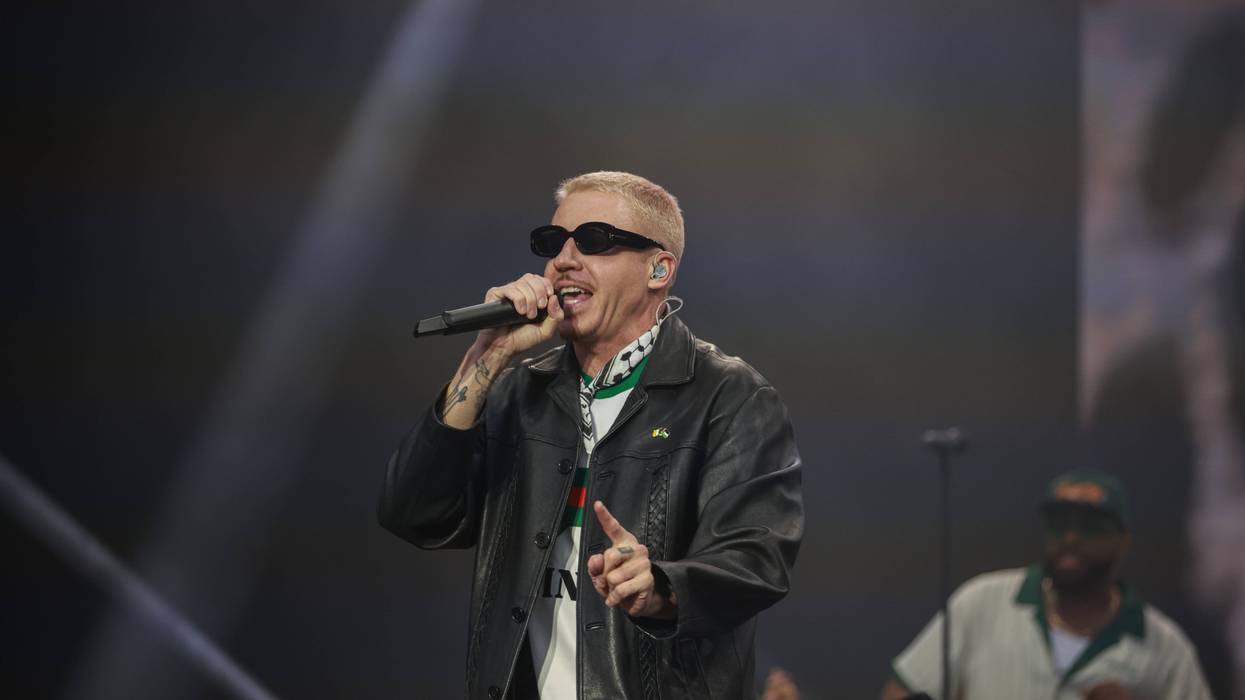
The rapper Macklemore said he was kicked off a tour with Ed Sheeran on Monday after pressure from NFL owners angered by his harsh criticism of Israel.
Macklemore, who has been an outspoken supporter of Palestinian rights, especially since October 2023, made headlines earlier this month when he said "Free Palestine" onstage during a show at MetLife Stadium in New Jersey, and said he wanted the people of Gaza and the occupied West Bank to know “we have not forgotten about them."
The rapper also performed his 2024 song "Hind's Hall," which debuted amid a wave of campus protests against US support for Israel's military campaign in Gaza. The Israeli assault has killed over 73,000 Palestinians, according to official counts, which major human rights organizations have denounced as a genocide.
The title of the song references pro-Palestinian demonstrators at Columbia University, who occupied a building during the protest wave and named it after Hind Rajab, a 5-year-old girl who was killed by Israeli forces in Gaza after spending hours trapped in a car with the bodies of her relatives and pleading for rescuers to save her.
The performance faced pressure from groups, including the Israeli American Council, which launched a petition calling for Sheeran to boot Macklemore from the tour. The performance was also met with criticism from the singer Pink, who said Macklemore's performance may have left Jewish audience members feeling "scared or targeted," though she said she did not want any artist to be "silenced."
Macklemore emphasized during a subsequent show that Jewish spectators were not the targets of his performance. "To all of my Jewish brothers and sisters: criticism of Israel, criticism of apartheid, being against genocide in no way is a criticism of you," he said. "My message is for peace; love for all human beings to be treated with dignity, respect, and equality.”
On Monday, the group promoting Sheeran's Loop Tour announced that Macklemore would not be performing at the remaining shows on the US leg, telling Rolling Stone that it had been "notified by venues on the upcoming US tour dates that they will not allow a concert to take place with Macklemore on the lineup, which would result in the cancellation of the tour and impact hundreds of thousands of fans."
In an Instagram post on Monday following the announcement, Macklemore gave more details on what he said prompted his exile from the tour.
"Last Monday, in the middle of all the media attention surrounding Pink and what I said at MetLife, Ed [Sheeran] told me that Robert Kraft called him," Macklemore explained. "We were scheduled to play Gillette Stadium later this month, which is owned by the Kraft Group. Ed told me that Kraft said I would not be allowed to perform in his stadium. Ed also told me that Kraft had rallied some of the other stadium owners, and collectively they gave him an ultimatum: 'If Macklemore stays on the tour, you will not be allowed to play in our venues.'"
According to Rolling Stone, other venues where decision-makers allegedly objected to Macklemore's appearance included Lincoln Financial Field in Philadelphia; Mercedes-Benz Stadium in Atlanta; Lucas Oil Stadium in Indianapolis; Bank of America Stadium in Charlotte, North Carolina; AT&T Stadium in Arlington, Texas; and Raymond James Stadium in Tampa, Florida.
Kraft, the multibillionaire owner of the New England Patriots, is one of the nation's most prominent donors to pro-Israel causes and is a close personal friend of Israeli Prime Minister Benjamin Netanyahu, who is wanted by the International Criminal Court for alleged crimes against humanity and war crimes in Gaza.
In 2019, Kraft received a $1 million award, presented by Netanyahu, to support his efforts to combat the Boycott, Divestment, and Sanctions (BDS) movement in the US, which aims to use economic means to pressure Israel to end the occupation of Palestinian territory, which is considered illegal under international law.
Since 2022, Kraft has also donated $3 million to the United Democracy Project, the super political action committee affiliated with the American Israel Public Affairs Committee (AIPAC), according to federal campaign finance records.
As public support for Israel has cratered, particularly among Democratic voters, AIPAC's political fundraising arms have been spending at a record pace, deploying over $100 million to back pro-Israel candidates during the 2026 election cycle.
Macklemore said he did not begrudge Sheeran, whom he described as a "friend" and "brother," for cutting him from the tour in the face of this pressure.
"Ed was in a fucked up position. He knew it. His typical apolitical stance was being challenged in a way it never had been before. He told me that the words 'Free Palestine' and the image of the Palestinian flag were hurtful to a lot of people he spoke with," Macklemore said. "I told him that if those words were more offensive than tens of thousands of Palestinian children being killed by Israel, then there was a fundamental disconnect between where those people stood and where I stood."
Macklemore said he understood why Sheeran and other artists choose to avoid controversial political topics.
"Taking a side can cost you. Money, brand deals, sponsorships, festivals, private shows, relationships, and access. I've lost all of those things," Macklemore said. "But there is no neutral position between the oppressor and the oppressed. When one side has the bombs and bottomless financial and military support from America, refusing to take a side doesn't leave you in the middle."
He emphasized that neither he nor Sheeran was a "victim" in this saga. "The victims," he said, "are the Palestinian people. The men, women, and children who have been killed, starved, displaced, and forced to live through unimaginable violence."
Macklemore noted that he has been making similar statements to those he made at MetLife "for almost three years." But now that he's saying it on bigger stages with bigger artists, he said, "it becomes too much of a risk."
"If I kept doing the shows, saying Free Palestine, with Ed implicitly supporting it, the crowd getting loud and showing undeniable support for Palestinian liberation, what artist might speak out next?" he said. "The stage becomes resistance. Maybe that's why this time it became so important to silence me."
"One of the most effective ways to enforce that silence has been to weaponize the accusation of antisemitism," he continued. "Antisemitism is real. And that is exactly why the word matters too much to be used as a shield against criticism of the Israeli state. When criticizing Israel, opposing Zionism, or saying 'Free Palestine' gets conflated with hatred of Jewish people, it doesn't protect Jewish people. It protects Israel from accountability."
Alex Skopic, an associate editor at Current Affairs magazine and author of a 2023 essay, "A Brief Cultural History of the White Rapper," which discusses Macklemore and his history of political activism extensively, said the rapper's removal from the tour was "a really terrifying example of the power of concentrated wealth to censor speech."
"It's one thing for a stadium owner to cancel a particular artist, but apparently Robert Kraft was able to make a few phone calls and get Macklemore banned from the entire tour," Skopic said in an email to Common Dreams. "It's incredibly dangerous to civil society when one guy has that kind of power to dictate what music can and can't be heard."
He added that it was also "notable who gets canceled and who doesn't," pointing out that in his home city of New Orleans, Ye (formerly Kanye West) recently performed before a packed Superdome, even "after he spent two years spouting Nazi rhetoric," including publicly praising Adolf Hitler on numerous occasions.
"Apparently, our elites consider the words 'Free Palestine' more threatening," Skopic said.
He added that Sheeran "has behaved like an absolute coward."
"When you think about it, Sheeran is one of maybe 30 artists on the planet who's big enough, in terms of money and influence, to say no to nonsense like this from stadium owners," Skopic said. "He chose the money over his integrity. It's bad enough that his music for the last decade has been painfully mediocre, but that shows a real lack of spine."
Given the long history of rappers taking controversial stances, Skopic added that "it's also kind of absurd that Macklemore is one of the foremost people in rap who's speaking out against an ongoing genocide."
"There's a lot of cop-outs to go around," he said. "DJ Khaled, famously, is Palestinian himself and won't say a word. Where's Kendrick Lamar, with his massive platform? Where are any of them?"
"AOC and Khanna... have shown a willingness to blaze unusual and much-needed trails on Capitol Hill beyond the constraints of the Democratic Party establishment and bipartisan corporatism."
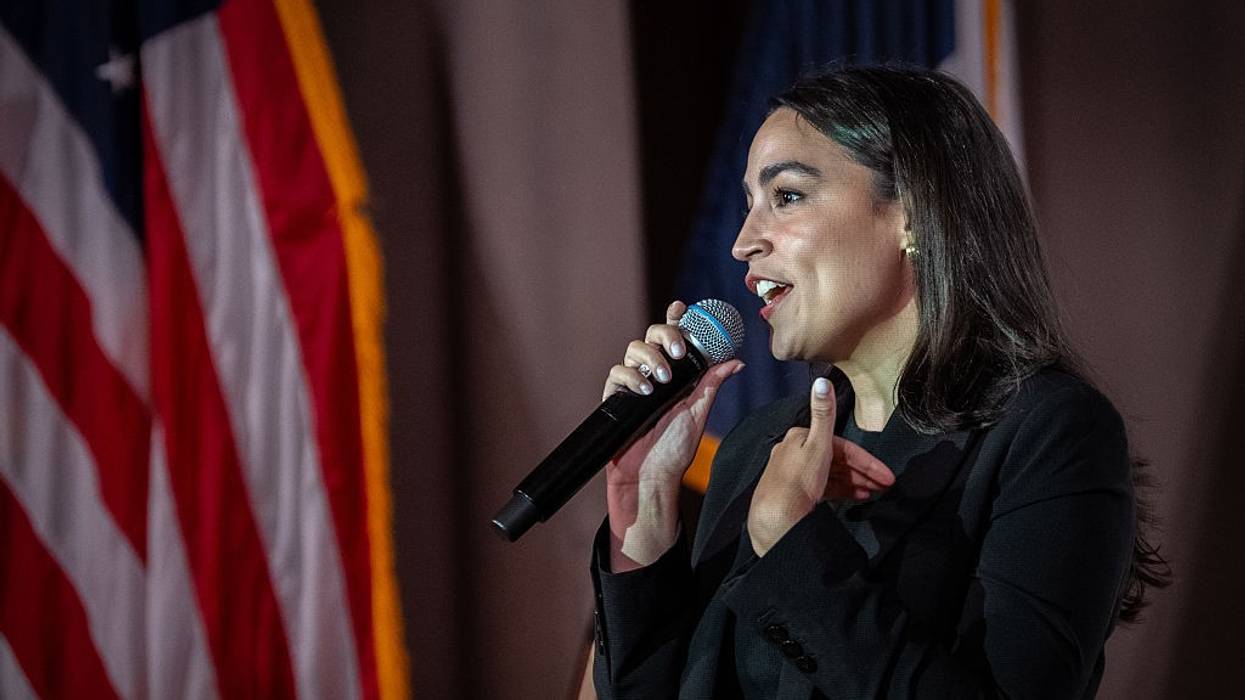
Two progressive advocacy organizations Monday called on Reps. Alexandria Ocasio-Cortez (D-NY) and Ro Khanna (D-Calif.) to enter the 2028 presidential race, singling them out as "proven leaders and voices of clarity."
Progressive Democrats of America (PDA) and RootsAction announced an initiative aimed at lobbying the two congressional progressives to put their hats in the ring for the presidency, arguing they offer a much-needed alternative to establishment Democrats too eager to do the bidding of corporate interests.
"Most of the Democrats whose names now crowd the field have been war enablers, go-slow reformers or status quo protectors," the groups wrote. "AOC and Khanna, meanwhile, have shown a willingness to blaze unusual and much-needed trails on Capitol Hill beyond the constraints of the Democratic Party establishment and bipartisan corporatism."
The groups cited polls showing that "majorities of voters, not just Democrats, are angry about nonstop war, runaway inflation, corporate greed and a government dominated by billionaires," and argued that Khanna and Ocasio-Cortez were needed in the race so that voters would "hear serious solutions" the country's most pressing problems.
"Without a progressive populist advocate atop the ticket, the Democratic response would be woefully underwhelming," the groups warned, "enabling right-wing demagoguery to push voter unrest in dangerous and divisive directions."
The campaign to get Khanna and Ocasio-Cortez into the race will begin immediately after the midterm elections in November, the groups said.
The two groups also touted their past work influencing Democratic politics, as PDA pushed for Sen. Bernie Sanders (I-Vt.) to launch a presidential bid as far back as 2013, while RootsAction was the first national group to endorse New York City Mayor Zohran Mamdani's insurgent 2025 campaign.
Alan Minsky, executive director of PDA, noted that most prospective 2028 Democratic candidates at the moment are "Big Money-backed status quo centrists," despite the fact that "the success of progressive candidates across the country was the story of the 2026 primary season."
"We need at least one progressive champion on the presidential debate stage to counter the corporatists’ cacophony of bland incrementalism," Minsky empghasized. "Americans want change."
Minsky's sentiment was echoed by India Walton, senior strategist at RootsAction.
"Working people are hungry for leadership that works for all of us, not just the wealthy and well-connected," said Walton, "leaders who do not capitulate to corporate power, who reject endless wars, and embrace policies that mean we can live healthy, happy lives. AOC and Ro Khanna can bring that vision to the presidential stage."
"DHS needs to be dismantled and held accountable for this complete inhumanity," said Rep. Pramila Jayapal.
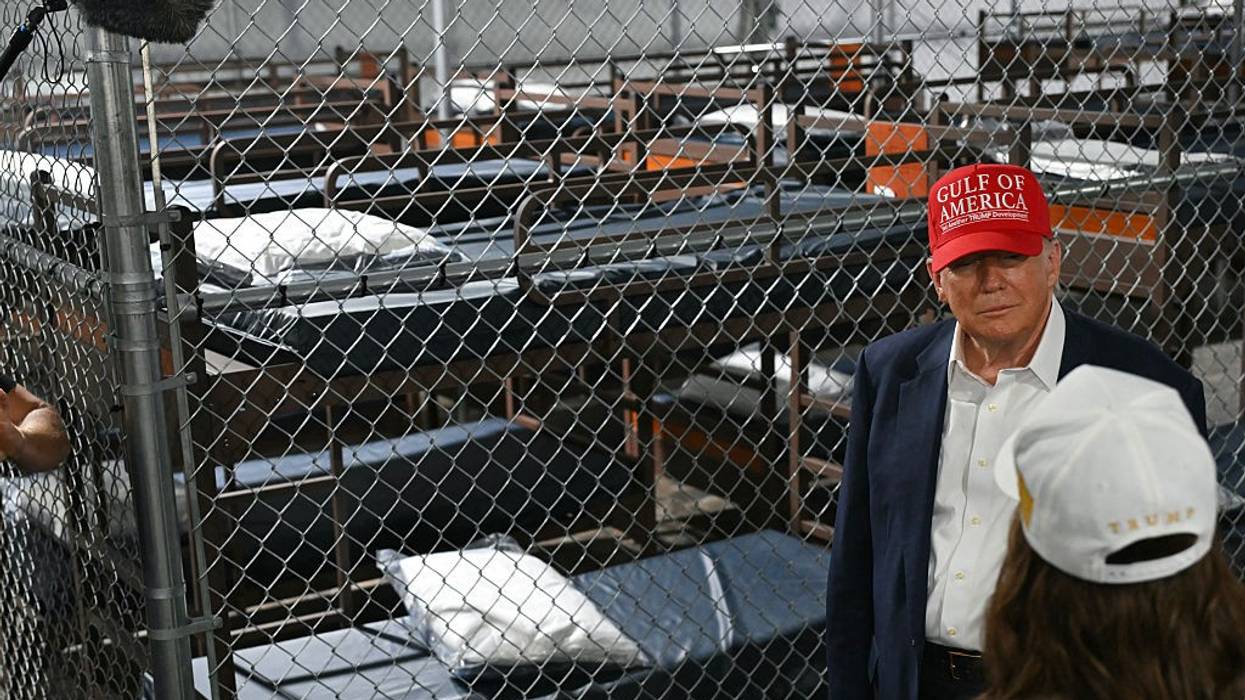
While US President Donald Trump publicly joked about giant reptiles devouring would-be escapees from the now-shuttered Alligator Alcatraz immigrant detention center in the Florida Everglades, a newly published report by the Department of Homeland Security's internal watchdog confirms that the biggest dangers facing detainees at the notorious lockup were found inside its walls.
The DHS Office of Inspector General (OIG) found that staff at Alligator Alcatraz—officially called the Florida Soft-Sided Facility (FSSF)—"complied with intake and use-of-force standards but did not comply with standards related to environmental health and safety, special management units, medical care, food service, personal hygiene, and recreation."
Affirming reports from human rights groups like Amnesty International, the OIG reported on September 11 that staff at the facility, which was operated by the state of Florida and private contractors, "confined 79 detainees in small metal enclosures—each offering about 18 square feet of floor space—for periods ranging from several minutes to nearly two hours."
"Facility staff described the small metal enclosures as 'calming areas' for detainees to de-escalate and have time alone," the report states. "Staff further maintained that detainees asked to spend time in the small metal enclosures. We found at least one instance in which the small metal enclosures may have been used as a disciplinary tool."
NEW: DHS's Inspector General releases a scathing report about the Everglades detention camp known as "Alligator Alcatraz." The OIG finds that the now-closed camp, violated multiple ICE standards.The OIG also confirms detainees were punished with placement in a metal cage in the Florida heat.🧵
[image or embed]
— Aaron Reichlin-Melnick (@reichlinmelnick.bsky.social) September 14, 2026 at 8:53 AM
While held in the cages, detainees—who reported being shackled and locked to the ground—were subjected to dangerously high temperatures and swarms of mosquitoes. Amnesty described the use of the cages as a form of torture.
"Use of these small metal enclosures for any reason is unprecedented among detention facilities OIG has inspected and presents significant risks to detainee health and safety," the DHS report notes.
Responding to the report's findings, Congresswoman Pramila Jayapal (D-Wash.) said on social media that "this is nothing short of torture."
"DHS needs to be dismantled and held accountable for this complete inhumanity," she added.
The OIG report additionally found that "FSSF did not provide detainees with sufficient living space, creating cramped conditions for detainees who spent most of their time in their housing units, which may harm detainees’ physical and mental health."
According to the OIG, detainees had about 28 square feet of living space each when the facility was at maximum capacity, well below the 75-square-foot DHS benchmark.
Three-quarters of the detainees interviewed by the OIG said they did not have access to clean drinking water.
The OIG also found that detainees were generally permitted to shower just three times a week, and inspectors noted insects in the showers.
Detainee recreation was also limited to three one-hour sessions per week.
The OIG report ominously concludes that "although FSSF ceased operations in June 2026, the issues raised by the department’s
management response regarding [US Immigration and Customs Enforcement's] level of oversight and responsibility for immigration detention remain consequential."
The publication cites the Baker Correctional Institution—also known as "Deportation Depot"—in Sanderson, Florida, which has yet to undergo OIG inspection, and where detainees and their advocates have reported abuses and inhumane conditions similar to those alleged at Alligator Alcatraz.
Some critics of the new OIG report denounced what they said were critical omissions and falsehoods, including that FSSF complied with use-of-force standards. Clients of attorney Katherine Blankenship and other detainees at the facility said they were beaten—and one man had his wrist fractured—after complaining about not having phone access earlier this year.
The Associated Press reported in April:
When one detainee approached a guard, he was punched in the face. The guards then started beating other detainees in the cell. One of Blankenship’s clients was punched in the right eye, thrown to the floor, and beaten by several guards. He was kicked in the head and his shoulder and arm were injured. A guard put his knee on the detainee’s neck while restraining him, according to the attorney’s declaration, which included a photo made during a video call almost a week later showing the detainee with a bruised eye.
Other alleged abuses and inhumane conditions at Alligator Alcatraz not mentioned in the OIG report include rotten and maggot-infested food, 24-hour lighting, flooding, and denial of religious practice.
Some detainees also claimed they were held in the phone booth-sized cages for far longer than two hours.
“People ended up in the ‘box’ just for asking the guards for anything," one former detainee told Amnesty. "I saw a guy who was put in it for an entire day."
Glad folks are appalled by photos of the "phone booth" cage under an awning, but pls understand: This IG report is likely part of a cover-up. Amnesty Int'l interviewed detainees EIGHT MONTHS AGO who said the cage was half this size (couldn't stand up), had no awning, w feet chained to the bottom.
[image or embed]
— Gillian Brockell (@gillianbrockell.com) September 14, 2026 at 9:20 AM
Responding to the new OIG report, Congressman Adam Smith (D-Wash.) said Monday on social media that "people at Florida's Alligator Alcatraz were subjected to inhumane, unjust punishment, risking their health and safety while in federal detention. No person should be locked into an 18-square-foot cage, period."
Last year, Jayapal and Smith introduced the Dignity for Detained Immigrants Act, which Jayapal's office described as "legislation to enact guardrails and oversight on immigration detention, and to ensure civil and human rights are protected."
Since Trump returned to the White House in January 2025, more than 50 people have died in ICE custody, including detainees who died inside lockups, during transfers, and in hospitals while still under DHS control. The agency also announced earlier this year that it would stop reporting the deaths of people recently released from ICE detention.
Krish O'Mara Vignarajah, President and CEO of the advocacy group Global Refuge, said in a statement responding to the new OIG report that "there is no euphemism that can sanitize caging human beings. Calling a metal box a 'calming area' is an affront to the English language and to human dignity alike."
"The stark reality is that human beings, many of whom came to this country seeking protection, were crammed into spaces unfit to accommodate them, denied adequate medical care, food, and basic hygiene—and in at least one case locked in a cage as punishment," Vignarajah continued. "That is not immigration enforcement. It is cruelty, carried out in our name and on our dime, to the tune of more than a million dollars a day."
"The facility is closed, but the mindset that built it lives on," she added. "We cannot let Alligator Alcatraz become a blueprint. We call on Congress and the Department of Homeland Security to guarantee that no one held in the United States—regardless of where they were born or how they arrived—is subjected to conditions this administration's own watchdog has deemed inhumane."