

SUBSCRIBE TO OUR FREE NEWSLETTER
Daily news & progressive opinion—funded by the people, not the corporations—delivered straight to your inbox.
5
#000000
#FFFFFF
To donate by check, phone, or other method, see our More Ways to Give page.
Daily news & progressive opinion—funded by the people, not the corporations—delivered straight to your inbox.
Michael Briggs or Will Wiquist (202) 224-5141
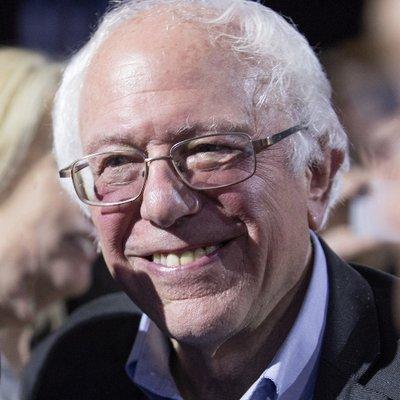
Sen. Bernie Sanders (I-Vt.) announced today that he will work with members of Congress, labor unions, seniors' organizations and others to develop progressive alternatives to proposals circulated by leaders of a White House deficit commission.
At a hastily-called press conference on Wednesday, the commission co-chairmen - former Sen. Alan K. Simpson and Erskine Bowles, President Bill Clinton's former chief of staff - laid out their proposals that included major cuts for seniors, college students, working families and vulnerable Americans.
"It is no surprise that these two favor draconian cuts to Social Security, Medicare, Medicaid, the needs of our veterans, and education while proposing tax reductions for the wealthy and large profitable corporations," Sanders said. Simpson is a darling of the Republican right wing and Bowles is a former investment banker who made a fortune on Wall Street. Their plan was floated amid reports that the two were struggling to cobble together enough support on their own commission to go forward by a Dec. 1 deadline.
Sanders also raised concerns that the National Commission on Fiscal Responsibility employed staffers paid by outside interest groups, including the right-wing Peter G. Peterson Foundation and the Peterson-funded Committee for a Responsible Federal Budget. Peterson is a billionaire who is bankrolling a major effort to undermine Social Security.
"Everyone agrees that over the long-term we have got to reduce the record-breaking $13.7 trillion national debt and unsustainable federal deficit," Sanders said, but he stressed that deficits mushroomed in recent years because of two unpaid wars, tax breaks for the wealthy, a Medicare prescription drug bill written by the pharmaceutical industry, and the Wall Street bailout. "The national debt is a very serious issue and we've got to tackle it, but we can do it without balancing the budget on the backs of middle-class families."
Sanders, in a letter, invited progressive activists and economists to meet next week to develop a progressive plan to reduce the deficit. "We all know that there are a number of fair ways to reduce deficits without harming the middle class and those who have already lost their jobs, homes, life savings and ability to send their kids to college. The time has come to put these proposals into a package so that a fair and progressive deficit reduction plan will become part of the national discussion," he said.
Sanders' own deficit reduction proposals include ending Bush-era tax breaks for the wealthiest Americans. He also favors ending expensive and outdated Cold War-era Pentagon programs and has proposed elimination of tax credits for big oil companies that have amassed the fattest profits in history.
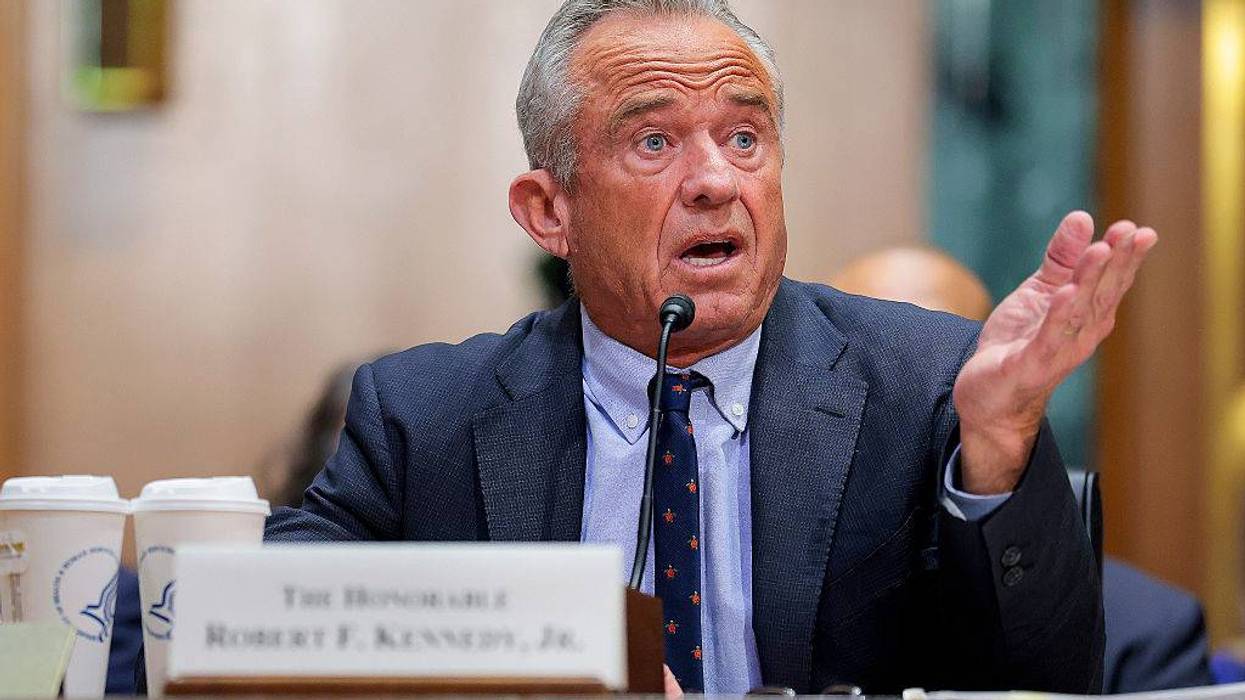
"Every day that goes by without Secretary Kennedy’s long overdue resignation is a day American lives are put further in harm's way," said the director of Protect Our Care's Public Health Project.
While public health advocates have sounded the alarm about Robert F. Kennedy Jr. since senators confirmed President Donald Trump's "profoundly unqualified" nominee to lead the US Department of Health and Human Services over a year ago, The New York Times' Sunday reporting on his job performance at HHS sparked fresh calls for his resignation.
HHS "affects the health of 340 million Americans and provides healthcare to 40% of the population through Medicare and Medicaid," explained the Times, which interviewed a dozen people who have had contact with Kennedy as secretary and other department employees. His nearly 16-month tenure has already featured a measles outbreak that killed two children in Texas last year, the recent hantavirus cases among cruise passengers, and the ongoing Ebola crisis in Africa.
As the newspaper detailed:
Mr. Kennedy has shown little interest in managing the details of work in his department, according to multiple colleagues. Instead, they say, he is single-mindedly focused on his top priorities, including food recommendations and pesticide exposures, and hunting for evidence to support his long-held beliefs that vaccines are harmful.
Deeply mistrustful of career civil officials, the secretary has surrounded himself with a close circle of handpicked advisers and stacked agencies with political appointees aligned with his views. While major posts have sat vacant and a wave of veteran health experts and scientists have departed, Mr. Kennedy has remained isolated from much of the department's top staff.
The paper highlighted the National Institutes of Health posts held by acting directors as well as the lack of a surgeon general (Trump's picks keep stalling in the GOP-controlled Senate), Food and Drug Administration commissioner (Marty Makary resigned in May, reportedly over a controversial vape policy sought by Big Tobacco), and Centers for Disease Control and Prevention chief (Kennedy fired CDC's Susan Monarez in August after they clashed on vaccine policy, which led other officials to step down). Courtney Spencer, the secretary's newly appointed top spokesperson, claimed that the department is "aggressively recruiting top talent to fill every remaining vacancy."
As for Kennedy's schedule when he's in Washington, DC, "he spends much of his day in closed-door meetings, according to those who work with him, and has little direct engagement with his staff," the Times reported. Sources pointed to his history of skipping gatherings with the leaders of the department's 13 operating divisions, and some described him as "checked out."
Alt headline: Kennedy's single-minded focus on undermining vaccines puts other HHS efforts in jeopardy.The piece is quite good but this NYT headline sure dances around the fact that Kennedy is a anti-vaccine quack who is not doing his job. www.nytimes.com/2026/06/07/u...
[image or embed]
— @NewsJennifer (Jennifer Schulze) (@newsjennifer.bsky.social) June 7, 2026 at 11:07 AM
White House spokesperson Kush Desai signaled support for the Trump appointee's performance so far, telling the Times that the department's "rapid and comprehensive response" to the Ebola outbreak proved that "under Secretary Kennedy’s leadership, HHS continues to safeguard the health and wellness of the American people."
However, Kayla Hancock, director of Protect Our Care's Public Health Project, said in a statement that "accounts from within the Trump HHS paint an unsettling picture of RFK Jr.'s absentee leadership amid public health crises both present and looming."
"Trump's health secretary hasn't stepped foot inside the CDC in nearly a year despite historic measles outbreaks inflamed by his own anti-vax propaganda," she stressed, summarizing the reporting. "When Kennedy does show up to the HHS office—typically for just six hours a day, which must be nice—he isolates himself from top staff and ignores lawmaker requests for months on end."
Hancock noted that "while Kennedy can't be bothered to involve himself in spiraling health threats like Ebola, he finds plenty of time to do a shirtless photo spread with Kid Rock, babble for hours on... his taxpayer-funded vanity podcast on topics like teen sperm, and orchestrate a wasteful department-wide fishing expedition for any data he can use to breathe life into his debunked anti-vax agenda."
"Worse, while RFK Jr. is unwilling to do his job, he's perpetuated a dangerous HHS leadership void for months, refusing to fill vital roles with actual competent, qualified people who would pick up his slack," she added. "Every day that goes by without Secretary Kennedy’s long overdue resignation is a day American lives are put further in harm's way."
#RFKJr is among the most unqualified, incompetent, ineffective and dangerous cabinet members in U.S. history... www.nytimes.com/2026/06/07/u...
[image or embed]
— Andy Ostroy (@andyostroy.bsky.social) June 7, 2026 at 8:45 AM
The reporting builds on warnings from experts since Kennedy took over HHS. Last September, nearly every living former director or acting director of CDC jointly argued in the Times that RFK Jr. "is endangering every American's health." The following month, six previous US surgeons general collectively wrote in The Washington Post that they had a duty to alert Americans that Kennedy is a danger to public health. In February, The Lancet, one of the world's most prestigious medical journals, marked his "one year of failure" with an editorial cataloging his broken promises and "destruction that... might take generations to repair."
Journalist Seth Abramson responded to the Times article with a new warning: "Do not doubt that if a major pandemic hits, millions of Americans will die because of this grotesque man. *Millions*. And not a single person in America better say that we didn't know it was coming. The alarm bells have been ringing nonstop that this sick buffoon is going to kill innocent people."

"Apparently our nitwit secretary of war(drobe) thinks a D-Day commemoration is an appropriate time to push his far-right ideology in Europe," said US Sen. Tim Kaine.
US Defense Secretary Pete Hegseth came under fire from critics around the world this weekend after he turned his speech at a Saturday event marking the D-Day anniversary into a "racist rant" against migrants.
On June 6, 1944, Allied forces stormed the beaches of Normandy in France, which was occupied by Nazi Germany's troops. Thousands were killed, but it is now widely seen as the beginning of the end of World War II. More than eight decades later, Hegseth traveled to the Normandy American Cemetery in Colleville-sur-Mer for the second straight year.
"Sadly, today, different European beaches are stormed by different dangerous ideologies," President Donald Trump's Pentagon chief said at the cemetery. "Beaches in Spain, in Italy, in Greece, and Bulgaria—boats and men arrive. When will European capitals do something about that invasion? Or is it too late? I pray not, and I believe not."
Critics quickly decried Hegseth's comments as "straight-up white nationalist talk," "utterly disgusting," "despicable," and "a disgrace to the memory of the men and women who gave their lives to win World War II."
US Army veteran and progressive advocate Mike Lavigne denounced Hegseth as "a disgrace to his office and to the nation."
Sharing a report about Hegseth's remarks on social media, Sen. Tim Kaine (D-Va.) wrote, "Apparently our nitwit secretary of war(drobe) thinks a D-Day commemoration is an appropriate time to push his far-right ideology in Europe."
House Minority Leader Hakeem Jeffries (D-NY) said: "Thousands of American heroes died on D-Day to defend freedom and defeat fascism. Pete Hegseth should honor and respect their memory. Not politicize their ultimate sacrifice. May God Bless the Greatest Generation on D-Day and every day."
After the speech, Hegseth "conspicuously skipped [the] afternoon's main international ceremony marking the anniversary of the Allied landings," France 24 reported. "His presence was not missed by some residents of the village hosting the ceremony, Langrune-sur-Mer, who said the US official was not welcome there."
As the news network detailed:
"He has very warlike views and it seems to us that this man does not share our democratic values," Sylvie Lamy Thepaut, a member of the municipal association Langrune en commun, told BFM TV.
A message on the association's website called for Hegseth's visit to be canceled on the grounds that the Pentagon chief "espouses values contrary to democracy, human rights and peace" and had made "numerous anti-European remarks," "warlike statements," and "American supremacist pronouncements."
"The honor of Langrune, that of France, and the memory of the young Allied soldiers—American, British, Canadian—who died on our beaches in the name of democracy would dictate canceling this individual’s visit," the statement concluded.
Hegseth's comments notably came a just day after US Vice President JD Vance claimed on social media that Henry Nowak—an 18-year-old student fatally stabbed in the United Kingdom last year by a fellow Brit who has since been sentenced to life in prison—would still be alive "if the last few generations of European elites had stood their ground against the politics of self-hatred and the mass invasion of migrants, many of whom despise the West and the people who love it."
"Each time a life like his is lost, the proper response—the only response—is righteous anger," Vance added. "One of the most important things the Trump administration has proven to the world is that stopping the flow of mass migration and defending national sovereignty is a matter of political will and leadership. Anything else is an excuse."
In response, a spokesperson for UK Prime Minister Keir Starmer said that "in recent days we have seen people trying to interfere in our democracy and seeking to stir up division on our streets. The Nowak family are grieving after Henry's horrific murder. They have said they don't want his death to be used to create further division, hatred, or tension. We should be respecting their wishes. Our politics should bring people together even in the most terrible of circumstances. That is who we are as a country."
The recent remarks from Vance and Hegseth align with the Trump administration's official National Security Strategy, which was released in December and is full of rhetoric often used by white nationalists. The document accuses the European Union of enacting "migration policies that are transforming the continent and creating strife," claims that "should present trends continue, the continent will be unrecognizable in 20 years or less," and stresses that US policy is to help "Europe to remain European, to regain its civilizational self-confidence, and to abandon its failed focus on regulatory suffocation."
Earlier this week, the 27-nation EU moved forward with an overhaul of its migration policy, which has led some human rights advocates to draw comparisons to Trump's use of US Immigration and Customs Enforcement (ICE) to crack down on people in the United States.
"Across the Atlantic, we see the violence and fear created by ICE's brutal immigration enforcement," Silvia Carter, a spokesperson for the Brussels-based Platform for International Cooperation on Undocumented Migrants, told The Associated Press. "Europe should be learning from the harms of that model, not building its own version of it."
Already, many migrants die while trying to reach Europe. The International Organization for Migration announced in February that at least 7,667 people died or went missing on migration routes worldwide last year—including at least 2,185 who died or went missing in the Mediterranean Sea, and another 1,214 on the Western Africa/Atlantic route toward the Canary Islands—but "the real toll is likely higher."

"If Graham Platner and all of you find a way to build that redemption through this campaign," Congressman Ro Khanna told a Maine crowd, "maybe you would show a way for this country to start to redeem itself."
Since The New York Times on Thursday published reporting about some of US Senate candidate Graham Platner's past relationships—including allegations of physical aggression that the Democrat denied—Mainers have continued to rally with and donate to the political newcomer's disruptive campaign, which has focused on promoting working-class priorities and defeating the oligarchy.
Maine's primary is on Tuesday, but Platner has been the presumptive Democratic nominee to challenge Republican Sen. Susan Collins in November since Gov. Janet Mills suspended her campaign over a month ago, citing a lack of financial resources.
In the wake of the Times reporting, Platner "raised more money than on any day since Gov. Mills' withdrawal from the race," according to his campaign. Specifically, as of 7:00 pm ET Friday, the 41-year-old oyster farmer and combat veteran had collected "over $200,000, from over 5,000 donors, with an average contribution of $40."
A Graham for Maine spokesperson said in a statement that "the people of Maine know what's on the ballot Tuesday: not Graham Platner's past, but whether their voice in the Senate works for them—or billionaires and special interests."
The Times spoke with more than two dozen people, including six women who had been romantically involved with Platner. The interviews arranged by his campaign were with three exes who now support his candidacy. The other three "offered a far more complicated assessment, describing volatile and 'toxic' relationships that were unsettling and at times emotionally wrenching."
Much of the coverage and commentary has focused on Lyndsey Fifield, who dated Platner from roughly 2013-15. The 40-year-old previously worked for former Republican South Carolina Gov. Nikki Haley's 2024 presidential campaign and right-wing organizations such as the Heritage Foundation, the US Chamber of Commerce, the Independent Women's Forum, and Ladies for Kavanaugh—a group she co-founded to support the US Supreme Court nomination of Brett Kavanaugh, who faced sexual misconduct allegations but was still confirmed as a justice by a majority of senators, including Collins.
"I know it looks like a bitter ex-girlfriend Republican trying to take down a Democrat—it has nothing to do with that," she told the Times. "If he was running as a Republican, I would be doing this exact same thing."
Fifield said that Platner's offensive posts on Reddit—an early controversy in his campaign—"reminded me of just how much he hated women," and she challenged his insistence that he did not know the skull and crossbones tattoo he got with fellow Marines in Croatia closely resembled a Nazi symbol until last fall, when it became another campaign controversy, and he got it covered up.
According to the Times:
Mr. Platner could be rough with her, Ms. Fifield said, particularly when they were drinking, leaving her shaken and sometimes afraid. In the interviews, Ms. Fifield grappled with how to process her experiences. She was quick to note that he "never hit me, he never punched me."
But she said he regularly grabbed her by the shoulders—sometimes hard enough to leave marks—and, on one occasion, yanked her out of a cab by her wrist after an argument when she wanted to stay in the car.
During one argument, she recalled, he twisted her arm behind her back, shoved her into a bedroom, and held the door closed from the other side so she couldn't get out, telling her to remain there until she was "calm." Eventually, Ms. Fifield said, she fell asleep and left the next morning.
"It hurt," she said. But she added: "It didn't cause an injury, it didn't break my arm."
Platner acknowledged to the newspaper that he had "too often self-medicated with alcohol, and was a far from perfect boyfriend" during what he called a "very dark period of my life," but he also strongly denied any claims of physical intimidation or altercations with past partners or knowing about the tattoo's Nazi ties.
Phil Proschko, who served with Platner in the Marines and also got the symbol tattooed on him, said in a brief interview with Zeteo on Friday: "No, we did not purposely get hateful fucking shit because we're racist people... We got matching tattoos because we were in our 20s, drunk in Croatia, and that's it. That's all that fucking happened."
Platner reiterated his responses to the Times during a nearly 25-minute interview with Chris Hayes on MS NOW. After the host read portions of Fifield's allegations, Platner said that "anything alleging physicality" and "anything alleging that I knew what my tattoo was" is "simply not true," and is coming from "someone who's politically motivated."
"I've been very upfront since the beginning of this campaign that that was a pretty dark period of my life after I came back from my combat service," added Platner, a veteran of the Afghanistan and Iraq wars.
Hayes also invited the candidate to discuss reporting by the Times and The Wall Street Journal late last month that during an internal vetting process, Platner's wife, Amy Gertner, told campaign staff that he had exchanged sexual messages with multiple other women early in their marriage, and they had addressed it in counseling—plus Gertner's video response supporting her husband, which Platner shared on social media.
Since Thursday, some have criticized the Times, with reporters from other outlets saying that the paper "breezed past" the full scope of Fifield's right-wing work history for an article seen by critics as "a hit job against an anti-oligarchy, anti-Israel populist."
Fifield also spoke out against the final product, writing in a long social media post on Friday that "it dawned on me that this really was a setup all along. The journalists I trusted who convinced me to share a story I never wanted to tell methodically delayed and twisted this into a gift to the Platner campaign."
Responding to Fifield's post, a spokesperson for the Times told Newsweek: "We published accounts provided by several women who were in romantic relationships with Graham Platner. Our story accurately presents each of these accounts as told to our reporters and according to our standards. We stand by our reporting of the accounts from Ms. Fifield and the other women, who provided a revealing look at the behavior of a major candidate for the US Senate."
After the sexting reports, Mills said that "people have the impression that I 'withdrew' or 'dropped out,' but I simply suspended active campaigning. I am still on the ballot." The newer reporting on Platner's exes has directed fresh attention toward the governor.
As NBC News detailed late Friday:
A source close to Mills told NBC News: "The governor remains on the ballot, and in the wake of this week's stories, people across Maine are reaching out to tell her they're voting for her and encouraging her to get fully back into the race."
One Democrat who had been involved in Mills' campaign said she would move forward anew only if Platner were to step aside, not to challenge him. The Democrat said losing to him "especially now" would serve as an embarrassment to the outgoing governor.
That person, and others, noted that Tuesday's primary was not the deadline they are looking at, but rather a mid-July deadline under state law. That's when Platner would have to step aside to be replaced as the nominee.
Platner made clear during his interview with Hayes that he hasn't considered stepping aside, and since the Times' Thursday reporting, MS NOW and Fox News have spoken with various voters on Maine streets who continue to back the candidate:
Actual Maine voters stand by Graham Platner:
“Does he have a problematic past? Yes, but I would rather have a redemption story than somebody telling you how wonderful they are, how much research they do, and yet they still make the wrong decision for the people of Maine”
“Would… pic.twitter.com/sTbOiElBrp
— Marco Foster (@MarcoFoster_) June 5, 2026
Actual Maine voters continue to back Graham Platner:
“The Democratic party’s come up short in a lot of ways in terms of like whitewashing our candidates and being so morally elitist and kind of entitled at times. We have to be willing to get dirty”
“His baggage is nowhere near… pic.twitter.com/CrSzvJ7pdb
— Marco Foster (@MarcoFoster_) June 6, 2026
“He’s the best candidate by far. And probing into the minutia of his personal relationships when you don't do that for any other candidate is ridiculous” pic.twitter.com/FUDTqkCf1M
— Acyn (@Acyn) June 5, 2026
Platner has stayed on the campaign trail, joining Maine gubernatorial candidate Troy Jackson; Matt Dunlap, who is running for the state's 2nd Congressional District; and Congressman Ro Khanna (D-Calif.), a potential 2028 presidential candidate, for a "Changing the Tides" rally in Bar Harbor on Friday.
Platner stressed that "we are up against one of the most powerful political systems in the history of the world. It is a system of billionaires and special interests. It is a system of corrupted politicians like Susan Collins... who for years has given us some charade that she's a moderate, that she stands up against her party, that she cares more about her constituents more than she cares about those that donate money to her. We see through it."
He also addressed the various controversies throughout his campaign, saying: "Since the beginning, Maine, you had my back. When hurtful things I said on the internet a decade ago came out into the public, as I shared my personal journey through PTSD and darkness, of recovery and accountability and growth, Maine had my back."
"Now, as every single piece of that past and journey gets dug up, litigated, and weaponized, you have my back," he told a cheering crowd. "And when politically motivated, serious, and false accusations are made against me, Maine, you have my back. The state of Maine raised me, and the state of Maine saved me. And to all of you out there, Maine, I will always have your back."
Meanwhile, Khanna, a Philadelphia-born son of immigrants, said during the event that "sometimes I think we're broken right now as a country," with so many Americans who "feel unseen, unheard, undervalued."
"We can barely talk to each other. Sometimes it feels like we're having different conversations, even about the situation we see with Graham and Amy... no ability to have dialogue," he continued. "For this country to heal, we need to find some way of having grace. We need to find some way of having redemption. We need to find some way of saying that if someone... felt hurt by Graham in a past relationship, we can listen to them, and we can listen to Graham, and we can have conversations as mature Americans, as fellow citizens."
"If Graham Platner and all of you find a way to build that redemption through this campaign, through this transformation," he added, "maybe you would show a way for this country to start to redeem itself, because we sure need that as we approach this 250th anniversary."
From Senate Minority Leader Chuck Schumer (D-NY), who initially backed Mills in the Maine primary, to Sen. Bernie Sanders (I-Vt.), an early supporter of Platner who caucuses with Democrats and twice sought their presidential nomination, the party "is united" behind "a single goal," Khanna also told the crowd. "We will defeat Susan Collins in November."
Sanders renewed his support for Platner in a Saturday social media post highlighting key campaign issues:
US Sen. Brian Schatz (D-Hawaii) is set to help rally donors for Platner during a virtual event on Sunday. As Politico noted: "The event is the first public stamp of approval from Schatz, who has not endorsed Platner previously. Making it even more notable is Schatz’s status as a rising leader in the party: He is currently deputy conference secretary and chief deputy whip for the Senate Democratic Caucus, and he has secured the votes—and Chuck Schumer's endorsement—to take over the No. 2 role next year."