SUBSCRIBE TO OUR FREE NEWSLETTER
Daily news & progressive opinion—funded by the people, not the corporations—delivered straight to your inbox.
5
#000000
#FFFFFF
To donate by check, phone, or other method, see our More Ways to Give page.


Daily news & progressive opinion—funded by the people, not the corporations—delivered straight to your inbox.

Many automakers are selling hybrid vehicles with significantly
enhanced environmental performance and fuel economy at a reasonable
cost, but too often they are inflating prices by including unnecessary
luxury features, such as DVD
players, keyless entry systems and leather interiors, according to a
new "Hybrid Scorecard" guide from the Union of Concerned Scientists
(UCS).
"Hybrids don't have
to be luxury vehicles," said Don Anair, the senior vehicles analyst
with UCS's Clean Vehicles Program who oversaw the guide. "They should
be within the reach of all Americans. Car buyers shouldn't be forced to
buy high-end bells and whistles when fuel economy and reducing
emissions are their top priority."
The popular 2010 Ford
Fusion Hybrid and 2009 Honda Civic Hybrid illustrate the problem with
"forced features." UCS's scorecard gave both cars a high "hybrid value"
rating. Both emit 31 percent less heat-trapping pollution than their
base conventional models due to their use of hybrid drivetrains, each
of which costs approximately $4,000. But both models come with forced
features that cost nearly as much as their hybrid drivetrains. The
Honda Civic Hybrid has more than $3,000 worth of forced features, while
the Ford Fusion Hybrid includes nearly $4,000 worth.
By contrast, the 2010
Toyota Prius Hybrid has a very high hybrid value. It emits 44 percent
less global warming pollution than its closest conventional
counterpart, the Toyota Matrix, and its hybrid drivetrain costs a
little more than $3,000. It comes with $1,600 worth of forced features.
The luxury Lexus LS
600h L hybrid is the worst offender. It comes with more than $17,000 in
forced features compared with the conventional, base model Lexus LS
460L. The Honda Insight, conversely, has no forced features, delivers
more than 40 miles per gallon, and emits relatively little global
warming pollution. With a sticker price of less than $20,000, the
Insight is one of the most affordable hybrids available.
Ford, General Motors, Honda and Toyota
all sell models with high hybrid value ratings. Size was not an issue,
since UCS awarded high ratings to vehicles ranging from compact cars to
luxury sedans to full-sized SUVs. But "muscle" hybrids, such as the GMC
Yukon Hybrid and Lexus LS 600h L, which emphasize power over increased
mileage and reduced emissions, have much lower hybrid value.
"The good news for
consumers is there are a lot of great hybrids out there," Anair said.
"But you can't trust the hybrid label alone. You need to look at how
much environmental performance you're getting for your money."
UCS's Hybrid
Scorecard also ranks models based on environmental performance
alone-mainly how well they reduce smog-forming emissions and the
heat-trapping emissions that cause global warming. The Prius scored a
9.8 out of a possible 10. The Honda Civic Hybrid, Mercury Milan Hybrid
and Ford Fusion Hybrid tied for second with an identical environmental
score of 7.8. Meanwhile, General Motors hybrids lagged far behind,
largely due to their relatively poor smog-forming emissions controls.
UCS's scorecard rated
31 hybrids, including two- and four-wheel drive models, manufactured by
five automakers: Ford, General Motors, Toyota,
Honda and Nissan. The scorecard provides a profile of each hybrid as
well as an explanation of the methodology UCS used. It is hosted at www.HybridCenter.org, UCS's Webby-award winning clearinghouse for hybrid news and information.
The Union of Concerned Scientists is the leading science-based nonprofit working for a healthy environment and a safer world. UCS combines independent scientific research and citizen action to develop innovative, practical solutions and to secure responsible changes in government policy, corporate practices, and consumer choices.
The strikes follow a massacre by Israeli forces of 13 Palestinians in a refugee camp in southern Lebanon.
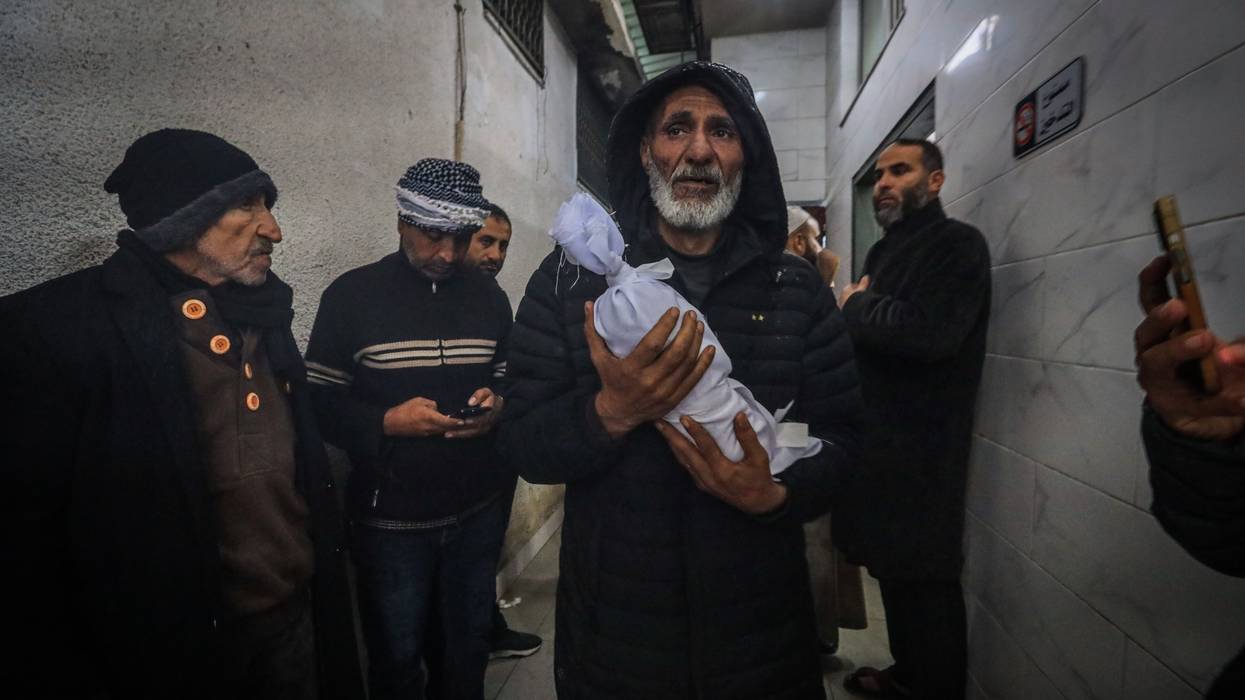
Israel Defense Forces strikes killed at least 28 Palestinians including a woman and 17 children in the Gaza Strip Wednesday in the latest of what local officials say are over 400 Israeli violations of a tenuous ceasefire.
The IDF said it carried out strikes targeting neighborhoods in Gaza City and Khan Younis after "terrorists" opened fire on occupation troops—none of whom were harmed—in what the IDF called "a violation of the ceasefire agreement."
Gaza officials said that more than 100 people were also wounded in Wednesday's attacks, including one which medical personnel said targeted a building housing displaced families in the Zeitoun neighborhood, southeast of Gaza City.
Hamas—which rules Gaza and led the October 7, 2023 attack on Israel—condemned the attacks as “a dangerous escalation” and refuted the IDF’s claim while accusing Israel of attempting to “justify its ongoing crimes and violations.” Hamas also urged the United States to exert “immediate, serious pressure” on Israel to “respect the ceasefire and halt the aggression against our people.”
Israeli forces also continued bombing southern Lebanon on Wednesday, a day after at least 13 people were killed in an IDF airstrike on a Palestinian refugee camp in Ain al-Hilweh near Sidon. Local officials said most of the victims were children playing soccer.
Israel has been accused of repeatedly violating its ceasefire agreements with Hamas in Gaza and Hezbollah in Lebanon.
More than 300 Palestinians have been killed and over 750 others wounded in what officials say are nearly 400 Israeli violations of the October ceasefire with Hamas.
Since agreeing to a truce with Hezbollah in November 2024, Israeli forces have also killed at least 121 civilians, including 21 women and 16 children, in Lebanon, according to officials there.
Overall, Israel's 775-day assault and siege on Gaza has left at least 249,000 Palestinians dead, maimed, or missing and millions more forcibly displaced, starved, and sickened.
Israel’s bombardment and invasion of Lebanon killed more than 4,000 people, according to the Lebanese Ministry of Public Health. This figure includes at least 790 women and 316 children. More than 16,600 others have been wounded. Upward of 1.2 million Lebanese were also forcibly displaced by Israel’s attacks and invasion.
"Holocaust education is too successful, it made the kids anti-holocaust while Israel is trying to do one," quipped one prominent critic.
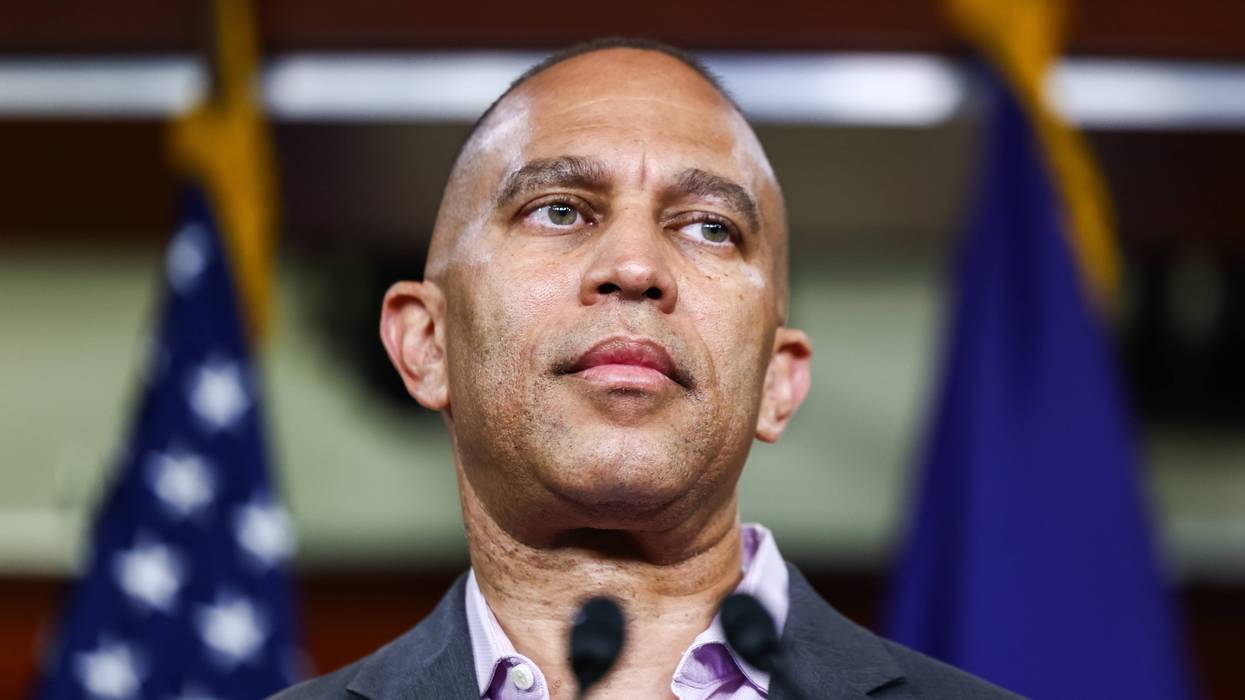
A speechwriter for prominent Democrats including former President Barack Obama and presidential candidates Hillary Clinton and John Kerry faced widespread outrage this week after video emerged of her blaming Holocaust education for young Jews' empathy for Palestinians in Gaza and revulsion at Israel's genocidal war there.
Earlier this week, Sarah Hurwitz—who was also a senior speechwriter for former First Lady Michelle Obama and other Democrats—spoke at the opening plenary of this year's Jewish Federations of North America general assembly in Washington, DC. The event featured speakers including Free Press staff writer Olivia Reingold, who implicitly attempted to absolve Israel from blame for the Gaza famine by noting that 12 of the at least 463 Palestinians who starved to death had preexisting health conditions.
"There have been huge shifts in America on how people think about Jews and Israel, and I think that is especially true of young people," Hurwitz said during the panel discussion, noting the rise of social media as a primary source of news and information.
"Today, we have social media," she added "Its algorithms are shaped by billions of people worldwide who don't really love Jews."
Hurwitz continued:
It's also this increasingly post-literate media. Less and less text, more and more videos, so you have TikTok just smashing our young peoples' brains all day long with video of carnage in Gaza. And this is why so many of us can't have a sane conversation with younger Jews, because anything we try to say to them, they are hearing it through this wall of carnage. So I wanna give data and information and facts and arguments and they are just seeing in their minds carnage, and I sound obscene.
"I think, unfortunately, the very smart... bet we made on Holocaust education to serve as antisemitism education, in this new media environment, I think that is beginning to break down a little bit, because Holocaust education is absolutely essential," Hurwitz asserted.
"But I think it may be confusing some of our young people about antisemitism, because they learn about big, strong Nazis hurting weak, emaciated Jews," she added, "...so when on TikTok all day long they see powerful Israelis hurting weak, skinny Palestinians, it's not surprising that they think, 'Oh, I know, the lesson of the Holocaust is you fight Israel, you fight the big powerful people hurting the weak people.'"
Reaction to Hurwitz' remarks ranged from incredulity to anger.
"I am almost literally speechless," American-Arab Anti-Discrimination Committee nation legal director Jenin Younes said on X. "She's decrying the fact that kids' takeaway from Holocaust education has been that we must protect helpless people from powerful people killing them. The real lesson from the Holocaust, it seems, is that Israel must be able to commit genocide if it wants to."
Argentinian economist Maia Mindel also took to X, writing that it is "extremely grim that a substantial number of very influential people seem to think that the lesson from the Holocaust isn't 'mass murder of civilians based on their ancestry so your nation can take their land is wrong' but rather, 'Fuck you, got mine.'"
Jewish Currents editor-at-large Peter Beinart wrote on X that "the level of condescension" in Hurwitz's commentary "is quite remarkable."
Writer Bryce Greene lamented: "We're at the point where Israels supporters are now claiming that the Holocaust was not bad because it was the powerful attacking the weak."
"No, that would be the wrong lesson from the Holocaust," he added. "According to them it was only bad because Jews were the victims. Real sick shit."
Independent journalist Ahmed Eldin said on X that "Zionism is so morally bankrupt it sees empathy as a design flaw."
Eldin wrote Wednesday on his Substack that "Hurwitz didn’t slip up—she said the quiet part out loud and exposed the Zionist project for exactly what it is."
"She even admitted that, amidst the carnage, she sounds 'obscene,'" he noted. "That admission, said almost accidentally, is the closest thing to honesty her worldview will allow: The problem is not the violence of Zionism itself, but the visibility of it. Zionism, as she inadvertently revealed, depends not on morality but on opacity. The ideology requires not less brutality, but simply fewer witnesses."
Moving on to Holocaust education, Eldin wrote:
According to Hurwitz, Holocaust curricula have “backfired” because they taught young people that “you fight the big powerful people hurting the weak people.” In her telling, this universal ethical principle—this most basic moral intuition—is the problem.
The implication is staggering: the “correct” lesson of the Holocaust, she seems to believe, is not “never again for anyone,” but “never question Israel.” What outrages her is not the suffering of Palestinians but the possibility that young people are recognizing it as suffering.
"A world that is witnessing and seeing Palestinians as human is a world in which Zionism cannot function," Eldin concluded. "A world that sees the violence cannot romanticize the ideology producing it. Once people witness the truth, the mythology cannot be resuscitated and the propaganda cannot be rehabilitated."
"Israel may be able to flatten Gaza’s buildings, but it cannot rebuild the ignorance it once relied upon," he added. "The truth is already out, the narrative collapse well underway, the mask irretrievably gone."
“We are grateful for everything this country has given us and our children,” said one man. “But the system has become downright cruel toward immigrants.”
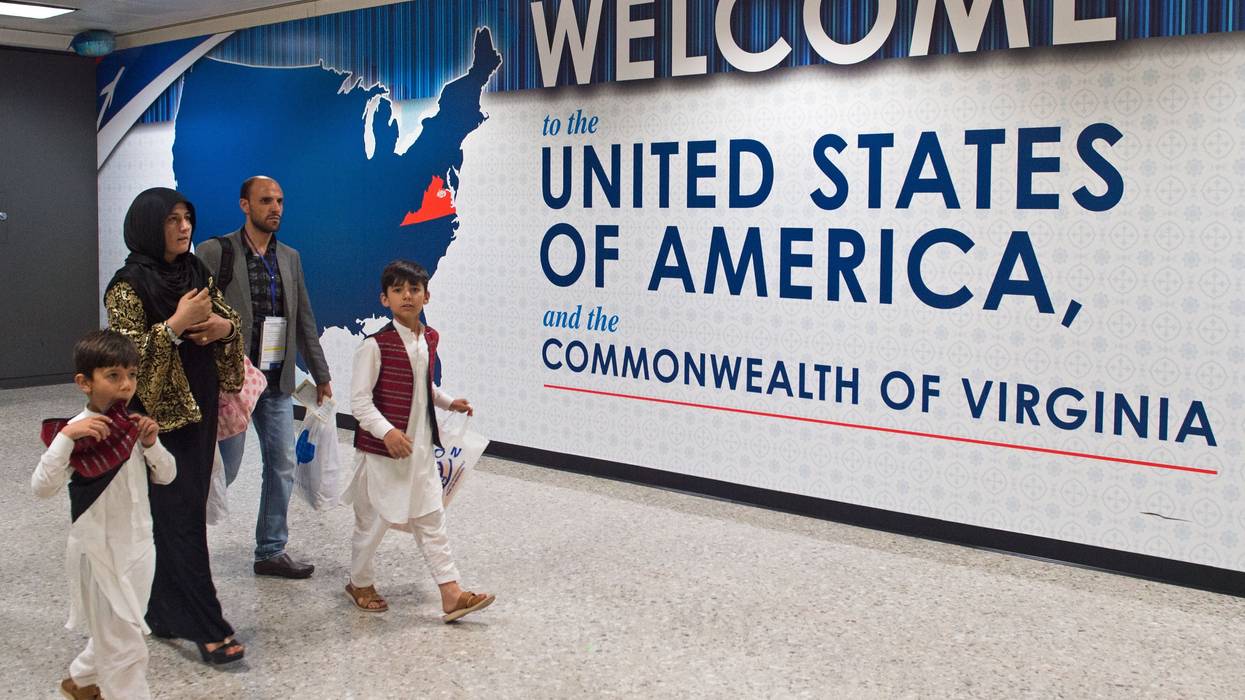
For people who have immigrated to the United States—regardless of whether they have legal status—life under the second Trump administration has provoked daily anxiety and fear—forcing many to make choices about whether it's safe to go to church services that once provided a sense of community, seek medical care, and send their children to school.
As federal immigration agents continued raiding communities in Charlotte, North Carolina—the latest target of the administration's mass deportation campaign—as well as other cities across the US, the New York Times/KFF poll released Tuesday gave a comprehensive look at how President Donald Trump's anti-immigration policies have impacted both undocumented immigrants and people who have green cards and other legal documentation.
Nearly 80% of undocumented immigrants reported negative health impacts due to worries about being deported, separated from their families, or otherwise harmed due to their immigration status.
Health impacts they reported include problems sleeping or eating, worsening health conditions such as high blood pressure and diabetes, and worsening anxiety or stress.
Immigrants with legal documentation also reported these impacts in large numbers, with 47% saying they have experienced health issues stemming from worries about Trump's policies. Nearly a third of naturalized citizens said the same.
A 34-year-old Colombian woman in New York said her family is "scared of going out."
“We’re getting depressed," she said. "We’re scared that they’ll separate us, they’ll mistreat us.”
While experiencing increased negative health impacts, immigrants have become more likely to avoid getting medical care—as viral videos have shown US Immigration and Customs Enforcement (ICE) agents making arrests at medical offices.
Under the Biden administration, ICE and other federal agents were barred from conducting immigration enforcement at sensitive locations like schools and hospitals, but Trump rescinded those limits.
Between 2023-25, the share of adult immigrants who reported skipping or delaying healthcare increased from 22% to 29%. One in five said it was due to immigration-related worries.
Nearly a third of parents also said they had delayed or avoided medical appointments for their children; the share rose to 43% for undocumented immigrant parents.
About half of all adult immigrants and nearly 80% of undocumented immigrants said they were "somewhat" or "very" concerned about healthcare providers sharing information with immigration enforcement officials.
Two years ago, about 26% of immigrants reported fears that they or a family member could be deported or detained, and that number has jumped to 41%.
One-third of noncitizen immigrants said they have begun avoiding aspects of everyday life, and nearly 60% of undocumented immigrants said the same.
"We have been the workforce in construction, restaurants, janitorial,” Ana Luna, an immigrant who has lived in Los Angeles with her family for nearly two decades, told the Times. “Now we have to run, hide, or stay inside. And it’s especially heartbreaking for our children.”
Luna told the Times that her youngest child's school had recently informed her that immigration enforcement was nearby.
“We are grateful for everything this country has given us and our children,” her husband, Gabriel Lorenzo, told the Times. “But the system has become downright cruel toward immigrants.”