

SUBSCRIBE TO OUR FREE NEWSLETTER
Daily news & progressive opinion—funded by the people, not the corporations—delivered straight to your inbox.
5
#000000
#FFFFFF
To donate by check, phone, or other method, see our More Ways to Give page.
Daily news & progressive opinion—funded by the people, not the corporations—delivered straight to your inbox.
The number of lobbyists seeking to influence federal policy on climate change has grown more than 300 percent in five years, with a slew of new interests from Main Street to Wall Street adding to the challenge of addressing global warming, according to a new Center for Public Integrity report, The Climate Change Lobby. The report provides a first-of-its-kind look at the universe of special interests shaping debate in the United States and how it has sharply expanded between 2003-- when Congress previously voted on climate change-- and 2008.
The Center for Public Integrity is a nonprofit organization dedicated to producing original, responsible investigative journalism on issues of public concern. The Center is non-partisan and non-advocacy. We are committed to transparent and comprehensive reporting both in the United States and around the world.
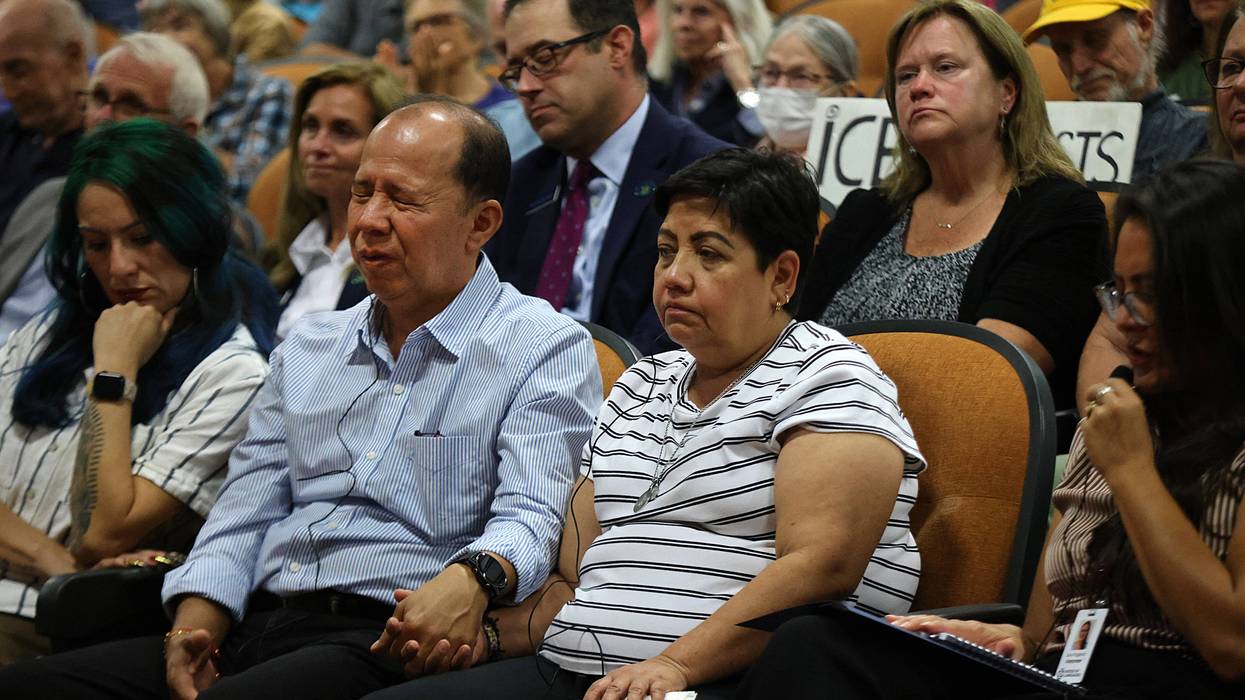
"I ask only of God and of the justice system that my son’s case be brought to light, along with the cases of the many others who have had to go through something like this," said the father of Johan Sebastián Durán Guerrero.
With Republican lawmakers refusing to use their congressional authority to investigate a federal agent's fatal shooting last month of Johan Sebastián Durán Guerrero in Biddeford, Maine, Democratic leaders assembled a "shadow hearing" on Monday at a local high school, where the 25-year-old's grieving father was among those who spoke to a crowd of about 200 people and pleaded for answers about his son's killing.
“The death of Johan Sebastián, under those conditions, at the hands of ICE, filled our community with fear and uncertainty," said Omar Durán, referring to US Immigration and Customs Enforcement. "That is why I ask only of God and of the justice system that my son’s case be brought to light, along with the cases of the many others who have had to go through something like this.”
Durán Guerrero was at least the 11th person to be fatally shot by federal agents since President Donald Trump began deploying ICE and other agencies under the Department of Homeland Security (DHS) to cities and towns across the US to carry out his mass deportation operation.
Federal agents have shot at more than 20 people on US streets under the Trump administration; Durán Guerrero was among several who have been shot at while driving a vehicle, which is against ICE's own policies.
Rep. Chellie Pingree (D-Maine) reported Monday that the ICE agents who were operating in Durán Guerrero's neighborhood in Biddeford on the morning of July 13 were actually looking for his roommate, who owned the car he was driving.
NEW: Chellie Pingree reveals the intended target of the Biddeford ICE stop last month was Johan Sebastian Guerrero's roommate: pic.twitter.com/AEubBvMAjN
— The Maine Wire (@TheMaineWire) August 17, 2026
Pingree said agents did not have a final removal order for the person who was the target of their operation, contrary to what DHS has said about the case.
“This shocking revelation in clear contradiction to what ICE and DHS have been saying about the operation raises fundamental questions,” Pingree said. “How is ICE deciding who to target and detain in Maine? What information are agents relying on?”
"If ICE cannot accurately determine a person's immigration status or circumstance before taking enforcement action, that is a profound failure of competence and accountability," the congresswoman added.
Even in cases where ICE has a deportation order for a person, agents are prohibited from using deadly force unless they have reason to believe the target of the operation poses an imminent threat to an officer's or someone else's safety.
An agent identified as David Michael Brouillette shot Durán Guerrero, who had a 3-year-old daughter with his partner, and DHS has claimed that the officer fired his weapon because Durán Guerrero was trying to flee and Brouillette feared "for public safety."
The agents involved in the operation were not wearing body cameras that were turned on at the time of the shooting, but an eyewitness reported that Durán Guerrero said, "I tried to stop" when the officers pulled him out of his vehicle, bleeding profusely from his head. Surveillance footage taken from a nearby store showed a white car circling an intersection after the shooting before agents stopped it.
"If there were active body cameras on every law enforcement member who was participating there, we wouldn’t be looking at some scratchy videos from one store that’s over here, or one person that’s standing in their doorway that’s trying to get it,” Pingree said at a news conference after Monday's hearing. “We would actually know every moment that’s happened at the scene.”
Durán Guerrero worked as a delivery driver and a cleaner at a veterinary clinic, and had a valid work permit and a pending asylum case.
A lawyer for Durán Guerrero's family said state investigators have interviewed his partner, Karolina Rojas, but no federal agencies have ever contacted her following the killing.
"Any reasonable investigation would include interviewing the family and eyewitnesses,” the lawyer, Ben Gideon, said Monday.
DHS said after the shooting that its inspector general would investigate, but both the agency and the Justice Department refused to answer questions from The New York Times about whether the probe had begun.
The office of Maine Attorney General Aaron Frey is investigating the shooting, and is expected to present its findings to the Maine Deadly Force Review Panel. The panel can make recommendations to DHS, but it does not have jurisdiction over the federal agency.
Durán Guerrero's parents traveled from his home country of Colombia for the shadow hearing. His mother did not speak publicly, while his father described the "deep pain" of hearing his young granddaughter ask where Durán Guerrero is.
The father of Johan Sebastian Duran Guerrero, the man who was shot and killed by an ICE officer in Biddeford last month, delivered an emotional statement during a field hearing about the deadly shooting in Maine. https://t.co/QH8J1JtFVk pic.twitter.com/jYx70sCAUw
— WMTW TV (@WMTWTV) August 17, 2026
"Our dream was always to be reunited and to hold each other again," he said. "Today, that dream can no longer come true."

Trump has cleared the way for 45 million acres of protected forest to be opened for logging and construction in what one conservation group called the "largest evisceration of public lands protection in American history."
The Trump administration is moving to reverse a decades-old rule that protected 45 million acres of forest lands from logging and construction, in what the Center for Biological Diversity called the "largest evisceration of public lands protection in American history."
On Tuesday, Agriculture Secretary Brooke Rollins announced that the US Forest Service had filed a proposed rule to fully rescind the 2001 Roadless Area Conservation Rule, enacted under former President Bill Clinton, which had prevented road building and commercial logging on about 30% of all national forest land.
Rollins described the "roadless rule" as a barrier to government wildfire prevention efforts. "Across the country, we’ve watched preventable conditions—overgrown stands, insect outbreaks, and disease—turn healthy landscapes into tinderboxes,” she said. "For too long, outdated restrictions have kept tens of millions of forested acres off-limits to the very treatments that improve forest health and reduce wildfire risk to our communities."
But conservation groups argue that the administration's reversal of the roadless rule has little to do with wildfire prevention and everything to do with opening up protected lands to logging interests and other extractive industries, which have long pushed for the rule to be weakened.
Increasing logging on federal lands has been a major goal of Trump's second term, and repealing the roadless rule is part of that effort. An executive order signed in March 2025 calling for the "immediate expansion" of timber production said that federal policies had made the country unable to "fully exploit our domestic timber supply."
In June2025, when the US Department of Agriculture first announced plans to rescind the roadless rule, it said that increasing timber production would be one of the benefits. The USDA said the rule hurt “jobs and economic development” and that repealing it aligned with Trump's goal to eliminate "barriers that hamper American business and innovation."
Earthjustice has argued that, contrary to what the administration says, repealing the roadless rule will actually lead to more wildfires, not fewer.
It points to findings from the Forest Service that 9 in 10 wildfires are caused by human activity, including throwing cigarettes out of windows, leaving campfires abandoned, and driving cars on grassy areas, causing them to ignite.
A peer-reviewed study published in January in the journal Fire Ecology by researchers with The Wilderness Society found that fires are about four times as likely to start near a road as in roadless forests.
Another study by the Forest Service in 2020, during the first Trump administration, examined two decades of data and found that roadless forests actually received more fuel-reduction treatments per square kilometer than areas elsewhere in the National Forest System.
"Speculation that eliminating road prohibitions would improve forest health is not supported by nearly 20 years of monitoring data," the study concluded.
Josh Hicks, director of conservation campaigns at the Wilderness Society, said Tuesday, "Opening our backcountry forests to more roads and development, and therefore more ignitions, is... not a wildfire solution, and never will be."
While doing little to curb the recent increases in wildfires exacerbated by climate change, conservationists argue that repealing the roadless rule will pose other harms to communities and wildlife across the country.
“Roadless forests supply clean drinking water for tens of millions of Americans, are home to irreplaceable wildlife, and store enormous amounts of carbon,” said Gabrielle Berthel, forest advocate at the Natural Resources Defense Council. "Repealing the Roadless Area Conservation Rule would allow for the fragmentation of some of the last intact forest ecosystems in the country, with irreversible consequences for the communities that rely on these forests and the people who seek out these special places for recreation."
The Center for Biological Diversity (CBD) noted that these forests serve as habitats for numerous threatened species that risk being disrupted, including American wolverines, Canada lynx, grizzly bears, and northern spotted owls.
Randi Spivak, the public lands policy director at the CBD, emphasized that "these are some of the last truly wild forests left in the country... Once you start bulldozing roads for commercial logging and industrial development, there’s no getting them back."
More than 625,000 public comments have been submitted to the Forest Service since plans to rescind the roadless rule were announced last June. The USDA will accept public comments on the proposal until September 21, after which the administration is expected to move toward a final rule later this year.
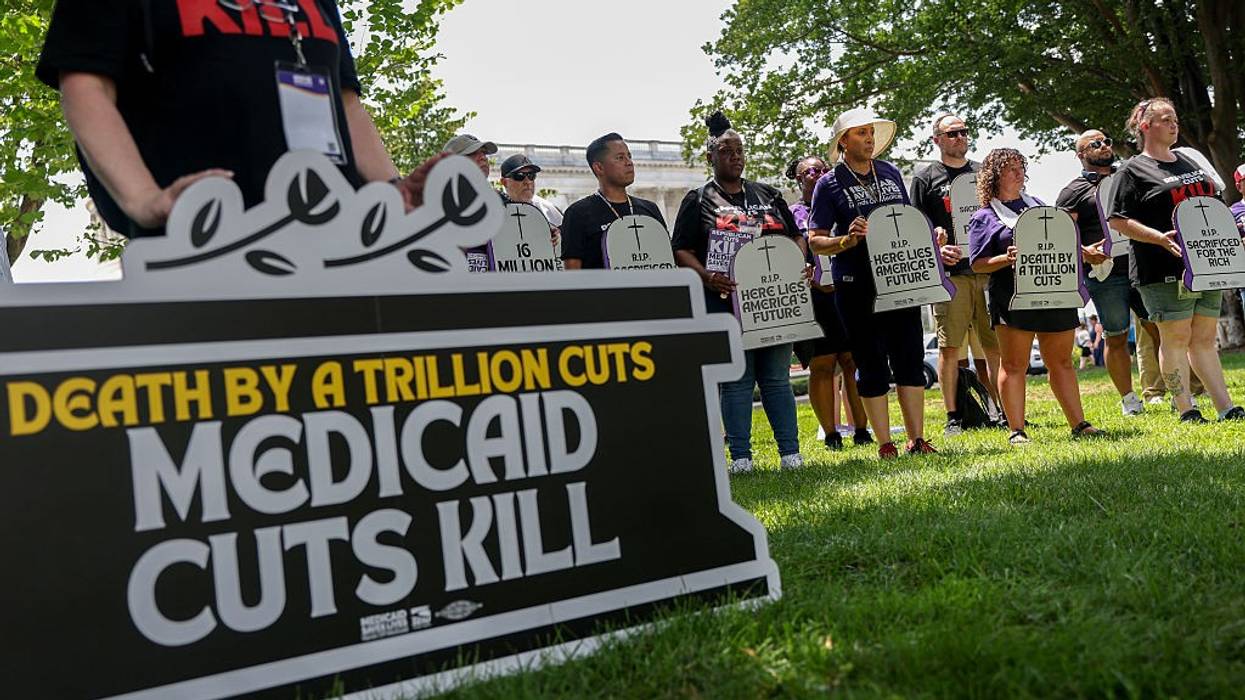
New fact sheets detail how people in every US state are suffering from the Republican Party's assault on Medicaid and the Affordable Care Act.
The unprecedented healthcare cuts that President Donald Trump and the Republican Party enacted last summer have impacted people in all 50 US states, stripping insurance coverage from around 8 million Americans total and wreaking havoc on hospitals and other providers nationwide.
The advocacy group Protect Our Care on Tuesday released state-by-state fact sheets detailing how many people have lost Medicaid, Children's Health Insurance Program (CHIP), and Affordable Care Act coverage due to Republican policy decisions, including the party's roughly $900 billion in cuts to Medicaid and decision to let enhanced ACA subsidies expire, sending premiums skyrocketing.
“Eight million Americans have lost their health care because Donald Trump and Republicans decided they would rather hand out tax breaks to billionaires than protect working families," said Brad Woodhouse, the president of Protect Our Care. "Every day that healthcare becomes more expensive, a family is forced to make an impossible choice between putting food on the table and staying covered, a senior is forced to ration their medication, and an expectant mother has to travel farther to access maternity care."
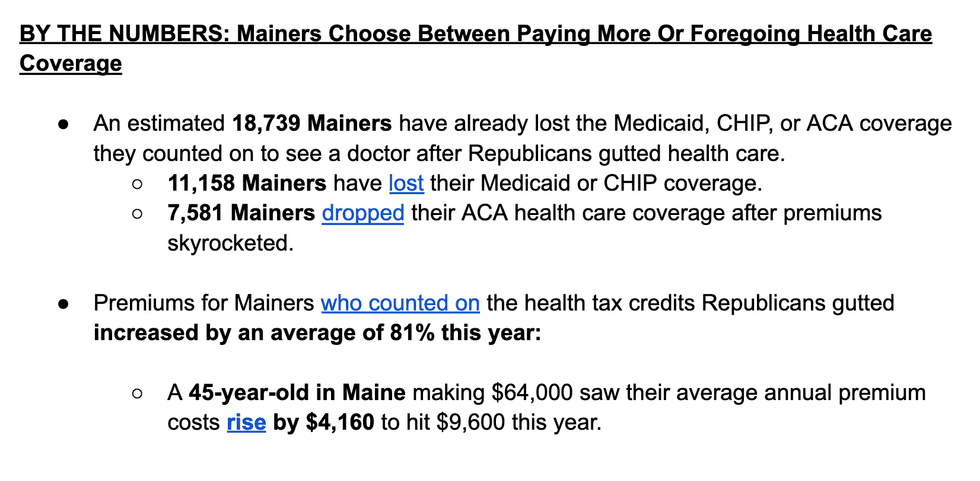
In Maine, where Democrats are looking to finally unseat vulnerable Sen. Susan Collins, more than 18,700 people have lost Medicaid, CHIP, or ACA coverage under the Republican budget law. Included in that total are the more than 7,500 Mainers who dropped ACA marketplace coverage after premiums soared due to the lapse of enhanced subsidies at the end of 2025.
Collins voted to advance GOP budget legislation that included the devastating Medicaid cuts, but voted against final passage.
Protect Our Care noted that "Maine hospitals and clinics are facing a $38 million loss in funding and a 6.7% spike in uncompensated care demand that will affect their ability to keep their doors open."
"As of August 2026, 20 Maine healthcare providers are at-risk, announced cuts, are closing, or have closed," the group added.
More than 25,600 Alaskans have lost health coverage under the Republican budget law and premiums have surged by an average of 346% this year, according to Protect Our Care's fact sheets.
US Sen. Dan Sullivan (R-Alaska), who along with Collins is seen as one of the most vulnerable Republicans this election cycle, voted for the more than $900 billion in Medicaid cuts.
"From Alaska to Florida, these people are our neighbors, our parents, our kids, and they’re sick of paying the price for Republicans’ greed," Woodhouse said on Tuesday. "They deserve better, and in November they will demand it at the ballot box.”

"Taylor Farms’ repeated connection to major outbreaks and recalls warrants a closer look at whether these are unrelated incidents or signs of recurring weaknesses."
An agricultural industry watchdog on Tuesday released a report examining how corporate consolidation enabled this summer's widespread outbreak of Cyclosporiasis, a foodborne illness that causes explosive diarrhea.
The report, published by Farm Action, argues that the wide reach of produce giant Taylor Farms, which is the source of the outbreak, spread food contaminated by the Cyclospora parasite far and wide before an issue was detected.
One problem with Taylor Farms' reach, the report states, is that it is often hidden, leaving people unaware of the source of certain products.
"Taylor Farms produces 40% of the salad kits sold in the country and grows about one-quarter of its own vegetables, sourcing the rest through partner farms," the report says. "That makes it a major link between farms and some of the nation’s largest food buyers."
The company's produce is used at popular fast-food chains such as Taco Bell, McDonald's, and Chipotle, and is sold at big-name grocery stories including Whole Foods, Target, Safeway, and Costco.
Beyond that, its produce is bought by foodservice distribution giants Sysco and US Foods, who send it to assorted schools, hospitals, and hotels.
The report says that the consolidation of the produce production industry was itself enabled by the industry consolidation of grocery stores, restaurant chains, and foodservice distributors, which found it more efficient to buy from conglomerates such as Taylor Farms, which the report categorizes as "grower-shipper-packers (GSPs)."
"Like other large GSPs, Taylor Farms sources produce through regional and international networks rather than relying primarily on nearby farms," writes Farm Action. "That helps explain why investigators traced lettuce implicated in the 2026 Cyclospora outbreak to Mexico, even in the middle of summer when much of the US is capable of growing lettuce."
Because Taylor distributes its produce to so many places under so many different brands, the report continues, consumers have a hard time avoiding them even if they are actively trying.
What's more, the 2026 Cyclospora outbreak isn't the first time Taylor has been linked to a food safety event, as Farm Action found that it was connected to "the 2026 Salmonella outbreak linked to jalapeño products, previous Cyclospora outbreaks, the 2024 E. coli outbreak linked to McDonald’s onions, the 2021 E. coli cluster involving romaine lettuce, and numerous recalls for allergens, labeling errors, contamination risks, and processing defects."
"These incidents do not by themselves prove a pattern of systemic problems," the report adds. "But Taylor Farms’ repeated connection to major outbreaks and recalls warrants a closer look at whether these are unrelated incidents or signs of recurring weaknesses."
The report concludes by recommending stronger enforcement of US antitrust laws to break up big distributors, as well as stronger food safety and traceability policies.
Sarah Carden, senior director of research and policy at Farm Action, said the report on Taylor Farms should be a wakeup call to food safety regulators about the dangers of corporate centralization.
"Taylor Farms has extraordinary reach across the produce supply chain, a history of connections to major food safety events, significant political spending and access, and a workplace record that raises serious questions," said Carden. "Its growth also shows how consolidation has left farmers with fewer buyers and made our food supply increasingly dependent on a small number of powerful companies."

"It is the height of absurdity that Congress is even considering a proposal to become more entangled with the Israeli military and use our tax dollars to subsidize their weapons companies."
A new poll of US voters published on Tuesday offers a warning for congressional lawmakers backing a plan to deepen military ties between the United States and Israel, finding that a clear majority of voters oppose the proposal—which some critics have called "treasonous."
The Data for Progress survey of 1,217 likely US voters—conducted August 3–7 for Demand Progress and the Institute for Middle East Understanding (IMEU) Policy Project—revealed that 61% of respondents oppose legislation in the National Defense Authorization Act (NDAA) for 2027 that would integrate Israeli weapons companies into the Pentagon at a level exceeding that of any other country. That figure rose to 78% among Democrats and 73% among independents.
“This poll is a flashing red warning sign for any member of Congress who supports the defense authorization bill," Demand Progress senior policy adviser Cavan Kharrazian said in a statement. "A clear majority of voters do not support further integrating the Israeli military and Israeli military companies into the Pentagon, which the NDAA is set to do."
NEW POLL: 61% of Americans - including 78% of Democrats and 73% of Independents - oppose a measure moving through Congress to integrate Israeli weapons companies into the Pentagon. Read more of the results from our poll with @demandprogress.bsky.social andconducted by @dataforprogress.org.⬇️
[image or embed]
— IMEU Policy Project (@imeupolicy.bsky.social) August 18, 2026 at 8:14 AM
The Republican-controlled House of Representatives voted last month 216-212, mostly along party lines, in favor of a record $1.15 trillion NDAA. The military spending bill contains Section 219, a provision that would create a US–Israel Defense Technology Cooperation Initiative, accelerating joint defense research, development, testing, and integration of technologies including artificial intelligence, missile defense, and counter-drone systems.
Reps. Thomas Massie (R-Ky.) and Ro Khanna (D-Calif.) submitted an amendment to strip Section 219 from the NDAA. The measure failed to pass.
Congresswoman Ilhan Omar (D-Minn.), who voted against the NDAA, described Section 219 as “an outrageous threat to our country’s security and autonomy."
The Senate version of the military spending authorization bill has a related provision—Section 1217, the United States-Israel FUTURES Act—and the two chambers will need to reconcile their NDAA legislation before the final language is decided. Reconciliation is not expected to occur before November at the earliest.
“It’s time for Congress to listen to the American people for once, and not the same voices who always want to cut Israel a blank check," Kharrazian said. That "blank check" has totaled more than $174 billion in non-inflation-adjusted aid since the modern state of Israel was founded in 1948.
The new poll found that 57% of respondents believe the Israeli military and Israeli weapons companies should not receive increased access to US military systems. Fifty-one percent said Israel benefits more from the US-Israel relationship, compared with just 12% who said the United States benefits more.
Although Republican voters support the Pentagon provision by a 16-point margin, when asked about it without additional context, they are considerably less enthusiastic about the idea of granting any foreign military special access, opposing it 62%-27%.
Forty percent of surveyed voters said they believe that the US-Israeli relationship is "too close," compared with 42% who say it is "about right." Among Democrats, 56% say relations are too close, versus just 23% who say about right. Twenty-two percent of Republicans and 43% of Independents said US-Israeli relations are too close.
Asked if they think President Donald Trump is too supportive of Israel's right-wing government, 49% said yes, compared with only 33% who said the president is giving Israel the right amount of backing and just 8% who believe he's not giving the key ally enough support.
Respondents' views of Israel itself have deteriorated markedly, with 44% saying they now view the country less favorably than they did three years ago—compared with just 17% who say their views have improved amid the war of annihilation in Gaza that United Nations experts, human rights groups, and a South Africa-led case currently before the International Court of Justice call a genocide, as well as the wider Israeli occupation, colonization, ethnic cleansing, and apartheid in Palestine.
Looking only at the past six months, 41% of respondents said their view of Israel has become less favorable, versus 16% who say it has become more favorable. Among Democrats, the split is 56%-13%; among Independents it's 42%-11%.
“Israel is a nation committing genocide that just dragged the American people into a disastrous war that is still hitting our pocketbooks," IMEU Policy Project executive director Margaret DeReus said, referring to the Iran War. “Senators take an oath to do what is best for the American people above all; to uphold that oath, they must scrap this ridiculous proposal.”
"It is the height of absurdity," DeReus added, "that Congress is even considering a proposal to become more entangled with the Israeli military and use our tax dollars to subsidize their weapons companies."

"Randy Fine is a menace to basic human decency," said one critic.
US Rep. Randy Fine, who has become notorious for his bigoted remarks against Muslims throughout his political career, was caught on camera Sunday rifling through the mailbox of a Florida voter.
A video that went viral on social media Monday shows Fine (R-Fla.) ringing the doorbell of a resident in Florida's 6th Congressional District, where he was canvassing for votes ahead of Tuesday's Florida congressional primary.
After the resident does not answer the door, Fine is seen opening up their mailbox and flipping through its contents for a few seconds.
Randy Fine just got caught committing a felony on camera. Your congressman just tried going through your mailboxes. That is a federal crime. I am calling on Randy Fine’s immediate removal from Congress & for an investigation to be opened. pic.twitter.com/UnyGquiS1S
— DannyKPolitics (@DannyKPolitics) August 18, 2026
Fine's office confirmed to TMZ on Tuesday that the Florida Republican, who was endorsed by President Donald Trump over the weekend, is the man seen in the video.
According to an article published by Legal Overview in May, opening another person's mailbox and touching their mail could run afoul of 18 USC § 1702 and result in felony charges for obstruction of correspondence.
Fine's potentially illegal actions drew ridicule from Rep. Mark Pocan (R-Wisc.), who observed in a Tuesday social media post that MAGA politicians seemingly can't stop committing crimes.
"Watch my 'colleague' Randy Fine break the law by going through someone’s mail," write Pocan. "MAGA movement’s newest hero is breaking federal law. Just like Daddy Trump. Time to throw these bums out in November!"
Former Democratic Florida US House candidate Barbie Harden Hall also mocked Fine.
"Why are you looking through someone’s mailbox while you’re out canvassing?" she asked. "Not only is it wrong, it’s creepy as fuck. Randy Fine is a menace to basic human decency."
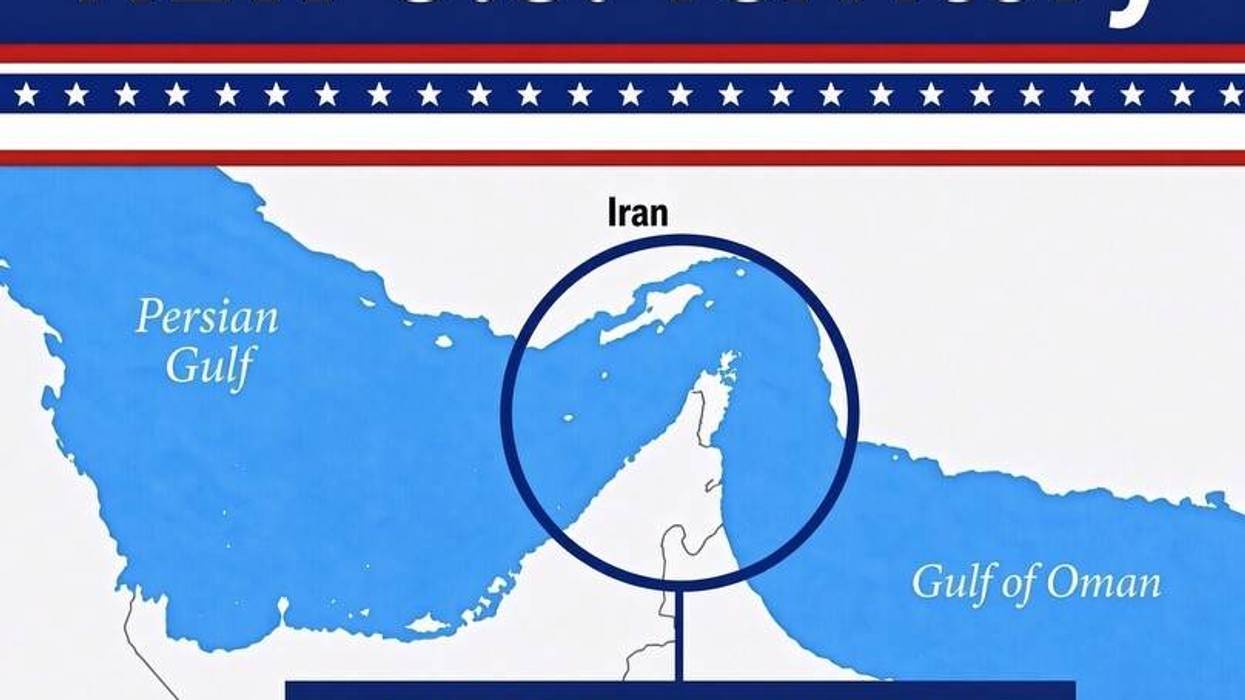
The Iranian Parliament speaker said the strait will stay closed until the US blockade and oil embargo are lifted, and any party continuing its "aggression or threats" would face a "more severe defeat."
Just days after threatening to declare the Strait of Hormuz a US territory, President Donald Trump on Tuesday posted a map on his Truth Social platform with that label over the crucial waterway—and was swiftly called out by a top Iranian diplomat.
"Just as Trump correctly wrote the name of the Persian Gulf, his illusion about the Strait of Hormuz will soon be corrected—or we will correct the delusions of this delusional individual," Iran's deputy foreign minister, Kazem Gharibabadi, responded in Arabic on X.
Gharibabadi included a screengrab of Trump's post featuring a map that shows the strait, which is south of Iran and runs between the Persian Gulf and Gulf of Oman.
Since Trump and Israel began illegally bombing Iran on February 28, the Middle East country has restricted traffic through the strait, a key shipping route, particularly for fossil fuels. That has driven up fuel prices worldwide, including in the United States, where the cost for a gallon of gasoline just hit a record high for mid-August.
Despite the economic toll at home, the range of impacts across the Middle East—where nearly six months of war have killed thousands of people—and a plummeting approval rating, Trump said last week that "I'll never apologize, I did the right thing."
That declaration and Trump's threat over the strait came in a Friday speech on Long Island, after which critics across the United States and beyond condemned the president as a "completely unhinged lunatic" and "sadistic violent menace to the world" who ought to be impeached again.
By Monday, a 60-day ceasefire deal expired, and neither side has signaled any progress on talks to end the war—which Trump claims is aimed at stopping Iran from building nuclear weapons, even though his own intelligence agencies have said it wasn't trying to do so. Trump notably ditched the Obama administration's Iran nuclear deal during his first term.
According to Palestine Chronicle, Iranian Maj. Gen. Mostafa Izadi, deputy commander-in-chief of the Islamic Revolutionary Guard Corps, said Tuesday that "the enemy failed to destroy Iran's defensive capabilities and nuclear industries."
As for the strait, Iranian Parliament Speaker Mohammad Bagher Ghalibaf said that it will stay closed until the US blockade and oil embargo are lifted, and warned that any party continuing its "aggression or threats" would face a "more severe defeat."
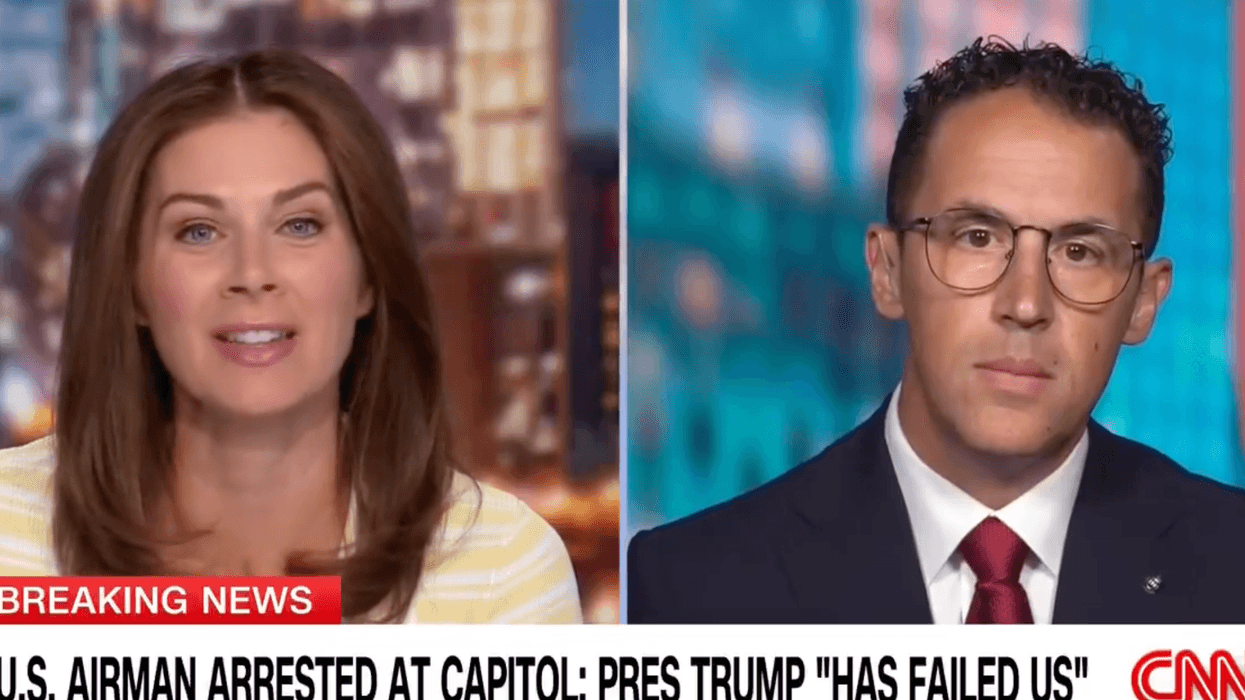
"Not only is he a failure as president, he is flagrantly violating the Constitution, breaking the law, engaged in rampant corruption, and is killing Americans, and that is unacceptable to me," said Maj. Jason Watson.
Maj. Jason Watson's participation in a protest organized last month by the Removal Coalition, a group that calls for President Donald Trump's impeachment, wasn't his first foray into speaking out against the commander-in-chief.
He spent 22 days last year on a hunger strike, staying anonymous by wearing a white mask and white jumpsuit on the US Capitol grounds, next to a sign that read: “Impeach. Convict. Remove.”
But the US airman spoke Monday about what pushed him last month to go public with his protest against Trump's unprovoked war on Iran, displaying the same sign at a news conference organized by Removal Coalition, where he wore his Air Force uniform and was identified by name.
"If I don't put myself out there in a big way, it's just noise," Watson told CNN anchor Erin Burnett. "We can change what is happening in our country if we're just willing to pay a price for it."
Air Force Maj. Jason Watson tells @ErinBurnett he is speaking out against Trump knowing the potential consequences and laws governing the US military: “Nothing that is worth doing, is something that you can do for free… we can change what is happening in our country if we’re… pic.twitter.com/UtBuBM6gOA
— Erin Burnett OutFront (@OutFrontCNN) August 18, 2026
His public dissent against the broadly unpopular war could violate Article 88 of the Uniform Code of Military Justice, which mandates punishment against “any commissioned officer who uses contemptuous words” against the president, military leaders, or US government officials, or Article 134, which prohibits statements "made with the intent to promote disloyalty or disaffection toward the United States."
Air Force Secretary Troy Meink has said the military is investigating the protest. Watson could face dishonorable discharge, a loss of military pay, and months in prison for violating the Uniform Code.
When considering his public protest, Watson said he asked himself, "What's the highest price that I'm willing to pay, and this is what I ultimately came up with."
He said he was "absolutely motivated" by his oath to the US Constitution and his concern for the future of the country as Trump and continues to threaten Iran and other countries in the Middle East, nearly six months after the president joined Israel in waging war on Iran.
"Any American can say, this government is intolerable and I want a better future for my children, and I want to hand them a better country than I inherited," said Watson.
After he joined the news conference on the Capitol steps last month, Watson was arrested by the US Capitol police. He was held in jail overnight and transferred to the DC Superior Court before the DC attorney general dropped the charge, but Air Force police officers then took him into custody and held him at Joint Base Anacostia-Bolling.
Air Force Major Jason Watson calls for the immediate removal of President Donald Trump and VP JD Vance from office at a press conference in front of Congress Wednesday afternoon.
He cites the numerous Constitutional violations undertaken by the Trump administration, from his… pic.twitter.com/YePHlxpLtn
— BreakThrough News (@BTnewsroom) July 2, 2026
Jessica Denson, founder of the Removal Coalition, told The Washington Post last month that Watson was "prepared for the worst-of-the-worst outcome" of his protest.
Watson said after his arrest that during his previous anonymous protest, he had been overly concerned with being identified, considering the Uniform Code.
“There was nobody paying attention because it’s just easy to ignore a lone actor, especially dressed the way that I was," he said on Denson's podcast, "Lights On."
He told Burnett Monday: "Nothing that is worth doing is something that you can do for free. Everything that is worthwhile is going to cost something."
"It's going to be hard, it's going to require sacrifice, and we are in an incredibly challenging time, and in order for us to get out of this situation we all have to have courage," he said.
On CNN, Watson doubled down on speaking out against Trump's war in Iran, which has killed more than 3,400 Iranians, including hundreds or children and women, as well as thousands of people across the Middle East as the conflict has widened, and at least 17 US service members.
The war has also worsened the affordability crisis in the US as oil and gas prices have soared, and led to a standoff over control of the Strait of Hormuz, which Iran effectively closed in retaliation for the US-Israeli assault.
"What is happening with the Iran War is very predictable strategically, and a lot of much smarter people than me knew that it would have gone pretty poorly," said Watson. "And he chose to do it anyway."
Air Force Maj. Jason Watson, who was arrested at the US Capitol after calling for Trump’s impeachment and removal from office, says the Iran war motivated him to speak out: “What he did was unconstitutional. It was an aggressive war of choice.” pic.twitter.com/wk9n0F6G7J
— Erin Burnett OutFront (@OutFrontCNN) August 18, 2026
"At the end of the day, it's also more important to remember that what he did was unconstitutional," said Watson. "It was an aggressive war of choice that, if we saw another country do that, we would probably look to our allies and say, 'What are we gonna do about this?'"
He compared the US war on Iran with Russia's incursion in Ukraine—another "aggressive war of choice."
"He has failed us," Watson said of Trump. "Not only is he a failure as president, he is flagrantly violating the Constitution, breaking the law, engaged in rampant corruption, and is killing Americans, and that is unacceptable to me."
"At long last! A broadcast network has found a backbone," said one First Amendment advocate.
ABC and its parent company Disney filed a First Amendment lawsuit against the Federal Communications Commission on Tuesday over what it called a "deeply un-American" effort by the Trump administration to punish broadcasters for airing speech critical of the president.
The suit comes in response to an April order by the FCC requiring Disney's eight ABC stations to file their broadcast renewal requests years ahead of schedule. As the Knight First Amendment Institute pointed out, it's the first time the FCC has ordered a broadcast station to submit early license renewals in more than 50 years.
The unusual request came after President Donald Trump had repeatedly suggested that networks giving him "negative coverage" should have their broadcast licenses "terminated."
ABC has argued that the license renewal demand is part of an effort to "attack" its First Amendment-protected speech.
"Government censorship is deeply un-American," the lawsuit, filed before the US District Court for the District of Columbia, said. "Acting through the Federal Communications Commission, the administration has waged a retaliatory campaign against ABC for a single reason: it disapproves of what ABC broadcasts."
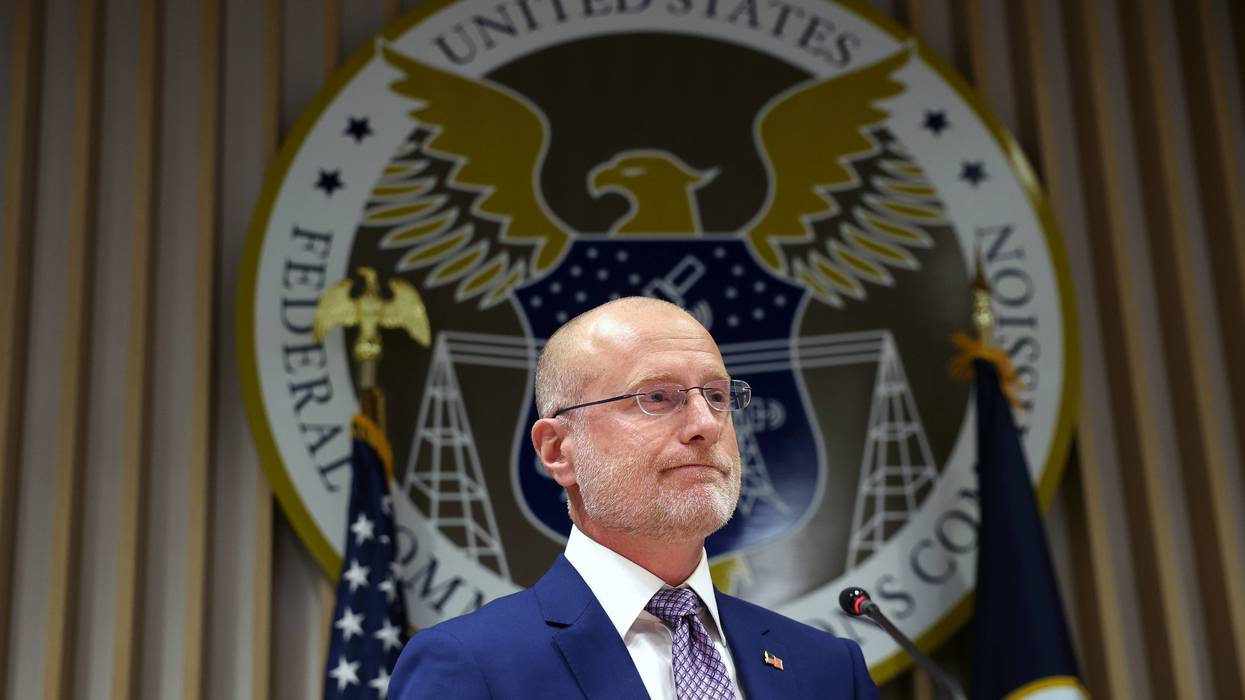
ABC specifically has found itself in the crosshairs of FCC Chair Brendan Carr, who used license authority to pressure the network to remove late-night host Jimmy Kimmel from the air briefly last year following a critical monologue about Trump and Republicans following the assassination of right-wing activist Charlie
The lawsuit quotes what ABC said were blatant efforts by Carr to "coerce" the network into pulling Kimmel, including his ultimatum, "We can do this the easy way or the hard way."
It also notes that the request for the early renewal order was issued just one day after Trump went on another social media tirade against Kimmel over jokes he made about First Lady Melania Trump, which the president claimed inspired an assassination attempt at the White House Correspondents' Dinner. Trump said that Kimmel should “be immediately fired by Disney and ABC.”
Carr has defended the FCC's orders to Disney, stating that they were not about retaliation, but about ensuring that ABC stations operate "in the public interest" as they are required to do under law.
“If broadcasters don’t like that, that’s okay,” Carr told CNBC back in July. “They can become a cable channel, they can become a podcast, they can stream online. But if you want to uniquely be on the public’s airwaves, you have to comply with those obligations.”
Noting previous comments by Carr that public interest considerations should include the "political ideology” of a broadcaster's programming, Monday's lawsuit said the order "thus appears intended to broaden the scope of the agency’s review, including to impermissibly consider the content of ABC programming."
Earlier this year, the FCC also opened an investigation into the daytime talk show The View, alleging that its hosting of interviews with Texas Democratic US Senate candidate James Talarico in February may have violated a rule requiring broadcast stations to give political candidates "equal time" when appearing on air.
ABC has contended that The View has previously been ruled as a "bona fide news interview" program, which is exempt from the rule.
As part of the investigation, the FCC Media Bureau has probed ABC's editorial process, ordering it to produce internal communications among View staff, disclose the political donations of employees, and provide information about ABC's internal guidance for producing interviews
The White House, meanwhile, included The View on a public webpage listing so-called "media offenders." On this page, it singled out the program's co-hosts for the "offenses" of criticizing government officials for “visiting the Alligator Alcatraz ICE detention facility in Florida” and “claiming President Trump was overstepping his authority by constructing a White House ballroom.”
The lawsuit says the FCC's pressure has affected its editorial decision-making. It notes that since the investigation was launched, it has not booked any other congressional candidates on The View.
It also notes that, considering the "risk of resulting administration retaliation," ABC chose to broadcast a speech by Trump in July on its streaming channel ABC News Live in which he made unfounded accusations of rampant voter fraud in the 2020 election, which "it ordinarily would not have done."
Trump again called on the network to have its broadcast license stripped for not airing the speech on its main network. And Carr has said that the FCC would consider that decision as part of the review of ABC's renewal applications.
The lawsuit says the administration is seeking either to mire the company in costly legal fees and intimidate it into compliance or to rip it off the air entirely, as Trump demanded.
"In either scenario," the lawsuit says, "the administration accomplishes its goal of eliminating a perceived media critic: either it gets plaintiffs to fall in line, or it silences them if they refuse."
The lawsuit asks the court to issue a temporary restraining order to prevent the FCC from proceeding with the reviews. It ultimately seeks a ruling that the license-renewal proceedings constitute unconstitutional retaliation that violates the First Amendment.
It notes that the administration has been attempting to coerce other legacy news broadcasters in the same way.
"If the administration gets its way, the message to every media company in the country will be unmistakable: Tell only the stories the administration deems favorable, or face the coercive machinery of the federal government," the lawsuit says. "In such a world, the press could in no way be described as free."
CNN's chief media analyst Brian Stelter described Disney and ABC's lawsuit as "one of the stiffest challenges from any American media company against the Trump administration during Trump's return to office."
Press freedom advocates welcomed the lawsuit as a sign that media outlets were beginning to fight back against the administration's strong-arming tactics rather than appeasing them.
"At long last! A broadcast network has found a backbone and is suing to stop the administration’s bullying and censorship," said Nico Perrino, the executive vice president of the Foundation for Individual Rights and Expression (FIRE).
“It’s about time for someone to take Carr and his FCC to court over their endless campaign of intimidation and retaliation against journalism that displeases Carr’s thin-skinned boss,” said Seth Stern, chief of advocacy for the Freedom of the Press Foundation.
"Carr knows the FCC is not the journalism police and said so regularly himself before he decided to throw away any integrity he once had to kiss up to Trump," Stern added. "Countless others whose First Amendment rights have been chilled by Carr’s antics should follow Disney’s lead.”
ABC has faced criticism for bowing to pressure from Trump in the past. In 2024, after Trump won the presidential election, the network agreed to pay out $15 million after he sued over comments made by anchor George Stephanopoulos, who stated that the president had been found “liable for rape” by a jury when he’d technically only been found liable for “sexual abuse." The president's case against the network was widely viewed as legally dubious.
That lawsuit was seen as an opening of the floodgates for Trump's efforts to coerce and control the media during his second term, and other networks, fearful of retaliation, would follow with their own concessions to avoid his wrath.
Aaron Blake, a senior political reporter at CNN, said ABC's decision to fight back against the FCC showed that "today, we're in a different situation."
"The United States is experiencing a 35-year high for measles cases as federal officials continue to elevate misleading and disproven information about vaccines," said one medical expert.
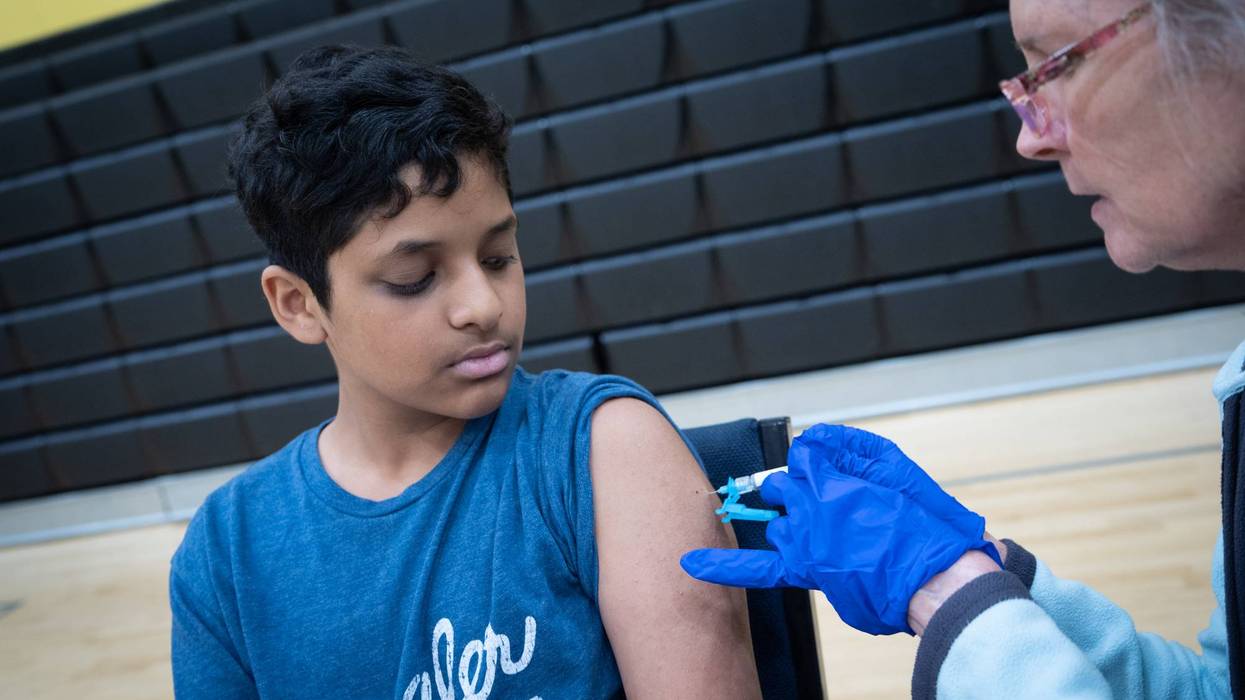
Data released by the US Centers for Disease Control and Prevention on Monday showed that the rate of kindergartners with vaccine exemptions hit a record high over the last year as the nation's top health official continued to spread falsehoods about vaccine safety.
In all, CDC reported that 155,000 students, or 4.2% of all kindergartners enrolled in public schools, received vaccination exemptions in the 2025-2026 school year, an increase from the 3.6% of publicly enrolled kindergartners who received such exemptions in the prior school year.
The Washington Post noted in a Monday report on the data that "the biggest factor in the increasing exemption rate came from families seeking nonmedical exemptions," and that exemption rates now exceed 5% in nearly half of all US states.
The jump in vaccine exemptions comes as the US is dealing with the largest outbreak of measles it's experienced in over three decades.
Numbers released by the CDC last month revealed that there have been 2,318 recorded cases of measles this year, the highest number of cases recorded since the virus was declared eliminated in the country more than two decades ago.
Experts have said that this surge in measles cases is largely due to lower uptake of the measles vaccine.
Dr. James Campbell, member of the American Academy of Pediatrics' Committee on Infectious Diseases, told CBS News in an interview published Monday that the primary reason for the drop in vaccinations was the "chaos and confusion in vaccination recommendation systems in the last year or so," since the start of the second Trump administration.
Dr. Andrew Racine, president of the American Academy of Pediatrics, told the Post that it doesn't take a very large decrease in the vaccination rate to give the measles virus an opening.
"For some diseases like measles, even a small decrease in vaccination rates can lead to more outbreaks of disease," Racine explained, "because community immunity requires over 95% of susceptible individuals to be immunized."
"This risk is real," Raccine added. "The United States is experiencing a 35-year high for measles cases as federal officials continue to elevate misleading and disproven information about vaccines, inserting unnecessary fear and confusion into families’ decision making. And we are seeing the results."
The results could get even worse if President Donald Trump's executive order calling for the combined measles, mumps, and rubella (MMR) vaccination be divided into three separate shots gets implemented.
Experts have warned that separating the vaccines means that families will be less likely to have their children get all three shots, and the CDC's own website notes that "no published scientific evidence shows any benefit in separating the combination MMR vaccine into three individual shots."
Brad Woodhouse, president of Protect Our Care, said surging exemptions were a direct result of misinformation about vaccines being pushed by both Trump and US Health and Human Services Secretary Robert F. Kennedy Jr.
"Connect the dots," said Woodhouse. "Donald Trump and RFK Jr. frequently spew anti-vax lies to a national audience, parents get needlessly freaked out, exemptions surge, vaccination rates plummet, outbreaks of preventable diseases shatter records, kids die. Trump’s allergy to science and reality is its own deadly virus."
Dr. Jerome Adams, who served as US surgeon general during Trump's first term, also criticized Kennedy's leadership in a Tuesday social media post.
"You can’t be the leader of all health policy in America, AND claim you’re for childhood vaccinations, AND ignore this trend/not have a clear plan to increase vaccine uptake," Adams wrote, "at least not if you’re serious about improving America’s health."