SUBSCRIBE TO OUR FREE NEWSLETTER
Daily news & progressive opinion—funded by the people, not the corporations—delivered straight to your inbox.
5
#000000
#FFFFFF
To donate by check, phone, or other method, see our More Ways to Give page.


Daily news & progressive opinion—funded by the people, not the corporations—delivered straight to your inbox.

Michael T. McPhearson 314-303-8874
Elliott Adams 518-441-2697
Veterans For Peace held its
Annual National Convention in St. Paul, Minnesota days before the start
of the Republican Convention. Over 400 veterans, military family
members and friends ranging from World War II to the current conflict
in Iraq gathered for workshops, discussions, inspirational speakers and
entertainment. Topics covered included Agent Orange, Depleted Uranium,
outreach to military personnel, PTSD and healing from war, military
sexual assault and others. Keynote speakers for the four day conference
were Father Roy Bourgeois, a Catholic priest and founder of the School
of Americas Watch; former Marine and chief United Nations Special
Commission (UNSCOM) Inspector in Iraq 1991-1998, Scott Ritter; Iraq War
Gold Star parent and former Minnesota State Senator Becky Lourey; the
author of the best seller "Blackwater: The Rise of the World's Most
Powerful Mercenary Army," Jeremy Scahill; and West Point graduate James
Yee, former Muslim Chaplin for the U.S. prison camp in Guantanamo Bay.
Veterans For Peace also passed sixteen resolutions taking stands on
topics ranging from increasing VFP commitment to greening the annual
convention, working to authorizing the creation of Veterans For Peace
Incarcerated Chapters to assisting disabled military personnel and
veterans. Three resolutions in particular stand out.
Veterans For Peace is calling for changes in military law and other
appropriate regulations so that military personnel can declare
themselves Conscientious Objectors to specific wars based on a
religious, moral, or legal basis. Current law calls for the objection
to all wars to qualify for CO status.
The group is calling for the government of the United States to
immediately withdraw all military and intelligence forces from
Afghanistan and Pakistan. This same resolution calls for the U.S.
government to provide humanitarian aid to the people of Afghanistan, in
non-coercive forms, to help them rebuild their own nation and their
lives in cooperation with other nations in the region; and to allow the
people of Afghanistan to freely determine their own government without
interference by the U.S.
Continuing with their efforts to impeach President Bush Jr. and Vice
President Cheney, VFP has pledged to take every appropriate measure to
insure that George W. Bush, Dick Cheney, and responsible members of
their administration are prosecuted for war crimes, crimes against
peace and crimes against humanity before any court claiming
jurisdiction in this country or abroad, for as long as they shall live.
Commenting on these resolutions, VFP Executive Director Michael
McPhearson said, "These three statements from our membership represent
many of the core values of our organization. We believe that service
members have the right to re-evaluate their decision to kill and change
their mind. We know that after all the killing is done the individual
soldiers must live with themselves and make sense of what they have
done. We believe that our political leaders must be held accountable
for their actions. This is a critical to a healthy and functional
democracy. We realize that to survive the challenges we face today,
like global warming, we must find ways to work together and war is not
viable."
To read full text of the resolutions please visit https://www.veteransforpeace.org/Convention_Resolutions_2008.vp.html
Veterans For Peace is a global organization of Military Veterans and allies whose collective efforts are to build a culture of peace by using our experiences and lifting our voices. We inform the public of the true causes of war and the enormous costs of wars, with an obligation to heal the wounds of wars. Our network is comprised of over 140 chapters worldwide whose work includes: educating the public, advocating for a dismantling of the war economy, providing services that assist veterans and victims of war, and most significantly, working to end all wars.
(314) 725-6005"Today’s news isn’t an anomaly," said leaders of the Democratic Women's Caucus and Congressional Black Caucus, "it is a part of a coordinated and sustained strategy to undermine and erase women and people of color."
In what's being called an "exceedingly rare" move, US Defense Secretary Pete Hegseth is blocking the promotion of two Black and two female colonels to one-star generals,
The New York Times reported Friday that some senior US military officials are questioning whether Hegseth acted out of animus toward Black people and women after the defense secretary blocked the promotion of the four officers despite the repeated objections of Army Secretary Daniel Driscoll, who touted what the Times called the colonels' "decadeslong records of exemplary service."
Military officials told the Times that Hegseth's chief of staff, Lt. Col. Ricky Buria, got into a heated exchange with Driscoll last summer over the promotion of another officer, Maj. Gen. Antoinette Gant—a combat veteran of the US invasions and occupations of Afghanistan and Iraq—to command the Military District of Washington, DC.
Such a promotion would have placed Gant in charge of numerous events at which she would likely be seen publicly with President Donald Trump. According to multiple military officials, Buria told Driscoll that Trump would not want to stand next to a Black female officer.
Pete Hegseth looked at a list of qualified officers and decided Black leaders and women had to go.That’s not leadership. It’s discrimination in plain sight.And every Republican who stays silent is complicit.
[image or embed]
— Rep. Norma Torres (@normajtorres.bsky.social) March 27, 2026 at 10:10 AM
A shocked Driscoll reportedly replied that "the president is not racist or sexist," an assessment that flies in the face of countless racist and sexist statements by the president, both before and during both of his White House terms.
Buria called the officials' account of his exchange with Driscoll "completely false."
White House Press Secretary Karoline Leavitt declined to discuss the matter beyond saying that Hegseth is “doing a tremendous job restoring meritocracy throughout the ranks at the Pentagon, as President Trump directed him to do.”
Military officials told the Times that one of the Black colonels whose promotion was blocked by Hegseth wrote a paper nearly 15 years ago historically analyzing differences between Black and white soldiers' roles in the Army. One of the female colonels, a logistics officer, was held back because she was deployed in Afghanistan during the US withdrawal whose foundation was laid by Trump during his first term. It is unclear why the two other colonels were denied promotions.
Although more than 40% of current active duty US troops are people of color, military leadership remains overwhelmingly comprised of white men. Hegseth, who declared a "frontal assault" on the "whores to wokesters" who he said rose up through the ranks during the Biden administration, told an audience during a 250th anniversary ceremony for the US Navy that "your diversity is not your strength."
Hegseth has argued that women should not serve in combat roles, although he later walked back his assertion amid pushback from senators during his confirmation process. Still, since Trump returned to office, every service branch chief and 9 of the military’s 10 combat commanders are white men.
Leaders of the Democratic Women's Caucus and Congressional Black Caucus issued a joint statement Friday calling Hegseth's blocking of the four colonels' promotions "outrageous and wrong."
"The claim that Hegseth’s chief of staff told the army secretary Trump would not want to stand next to a Black female officer at military events is racist, sexist, and extremely concerning," wrote the lawmakers, Reps. Yvette Clarke (NY), Teresa Leger Fernández (NM), Emilia Sykes (Ohio), Hillary Scholten (Mich.), and Chrissy Houlahan (Pa.).
"Time and time again, Trump and his administration have shown us exactly who they are—attacking and undermining Black people and women in the military, public servants, and women in power," the congressional leaders asserted. "It is clear they are trying to erase Black and women’s leadership and history."
"Today’s news isn’t an anomaly, it is a part of a coordinated and sustained strategy to undermine and erase women and people of color," their statement said.
"We've long known that Pete Hegseth is an unfit and unqualified secretary of defense appointed by Trump," the lawmakers added. "So it is absurd, ironic, and beyond inappropriate that he of all people would deny these promotions to officers with records of exemplary service. America's servicemembers deserve so much better.”
Sen. Jack Reed (D-RI), ranking member of the Senate Armed Services Committee, also issued a statement reading, "If these reports are accurate, Secretary Hegseth's decision to remove four decorated officers from a promotion list after having been selected by their peers for their merit and performance is not only outrageous, it would be illegal."
"Denying the promotions of individual officers based on their race or gender would betray every principle of merit-based service military officers uphold throughout their careers," Reed added.
Several congressional colleagues weighed in, like Sen. Tammy Duckworth (D-Ill.), a decorated combat veteran who lost her legs when an Iraqi defending his homeland from US invasion shot down the Blackhawk helicopter she was piloting. Duckworth said on Bluesky: "He says he wants to bring meritocracy back to our military. He says he has our warfighters' backs. But here he is, the most unqualified SecDef in history, denying troops a promotion that their fellow warfighters decided they've earned. Hegseth is a disgrace to our heroes."
Other observers also condemned Hegseth's move, with historian Virginia Scharff accusing him of "undermining national security with his racism and misogyny," and City University of New York English Chair Jonathan Gray decrying the "gutter racist" who "should be hounded from public life for the damage he’s caused."
More than 7 million borrowers booted from a Biden-era loan forgiveness program will have to quickly switch to a new plan using a system that's been backed up for months.
After axing a Biden-era student loan repayment program, the Trump administration is threatening to kick its millions of mostly low-income beneficiaries onto the government's most expensive plan unless they switch to a new one quickly.
The Washington Post reported on Friday that the Department of Education was beginning to email the more than 7 million people enrolled in the Saving on a Valuable Education (SAVE) program, telling them they needed to change their plan within the next 90 days.
Around 4.5 million of those borrowers earn incomes between 150% and 225%, allowing them to qualify for zero-dollar monthly payments under SAVE, which the Trump administration effectively killed in December after settling with Republican states who'd brought lawsuits against the program under former President Joe Biden.
Anonymous officials told The Post that those who do not switch plans within three months of receiving the email will automatically be re-enrolled in the Standard Plan. Unlike SAVE, which is income-based, the Standard plan has borrowers pay a fixed rate over 10 years.
Standard typically carries the highest monthly payments, and those transitioning to it from SAVE could pay more than $300 extra per month in some cases, with the poorest borrowers seeing the sharpest increases.
While 90 days may seem like plenty of time to switch to a less expensive repayment plan, it's not nearly that simple.
Due to the large exodus of borrowers, the Department of Education has struggled to process all the forms, processing only about 250,000 per month. Many borrowers who have tried to transition have found themselves waiting months for a reply.
To make matters more confusing, many of these borrowers will have to switch programs again soon, since all but one repayment program will be dissolved on July 1, 2028 as a result of last year's Republican budget law. The remaining plan will also be income-driven, though it is still expected to cost borrowers more each month.
According to a report released last month by the Century Foundation and Protect Borrowers, two groups that support loan forgiveness, nearly 9 million student loan borrowers are in default. During Trump's first year back in office, the student loan delinquency rate jumped from roughly zero to 25%, which it called "precedent-shattering."
"Much of the rise in delinquencies can be linked to the Trump administration’s actions aimed at increasing student loan payments," the report said. “The US Department of Education blocked borrowers from accessing more affordable payments through income-driven plans, having ordered a stoppage in application processing for three months and mass-denying 328,000 applications in August 2025. As of December 31, 2025, a warehouse’s worth of 734,000 applications sat unprocessed.”
Being in default has major ramifications for borrowers' finances. Those with delinquent loans saw their credit scores decrease by an average of 57 points during the first three quarters of 2025, dragging around 2 million of them into "subprime" territory, which forces them to pay thousands of dollars more for auto and personal loans and makes them more likely to have difficulty finding housing and employment.
The report estimated that if those booted from SAVE defaulted at the same rate as other borrowers, the number of student loan borrowers in distress could rise as high as 17 million.
According to Protect Borrowers, the typical family will pay more than $3,000 per year in additional costs as a result of the end of SAVE.
The end of SAVE comes as oil shocks caused by Trump's war in Iran have spiked gas prices and threaten to raise them throughout the economy, adding to the already elevated costs of food, housing, and transportation resulting from the president's aggressive tariff regime.
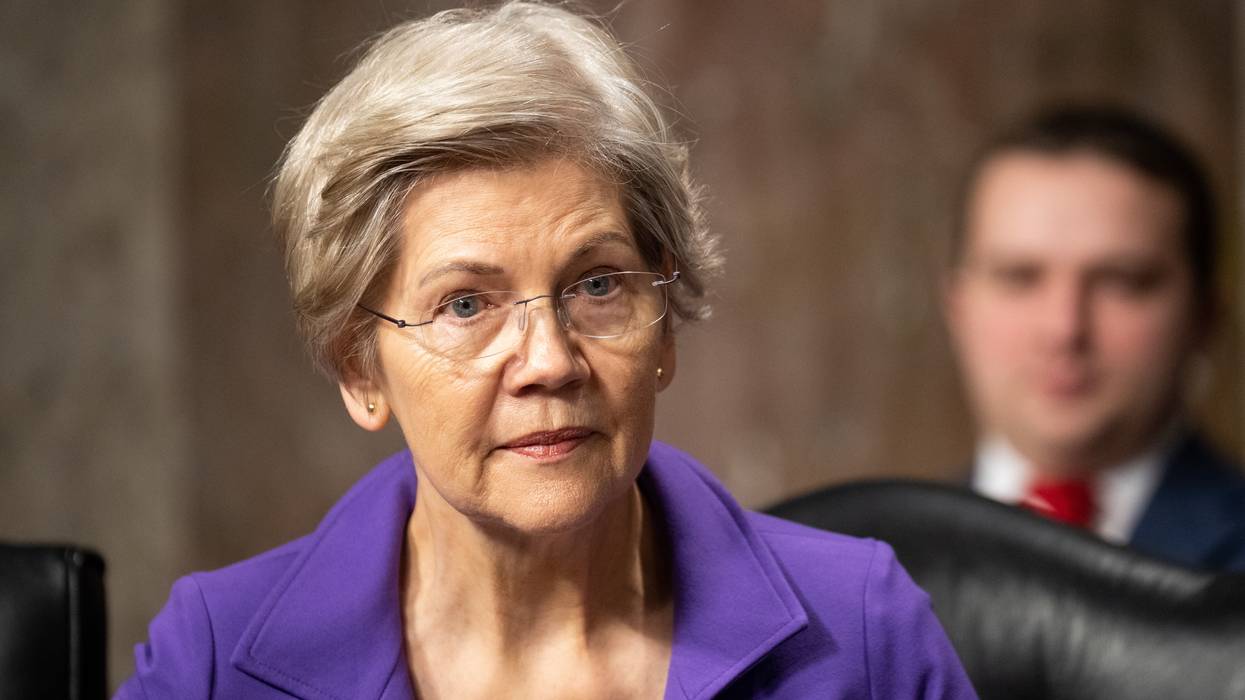
"In the middle of an affordability crisis driven by Donald Trump," said Sen. Elizabeth Warren (D-Mass.), "Trump is killing a plan that lowers student loan costs. It's shameful."
"The United States and Iran are trapped in a conflict in which each new escalation only deepens a shared, losing predicament... Sooner rather than later, both will confront the urgency of finding an off-ramp."
Multiple reports published in the last two days have indicated that President Donald Trump is seeking to wrap up his illegal war in Iran, which has significantly hurt his domestic political standing—partially by raising gas prices at a time when polls show US voters are primarily concerned about the cost of living.
While ending the Iran war will not be simple, some foreign policy experts believe that it can be done if both the US and Iran truly understand that deescalation is in both nations' best interests.
George Beebe, director of grand strategy at the Quincy Institute for Responsible Statecraft and former director of the CIA’s Russia analysis, and Trita Parsi, executive vice president of the Quincy Institute, have written an essay published on Thursday by Foreign Policy outlining what an achievable Iran "exit plan" would look like.
The authors acknowledged the immense challenges in getting both sides to meet one another halfway, but said this option is preferable to a drawn-out war that will leave both nations poorer and bloodied.
On Iran's side, argued Beebe and Parsi, a deal would involve renewing "its stated commitment to never pursue nuclear weapons," re-opening the Strait of Hormuz to all shipping vessels, and making a commitment "to denominating at least half of its oil sales in US dollars rather than the Chinese yuan."
The US, meanwhile, would "grant sanctions exemptions to countries prepared to finance Iran’s reconstruction" and "would also permit a specified group of states—such as China, India, South Korea, Japan, Turkey, Iraq, and others in the Gulf—to resume trade with Tehran and the purchase of Iranian oil, thereby easing global energy prices."
Beebe and Parsi emphasized that this deal would only be a first step, and they said the next step would be restarting negotiations to establish a nuclear weapons agreement similar to the one previously negotiated by the Obama administration that Trump tore up during his first term.
"The United States and Iran are trapped in a conflict in which each new escalation only deepens a shared, losing predicament," they wrote. "Neither can compel the other’s surrender. Sooner rather than later, both will confront the urgency of finding an off-ramp—one that does not hinge on the other’s humiliation."
Even if Trump takes this course of action, however, there is no guarantee it will succeed, in part because of how much he has already damaged US alliances across the world.
In an analysis published Thursday, Sarah Yerkes, senior fellow at the Carnegie International Endowment for Peace's Middle East Program, argued that even nations in the Middle East that stand to benefit from a weakened Iran are now thinking twice about their dependence on the US for their security needs, given that Trump's war has resulted in Iran launching retaliatory strikes throughout the region.
Yerkes also highlighted how Trump's handling of European allies is making it less likely that they will play a significant part in helping him end the conflict.
"Europe, which is not eager to enter what it sees as a war of choice, has refrained from proactively joining US and Israeli strikes," Yerkes explained. "One of the clearest examples of the transatlantic rift was over the initial reaction to closures in the Strait of Hormuz, the shipping channel for approximately 20% of the world’s seaborne oil and LNG traffic. Multiple European countries refused to cow to Trump’s demand that they send warships to help keep the strait open, inviting public ire from Trump."
The bottom line, warned Yerkes, is that "each day the war continues, without explicit goals or a clear exit strategy, opposition to the United States—from friends and foes, inside and outside—is also likely to grow, making America less safe and less secure."