August, 29 2008, 01:21pm EDT

For Immediate Release
Contact:
Aaron Huertas
Press Secretary Landline: 202-331-5458
Cell: 202-236-8495
www.ucsusa.org
At RNC, Clear Channel OKs Pro-Coal Ad, Removes UCS's
Northwest Airlines and Clear Channel Selectively Apply Advertising Policy
MINNEAPOLIS
Last
week Northwest Airlines and Clear Channel Outdoor took down the Union
of Concerned Scientists' (UCS) anti-nuclear-weapons billboards in the Minneapolis and Denver
airports ostensibly because they did not meet airport advertisement
policies. But given that both the airline and Clear Channel have not
objected to a pro-coal billboard on the same concourse in the Minneapolis
airport where UCS's billboard appeared, it is apparent that both the
airline and Clear Channel apply their no-politics policies
selectively. (UCS can provide pictures of both advertisements.)
NORTHWEST REJECTS UCS AD, BUT SAYS NOTHING ABOUT COAL INDUSTRY AD
When
asked why Northwest Airlines objected to the Union of Concerned
Scientists' anti-nuclear billboard in the Minneapolis airport,
Northwest spokesperson Tammy Lee told reporters that the airline does
not "allow controversial or political advertising in our concourse, and
this one [UCS's billboard] was both." She added that Clear Channel's
contract with the airport authority states: "Under no circumstances
shall displays embody controversial, social, moral, political or
ethical issues." (In one story she also characterized UCS's billboards
as political "attack ads," even though both presidential candidates
largely agree with UCS's position on ridding the world of nuclear
weapons.)
So why isn't the airline objecting to a coal industry billboard that is now posted in the same Minneapolis airport concourse where ours was located? (See attached photo below.)
We
found out about this coal billboard, which is located between gates G13
and G14, from emails between Northwest officials and Clear Channel
regarding our billboard. Northwest's director of customer service and
airport operations, Rick Feltner, complained in the email exchange that
someone had placed a sticker with "an opposing point of view" on the
billboard. Note that he was not objecting to the billboard itself.
The
coal billboard touts "clean coal." Clean coal is an oxymoron. It's akin
to saying "safe cigarette." Coal is not clean. Coal-fired power plants
in the United States produce one-third of America's carbon dioxide
emissions -- about the same amount as all our cars, SUVs, trucks,
buses, ships and planes combined (for more about coal, see UCS's 2006
report, "Gambling with Coal," at www.ucsusa.org/assets/documents/clean_energy/gambling_with_coal_final_report_sept_06.pdf).
The
coal billboard violates Clear Channel's contract with the airport
authority as well as Northwest's policy. It is clearly controversial.
And given that there is a raging policy debate over the future of coal,
any ad promoting coal is political. Why hasn't Northwest asked Clear
Channel to take down this billboard?
The email exchange is reproduced below:
-----Original Message----- From: Nelson, Kathleen J (Reg Director)
Sent: Monday, August 18, 2008 2:44 PM To: HARDIE, PEGGY Subject: Re: www.reducethethreat.org
I just took a look and I can see how this would be offensive/scary to some (the concept of our city in the crosshairs of a nuclear bomb) and the strong anti-McCain message. Can we remove it?
The coal ad with the sticker is between G13 and G14 along the moving walkway.
Thanks!
------------------- -----Original Message----- From: Nelson, Kathleen J (Reg Director)
Sent: Monday, August 18, 2008 1:17 PM To: HARDIE, PEGGY Subject: www.reducethethreat.org
Peggy - we've had several complaints about an ad near G16-G17 by this group and the fact that it is political and evidently has a picture of Mpls in crosshairs and talks about nuclear bombs and is anti-McCain. I'll go down and look at it in a bit, but wondered what you knew. Also see note below re: another ad.
------------------- Sent from my BlackBerry
----- Original Message ----- From: Feltner, Rick To: Nelson, Kathleen J (Reg Director) Sent: Mon Aug 18 13:12:33 2008 Subject: Re: VM
Ok. On your way down take a look at the coal ad as well. Looks like someone put a sticker on it with an opposing point of view.
Rick Feltner
----- Original Message ----- From: Nelson, Kathleen J (Reg Director) To: Feltner, Rick Sent: Mon Aug 18 13:07:40 2008 Subject: VM
Got your voicemail. I am actually over here in a MAC mtg and will take a look at it and talk to clear channel.
I'll get back to you later.
------------------- Sent from my BlackBerry
Based
on this email exchange, it is clear that Northwest officials object to
ads that do not reflect their political views but apparently have no
problem with ads that advance views they support.
It
also is clear from the email exchange that Northwest's objections to
our billboard were because, according to Northwest Regional Director
Kathleen J. Nelson, it could be seen as "offensive/scary" and because
of its "very strong anti-McCain message." Note that the airline told
reporters that its objection to the billboard was not motivated by
partisan considerations.
It
also should be noted that Northwest is the official airline of the
Republican National Convention. Northwest Airlines' CEO, Doug
Steenland, is on the Republican National Convention host committee
board (see https://www.msp2008.com/committee).
Was
Northwest's request to Clear Channel to remove UCS's billboard
politically motivated? We think so - even though, as we have previously
pointed out, Sen. McCain largely agrees with our goal of ridding the
world of nuclear weapons (see Sen. McCain's official campaign site: www.johnmccain.com/involving/petition.aspx?guid=46fc9952-ebb3-49ea-bdc7-6537fee1399f).
CLEAR CHANNEL ALSO APPLIES ITS NO-POLITICS POLICY SELECTIVELY
Clear
Channel apparently has a history of rejecting political advertisements
that do not reflect its corporate views while accepting other political
advertisements that do. (For more information on Clear Channel's track
record of rejecting advertising, go to: https://wweek.com/editorial/3440/11375/ and https://www.commondreams.org/headlines04/0712-01.htm. For an overview of Clear Channel from Sourcewatch, go to https://www.sourcewatch.org/index.php?title=Clear_Channel.)
In our case, Clear Channel accepted our billboards and posted them. The Minneapolis billboard went up on August 13 and the Denver billboard went up on August 15. It wasn't until the following week that the company decided to take them down.
WHY DID CLEAR CHANNEL REMOVE THE DENVER AD WHEN NOBODY COMPLAINED?
Clear Channel caved to Northwest's request to take down the Minneapolis
airport billboard ostensibly because the airline has the right to
reject advertisements on its concourses. But why did Clear Channel
remove the version of the billboard in Denver addressing Sen. Obama? Chuck Cannon, director of public affairs at the Denver International Airport,
told reporters that the airport had no problem with the ad. As reported
in Advertising Age, Cannon said, "While no one has complained yet, my
first response would not be to take it down."
UCS BILLBOARDS A PART OF A LARGER CAMPAIGN
The
billboards are a part of a larger UCS media campaign that includes
smaller versions in bars and restaurants around the convention sites.
The group also bought Web ads on Minnesota and Colorado political blog sites. (For more on UCS's ad campaign, go to www.reducethethreat.org.)
The
UCS campaign builds on the organization's multiyear effort promoting a
fundamental reassessment of the role, purpose and future of U.S. nuclear weapons. Earlier this year, UCS released "Toward True Security: Ten Steps the Next President Should Take to Transform U.S. Nuclear Weapons Policy" and a scientists statement on nuclear weapons signed by 21 Nobel laureates. In December 2007, the organization conducted a public opinion poll in South Carolina that found more than two-thirds of likely Republican and Democratic primary voters in that state want the United States
to spearhead an international effort to reduce the number of nuclear
weapons globally and believe that those reductions would make the United States safer.
The Union of Concerned Scientists is the leading science-based nonprofit working for a healthy environment and a safer world. UCS combines independent scientific research and citizen action to develop innovative, practical solutions and to secure responsible changes in government policy, corporate practices, and consumer choices.
LATEST NEWS
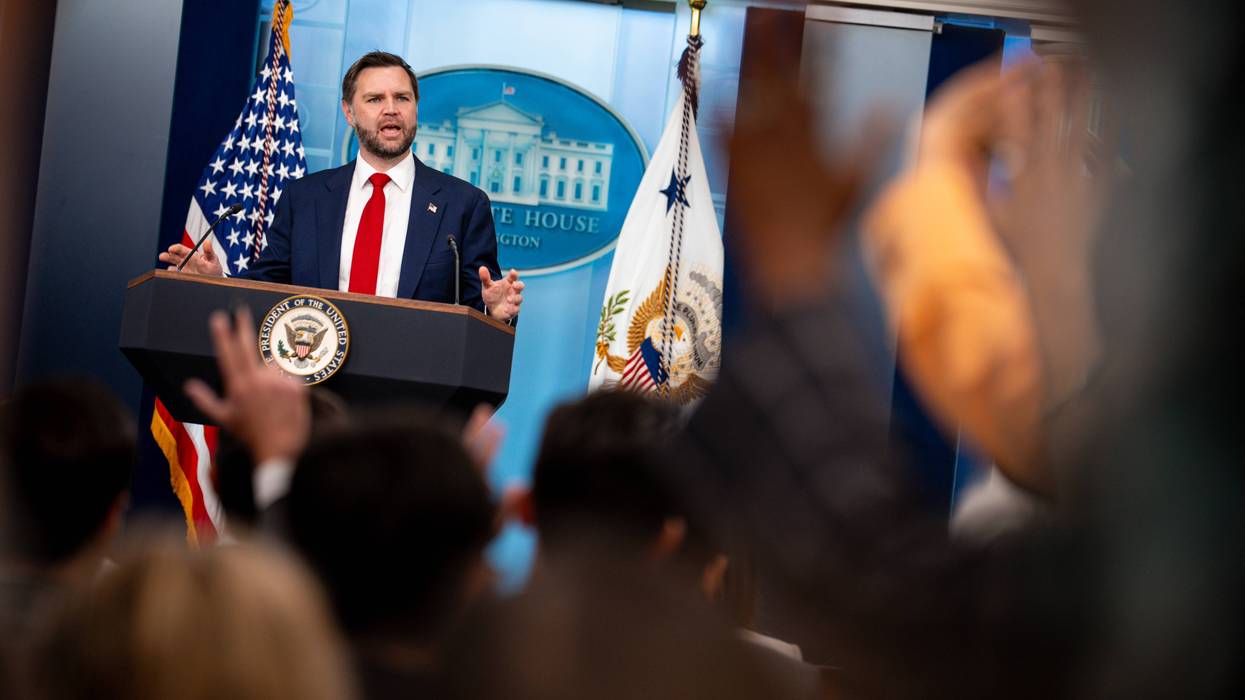
Vance Stuns by Calling Trump ‘Only Head of State in the Entire World Who Is Sympathetic’ to Israel
One columnist called it "probably the toughest public criticism offered by a US administration towards Israel in my lifetime."
Jun 18, 2026
Vice President JD Vance stunned observers on Thursday with some of the bluntest criticism issued to Israel by a US presidential administration in recent memory as Israeli Prime Minister Benjamin Netanyahu continues his attempts to sabotage peace with Iran.
Noting the indignance and defiance of Netanyahu and his cabinet in response to the memorandum of understanding signed this week by Trump—which calls on Israel to withdraw from Lebanon and end its ethnic cleansing campaign there—Vance said Israel's leaders were in the midst of a “weird panic” and "freakout" during a New York Times interview on Thursday.
"You’re a country of 9 million people," he said. "You can’t just kill your way out of solving every single national security problem that you have.”
⭕️ JD Vance’s message to Israel:
“You’re a country of 9 million people. You can’t just kill your way out of solving every single national security problem that you have.”
Noting that significant segments of the Israeli population and political system are anxious about the deal,… pic.twitter.com/HD2Z9WxjEb
— Drop Site (@DropSiteNews) June 18, 2026
It comes on the heels of Trump's own criticism of Israel's tactics in Lebanon earlier this week, describing its bombing of an apartment building—one of countless attacks on civilian infrastructure—as "vicious" and "too much," before claiming that "without me, there would be no Israel."
Vance went even further later on Thursday during a press conference at the White House, reminding Israel's leaders that they've made their country an international pariah.
"My message to them would be twofold. No. 1: Donald J. Trump is the only head of state in the entire world who is sympathetic to the nation of Israel at this moment in time," Vance said. "If I was in the cabinet of the Israeli government, I might not be attacking the only powerful ally that I have anywhere left in the entire world."
In a style reminiscent of his infamous Oval Office meeting with Ukrainian President Volodymyr Zelenskyy last year, he later took Israel's leaders to task over what he described as ingratitude for America's support, which has included roughly $4 billion in military assistance each year and even more since Israel began its genocidal military campaign against Gaza in 2023 in response to Hamas' October 7 attacks.
The weapons Israel uses, Vance stressed, "have been built by American hands and paid for by American tax dollars." He added, "The problem for Israel is not Donald J. Trump and anybody in Israel who thinks their biggest problem is the president of the United States needs to wake up and smell the reality of the situation that the country is in."
In a marked shift from earlier this year, when the administration had cosigned Israel's attacks on Lebanon even at the cost of ceasefire negotiations, Vance on Thursday called on Israel to "respect this peace process" and called Israel's attacks on civilians "unacceptable."
Just as observers have been bewildered by Trump's sudden acknowledgment of Iran's rights to possess ballistic missiles and to pursue nuclear energy, many were similarly caught off guard by Vance's abrupt acknowledgment of truths about Israel that have been apparent to most of the world for years.
JD Vance is not changing the conversation about Israel in the US. He is changing the entire paradigm:
He is reminding the Israelis that they are alone and - though he doesn't use this word - much disliked internationally. Israel should not undermine the only strong friend they… pic.twitter.com/ZnqVTjve9R
— Trita Parsi (@tparsi) June 18, 2026
"JD Vance is not changing the conversation about Israel in the US. He is changing the entire paradigm," said Trita Parsi, the executive vice president of the Quincy Institute for Responsible Statecraft. "He is reminding the Israelis that they are alone and—though he doesn't use this word—much disliked internationally. Israel should not undermine the only strong friend they have left."
Washington Post columnist Shadi Hamid agreed that it was "probably the toughest public criticism offered by a US administration towards Israel in my lifetime," adding that "we'll see if it gets translated into action or if it's just rhetoric, but it's still much more than the Biden administration could ever manage."
The naked cynicism of the flip-flop was apparent to many, given the Trump administration's slavish deference to Israel up to the point that it became political poison.
College students who have said similar things to Vance about Israel's killing of civilians have found themselves facing deportation, while International Criminal Court officials who have attempted to hold Israeli officials criminally liable for war crimes have found themselves sanctioned by the US.
That is to say nothing of Trump's willingness to follow Netanyahu's lead into a disastrous and unpopular war with Iran despite warnings from his own cabinet that he was being manipulated.
"It would be nice if they had this posture from January 2025," journalist Zaid Jilani said of Vance's comments on Thursday. "Might have helped save Trump's presidency."
Alexander Langlois, a contributing fellow at the anti-interventionist think tank Defense Priorities, described it as a deeply calculated maneuver to simultaneously show Israel who is boss in front of a nation growing wary of its influence while also reiterating America's support.
"Vance is drawing a line. The White House is absolutely trying to use its power and influence to get not only Republicans, but Israel, in line," he said.
Still, despite doubts, it was hard to overstate the gravity of the shift underway, at least rhetorically.
"It could all lead to nothing, or worse—a joint US-Israel resumption of the war," said journalist Glenn Greenwald. "But there hasn't been a week where American leaders have spoken so sternly, clearly, truthfully and decisively about Israel since... well, perhaps ever."
Keep ReadingShow Less

'Good News, But It's a Low Bar': Trump Backtracks on Plan to Kill Ocean Monitoring Program
"Trump is backing off from doing something incredibly stupid, so we celebrate."
Jun 18, 2026
The Trump administration on Thursday backed off a widely criticized plan to dismantle a deep-sea monitoring system designed to provide crucial storm forecasting data while also tracking the health of coastal habitats and the impacts of the climate crisis on the world's oceans.
In an announcement posted on its website, the US National Science Foundation (NSF) said it "will not proceed with further removal or descoping of equipment" from the Ocean Observatories Initiative (OOI), less than a month after it revealed plans to remove more than 900 instruments deployed along US coastlines.
NSF also said that it would continue planned maintenance operations on the remaining systems, while also creating plans to redeploy that Endurance Array, which is a set of long-term moorings set up in the Pacific Northwest, after it undergoes equipment servicing.
"NSF remains committed to ocean sciences," the announcement concluded, "to responsible stewardship of its research infrastructure and to supporting the stakeholders that depend on it."
The decision to end OOI drew bipartisan backlash in Congress, as the Republican-controlled US Senate on Wednesday passed a measure to block the administration from further removing ocean monitoring equipment.
Sen. Jeff Merkley (D-Ore.), who led the Senate effort to block the Trump administration's OOI plans alongside Sen. Lisa Murkowski (R-Alaska), described the removal of ocean monitoring systems as "supreme stupidity" that would destroy "a vital source of climate data."
The timing of NSF’s decision to dismantle the system was particularly controversial given concerns over planetary heating and the growing threat of extreme weather, especially as the return of El Niño this year is expected to unleash larger and more damaging meteorological events in the near future.
In response to Thursday's announcement, the Democratic National Committee’s Environment and Climate Council described the reversal on OOI as a rare sensible decision for a Trump administration that has been overtly hostile to climate science.
"Good news. But it's a low bar," the council wrote in a social media post. "Trump is backing off from doing something incredibly stupid, so we celebrate."
Keep ReadingShow Less
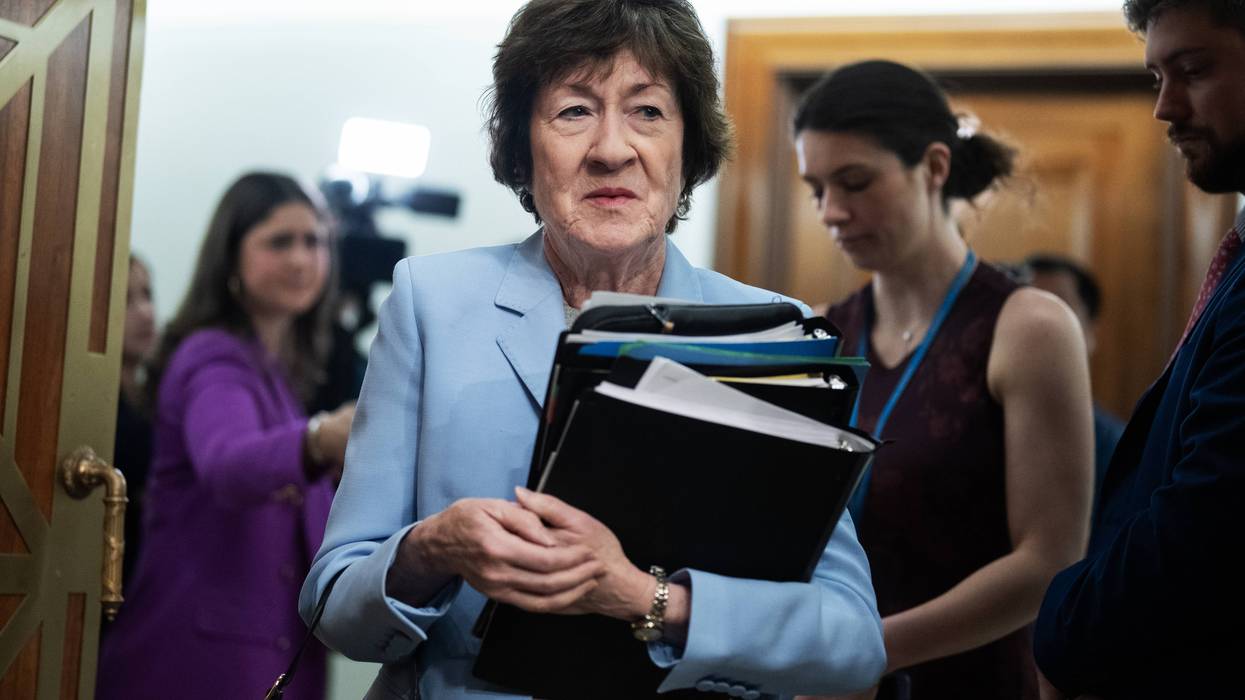
Susan Collins Ads Brag About $190 Million for Rural Hospitals. It’s a Band-Aid on the Gaping Wound She Helped Inflict
The Republican senator running for a sixth term has postured as a champion of rural healthcare, but the Medicaid cuts she voted to advance are set to devastate vulnerable communities in Maine and across the US.
Jun 18, 2026
In recent weeks, Mainers have been inundated with ads touting Republican Sen. Susan Collins' role in securing passage of a $50 billion fund aimed at shoring up beleaguered rural healthcare systems across the US—including $190 million earmarked for her state.
But the ads, purchased by Collins' campaign directly and by the dark money group One Nation, neglect to mention a key fact: The Republican budget law that implements the Rural Health Transformation Program (RHTP) also contains the largest cuts to Medicaid in the program's history, rendering the $50 billion fund a mere Band-Aid on a massive wound.
According to one analysis, the GOP law's estimated cuts to federal Medicaid spending in rural areas over the next decade will amount to nearly triple the RHTP's funding. Maine is expected to lose nearly $3 billion in federal Medicaid funds over the next 10 years due to the Republican law—a massive hit that the pro-Collins campaign ads predictably avoid.
Collins, who is running for a sixth term against Democratic nominee Graham Platner, emphasizes that she voted against final passage of the GOP budget legislation, known as the One Big Beautiful Bill Act (OBBBA). But Collins cast a decisive procedural vote that allowed the bill, which also delivered massive tax breaks to the wealthy and large corporations, to advance to the Senate floor, where her Republican colleagues did the rest. President Donald Trump signed the bill into law last summer.
"Susan Collins is only bipartisan when it doesn't matter," declares a 30-second ad unveiled Wednesday by the Platner campaign, which highlighted the incumbent senator's vote to advance the OBBBA and pilloried her reputation as a "moderate."
The Republican law's Medicaid cuts, which total nearly $1 trillion, are expected to cost Maine hospitals $66 million per year in revenue and strip health coverage from tens of thousands of residents—projections that Collins' ads omit.
"Maine will be forced to offset budget holes caused by this bill by terminating coverage for families, eliminating essential health services, and cutting provider rates so drastically that doctors and hospitals are forced to close their doors—particularly in rural communities," the advocacy group Families USA warned in an analysis of the Republican budget measure. "Hospitals like Cary Medical Center and Northern Light AR Gould Hospital in Aroostook County, Northern Light Maine Coast Hospital in Hancock County, and Calais Community Hospital in Washington County will be at greater financial risk of closing due to Medicaid cuts in the bill."
"While more funding for rural healthcare is always welcome, political messaging about new funding cannot obscure the reality for states."
Nationwide, the impacts of the Medicaid cuts—which include new work requirements and other bureaucratic barriers—are expected to be devastating for years to come. A tracker maintained by Protect Our Care shows that more than 1,000 hospitals, clinics, wards, and nursing homes are "facing closure or cuts" following OBBBA's passage.
Maine Family Planning, the state's largest network of reproductive health clinics, was forced to end primary care services late last year due to the Republican budget law.
“Behind each pin is a story,” Anne Shoup, senior adviser to Protect Our Care, said Wednesday, referencing the markers on the group's hospital closure tracker. "Whether it’s an expectant mother losing access to prenatal care after the nearest rural hospital was forced to close its maternity ward, or seniors driving hours each way for care that used to be down the road, or people with disabilities facing gaps in caregiving that allow them to stay in their own homes, these pins represent our neighbors, our parents, and our kids. They deserve better than to have their healthcare gutted to write a check to the ultra-wealthy.”
The health policy organization KFF has said it is "highly unlikely that any state will receive more money from the rural health fund than it will lose" from Medicaid cuts and other federal policy changes, calling into question Collins' characterization of the RHTP money as transformative for Maine's rural healthcare system.
"RHTP is like lending someone a bucket to catch rain from a leaking roof," Mark Shaffer, an analyst at the Maine Center for Economic Policy, wrote last month. "It’s too small to hold what’s falling and is taken away before the roof ever gets fixed. The cruel irony is while hospitals scramble to manage the leak, millions of Americans have simply been pushed out of the system entirely and left to fend for themselves. And this was all done to support tax cuts for the wealthy."
A 30-second pro-Collins ad released earlier this year by One Nation—a GOP-aligned dark money group that has already dropped $20 million on ads supporting the Republican incumbent—described the $190 million in RHTP funds awarded to Maine for the first year of the program as quite literally lifesaving.
The problem, as the Maine Beacon pointed out, is that "no funds had actually been distributed at the time Collins’ ad aired in mid-March 2026."
"In fact, the Maine Department of Health and Human Services did not receive full approval for the program’s budget until the end of March, weeks after the ad began running," the Beacon observed. "State officials said during a Rural Health Fund Seminar on March 31 that they are still working to finalize contracts and hire staff, with funds not expected to be distributed until later in 2026."
In a March 27 statement, Collins took credit for preserving the $190 million in federal rural health funding for Maine, claiming it was "at risk" of being rescinded and reallocated by the Trump administration. (In early April, the office of Maine Gov. Janet Mills denied the funding was ever in jeopardy.)
Earlier this week, KFF Health News reported that Maine is one of several states that have been forced to make changes to their plans to spend the rural health funds as the Trump administration exerts "tight control" over the money. One restriction imposed by the Centers for Medicare and Medicaid Services—headed by Mehmet Oz—bars states from spending more than 15% of allotted RHTP funds on payments to rural hospitals and other providers for patient care.
Collins' ads celebrating the program as an unequivocal victory for rural healthcare include no mention of the spending limitation—which is not in the language of the GOP budget law—or the Trump administration's vice-like grip on the funds.
"It has frankly been surprising to me as a longtime observer of legislative officials, that the GOP members of Congress who were the cheerleaders of the RHTP as a rural hospital fund have not raised any substantial complaints as the Trump administration created this severe funding limit that impacts struggling rural hospitals in their own districts," Adam Searing, an associate professor at Georgetown University's Center for Children and Families, wrote in March.
"While more funding for rural healthcare is always welcome," wrote Searing, "political messaging about new funding cannot obscure the reality for states."
Keep ReadingShow Less
Most Popular