SUBSCRIBE TO OUR FREE NEWSLETTER
Daily news & progressive opinion—funded by the people, not the corporations—delivered straight to your inbox.
5
#000000
#FFFFFF
To donate by check, phone, or other method, see our More Ways to Give page.
Daily news & progressive opinion—funded by the people, not the corporations—delivered straight to your inbox.

Sen. Elizabeth Warren (D-Mass.) speaks during a campaign event with former New York City Comptroller Brad Lander in front of the New York Stock Exchange on April 24, 2026 in New York City.
“It’s simple: Members of Congress should spend their time in Washington serving the American people, not preparing to cash in big time with a cushy lobbying career after they leave office,” said Sen. Elizabeth Warren.
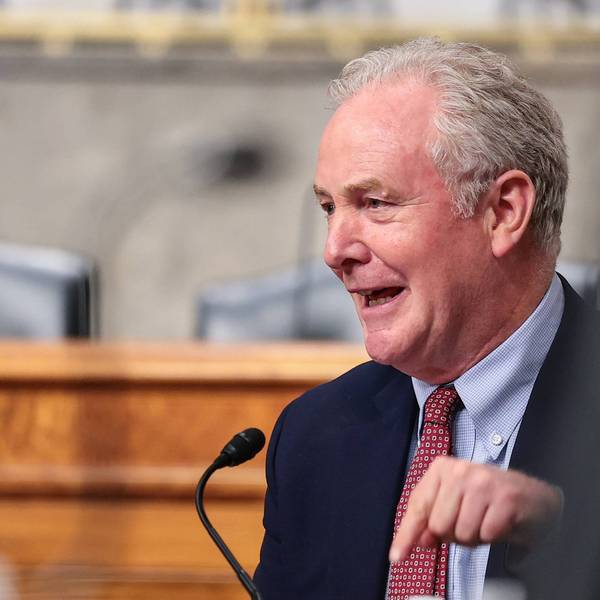
US Sens. Elizabeth Warren and Rick Scott introduced a bipartisan bill on Thursday to permanently ban members of Congress from becoming lobbyists after leaving office.
Right now, ex-lawmakers are given just a brief "cooling-off" period before they are allowed to return and lobby their former colleagues—one year in the House of Representatives and two years in the Senate.
According to OpenSecrets, about 41% of former members of the 117th Congress have gone on to work for a lobbying firm or client, which Warren (D-Mass.) said raises the prospect that they're "thinking about how they can make money in their next gig while in office."
The bill she co-introduced with Scott (R-Fla.), known as the Banning Lobbying And Safeguarding Trust (BLAST) Act, would replace the cooling-off periods with a permanent ban, forbidding former lawmakers from registering as lobbyists or engaging in the activities that would require them to do so.
It also bans ex-congresspeople from making lobbying contracts, which are often used as loopholes to avoid formal registration.
Those who violate the act could face up to five years in prison for knowing and willful violations.
“It’s simple: Members of Congress should spend their time in Washington serving the American people, not preparing to cash in big time with a cushy lobbying career after they leave office,” Warren said. “It’s long past time to close the revolving door that’s corrupted our government and destroyed public trust in elected officials. This bipartisan bill is an important push to get that done.”
While Warren has a long record of seeking to limit the influence of money in politics, Scott's presence as a cosponsor was a head-scratcher for many observers.
A former healthcare CEO whose company was hit with the largest healthcare‑fraud settlement in US history, he has always been a reliable partner to corporate interests and has been cited as one of the top Republican recipients of fossil fuel and defense industry money.
Nevertheless, Scott described the "revolving door between Capitol Hill and K Street" as a major reason trust in institutions is at an all-time low among Americans.
Regardless of his own intentions, Scott is seizing on a sense of distrust among the American public that is both very real and very bipartisan.
With this coming midterm election cycle expected to be the most expensive in history, 72% of Americans said in a Politico poll released last week that there is "too much money from special interest groups in American elections," while just 5% disagreed. This belief was virtually equal between Republicans and Democrats.
And while more Democrats (76%) felt it necessary to curb billionaire control of politics, over half of Republican voters (54%) also agreed that billionaires had "too much influence" over elections.
Dear Common Dreams reader, It’s been nearly 30 years since I co-founded Common Dreams with my late wife, Lina Newhouser. We had the radical notion that journalism should serve the public good, not corporate profits. It was clear to us from the outset what it would take to build such a project. No paid advertisements. No corporate sponsors. No millionaire publisher telling us what to think or do. Many people said we wouldn't last a year, but we proved those doubters wrong. Together with a tremendous team of journalists and dedicated staff, we built an independent media outlet free from the constraints of profits and corporate control. Our mission has always been simple: To inform. To inspire. To ignite change for the common good. Building Common Dreams was not easy. Our survival was never guaranteed. When you take on the most powerful forces—Wall Street greed, fossil fuel industry destruction, Big Tech lobbyists, and uber-rich oligarchs who have spent billions upon billions rigging the economy and democracy in their favor—the only bulwark you have is supporters who believe in your work. But here’s the urgent message from me today. It's never been this bad out there. And it's never been this hard to keep us going. At the very moment Common Dreams is most needed, the threats we face are intensifying. We need your support now more than ever. We don't accept corporate advertising and never will. We don't have a paywall because we don't think people should be blocked from critical news based on their ability to pay. Everything we do is funded by the donations of readers like you. When everyone does the little they can afford, we are strong. But if that support retreats or dries up, so do we. Will you donate now to make sure Common Dreams not only survives but thrives? —Craig Brown, Co-founder |
US Sens. Elizabeth Warren and Rick Scott introduced a bipartisan bill on Thursday to permanently ban members of Congress from becoming lobbyists after leaving office.
Right now, ex-lawmakers are given just a brief "cooling-off" period before they are allowed to return and lobby their former colleagues—one year in the House of Representatives and two years in the Senate.
According to OpenSecrets, about 41% of former members of the 117th Congress have gone on to work for a lobbying firm or client, which Warren (D-Mass.) said raises the prospect that they're "thinking about how they can make money in their next gig while in office."
The bill she co-introduced with Scott (R-Fla.), known as the Banning Lobbying And Safeguarding Trust (BLAST) Act, would replace the cooling-off periods with a permanent ban, forbidding former lawmakers from registering as lobbyists or engaging in the activities that would require them to do so.
It also bans ex-congresspeople from making lobbying contracts, which are often used as loopholes to avoid formal registration.
Those who violate the act could face up to five years in prison for knowing and willful violations.
“It’s simple: Members of Congress should spend their time in Washington serving the American people, not preparing to cash in big time with a cushy lobbying career after they leave office,” Warren said. “It’s long past time to close the revolving door that’s corrupted our government and destroyed public trust in elected officials. This bipartisan bill is an important push to get that done.”
While Warren has a long record of seeking to limit the influence of money in politics, Scott's presence as a cosponsor was a head-scratcher for many observers.
A former healthcare CEO whose company was hit with the largest healthcare‑fraud settlement in US history, he has always been a reliable partner to corporate interests and has been cited as one of the top Republican recipients of fossil fuel and defense industry money.
Nevertheless, Scott described the "revolving door between Capitol Hill and K Street" as a major reason trust in institutions is at an all-time low among Americans.
Regardless of his own intentions, Scott is seizing on a sense of distrust among the American public that is both very real and very bipartisan.
With this coming midterm election cycle expected to be the most expensive in history, 72% of Americans said in a Politico poll released last week that there is "too much money from special interest groups in American elections," while just 5% disagreed. This belief was virtually equal between Republicans and Democrats.
And while more Democrats (76%) felt it necessary to curb billionaire control of politics, over half of Republican voters (54%) also agreed that billionaires had "too much influence" over elections.
US Sens. Elizabeth Warren and Rick Scott introduced a bipartisan bill on Thursday to permanently ban members of Congress from becoming lobbyists after leaving office.
Right now, ex-lawmakers are given just a brief "cooling-off" period before they are allowed to return and lobby their former colleagues—one year in the House of Representatives and two years in the Senate.
According to OpenSecrets, about 41% of former members of the 117th Congress have gone on to work for a lobbying firm or client, which Warren (D-Mass.) said raises the prospect that they're "thinking about how they can make money in their next gig while in office."
The bill she co-introduced with Scott (R-Fla.), known as the Banning Lobbying And Safeguarding Trust (BLAST) Act, would replace the cooling-off periods with a permanent ban, forbidding former lawmakers from registering as lobbyists or engaging in the activities that would require them to do so.
It also bans ex-congresspeople from making lobbying contracts, which are often used as loopholes to avoid formal registration.
Those who violate the act could face up to five years in prison for knowing and willful violations.
“It’s simple: Members of Congress should spend their time in Washington serving the American people, not preparing to cash in big time with a cushy lobbying career after they leave office,” Warren said. “It’s long past time to close the revolving door that’s corrupted our government and destroyed public trust in elected officials. This bipartisan bill is an important push to get that done.”
While Warren has a long record of seeking to limit the influence of money in politics, Scott's presence as a cosponsor was a head-scratcher for many observers.
A former healthcare CEO whose company was hit with the largest healthcare‑fraud settlement in US history, he has always been a reliable partner to corporate interests and has been cited as one of the top Republican recipients of fossil fuel and defense industry money.
Nevertheless, Scott described the "revolving door between Capitol Hill and K Street" as a major reason trust in institutions is at an all-time low among Americans.
Regardless of his own intentions, Scott is seizing on a sense of distrust among the American public that is both very real and very bipartisan.
With this coming midterm election cycle expected to be the most expensive in history, 72% of Americans said in a Politico poll released last week that there is "too much money from special interest groups in American elections," while just 5% disagreed. This belief was virtually equal between Republicans and Democrats.
And while more Democrats (76%) felt it necessary to curb billionaire control of politics, over half of Republican voters (54%) also agreed that billionaires had "too much influence" over elections.