SUBSCRIBE TO OUR FREE NEWSLETTER
Daily news & progressive opinion—funded by the people, not the corporations—delivered straight to your inbox.
5
#000000
#FFFFFF
To donate by check, phone, or other method, see our More Ways to Give page.
Daily news & progressive opinion—funded by the people, not the corporations—delivered straight to your inbox.
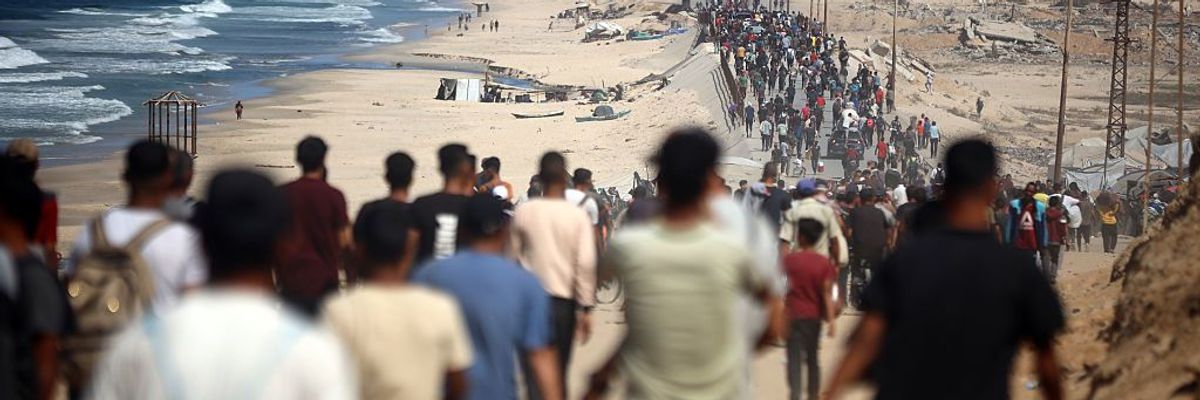
"Hamas was willing to gamble on Trump’s promise to prevent the Israelis from resuming the genocide once Israel had its prisoners back," wrote independent journalist Nicolas J.S. Davies.
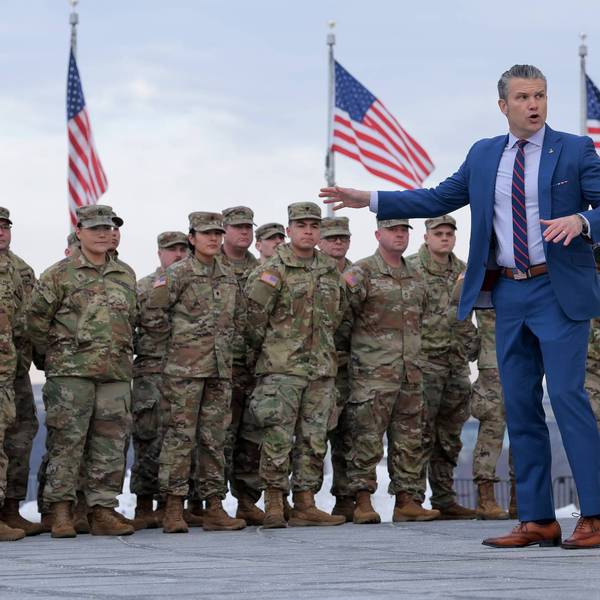
The US is sending 200 troops to Israel to monitor the Gaza ceasefire agreement signed earlier this week, the Associated Press reported on Friday.
Several officials, who spoke on condition of anonymity, told the AP that the "US Central Command (CENTCOM) is going to establish a 'civil-military coordination center' in Israel that will help facilitate the flow of humanitarian aid as well as logistical and security assistance into the territory wracked by two years of war."
White House press secretary Karoline Leavitt confirmed on social media that "up to 200 US personnel, who are already stationed at CENTCOM, will be tasked with monitoring the peace agreement in Israel, and they will work with other international forces on the ground."
Though the United States has provided $16.3 billion in direct military aid to Israel since its two-year campaign of genocide in Gaza began following Hamas' attacks on October 7, 2023, this will be the first time the US will directly have "boots on the ground" in the conflict, though the troops are not expected to be deployed within Gaza itself.
The military team will be overseen by Adm. Brad Cooper, the head of CENTCOM. One senior official said, "his role will be to oversee, observe, make sure there are no violations." The force is expected to also contain members of the armed forces of Egypt, Qatar, Turkey, and the United Arab Emirates, with the AP reporting that it will also "coordinate with Israeli defense forces."
According to Axios, Hamas negotiators were reluctant to agree to the first phase of the ceasefire deal unless it received assurances from US President Donald Trump that Israel would not resume attacks once all of its captives were released. Israel had already unilaterally broken the previous ceasefire in March.
"Hamas was willing to gamble on Trump’s promise to prevent the Israelis from resuming the genocide once Israel had its prisoners back," wrote independent journalist Nicolas J.S. Davies in Common Dreams on Thursday. "Under Trump’s plan, Israel would agree to end its genocidal assault on Gaza and partially withdraw its forces, but only his word would prevent it from relaunching the genocide once it had the Israeli prisoners in Gaza safely back."
Within hours after the ceasefire deal was signed on Thursday, Israel had already launched attacks that killed at least nine Palestinians and injured dozens more at displaced people's shelters, homes, and gatherings.
But even if the ceasefire holds, many of the most contentious questions have yet to be resolved, and have instead been kicked down the road to the next round of talks.
Although it dropped its ask for Israel to totally withdraw from Gaza, Hamas has dubbed many of Trump's points in the so-called "peace plan," as nonstarters, including the demand that the militant group fully disarm and that it hand over control of the strip's governance to a "Board of Peace" headed by Trump and Tony Blair, a former UK prime minister and an architect of the Iraq War.
“The proposed plan fails to ensure that Palestinians fully and meaningfully participate in all decisions about the future of the [occupied Palestinian territories], its governance, and the exercise of their rights," said Agnès Callamard, Amnesty International’s secretary general. "A plan that repeats the mistakes and failures of past initiatives that ignored human rights and the root causes of injustice will fail to secure a just and sustainable future for all those living in Israel and the OPT."
Dear Common Dreams reader, It’s been nearly 30 years since I co-founded Common Dreams with my late wife, Lina Newhouser. We had the radical notion that journalism should serve the public good, not corporate profits. It was clear to us from the outset what it would take to build such a project. No paid advertisements. No corporate sponsors. No millionaire publisher telling us what to think or do. Many people said we wouldn't last a year, but we proved those doubters wrong. Together with a tremendous team of journalists and dedicated staff, we built an independent media outlet free from the constraints of profits and corporate control. Our mission has always been simple: To inform. To inspire. To ignite change for the common good. Building Common Dreams was not easy. Our survival was never guaranteed. When you take on the most powerful forces—Wall Street greed, fossil fuel industry destruction, Big Tech lobbyists, and uber-rich oligarchs who have spent billions upon billions rigging the economy and democracy in their favor—the only bulwark you have is supporters who believe in your work. But here’s the urgent message from me today. It's never been this bad out there. And it's never been this hard to keep us going. At the very moment Common Dreams is most needed, the threats we face are intensifying. We need your support now more than ever. We don't accept corporate advertising and never will. We don't have a paywall because we don't think people should be blocked from critical news based on their ability to pay. Everything we do is funded by the donations of readers like you. When everyone does the little they can afford, we are strong. But if that support retreats or dries up, so do we. Will you donate now to make sure Common Dreams not only survives but thrives? —Craig Brown, Co-founder |
The US is sending 200 troops to Israel to monitor the Gaza ceasefire agreement signed earlier this week, the Associated Press reported on Friday.
Several officials, who spoke on condition of anonymity, told the AP that the "US Central Command (CENTCOM) is going to establish a 'civil-military coordination center' in Israel that will help facilitate the flow of humanitarian aid as well as logistical and security assistance into the territory wracked by two years of war."
White House press secretary Karoline Leavitt confirmed on social media that "up to 200 US personnel, who are already stationed at CENTCOM, will be tasked with monitoring the peace agreement in Israel, and they will work with other international forces on the ground."
Though the United States has provided $16.3 billion in direct military aid to Israel since its two-year campaign of genocide in Gaza began following Hamas' attacks on October 7, 2023, this will be the first time the US will directly have "boots on the ground" in the conflict, though the troops are not expected to be deployed within Gaza itself.
The military team will be overseen by Adm. Brad Cooper, the head of CENTCOM. One senior official said, "his role will be to oversee, observe, make sure there are no violations." The force is expected to also contain members of the armed forces of Egypt, Qatar, Turkey, and the United Arab Emirates, with the AP reporting that it will also "coordinate with Israeli defense forces."
According to Axios, Hamas negotiators were reluctant to agree to the first phase of the ceasefire deal unless it received assurances from US President Donald Trump that Israel would not resume attacks once all of its captives were released. Israel had already unilaterally broken the previous ceasefire in March.
"Hamas was willing to gamble on Trump’s promise to prevent the Israelis from resuming the genocide once Israel had its prisoners back," wrote independent journalist Nicolas J.S. Davies in Common Dreams on Thursday. "Under Trump’s plan, Israel would agree to end its genocidal assault on Gaza and partially withdraw its forces, but only his word would prevent it from relaunching the genocide once it had the Israeli prisoners in Gaza safely back."
Within hours after the ceasefire deal was signed on Thursday, Israel had already launched attacks that killed at least nine Palestinians and injured dozens more at displaced people's shelters, homes, and gatherings.
But even if the ceasefire holds, many of the most contentious questions have yet to be resolved, and have instead been kicked down the road to the next round of talks.
Although it dropped its ask for Israel to totally withdraw from Gaza, Hamas has dubbed many of Trump's points in the so-called "peace plan," as nonstarters, including the demand that the militant group fully disarm and that it hand over control of the strip's governance to a "Board of Peace" headed by Trump and Tony Blair, a former UK prime minister and an architect of the Iraq War.
“The proposed plan fails to ensure that Palestinians fully and meaningfully participate in all decisions about the future of the [occupied Palestinian territories], its governance, and the exercise of their rights," said Agnès Callamard, Amnesty International’s secretary general. "A plan that repeats the mistakes and failures of past initiatives that ignored human rights and the root causes of injustice will fail to secure a just and sustainable future for all those living in Israel and the OPT."
The US is sending 200 troops to Israel to monitor the Gaza ceasefire agreement signed earlier this week, the Associated Press reported on Friday.
Several officials, who spoke on condition of anonymity, told the AP that the "US Central Command (CENTCOM) is going to establish a 'civil-military coordination center' in Israel that will help facilitate the flow of humanitarian aid as well as logistical and security assistance into the territory wracked by two years of war."
White House press secretary Karoline Leavitt confirmed on social media that "up to 200 US personnel, who are already stationed at CENTCOM, will be tasked with monitoring the peace agreement in Israel, and they will work with other international forces on the ground."
Though the United States has provided $16.3 billion in direct military aid to Israel since its two-year campaign of genocide in Gaza began following Hamas' attacks on October 7, 2023, this will be the first time the US will directly have "boots on the ground" in the conflict, though the troops are not expected to be deployed within Gaza itself.
The military team will be overseen by Adm. Brad Cooper, the head of CENTCOM. One senior official said, "his role will be to oversee, observe, make sure there are no violations." The force is expected to also contain members of the armed forces of Egypt, Qatar, Turkey, and the United Arab Emirates, with the AP reporting that it will also "coordinate with Israeli defense forces."
According to Axios, Hamas negotiators were reluctant to agree to the first phase of the ceasefire deal unless it received assurances from US President Donald Trump that Israel would not resume attacks once all of its captives were released. Israel had already unilaterally broken the previous ceasefire in March.
"Hamas was willing to gamble on Trump’s promise to prevent the Israelis from resuming the genocide once Israel had its prisoners back," wrote independent journalist Nicolas J.S. Davies in Common Dreams on Thursday. "Under Trump’s plan, Israel would agree to end its genocidal assault on Gaza and partially withdraw its forces, but only his word would prevent it from relaunching the genocide once it had the Israeli prisoners in Gaza safely back."
Within hours after the ceasefire deal was signed on Thursday, Israel had already launched attacks that killed at least nine Palestinians and injured dozens more at displaced people's shelters, homes, and gatherings.
But even if the ceasefire holds, many of the most contentious questions have yet to be resolved, and have instead been kicked down the road to the next round of talks.
Although it dropped its ask for Israel to totally withdraw from Gaza, Hamas has dubbed many of Trump's points in the so-called "peace plan," as nonstarters, including the demand that the militant group fully disarm and that it hand over control of the strip's governance to a "Board of Peace" headed by Trump and Tony Blair, a former UK prime minister and an architect of the Iraq War.
“The proposed plan fails to ensure that Palestinians fully and meaningfully participate in all decisions about the future of the [occupied Palestinian territories], its governance, and the exercise of their rights," said Agnès Callamard, Amnesty International’s secretary general. "A plan that repeats the mistakes and failures of past initiatives that ignored human rights and the root causes of injustice will fail to secure a just and sustainable future for all those living in Israel and the OPT."