SUBSCRIBE TO OUR FREE NEWSLETTER
Daily news & progressive opinion—funded by the people, not the corporations—delivered straight to your inbox.
5
#000000
#FFFFFF
To donate by check, phone, or other method, see our More Ways to Give page.
Daily news & progressive opinion—funded by the people, not the corporations—delivered straight to your inbox.
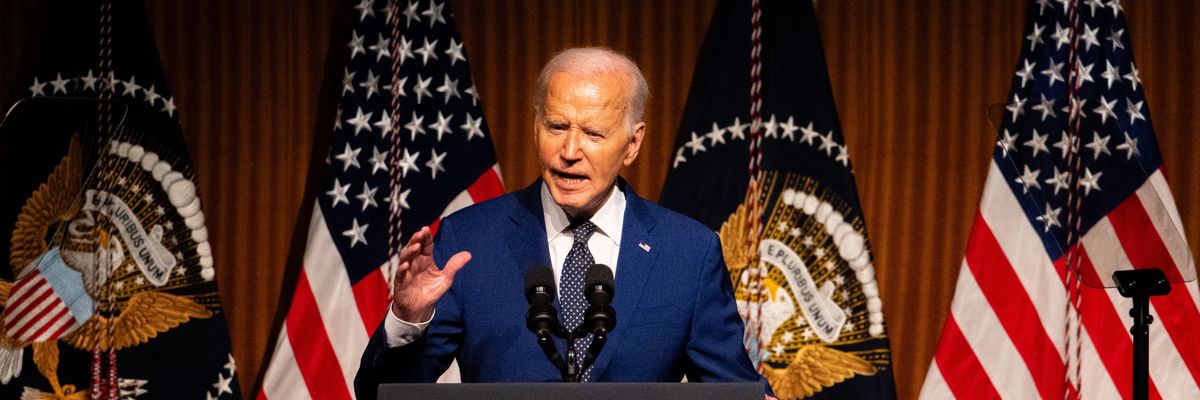
U.S. President Joe Biden speaks to attendees while commemorating the 60th anniversary of the Civil Rights Act at the Lyndon Baines Johnson Presidential Library on July 29, 2024 in Austin, Texas.
"Outdated trade rules like ISDS can pose a real threat to states' sustainable energy initiatives and the good-paying jobs they create," said one lawmaker from Maine.
More than 300 state lawmakers signed a letter Monday calling on U.S. President Joe Biden to "eliminate the threat of Investor-State Dispute Settlement from all U.S. trade and investment agreements," joining hundreds of civil society groups and dozens of members of Congress in speaking out against rules that allow foreign corporations to challenge state laws.
The legislators—who include Democrats, Republicans, and Independents—expressed support for the official position of the National Conference of State Legislatures (NCSL) regarding ISDS, as the conference convened its annual summit in Louisville, Kentucky.
The NCSL opposes trade deals "with investment chapters that provide greater substantive or procedural rights to foreign companies than U.S. companies enjoy under the U.S. Constitution."
The Biden administration has agreed with the NCSL's call to exclude ISDS from any new trade agreements, but the U.S. is currently a party to more than 50 trade and investment deals that contain the rules.
"It's long overdue that we change course. Getting rid of ISDS, which embodies the runaway corporate power embedded in our trade deals, is a great place to start.
ISDS rules empower corporations to sue governments if they claim their profit margins are harmed by public programs, such as public health regulations, environmental rules, food safety guidelines, or climate laws aimed at reducing fossil fuel emissions.
"The outcomes of these cases, which can result in billions of U.S. tax dollars paid to foreign corporations in compensation, are
determined in unaccountable tribunals presided over by unelected corporate lawyers whose rulings are not subject to appeal," reads the Monday letter from state lawmakers, including North Carolina state Rep. Pricey Harrison (D-61), New York state Sen. Liz Krueger (D-28), and Florida Rep. Anna Eskamani (D-42).
According to the letter, "even cases that get dismissed can result in countries paying millions in tribunal costs."
Harrison said in a statement that "the era of corporate-dominated trade policy" has contributed to a loss of 40% of North Carolina's manufacturing jobs.
"It's long overdue that we change course," said Harrison. "Getting rid of ISDS, which embodies the runaway corporate power embedded in our trade deals, is a great place to start. These extreme corporate rights undermine democracy and critical public interest protections here at home and around the globe. I'm glad to see so many colleagues from across the political spectrum joining me in this effort."
Last November, 200 civil society groups demanded the elimination of ISDS within APEP, and three dozen members of Congress wrote to U.S. Trade Representative Katherine Tai and Secretary of State Antony Blinken last May saying the U.S. should end the system's use in its trade agreements.
Allowing corporations to sue over laws that cut into their profits, wrote the lawmakers on Monday, "threatens the policy space we need to maintain high-level public health standards, create clean energy jobs, protect the digital privacy and data-security of those we represent, and much more."
Maine state Sen. Craig Hickman (D-14) expressed concern about ISDS both as a lawmaker and "an organic farmer committed to curtailing the severe impacts of climate change and strengthening rural economies."
"Outdated trade rules like ISDS can pose a real threat to states' sustainable energy initiatives and the good-paying jobs they create,"
said Hickman. "I urge the administration to eliminate this antiquated mechanism that stands in the way of sustainable food systems and the clean energy economy we need to build for our children and grandchildren."
Note: This article has been edited to correct a reference to U.S. trade deals containing ISDS and the Americas Partnership for Economic Prosperity.
Dear Common Dreams reader, It’s been nearly 30 years since I co-founded Common Dreams with my late wife, Lina Newhouser. We had the radical notion that journalism should serve the public good, not corporate profits. It was clear to us from the outset what it would take to build such a project. No paid advertisements. No corporate sponsors. No millionaire publisher telling us what to think or do. Many people said we wouldn't last a year, but we proved those doubters wrong. Together with a tremendous team of journalists and dedicated staff, we built an independent media outlet free from the constraints of profits and corporate control. Our mission has always been simple: To inform. To inspire. To ignite change for the common good. Building Common Dreams was not easy. Our survival was never guaranteed. When you take on the most powerful forces—Wall Street greed, fossil fuel industry destruction, Big Tech lobbyists, and uber-rich oligarchs who have spent billions upon billions rigging the economy and democracy in their favor—the only bulwark you have is supporters who believe in your work. But here’s the urgent message from me today. It's never been this bad out there. And it's never been this hard to keep us going. At the very moment Common Dreams is most needed, the threats we face are intensifying. We need your support now more than ever. We don't accept corporate advertising and never will. We don't have a paywall because we don't think people should be blocked from critical news based on their ability to pay. Everything we do is funded by the donations of readers like you. When everyone does the little they can afford, we are strong. But if that support retreats or dries up, so do we. Will you donate now to make sure Common Dreams not only survives but thrives? —Craig Brown, Co-founder |
More than 300 state lawmakers signed a letter Monday calling on U.S. President Joe Biden to "eliminate the threat of Investor-State Dispute Settlement from all U.S. trade and investment agreements," joining hundreds of civil society groups and dozens of members of Congress in speaking out against rules that allow foreign corporations to challenge state laws.
The legislators—who include Democrats, Republicans, and Independents—expressed support for the official position of the National Conference of State Legislatures (NCSL) regarding ISDS, as the conference convened its annual summit in Louisville, Kentucky.
The NCSL opposes trade deals "with investment chapters that provide greater substantive or procedural rights to foreign companies than U.S. companies enjoy under the U.S. Constitution."
The Biden administration has agreed with the NCSL's call to exclude ISDS from any new trade agreements, but the U.S. is currently a party to more than 50 trade and investment deals that contain the rules.
"It's long overdue that we change course. Getting rid of ISDS, which embodies the runaway corporate power embedded in our trade deals, is a great place to start.
ISDS rules empower corporations to sue governments if they claim their profit margins are harmed by public programs, such as public health regulations, environmental rules, food safety guidelines, or climate laws aimed at reducing fossil fuel emissions.
"The outcomes of these cases, which can result in billions of U.S. tax dollars paid to foreign corporations in compensation, are
determined in unaccountable tribunals presided over by unelected corporate lawyers whose rulings are not subject to appeal," reads the Monday letter from state lawmakers, including North Carolina state Rep. Pricey Harrison (D-61), New York state Sen. Liz Krueger (D-28), and Florida Rep. Anna Eskamani (D-42).
According to the letter, "even cases that get dismissed can result in countries paying millions in tribunal costs."
Harrison said in a statement that "the era of corporate-dominated trade policy" has contributed to a loss of 40% of North Carolina's manufacturing jobs.
"It's long overdue that we change course," said Harrison. "Getting rid of ISDS, which embodies the runaway corporate power embedded in our trade deals, is a great place to start. These extreme corporate rights undermine democracy and critical public interest protections here at home and around the globe. I'm glad to see so many colleagues from across the political spectrum joining me in this effort."
Last November, 200 civil society groups demanded the elimination of ISDS within APEP, and three dozen members of Congress wrote to U.S. Trade Representative Katherine Tai and Secretary of State Antony Blinken last May saying the U.S. should end the system's use in its trade agreements.
Allowing corporations to sue over laws that cut into their profits, wrote the lawmakers on Monday, "threatens the policy space we need to maintain high-level public health standards, create clean energy jobs, protect the digital privacy and data-security of those we represent, and much more."
Maine state Sen. Craig Hickman (D-14) expressed concern about ISDS both as a lawmaker and "an organic farmer committed to curtailing the severe impacts of climate change and strengthening rural economies."
"Outdated trade rules like ISDS can pose a real threat to states' sustainable energy initiatives and the good-paying jobs they create,"
said Hickman. "I urge the administration to eliminate this antiquated mechanism that stands in the way of sustainable food systems and the clean energy economy we need to build for our children and grandchildren."
Note: This article has been edited to correct a reference to U.S. trade deals containing ISDS and the Americas Partnership for Economic Prosperity.
More than 300 state lawmakers signed a letter Monday calling on U.S. President Joe Biden to "eliminate the threat of Investor-State Dispute Settlement from all U.S. trade and investment agreements," joining hundreds of civil society groups and dozens of members of Congress in speaking out against rules that allow foreign corporations to challenge state laws.
The legislators—who include Democrats, Republicans, and Independents—expressed support for the official position of the National Conference of State Legislatures (NCSL) regarding ISDS, as the conference convened its annual summit in Louisville, Kentucky.
The NCSL opposes trade deals "with investment chapters that provide greater substantive or procedural rights to foreign companies than U.S. companies enjoy under the U.S. Constitution."
The Biden administration has agreed with the NCSL's call to exclude ISDS from any new trade agreements, but the U.S. is currently a party to more than 50 trade and investment deals that contain the rules.
"It's long overdue that we change course. Getting rid of ISDS, which embodies the runaway corporate power embedded in our trade deals, is a great place to start.
ISDS rules empower corporations to sue governments if they claim their profit margins are harmed by public programs, such as public health regulations, environmental rules, food safety guidelines, or climate laws aimed at reducing fossil fuel emissions.
"The outcomes of these cases, which can result in billions of U.S. tax dollars paid to foreign corporations in compensation, are
determined in unaccountable tribunals presided over by unelected corporate lawyers whose rulings are not subject to appeal," reads the Monday letter from state lawmakers, including North Carolina state Rep. Pricey Harrison (D-61), New York state Sen. Liz Krueger (D-28), and Florida Rep. Anna Eskamani (D-42).
According to the letter, "even cases that get dismissed can result in countries paying millions in tribunal costs."
Harrison said in a statement that "the era of corporate-dominated trade policy" has contributed to a loss of 40% of North Carolina's manufacturing jobs.
"It's long overdue that we change course," said Harrison. "Getting rid of ISDS, which embodies the runaway corporate power embedded in our trade deals, is a great place to start. These extreme corporate rights undermine democracy and critical public interest protections here at home and around the globe. I'm glad to see so many colleagues from across the political spectrum joining me in this effort."
Last November, 200 civil society groups demanded the elimination of ISDS within APEP, and three dozen members of Congress wrote to U.S. Trade Representative Katherine Tai and Secretary of State Antony Blinken last May saying the U.S. should end the system's use in its trade agreements.
Allowing corporations to sue over laws that cut into their profits, wrote the lawmakers on Monday, "threatens the policy space we need to maintain high-level public health standards, create clean energy jobs, protect the digital privacy and data-security of those we represent, and much more."
Maine state Sen. Craig Hickman (D-14) expressed concern about ISDS both as a lawmaker and "an organic farmer committed to curtailing the severe impacts of climate change and strengthening rural economies."
"Outdated trade rules like ISDS can pose a real threat to states' sustainable energy initiatives and the good-paying jobs they create,"
said Hickman. "I urge the administration to eliminate this antiquated mechanism that stands in the way of sustainable food systems and the clean energy economy we need to build for our children and grandchildren."
Note: This article has been edited to correct a reference to U.S. trade deals containing ISDS and the Americas Partnership for Economic Prosperity.