
The Sora 2 icon is displayed on a mobile phone with the OpenAI company's branding seen in the background in this photo illustration in Brussels, Belgium, on October 19, 2025.
Watchdog Warns of Increased AI Propaganda, Deepfakes, and Harassment by OpenAI's 'Dangerous' Sora 2
"The hasty release of Sora 2 demonstrates a reckless disregard for product safety, name/image/likeness rights, the stability of our democracy, and fundamental consumer protection against harm."
Consumer advocacy organization Public Citizen on Wednesday issued a new warning about the dangers of Sora 2, the artificial intelligence video creation tool released by OpenAI earlier this year.
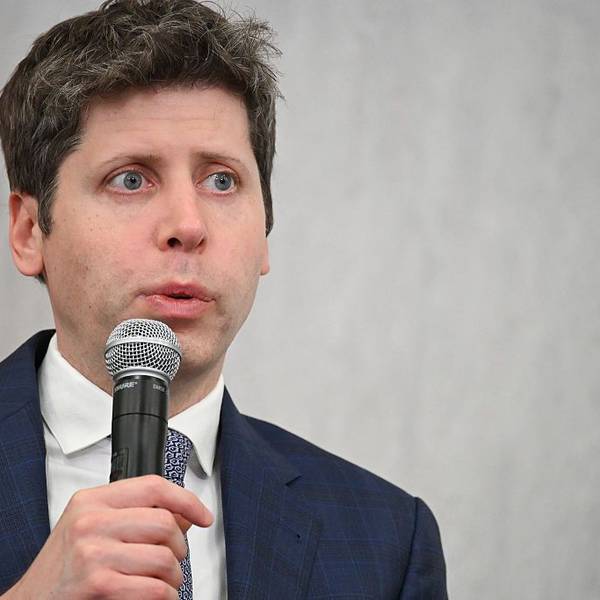
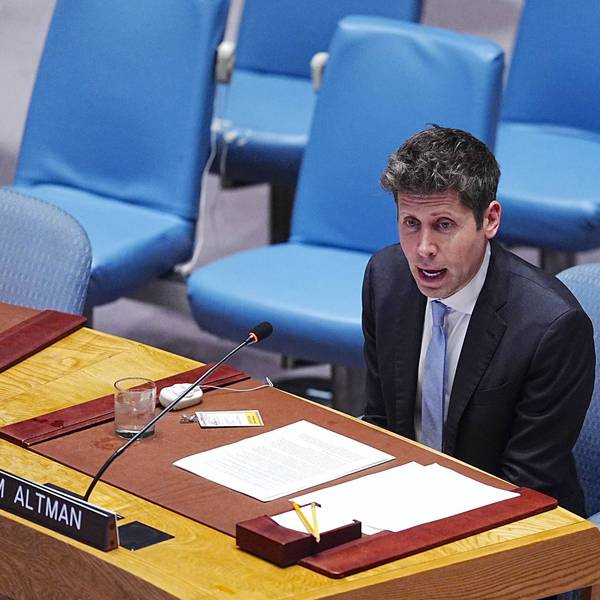
In a letter sent to OpenAI CEO Sam Altman, Public Citizen accused the firm of releasing Sora 2 without putting in proper guardrails to prevent it from by abused by malevolent actors.
"OpenAI must commit to a measured, ethical, and transparent pre-deployment process that provides guarantees against the profound social risks before any public release," the letter stated. "We urge you to pause this deployment and engage collaboratively with legal experts, civil rights organizations, and democracy advocates to establish real, hard technological and ethical redlines."
Among other things, Public Citizen warned that Sora 2 could be used as "a scalable, frictionless tool for creating and disseminating deepfake propaganda" aimed at impacting election results. The watchdog also said that Sora 2 could be used to create unauthorized deepfakes and revenge-porn videos involving both public and private figures who have not consented to have their likenesses used.
Although OpenAI said it has created protections to prevent this from occurring, Public Citizen said recent research has shown that these are woefully inadequate.
"The safeguards that the model claims have not been effective," Public Citizen explained. "For example, researchers bypassed the anti-impersonation safeguards within 24 hours of launch, and the 'mandatory' safety watermarks can be removed in under four minutes with free online tools."
JB Branch, Big Tech accountability advocate at Public Citizen, said that the rushed release of Sora 2 is part of a pattern of OpenAI shoving products out the door without proper ethical considerations.
"The hasty release of Sora 2 demonstrates a reckless disregard for product safety, name/image/likeness rights, the stability of our democracy, and fundamental consumer protection against harm," he said.
Advocates at Public Citizen aren't the only critics warning about Sora 2's potential misuse.
In a review of Sora 2 for PCMag published last week, journalist Ruben Circelli warned that the tool would "inevitably be weaponized" given its ability to create lifelike videos.
"A world where you can create lifelike videos, with audio, of anything in just a minute or two for free is a world where seeing is not believing," he said. "So, I suggest never taking any video clips you see online too seriously, unless they come from a source you can absolutely trust."
Circelli also said that OpenAI as a whole does not do a thorough job of protecting user data, and also questioned the overall utility of the video creation platform.
"While some of the technology at play here is cool, I can’t help but wonder what the point of it all is," he wrote. "Is the ability to generate AI meme videos really worth building 60 football fields' worth of AI infrastructure every week or uprooting rural families?"
Consumer Affairs also reported on Wednesday that a coalition of Japanese entertainment firms, including Studio Ghibli, Bandai Namco, and Square Enix, is accusing OpenAI of stealing its copyrighted works in order to train Sora 2 to generate animations.
This has spurred the Japanese government into action. Specifically, the government has now "formally requested that OpenAI refrain from actions that 'could constitute copyright infringement' after the tool produced videos resembling popular anime and game characters," according to Consumer Affairs.
We are at a crossroads
This country and this world are at a monumental crossroads. In a few short weeks, US voters will have an opportunity to beat back the forces of fascism and confront the billionaires who are rigging the economy, our media system, and our democracy, making it increasingly impossible for ordinary people to get by. We’re not just talking about the election. We’re talking about what must be done once these fascist elements are vanquished from power. We need a bolder set of solutions than what either major party has so far been willing to offer and a working-class movement ready to fight like hell for it. Trump didn't emerge from nowhere. The conditions that fueled MAGA authoritarianism were created by decades of radical neoliberal economic policies and a corrupt political system dominated by corporate interests. They slashed taxes on the super-rich, promising that the benefits would trickle down. They said giveaways to the corporate titans would make life more affordable for the rest of us. It was all bullshit. And when a bitter, betrayed populace searches for someone to blame, right-wing demagogues have little trouble finding scapegoats. People know when they're being lied to, but you won't hear any of this from the corporate media. Only independent journalism—powered and funded by people who believe in building a better world—can deliver truly trustworthy daily news. Our Fall Campaign is underway, and we need your help. To power our newsroom through the rest of the year, we need to raise $125,000 by midnight on October 31. So if you share our vision, please contribute whatever you can to sustain our work. |
Consumer advocacy organization Public Citizen on Wednesday issued a new warning about the dangers of Sora 2, the artificial intelligence video creation tool released by OpenAI earlier this year.
In a letter sent to OpenAI CEO Sam Altman, Public Citizen accused the firm of releasing Sora 2 without putting in proper guardrails to prevent it from by abused by malevolent actors.
"OpenAI must commit to a measured, ethical, and transparent pre-deployment process that provides guarantees against the profound social risks before any public release," the letter stated. "We urge you to pause this deployment and engage collaboratively with legal experts, civil rights organizations, and democracy advocates to establish real, hard technological and ethical redlines."
Among other things, Public Citizen warned that Sora 2 could be used as "a scalable, frictionless tool for creating and disseminating deepfake propaganda" aimed at impacting election results. The watchdog also said that Sora 2 could be used to create unauthorized deepfakes and revenge-porn videos involving both public and private figures who have not consented to have their likenesses used.
Although OpenAI said it has created protections to prevent this from occurring, Public Citizen said recent research has shown that these are woefully inadequate.
"The safeguards that the model claims have not been effective," Public Citizen explained. "For example, researchers bypassed the anti-impersonation safeguards within 24 hours of launch, and the 'mandatory' safety watermarks can be removed in under four minutes with free online tools."
JB Branch, Big Tech accountability advocate at Public Citizen, said that the rushed release of Sora 2 is part of a pattern of OpenAI shoving products out the door without proper ethical considerations.
"The hasty release of Sora 2 demonstrates a reckless disregard for product safety, name/image/likeness rights, the stability of our democracy, and fundamental consumer protection against harm," he said.
Advocates at Public Citizen aren't the only critics warning about Sora 2's potential misuse.
In a review of Sora 2 for PCMag published last week, journalist Ruben Circelli warned that the tool would "inevitably be weaponized" given its ability to create lifelike videos.
"A world where you can create lifelike videos, with audio, of anything in just a minute or two for free is a world where seeing is not believing," he said. "So, I suggest never taking any video clips you see online too seriously, unless they come from a source you can absolutely trust."
Circelli also said that OpenAI as a whole does not do a thorough job of protecting user data, and also questioned the overall utility of the video creation platform.
"While some of the technology at play here is cool, I can’t help but wonder what the point of it all is," he wrote. "Is the ability to generate AI meme videos really worth building 60 football fields' worth of AI infrastructure every week or uprooting rural families?"
Consumer Affairs also reported on Wednesday that a coalition of Japanese entertainment firms, including Studio Ghibli, Bandai Namco, and Square Enix, is accusing OpenAI of stealing its copyrighted works in order to train Sora 2 to generate animations.
This has spurred the Japanese government into action. Specifically, the government has now "formally requested that OpenAI refrain from actions that 'could constitute copyright infringement' after the tool produced videos resembling popular anime and game characters," according to Consumer Affairs.
- FTC Proposes Ban on Impersonations of Individuals, Including With AI Deepfakes ›
- Watchdog Says OpenAI's For-Profit Restructuring Scheme 'Should Not Be Allowed to Stand' ›