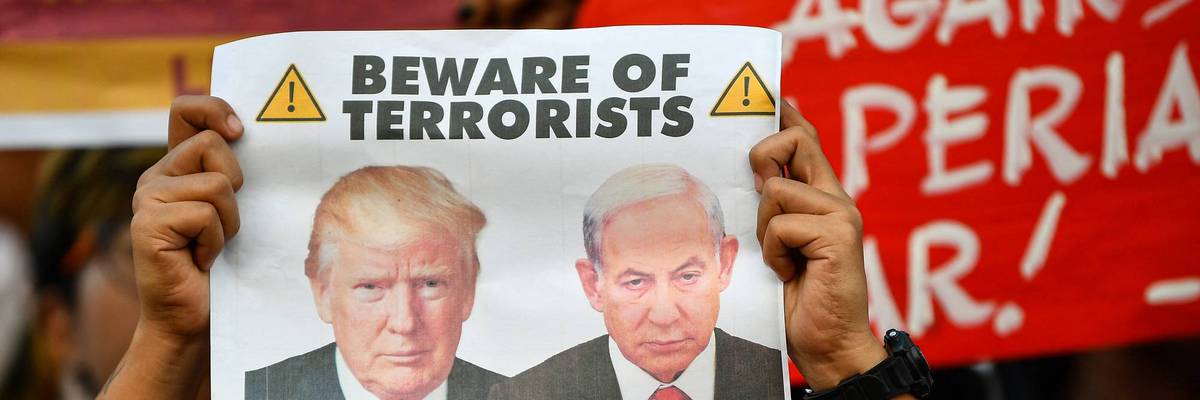
An activist holding a placard with portraits of US President Donald Trump and Israeli Prime Minister Benjamin Nethanyahu during a protest in Manila on March 2, 2026.
Netanyahu Insists Iran Assault Is 'Not an Endless War' as US Sends More Forces to Middle East
Benjamin Netanyahu infamously predicted that the US invasion of Iraq in 2003 would "have enormous positive reverberations on the region."
Israeli Prime Minister Benjamin Netanyahu insisted in a Fox News appearance late Monday that the intensifying assault on Iran "is not an endless war," even as Trump administration officials declined to provide a clear timeline for the ongoing military operations, deployed more forces to the region, and signaled a more intense bombing campaign is ahead.
As elements of Trump's MAGA base expressed outrage over the war, which is broadly unpopular with the American public, Netanyahu claimed in an appearance on "Hannity" that the US-Israeli onslaught "will create conditions of peace," remarks that came as the Middle East descended into regional war as Iran retaliated against the illegal attacks with strikes on sites in at least nine countries.
The Israeli prime minister's comments recalled his infamous prediction in 2002, ahead of the US invasion of Iraq, that "if you take out Saddam, Saddam's regime, I guarantee you that it will have enormous positive reverberations on the region."
Netanyahu's remarks to Trump loyalist Sean Hannity echoed those of US Pentagon Secretary Pete Hegseth, who told reporters and the public earlier Monday that "this is not Iraq," dismissing criticism of the administration for plunging the US into another disastrous Middle East war.
"This is not endless," Hegseth said. The Pentagon chief later bristled at a question about President Donald Trump's suggested timeline of "four weeks or less," calling it a "typical NBC sort of got-you type question."
"President Trump has all the latitude in the world to talk about how long it may or may not take four weeks, two weeks, six weeks," Hegseth said. "It could move up, it could move back. We're going to execute at his command."
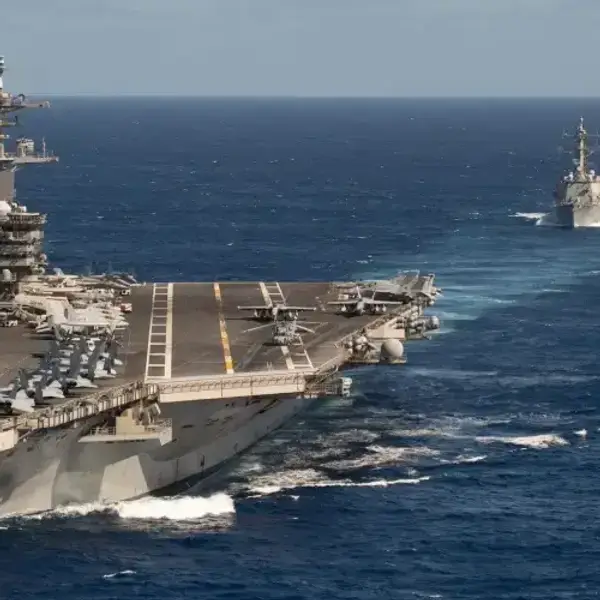
During the same press conference, Gen. Dan Caine, chairman of the Joint Chiefs of Staff, said the US would be sending more forces to the region, declining to offer specifics so as not to "tip the enemy off." Caine also said the US expects to "take additional losses."
"This work is just beginning and will continue," Caine said.
Trump, for his part, said the timeline for the war is "whatever it takes" for the US and Israel to achieve their stated objectives, which have ranged from knocking out Iran's nuclear energy program to full-scale regime change.
"Right from the beginning we projected four to five weeks, but we have the capability to go far longer than that," Trump said.
US Secretary of State Marco Rubio, meanwhile, warned that "the hardest hits are yet to come from the US military" and said that "the next phase will be even more punishing on Iran than it is right now." Rubio also indicated that Trump decided to join Israel in attacking Iran because the planned Israeli attack was likely to spark retaliation against US forces in the region, a justification that critics described as "insane."
The Iranian Red Crescent said Tuesday that Iran's death toll from the assault is now close to 800 and counting. The US has confirmed six deaths from an Iranian strike on a military installation in Kuwait.
"That we would just follow an ally into a war of choice that puts hundreds of Americans' lives, if not thousands of Americans' lives, at risk should be bone-chilling to Americans," US Sen. Chris Murphy (D-Conn.) said late Monday.
We are at a crossroads
This country and this world are at a monumental crossroads. In a few short weeks, US voters will have an opportunity to beat back the forces of fascism and confront the billionaires who are rigging the economy, our media system, and our democracy, making it increasingly impossible for ordinary people to get by. We’re not just talking about the election. We’re talking about what must be done once these fascist elements are vanquished from power. We need a bolder set of solutions than what either major party has so far been willing to offer and a working-class movement ready to fight like hell for it. Trump didn't emerge from nowhere. The conditions that fueled MAGA authoritarianism were created by decades of radical neoliberal economic policies and a corrupt political system dominated by corporate interests. They slashed taxes on the super-rich, promising that the benefits would trickle down. They said giveaways to the corporate titans would make life more affordable for the rest of us. It was all bullshit. And when a bitter, betrayed populace searches for someone to blame, right-wing demagogues have little trouble finding scapegoats. People know when they're being lied to, but you won't hear any of this from the corporate media. Only independent journalism—powered and funded by people who believe in building a better world—can deliver truly trustworthy daily news. Our Fall Campaign is underway, and we need your help. To power our newsroom through the rest of the year, we need to raise $125,000 by midnight on October 31. So if you share our vision, please contribute whatever you can to sustain our work. |
Israeli Prime Minister Benjamin Netanyahu insisted in a Fox News appearance late Monday that the intensifying assault on Iran "is not an endless war," even as Trump administration officials declined to provide a clear timeline for the ongoing military operations, deployed more forces to the region, and signaled a more intense bombing campaign is ahead.
As elements of Trump's MAGA base expressed outrage over the war, which is broadly unpopular with the American public, Netanyahu claimed in an appearance on "Hannity" that the US-Israeli onslaught "will create conditions of peace," remarks that came as the Middle East descended into regional war as Iran retaliated against the illegal attacks with strikes on sites in at least nine countries.
The Israeli prime minister's comments recalled his infamous prediction in 2002, ahead of the US invasion of Iraq, that "if you take out Saddam, Saddam's regime, I guarantee you that it will have enormous positive reverberations on the region."
Netanyahu's remarks to Trump loyalist Sean Hannity echoed those of US Pentagon Secretary Pete Hegseth, who told reporters and the public earlier Monday that "this is not Iraq," dismissing criticism of the administration for plunging the US into another disastrous Middle East war.
"This is not endless," Hegseth said. The Pentagon chief later bristled at a question about President Donald Trump's suggested timeline of "four weeks or less," calling it a "typical NBC sort of got-you type question."
"President Trump has all the latitude in the world to talk about how long it may or may not take four weeks, two weeks, six weeks," Hegseth said. "It could move up, it could move back. We're going to execute at his command."
During the same press conference, Gen. Dan Caine, chairman of the Joint Chiefs of Staff, said the US would be sending more forces to the region, declining to offer specifics so as not to "tip the enemy off." Caine also said the US expects to "take additional losses."
"This work is just beginning and will continue," Caine said.
Trump, for his part, said the timeline for the war is "whatever it takes" for the US and Israel to achieve their stated objectives, which have ranged from knocking out Iran's nuclear energy program to full-scale regime change.
"Right from the beginning we projected four to five weeks, but we have the capability to go far longer than that," Trump said.
US Secretary of State Marco Rubio, meanwhile, warned that "the hardest hits are yet to come from the US military" and said that "the next phase will be even more punishing on Iran than it is right now." Rubio also indicated that Trump decided to join Israel in attacking Iran because the planned Israeli attack was likely to spark retaliation against US forces in the region, a justification that critics described as "insane."
The Iranian Red Crescent said Tuesday that Iran's death toll from the assault is now close to 800 and counting. The US has confirmed six deaths from an Iranian strike on a military installation in Kuwait.
"That we would just follow an ally into a war of choice that puts hundreds of Americans' lives, if not thousands of Americans' lives, at risk should be bone-chilling to Americans," US Sen. Chris Murphy (D-Conn.) said late Monday.
Israeli Prime Minister Benjamin Netanyahu insisted in a Fox News appearance late Monday that the intensifying assault on Iran "is not an endless war," even as Trump administration officials declined to provide a clear timeline for the ongoing military operations, deployed more forces to the region, and signaled a more intense bombing campaign is ahead.
As elements of Trump's MAGA base expressed outrage over the war, which is broadly unpopular with the American public, Netanyahu claimed in an appearance on "Hannity" that the US-Israeli onslaught "will create conditions of peace," remarks that came as the Middle East descended into regional war as Iran retaliated against the illegal attacks with strikes on sites in at least nine countries.
The Israeli prime minister's comments recalled his infamous prediction in 2002, ahead of the US invasion of Iraq, that "if you take out Saddam, Saddam's regime, I guarantee you that it will have enormous positive reverberations on the region."
Netanyahu's remarks to Trump loyalist Sean Hannity echoed those of US Pentagon Secretary Pete Hegseth, who told reporters and the public earlier Monday that "this is not Iraq," dismissing criticism of the administration for plunging the US into another disastrous Middle East war.
"This is not endless," Hegseth said. The Pentagon chief later bristled at a question about President Donald Trump's suggested timeline of "four weeks or less," calling it a "typical NBC sort of got-you type question."
"President Trump has all the latitude in the world to talk about how long it may or may not take four weeks, two weeks, six weeks," Hegseth said. "It could move up, it could move back. We're going to execute at his command."
During the same press conference, Gen. Dan Caine, chairman of the Joint Chiefs of Staff, said the US would be sending more forces to the region, declining to offer specifics so as not to "tip the enemy off." Caine also said the US expects to "take additional losses."
"This work is just beginning and will continue," Caine said.
Trump, for his part, said the timeline for the war is "whatever it takes" for the US and Israel to achieve their stated objectives, which have ranged from knocking out Iran's nuclear energy program to full-scale regime change.
"Right from the beginning we projected four to five weeks, but we have the capability to go far longer than that," Trump said.
US Secretary of State Marco Rubio, meanwhile, warned that "the hardest hits are yet to come from the US military" and said that "the next phase will be even more punishing on Iran than it is right now." Rubio also indicated that Trump decided to join Israel in attacking Iran because the planned Israeli attack was likely to spark retaliation against US forces in the region, a justification that critics described as "insane."
The Iranian Red Crescent said Tuesday that Iran's death toll from the assault is now close to 800 and counting. The US has confirmed six deaths from an Iranian strike on a military installation in Kuwait.
"That we would just follow an ally into a war of choice that puts hundreds of Americans' lives, if not thousands of Americans' lives, at risk should be bone-chilling to Americans," US Sen. Chris Murphy (D-Conn.) said late Monday.