SUBSCRIBE TO OUR FREE NEWSLETTER
Daily news & progressive opinion—funded by the people, not the corporations—delivered straight to your inbox.
5
#000000
#FFFFFF
To donate by check, phone, or other method, see our More Ways to Give page.
Daily news & progressive opinion—funded by the people, not the corporations—delivered straight to your inbox.
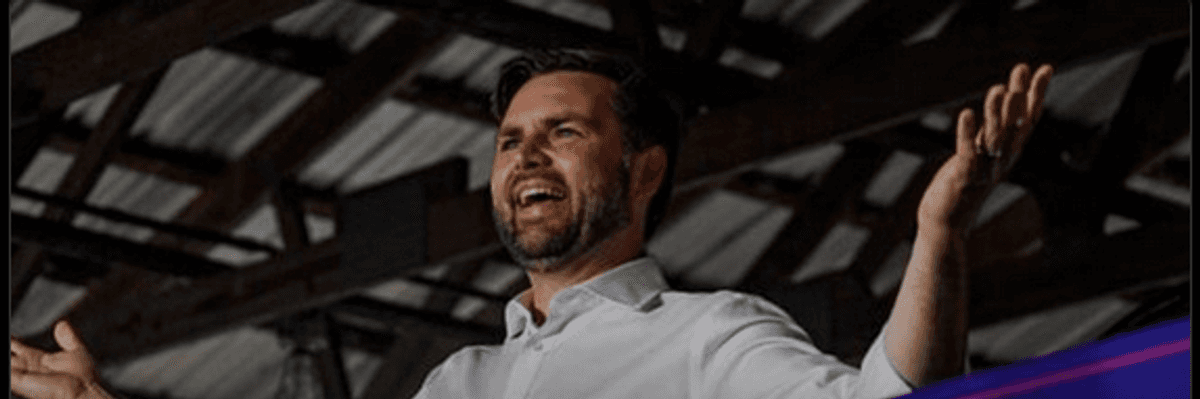
Screenshot of a tweet shared by journalist Ken Klippenstein prior to his account being suspended by X on Thursday, September 26, 2024.
"The 'free speech absolutist' has once again silenced a journalist he didn't like," said one observer.
X—the social media platform formerly known as Twitter—suspended Ken Klippenstein's account Thursday after the investigative journalist posted an article containing a link to a dossier on Republican U.S. vice presidential candidate JD Vance that allegedly came from an Iranian hack of former President Donald Trump's 2024 campaign.
Klippenstein, who formerly worked at The Intercept, said on his paid Substack Thursday that his X account was suspended for violating the platform's ban on posting private information.
"I know that it is general practice to delete 'private' information from leaks and classified documents, but in this case, not only is Vance an elected official and vice presidential candidate, but the information is readily available for anyone to buy," he wrote. Vance is also the junior U.S. senator from Ohio.
Klippenstein continued:
We should be honest about so-called private information contained in the dossier and "private" information in general. It is readily available to anyone who can buy it. The campaign purchased this information from commercial information brokers. Those dealers make huge profits from selling this data. And the media knows it, because they buy the data for reporting purposes, just like the campaign. They don't like to mention that though.
According to Klippenstein, the corporate media has "been sitting on" the dossier since June, "declining to publish in fear of finding itself at odds with the government's campaign against 'foreign malign influence.'"
"If the document had been hacked by some 'Anonymous'-like hacker group, the news media would be all over it," he contended. "I'm just not a believer of the news media as an arm of the government, doing its work combatting foreign influence. Nor should it be a gatekeeper of what the public should know."
Klippenstein shared a general overview of the contents of the dossier, which he described as "a 271-page research paper the Trump campaign prepared to vet" Vance, pulling out select quotes from the document:
"While the news media has paraphrased some of the contents of the dossier, what they haven't done is provide the American people with the underlying document, in the language in which it appeared, so they can decide for themselves what they think," Klippenstein said. "You decide for yourself."
An X spokesperson told Zeteo's Justin Baragona that "Ken Klippenstein was temporarily suspended for violating our rules on posting unredacted private personal information, specifically Sen. Vance's physical addresses and the majority of his Social Security number."
The Federal Bureau of Investigation is investigating the Trump campaign's claim of an Iranian hack. Iran's government denies any such action.
Numerous observers accused Musk—a self-described "free speech absolutist"—of hypocrisy over X's suspension of Klippenstein's account, although it is not known if the billionaire owner had any role in the decision. Other users also reported punitive action against their accounts over the dossier post.
"I'm old enough to remember when free speech zealot Elon Musk was outraged by Twitter's censorship," journalist Seth Hettena said on X.
Jacobin writer Branko Marcetic posted that "this scenario is actually a good preview of the future none of us want, but that we're heading to currently: A major story breaks, establishment press refuses to cover it, and the indy media that does is throttled by tech censors."
Dear Common Dreams reader, It’s been nearly 30 years since I co-founded Common Dreams with my late wife, Lina Newhouser. We had the radical notion that journalism should serve the public good, not corporate profits. It was clear to us from the outset what it would take to build such a project. No paid advertisements. No corporate sponsors. No millionaire publisher telling us what to think or do. Many people said we wouldn't last a year, but we proved those doubters wrong. Together with a tremendous team of journalists and dedicated staff, we built an independent media outlet free from the constraints of profits and corporate control. Our mission has always been simple: To inform. To inspire. To ignite change for the common good. Building Common Dreams was not easy. Our survival was never guaranteed. When you take on the most powerful forces—Wall Street greed, fossil fuel industry destruction, Big Tech lobbyists, and uber-rich oligarchs who have spent billions upon billions rigging the economy and democracy in their favor—the only bulwark you have is supporters who believe in your work. But here’s the urgent message from me today. It's never been this bad out there. And it's never been this hard to keep us going. At the very moment Common Dreams is most needed, the threats we face are intensifying. We need your support now more than ever. We don't accept corporate advertising and never will. We don't have a paywall because we don't think people should be blocked from critical news based on their ability to pay. Everything we do is funded by the donations of readers like you. When everyone does the little they can afford, we are strong. But if that support retreats or dries up, so do we. Will you donate now to make sure Common Dreams not only survives but thrives? —Craig Brown, Co-founder |
X—the social media platform formerly known as Twitter—suspended Ken Klippenstein's account Thursday after the investigative journalist posted an article containing a link to a dossier on Republican U.S. vice presidential candidate JD Vance that allegedly came from an Iranian hack of former President Donald Trump's 2024 campaign.
Klippenstein, who formerly worked at The Intercept, said on his paid Substack Thursday that his X account was suspended for violating the platform's ban on posting private information.
"I know that it is general practice to delete 'private' information from leaks and classified documents, but in this case, not only is Vance an elected official and vice presidential candidate, but the information is readily available for anyone to buy," he wrote. Vance is also the junior U.S. senator from Ohio.
Klippenstein continued:
We should be honest about so-called private information contained in the dossier and "private" information in general. It is readily available to anyone who can buy it. The campaign purchased this information from commercial information brokers. Those dealers make huge profits from selling this data. And the media knows it, because they buy the data for reporting purposes, just like the campaign. They don't like to mention that though.
According to Klippenstein, the corporate media has "been sitting on" the dossier since June, "declining to publish in fear of finding itself at odds with the government's campaign against 'foreign malign influence.'"
"If the document had been hacked by some 'Anonymous'-like hacker group, the news media would be all over it," he contended. "I'm just not a believer of the news media as an arm of the government, doing its work combatting foreign influence. Nor should it be a gatekeeper of what the public should know."
Klippenstein shared a general overview of the contents of the dossier, which he described as "a 271-page research paper the Trump campaign prepared to vet" Vance, pulling out select quotes from the document:
"While the news media has paraphrased some of the contents of the dossier, what they haven't done is provide the American people with the underlying document, in the language in which it appeared, so they can decide for themselves what they think," Klippenstein said. "You decide for yourself."
An X spokesperson told Zeteo's Justin Baragona that "Ken Klippenstein was temporarily suspended for violating our rules on posting unredacted private personal information, specifically Sen. Vance's physical addresses and the majority of his Social Security number."
The Federal Bureau of Investigation is investigating the Trump campaign's claim of an Iranian hack. Iran's government denies any such action.
Numerous observers accused Musk—a self-described "free speech absolutist"—of hypocrisy over X's suspension of Klippenstein's account, although it is not known if the billionaire owner had any role in the decision. Other users also reported punitive action against their accounts over the dossier post.
"I'm old enough to remember when free speech zealot Elon Musk was outraged by Twitter's censorship," journalist Seth Hettena said on X.
Jacobin writer Branko Marcetic posted that "this scenario is actually a good preview of the future none of us want, but that we're heading to currently: A major story breaks, establishment press refuses to cover it, and the indy media that does is throttled by tech censors."
X—the social media platform formerly known as Twitter—suspended Ken Klippenstein's account Thursday after the investigative journalist posted an article containing a link to a dossier on Republican U.S. vice presidential candidate JD Vance that allegedly came from an Iranian hack of former President Donald Trump's 2024 campaign.
Klippenstein, who formerly worked at The Intercept, said on his paid Substack Thursday that his X account was suspended for violating the platform's ban on posting private information.
"I know that it is general practice to delete 'private' information from leaks and classified documents, but in this case, not only is Vance an elected official and vice presidential candidate, but the information is readily available for anyone to buy," he wrote. Vance is also the junior U.S. senator from Ohio.
Klippenstein continued:
We should be honest about so-called private information contained in the dossier and "private" information in general. It is readily available to anyone who can buy it. The campaign purchased this information from commercial information brokers. Those dealers make huge profits from selling this data. And the media knows it, because they buy the data for reporting purposes, just like the campaign. They don't like to mention that though.
According to Klippenstein, the corporate media has "been sitting on" the dossier since June, "declining to publish in fear of finding itself at odds with the government's campaign against 'foreign malign influence.'"
"If the document had been hacked by some 'Anonymous'-like hacker group, the news media would be all over it," he contended. "I'm just not a believer of the news media as an arm of the government, doing its work combatting foreign influence. Nor should it be a gatekeeper of what the public should know."
Klippenstein shared a general overview of the contents of the dossier, which he described as "a 271-page research paper the Trump campaign prepared to vet" Vance, pulling out select quotes from the document:
"While the news media has paraphrased some of the contents of the dossier, what they haven't done is provide the American people with the underlying document, in the language in which it appeared, so they can decide for themselves what they think," Klippenstein said. "You decide for yourself."
An X spokesperson told Zeteo's Justin Baragona that "Ken Klippenstein was temporarily suspended for violating our rules on posting unredacted private personal information, specifically Sen. Vance's physical addresses and the majority of his Social Security number."
The Federal Bureau of Investigation is investigating the Trump campaign's claim of an Iranian hack. Iran's government denies any such action.
Numerous observers accused Musk—a self-described "free speech absolutist"—of hypocrisy over X's suspension of Klippenstein's account, although it is not known if the billionaire owner had any role in the decision. Other users also reported punitive action against their accounts over the dossier post.
"I'm old enough to remember when free speech zealot Elon Musk was outraged by Twitter's censorship," journalist Seth Hettena said on X.
Jacobin writer Branko Marcetic posted that "this scenario is actually a good preview of the future none of us want, but that we're heading to currently: A major story breaks, establishment press refuses to cover it, and the indy media that does is throttled by tech censors."